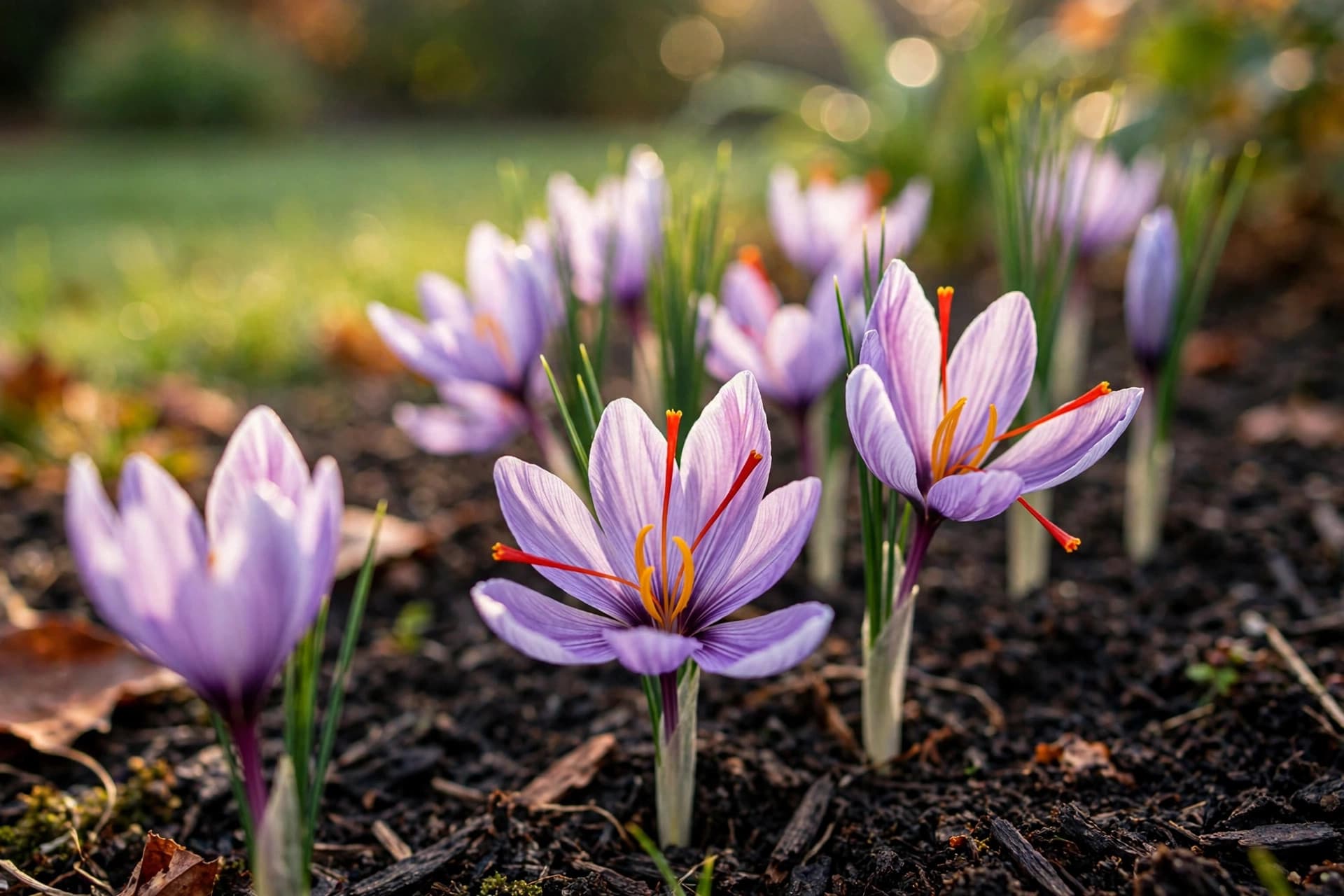

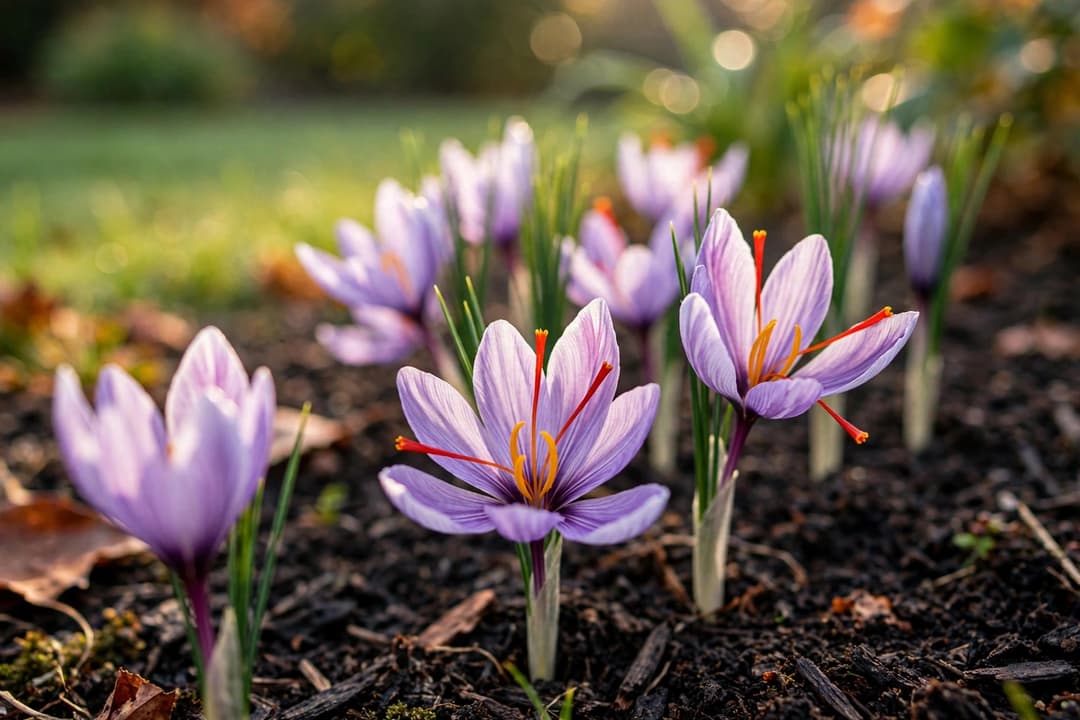
Yes — you can grow saffron at home. Saffron is the dried stigmas of Crocus sativus, a fall-blooming crocus in the iris family, according to a 2021 UVM factsheet for home gardeners. It is hardy down to USDA zone 4 — UVM's 2021 saffron brochure notes that it survives cold Vermont winters. Plant the corms in late summer to early fall in full sun and exceptionally well-drained soil, and flowers appear within six to eight weeks, each offering just three crimson stigmas (Penn State Extension's 2025 growing guide). The catch: it takes roughly 4,000 blossoms to yield a single ounce of saffron (same guide) — so grow it for the joy and the flavor, not the fortune.
The Science of Saffron
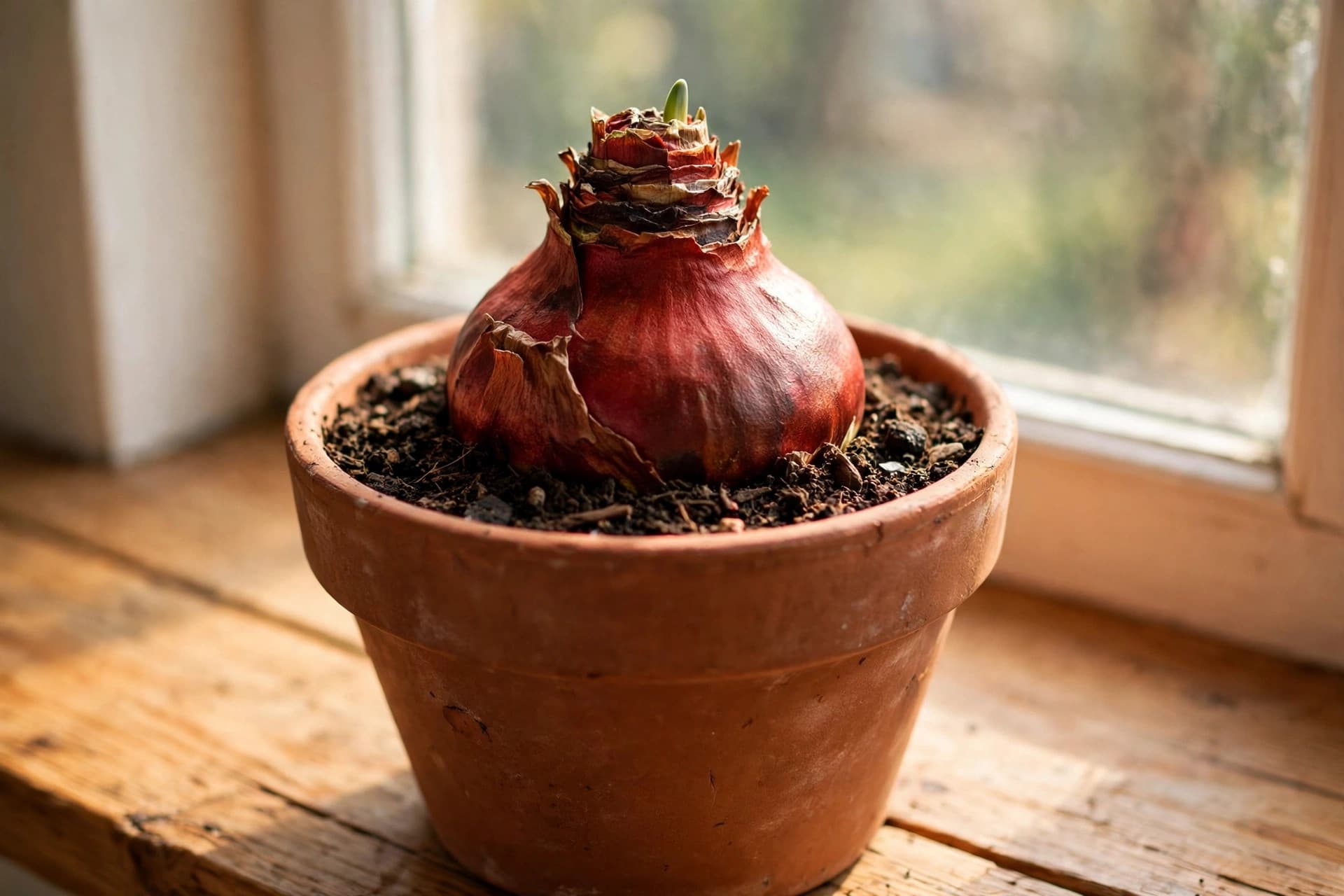
Saffron crocus is a perennial corm, not a bulb: a corm is a solid, vertical underground stem topped with a bud, while a bulb is a compressed stem wrapped in leafy scales around a center bud (Penn State Extension, 2025). It also has a remarkable reproductive quirk. The plant is a sterile triploid geophyte, unable to produce seeds at all — it propagates only through its corms, with each "mother" corm producing several daughter corms before naturally dying off (same guide). UVM's 2017 life-cycle factsheet traces the rhythm: the parent corm dies back each spring, leaving a cluster of secondary corms that become the next season's crop. Because there are no seeds, every saffron crocus is effectively a clone, divided and replanted by hand across millennia — and UVM notes that growers leave beds in place for four to six years, with yields increasing each year (UVM's 2021 brochure).
Lore holds that saffron has been treasured for more than 4,000 years, with its earliest known use dated to around 2300 BCE (Penn State Extension retells the old tale). The better-documented American chapter: the Pennsylvania Dutch brought saffron to North America over 280 years ago (UVM's 2021 brochure), and German and Alsatian settlers established a "Saffron Belt" across Lebanon, Lancaster, and Berks counties in Pennsylvania (Penn State Extension, 2025). In 2015, the University of Vermont launched the North American Center for Saffron Research and Development to study the crop on this continent (same source).
Sophie hovered over the raised bed with a pair of tweezers, counting under her breath. "Three. Just three little threads per flower?"
"Three per flower," Sprouty said, nudging a freshly opened bloom upright. "And each one has to be picked by hand, the same day the flower opens. That's why it's the most expensive spice in the world."
"But where are the seed packets?" Sophie asked, flipping the catalog page. "I want to start a whole row."
"There are no seed packets," Sprouty said. "Saffron crocus is a sterile triploid — it can't make seeds at all. Every corm you plant is a clone, passed from gardener to gardener by division."
Sophie laughed. "So no shortcuts. Thanks, Sprouty — corms it is."
Planting Saffron at Home
Timing. Set corms out in September through October (Penn State Extension, 2025). UVM's home-gardener factsheet is blunter: plant as soon as possible in August or early September, and never hold corms over until spring — they will sprout and die (UVM, 2021). Flowers typically appear within six to eight weeks of planting (Penn State Extension, 2025); UVM researchers observed flowering beginning 30 to 40 days after a mid-to-late August planting (UVM, 2017).
Sun and soil. Give saffron full sun — at least five hours of direct light daily (Penn State Extension, 2025). Soil must be well-drained and sandy or loamy, slightly alkaline (pH 7.0–8.0) and nutrient-rich, because corms will rot if the soil stays too wet (same guide). UVM echoes the drainage warning: use a light to moderate texture with high organic matter, since corms rot in standing water (UVM, 2021). Clemson Extension's factsheet on summer- and fall-flowering bulbs likewise lists saffron crocus for well-drained soil in partial shade to full sun.
Depth and spacing. UVM's 2021 home-gardener guide says to plant corms six inches deep, at six to twelve corms per square foot — roughly three to four inches apart (UVM, 2021). Penn State's 2025 guide suggests three to four inches deep and three to four inches apart, pointed end up (Penn State Extension, 2025). Either way, water only once after planting (same guide).
Cold hardiness. Hardy to USDA zone 4 and able to survive cold Vermont winters (UVM's 2021 brochure); UVM rates it for zones 4 through 8 (UVM, 2021), while Penn State says it thrives in zones 6 through 9 (Penn State Extension, 2025). Containers work too — at least six inches wide and eight inches deep (same guide) — and in the coldest regions you can dig corms before the ground freezes and store them indoors at 40–50°F, buried in sand or dry peat moss (same guide).
Leave them be. Saffron beds stay in place for four to six years, increasing in yield annually — and UVM warns not to dig up the parent corm when flowering is over (UVM's 2021 brochure). Every four to six years, divide the multiplied corms during their dormant period in July–August to propagate more (Penn State Extension, 2025).
A Critical Warning: Don't Confuse It With Autumn Crocus
Here is the safety fact Sprouty insists every grower memorize: autumn crocus (Colchicum autumnale) is not saffron, and it is toxic. It is sold under look-alike names like "autumn crocus," "meadow saffron," and "naked ladies," yet it belongs to an entirely different family, Colchicaceae (NC State Extension's plant database). NC State flags it as having high-severity poison characteristics: its toxic principle is the alkaloid colchicine, and the plant is highly toxic — it can be fatal if ingested (same source). Most alarming for gardeners, NC State's own page notes that Colchicum autumnale is "often confused with" Crocus sativus — and Clemson Extension's bulb factsheet lists colchicum right alongside true crocuses under the name "Autumn Crocus or Meadow Saffron," showing exactly how the naming tangle happens. Buy corms clearly labeled Crocus sativus from reputable growers (Penn State Extension, 2025), and plant them in a spot separate from other corms and bulbs (same guide). When in doubt, do not taste it.
Harvesting Your Red Gold
Flowers bloom between late October and December (Penn State Extension, 2025), with the flush lasting four to six weeks (a 2021 UVM harvesting factsheet) — and each individual flower wilts after just one day (Penn State Extension, 2025). Harvest daily, in the morning: UVM recommends mid-morning after the dew has dried (UVM, 2021), and Penn State says to pick after the dew or frost dries but before the sun wilts the flowers (Penn State Extension, 2025). If you can, pick flowers while they are still slightly closed, which protects the stigmas (UVM, 2021). Each flower carries three stigmas, each attached to the style (same factsheet). The same day you pick, gently pull the petals apart, hold the stigmas firmly at their base, and pull them away — including part of the style — then cut off the yellowish-white bottom of the style; discard the yellow stamens and purple petals (same factsheet). Set expectations honestly: the first year you may get only one flower per corm, but by years two and three a corm can produce six to nine blooms (Penn State Extension, 2025).
Drying and Storing
Drying develops saffron's aroma and potency, and you have options. Air-dry the threads spread on a dry paper towel indoors for one to two days, or use an oven: 130°F for 60 minutes, 170°F for 25 minutes, or 210°F for 7 to 10 minutes — the hottest method yielded the highest flavor content in UVM research (Penn State Extension, 2025; a 2021 UVM drying study found the high-temperature regime generated more safranal and crocins). UVM's study notes that stigmas must lose over 80% of their water content to count as high quality (same study). Store the dried threads in an airtight glass or metal container, in a cool place out of sunlight (Penn State Extension, 2025); UVM's home-gardener guide adds that the jar belongs in a dark, dry spot — and advises waiting a month before using your harvest (UVM, 2021).
Why It Costs What It Costs
Saffron is widely called the most expensive spice in the world (UVM, 2017), and the numbers explain why. It takes roughly 4,000 blossoms to yield just one ounce of saffron, and an acre produces only about three pounds — with every step done by hand (Penn State Extension, 2025). UVM's harvesting research puts the labor at 10 to 20 person-hours per pound of saffron (UVM, 2021), and about 50 flowers go into a single teaspoon (Penn State Extension, 2025). For price framing, UVM's 2021 brochure cited retail values of $3,000 to $9,000 per pound, with North American–grown saffron selling for $25 to $50 per gram (UVM's 2021 brochure).
Frequently Asked Questions
When should I plant saffron corms?
Plant in September through October (Penn State Extension, 2025); UVM's home-gardener guide urges planting as soon as possible in August or early September and never holding corms over until spring (UVM, 2021). Expect flowers within six to eight weeks of planting (Penn State Extension, 2025).
How deep and how far apart should I plant?
UVM's 2021 home-gardener factsheet says six inches deep at six to twelve corms per square foot — roughly three to four inches apart (UVM, 2021). Penn State's 2025 guide says three to four inches deep and three to four inches apart, pointed end up (Penn State Extension, 2025). Water only once after planting (same guide).
Can I grow saffron in containers?
Yes — use a container at least six inches wide and eight inches deep with the same well-drained soil (Penn State Extension, 2025). In the coldest regions, dig corms before the ground freezes and store them at 40–50°F, buried in sand or dry peat moss (same guide).
Can I start saffron from seed?
No. Saffron crocus is a sterile triploid geophyte that cannot produce seeds; it propagates only by corm division (Penn State Extension, 2025). Buy corms from reputable growers (same guide).
How much saffron will a home planting actually produce?
Plan on roughly 50 flowers per teaspoon of dried saffron (Penn State Extension, 2025). The first year may bring just one flower per corm, rising to six to nine blooms per corm by years two and three (same guide). Remember the scale: about 4,000 blossoms make one ounce (same guide).
How do I tell saffron crocus from toxic autumn crocus?
Saffron is Crocus sativus in the iris family; autumn crocus is Colchicum autumnale in the Colchicaceae family, sold as "autumn crocus," "meadow saffron," or "naked ladies" — and NC State Extension warns it is often confused with saffron crocus (NC State Extension). Autumn crocus is highly toxic, its poison principle is the alkaloid colchicine, and it can be fatal if ingested (same source). Only plant corms clearly labeled Crocus sativus from reputable growers (Penn State Extension, 2025).
How should I dry and store my harvest?
Air-dry the threads on a paper towel indoors for one to two days, or oven-dry — 130°F for 60 minutes, 170°F for 25 minutes, or 210°F for 7 to 10 minutes, with the hottest method testing highest in flavor in UVM research (Penn State Extension, 2025). Store in an airtight glass or metal container in a cool, dark spot, and wait a month before using (UVM, 2021).
Related reading: If saffron has you in a fall-planting mood, keep going — avoid these October garlic mistakes, mulch to extend your fall growth window, sow daikon as a soil-breaking cover crop, and learn the sweet-potato frost emergency harvest drill. For more autumn color, see the top five flowering plants to plant in September and how to buy California natives to plant after the heat; bulb lovers should read about planting spring bulbs in shallow soil for stronger bloom and a planting planner that ends frost-date guessing.