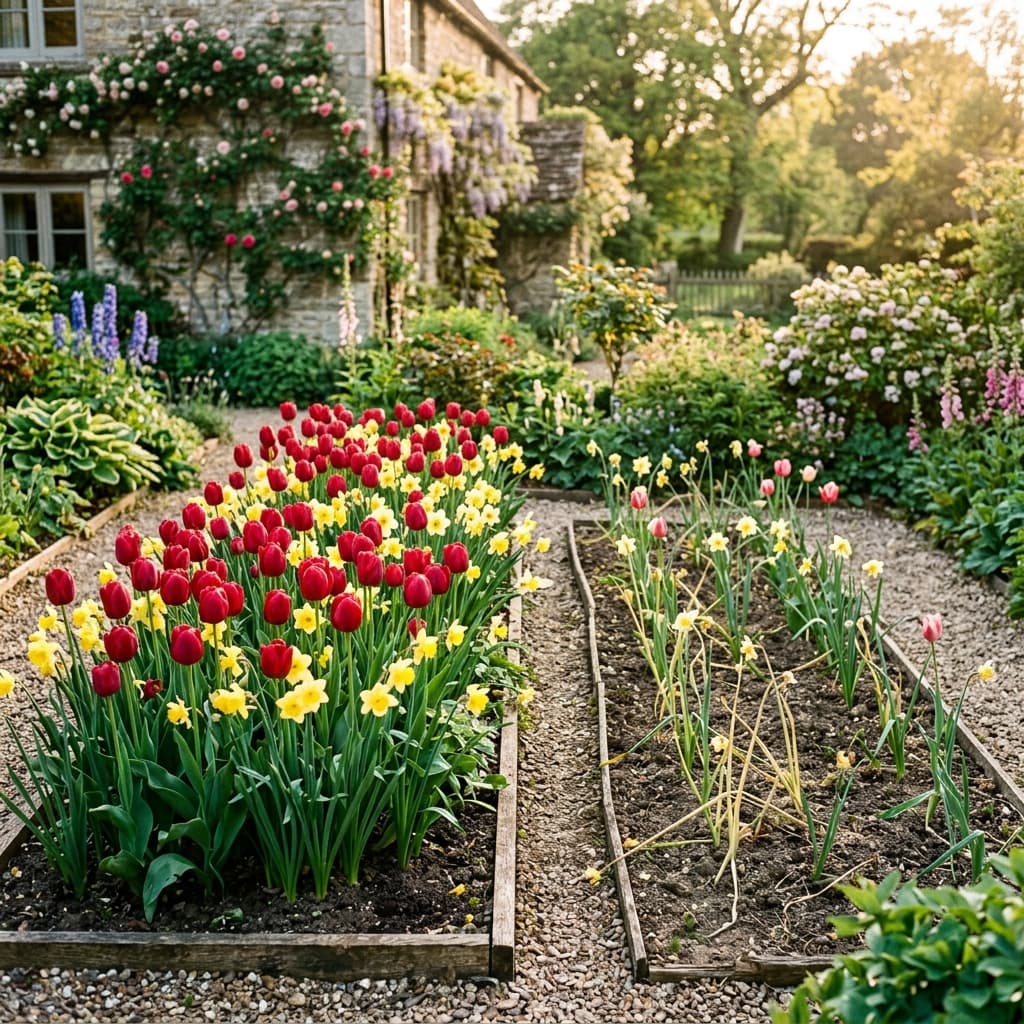

Every bulb packet says the same thing: plant at a depth three times the bulb's height. Tulip the size of a golf ball? Dig six inches down. It sounds authoritative. It sounds safe.
It's also costing you some of the best blooms your garden could produce.
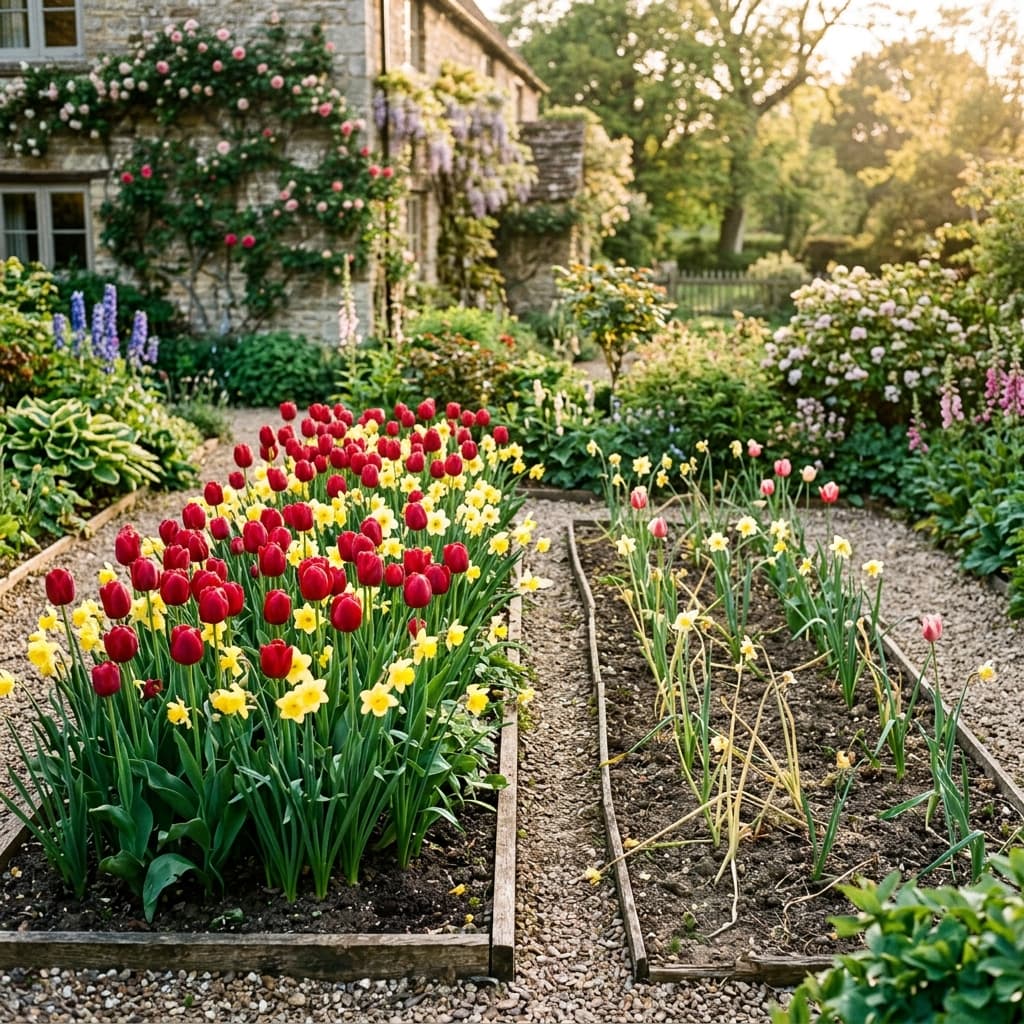
The "3× Depth" Rule Was Never About Blooms
The traditional deep-planting rule was designed for one thing: frost protection. The idea was that burying bulbs well below the freeze line would protect them through winter. That makes sense in a world where everyone gardens in USDA Zone 4 and below.
But the majority of gardeners today live in zones 5 through 9 — where ground frost rarely penetrates past 2–3 inches, and where hardiness zone shifts in 2026 are pushing effective frost depth even shallower. You're digging an 8-inch trench to protect against a freeze that hasn't reached that depth in years.
Meanwhile, that deep trench is actively working against spring's most important trigger: soil warmth.
🌿 The Rule of Thumb, Corrected
For most gardeners in zones 5–9, the real target is 1.5× the bulb height — not 3×. A 2-inch tulip bulb goes 3 inches deep, not 6. That one change alone meaningfully accelerates emergence and thickens stems.
Shallow Soil Warms Up Weeks Earlier
Here's the physics that changes everything: the top 2–3 inches of soil absorbs solar radiation directly. On a sunny March day that feels cold to you, that shallow zone can be 10–15°F warmer than the air temperature — and up to 20°F warmer than soil six inches down.
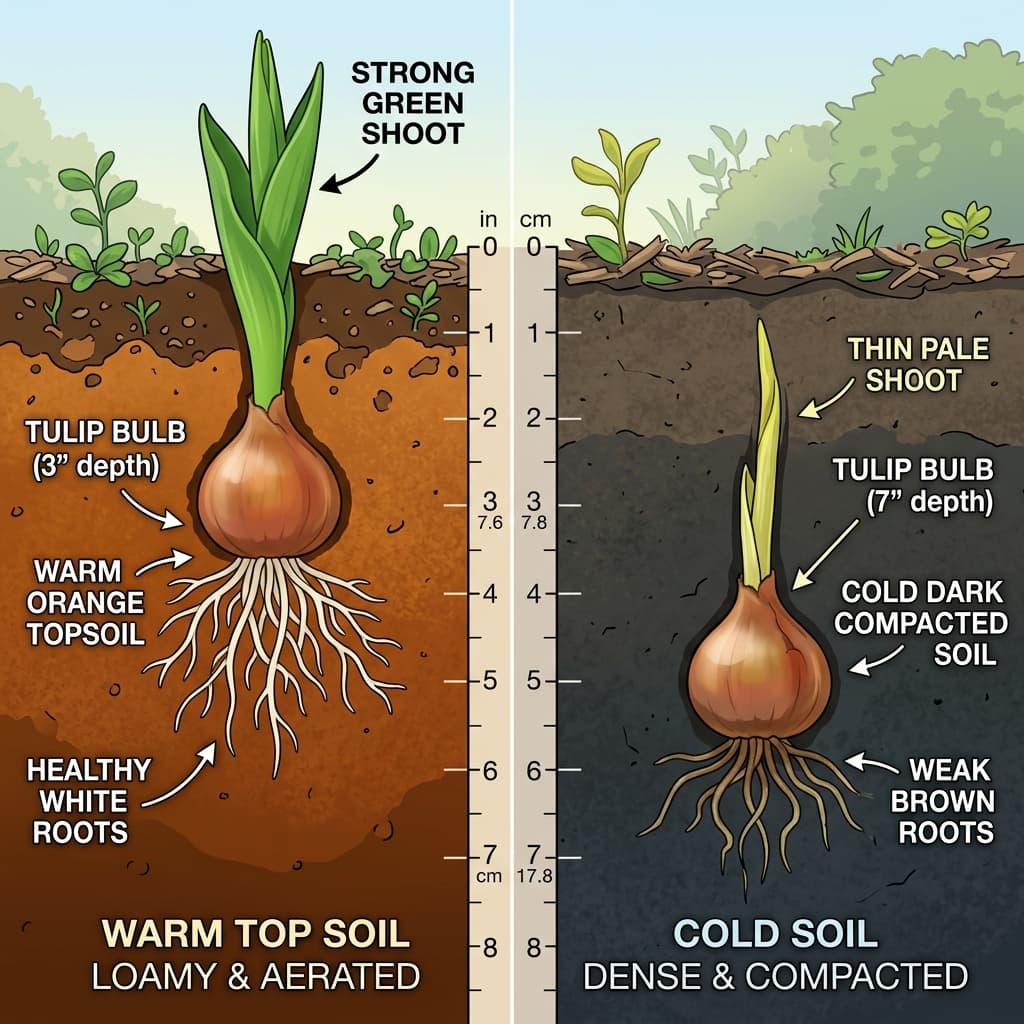
Spring bulbs use soil temperature as their wake-up call. Their internal chemistry — the enzyme cascades that convert stored starch into the energy needed for shoot growth — activates at around 50°F (10°C). In shallow soil, bulbs cross that threshold weeks ahead of deeply buried ones.
Those extra weeks matter. A bulb that wakes up earlier has more time to build root mass before investing energy in the shoot. The result is a thicker, more energetic stem with more nutrient reserves already loaded into the flower bud before it ever breaks ground.
Shorter Journey = Stronger Stem
When a bulb is buried deep, every inch of stem it grows underground before reaching light is energy spent — energy that isn't going into the flower. A bulb planted 6 inches down must produce 4–5 inches of etiolated, unsupported stem before it ever sees the sun.
That underground stem has no photosynthesis to fuel it. It's running entirely on the bulb's stored reserves. By the time it emerges, those reserves are partially depleted, and the remaining energy budget for the flower is smaller.
| Factor | 🌱 Shallow Planting (1.5×) | ⬇️ Deep Planting (3×) |
|---|---|---|
| Soil temp in March | 50–58°F — at threshold | 38–44°F — still dormant |
| Emergence timing | 2–3 weeks earlier | Delayed — misses optimal window |
| Underground stem travel | 1–2 inches (minimal drain) | 4–6 inches (major energy cost) |
| Stem thickness | ✅ Thicker cell walls, sturdier | ❌ Thin, leggy, flops in wind |
| Oxygen in root zone | ✅ Well-aerated topsoil | ❌ Compacted, anaerobic risk |
| Rot / fungal risk | ✅ Lower — drains well | ❌ Higher — cold wet zone |
| Bloom intensity | ✅ More pigment, fuller flower | ❌ Washed-out, smaller head |
The Hidden Factor: Oxygen
Deep soil is not just cold — it's often anaerobic. Water drains through topsoil relatively quickly, but at 5–8 inches, it can pool and stagnate. That saturated zone becomes a breeding ground for the fungal pathogens (primarily Fusarium and Botrytis species) that cause the dreaded "bulb mushy bottom" rot that gardeners blame on "bad bulbs."
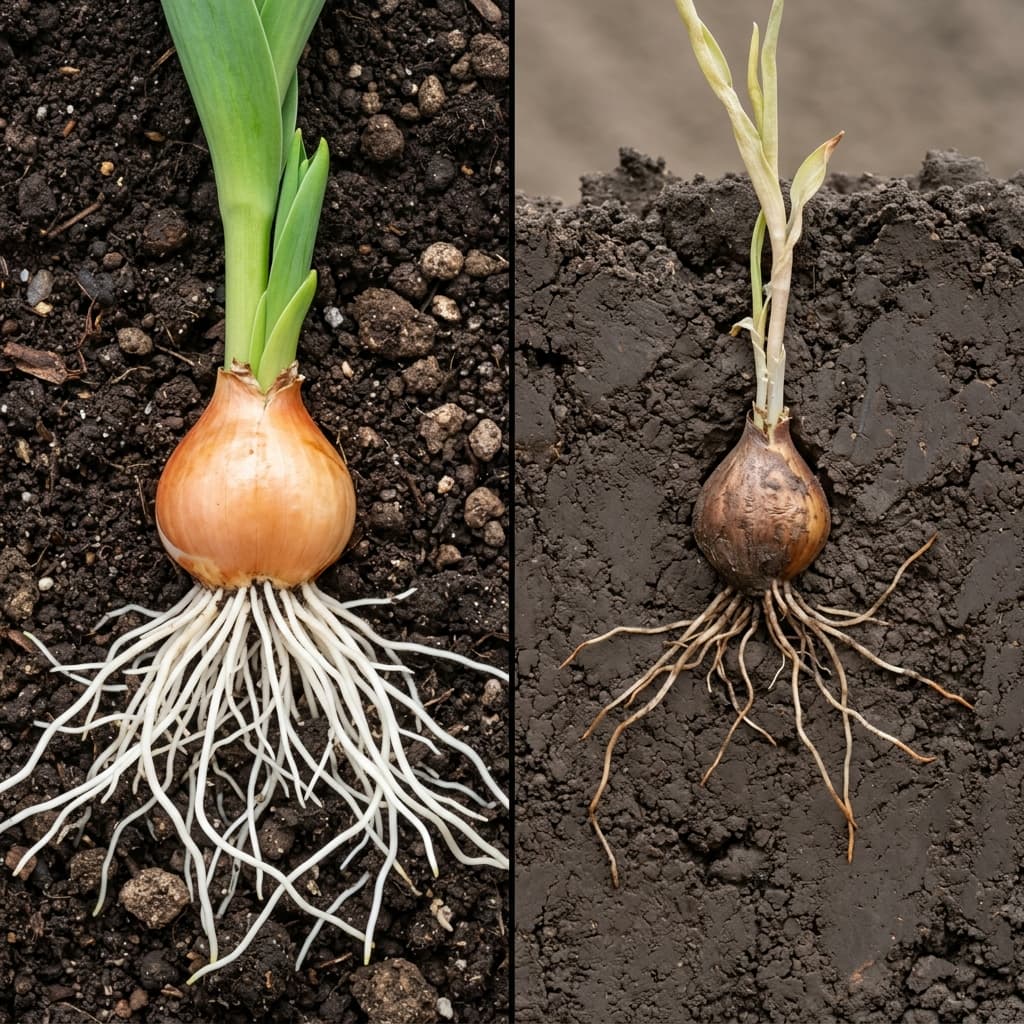
The bulb isn't bad. The depth is. Move it up 3 inches, and the exact same bulb, in the same garden, with the same soil, will survive — and bloom stronger — because it's in an oxygen-rich, well-drained environment instead of a compressed, waterlogged one.
This is particularly relevant in heavier clay soils, which compact significantly at depth. If your garden drains slowly, the case for shallow planting is even stronger. Our guide on understanding soil composition and drainage explains how to assess your specific soil type and amend it before planting.
How to Do It: The Shallow Planting Playbook
Switching to shallow planting is simple — but there's one tradeoff to manage: the top 2–3 inches of soil can get colder during late freeze events. The fix is a nutrient-dense top-dressing that insulates while simultaneously feeding the root zone as it develops.
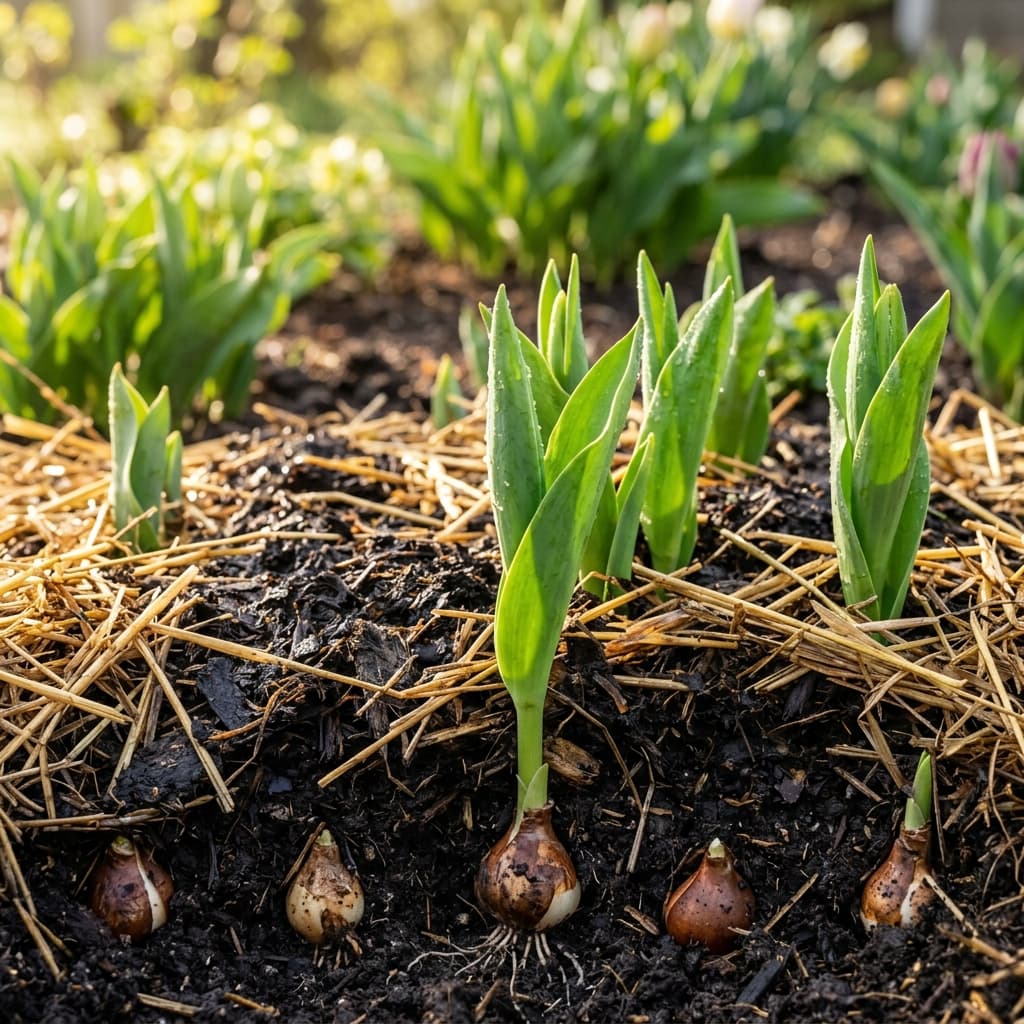
Here's the exact approach:
- Dig your hole at 1.5× the bulb height — not 3×. For a standard tulip (2 inches tall), that's a 3-inch hole.
- Place the bulb pointed-end up with the flat (basal) plate sitting on loose, not compacted soil.
- Backfill with amended topsoil mixed with quality compost — high nutrient density in the immediate root zone makes a measurable difference in first-year bloom size. Our breakdown of what organic amendments actually do to root zone chemistry is worth reading before you choose your mix.
- Apply a 2-inch top-dressing of compost or shredded leaf mulch over the planting area. This insulates against any late spring cold snaps — and as it breaks down, it feeds the roots directly. Think of it as free, slow-release fertilizer sitting right where the bulb needs it. Our guide on using organic matter for soil health explains exactly why this layer matters so much.
- Don't water excessively. Shallow bulbs in amended soil need far less supplemental watering than deeply buried ones. The topsoil zone retains enough moisture from natural rainfall; overwatering a shallow bulb is the one way to undo the rot-prevention advantage you've just created.
🌿 Sprouty's 2026 Climate Note
With spring temperatures running 2–4 weeks warmer than historical averages in most of the US in 2026, shallow planting is now less risky than it has ever been for frost, and more valuable for heat capture. If you've been on the fence about this technique, this is the season to try it. The window between "can plant" and "too warm for bulb dormancy" is tightening — and shallow-planted bulbs are better positioned to beat that window every single time.
Quick Reference: Shallow Planting Depths by Bulb
| Bulb Type | Traditional Depth | Sprouty Shallow Depth | Zones Where Shallow Works |
|---|---|---|---|
| Tulip | 6 in | 3 in + 2 in mulch | 5–9 |
| Daffodil / Narcissus | 6 in | 4 in + 2 in mulch | 4–9 |
| Hyacinth | 6 in | 3.5 in + 2 in mulch | 5–9 |
| Crocus | 3–4 in | 2 in + 1 in mulch | 3–9 |
| Allium | 8 in | 5 in + 2 in mulch | 4–9 |
| Muscari (Grape Hyacinth) | 3 in | 2 in + 1 in mulch | 3–9 |
Already planning your spring planting list? Our roundup of the 10 best plants to grow in spring pairs perfectly with this technique — several of the bulb varieties covered there will bloom dramatically better with a shallow-first approach.
🌿 Sprouty's Bottom Line
The "bury it deep" rule was written for a different era of gardening, in colder zones, without the benefit of compost top-dressing as a frost buffer. In most gardens today, deep planting keeps bulbs cold, oxygen-starved, and energy-depleted before they've even started growing. Shallow planting — with a good mulch layer on top — gives you warmth, drainage, aeration, and a shorter journey to the light. That combination doesn't just protect your bulbs. It unlocks everything they were capable of producing all along.
Want to build the strongest possible soil foundation under your bulbs? Start with Sprouty's guide to soil pH and structure, and our deep-dive into why organic mulch is the most underrated tool in the garden.