
Plant it this week — by around October 20 at the latest. The amaryllis bulb sold for the holidays is botanically Hippeastrum, and unlike tulips or daffodils it needs no chilling period at all (Penn State Extension). Most varieties bloom 6 to 8 weeks after planting — 6 to 12 weeks depending on the variety (Penn State Extension) — so a bulb potted this week is on schedule for Christmas, while one planted in late November will open in January. The University of Georgia recommends planting in early October for winter forcing (UGA Extension), and the deadline math is honest: choose a variety marked early or holiday-forcing, pot it now, and give it warmth and light.
Sophie almost missed the window last year. The bulb sat in its box on the counter through Thanksgiving, and the "Christmas" blooms arrived for Valentine's Day. This year the pot is already on the sill. Sprouty has opinions about the pot:
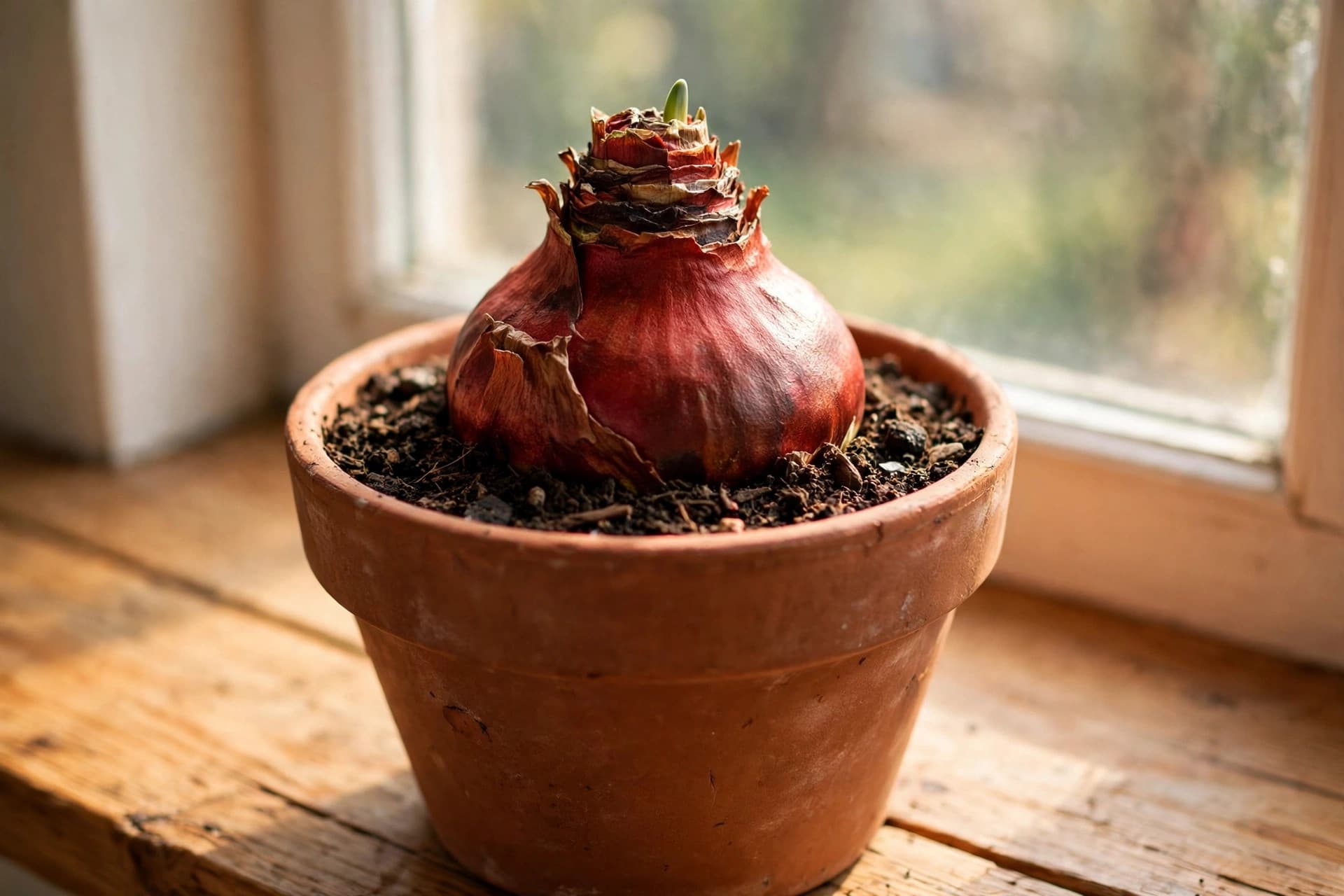
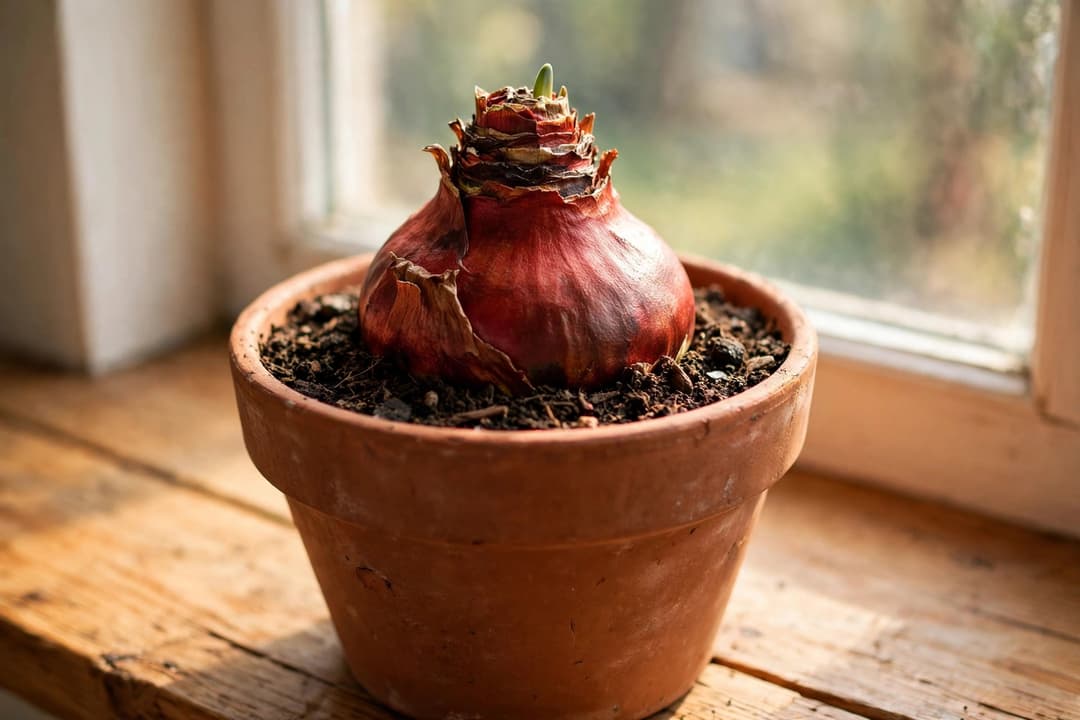
Sophie: (Potting the bulb, leaving the top third exposed) "Six weeks of patience and you'll be the centerpiece, big guy."
Sprouty: (Inspecting the pot, arms folded) "One inch wider than the bulb, Sophie. Not the mansion pot. It likes being snug."
🧅 On-Screen Lesson: Amaryllis needs no chilling period. Pot it snug, top third exposed, and plant now for Christmas blooms.
Why amaryllis cheats the system
Forcing spring bulbs is a long game: tulips and daffodils need 15 to 17 weeks of chilling at 40–45°F before they will flower — that is why tulip-forcing is a project you start in September (Penn State Extension). Amaryllis (Hippeastrum spp.) and paperwhite narcissus are the two common exceptions: the chilling requirement is none. That single row in the extension tables is why amaryllis is the easiest holiday bloom — you are skipping three months of refrigerator management that tulips demand.
One botanical precision note, because the label lies a little: what the garden center sells as "amaryllis" is Hippeastrum, the genus extension tables list (Penn State Extension). The name sticks because it has been the holiday bulb for generations — care for it as Hippeastrum and the advice all lines up.
Plant it right this week
Start with the bulb: buy large, firm, unblemished bulbs — withered or damaged bulbs bloom poorly, and larger bulbs produce the largest, most attractive flowers (Penn State Extension). The University of Illinois adds the shopper's version: the biggest bulbs have the most blooms — you pay for what you get (Illinois Extension).
Potting, per Penn State: choose a pot one inch wider than the widest part of the bulb and twice as tall — a slightly pot-bound bulb blooms better. Fill halfway with fresh potting soil, set the bulb in so the top sits slightly above the pot's edge, and add soil around it so one-third to one-half of the bulb stays visible. Keeping the top uncovered helps prevent fungal disease. Water thoroughly at planting, then water only when the soil feels dry — about once a week (Penn State Extension). Illinois Extension gives the same check: water well at planting, then only when the top 2 inches of soil feel dry (Illinois Extension). A heavy pot with drainage holes matters — the flower stalk gets top-heavy.
The University of Georgia's timing note is worth heeding: "Optimally, planting in early October or late summer is recommended" — and for indoor forcing, pot up bulbs in fall for winter bloom (UGA Extension). This week is the window; late November planting is January flowers.
The Christmas countdown
Set the pot in a warm, sunny window to stimulate growth and rotate it occasionally so the stalk does not lean lopsided toward the light (Illinois Extension). Warmer rooms move things faster; typical bloom time is 6 to 8 weeks, stretching to 12 for some varieties (Penn State Extension).
When the buds start to open, make one move: take the pot out of direct sunlight and away from heat sources. That single change prolongs the flowering, which otherwise lasts a few weeks (Penn State Extension; Illinois Extension). If the stalk looks weak or spindly, it usually wants more sunlight or less water.
After the holidays: make it bloom again
Do not toss the bulb in January. When flowering finishes, remove the flower stalk but not the leaves — "the plants need the leaves for photosynthesis to produce next year's blooms" (UGA Extension). Treat it as a houseplant in a sunny, warm spot; the University of Missouri's guidance is to cut the flowers to prevent seed formation, keep it sunny and warm, and fertilize monthly through the summer to rebuild the bulb (MU Extension). UGA suggests a low-nitrogen fertilizer when new growth begins, again when stalks reach 6–8 inches, and right after flowering (UGA Extension).
Bring it indoors before the first frost, then withhold water and store it cool and dark until the foliage dries completely — the bulb needs about eight weeks of dormancy before it will rebloom (MU Extension). In mild climates (the Southeast and similar), amaryllis can also live in the garden year-round in amended, well-drained beds, where established bulbs can flower for decades (UGA Extension).
Quick answers
Do amaryllis bulbs need chilling? No — unlike tulips and daffodils, amaryllis (Hippeastrum) requires no chilling period (Penn State Extension).
How long from planting to bloom? Typically 6 to 8 weeks; some varieties take up to 12, so plant early varieties this week for a Christmas target (Penn State Extension).
Why is my amaryllis all leaves and no flowers? Usually light or bulb energy: give it a warm, sunny window, rotate the pot, buy large firm bulbs, and let the leaves rebuild the bulb after flowering (Illinois Extension; UGA Extension).