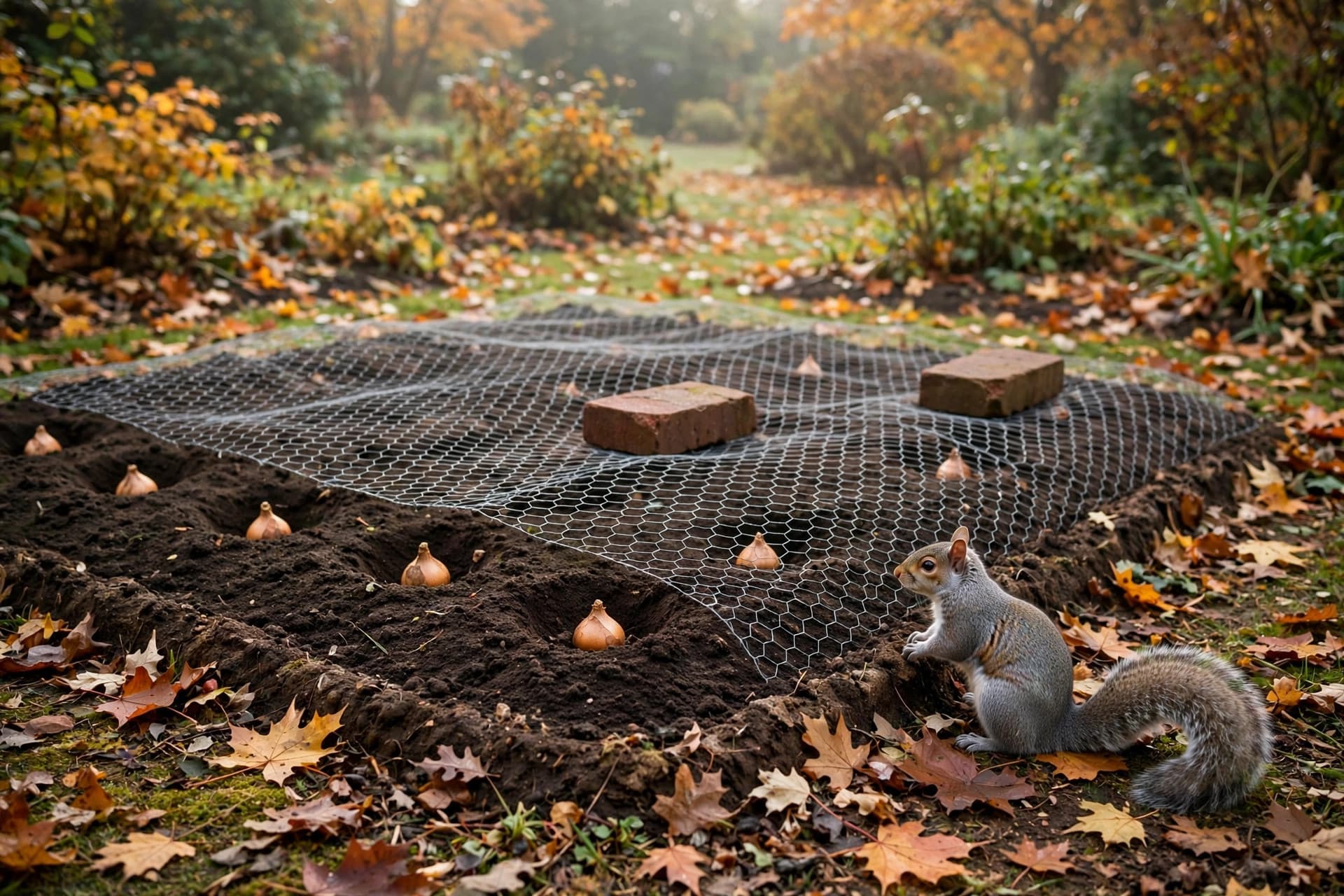

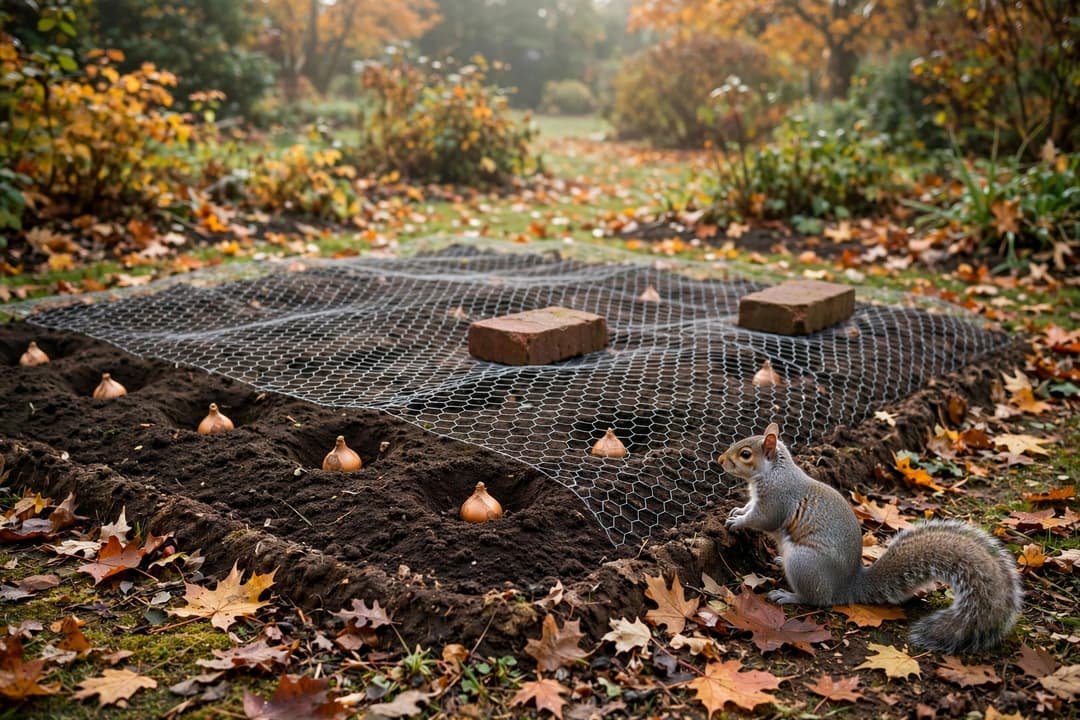
Lay chicken wire over the bed. That is the short answer: Iowa State University Extension calls covering the planting area with a piece of chicken wire or hardware cloth the best way to keep squirrels from digging up tulips and other spring bulbs (ISU Yard and Garden). Pair the wire with proper depth — tulip bulbs planted 6 to 8 inches deep, soil firmed over them and watered in — and the dig gets hard enough that most squirrels give up and move on (same guide).
Why squirrels find your bulbs so fast
You bury a bulb; a squirrel un-buries it. The giveaway is the soil itself: freshly worked, loose earth tells every curious squirrel in the neighborhood that something changed down there. That is exactly why Iowa State Extension's advice starts with firming the soil over your bulbs as you backfill — not just dropping them in the hole and walking away (ISU Yard and Garden). The planting is the invitation, and the disturbed soil is the envelope it arrives in.
Step 1: Plant deep, firm it, water it in
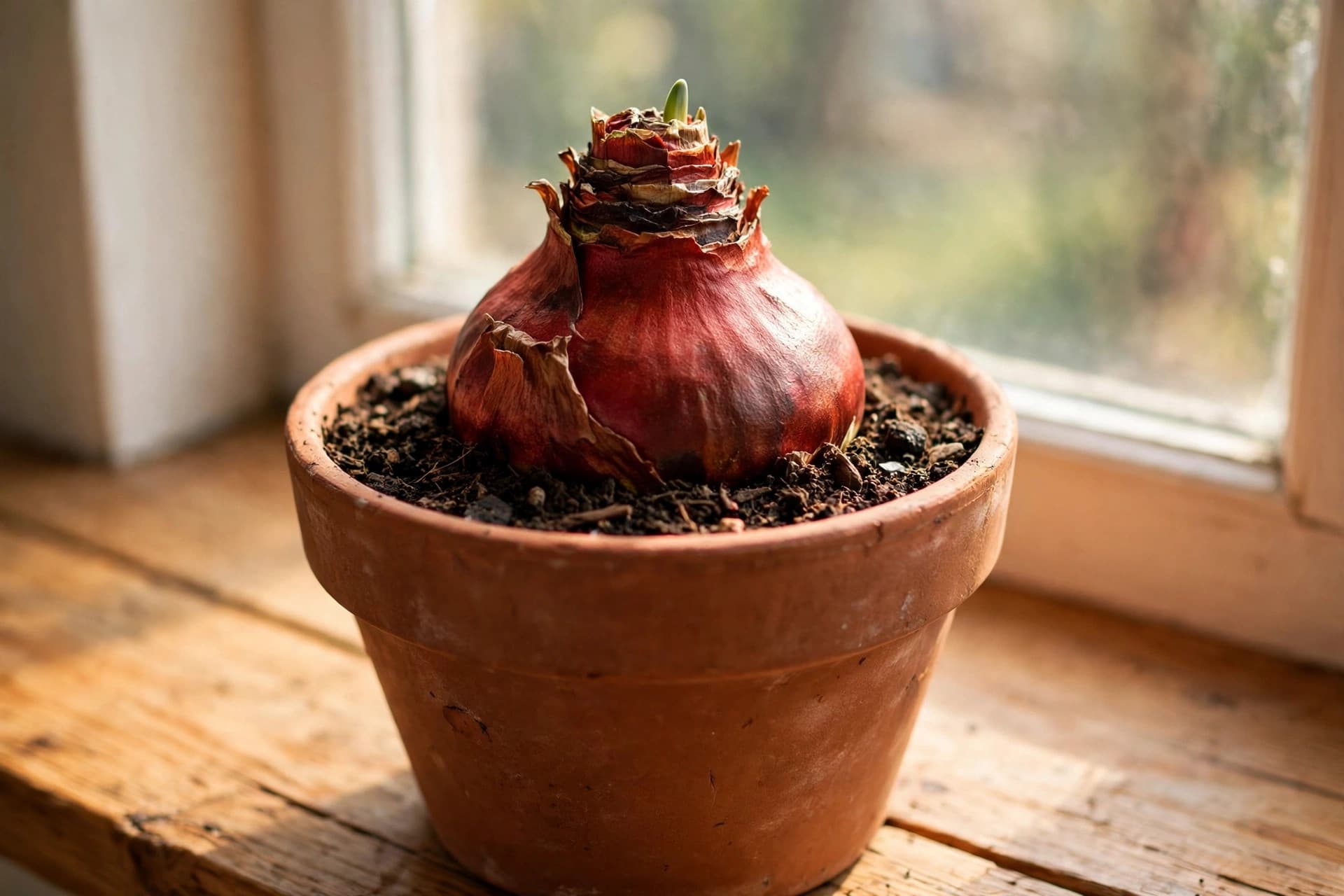
Plant tulips, daffodils, and hyacinths 6 to 8 inches deep — roughly three to four times the bulb's maximum diameter — and tuck smaller bulbs like crocuses at 3 to 4 inches (ISU Yard and Garden). As you place soil over the bulbs, press it down firmly with your hands, then water the area to settle everything in place (ISU Yard and Garden). Shallow bulbs sitting in fluffy, loose soil are the easiest score in the garden — depth and a firm, watered-in bed make the excavation meaningfully harder. But Iowa State is candid: depth and firming help, yet the wire covering is still the best defense.
Step 2: The chicken-wire blanket — the best defense
After planting, cut a piece of chicken wire or hardware cloth big enough to cover the entire planting area and lay it flat over the soil. Weigh it down with bricks or other heavy objects so a persistent squirrel cannot nose under the edges, then hide it under a thin layer of mulch if the look bothers you (ISU Yard and Garden). This is a winter-long installation: leave it in place all season, then promptly remove it in early spring before the tulip foliage begins to emerge (same guide) — spring shoots will try to push straight through the mesh, and untangling leaves from wire is a chore nobody needs.
Step 3: In the worst beds, plant what squirrels won't eat
Daffodils (Narcissus) come with built-in armor. Their bulbs contain lycorine, a bitter, toxic alkaloid — Ohio State University notes that these are the very compounds that teach wild animals such as deer to leave daffodils and amaryllis alone (Ohio State University). Plant daffodils 6 to 8 inches deep just like tulips (ISU Yard and Garden). One honest caveat, though: daffodils do not cast a force field over neighboring tulips. In the beds where squirrels are truly relentless, the winning move is planting daffodils instead of tulips — not beside them, hoping for a shield.
The good news: you're planting at exactly the right time
October is the ideal time to plant spring-flowering bulbs like tulips — roots establish and develop well before winter — and the guide was updated by Iowa State in 2026 (ISU All About Tulips). Running late? As long as the ground isn't frozen, procrastinators can plant tulip bulbs as late as December (same guide). So the window is open right now: plant this weekend, wire the beds the same day, and spring's color is protected before the squirrels file their first report.
Quick answers
Will the bulbs grow through the chicken wire? They'll try — which is why Iowa State says to remove the wire promptly in early spring before the foliage emerges (ISU Yard and Garden). Don't leave it on into the growing season.
Do I need to wire over daffodils too? Probably not. Squirrels generally leave daffodils alone thanks to the bitter lycorine in the bulbs (Ohio State University). Save the wire for tulips (Tulipa) and other tempting bulbs.
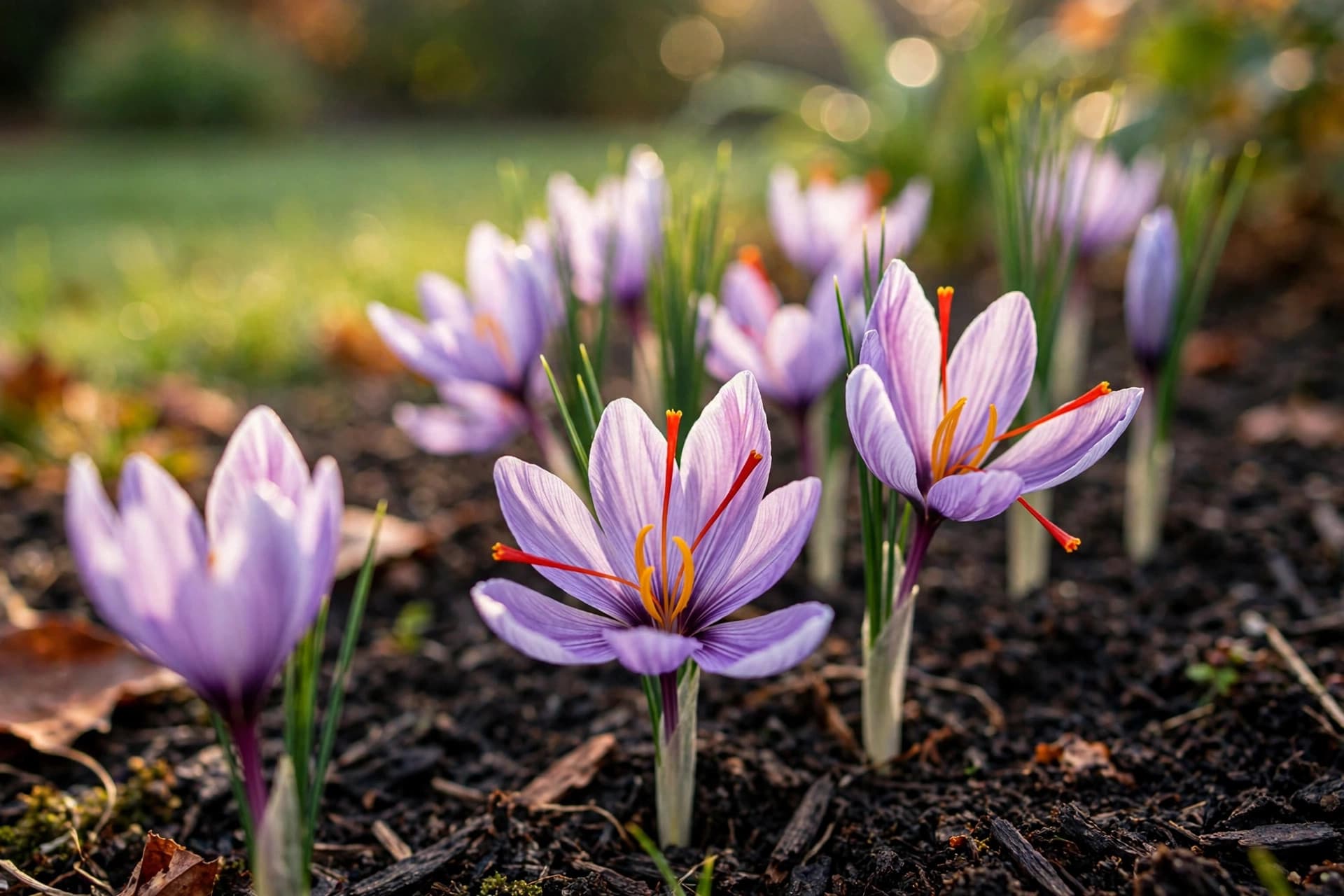
What about crocuses? Treat them like tulips — same planting session, same wire blanket. Iowa State's guidance covers tulips "and other bulbs," and crocuses are classic squirrel targets.
Keep reading
Bulbs have strong opinions about depth: shallow planting gives you weaker blooms — the same 6-to-8-inch rule that foils squirrels also grows stronger flowers. And if you're planting California natives this fall, wait for the first rains, or they'll rot.
Wire the beds this weekend — then tell us: which bulbs are the squirrels after in your garden?