
Short answer: your plant is most likely acclimating, not dying. When you bring a houseplant back indoors ahead of chilly weather, losing some foliage is perfectly normal and no reason to panic (K-State Research and Extension). Outside on a patio, porch, or deck, your plant soaked up bright natural light and built dense foliage tailored for high outdoor energy. Moving inside brings a steep drop in light levels. In response, the plant triggers a natural reset: it drops outdoor leaves it can no longer support and shifts energy into low-light survival. The reassuring clue is new growth: if stems stay firm and fresh green shoots emerge at the tips, your plant is simply acclimating to its indoor home.
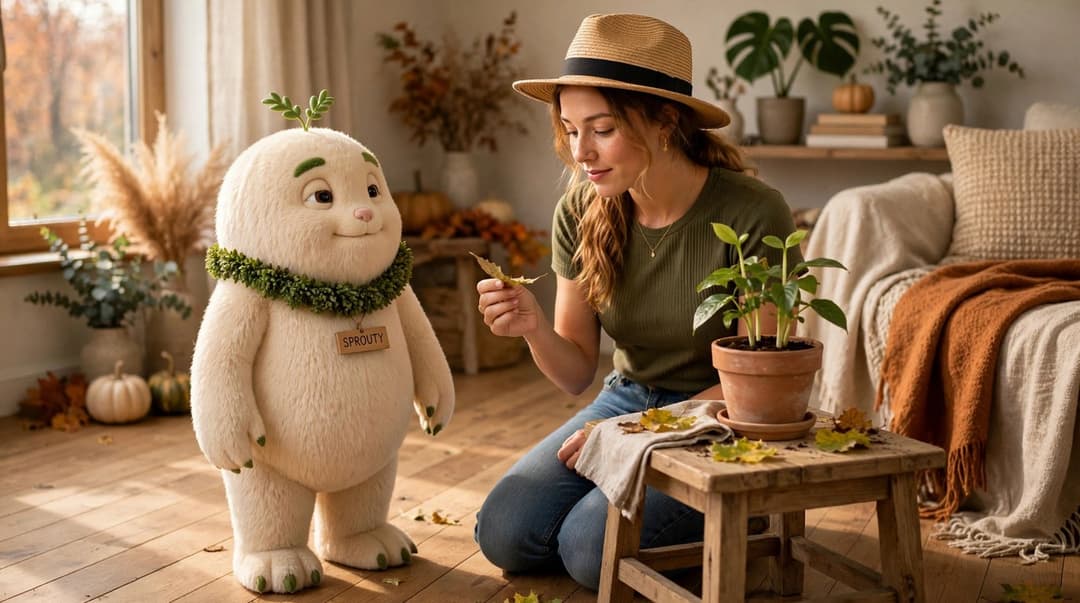
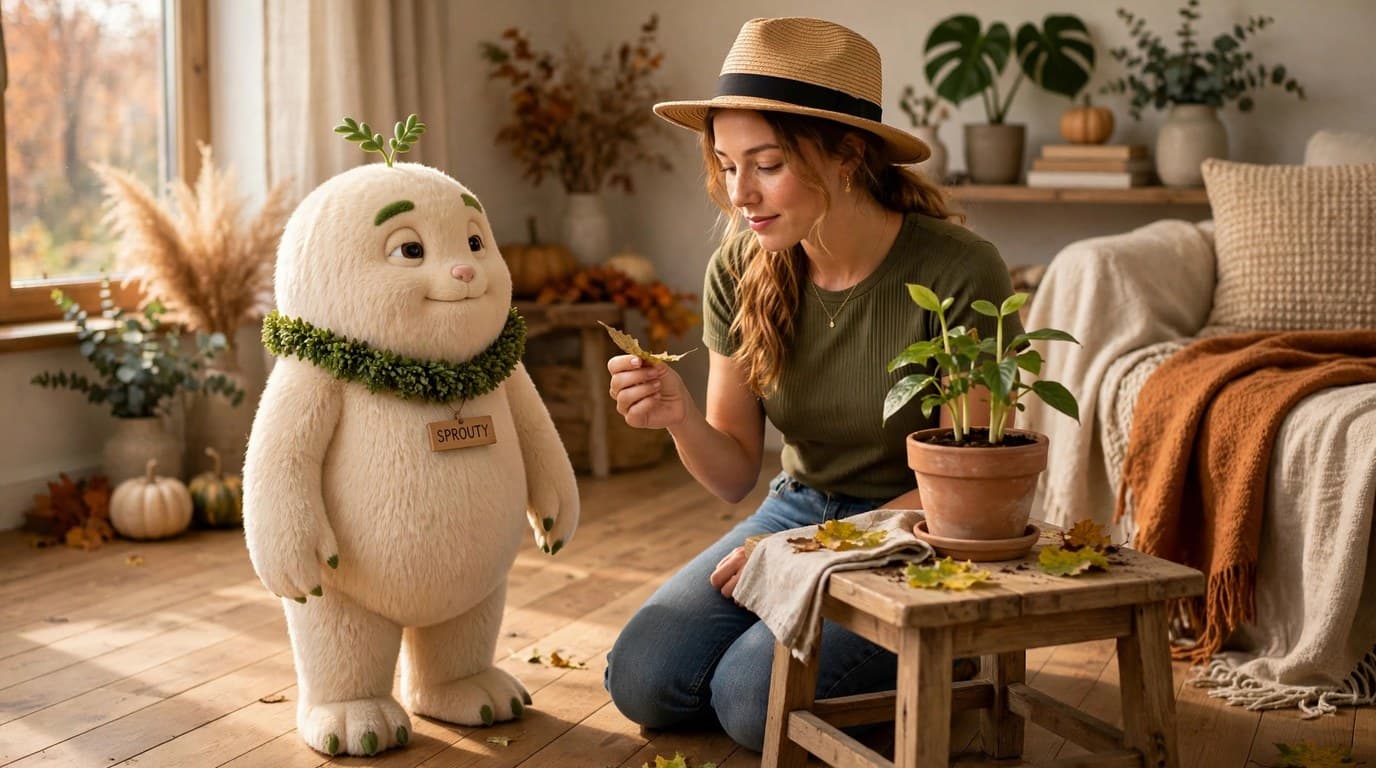
Watch Sophie & Sprouty Decode the Leaf Drop
Sophie panics over a yellow carpet of leaves on the floor. Sprouty spots the secret shoots that prove the plant is just resetting.
Sun leaves vs. shade leaves: what's actually happening
To understand why houseplants shed when brought inside, we have to look at leaf anatomy. A leaf is an energy-producing organ whose internal structure mirrors the light intensity of its environment. When tropical plants bask outside during summer, they build what botanists call sun leaves.
Horticultural research conducted in Florida in the late 1970s revealed that tropical foliage grown under high light conditions differs fundamentally from foliage grown under low indoor light, as documented by K-State Research and Extension. Sun leaves are thick, small, and numerous. Because outdoor sunlight is abundant, they contain less total chlorophyll, and what chlorophyll is present sits buried deep within internal cell layers to prevent light overload while harvesting energy across a dense canopy.
Move that plant indoors for autumn, and the lighting changes abruptly. Rooms lit by standard windows provide only a fraction of outdoor daylight. In this dim environment, thick sun leaves become an energy drain: they burn more stored carbohydrates through ongoing respiration than they can generate through indoor photosynthesis. The plant cannot afford to maintain foliage that costs more energy than it produces.
To survive, the plant undergoes acclimatization. As extension horticulturists at the Cottonwood Extension District explain, when forced to adjust rapidly to low light, the plant drops its outdoor sun leaves and constructs a new canopy of shade leaves. Shade leaves are thinner, broader, and fewer in number, with chlorophyll concentrated near the leaf surface to capture every available photon indoors. When you see older leaves dropping while fresh shoots unfurl, you are seeing this canopy exchange in real time.
What to do right now
When you see fallen leaves around the pot, your main goal is to reduce environmental stress so the plant can rebuild smoothly. Follow these key steps:
- Give it the brightest spot you have, then settle it to its usual place. Avoid moving a plant straight from bright patio sun into a dim corner. Place it in your brightest indoor window — such as an unobstructed south- or east-facing exposure. Starting the adjustment about a week before the move helps: University of Illinois Extension recommends moving plants to increasingly shadier areas so they begin acclimating to indoor light levels before coming inside. Once indoors, give the plant a week or so in its brightest window before settling it to its usual spot.
- Do not repot or fertilize now. Seeing yellow leaves often prompts plant owners to repot or fertilize, but both actions cause harm right now. Repotting disturbs root hairs and adds transplant stress when the plant is already adjusting its canopy. Fertilizer introduces mineral salts that resting roots cannot absorb, risking root burn. Leave the root ball undisturbed and let the plant focus on adapting above the soil line.
- Check for hitchhiking pests before and after the move. Outside, rain, wind, and beneficial predators keep pest numbers down. Inside dry, heated rooms, pests like spider mites, scale, and mealybugs can rapidly multiply. Check leaf undersides and stem joints under good light. Wipe leaves clean or rinse them with lukewarm water, and isolate the returning plant from other houseplants for the first two weeks.
- Be patient — a few weeks of adjustment is normal. Acclimatization is a gradual process. Expect older interior leaves to yellow and drop over a few weeks. As long as the shedding is limited to older growth and you see crisp new shoots developing, your plant is adapting on schedule. Clear away fallen leaves and give the plant time to finish adjusting.
What NOT to do
When leaves fall, hasty human reactions often cause far more harm than lower indoor light. Avoid these four common missteps:
- Do not overwater to “compensate” for leaf drop. Seeing leaves drop tempts many growers to water more frequently. In lower light, however, plant metabolism slows and roots absorb water much more slowly. Overwatering is the number one winter houseplant killer; as Montana State University Extension notes, indoor plants generally need about half as much water in winter as they do in summer. Always check that the top soil has dried before watering, and never let pots sit in standing saucer water.
- Do not assume EVERY dropped leaf is acclimation. Acclimation is the primary cause only when the plant is otherwise healthy and pushing new growth. If defoliation continues past a few weeks, if tender new growth yellows or blackens, or if stems feel soft and mushy, something else is wrong. The Memphis Area Master Gardeners emphasize that persistent leaf drop warrants checking for root rot, fungal disease, or hidden pests rather than assuming harmless seasonal adjustment.
- Do not park it next to heat vents or drafty windows. Bringing plants inside protects them from freezing temperatures, but setting a pot in line with a forced-air heat vent quickly scorches foliage with dry air. Placing plants next to drafty exterior doors or unsealed windows causes chilling root stress. Extension guidance from the Memphis Area Master Gardeners stresses keeping houseplants away from cold drafts and direct heating registers.
- Do not fertilize in winter. Shorter days and cool indoor temperatures naturally slow houseplant growth. As University of Illinois Extension notes, plants grow slower indoors and need less water and fertilizer — allow the soil to dry slightly between waterings. Adding fertilizer while roots are inactive causes unused salts to build up in the soil, damaging roots and causing additional leaf drop. Hold off on feeding until active spring growth returns.
🌱 Sprouty's script
“Why is my houseplant dropping leaves?” … “Indoor light is lower. Old leaves drop. See those new shoots?” … “Oh, I see the shoots!”
Quick answers
How long does the leaf drop last?
For most tropical houseplants, acclimation leaf drop usually lasts a few weeks. During this window, the plant discards inefficient sun leaves and shifts resources into indoor-adapted foliage. If leaf loss continues steadily past a few weeks or if no new shoots appear, check for overwatering, dry air, cold drafts, or pests.
My plant dropped ALL its leaves — is it dead?
Not necessarily! Species like weeping figs (Ficus benjamina) often drop nearly all their leaves after a move yet remain alive. Perform a quick scratch test: gently scrape a small fleck of outer bark on a main branch with your thumbnail. If the cambium layer underneath is green and moist, the plant is alive. Keep it in bright indirect light, water only when the top soil dries, and watch for buds to break. If the branch snaps brittle and is dry and brown inside all the way down, that branch has died.
Should I cut off the yellow leaves?
You can remove loose, fully yellow leaves, but avoid pulling leaves that are still firmly attached. During acclimation, the plant actively pulls mobile nutrients out of fading sun leaves to nourish new shoots. Once this transfer finishes, the plant forms a clean abscission layer at the stem base, and the leaf will drop away easily with a light touch.
Will a grow light stop the drop?
A full-spectrum LED grow light helps reduce leaf drop by closing the gap between outdoor and indoor light levels. While supplemental lighting provides helpful energy, it may not eliminate all shedding if the plant experienced a sudden move or dry indoor air. Providing daily supplemental grow light helps high-light houseplants retain more leaves and push vigorous indoor growth.
If your plant's leaf drop doesn't match seasonal acclimation, check our yellow leaf diagnostic checklist to identify root rot, lighting issues, or watering errors before damage spreads. Looking for greenery that handles indoor shifts smoothly? Explore our trending houseplants care guide. And if unwanted hitchhikers are behind the leaf drop, follow our guide on how to actually eliminate thrips and indoor pests once and for all.