
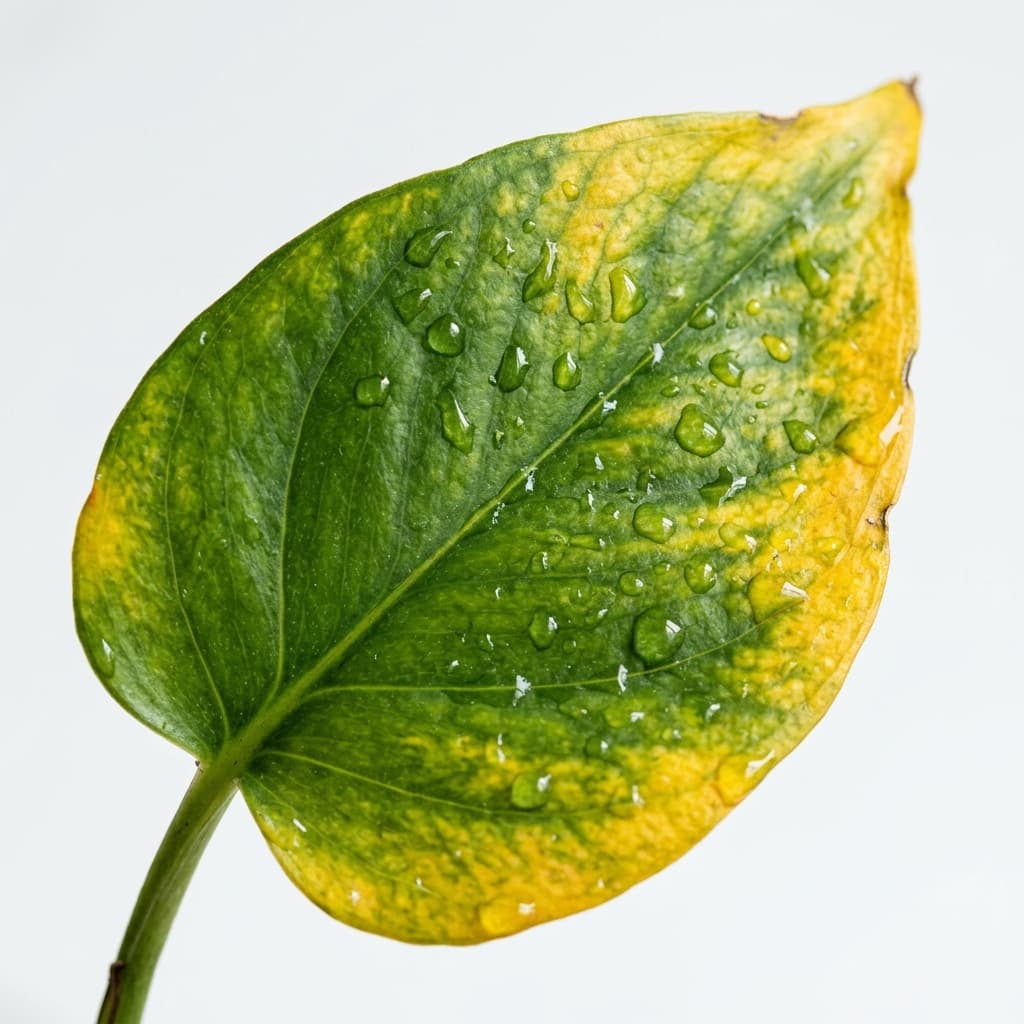
Yellow leaves are a symptom, not a diagnosis. Check which leaves are affected, whether the mix is wet or dry, and whether roots or pests show warning signs. One old lower leaf on an otherwise growing plant may be normal; several yellow leaves with soft roots need a different response. Avoid fertilizer until you have narrowed the cause.
Sophie: So the yellow leaf is a question mark, not an answer.
Sprouty: Exactly. One tired old leaf? Probably just retirement. Five yellow leaves sitting in soggy soil? That's a group-chat emergency. This checklist will help you tell the difference.
First: One Old Leaf, or a Developing Problem?
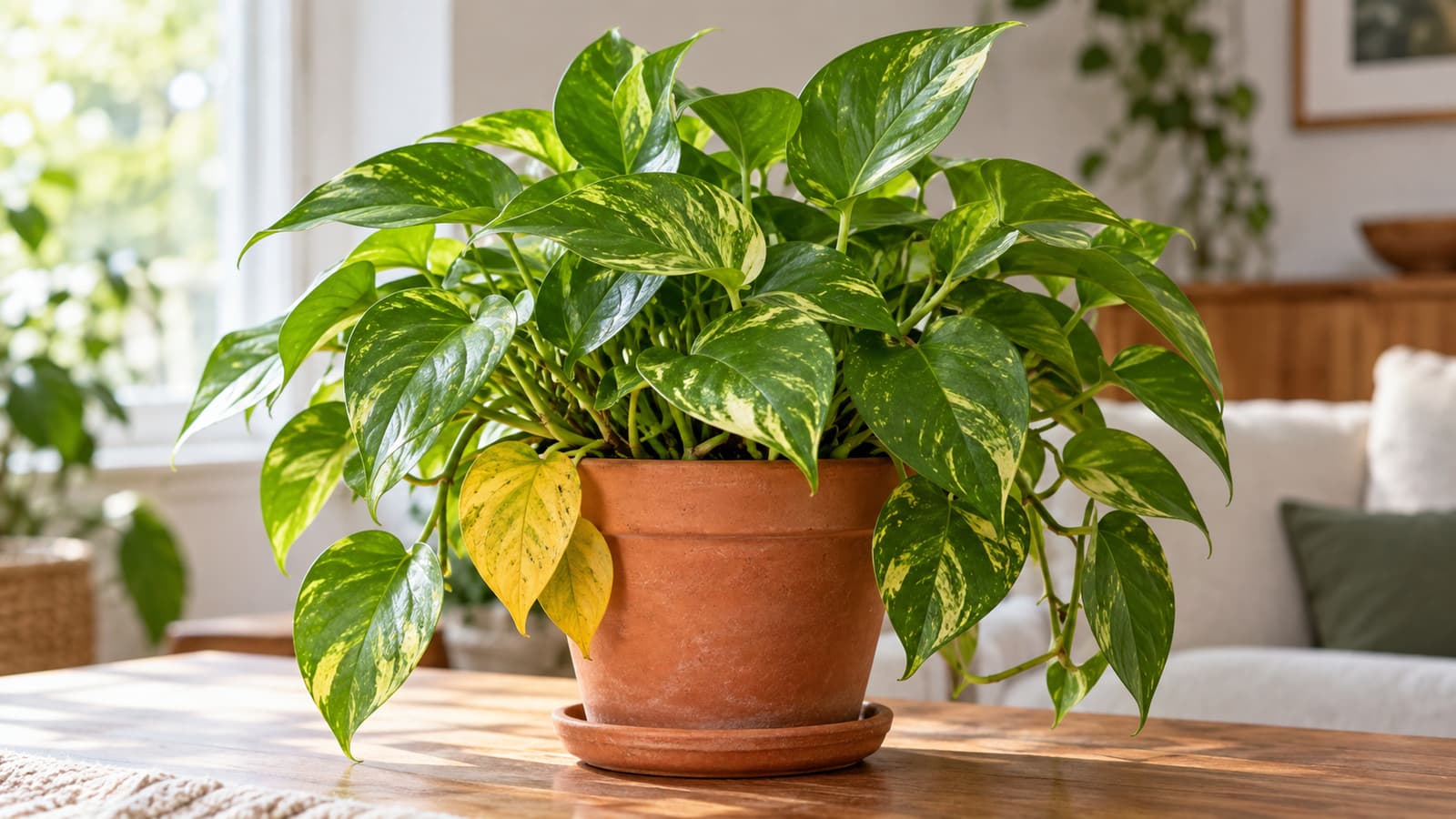
Before you reach for anything, count. If one or two of the oldest, lowest leaves are yellowing while the rest of the plant looks healthy and keeps growing, that is usually normal aging — the plant is retiring leaves it no longer needs. No treatment required, and definitely no fertilizer.
If instead you see several yellow leaves, yellowing that spreads, or yellow leaves plus soft stems, mushy soil, or stalled growth, you have a developing problem. Work through the checklist below, starting with the quickest checks first.
At a Glance: Yellow-Leaf Patterns
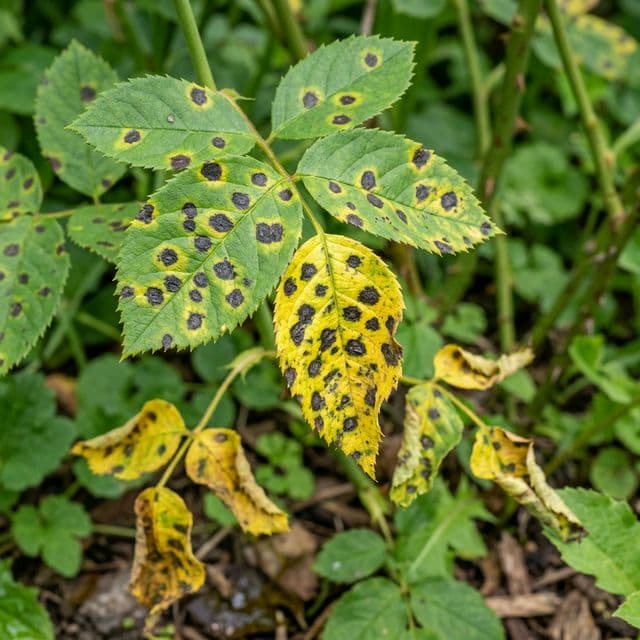
These patterns narrow the possibilities — they don't hand you a diagnosis. Similar yellowing can arise from root stress, nutrient availability, and pests, so always confirm against the soil, the plant's recent history, and a close inspection. (UC IPM's houseplant problem guide makes the same point: overlapping symptoms need checking against growing conditions.)
Note: at the nutrient rows especially, more than one cause can produce the same look — root damage and pH problems can mimic deficiencies. Confirm before supplementing.
Wet or Dry? Check the Mix and the Roots
Water issues are behind most yellowing houseplants — but the fix depends on which direction you've gone wrong, and on the plant.
Overwatering
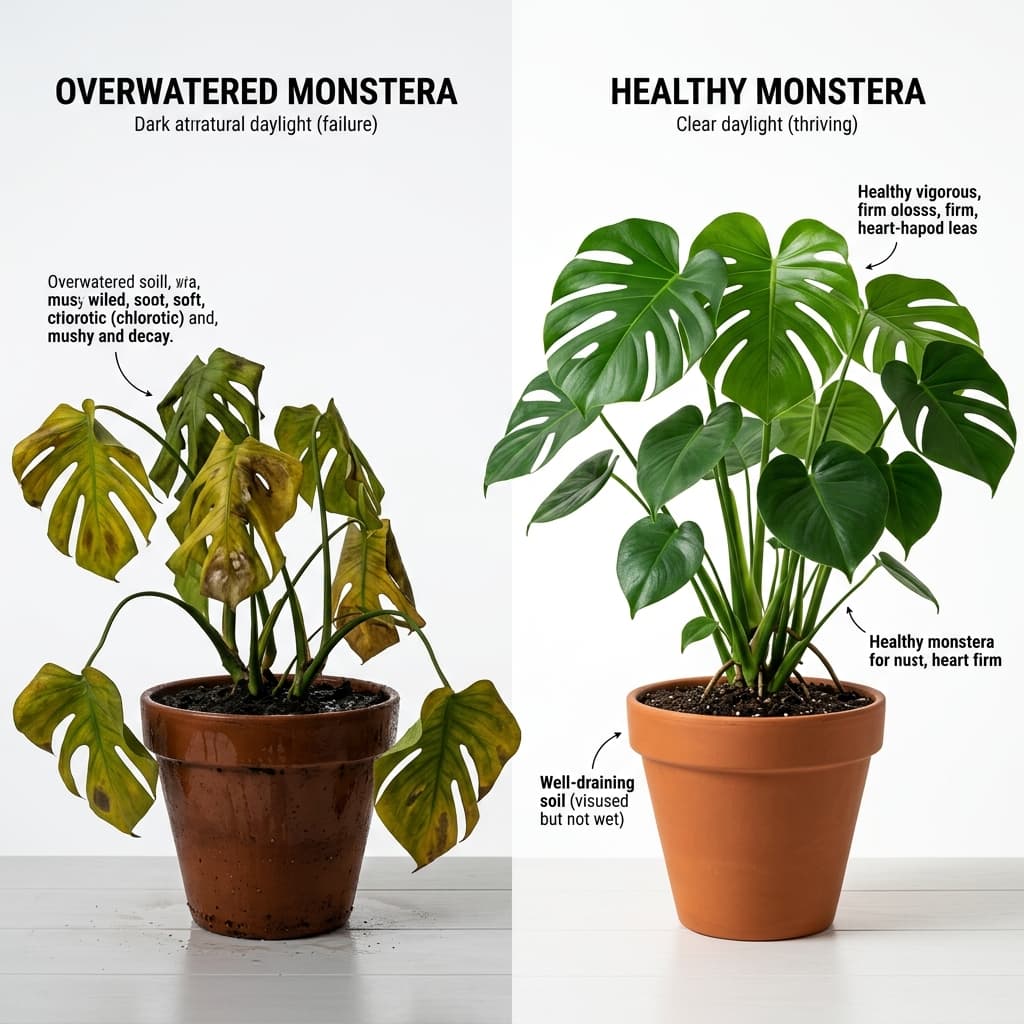
- Signs: Leaves feel soft, mushy, and limp. The soil stays wet for days. You may notice a sour smell from the pot, or dark, mushy roots.
- What to do: Stop watering and let the mix dry down — how far depends on the plant. Succulents and snake plants want a thorough dry-out between waterings; moisture-lovers like calatheas and ferns just need the soggy extreme corrected, not a desert. If you suspect root rot, tip the plant out, trim black or slimy roots with sterilized scissors, and repot in fresh mix with drainage. Snake plants are a classic overwatering casualty — if yours is drooping, see our drooping snake plant guide.
Underwatering
- Signs: Yellow leaves feel crispy and brittle. The soil is dry throughout and may pull away from the pot edges.
- What to do: Water deeply until it flows freely from the drainage hole. If the mix has gone hydrophobic (water beads and runs straight through), soak the whole pot in a basin for about 30 minutes so it can rehydrate.
New Leaves vs. Old Leaves — and Green Veins
Where yellowing starts is a genuine clue — but treat each row below as a lead to confirm, not a verdict. Root damage, pH problems, and more than one deficiency can produce the same look.
The big rule for this whole section: don't fertilize a guess. Adding nutrients before you know what's missing — or whether the real problem is roots, pH, or water — can make things worse. Rule out moisture and root problems first; they're more common and the fixes are simpler.
Light, Temperature, and Recent Changes
Plants are solar-powered, and most popular houseplants are tropical in origin — so light and temperature swings both show up as yellow leaves. Ask what changed recently: a move across the room, a new AC vent, a cold window.
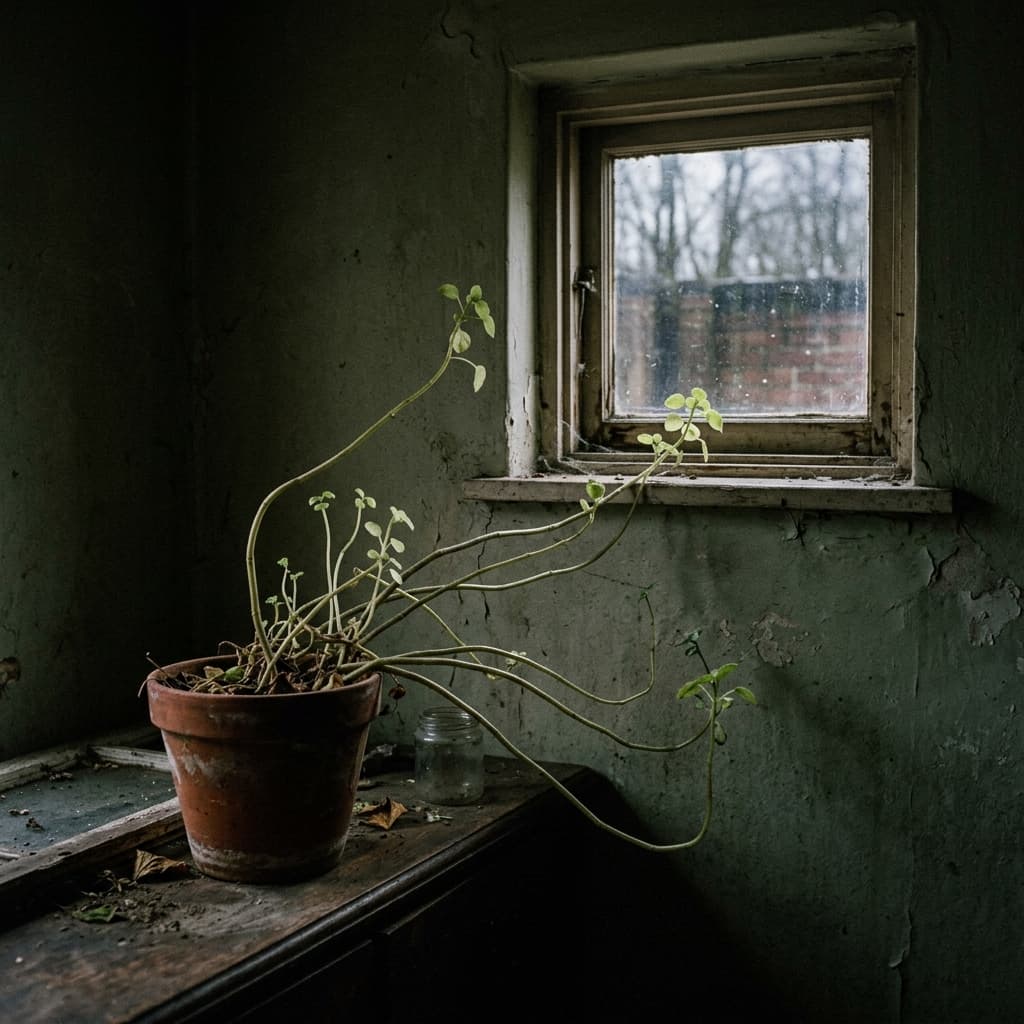
- Too little light: Leggy, stretched growth reaching toward the nearest window, then slow yellowing and leaf drop as the plant conserves energy. Fix: gradually introduce more light, or supplement with a full-spectrum LED grow light.
- Too much direct sun: Bleached, washed-out leaves or crispy yellow-brown burn patches — most common right after moving a plant from indoors to a bright patio. Fix: move it back, or diffuse harsh afternoon sun with a sheer curtain.
- Cold drafts and heat blasts: Sudden cold from a window crack or AC vent, or hot dry air from a radiator, can trigger rapid yellowing and leaf drop in tropical plants. Fix: hold your hand where the plant sits for a minute — feel a breeze, radiator heat, or cold glass? Move the plant.
Inspect for Pests Before You Spray
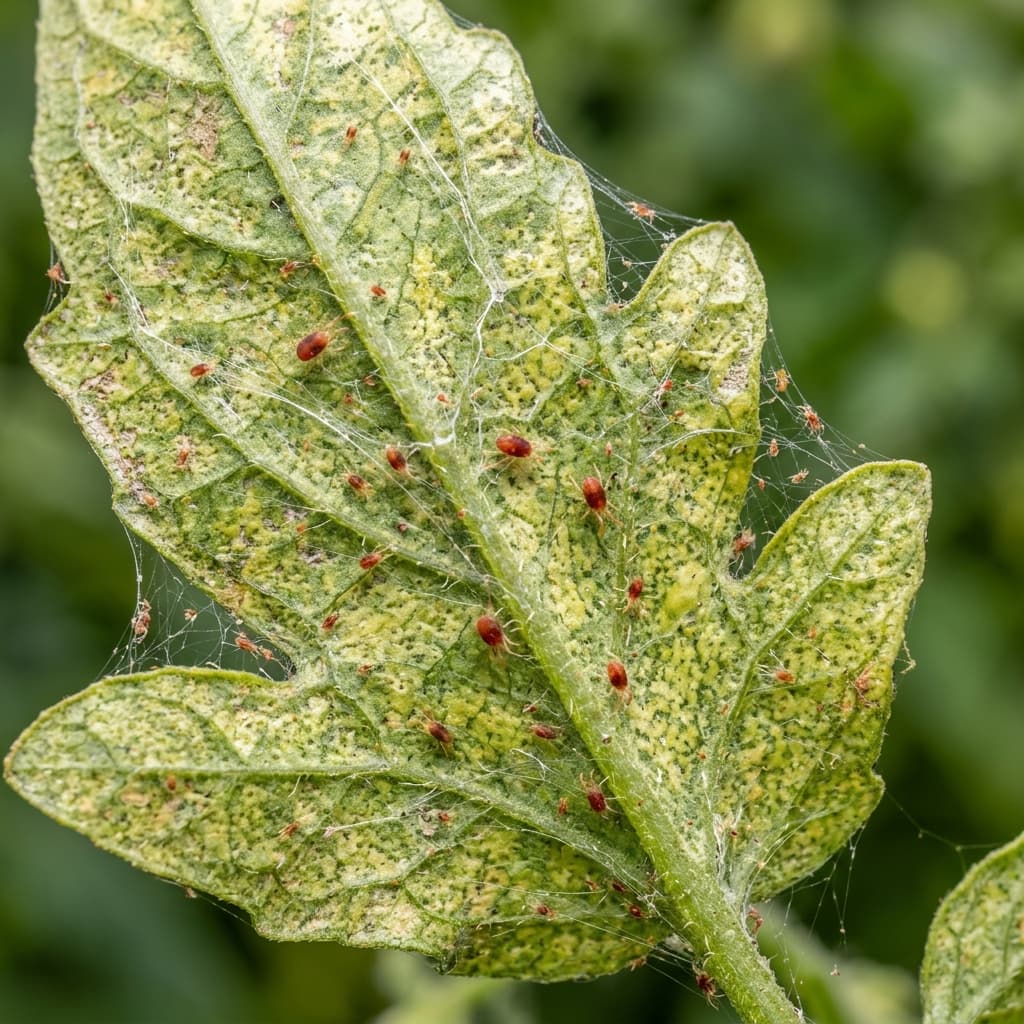
Before assuming a cultural problem, check the undersides of yellowing leaves. Sap-sucking pests drain the plant, causing yellowing, mottling, and stippling — but you need to know which pest before choosing a treatment.
Common sap-sucking pests to check for:
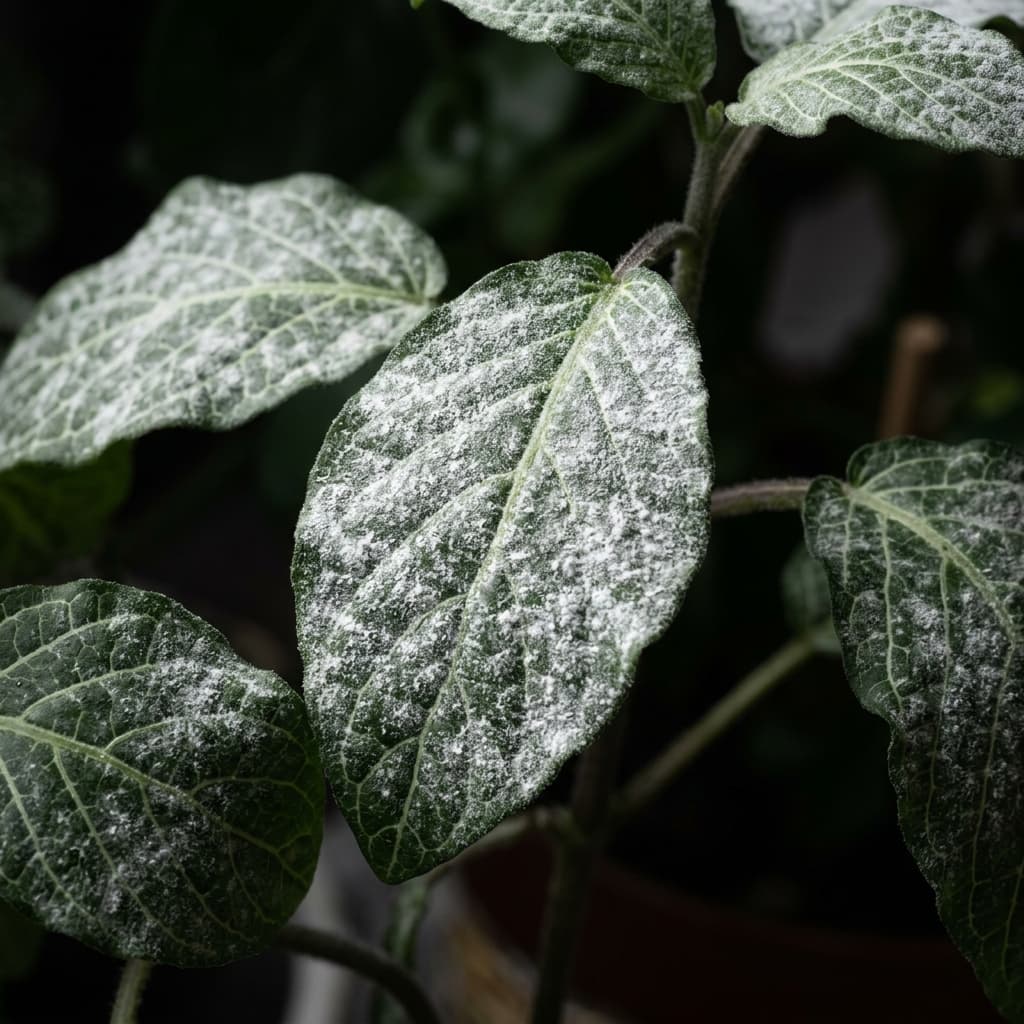
- Spider mites: Tiny reddish or pale dots with fine webbing on leaf undersides; leaves look stippled, silvery, or dusty.
- Aphids: Small pear-shaped bugs clustered on new growth; sticky "honeydew" residue on leaves below.
- Mealybugs: White, cottony clusters in leaf joints and along stems.
- Thrips: Silvery scarring and tiny dark specks; they hide well, so inspect closely — our thrips treatment guide walks through finishing the job.
What to do: Isolate the affected plant first. Then treat for the pest you actually found, following the product label — different pests need different approaches, and there is no one-size schedule. Re-inspect weekly until new growth comes in clean.
Plant-Specific Guides and Realistic Recovery
Some plants have their own quirks worth reading up on: calatheas and prayer plants are dramatic about humidity and water quality, while snake plants would rather be left alone than overwatered.
And a note on expectations: a yellowed leaf will not turn green again. Once chlorophyll is gone from a damaged or aging leaf, that leaf is done — it won't recover its color. Judge your fix by what comes next: healthy new growth is the sign of recovery. Fresh green leaves mean you read the pattern right.
Sprouty's Quick Triage Checklist
Run through these steps before diagnosing any yellow-leaf problem:
- Check the mix — wet or dry? Then interpret it for this plant and this pot.
- Count the damage: one old leaf, or a spreading problem? Where did the yellowing start — old leaves or new?
- Look for green veins on yellow leaves, and check what changed recently — a move, a draft, a new vent.
- Grab a magnifying glass and inspect leaf undersides for webbing, tiny bugs, or white fuzz.
- Only then consider feeding — and only for a confirmed cause, per label directions.
FAQs
Will yellow leaves turn green again?
No. Once a leaf has lost its chlorophyll to damage or aging, it won't regain color. Remove fully dead leaves; judge recovery by healthy new growth, not by old leaves improving.
Should I fertilize a plant with yellow leaves?
Not until you've narrowed the cause. Most yellowing comes from water, roots, light, or pests — fertilizer won't fix those, and the wrong supplement can create new problems. Check moisture, roots, and history first.
Should I cut off the yellow leaves?
Remove leaves that are fully dead or mushy — they can harbor disease. Leave partly-yellow leaves that are still attached; the plant may still be drawing energy from them. Focus your effort on fixing the cause, not pruning the symptom.
Sources
- UC IPM: Houseplant problems — symptom patterns and growing-condition checks.
- University of Maryland Extension: Soil amendments — on Epsom salt and amendment caution.
A yellow leaf asks a question. It doesn't automatically ask for fertilizer. Work the checklist, confirm before you treat, and let new growth tell you when you've got it right.