
Is Your Garden Under Attack? How to Spot & Stop Common Outdoor Plant Diseases
One morning you walk out to your garden and notice something's off — your rose leaves are peppered with dark spots, your plum tree's new growth is curled and puckered, or your citrus looks like someone squeezed every leaf in their fist. Don't panic. These are among the most common plant diseases gardeners face, and with the right diagnosis, almost all of them are very treatable.
This guide covers the most common disease problems affecting outdoor plants right now — with a particular focus on what's actively happening in gardens this season: rose diseases and leaf curl on plums and citrus. We'll show you exactly what each disease looks like, what's causing it, and the most effective organic and conventional treatments.
Rose Diseases: The Big Three
Roses are beautiful but susceptible — they're among the most disease-prone plants in the home garden. Here are the three diseases you're most likely dealing with right now.
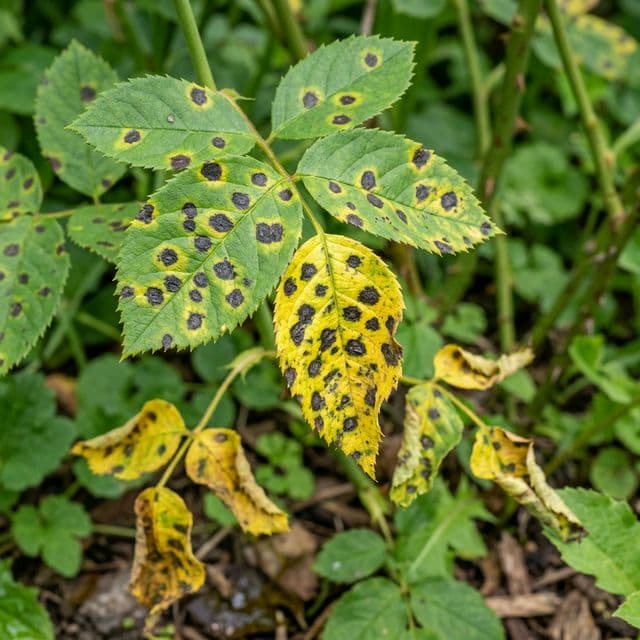
1. Black Spot (Diplocarpon rosae)
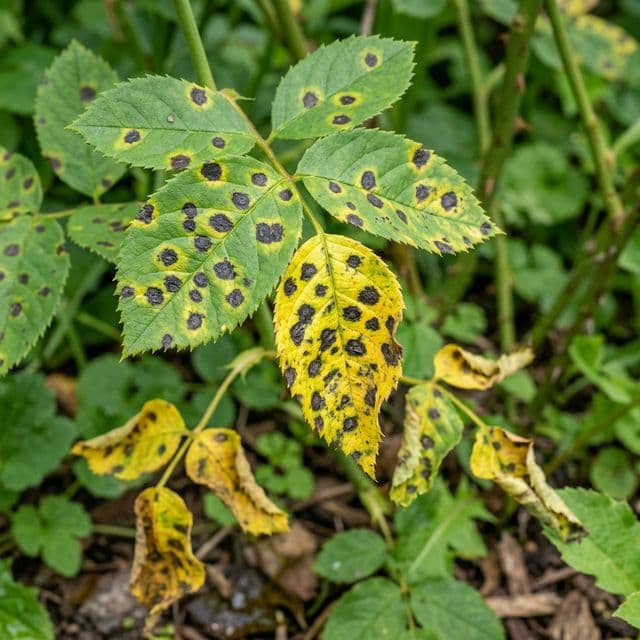
Black spot is the #1 rose disease worldwide. If you see dark circular spots with yellow halos on your rose leaves — and then the leaves drop — this is almost certainly it.
How to Treat Black Spot
- Remove all infected leaves immediately — both on the plant and fallen on the ground. Bag and bin them (do not compost — fungal spores survive).
- Spray with a copper-based fungicide or neem oil solution. Apply to both sides of all leaves. Repeat every 7–10 days during wet weather.
- Water at the base, never overhead. Drip irrigation is ideal — keeping foliage dry is the most powerful prevention tool.
- Improve airflow by pruning crossing branches and crowded growth. Spores thrive in stagnant humid air.
- Mulch around the base to prevent soil splash from reaching leaves when it rains.
2. Powdery Mildew on Roses
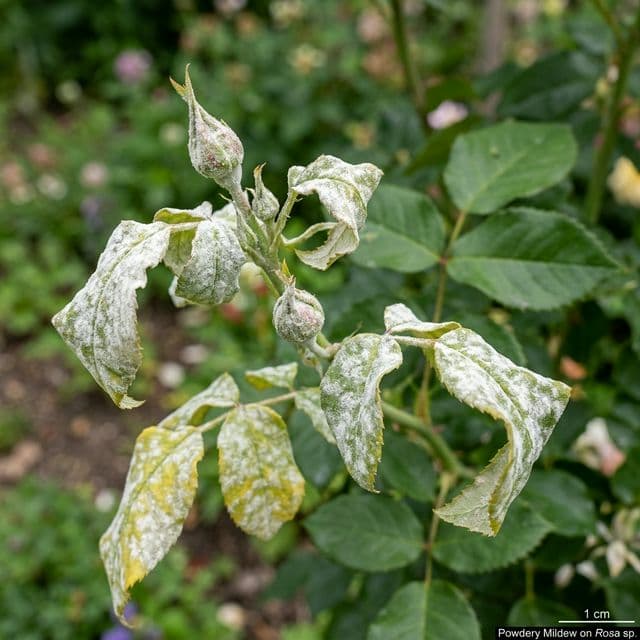
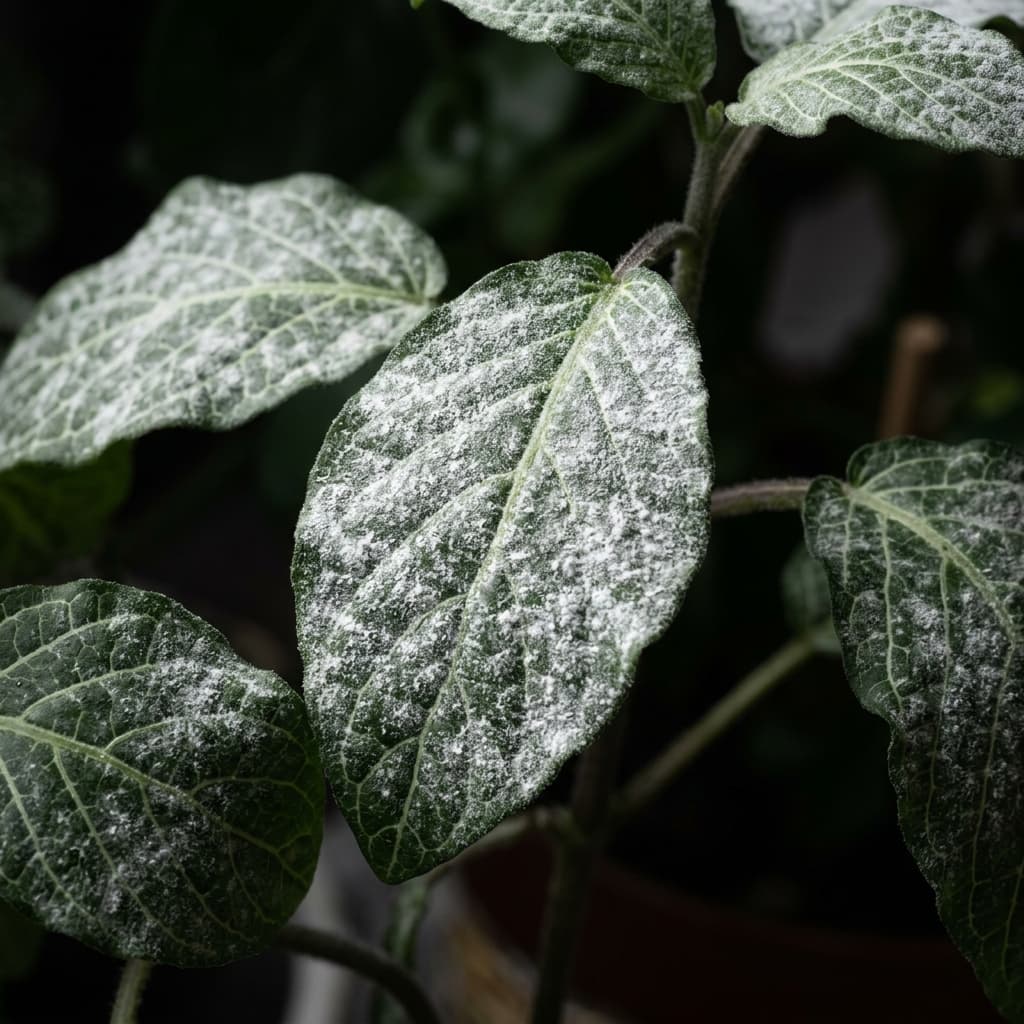
Unlike most fungal diseases, powdery mildew thrives in dry conditions with warm days and cool nights — which makes it especially common in late spring and early fall. If you see a white floury coating on your rose's young shoots and buds, this is it.
How to Treat Powdery Mildew
- Prune off and dispose of all heavily coated shoots. Don't compost.
- Baking soda spray (1 tsp baking soda + ½ tsp liquid soap + 1 quart water) is highly effective as an organic treatment. Spray weekly on all surfaces.
- Neem oil or potassium bicarbonate sprays are both excellent organic options and available at most garden centres.
- Avoid high-nitrogen fertilizer in summer — it promotes the soft succulent new growth that mildew attacks most aggressively.
3. Rose Rust
Less common than black spot but striking in appearance — rose rust causes bright orange-yellow powdery pustules on the undersides of leaves, with corresponding yellow spots on the top surface. Infected leaves drop prematurely, weakening the plant.
Quick Comparison: Telling Rose Diseases Apart
| Symptom | Black Spot | Powdery Mildew | Rose Rust |
|---|---|---|---|
| Top of leaf | Black circular spots w/ yellow halo | White powdery coating | Yellow/orange spots |
| Underside of leaf | Same dark spots | White coating | Bright orange pustules 🟠 |
| New growth affected? | Yes | Primarily | Older leaves more |
| Spreads by | Water splash | Wind (dry) | Wind (damp weather) |
| Organic treatment | Copper spray, neem | Baking soda, neem | Sulfur spray, neem |
Leaf Curl: Plum, Peach & Citrus
Leaf curl is one of the most alarming-looking problems in the garden — dramatic puckering, thickening, and colour changes that make a tree look like it's in serious trouble. The good news: for stone fruits, it's entirely preventable. For citrus, it has multiple causes and a clear treatment path.
Peach & Plum Leaf Curl (Taphrina deformans)
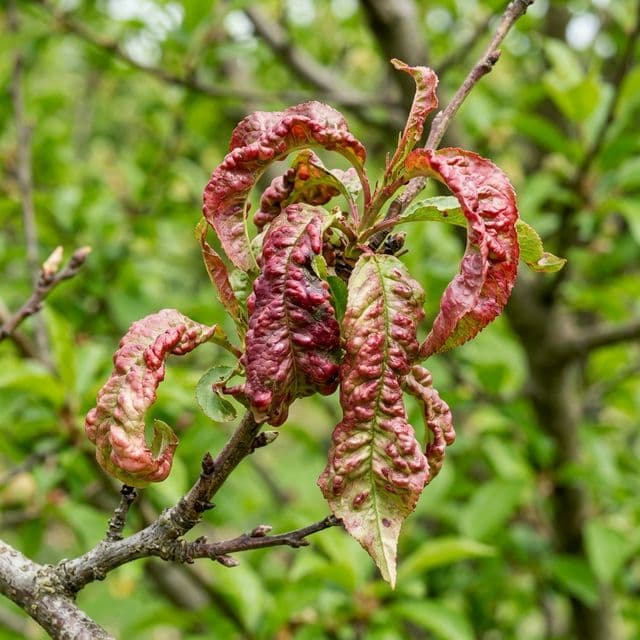
If your plum or peach tree puts out leaves in spring that are immediately distorted, thickened, and turn red-purple or pinkish before dropping, you're looking at Taphrina deformans — the peach leaf curl fungus. This is one of the most distinctive plant diseases in the garden and one of the most manageable once you understand its life cycle.
How to Treat (and Prevent) Plum/Peach Leaf Curl
- This season: Remove and bin all distorted leaves as they appear. The tree will push a second flush of healthy growth — fertilise lightly to support this recovery. Do not compost infected material.
- Next dormant season (the real fix): Apply a copper-based fungicide spray (Bordeaux mixture, copper oxychloride, or copper hydroxide) during dormancy — after leaf fall in autumn AND again at bud swell in late winter, before any green shows. Both applications together give the best control.
- Timing is everything: A single well-timed spray at bud swell (5–50% bud break) can prevent the disease entirely for that season. Miss this window and prevention is lost until next year.
- Keep trees healthy: Well-nourished, well-watered trees recover from leaf curl much faster. Add a balanced slow-release fertiliser in early spring as new growth pushes.
Plum/Peach Leaf Curl — Treatment Calendar
| Timing | Action | Product |
|---|---|---|
| Late autumn (after leaf drop) | First preventive spray | Bordeaux mixture or copper oxychloride |
| Late winter (bud swell, before green shows) | Second preventive spray — most critical | Bordeaux mixture or copper hydroxide |
| Spring (leaves already curled) | Remove infected leaves; support recovery | Balanced fertiliser; no spray effective |
| After second leaf flush | Feed tree to rebuild energy reserves | Slow-release NPK fertiliser |
Citrus Leaf Curl: Multiple Causes, One Symptom
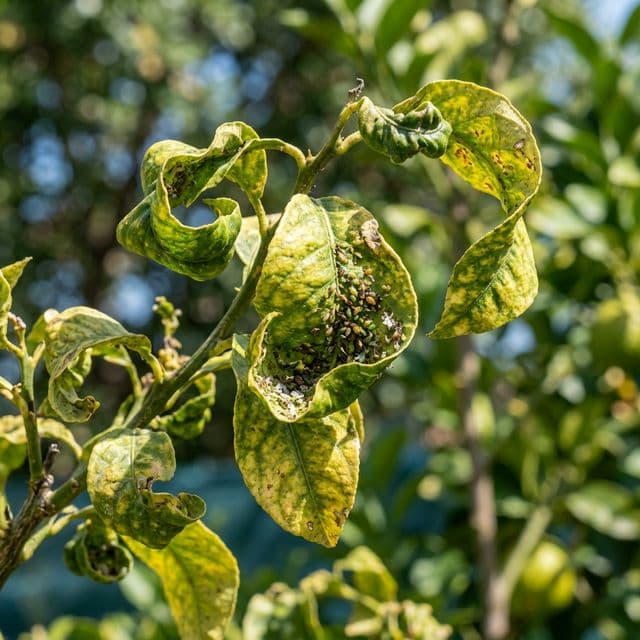
Citrus leaf curl is different from peach leaf curl — it's not caused by a single specific pathogen. Instead, curling citrus leaves are a symptom that can have several different causes, and identifying the right one is key to solving it.
Citrus Leaf Curl: Diagnosis by Appearance
| Appearance | Likely Cause | Treatment |
|---|---|---|
| New growth curled; aphid colonies visible inside | 🐛 Aphid infestation | Blast with water; neem oil spray; introduce ladybirds |
| Whole leaves cupped downward; wilting in heat | 💧 Water stress (under or over watering) | Check soil moisture; adjust watering frequency |
| Leaves curl + yellow mottling; stunted growth | 🦠 Citrus tristeza virus (CTV) | No cure; remove severely affected plants; use certified virus-free stock |
| Curl + silvery streaks on leaves | 🔬 Citrus leafminer (Phyllocnistis citrella) | Neem oil on new growth flushes; kaolin clay spray |
| Curl + bronzing on undersides | 🕷️ Broad mites or citrus mites | Wettable sulfur, horticultural oil, or miticide |
| Uniform cupping; no pests visible | 🌡️ Heat/sun stress or root problem | Deep water; check drainage; mulch root zone |
The Aphid Culprit (Most Common)
The most common cause of citrus leaf curl in home gardens is aphids. These tiny sap-sucking insects cluster on new tender growth, and the plant's defensive response is to curl the leaf around them — which unfortunately makes them harder to reach with sprays.
- Strong water blast from a hose: the most immediate and effective first step. Repeat daily for a week. Many aphid infestations can be beaten with water alone.
- Neem oil spray (2 tsp per litre + a few drops of liquid soap as an emulsifier): apply to all new growth in the early morning or evening, coating both leaf surfaces. Repeat every 5–7 days for 3 weeks.
- Attract beneficial insects: plant companion flowers like marigolds, fennel, dill, and sweet alyssum nearby. Ladybirds, lacewings, and parasitic wasps are voracious aphid predators.
- Avoid high-nitrogen fertiliser during peak aphid season: it produces the soft, sappy new growth aphids love.
5 Prevention Principles That Apply to Every Plant Disease
Most common garden diseases can be dramatically reduced — or eliminated entirely — by applying a few fundamental practices consistently.
Water at the Base
Most fungal diseases need wet foliage to spread. Drip irrigation or careful base watering keeps leaves dry. If you use sprinklers, run them in the morning so foliage dries quickly.
Prune for Airflow
Dense, overcrowded branches trap humidity. Open up the canopy each year to let air and light penetrate. Good airflow is the single best long-term disease prevention tool.
Clean Up Fall Debris
Diseased leaves and plant material left under plants overwinter fungal spores. Remove and bin (not compost) all infected material every autumn without fail.
Feed for Resilience
Well-nourished plants resist disease significantly better. But timing matters — avoid heavy nitrogen in late summer or autumn, which promotes soft growth vulnerable to infection.
Inspect Regularly
Walk through your garden weekly and look closely at both sides of leaves. Most diseases are far easier to treat when caught early — before they spread to the whole plant.
When to Call in an Expert
Most common plant diseases are manageable with the treatments described above. However, contact your local Cooperative Extension office or a certified arborist if you notice:
- A disease spreading rapidly despite treatment (could indicate a resistant strain or misdiagnosis)
- Cankers or dieback on main stems or trunk (could indicate serious wood-rotting pathogens)
- Yellowing that spreads from the veins outward on citrus (could be Huanglongbing / citrus greening — a reportable disease)
- Total defoliation of a valuable mature tree after multiple treatment attempts