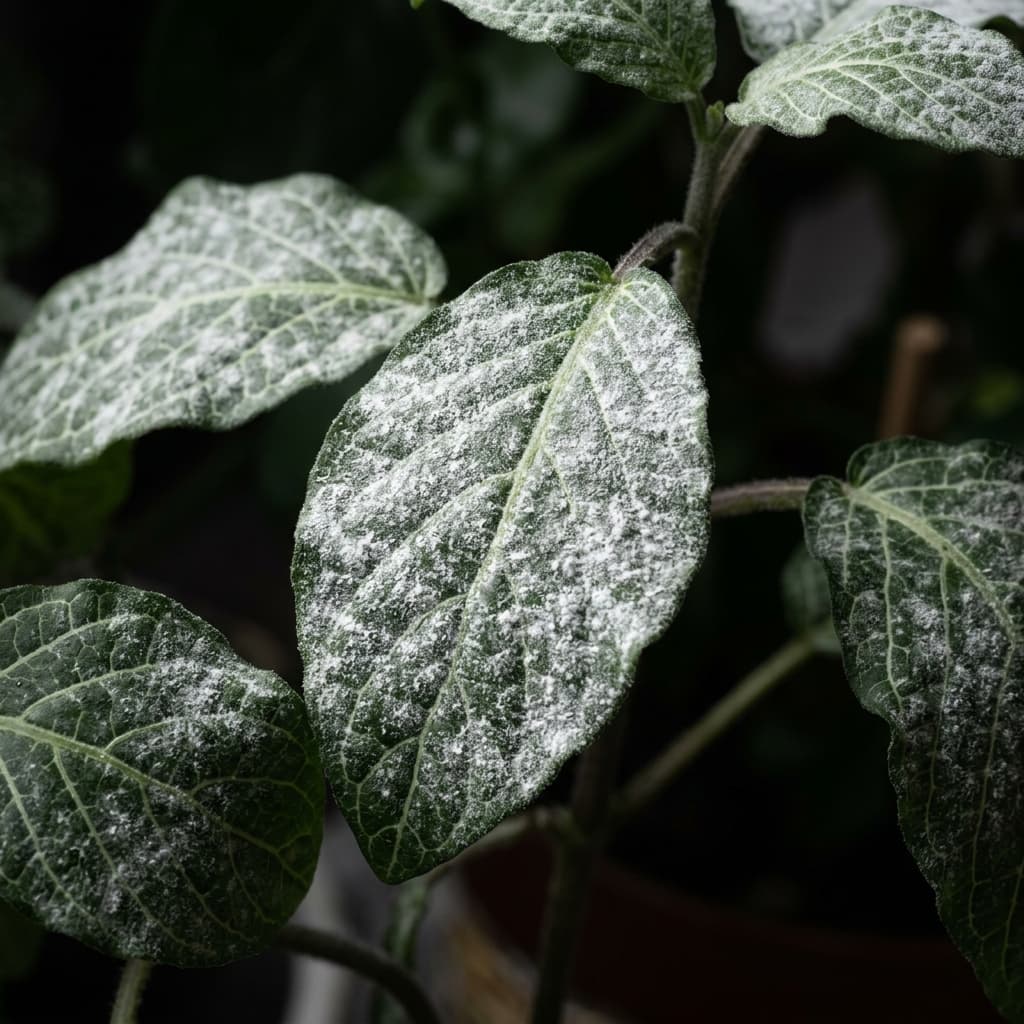

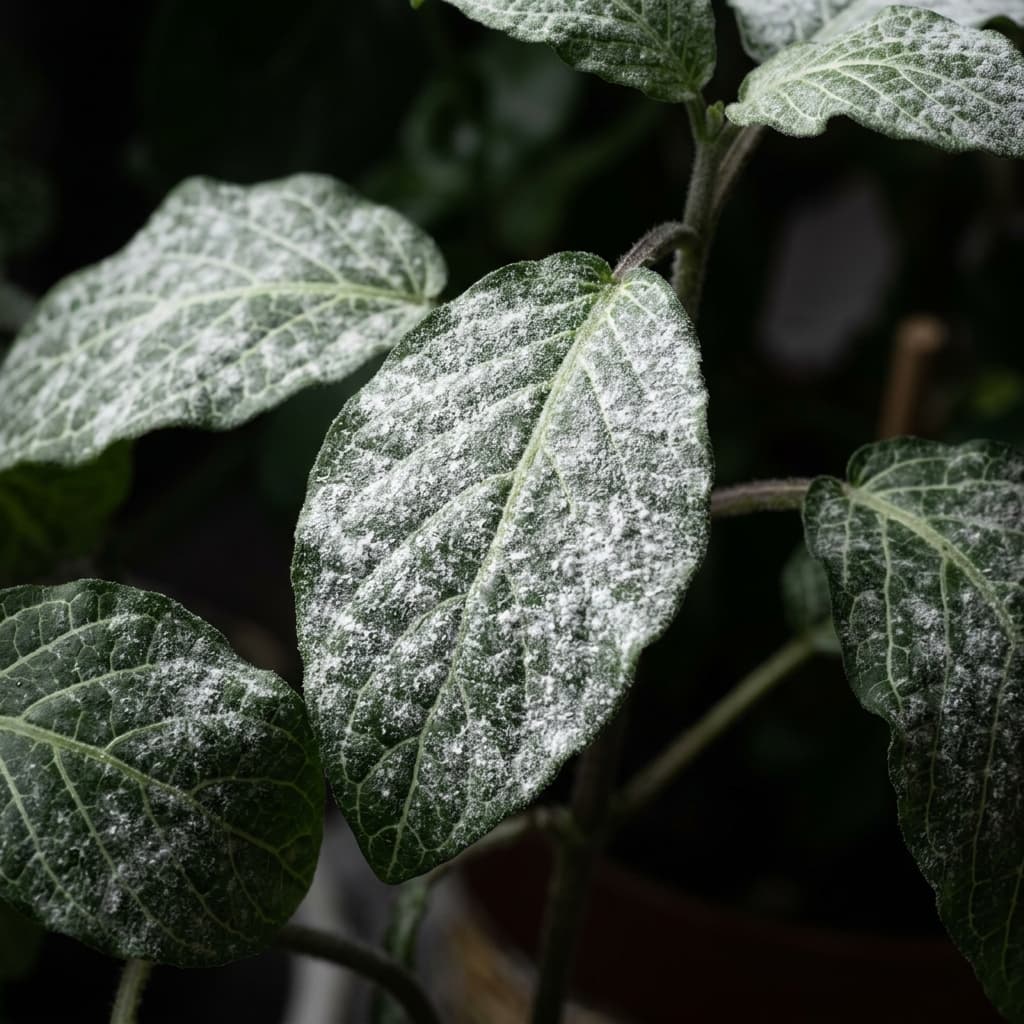
You're doing your usual plant check, you flip over a leaf, and there it is — a strange white powdery coating that definitely wasn't there last week. First thought: is my plant dying?
Good news: probably not. What you're looking at is powdery mildew, a fungal issue that's super common on indoor plants. And the even better news? It's totally treatable — often with things already in your kitchen.
What Even Is Powdery Mildew?
Powdery mildew is a fungus — or rather, a whole family of fungi — that lives on the surface of plant leaves. Unlike most fungi that need wet conditions, powdery mildew actually thrives when it's dry. That's what catches so many indoor plant owners off guard. You're keeping things nice and dry, and the mildew is loving it.
It spreads through airborne spores, so once one plant has it, nearby plants are at risk. The bad news: it spreads fast. The good news: it rarely kills a plant outright — it just weakens it over time, making leaves curl, yellow, and lose energy. Catch it early and your plant will be absolutely fine.
🌿 Is It Definitely Powdery Mildew?
Try rubbing the white coating between your fingers. If it smears or wipes off, it's mildew. If the discoloration is part of the leaf itself and won't rub away, it might be a sunburn patch or natural variegation — not mildew. Act on powdery mildew only if it wipes off.
Why Is It Happening on Your Plant?
Powdery mildew shows up when a few conditions line up:
- 🌬️ Poor airflow — plants crammed together with no air movement between them
- 💧 High humidity + warm temperatures — think stuffy rooms in summer
- 🌑 Low light — plants weakened by insufficient light have less resistance to fungal issues
- 🌱 Overwatering — not a direct cause, but stressed plants are more vulnerable
Plants most commonly affected indoors: begonias, African violets, zucchini and squash (if you're growing edibles inside), ivy, and some philodendrons. But honestly, any houseplant can get it under the wrong conditions.
How to Treat It: Your Step-by-Step Fix
Step 1 — Isolate the Plant
Move the affected plant away from your other plants right now. Powdery mildew spores are airborne and spread easily. One infected plant sitting next to a healthy one is a problem waiting to grow.
Step 2 — Remove the Worst Leaves
If any leaves are heavily coated all over, just remove them entirely. Don't compost them indoors — bag and bin them. A heavily mildewed leaf isn't going to recover, and removing it means fewer spores hanging around.
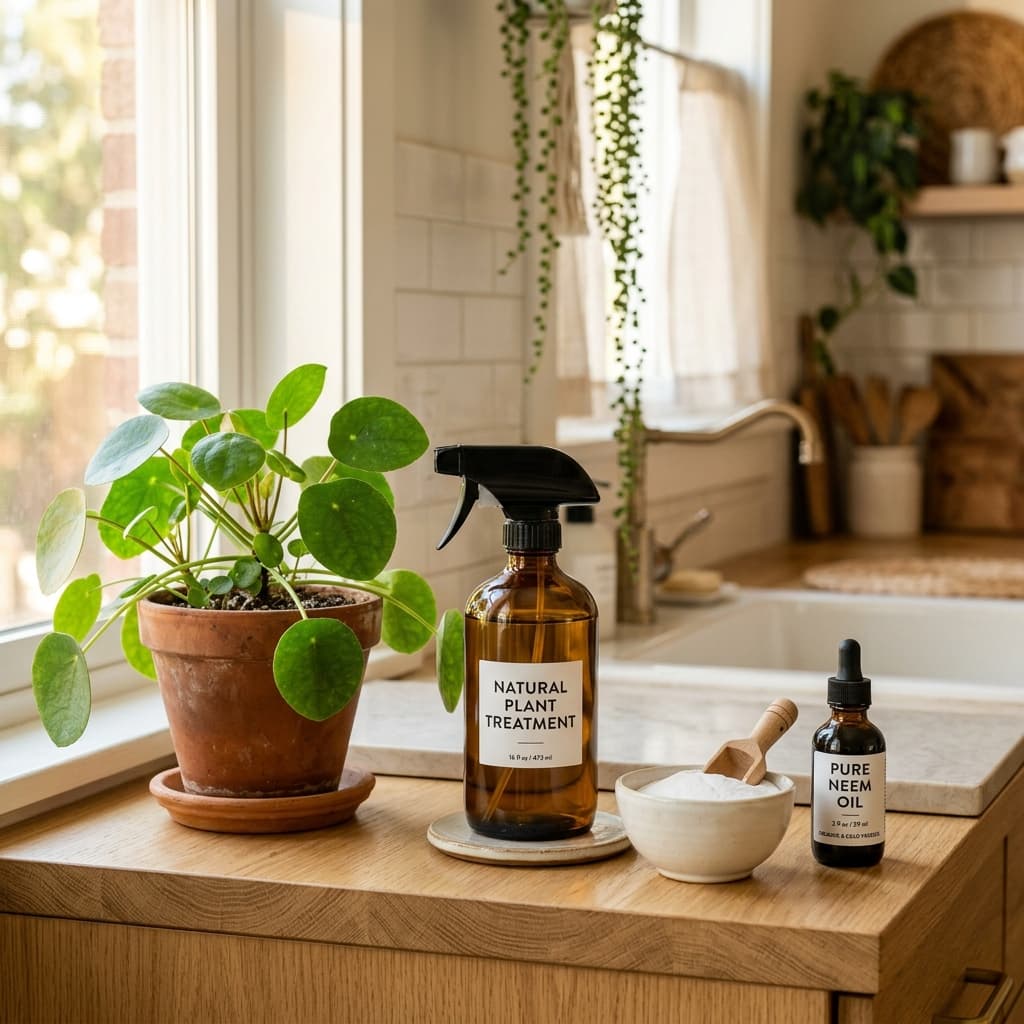
Step 3 — Spray with a DIY Treatment
Pick one of these — all of them work, and all use things you likely have at home:
| Remedy | How to Mix It | Best For |
|---|---|---|
| Baking soda spray | 1 tsp baking soda + 1 tsp dish soap + 1L water | Mild to moderate infections |
| Neem oil spray | 2 tsp neem oil + 1 tsp dish soap + 1L water | Moderate to heavy infections |
| Diluted white vinegar | 1 tbsp apple cider vinegar + 1L water | Early-stage, light dusting only |
Spray the entire plant — tops and undersides of leaves — until dripping. Do this every 5–7 days for 3–4 weeks. The key word is consistently. One spray won't fix it; the follow-through is what clears it up.
Tip: Always test a new spray on a single leaf first and wait 24 hours to make sure your plant doesn't react badly to it before going full coverage.
Step 4 — Improve the Conditions
Killing the existing mildew without changing the conditions is like mopping the floor while the tap is still running. Fix the environment so it doesn't come back:
- Move the plant somewhere with better airflow (near a window that opens, or add a small fan nearby)
- Pull plants apart so air can circulate between them
- If your home is humid, a small dehumidifier in the plant room makes a real difference
- Water at the base, not over the leaves — wet foliage creates the perfect mildew micro-climate
Prevention: Space = Air = Happy Plants
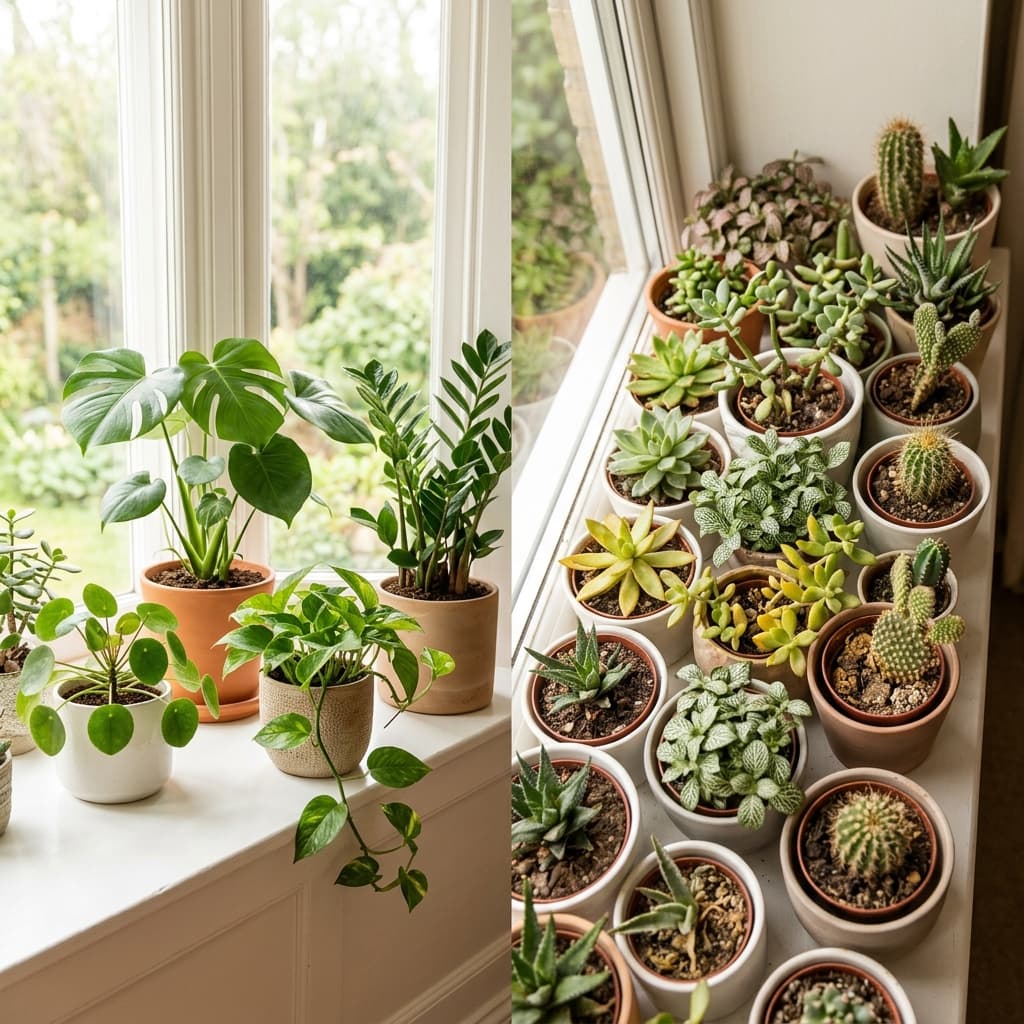
The single best thing you can do to prevent powdery mildew coming back is simple: don't overcrowd your plants. When plants are packed together, airflow stops, humidity builds up between leaves, and mildew finds the perfect spot to settle in.
A bit of space between pots — even just a few centimetres — makes a surprisingly big difference. And if you're near a window that you can crack open occasionally, even better.
When to Worry (And When Not To)
Powdery mildew is almost never fatal to indoor plants. If you treat it and address the conditions, the plant will recover. The situations where you'd need to consider more drastic action:
- ⚠️ The mildew keeps coming back after 4+ weeks of consistent treatment — time to try a stronger neem oil concentration or a commercial fungicide
- ⚠️ The whole plant is covered and leaves are dropping — at this point, a heavy prune back to healthy growth and a fresh start is often better than treating leaf by leaf
- ✅ A few affected leaves with the rest of the plant looking healthy — totally normal recovery territory, keep spraying
🌿 Sprouty's Quick Recap
Spot the white powder → isolate the plant → remove the worst leaves → spray with baking soda or neem oil every week for a month → improve airflow → done. Most plants bounce back within 3–4 weeks. You've got this.
Dealing with other strange spots or discoloration? Sprouty's guide to why plant leaves turn yellow is a good next read.