
Ask most casual gardeners when to plant flowers, and they will point straight to May. But ask professional horticulturists, botanists, and seasoned growers, and they will let you in on gardening's best-kept secret: September is the true golden window for planting flowering perennials and cold-hardy blooms.
In September, the soil is still baked warm from summer sun (typically hovering between 60°F and 75°F), yet ambient air temperatures are dropping. Transpiration rates plummet, meaning transplants do not wilt under intense heat stress. While above-ground stems prepare for dormancy, subterranean root systems kick into overdrive, branching out and anchoring deeply without having to support vigorous top growth. When spring arrives, September-planted flowers wake up months ahead of spring nursery stock, yielding earlier, heavier blooms and shrug-off summer drought tolerance.
Whether you garden in cold northern borders, the temperate mid-Atlantic, or mild coastal and valley climates, here are the top 5 flowering plants to get into the ground this September, complete with verified USDA zone guidance, the exact timing why, and the critical mistakes to avoid.
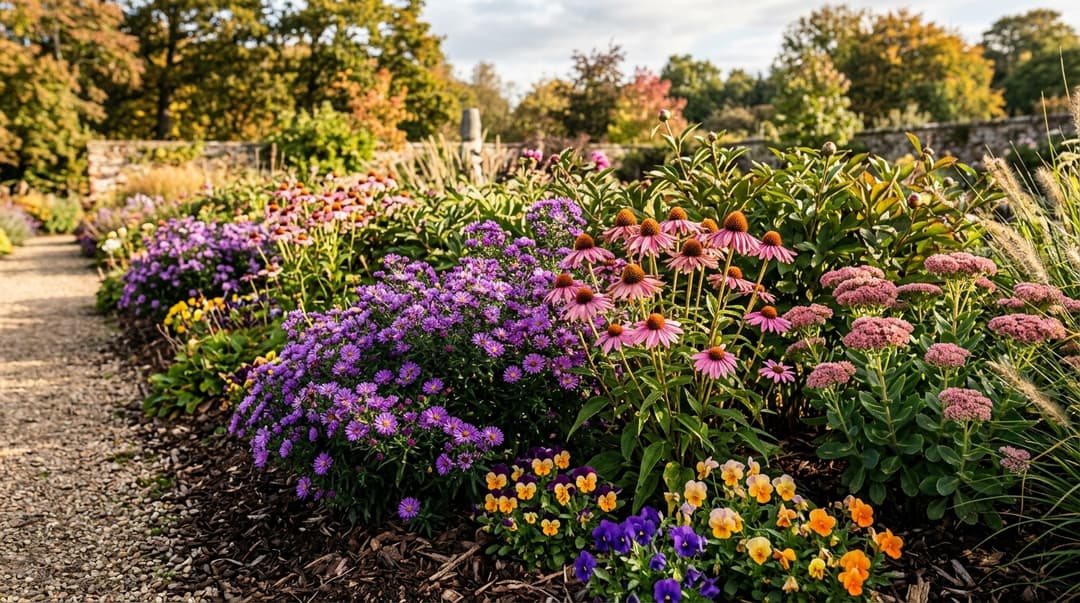
1. New England & Aromatic Asters (Symphyotrichum novae-angliae & S. oblongifolium)
If you want color in your garden right now while simultaneously putting down durable perennial roots for the next decade, asters are the unrivaled champion of September planting.
- USDA Hardiness: Zones 3 through 8. Exceptionally cold-hardy native perennials across the Northeast, Midwest, Upper South, and Pacific Northwest.
- Regional Note: In mild Mediterranean and California valley climates (Zones 9–10), look for California aster (Symphyotrichum chilense or Corethrogyne filaginifolia), which flowers profusely right through November on minimal summer irrigation, as highlighted in the UC Davis Arboretum All-Stars collection.
The Timing Why: Nurseries are packed with budded and blooming container asters throughout September. When planted into warm early-autumn soil, asters root outwards rapidly within 3 to 4 weeks. You get immediate floral satisfaction this year, and next season the plant will emerge as an established, multi-stemmed perennial anchor.
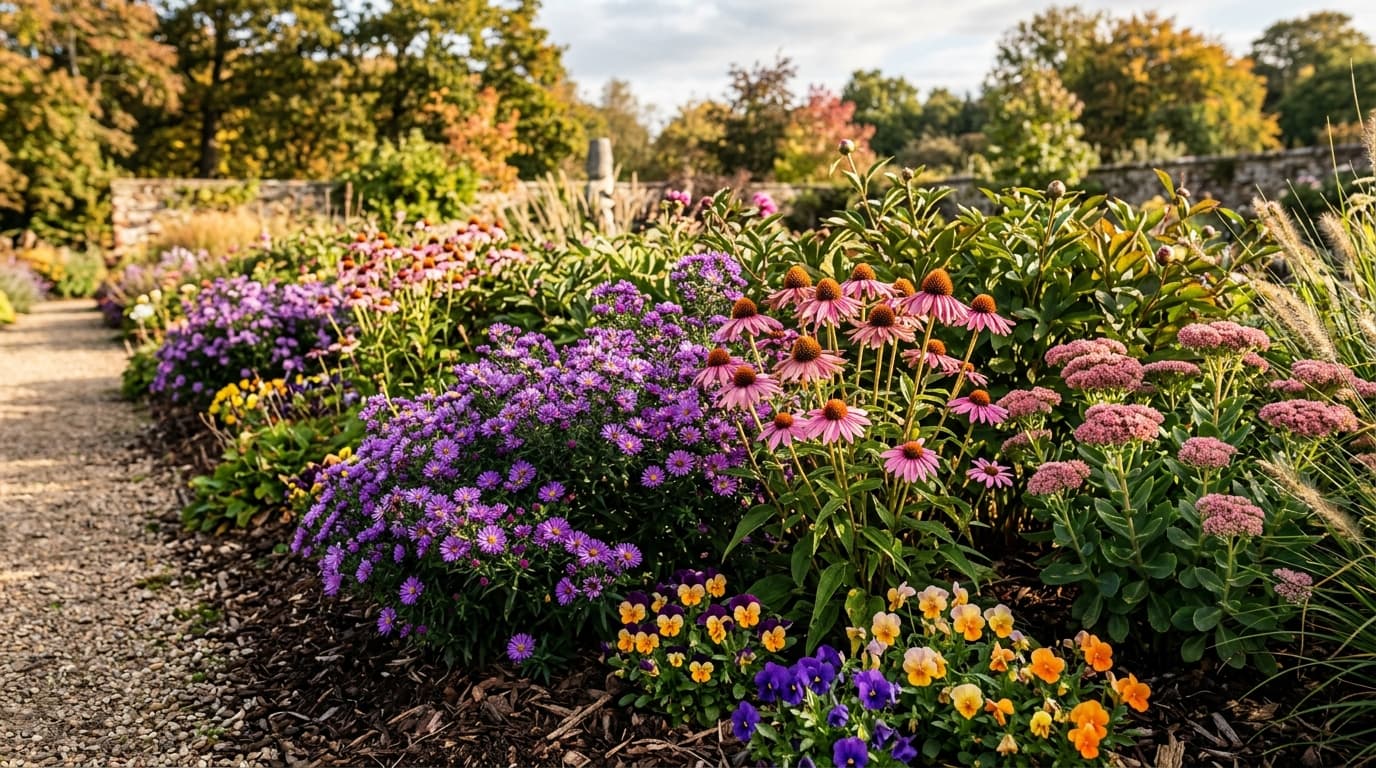
The Bloom Payoff: Dense clouds of electric violet, pink, magenta, and cornflower blue petals centered around luminous golden-yellow discs. Asters bloom straight through light frosts when summer annuals have withered, serving as an irreplaceable fueling station for migrating monarch butterflies and foraging native bumblebees.
The #1 Mistake to Avoid: Late-day overhead sprinkler watering. Asters are notoriously susceptible to powdery mildew if foliage stays wet through cool nights. Soak the root zone at the soil line in the morning. Additionally, in cold northern zones (Zones 3–5), plant asters by mid-to-late September so roots anchor firmly before ground freeze prevents frost-heaving.
Verified Citation: NC State Extension Plant Toolbox: Symphyotrichum novae-angliae (New England Aster)
2. Herbaceous Peonies (Paeonia lactiflora)
Peonies are the crown jewels of the late-spring garden, boasting opulent, rose-scented blossoms that can return in the exact same garden spot for over 50 to 100 years. But if you wait until spring to plant them, you are setting yourself up for disappointment. September to October is universally recognized by botanists as the premier planting window for herbaceous peonies.
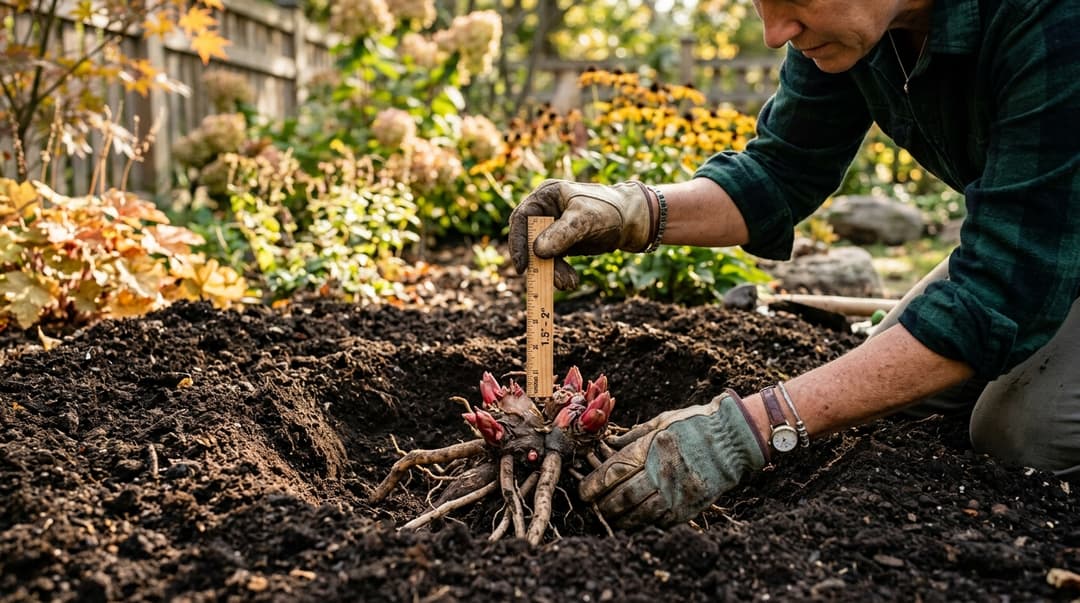
- USDA Hardiness: Zones 3 through 8. Peonies require winter chilling (around 500 to 1,000 cumulative chill hours below 40°F) to initiate spring flower bud development.
- Regional Note: In warm-winter climates (USDA Zone 9 and above), standard Paeonia lactiflora cultivars often fail to bloom due to insufficient chill hours. If you garden in mild regions like inland Southern California or the Deep South, choose early-blooming varieties or hybrid intersectional (Itoh) peonies with low chilling requirements.
The Timing Why: In September, peonies go dormant above ground. Bare-root divisions and container crowns are lifted and shipped while the plant is resting. Planting in September gives the fleshy tubers several months in cooling, moist soil to grow fine feeder roots before winter dormancy locks the ground.
The Bloom Payoff: Giant, ruffled, bowl-shaped blossoms up to 8 inches across in shades of pure white, blush pink, coral, and deep burgundy in late May and June. Once established, an herbaceous peony clump produces dozens of stems every single year with zero staking needed for sturdy-stemmed varieties.
The #1 Mistake to Avoid: Planting too deep! This is the single most common reason peonies produce luxuriant foliage for a decade without producing a single flower. When placing bare-root tubers or container rootballs, the pinkish "eyes" (growth buds) must sit strictly 1.5 to 2 inches below the soil surface in northern zones, and just 1 inch deep in Zones 7–8. If buried 3 or 4 inches deep, the crown will refuse to set flower buds.
Verified Citation: NC State Extension Plant Toolbox: Paeonia (Herbaceous Types)
3. Pansies & Violas (Viola × wittrockiana & Viola cornuta)
Do not let their delicate, smiling faces fool you: pansies and violas are among the toughest flowering plants in horticulture. While novice gardeners treat them as disposable spring annuals, planting them in September unlocks their true superpowers.
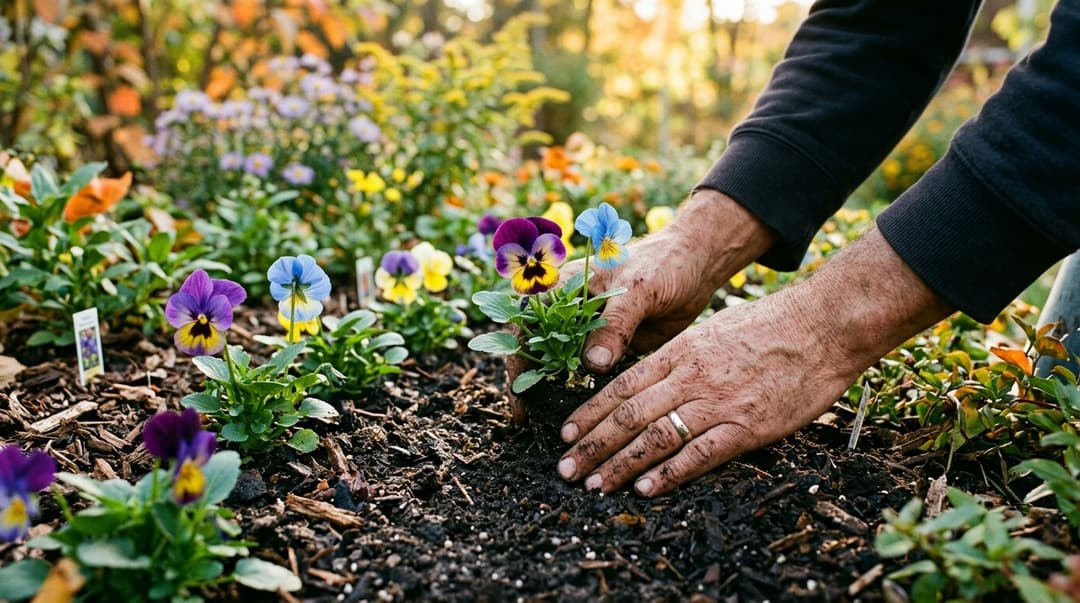
- USDA Hardiness: Zones 4 through 9 (grown as cool-season annuals or biennials).
- Regional Differences:
- Mild-Winter Regions (Zones 7–10, South & Coastal/Interior California): September-planted pansies bloom continuously through October, November, December, January, and right through spring until late May heat arrives.
- Cold Northern Climates (Zones 4–6, Midwest & Northeast): Pansies will bloom richly throughout autumn until hard freezes arrive (around 20°F). They will then hunker down under winter snow and re-emerge in March, exploding into bloom weeks before local garden centers even open their doors.
The Timing Why: Root establishment requires warm soil. When planted in early September while soil temperatures remain above 55°F, pansies generate extensive subterranean root hairs. If you delay planting until late October or November, cold soil inhibits root development, leaving shallow roots susceptible to winter desiccation and freeze-thaw heaving.
The Bloom Payoff: Cheerful 2- to 3-inch blooms in velvety bicolors, deep indigo, sunny yellow, terracotta, and pure white that withstand repeated morning frosts without petal browning.
The #1 Mistake to Avoid: Planting too deep or in soggy, unamended clay. If you bury the crown (the point where stems join the roots), pansies will quickly develop crown and root rot (caused by Pythium and Phytophthora). Set the transplant so the nursery rootball surface is flush with the garden soil line, and mulch lightly around—not over—the crown.
Verified Citation: NC State Extension Plant Toolbox: Viola × wittrockiana (Garden Pansy)
4. Purple Coneflower (Echinacea purpurea)
Purple coneflower is a North American native prairie workhorse. While summer shoppers often grab blooming gallons on impulse in July only to see them struggle with heat shock, planting coneflowers in September yields exponentially better root systems.
- USDA Hardiness: Zones 3 through 9. Thrives in nearly every climate zone across the continental United States.
- Soil & Sun: Full sun (at least 6 hours of direct light) and well-draining soil. Exceptionally drought-tolerant once established.
The Timing Why: Like most prairie taprooted perennials, Echinacea expends tremendous energy in spring pushing up thick stems and blossoms. In September, the plant shifts its energy downward. Warm autumn soil encourages taproot depth and lateral branching without water loss through foliage. The winter chilling period naturally breaks seed and root dormancy, triggering vigorous multi-crown emergence come spring.
The Bloom Payoff: Stately 2- to 4-foot stems bearing dramatic 3- to 5-inch flowers with swept-back rose-purple petals and prominent spiky, copper-bronze cones. They bloom tirelessly from June through autumn, drawing hundreds of native pollinators.
The #1 Mistake to Avoid: Giving the plant a "tidy fall buzzcut." When autumn turns coneflowers into brown standing stalks, resist the urge to shear them down to the ground! Those spiky central cones are filled with carbohydrate-rich seeds that sustain American goldfinches and chickadees throughout winter storms. Even more importantly, hollow perennial stems are the primary nesting chambers for over 30% of our native solitary bee species. Leaving dried stalks standing until late spring protects your garden's pollinator nursery (read our full guide on why cutting dried perennial stems in fall evicts native bees).
Verified Citation: NC State Extension Plant Toolbox: Echinacea purpurea (Purple Coneflower)
5. Autumn Joy Sedum / Upright Stonecrop (Hylotelephium telephium)
If you want a truly bulletproof perennial that laughs at dry spells, survives brutal subzero winters, and delivers four seasons of garden architecture, upright stonecrop belongs at the top of your September shopping cart.
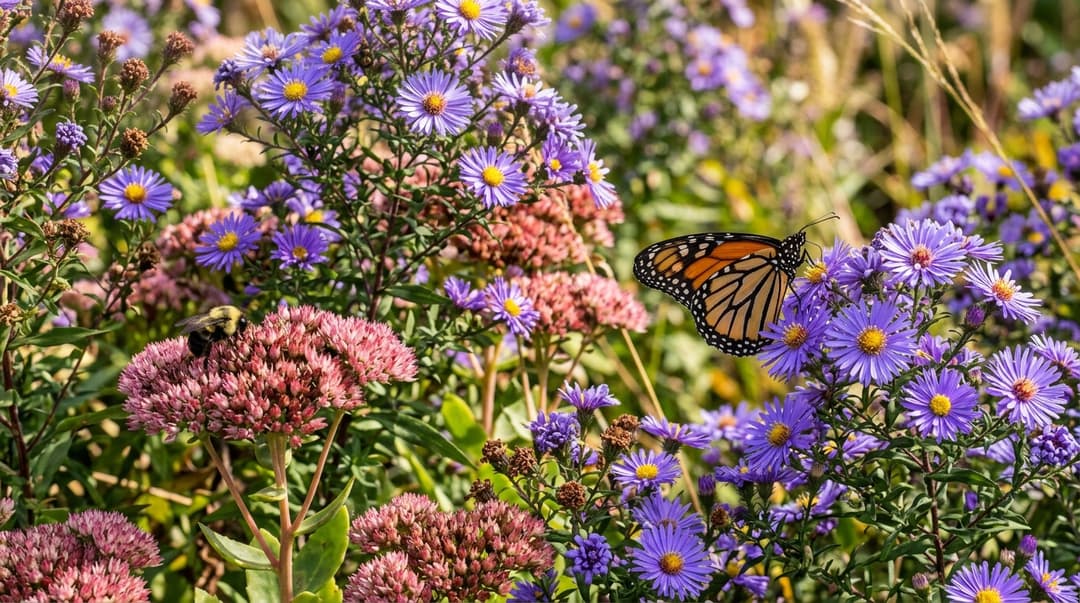
- USDA Hardiness: Zones 3 through 9. Handles -35°F winter chills in the upper Midwest as easily as hot, dry Mediterranean summers in the West.
- Cultivars to Seek Out: 'Autumn Joy' (syn. 'Herbstfreude'), 'Neon' (vivid magenta-pink), and 'Matrona' (dusky purple foliage with pale pink flower heads).
The Timing Why: September is ideal for two reasons: garden centers offer robust blooming clumps on end-of-season sales, and established garden clumps are ready for propagation. You can easily lift mature clumps, slice through the root mass with a sharp spade, and transplant divisions across your beds. Because sedum leaves store ample moisture, divisions experience virtually zero transplant shock.
The Bloom Payoff: In August, dense broccoli-like green clusters form. By September, they turn into dusty rose-pink umbrellas, deepening to rust-red in October and drying to rich copper-bronze seedheads that hold their structure through falling snow, providing striking winter silhouettes.
The #1 Mistake to Avoid: "Loving it to death" with fertilizer, rich compost, or shade. Sedums evolved in lean, rocky, well-draining soils. If you plant them in rich soil and feed them heavy nitrogen, they will produce weak, floppy stems that collapse open in the center during peak bloom. Give them full sun, lean soil, and sharp drainage.
Verified Citation: NC State Extension Plant Toolbox: Hylotelephium telephium (Orpine / Autumn Joy Stonecrop)
🌿 Sprouty's Fall Planting Rules of Thumb
- Settle roots, don't drown them: Soak newly planted perennial rootballs thoroughly once at planting time to settle soil around the roots and eliminate air pockets. After that, keep the root zone moderately moist until the ground freezes—do not create waterlogged muck.
- Hold off on high-nitrogen fertilizer: Never apply quick-release nitrogen fertilizer to fall plantings. High nitrogen forces tender green foliage that frost will turn to mush. Roots establish best on existing soil nutrients and finished compost topdressings.
- Mulch after the first hard frost, not before: In cold-winter zones, wait until the ground has frozen lightly before applying a 2- to 3-inch layer of shredded autumn leaves or bark mulch. Applying mulch too early traps summer warmth, delaying natural plant dormancy; applying it after freezing stabilizes soil temperatures and stops winter frost-heaving (learn more in our guide on why fallen leaves save your soil).
- Bulbs have different rules: While herbaceous perennials love September planting, remember that geophytes have unique calendars. Spring-blooming Dutch bulbs (tulips and daffodils) prefer soil cooling below 50°F (read our shallow bulb planting tips), while Mediterranean and California native bulbs like Brodiaea must wait for natural seasonal rains (see why planting native bulbs before the first rains causes rot).
Planning Your Autumn Garden
September is not the end of the gardening year—it is the opening chapter of next spring's triumph. Getting your perennials and cool-season color into the ground now guarantees stronger root structures, earlier blooms, and vastly less watering stress when summer returns.
For more detailed seasonal checklists, check out our comprehensive Sprouty Fall Gardening Guide & Playbook, and explore our master guides on why you should never prune lilacs in September and Sprouty's downloadable garden resources.