
Every autumn, as night temperatures begin to dip into the crisp 40s and leaves begin drifting down from deciduous trees, a subtle mistake quietly sabotages gardens everywhere. Gardeners look at their thriving beds of kale, spinach, carrots, and newly planted perennials, gaze at their pile of straw or shredded leaves, and think: "I'll wait until the weather really turns cold or the first freeze hits before putting down mulch."
Sophie had her wheelbarrow parked right next to the garden shed, piled high with clean golden straw. She was about to wheel it back into the barn when Sprouty caught up with her in the garden path:
Sophie: "I was going to mulch the raised beds today, but my neighbour told me you shouldn't mulch until the soil cools down completely and the ground is almost freezing. So I figured I'd wait until November."
Sprouty: "Sophie, put that wheelbarrow down and grab your pitchfork right now! If you wait for the soil to cool, you completely delete your fall growth extension!"
Sophie: "Wait, really? But doesn't mulch protect plants from the cold?"
Sprouty: "Mulch is an insulator, not a space heater! It doesn't generate heat—it traps whatever temperature is already in the ground. If you mulch while your soil is still sitting in that warm 55°F to 65°F sweet spot, you trap that summer heat like a thermos. If you wait until the soil is chilled down to 40°F, you're literally locking the refrigerator door shut from the outside!"
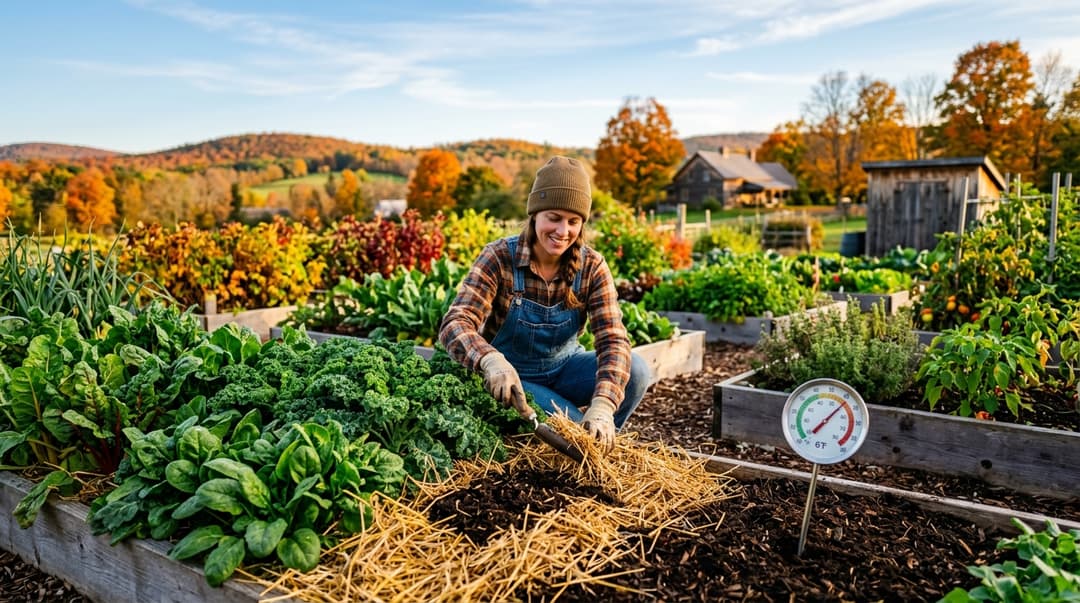
Watch Sprouty & Sophie on the Warm-Soil Mulch Window
See why waiting for cold soil kills your autumn growth extension in our quick video companion.
The Great Fall Mulching Confusion: Dormancy vs. Season Extension
Where did this advice to "wait until the ground freezes or cools" come from in the first place? It comes from standard winter care for dormant perennials and strawberries in severe northern climates.
As documented by the University of Minnesota Extension, winter mulch for dormant plants is applied only after soil temperatures drop to 40°F or lower. The sole purpose of that late mulch is to keep the ground frozen solid and prevent freeze-thaw cycles ("frost heaving") from thrusting sleeping roots out of the soil.
However, active fall gardens are the complete opposite.
If you are growing fall crops—cool-season brassicas, kale, Swiss chard, spinach, radishes, carrots, winter lettuce, or trying to establish roots on fall-divided perennials and shrubs—you are not trying to put plants into deep freeze dormancy. You want them to keep growing!
According to research published in the University of California Agriculture and Natural Resources (UC ANR Publication 8059, Vegetable Garden Basics), organic mulch functions as a temperature moderator and water conservator. Soil that is protected by an organic blanket experiences dramatically moderated temperature swings compared to exposed bare ground.
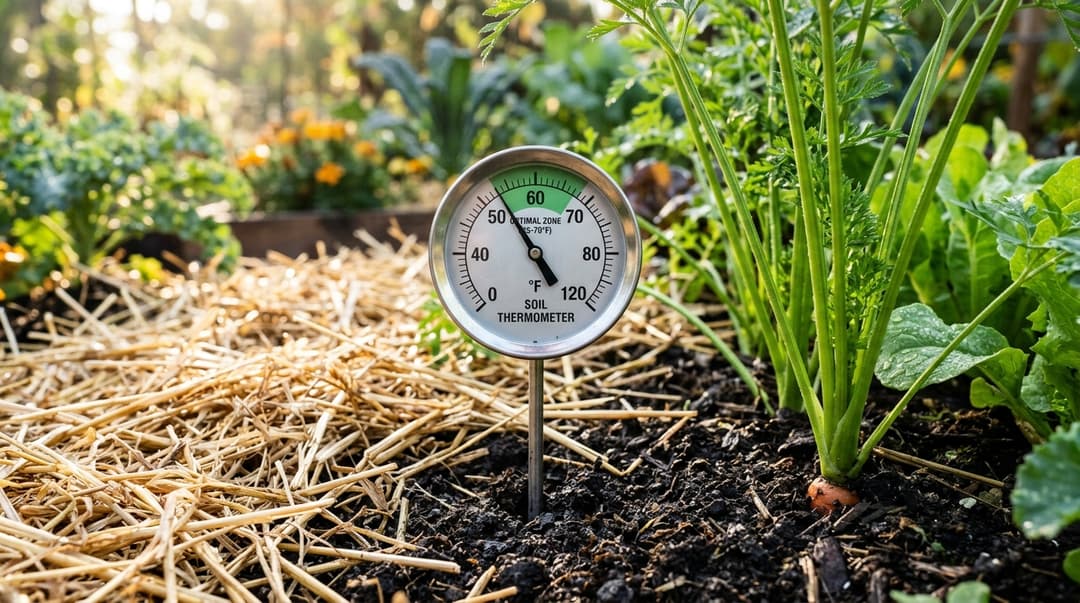
The Thermodynamics: Why Mulch Acts Like a Thermos, Not a Heater
To master your autumn garden, you have to understand one fundamental law of soil physics: mulch has zero heating capacity. It is purely an insulator with high thermal resistance (R-value).
Throughout August and September, your garden soil absorbs massive amounts of solar radiation. The top 6 to 12 inches of soil act like a massive thermal battery, storing heat energy deep into the subsoil. In early autumn, soil temperatures commonly range between 55°F and 65°F, even when night air temperatures begin dipping into the 40s or high 30s.
Here is what happens depending on when you apply mulch:
- Scenario A: You mulch while soil is warm (55–65°F): You cap the thermal battery. During the day, the mulch prevents rapid evaporative heat loss. At night, when cold air sweeps across the yard, the 2–3 inch layer of straw or shredded leaves traps the upward conductive heat radiating from the Earth. The root zone stays above 55°F for 3 to 5 extra weeks!
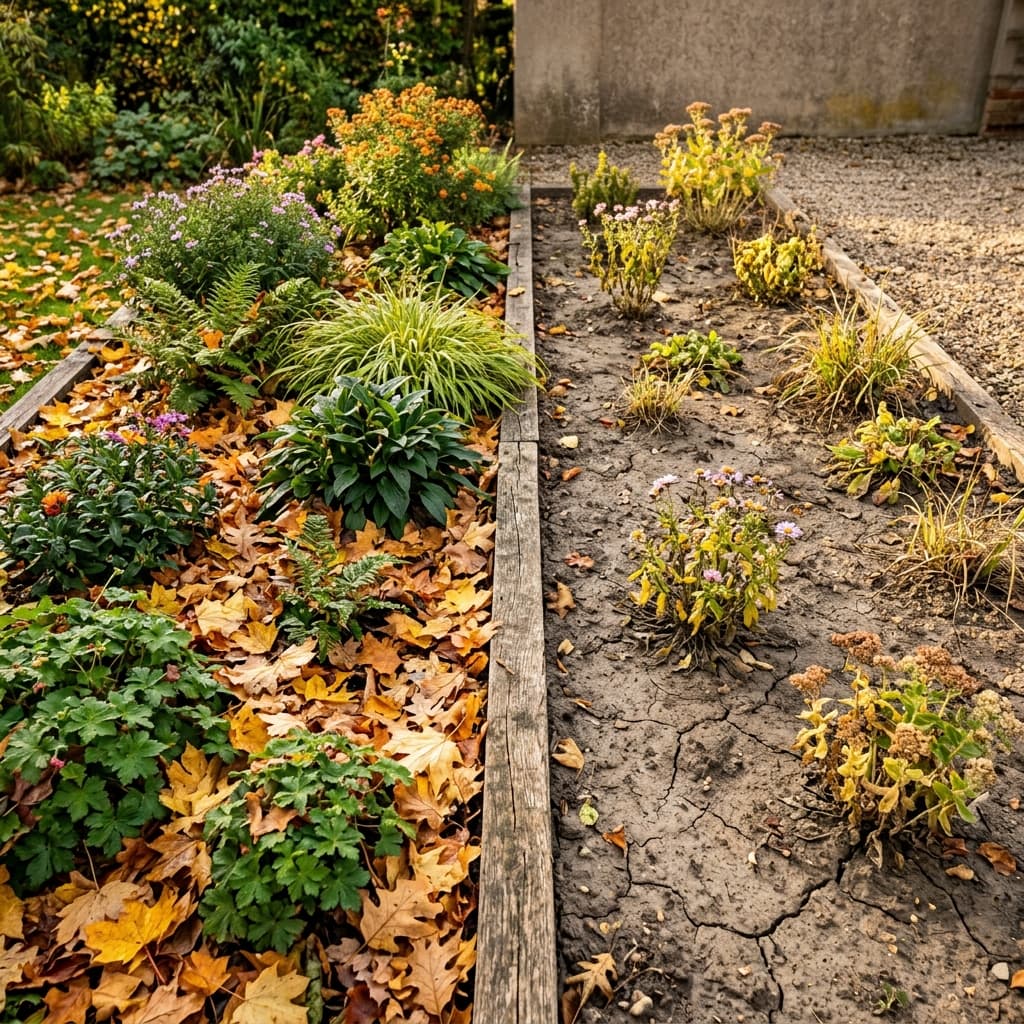
- Scenario B: You leave soil bare until it cools (<45°F): Bare soil loses heat rapidly through radiant cooling to the clear night sky. By late October, the soil plunges into the 40s. If you then apply mulch over chilled soil, the mulch shades the ground during the sunny hours of the day, reflecting solar energy and locking in the cold. You essentially created a subterranean refrigerator!
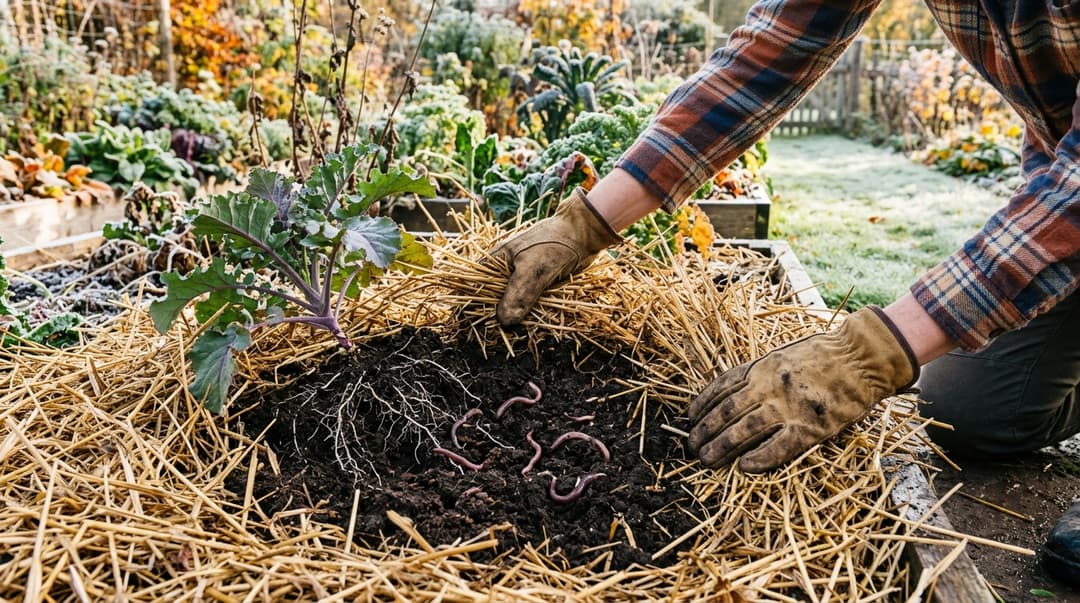
What Happens to Roots Below 50°F?
Why is the 55°F–65°F window so decisive for autumn plant performance? It all comes down to rhizosphere biology and cellular respiration:
- Meristematic Root Expansion: Root tip cells divide and elongate vigorously when soil temperatures hover between 55°F and 68°F. Even when cold air slows down above-ground leaf expansion, warm soil allows crops to build dense, fibrous root systems that anchor the plant and store carbohydrates. Once soil hits 48°F–50°F, cell division in roots stalls abruptly.
- Mycorrhizal and Bacterial Nutrient Cycling: Beneficial soil bacteria and mycorrhizal fungi break down organic matter and mineralize nitrogen, phosphorus, and potassium. As soil temperature drops below 50°F, microbial enzyme activity plummets. In warm-mulched soil, microbes continue mineralizing nutrients right through November.
- Phosphorus and Water Uptake: Cold soil dramatically increases water viscosity and impairs root membrane permeability. Plants sitting in 42°F soil struggle to take up phosphorus (often showing purple-tinted leaf veins) even if the soil is damp. Insulated warm soil prevents cold-induced nutrient lockup.
Timing Comparison: Mulch Now vs. Mulch Late
🌡️ Sprouty's 2-Minute Soil Temperature Test
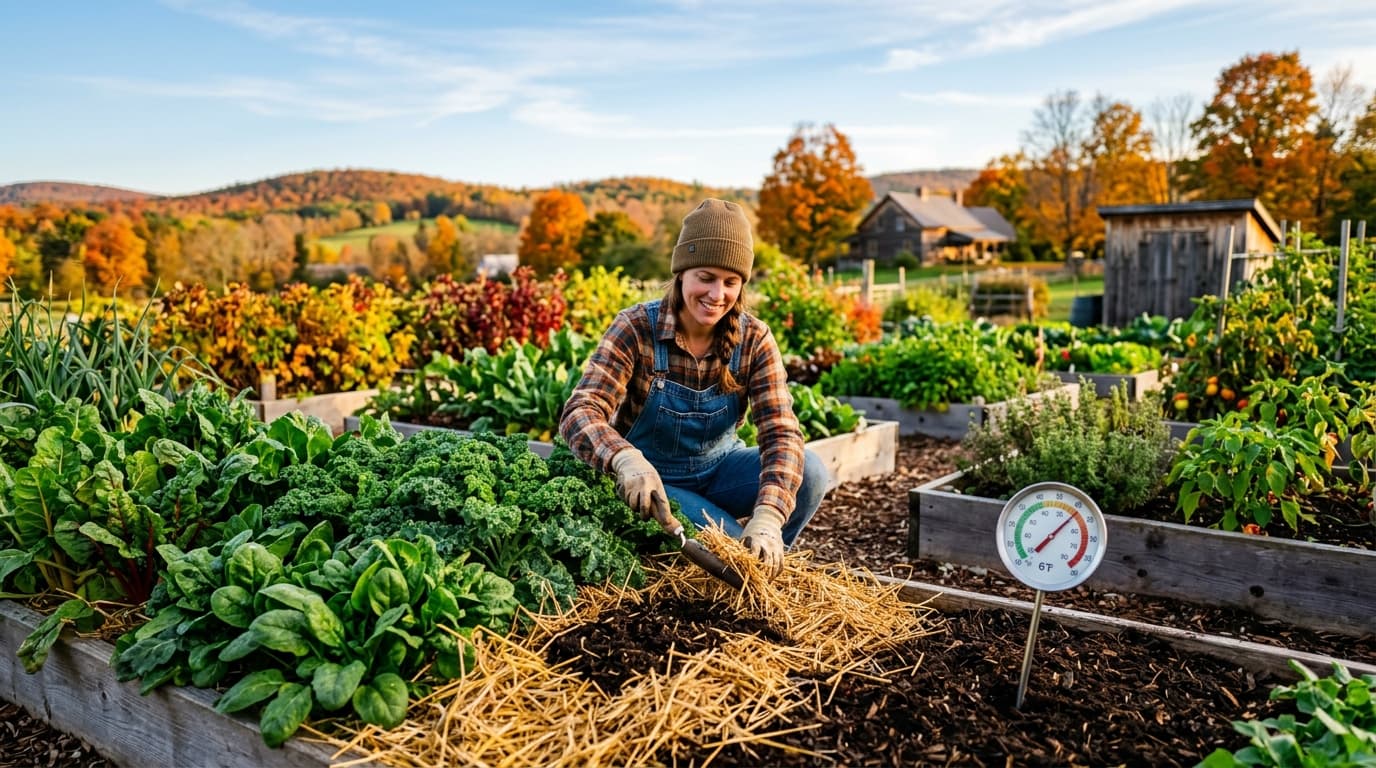
Don't guess by daytime air temperature—air can feel brisk at 50°F while the soil remains a toasty 62°F! Pick up a basic compost or soil probe thermometer. Around 9:00 AM or 10:00 AM, insert the probe 3 to 4 inches deep into the center of your bed. If the needle reads between 55°F and 68°F, you are in the golden mulching window. Apply your mulch immediately to capture that heat before the next cold front sweeps through.
How to Mulch Active Fall Beds the Right Way
Applying mulch in autumn requires slightly different care than mulching in the scorching heat of July. According to landscape mulching guidelines from the UC Statewide IPM Program, follow these four rules to avoid common pitfalls:
- Clear Weeds and Water Deeply First: Never lay mulch over bone-dry soil! Dry organic mulch can shed light autumn drizzles like a thatched roof. Soak your garden beds thoroughly before mulching so you lock deep moisture into the root zone alongside thermal heat. Clear any sprouting winter annual weeds (like chickweed or annual bluegrass) before laying the blanket.
- Target 2 to 3 Inches of Depth: A 1-inch layer of mulch is too thin to provide meaningful thermal insulation. Conversely, piling 5 or 6 inches of dense material suffocates soil respiration and blocks oxygen exchange. A fluffy 2 to 3 inch blanket of clean seedless straw, chopped deciduous leaves, or clean pine shavings provides the perfect air-pocket insulation.
- Keep the Crown "Donut" Clear: Do not smother plant crowns or stems! Piling wet mulch directly against the lower stems of kale, cabbage, or chard invites fungal damping-off and slug feeding. Leave a 2-inch clear buffer ring around the base of every main plant stem.
- Pair with Floating Row Covers for Frost: Mulch insulates the ground from beneath; floating row covers (or frost blankets) trap warm air escaping upward from the mulched soil. When combined, your beds can survive temperatures 6°F to 10°F colder than exposed gardens, allowing you to harvest crisp sweet greens well past Thanksgiving.
🍂 The Best Fall Mulch Materials (Ranked)
- Clean Wheat/Oat Straw: High thermal loft with millions of tiny air pockets. Excellent for vegetable beds and easy to rake back in spring. Make sure it is straw (stalks), not weed-seed-filled hay!
- Shredded Autumn Leaves: 100% free and packed with trace minerals. Run your mower over dry maple, oak, or fruit tree leaves. Shredding is essential—whole flat leaves mat down like wet cardboard and block air. Check our guide on using fallen leaves as soil fertilizer.
- Finished Compost: Spread a 1-to-2-inch topdressing of dark compost directly over the soil surface, then top with a light straw blanket. It feeds earthworms and adds biological warmth.
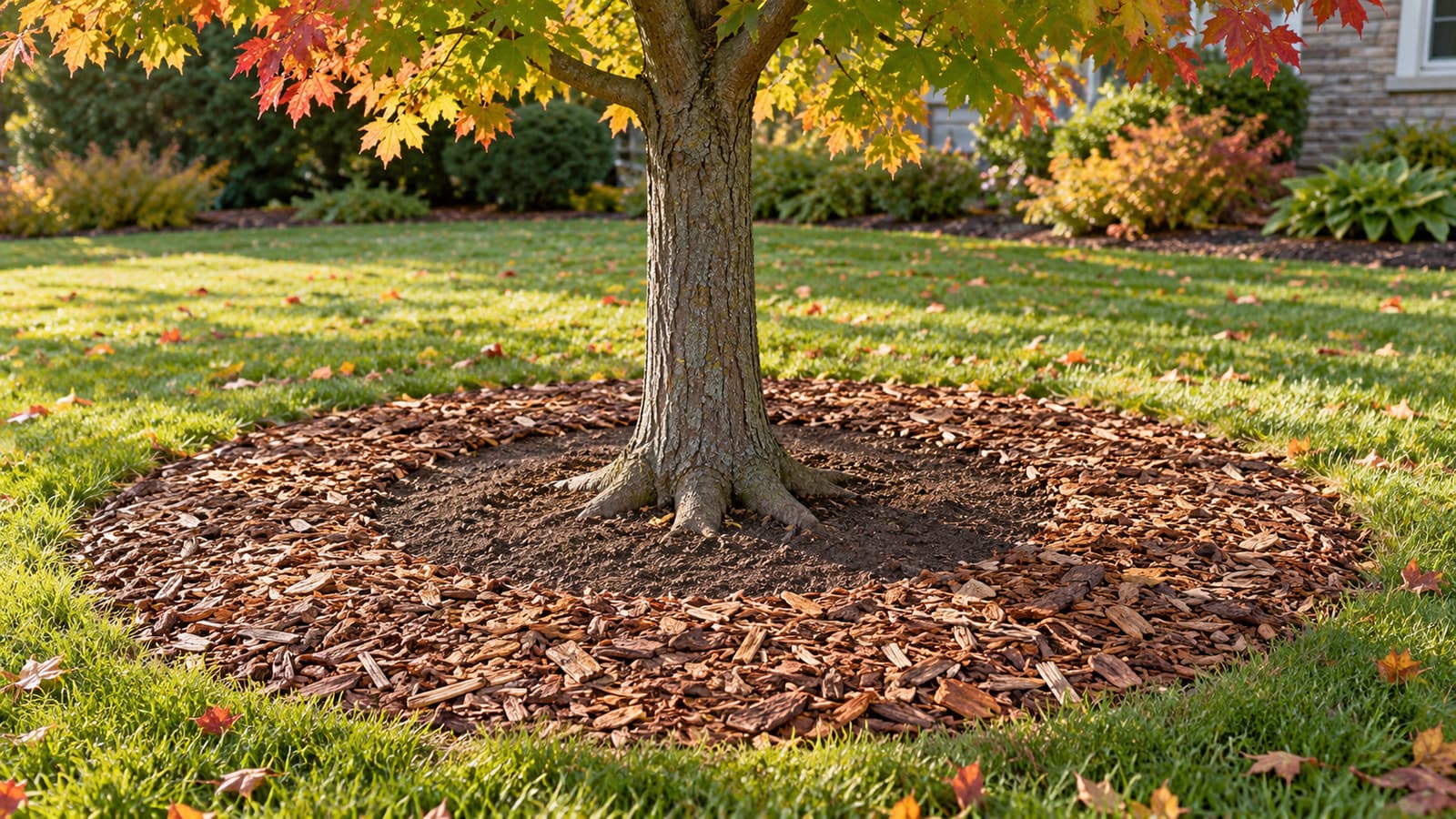
- Arborist Wood Chips: Superb for permanent perennial borders, fruit tree rings, and pathways. Keep wood chips away from tender annual vegetable stems where they can tie up surface nitrogen during initial breakdown.
🌿 The Bottom Line
Don't let the calendar trick you into waiting. Once your garden soil drops below 50°F, you can never get that warmth back until spring sunshine returns in April. Grab your pitchfork this weekend, check your soil thermometer, and tuck your beds in while the ground is still warm. You'll be picking sweet, frost-kissed salads when everyone else's garden has long gone to sleep!
Planning the rest of your autumn garden calendar? Check our complete SproutySpeaks Fall Gardening Guide & Checklist, discover why sowing daikon cover crops in September bio-drills compacted soil, learn how to handle tender tubers in our sweet potato post-frost harvest rescue guide, and discover how to recycle autumn leaves right back into your garden beds.