
The first real leaf drop of fall hits the beds, the paths, and the lawn edge, and the tidy instinct shows up with it. Out come the rake, the blower, and a stack of yard-waste bags. Every brown leaf looks like a chore that has to leave the property before the weekend is over.
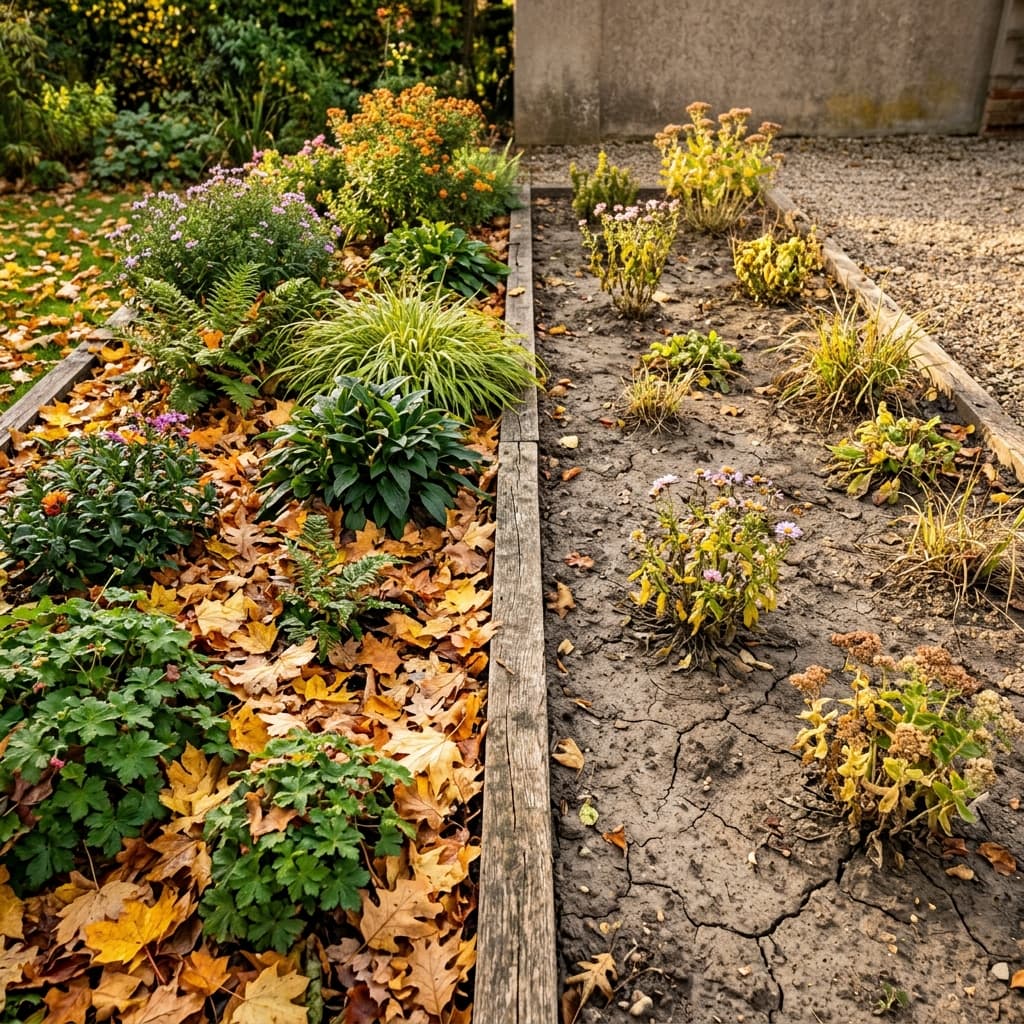
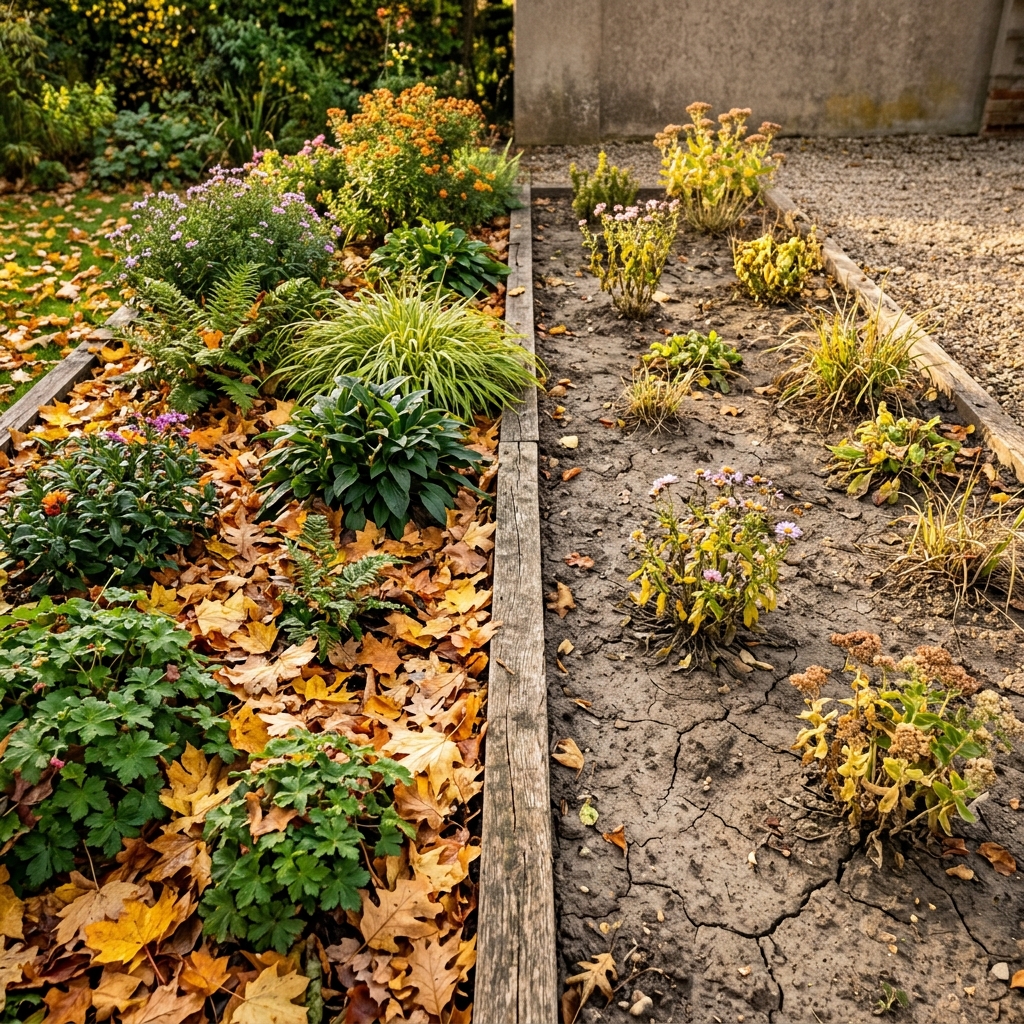
Put the bags down for a minute. Healthy fallen leaves are not trash. They are winter mulch. A loose layer on bare soil feeds the ground as it breaks down, covers the surface so moisture stays put, and gives beneficial insects a place to ride out the cold. The leaves that actually need to leave are the clearly diseased ones.
That exact moment played out in Sophie's garden during fall cleanup. She had the rake already moving, ready to clear every leaf off the beds and into bags. Sprouty stopped her before the healthy ones were hauled away:
Sophie: (Rake in hand, starting to clear every fallen leaf off the beds and into bags) "Fall cleanup day. I'm raking all of these leaves out of here."
Sprouty: (Gently setting a paw on the rake handle) "Leave the healthy ones, Sophie. Healthy fallen leaves are winter mulch. They feed the soil and hold moisture. Only bag the diseased ones."
Sophie: (Setting the full bags aside and sorting the pile) "Got it. The healthy leaves stay as mulch. I'll bag only the sick ones."
On-Screen Lesson: Don't rake healthy fallen leaves away. They are winter mulch. Only bag the diseased ones.
Watch Sprouty & Sophie on Healthy Leaves as Winter Mulch
See why healthy fallen leaves stay on the beds, and only the diseased ones get bagged, in our quick video companion.
What to Do in Fall Cleanup: Leave Healthy Leaves as Winter Mulch
October is when many home gardens get their big seasonal tidy. The UC Master Gardeners of Santa Clara County October Tips put it plainly in their Fall Garden Cleanup note: it is best to leave fallen leaves in place unless they are diseased. Left where they fall, they work as a mulch layer. They break down slowly, return nutrients to the soil, and send those nutrients back toward the plants. Covered soil also holds moisture, which matters even more in a dry stretch. The same leaf litter gives extra cover to hibernating bumble bees and to beneficial insects overwintering in different life stages.
That is the whole job for healthy leaves during fall cleanup:
- Leave them on beds and bare soil. A loose blanket of healthy leaves is winter mulch, not a mess you failed to finish.
- Let them feed the soil. As they break down, they return nutrients instead of leaving in a truck.
- Let them hold moisture. Covered ground dries out more slowly than bare ground.
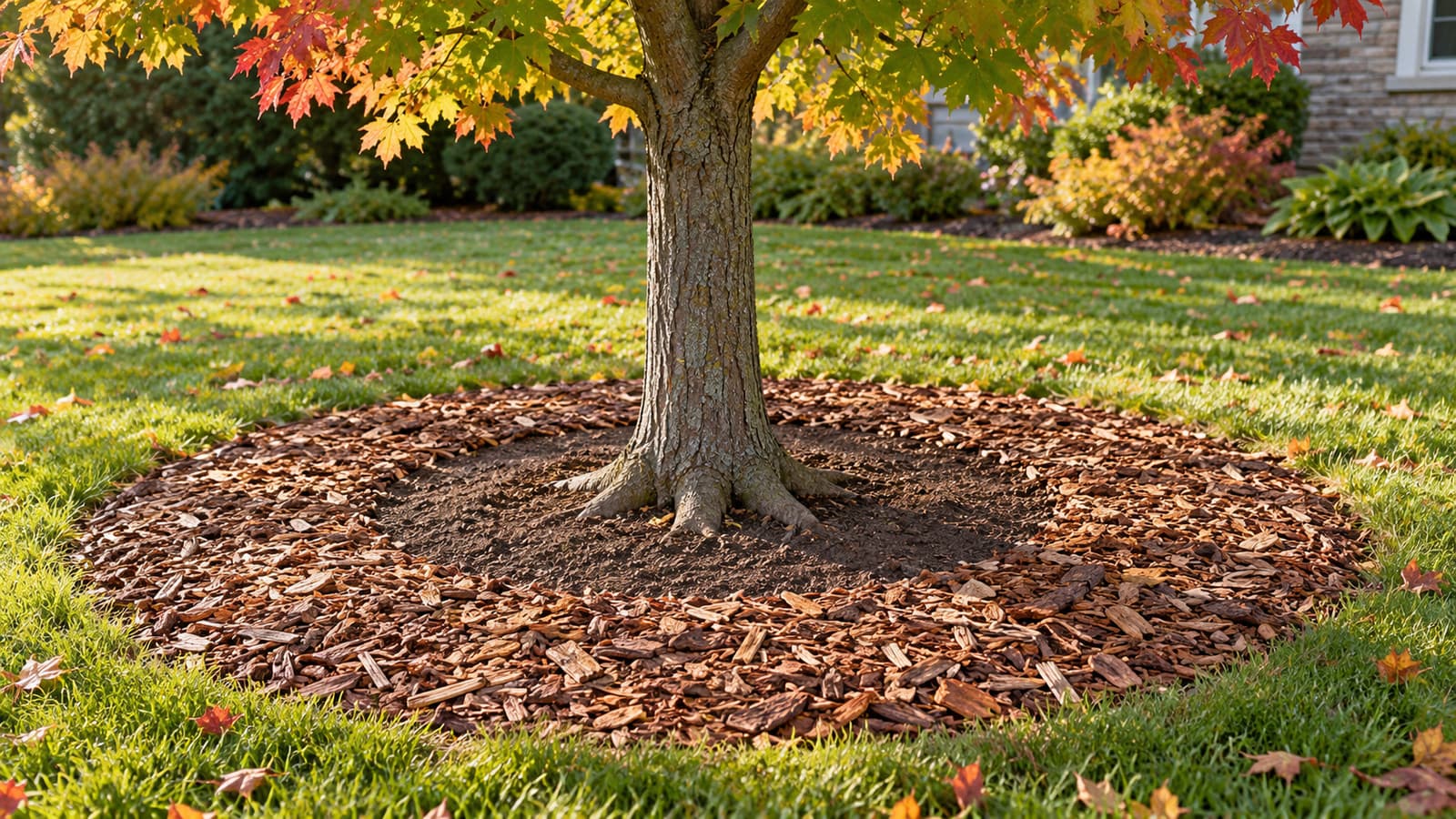
- Keep the layer off trunks and stems. Leaves belong on the soil, not piled against bark. See why mulch volcanoes rot woody trunks.
The same October tips page makes a related point under Winter Soil Health and Mulch Bare Soil Before Rains. Organic mulches such as leaves hold moisture, moderate soil temperature, help keep weeds from germinating, and break down in a way that supports soil life. Bare soil that sits open to rain, wind, and sun packs down, and rain tends to run off instead of soaking in. Healthy leaves are one of the easiest covers you already have.
What Not to Do: Don't Bag Every Healthy Leaf
Bagging the entire drop feels productive. It also throws away the mulch, the moisture cover, and the slow fertilizer the beds were about to get for free. If the leaves are whole, dry or newly fallen, and not spotted, mildewed, or stuck together with obvious disease, they do not belong in the bag.
A few practical limits still apply, and they are not the same as "rake everything":
- Don't seal a lawn you want to keep under a wet, matted sheet. Shift those healthy leaves onto garden beds, around shrubs, or into a leaf pile that will become mulch. The point is to move them, not to throw them out.
- Don't rake leaves off paths into the trash if a bed next to the path is bare. Paths stay walkable. Beds get the mulch.
- Don't treat every brown leaf as sick. Ordinary fall color, dry edges, and a normal drop are not disease.
If you want the longer soil story, our guide on why removing dead leaves starves garden soil walks through what that litter does once it stays. This fall, the short version is enough: healthy leaves stay.
What Not to Do: Don't Leave Clearly Diseased Leaves, and Don't Cool-Compost Them
Healthy and diseased are not the same pile. The Santa Clara County October tips say diseased leaves need to be removed and put out with the yard waste. On that same page, the apple and pear harvest note says to clean up fallen leaves and fruit and discard them so apple scab and codling moth are not invited to stay. Leaves under a tree you already know had scab, mildew, or another clear foliar disease are sanitation, not winter mulch.
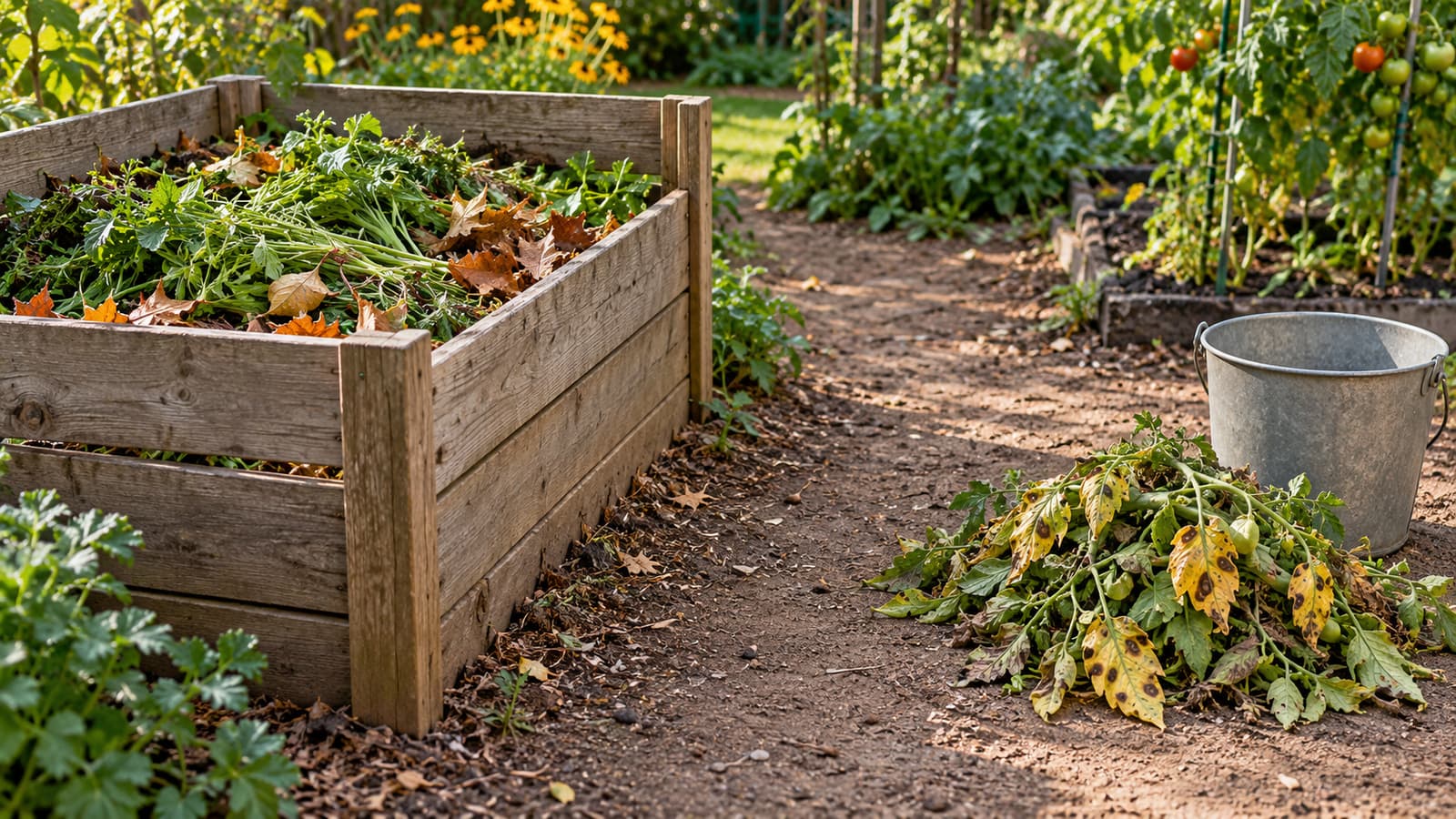
Bag those leaves, or put them in the municipal yard-waste cart. Do not tuck them back under the shrub "so they can rot." And do not dump clearly diseased leaves into a cool backyard compost pile. As our guide on why diseased plants survive in a cool compost pile explains, a typical home pile does not hold the kind of even, pasteurizing heat that knocks plant pathogens down. Finished compost from that pile can carry the problem back onto the beds next season.
Sort Before You Bag
Stays as winter mulch: healthy fallen leaves on beds and bare soil. Goes out with yard waste: leaves that are clearly diseased, including the fallen leaves you are cleaning up under apples and pears to limit scab carryover. Does not go in a cool home compost pile: those diseased leaves. The same rule is why we do not compost blighted camellia blossoms; see why fallen camellia flowers keep petal blight cycling.
When to Do This: Fall Cleanup, Before the Rains Pack the Soil
This is an October and November job, lined up with fall garden cleanup rather than a midsummer tidy. Do it while you can still see the difference between a healthy drop and a diseased one, and before bare beds sit open to the first soaking rains.
- Walk the beds before you rake. Note trees or shrubs that had obvious leaf spots, mildew, or blight this season. Those leaves are the bag pile.
- Pull the diseased leaves first and put them in yard waste. Do not mix them back into the healthy layer.
- Leave or move the healthy leaves onto bare soil, around perennials, and under shrubs, off the trunk flare.
- Clear only what has to stay open: steps, drains, and the walking surface of paths. Relocate those healthy leaves. Do not bag them by default.
After the layer is down, you are done until spring. You do not need to vacuum the beds again in December just because more healthy leaves landed. Add them to the mulch. Keep bagging only the ones you can see are sick.
Frequently Asked Questions About Leaving Fallen Leaves
Should I rake all the fallen leaves in fall?
No. Healthy fallen leaves should stay as winter mulch on beds and bare soil. They feed the soil as they break down and help hold moisture. Bag only the leaves that are clearly diseased, and put those out with the yard waste.
Do fallen leaves really help the soil?
Yes, when they are healthy and left in place. UC Master Gardeners of Santa Clara County describe fallen leaves as a mulch layer that breaks down slowly, returns nutrients to the soil, and helps the soil hold moisture. Leaf litter also shelters hibernating bumble bees and other beneficial insects.
Can I compost diseased leaves at home?
Do not put clearly diseased leaves into a cool home compost pile. Those piles rarely get hot enough, evenly enough, to kill the organisms you are trying to remove, and the compost can put them back in the garden. Use municipal yard waste instead.
What about leaves under my apple or pear tree?
Treat those as cleanup, not as mulch under that tree. The Santa Clara County October tips say to clean up fallen apple and pear leaves and fruit and discard them to help prevent apple scab and codling moth. Healthy leaves from other plants can still mulch beds that were not in that disease cycle.
Will a thick layer of leaves hurt my plants?
Keep leaf mulch on the soil and pulled back from trunks and woody stems so you are not building a mulch volcano. On a lawn you want to keep, move a heavy wet mat of leaves onto beds instead of leaving the grass sealed underneath. The leaves are still useful. They just need to sit where mulch helps.
Related Fall Cleanup Guides
Healthy leaves are one piece of fall cleanup, not a reason to leave every problem in the bed. Read why keeping dead leaves protects garden soil, see why cool compost does not kill diseased plant tissue, keep mulch off the bark with why mulch volcanoes rot trunks, and time the rest of the season with the SproutySpeaks seasonal tips. For a different fall mulch question, about when a blanket on still-warm soil slows the beds you are still harvesting, see how mulch on warm soil changes the fall growth window.
References
- UC Master Gardeners of Santa Clara County: October Tips, including Fall Garden Cleanup, Mulch Bare Soil Before Rains, Winter Soil Health, and Apple and Pear Harvest. University of California Agriculture and Natural Resources.