 Sprouty
As late summer winds down and warm September afternoons linger across backyard gardens, home orchardists often feel an urge to pamper their fruit trees. Your Meyer lemon might be heavy with green fruit slowly plumping up, your Bearss lime is still fragrant, and your Satsuma mandarin is getting ready for winter harvest. It is only natural to look at your citrus trees and think: "A quick scoop of citrus food right now will give them strength to sail through winter, right?"
Unfortunately, that generous impulse is one of the most hazardous mistakes you can make with citrus. Unlike deciduous fruit trees (like apples, peaches, and plums) that enter deep dormancy by shedding their leaves and sealing their buds regardless of soil nutrients, citrus trees are tender subtropical evergreens. Feeding them in September short-circuits their natural winter preparation, forcing an explosion of delicate, succulent new growth that freezing temperatures will blacken and kill within hours.
That exact temptation occurred in Sophie's backyard on a sunlit September afternoon. Standing next to her lemon tree on the garden path, Sophie held a metal scoop packed with granular citrus fertilizer, positioned directly over the planting bed. Just as she tilted her wrist to scatter the granules, Sprouty rushed over and raised a gentle paw to stop her—catching the scoop before even a single pellet could hit the soil:
Sophie: (Holding the scoop of citrus fertilizer over the bed) "One last feed before fall?"
Sprouty: (Gently raising a paw to halt her before a single granule spills) "Skip it now! Fertilizer pushes soft new growth — and frost can kill it."
Sophie: (Lowering the scoop safely, keeping every granule inside) "Ah — I'll wait."
🍊 On-Screen Truth: Fertilizing citrus in September? Skip it now—fall fertilizer pushes soft growth that frost will kill.

Watch Sprouty & Sophie Halt Fall Citrus Fertilizing
See why feeding citrus in September forces soft growth that winter freezes kill in our quick video companion.
The Plant Physiology: How Citrus "Hardens Off" for Winter
To understand why late fertilizer is so destructive, we have to look at the cellular biology of citrus trees. Citrus species (including lemons, limes, oranges, grapefruits, and mandarins) originated in the subtropical and tropical regions of Southeast Asia. Because their ancestors evolved without harsh freezing winters, citrus trees do not possess a true, photoperiod-induced endodormancy mechanism like temperate fruit trees.
Instead, citrus enters what horticulturalists call quiescence—a state of rest induced strictly by environmental conditions: steadily dropping soil temperatures, cooler night air, and reduced daily photoperiod. When autumn weather arrives, a healthy citrus tree begins a physiological preparation process known as cold acclimation (or "hardening off"):
- Cessation of Cell Division: The active apical meristems at branch tips stop producing new vegetative shoots, slowing mitotic division.
- Cell Wall Lignification: Existing leaves and stems thicken their primary and secondary cell walls with structural lignin and cellulose, creating a rigid barrier against physical disruption.
- Accumulation of Osmoprotectants: Plant cells convert starches into soluble sugars (fructose, glucose, and sucrose) and proline. These dissolved solutes act like biological antifreeze within the cytoplasm, depressing the freezing point of intracellular fluids and protecting cellular water from crystalline freezing.
This acclimation process takes 6 to 8 weeks of gradually declining autumn temperatures to complete. When citrus trees complete this cycle undisturbed, mature leaves and hardened branches can withstand brief temperature dips into the mid-to-upper 20s (°F) with minimal harm. (For details on winter container care and planting vulnerability, see our guide on planting nursery citrus in September and winter frost risk).
What Happens When You Fertilize in September
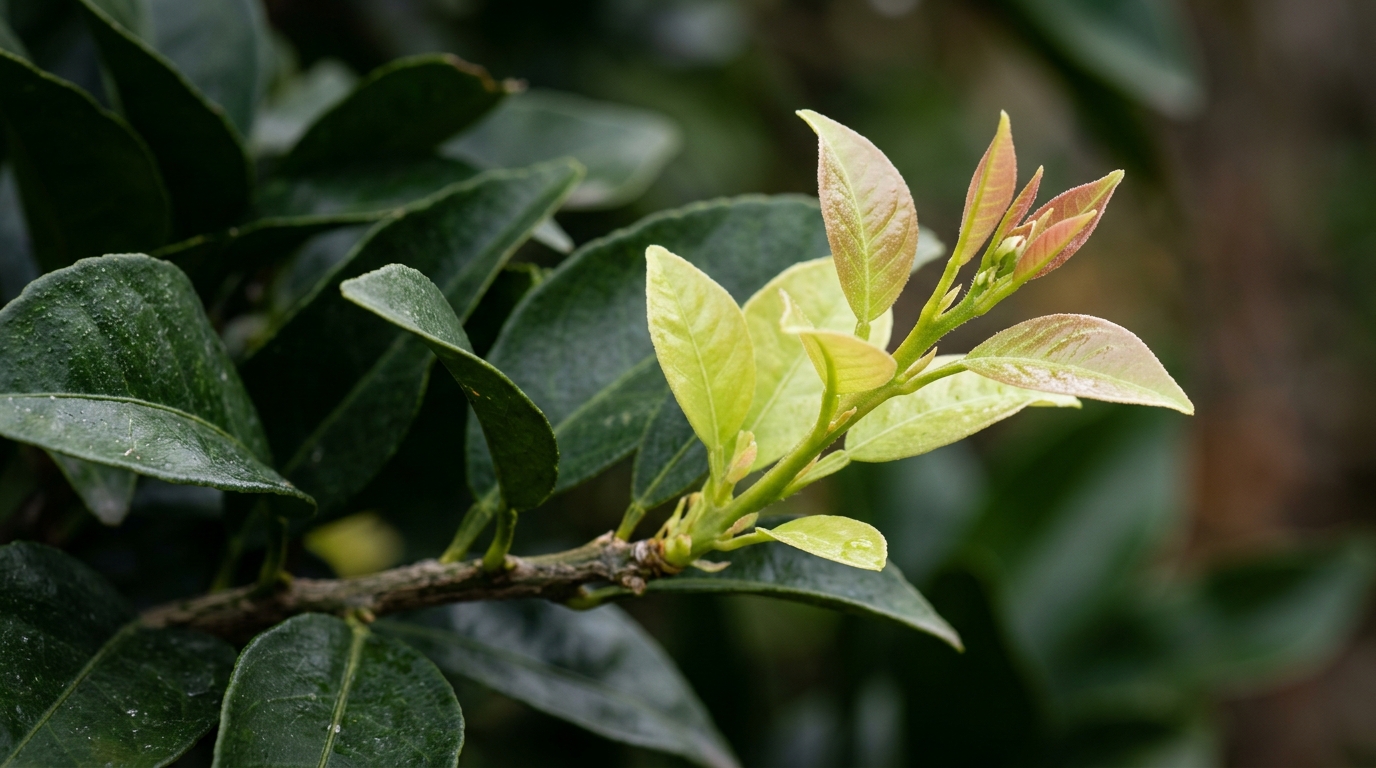
Nitrogen is the primary chemical gas pedal for vegetative growth. When you apply fertilizer containing nitrogen in September—whether synthetic granules, organic meals, or water-soluble feeds—the roots absorb nitrates and ammonium from the warm autumn soil. This surges into the canopy and triggers a rapid, unseasonal flush of tender shoots.
This late-season vegetative flush creates three serious hazards for your citrus tree:
1. Cellular Frost Rupture (Freeze Kill at 30°F–32°F)
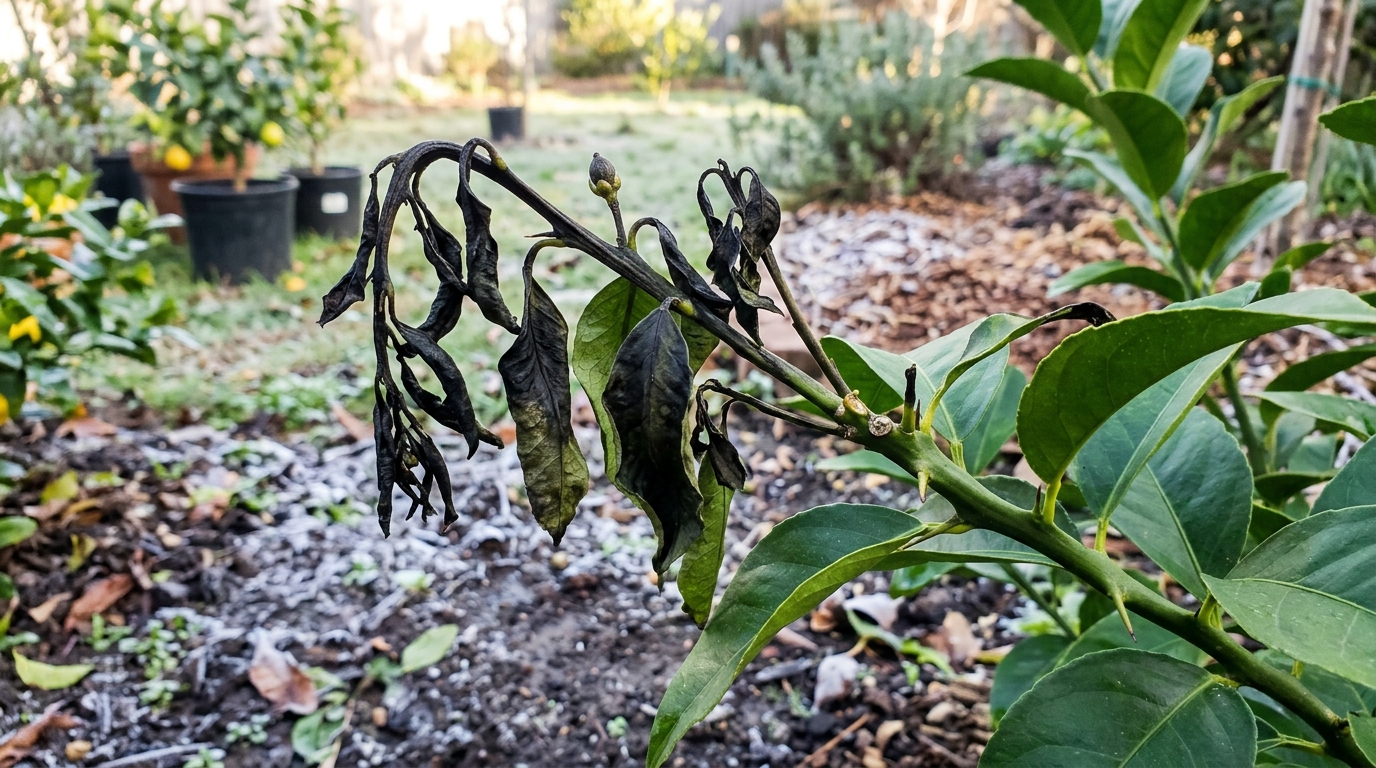
While hardened, mature citrus leaves have thick waxy cuticles and concentrated cytoplasmic sugars that endure 26°F to 28°F (-3°C to -2°C), tender late-season shoots consist of fragile, thin-walled parenchyma cells filled with watery vacuolar fluid. When nighttime temperatures dip just below freezing (30°F to 32°F / -1°C to 0°C), sharp ice crystals form rapidly within and between cell walls. These ice shards puncture cell membranes, causing complete cellular lysis.
When the morning sun strikes the frosted canopy, the ruptured tissue collapses into blackened, water-soaked mush. Even worse, the damage does not stop at the leaf tips: cold damage frequently travels downward through unlignified green stems, killing branch wood back into the heart of the tree.
2. Gateway for Bacterial Blast (Pseudomonas syringae)
Frost-damaged autumn shoots are not just an aesthetic eyesore—they are an open biological doorway for pathogens. As detailed in the University of California Statewide Integrated Pest Management Program (UC IPM Guidelines on Freezing and Frost Damage to Citrus), frost injury cracks open the bark and leaves necrotic wounds. During cold, rainy winter weather, the bacterial pathogen Pseudomonas syringae pv. syringae colonizes these wounds, causing citrus bacterial blast and black pit.
Bacterial blast causes twigs to turn dark brown or black, leaves to wither and drop while their petioles remain firmly cemented to the dead twigs, and entire branches to collapse. In severe cases, the infection girdles main scaffold branches, requiring aggressive surgical pruning in spring.
3. Ruined Fruit Quality and Delayed Degreening
Even if winter stays unusually mild and avoids hard frosts, late-season nitrogen severely degrades the fruit currently ripening on the branches. Horticultural research from university citrus extension programs confirms that excess nitrogen late in the season causes multiple fruit physiological defects:
- Delayed Color Break ("Regreening"): High nitrogen levels maintain high chlorophyll synthesis in the rind, preventing lemons, oranges, and mandarins from shifting into their bright yellow or orange coloration. Fruit remains green or dull bronze long past its normal ripening window.
- Thick, Puffy Rinds: Excessive late nitrogen stimulates peel tissue overgrowth, resulting in coarse, pebbly, puffy rinds with reduced internal juice vesicles and dry, stringy flesh.
- Imbalanced Flavor: High nitrogen delays sugar accumulation while prolonging harsh acid levels, leaving fruit tart, watery, and lacking sweetness.
The University-Approved Citrus Fertilization Schedule
So when should you feed your citrus trees? According to commercial orchard guidelines and home garden publications from the University of California Statewide IPM Citrus Guide and extension specialists across citrus-growing regions (California, Arizona, Texas, and Florida), citrus requires regular nitrogen—but delivered in a precise, front-loaded seasonal schedule.
Instead of feeding constantly throughout the year, the tree's total annual nitrogen requirement should be divided into three equal applications during active spring and summer growth:
The 3-Split Citrus Feeding Calendar
- Application 1 (January / February — Late Winter): Apply just as vegetative bud swell begins and flower clusters emerge. This critical early feeding provides the nitrogen needed for strong flower set, petal drop, and the vigorous primary spring flush.
- Application 2 (April / May — Late Spring): Apply after fruit set when small pea-sized fruitlets are forming. This supports early fruit cell division, foliage expansion, and secondary canopy growth.
- Application 3 (June / July — Mid-Summer): The final feeding of the year, providing nutrients for fruit sizing. In frost-prone regions, August 1 to August 15 is the absolute cutoff date for applying any nitrogen fertilizer.
If you recently purchased a new container citrus tree, remember that nursery stock comes packed with slow-release fertilizer pellets designed to feed the plant for weeks. Review our breakdown in the nursery fertilizer secret: why you must wait before feeding new plants to avoid double-dosing young roots.
What About Yellow Leaves in September? (The Chlorosis Trap)
One of the most frequent reasons gardeners reach for the fertilizer bag in September is seeing pale or yellowing leaves. It feels counterintuitive to leave a yellowing tree unfed. But before you act, diagnose what those yellow leaves actually mean:
1. Natural Leaf Shedding
Citrus leaves have an average lifespan of 18 to 24 months. In late summer and early autumn, it is entirely normal for older, interior leaves (closest to the trunk) to turn uniformly yellow and drop off. If the exterior canopy and branch tips remain deep green, the tree is simply shedding older, shaded foliage to conserve energy for winter.
2. Cool Soil Nutrient Lockout
As nighttime temperatures cool down in September and October, soil temperatures drop below 60°F (15°C). At these cooler temperatures, citrus root metabolism naturally decelerates. Roots take up nitrogen, iron, and zinc at a fraction of their mid-summer rate. Dumping granular fertilizer around the tree will not force uptake; instead, the unabsorbed salts accumulate in the root zone or leach into the water table, while the tree remains pale until spring soil warmth reactivates root transport.
3. Micronutrient Deficiencies (Iron & Zinc)
If younger leaves show distinct interveinal chlorosis (yellow leaf blades with prominent green veins), the issue is typically iron or zinc deficiency, often caused by alkaline soil (pH above 7.5). High-nitrogen citrus fertilizer will not resolve micronutrient chlorosis. If correction is essential before winter, apply a gentle chelated foliar iron spray directly to the foliage on an overcast morning, which enters through the leaf stomata without triggering root flushes.
What You SHOULD Do for Citrus in September
Skipping the fertilizer scoop does not mean abandoning your citrus orchard. Early autumn is the ideal window to prepare your trees for cold weather with proven cultural practices:
- Maintain Deep, Consistent Soil Moisture: Do not let citrus soil bake dry in autumn. A well-hydrated citrus tree has full cellular turgor and is significantly more freeze-resistant than a drought-stressed tree. Furthermore, moist soil acts as a massive thermal battery: during clear sunny autumn days, moist dark soil absorbs solar radiation, slowly radiating that stored ground heat upward into the tree canopy during freezing nights. (Avoid waterlogged conditions; ensure drainage is sharp).
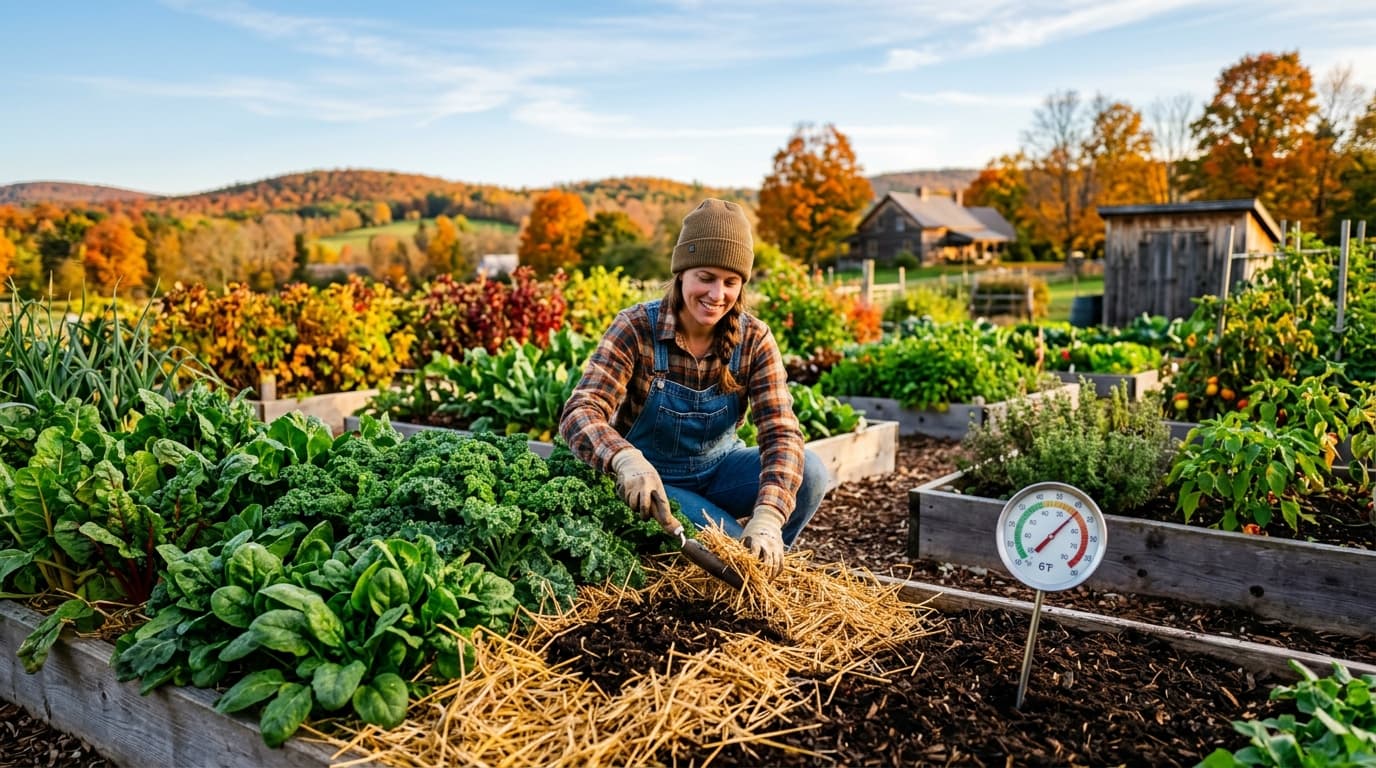
- Apply Root-Zone Mulch While Soil Is Still Warm: Lay down a 2- to 3-inch layer of organic arborist wood chips or coarse compost out to the drip line. As detailed in our guide on mulching warm soil to protect root systems, insulating warm autumn soil protects delicate feeder roots from rapid temperature swings. Crucial caution: Keep mulch at least 4 to 6 inches away from the trunk base to prevent damp collar rot (Phytophthora).
- Rake Up Fallen Fruit: Pick up all overripe or dropped fruit from beneath the canopy. Decaying fruit harbors fungal spores and attracts fruit flies, rodents, and fungal brown rot. Learn more about orchard hygiene in our guide on picking up fallen fruit to protect fruit trees.
- Stage Your Frost Protection Gear: Do not wait for the first hard freeze warning in December to look for frost blankets. Gather 4 wooden or bamboo stakes, breathable woven frost cloth (such as Agribon-35 or 50), and anchoring landscape staples now. Having your frame ready allows you to build a protective tent over small or young trees in under ten minutes when temperatures dip below 30°F.
Frequently Asked Questions About Fall Citrus Fertilization
My citrus tree already started pushing new flush in early September. What should I do?
Do not panic, and do not prune it off. Pruning stimulates latent buds and will trigger even more tender growth! Immediately cease all fertilizer applications. Keep the soil evenly hydrated so the shoots can mature as much as possible before temperatures drop. Mark those branches: when the first frost forecast arrives, make sure your frost cloth completely covers and protects those tender branch tips from freezing air.
Does this no-fertilizer rule apply to potted citrus trees?
Yes, and with even greater urgency! Container-grown citrus trees are far more vulnerable to cold than in-ground trees because freezing ambient air surrounds the entire root ball, lowering root temperatures rapidly. Stop fertilizing potted citrus by late summer. Before the first freeze, move containers to a sheltered microclimate—such as beneath a covered south-facing patio overhang, against a sunny brick wall, or indoors near a bright south-facing window.
What about "winterizer" fertilizers with potassium? Can I use those?
Many commercial "fall winterizer" fertilizers marketed for lawns contain significant amounts of nitrogen along with potassium (e.g., 10-0-14 or 8-0-24). Avoid these for citrus! While potassium does help reinforce cellular membrane stability and cold tolerance, applying any nitrogen in fall is counterproductive. If soil tests show your soil is deficient in potassium, apply a nitrogen-free source (such as potassium sulfate, 0-0-50) in mid-summer, not during the autumn dormancy transition.
Which citrus varieties are most sensitive to frost?
Cold hardiness varies widely across citrus species:
- Most Tender (Damage below 29°F–30°F): Limes (Key lime, Bearss lime), lemons (Eureka, Lisbon, Meyer), and citrons.
- Moderately Hardy (Damage below 26°F–28°F): Sweet oranges (Navel, Valencia), grapefruits, and pomelos.
- Most Cold-Tolerant (Hardened trees endure 20°F–24°F): Satsuma mandarins, kumquats, calamondins, and Yuzu.
Regardless of the species, tender late-season flush on any citrus variety freezes and dies at 30°F to 32°F.
Deepen your orchard care and soil knowledge: check our companion guide on planting nursery citrus in September and frost risk, discover the nursery fertilizer secret for young plants, read why fall mulching protects warm roots, explore how fallen leaves feed soil naturally, and explore our comprehensive Seasonal Gardening Playbook.