 Sprouty
Every September, home gardeners across warm-winter zones walk into garden centers to find enticing end-of-summer nursery sales. Tables overflowing with glossy, fragrant citrus trees—sweet Meyer lemons, Bearss limes, Navel oranges, and juicy Satsuma mandarins—line the retail yards. Gardeners have spent years reading one of the most widely repeated adages in horticultural literature: "Fall is the undisputed best time of year to plant trees!"
Armed with that conventional wisdom, it feels entirely logical to load a handsome 5-gallon or 15-gallon containerized citrus tree into the car, grab a spade, carve a wide planting hole in the warm September dirt, and set your new citrus free.
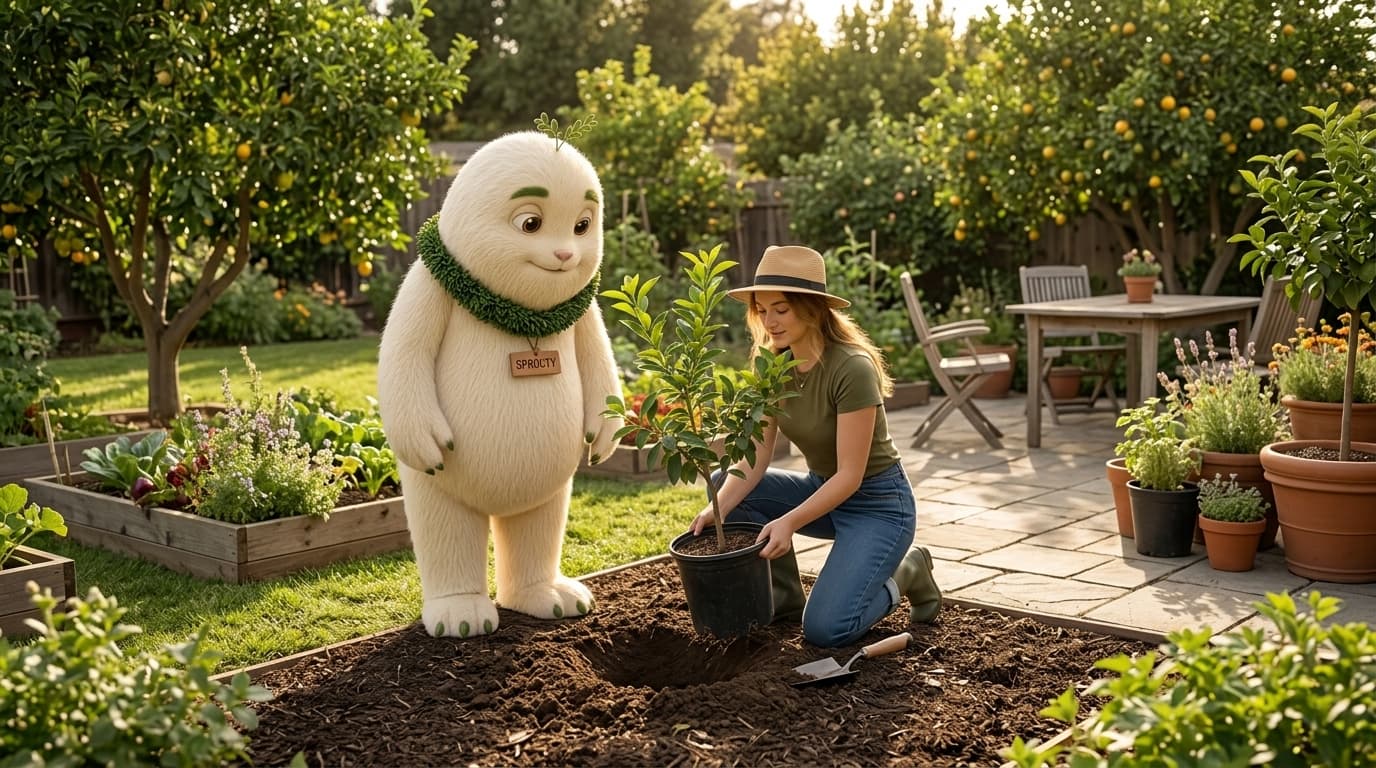
That was exactly the scene unfolding in Sophie's backyard on a warm, sunlit September afternoon. She had just finished digging a generous planting bed and was gently loosening the root ball of a healthy young container citrus, preparing to slide it into the earth. That is when Sprouty scampered over, raising a paw in an urgent halt:
Sprouty: "Whoa, Sophie! I’d wait till spring."
Sophie: (Freezing with the citrus halfway out of the pot) "Why? It’s still warm! The soil is toasty and the roots have weeks before winter."
Sprouty: "Frost can kill young citrus. Unless you’ll protect it all winter—keep it potted!"
Sophie: (Pausing, then sliding the citrus safely back into its plastic container) "Got it. Tree stays in the pot until the spring warmth hits."
🍊 On-Screen Truth: Planting nursery citrus in September? Wait until spring—or protect it hard all winter.
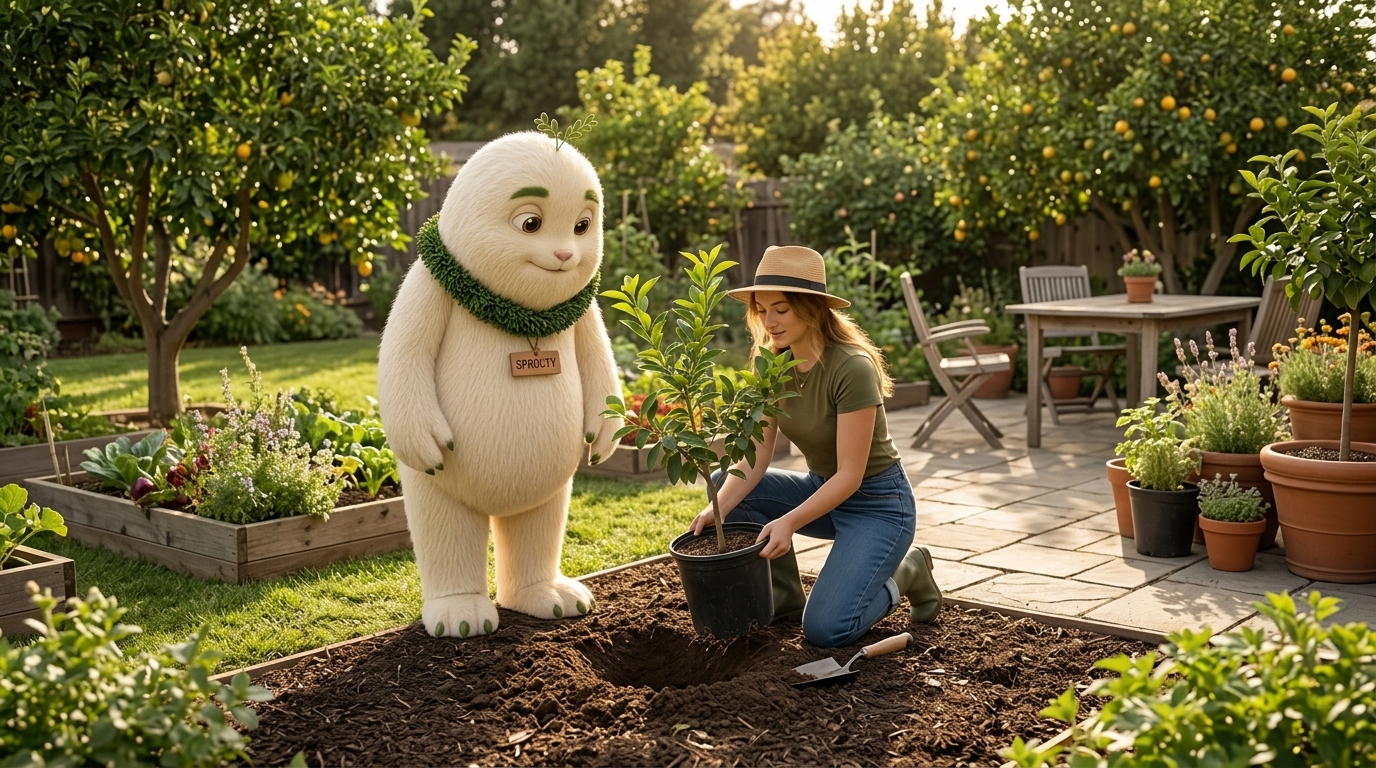
Watch Sprouty & Sophie on Nursery Citrus September Planting
See why putting container citrus trees into garden beds in September puts them directly in the crosshairs of winter frost.
The Fall Tree Planting Fallacy: Deciduous Hardiness vs. Subtropical Vulnerability
Why does practically every gardening column champion autumn planting? Because for deciduous fruit trees and temperate shade trees (apples, pears, plums, peaches, oaks, and dogwoods), fall planting is an extraordinary advantage. In autumn, declining air temperatures and photoperiod halt canopy transpiration, while warm late-season soil promotes vigorous feeder root development. By the time winter settles in, deciduous species have shed their foliage, entered biochemical endodormancy, and can tolerate sub-zero temperatures without flinching.
Citrus trees (genus Citrus) do not belong to that world.
Originating in the humid subtropical and tropical climates of Southeast Asia and southern China, citrus species are broadleaf evergreens. They maintain active leaves, thin green cambium, and fluid cellular sap throughout all twelve months of the year. Citrus trees do not possess a true physiological dormancy mechanism. Instead, they enter a state known to plant physiologists as temperature-induced quiescence: they merely pause active vegetative growth when ambient temperatures drop below roughly 55°F (12.8°C).
When you plant a potted nursery citrus directly into garden soil in September, three critical vulnerabilities converge:
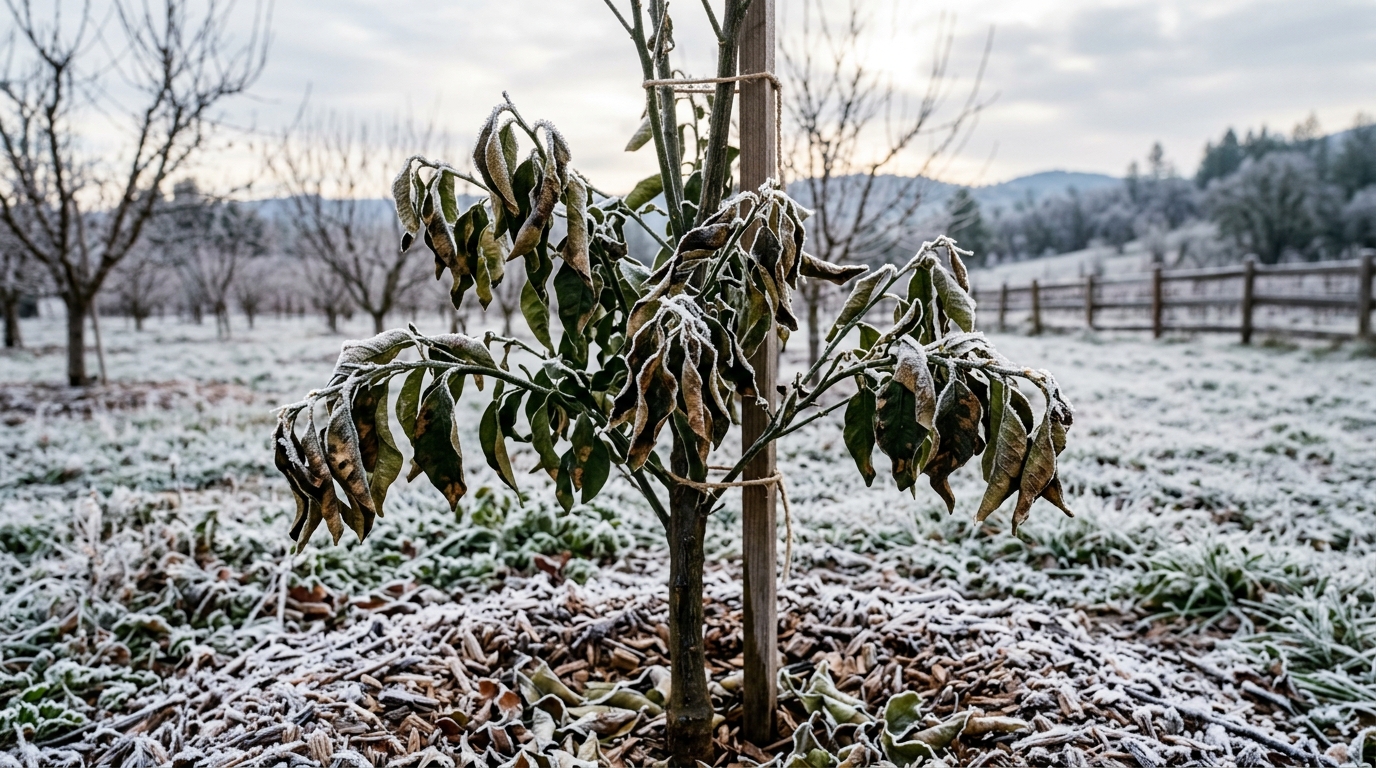
- Late Succulent Vegetative Flushes: Container citrus from nurseries have typically been pampered under shade cloth and fed with soluble nitrogen fertilizers. Planting them into warm September garden soil combined with post-transplant watering acts as an aggressive stimulant, triggering a late autumn flush of soft, tender shoots. These succulent green stems contain high water content and zero lignified protection—meaning they freeze solid at 30°F to 32°F.
- A Severe Hydraulic Root Deficit: Even when transplanted with meticulous care, shifting a root system from lightweight nursery container media (peat moss, bark, and perlite) into native garden soil disrupts fine root hairs. According to commercial citrus production research from UC Davis Fruit and Nut Research and Information Center, citrus feeder roots require 4 to 6 months of active warm-soil growth to knit deeply into native soil. When dry, windy winter freezes strike, the unanchored root zone cannot deliver moisture to transpiring evergreen leaves, resulting in lethal winter desiccation.
- The Vulnerable Graft Union: Young citrus sold in nurseries are grafted or budded onto cold-tolerant rootstocks (such as Trifoliate orange Poncirus trifoliata, Carrizo citrange, or C-35). In 5-gallon and 15-gallon nursery trees, that vital graft union sits a mere 4 to 8 inches above the soil line. On clear, calm winter nights, the densest freezing air settles right at ground level. If freezing temperatures girdle the trunk at the graft union, the entire cultivated scion dies—leaving you with only the thorny, unpalatable rootstock sucker.
Citrus Cold Hardiness: Biological Thresholds by Variety
Not all citrus varieties handle cold equally. As detailed in the University of California Statewide Integrated Pest Management Program (UC IPM Guidelines on Freezing and Frost Damage to Citrus), cold sensitivity is dictated by species genetics, rootstock, acclimation, and tree maturity:
- Limes and Lemons (Most Cold-Sensitive): Mexican (Key) limes are exceptionally tender and suffer significant foliage and shoot collapse at 30°F to 32°F. Eureka and Lisbon lemons will suffer leaf damage below 28°F to 30°F and branch dieback at 26°F. Meyer lemons (a lemon-sweet orange hybrid) are slightly hardier, enduring down to roughly 26°F once established, but young nursery specimens freeze rapidly.
- Sweet Oranges and Grapefruits (Moderate Sensitivity): Navel oranges, Valencia oranges, and grapefruits possess moderate cold tolerance. Established, mature trees can endure 26°F to 28°F for short durations. However, a newly planted nursery sapling lacks the dense canopy and carbohydrate reserves of a mature orchard tree, suffering severe canopy defoliation when temperatures hover below 29°F for more than a couple of hours.
- Mandarins, Tangerines, and Kumquats (Most Cold-Tolerant): Satsuma mandarins (such as 'Owari') and kumquats (*Fortunella*) can withstand temperatures down to 20°F to 22°F—and kumquats even down to 18°F—when mature and fully hardened. However, university researchers at UC ANR Master Gardeners (Citrus for the Home Garden) warn that nursery saplings fresh from greenhouse conditions have not accumulated the intracellular sugars and cold acclimation required to survive those benchmark temperatures without protection.
🔬 Radiative Freeze: Why Your Thermometer Is Lying to You
Most backyard frost damage across Mediterranean, Pacific, and inland valley climates is caused by radiation frosts rather than arctic advective blizzards. On clear, cloudless, windless nights, terrestrial heat absorbed by the earth radiates freely straight into the upper atmosphere.
Because heat escapes rapidly into the cloudless sky, exposed surfaces like citrus leaves and green bark cool at a faster rate than the surrounding air. When your official weather station or porch thermometer reads 34°F, the upper surface of your citrus foliage may already be at 29°F to 30°F! In hollows and enclosed gardens, a thermal inversion creates a freezing puddle of cold air that hugs the ground right around your sapling's root flare.
Option 1: The Safest Move — Stage the Pot and Wait for Spring
If you ask university orchard specialists and commercial citrus nursery growers, their guidance is clear and unanimous: the single best time to plant a container citrus tree in the ground is spring (mid-March through May), after the final threat of frost has safely passed.
Planting in spring gives your tree 6 to 8 months of long, warm days, uninterrupted sunshine, and active soil temperatures. By the time autumn winds return, the tree has woven extensive feeder roots deep into native dirt, hardened its summer flushes into resilient brown bark, and accumulated the cellular antifreeze sugars necessary to handle winter cold snaps.
If you scored an irresistible citrus specimen on clearance this September, you do not have to leave it at the nursery! Simply employ the container staging protocol (just like our guidance on holding potted nursery California natives until heat waves pass):
- Keep the Tree in Its Container: Keep the citrus in its black plastic nursery pot through autumn and winter. If roots are circling aggressively, you can gently slip-pot it into a container one size larger using a coarse, fast-draining potting soil without disturbing the core root ball.
- Position It in a Warm Microclimate: Place the pot in a sheltered outdoor refuge:
- Beneath covered patio eaves or an open porch (the ceiling acts as a thermal shield that reflects radiant heat back down, preventing skyward heat loss).
- Against a south-facing or west-facing masonry, brick, or stucco wall that absorbs daytime solar heat and slowly radiates warmth throughout the night.
- Elevated slightly off cold concrete slabs using pot feet or a wooden plant caddy.
- Exercise the Mobility Advantage on Freezing Nights: Being in a container is the ultimate frost defense. Whenever local weather forecasts warn of overnight lows dropping toward 32°F (or below 35°F for limes and lemons), simply wheel the pot into an attached garage, garden shed, or bright covered porch for the night. Wheel it back out into the sun the following morning.
- Plant with High Vigour in Spring: When your region's last spring frost date arrives, dig your planting hole and plant your hardened, vigorous specimen into the garden bed with total confidence.
Option 2: If Planting Now — How to Protect Hard All Winter Long
What if you live in an exceptionally mild microclimate (such as USDA Zone 10 or coastal thermal belts), or you have already dug the hole and put your citrus into the ground? You cannot rely on mild luck. You must protect hard through every cold snap from November through March.
Here is the proven, science-backed winter protection protocol for newly planted in-ground citrus trees:
1. Construct an Air-Pocket Frame (Never Drape Directly on Leaves)
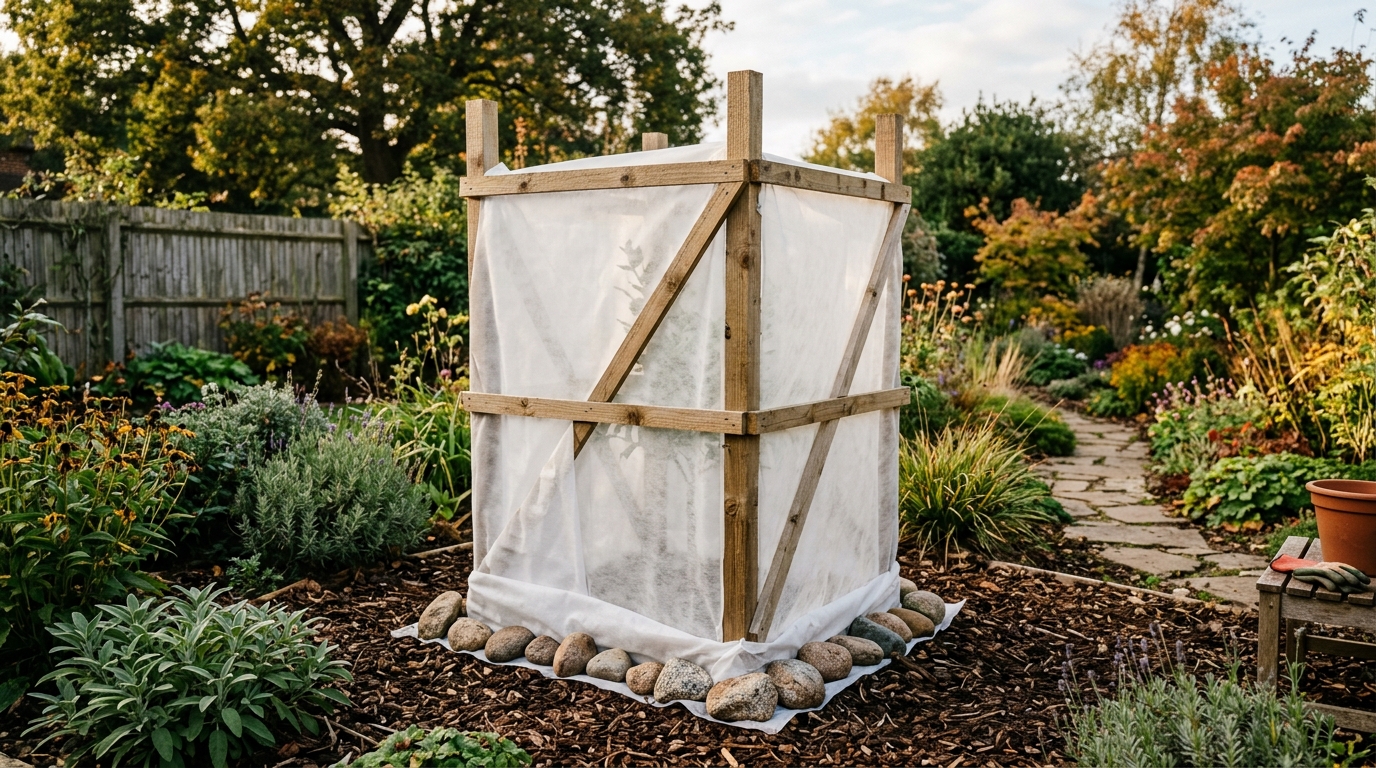
Drive four sturdy wooden stakes or tall bamboo posts into the soil outside the tree's drip line, creating a box or teepee structure that stands 6 to 12 inches higher and wider than the citrus canopy. Never drape frost blankets, tarps, or plastic sheeting directly onto citrus foliage. When cold fabric or plastic rests against leaves, thermal conduction pulls heat directly out of the plant tissue, causing instant frost burn and black leaf necrosis everywhere the material makes contact.
2. Use Breathable Frost Blanket That Reaches the Soil
Drape a medium-duty (1.5 to 2.0 oz/sq yd) breathable agricultural frost blanket (such as Agribon, Reemay, or DeWitt frost cloth) over your stake frame. Ensure the fabric drops completely to the ground on all four sides, and anchor the edges firmly with heavy rocks, bricks, or mounds of dirt. The primary heat engine during a freeze is the earth itself: soil absorbs solar radiation during the day and breathes it upward all night. Your shelter must trap that chimney of warm rising terrestrial air.
3. Insulate the Root Zone (The Trunk Donut Rule)
Spread a 3- to 4-inch layer of coarse organic wood chip or shredded bark mulch across the entire root perimeter out to the drip line. As covered in our guide on how mulching warm soil insulates root zones, this organic blanket shields delicate feeder roots from freezing soil temperatures. However, observe the golden orchard rule: keep mulch pulled back 4 to 6 inches from the trunk. Piling wet mulch against green citrus bark creates a damp environment that welcomes fatal crown rot and gummosis pathogens (Phytophthora nicotianae).
4. Shield the Green Bark from Sunscald and Freeze Cracking
Young citrus trees have thin, photosynthetic green bark on their main trunk. During bright winter days, low-angle sunlight heats the southwestern side of the trunk; when the sun sets and temperatures plummet, that sudden thermal drop causes severe bark splitting and cambium death. Wrap the lower trunk from soil level up to the lowest branch forks with breathable foam tree wrap, or paint the trunk with a 50:50 mixture of white interior latex paint and water.
5. Deploy Active Heat for Extreme Hard Freezes
When forecasts predict sustained nighttime temperatures below 28°F, passive fabric tents alone may not keep a tender 1-year nursery tree above the danger threshold. Add active heat under the tent canopy:
- Incandescent Holiday String Lights: String an outdoor-rated strand of old-fashioned C7 or C9 incandescent lights (not cool modern LEDs) through the lower branches inside the stake frame. The gentle thermal emission from incandescent bulbs will lift interior temperatures by 3°F to 6°F.
- The Water Thermal Mass Trick: Place two 5-gallon buckets of warm water under the frost tent right before sunset. Water possesses an exceptionally high specific heat capacity; as it gradually cools and freezes overnight, it releases latent heat of fusion directly into the enclosed air pocket.
🌿 The Bottom Line
Don't let autumn tree-planting slogans ruin an expensive nursery citrus tree. Apples and maples thrive with fall planting because they drop their leaves and sleep through the freeze; subtropical citrus trees stay active and have zero tolerance for winter frost when young. If you bring home a potted citrus tree in September, stage it safely in its container within a sheltered microclimate and plant it next spring after the last freeze. And if your citrus is already in the ground, get your stakes, breathable frost blankets, and mulch collars installed before the first cold snap arrives!
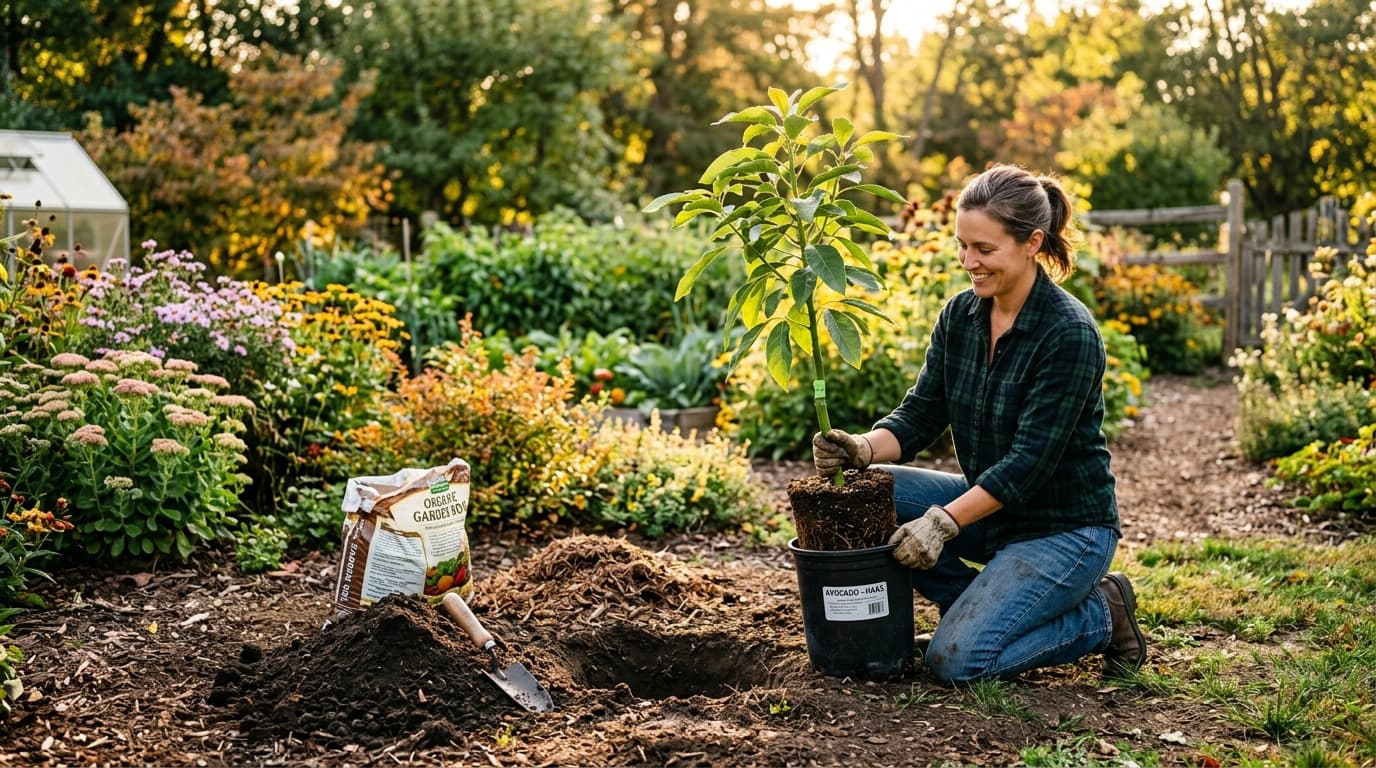
Planning your cool-season garden schedule? Explore our SproutySpeaks Fall Gardening Playbook & Checklist, see why we recommend the same staging approach for nursery avocado trees facing September frost risk, discover how to stage nursery California natives until autumn heat breaks, understand how mulching warm soil insulates root zones, review the emergency sweet potato frost harvest checklist, and follow our guide on clearing fallen diseased fruit to maintain orchard hygiene.