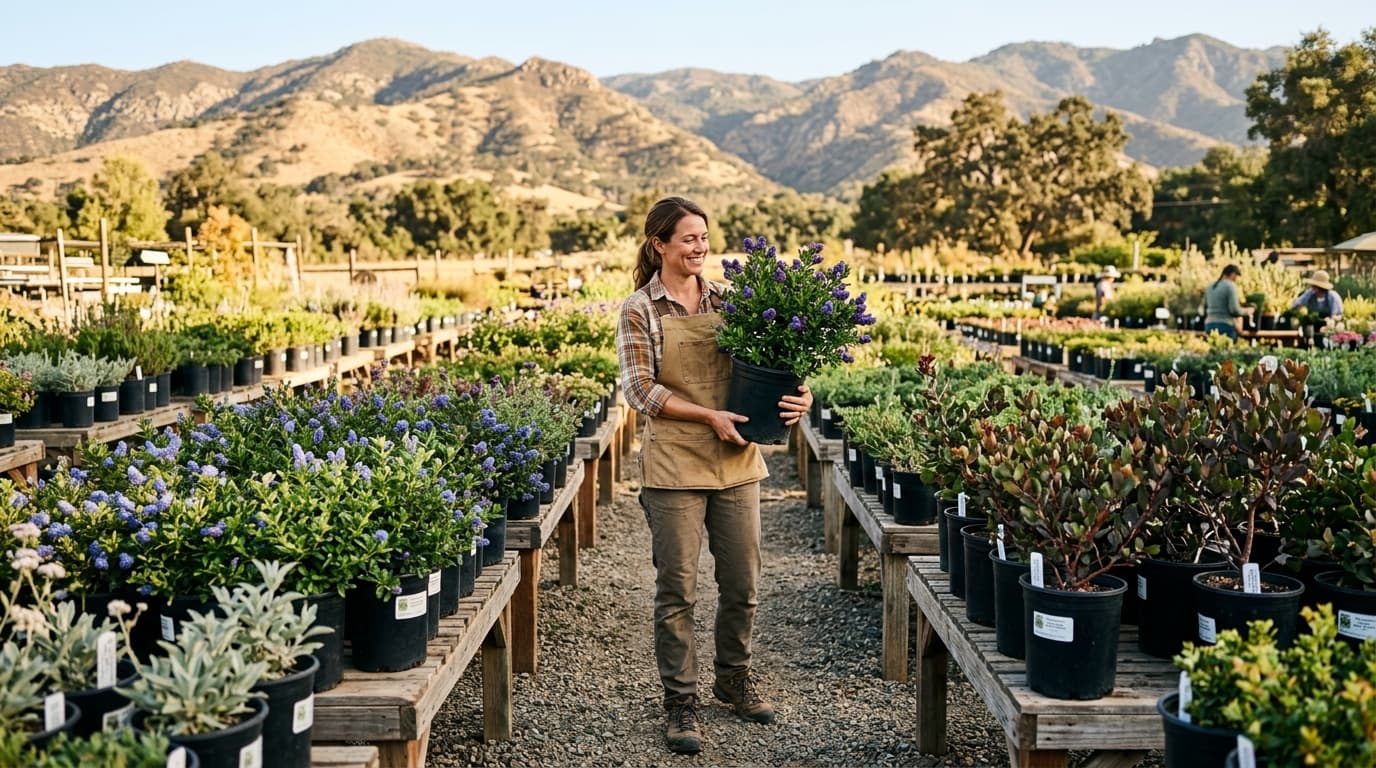

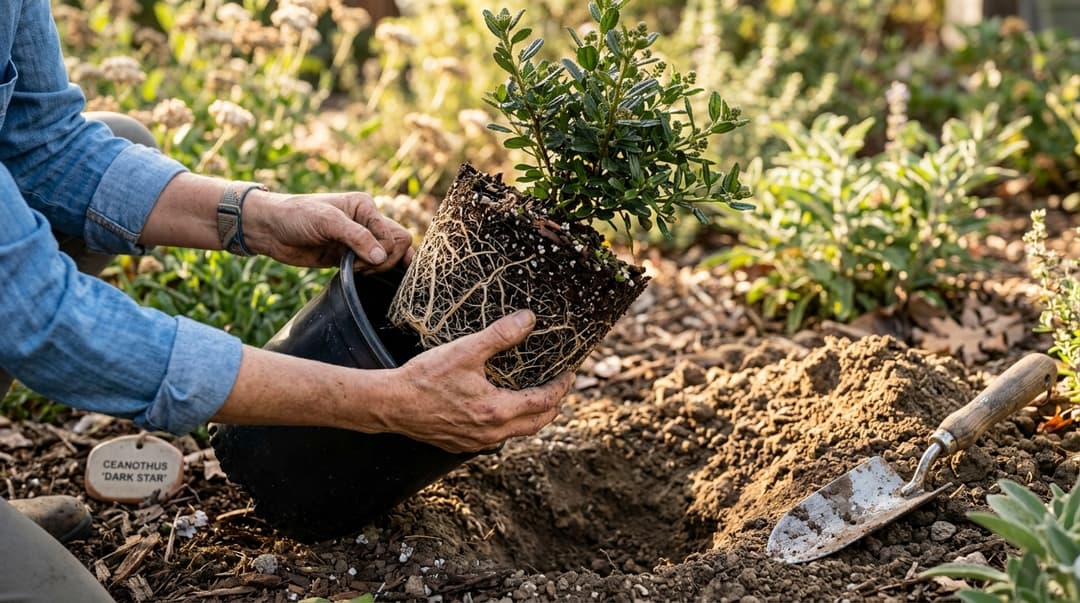
Late summer brings one of the most exciting shopping windows of the gardening calendar. Local nurseries and botanical sales suddenly burst with deep-green flats and gallons of California lilacs, manzanitas, salvias, and buckwheats. On a warm September afternoon, Sophie stood in the garden, trowel in hand, ready to plant a prize 1-gallon Ceanothus into a freshly dug hole:
Sophie: "Look at this nursery selection — California natives are everywhere right now! I dug the hole and I'm ready to plant this Ceanothus today."
Sprouty: "Whoa, Sophie — stop right there! Buy the plants now, but step away from that hole. Do not plant them into this summer heat!"
Sophie: "Wait... buy them now, but don't plant them?"
Sprouty: "September nursery stock is the best it gets all year, but dropping fresh roots into baking late-summer dirt stalls them out and invites fatal root rot. Stage them in the shade, keep them hydrated, and wait for cooler weather!"
It sounds counterintuitive at first. After all, if the nursery has them on display, shouldn't they go straight into your landscape? The answer is a resounding no. While September is hands-down the smartest month to purchase California native container stock, planting them into lingering 85°F to 100°F soil temperatures is the number one reason novice native gardeners watch their expensive shrubs die within weeks.
Watch Sprouty & Sophie Break Down the Native Planting Window
See why dropping potted California natives into late-summer heat stalls root growth and cooks plants in our quick video companion.
The Nursery Paradox: Why September Stock Is Supreme
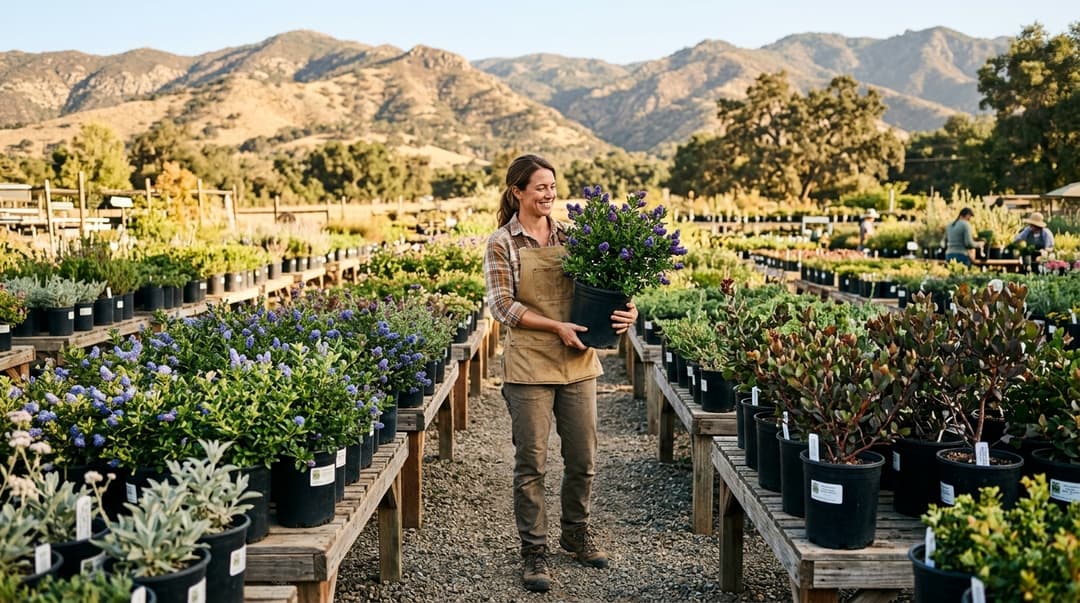
Every September, California wholesale nurseries gear up for the massive autumn planting season. Specialist growers propagate cuttings and pot up transplants throughout spring and summer, timing their peak shipments for late summer and early autumn. In garden centres from Sacramento to San Diego, benches are filled with:
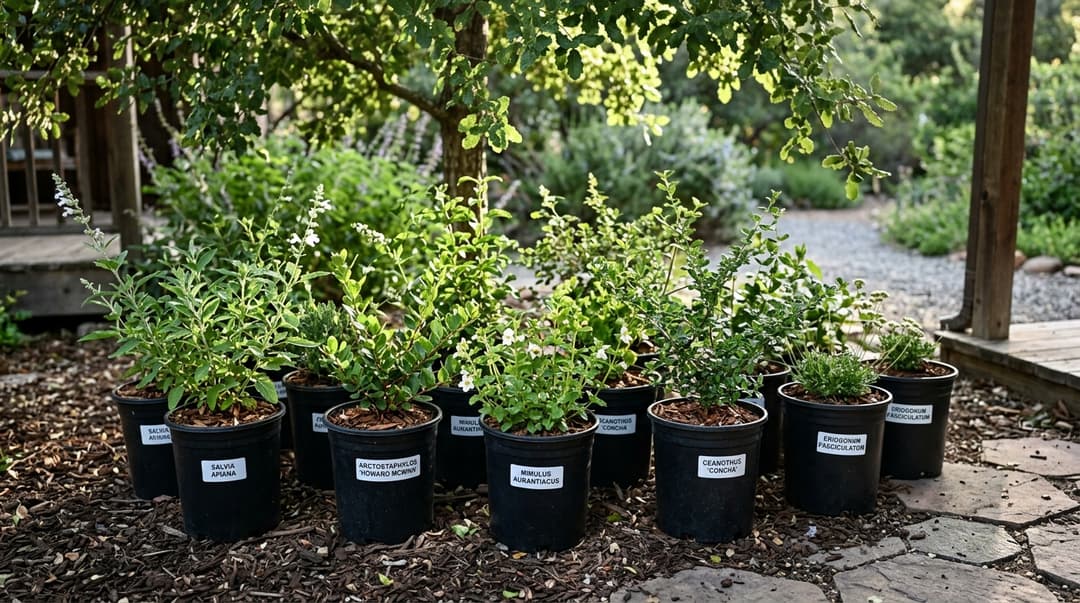
- Deep evergreen shrubs: Ceanothus ('Dark Star', 'Concha', 'Ray Hartman'), manzanitas (Arctostaphylos 'Howard McMinn', 'Emerald Carpet'), and coffeeberry (Frangula californica).
- Aromatic coastal and chaparral sages: Cleveland sage (Salvia clevelandii), white sage (Salvia apiana), and hummingbird sage (Salvia spathacea).
- Pollinator powerhouses: California buckwheat (Eriogonum fasciculatum), sticky monkeyflower (Diplacus aurantiacus), and goldenrod (Solidago velutina).
If you wait until November or December to shop, the most desirable cultivars, compact forms, and robust 1-gallon specimens are often completely sold out. You should definitely buy your plants in September. The mistake is what you do with them the moment you arrive home.
The Botany of Late-Summer Heat: Why Planting Now Stalls Roots
California native flora evolved under a Mediterranean climate regime: cool, wet winters followed by bone-dry, scorching summers. This evolutionary backdrop dictates how native root systems behave during September heatwaves:
1. Summer Estivation & Root Inactivity
Unlike temperate turfgrass or tropical ornamentals that flush with green whenever you pour on water, many California chaparral and coastal sage scrub species undergo estivation (summer dormancy). To survive months without rainfall, plants reduce metabolic activity, thicken leaf cuticles, and slow cellular elongation in their roots. When you plant a native into 90°F ground, its physiology is programmed to defend itself against desiccation — not to push tender, exploratory new feeder roots into dry surrounding dirt.
2. High Soil Temperatures Cause Thermal Shock
Air temperatures of 92°F often translate into bare garden soil temperatures exceeding 100°F in the top 4 to 6 inches. When a potted root system is placed into that baking earth, fine root hairs cook. Instead of expanding outward, the root system contracts and stalls. The plant sits frozen in time, unable to take up water efficiently.
3. The Deadly "Warm Wet Soil" Trap (Phytophthora)
Seeing their newly planted native droop in the heat, the well-meaning gardener grabs the hose and gives it a deep soaking every afternoon. This is the fatal blow.
As documented in the University of California IPM Pest Note 74133 on Phytophthora Root and Crown Rot, water molds like Phytophthora and Pythium thrive in warm, saturated soils. California natives possess zero evolutionary defense against hot, soggy soil conditions because natural rains occur only during cold winter months. Saturating a native root ball in warm September soil creates a petri dish for pathogens, causing rapid root rot, vascular collapse, and sudden death within 10 to 14 days.
Timing Comparison: Planting in Heat vs. Planting in Cool Weather
The difference in plant survival between planting in September heat versus waiting for the autumn cooling window is night and day:
The Staging Protocol: How to Keep Nursery Plants Happy Until Planting
So how do you take advantage of incredible September nursery selections without sacrificing your plants? Follow Sprouty's 4-step staging playbook:
🛡️ The 4-Step September Nursery Staging Playbook
- Pick Morning Sun or Dappled Canopy: Move all purchased nursery containers to a spot receiving gentle morning sun and shaded from the blistering afternoon heat (from 1:00 PM to 6:00 PM). Under a patio overhang, an arbor, or the north side of a fence is perfect.
- Cluster the Containers: Push pots shoulder-to-shoulder. Black nursery plastic absorbs intense radiant heat; clustering pots shades their sides, keeping root balls up to 15°F cooler than if isolated in the sun.
- Water When Top Inch Dries: Nursery potting soil (often bark and peat-based) dries out much faster than native garden soil. Check pots daily. When the top inch feels dry, give each container a thorough drink until water runs freely through the drainage holes. Never let pots sit in standing trays of water.
- Do NOT Fertilize: Skip all synthetic fertilizers or high-nitrogen feeds. Adding fertilizer now forces weak, tender green top-growth that will sunburn in late-season heatwaves or get scorched by early frosts.
When to Put Them in the Ground: The 3 "Go" Signals
When does the planting window officially open? Don't look at the calendar alone — look for these environmental cues backed by the UC Davis Arboretum and Public Garden and recommendations from Calscape (California Native Plant Society):
- Daytime Highs Drop Below 80°F: Wait until the string of 90°F+ afternoon spikes ends and daytime temperatures consistently peak in the 70s°F or low 80s°F.
- Nights Cool Down into the 50s°F: Crisp autumn nights cool the upper soil layers and increase relative humidity, giving new transplants overnight relief.
- The First Autumn Rains Arrive (The Gold Standard): In most California regions, the first significant winter rainstorms hit between mid-October and late November. Planting right before or immediately following a soaking rain allows roots to establish in deeply moistened soil with zero thermal shock.
🌿 The Bottom Line
Hit the native plant nurseries this September with confidence. Load your cart with the ceanothus, manzanitas, salvias, and buckwheats you have been dreaming about. Just remember Sprouty's cardinal rule: buy in September, stage in the shade, and plant when the heat breaks. Your native garden will establish deeper roots, dodge lethal pathogens, and reward you with spectacular spring blooms.
Planning more autumn planting projects? Read our companion guide on why planting native bulbs before the first rains rots them, discover the top 5 flowering plants to plant in September, and consult the complete SproutySpeaks Fall Gardening Seasonal Playbook.