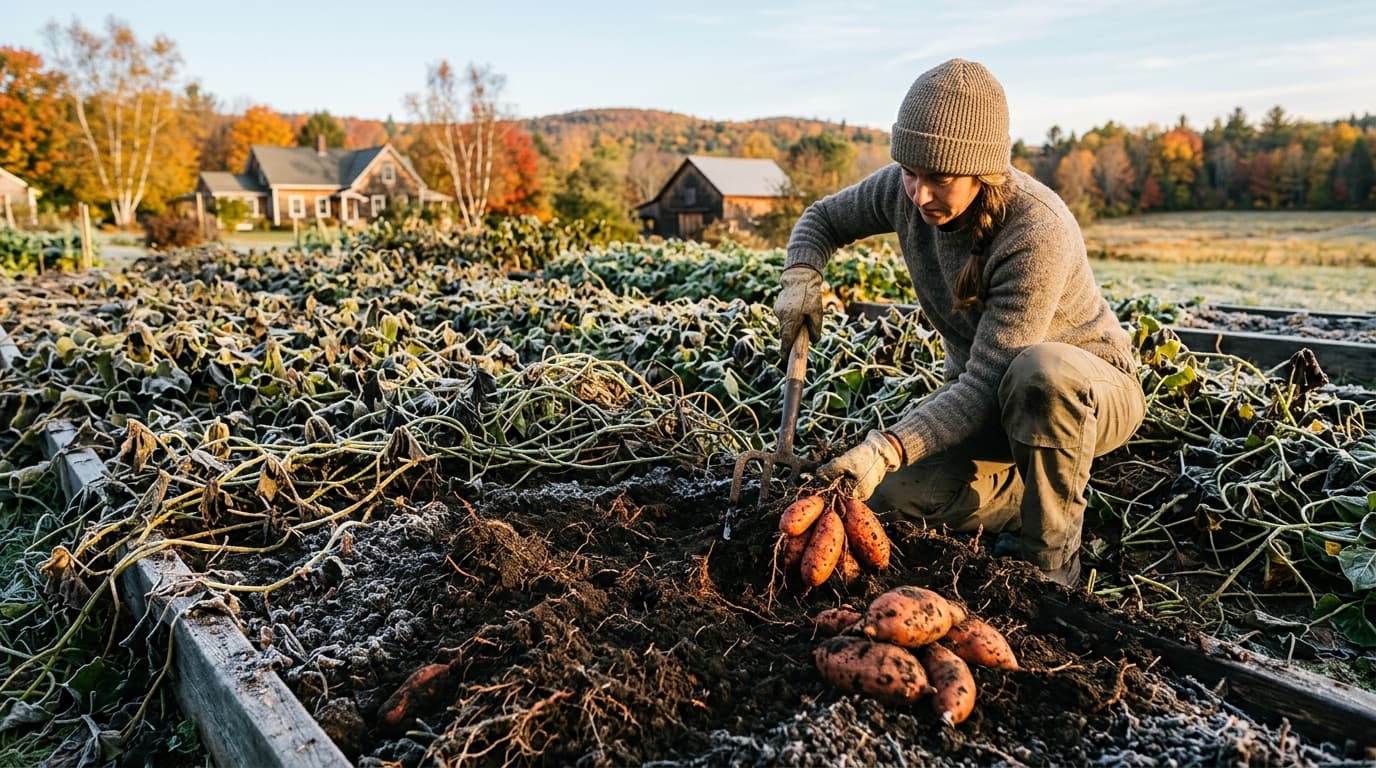

It happens almost overnight every autumn. Sophie stepped out into the crisp morning air with her mug of tea, looked across the raised beds, and stopped dead in her tracks. The sprawling, emerald-green jungle of sweet potato vines that had dominated the bed all summer was gone. In its place lay a collapsed, blackened carpet of limp foliage, touched by the season's first frost.
"Well, the vines are done," Sophie sighed. "I guess the potatoes are safe underground until I have time to dig them this weekend?"
Sprouty's immediate reaction: "Drop the tea mug and grab your digging fork right now! When frost hits sweet potato vines, you have hours, not days, before rot races straight down into your harvest."
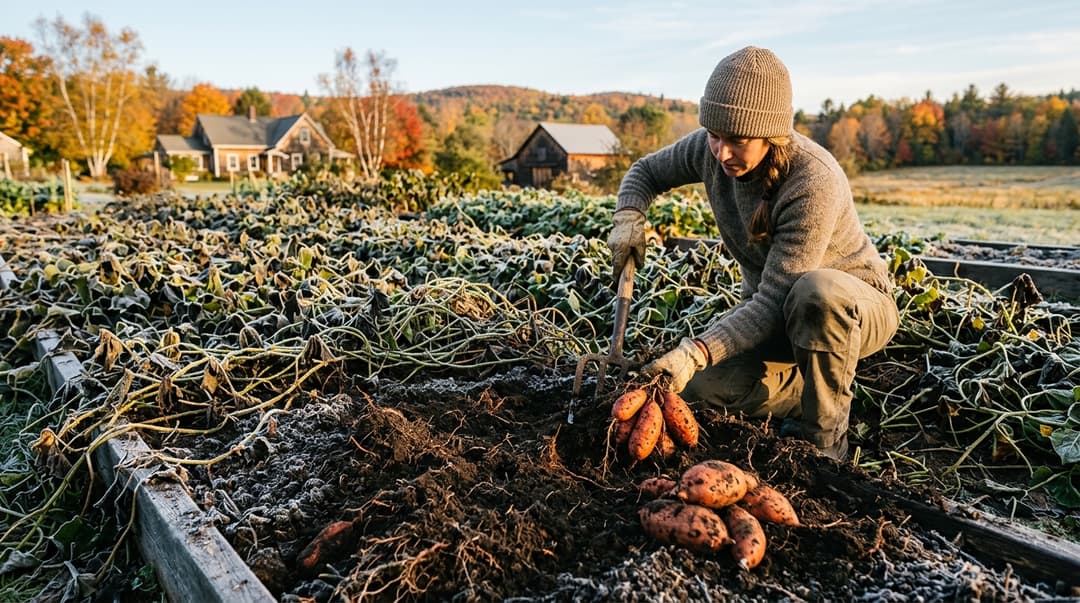
Watch Sprouty & Sophie on Frost-Damaged Sweet Potatoes
See exactly why you need to dig your sweet potatoes the day frost strikes in our latest quick tip video.
The Plant Botany: Why Sweet Potatoes Cannot Tolerate Frost
Many gardeners treat sweet potatoes like regular Irish potatoes (Solanum tuberosum). With regular potatoes, a light frost simply kills the tops, and the tubers can sit comfortably in cool autumn soil for several weeks until you are ready to dig them up.
Sweet potatoes (Ipomoea batatas) are completely different creatures.
Sweet potatoes are tropical perennials belonging to the morning glory family (Convolvulaceae). Unlike true potatoes, which are modified underground stems, sweet potatoes are true enlarged storage roots. They are intensely sensitive to cold temperatures above and below ground:
- Tender foliage: Sweet potato leaves and vines contain high water content and zero frost tolerance. Ice crystal formation ruptures cell walls at 31–32°F (-0.5°C), causing the entire canopy to turn black and collapse within minutes of sunrise.
- Direct stem-to-tuber connection: Unlike white potatoes that detach easily on slender stolons, sweet potato storage roots connect directly to the main crown and vine bases through fibrous vascular bundles.
- Chilling injury sensitivity: As documented by postharvest specialists at the UC Davis Postharvest Technology Center, sweet potato roots suffer severe physiological chilling injury whenever soil or storage temperatures drop below 55°F (13°C), resulting in internal breakdown, off-flavors, and rapid decay.
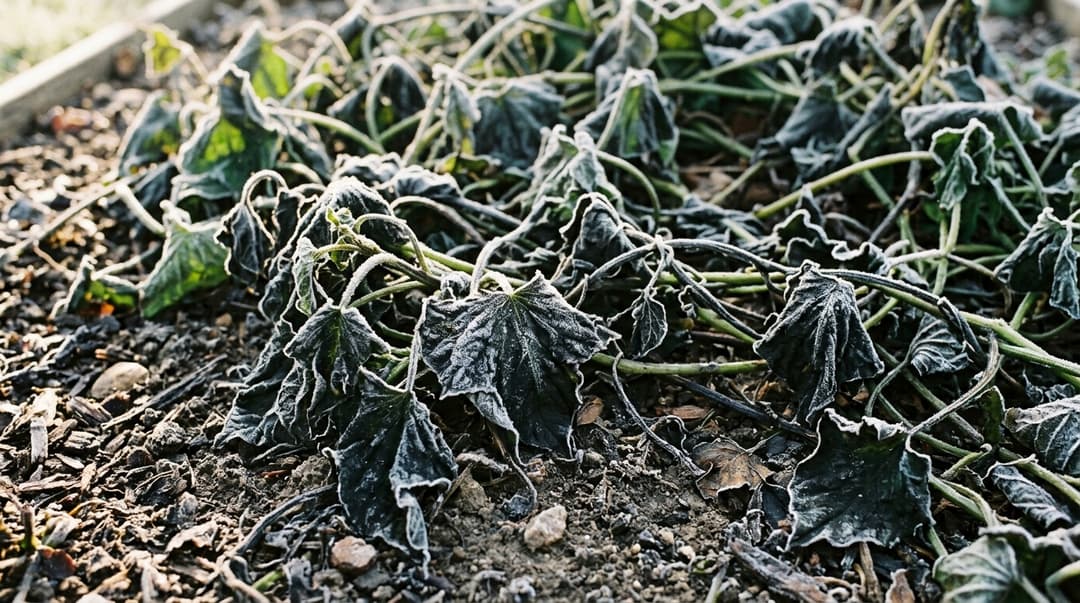
The Decay Highway: What Happens If You Leave Frosted Vines in the Ground
If you leave your frosted sweet potato crop sitting in the soil waiting for the weekend, you trigger a destructive two-front attack on your harvest:
- Pathogen Migration Down the Vines: When frost kills the vegetative vines, the dead tissue begins to break down immediately. Opportunistic decay fungi (including Rhizopus soft rot and black rot) and bacterial organisms invade the decaying stems. As documented in NC State Extension's Postharvest Sweetpotato Guide, decay organisms can travel downward through the dead vine tissue directly into the proximal (stem) end of the root. Within 48 to 72 hours, sound tubers develop sunken, sour-smelling rot zones that ruin their storage life.
- Subsoil Chilling Injury & "Hard Core": Following an autumn frost, nighttime soil temperatures drop rapidly. When sweet potatoes sit in wet, cold soil below 50°F, their internal cell metabolism is crippled. Chilled roots develop "hard core" — a condition where portions of the root remain tough, woody, and uncookable even after boiling or baking for hours.
⚠️ Can't Dig Today? Sever the Vines Immediately!
If an unexpected frost hits before work and you physically cannot dig the crop until later, take 5 minutes with pruners or shears to cut the vines off cleanly right at ground level. Cutting off the frosted vines breaks the vascular bridge, preventing decay organisms and toxic breakdown sap from migrating down into the tubers. Then, dig the roots out within 24 to 36 hours maximum before cold soil penetrates the root zone.
Sweet Potatoes vs. Irish Potatoes: The Autumn Frost Rulebook
Understanding how differently these two root crops behave in autumn frost will save your harvest year after year:
How to Dig Sweet Potatoes Without Destroying Their Skin
According to field recommendations from the UC Master Gardeners, sweet potatoes have exceptionally delicate, paper-thin skin at harvest time. A single scratch or nick from a spade tine will invite fungal pathogens. Follow these four steps for a clean rescue:
- Clear the Frosted Vines: Before digging, pull or cut the dead vines away from the bed so you have an unobstructed view of the soil surface and plant crowns.
- Start Digging 12–18 Inches Away: Do not drive your garden fork straight down near the crown! Sweet potato roots often push horizontally before swelling. Insert your digging fork at a 45-degree angle well outside the perimeter of the mound.
- Lever the Root Clump from Below: Gently pry upward from underneath the entire hill. Use your hands to feel into the loose soil and gently lift the tubers out. Never yank on the main stem, which can snap the necks of the largest potatoes.
- Do NOT Wash With Water: Resist the temptation to spray off the dirt with a hose. Water saturates fresh skin wounds and creates an ideal environment for soft rot. Simply shake off loose soil and let the tubers dry in the shade for an hour.
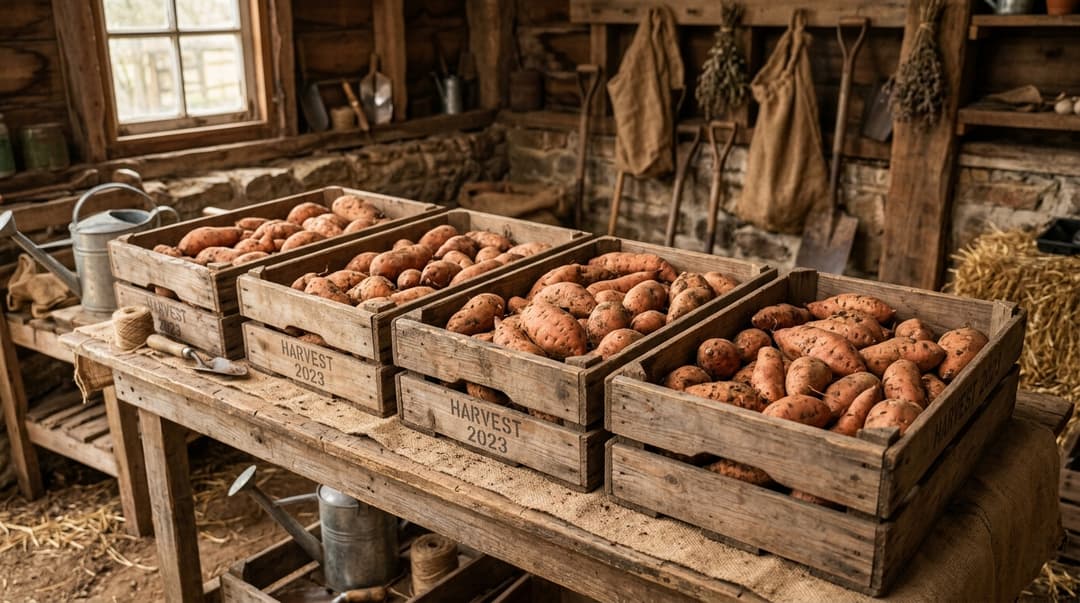
The Non-Negotiable Step: Curing Your Sweet Potatoes
If you have ever eaten a freshly dug sweet potato, you were probably disappointed: it tasted starchy, dry, and bland. That's because sweet potatoes are not ready for the kitchen on harvest day.
Freshly dug sweet potatoes require curing. Curing triggers two biological transformations:
- Wound Healing (Suberization): A warm, humid environment stimulates the root to synthesize suberin, a waxy waterproof substance that thickens the skin and seals off minor field scrapes.
- Sugar Conversion: Internal enzymes (specifically beta-amylase) break down stored complex starches into sweet maltose and sucrose sugars, giving the tubers their signature rich flavor and moist texture.
🍠 How to Cure Sweet Potatoes at Home (Easy Setup)
Commercial growers cure in specialized climate-controlled rooms at 85°F and 85–90% relative humidity for 4–7 days. At home, you can easily replicate this:
- Place tubers in a single layer in shallow cardboard boxes or wooden slatted crates.
- Cover the boxes loosely with a damp towel or burlap to trap humidity while allowing air exchange.
- Place the boxes in your warmest indoor room: next to a furnace or water heater, inside a boiler room, or in a warm bathroom with a space heater set to 80–85°F.
- After 5 to 7 days, move the cured tubers to long-term storage in a cool, dark pantry at 55°F to 60°F. Never refrigerate sweet potatoes! Refrigeration triggers chilling injury that turns the center woody and bitter.
🌿 Sprouty's Golden Rule for Autumn Harvests
Frost on root crops isn't always a crisis — carrots, parsnips, and beets actually get sweeter with a light freeze. But sweet potatoes are tropical travelers. When their vines turn black, treat it like an emergency fire drill. Dig them today, cure them warm, and you will be enjoying sweet, creamy sweet potatoes right through Thanksgiving and Christmas!
Wrapping up your autumn garden checklist? Check out our complete Fall Gardening Guide & Cleanup Playbook, explore our guide on what to plant in your fall garden before winter sets in, learn how your local first-frost dates are shifting in our plant hardiness zone breakdown, and find out why you should use fallen leaves to nourish your cleared beds.