
Every September, garden centers across the country roll out enticing end-of-summer nursery sales. Rows of glossy, emerald-leaved fruit trees line the aisles—including tempting 5-gallon and 15-gallon containerized avocado trees. Gardeners have spent years hearing the cardinal rule of arboriculture drilled into their heads: "Fall is the single best time of year to plant trees!"
So, naturally, you buy that gorgeous grafted Hass, Fuerte, or Bacon avocado tree, wheel it into the backyard, dig a generous hole in the warm September earth, and prepare to slide it into the ground.
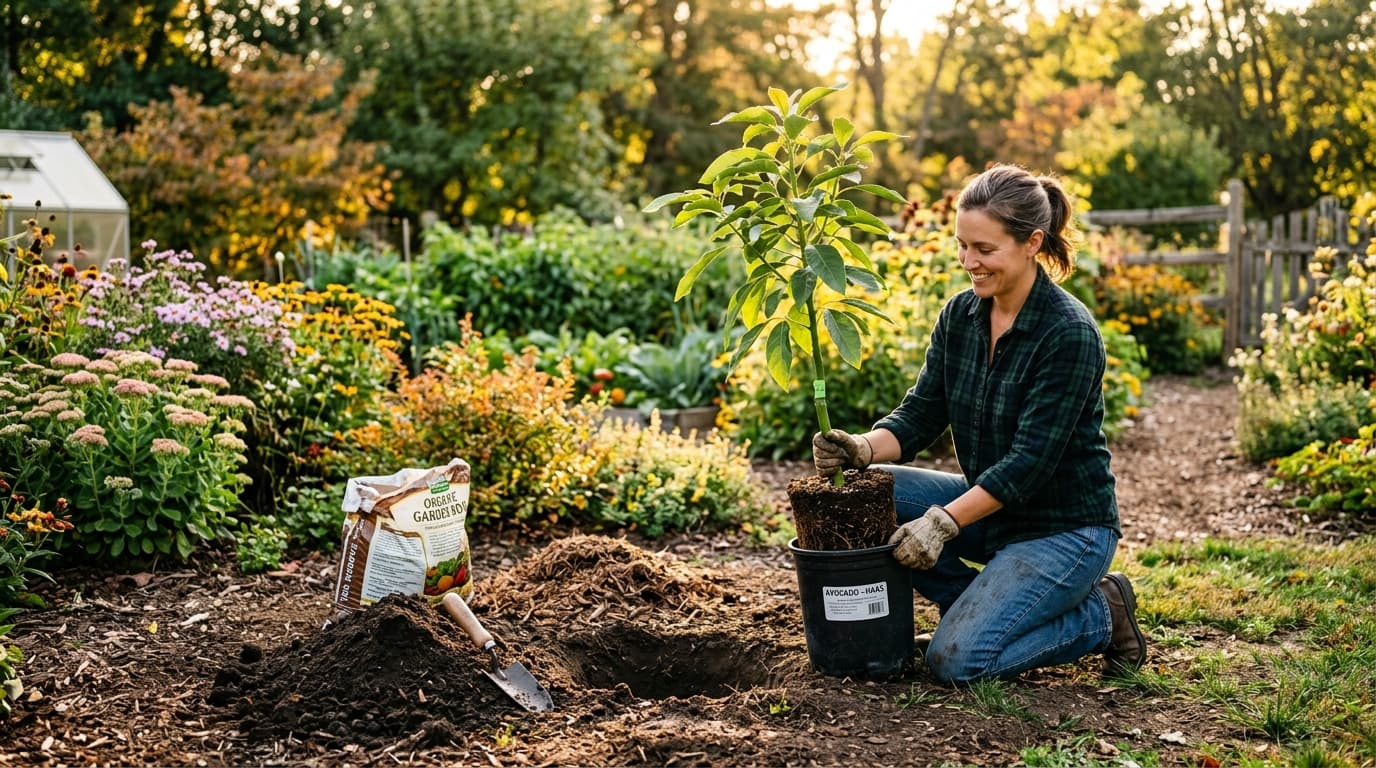
That was exactly where Sophie was standing on a crisp, golden September afternoon—kneeling beside a freshly dug hole with a beautiful potted Hass avocado sapling, ready to ease the root ball out of its black nursery container. That's when Sprouty burst onto the lawn, waving his leaves in frantic protest:
Sophie: "Sprouty, look at this gorgeous Hass avocado tree I found on nursery clearance! I'm getting it straight in the ground today so the roots can get established before next summer. You're always saying fall is the best time to plant trees!"
Sprouty: "Sophie, drop that shovel and back away from the planting hole right now! That rule applies to deciduous trees, not tender subtropicals!"
Sophie: "Wait, what's the difference? A tree is a tree, right? The soil is warm and the air is cooling down—it's perfect!"
Sprouty: "Deciduous apples and oaks go completely dormant in winter—they drop their leaves and sleep like a log through hard freezes. But an avocado is a broadleaf subtropical evergreen! It never goes fully dormant. If you plant that baby tree in the ground in September, its succulent green branches and shallow tender roots are sitting ducks when winter frosts roll in. One night at 28 degrees and your sixty-dollar tree is dead black mulch down to the rootstock! You either need heavy-duty winter protection, or you wait for spring!"
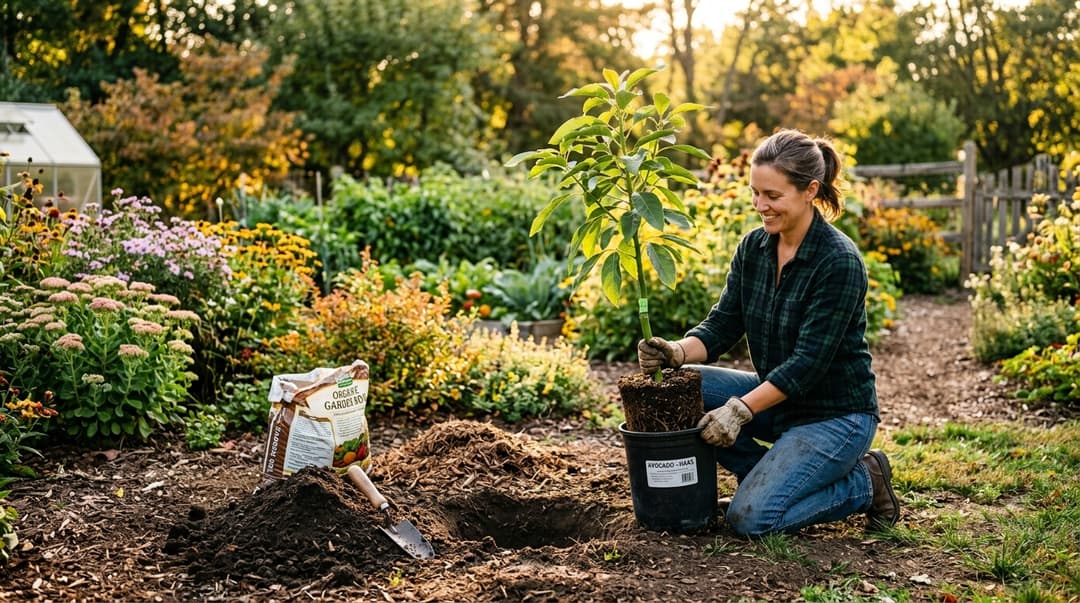
Watch Sprouty & Sophie on Nursery Avocado September Planting
See why putting container avocados in the ground in September leaves tender trees vulnerable to winter frost kill.
The Fall Tree Planting Fallacy: Deciduous vs. Subtropical
Why does almost every gardening book praise autumn tree planting? Because for deciduous species (peaches, apples, plums, maples, and oaks), fall planting is unmatched. Cool air halts foliage transpiration while warm autumn soil encourages new feeder roots. When winter arrives, the tree drops its foliage, enters hormonal endodormancy, and easily withstands temperatures well below 0°F.
Avocados (Persea americana) and citrus do not belong to that world.
Avocados originated in the subtropical cloud forests and highland tropics of Central America and Mexico. They are evergreen trees that maintain functional foliage, tender chlorophyll-rich green bark, and active sap flow throughout the entire calendar year. They do not enter true winter dormancy.
When you plant a nursery avocado in late summer or September:
- Transplant shock disrupts water transport: Even a careful planting disrupts delicate root hairs. The tree requires weeks of mild weather to knit feeder roots into native soil.
- Fall flushes emerge tender: Warm September soil stimulates a burst of succulent late-autumn vegetative growth. These soft green shoots have zero cold hardiness.
- The graft union is exposed: In young nursery container trees, the scion graft union is positioned just 4 to 8 inches above soil level. If cold air pools around the base, the entire cultivated scion can be killed, leaving only the thorny wild rootstock.
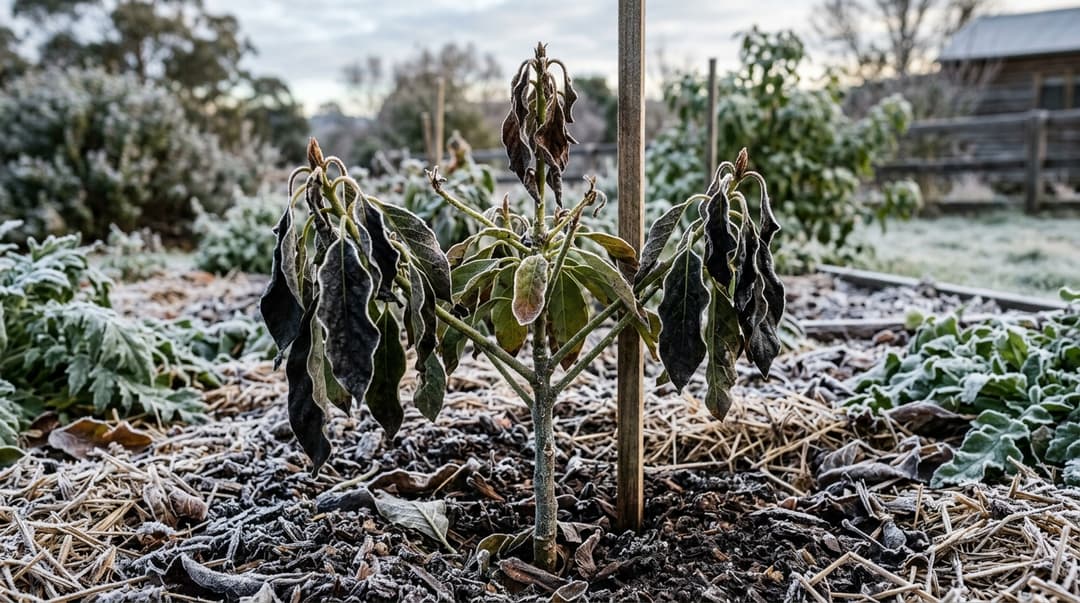
The Biological Thresholds: How Cold Kills an Avocado
According to commercial and home orchard research from the University of California Statewide IPM Program (UC IPM Cultural Tips for Growing Avocado), avocado cold sensitivity depends sharply on horticultural race, tree age, and exposure:
- Guatemalan Varieties (Hass, Reed, Pinkerton): Suffer significant foliage and wood injury when temperatures drop into the 27°F to 30°F range. In young trees, even a few hours at 29°F can cause total canopy defoliation and terminal stem death.
- Mexican Varieties (Bacon, Zutano, Mexicola): Possess greater innate cold tolerance and can tolerate brief dips to 24°F to 26°F once mature. However, young nursery saplings have not developed the thick bark required to withstand these limits.
- West Indian Varieties: Highly tropical and will suffer catastrophic injury below 32°F.
Furthermore, extension horticulturists at the University of Florida IFAS Extension (Avocado Growing in the Florida Home Landscape) emphasize that trees under 3 years of age have exceptionally thin epidermal layers. During clear, calm autumn and winter nights, radiative freeze occurs: as detailed in the UC Statewide IPM Freezing and Frost Damage Guidelines, plant surfaces radiate thermal heat directly upward into the cloudless night sky, dropping leaf and bark temperatures 2°F to 4°F below the official ambient thermometer reading!
⚠️ What Actually Happens Inside the Stem During a Freeze?
When temperatures drop below the ice nucleation point of plant sap (around 28°F–30°F in young tissue):
- Ice crystals form in the extracellular spaces between plant cells.
- This ice extracts water from within the living cells, causing severe cellular dehydration.
- As freezing deepens, expanding ice crystals puncture fragile cell membranes and rupture the vascular cambium (the plumbing that carries water and sugars).
- When morning sun strikes the frosted trunk, rapid thawing splits the bark wide open, severing vascular connectivity and inviting fatal bacterial and fungal cankers.
Option 1 (The Safest Route): Stage the Pot and Wait for Spring
Both the UC IPM program and commercial avocado nurserymen agree: the single best planting window for containerized avocado trees is early-to-mid spring (March through May), right after the threat of the last spring frost has passed.
Spring planting provides the sapling with 6 to 8 uninterrupted months of warm sunshine, active photosynthesis, and vigorous root expansion before facing its first winter chill. By the time November rolls around, the tree has developed a deep, anchorsome root architecture and toughened wood.
If you scored a bargain avocado tree in September, you don't have to return it! Simply use the nursery staging method (similar to how we recommend holding potted California native plants until fall heat breaks):
- Keep It in the Container: Keep the tree in its black nursery pot. If the root system is visibly rootbound or crowded, bump it up one size (from a 5-gallon to a 7-gallon or 10-gallon container) using a coarse, well-draining potting mix.
- Stage in a Warm Microclimate: Place the pot in a sheltered location:
- Beneath an open covered patio or porch eaves (which blocks radiant heat loss to the night sky).
- Against a south- or west-facing stucco or brick wall that absorbs heat during the day and radiates warmth at night.
- Under the high, dappled canopy of a large evergreen landscape tree.
- Move Indoors on Freezing Nights: Because the tree is still mobile, you have the ultimate insurance policy. When your local forecast predicts nighttime lows near or below 32°F, simply wheel the potted avocado into an attached garage, garden shed, or bright sunroom for the night.
- Plant with Confidence in Spring: As soon as frost danger ends in late March or April, plant your healthy, hardened specimen directly into the garden.
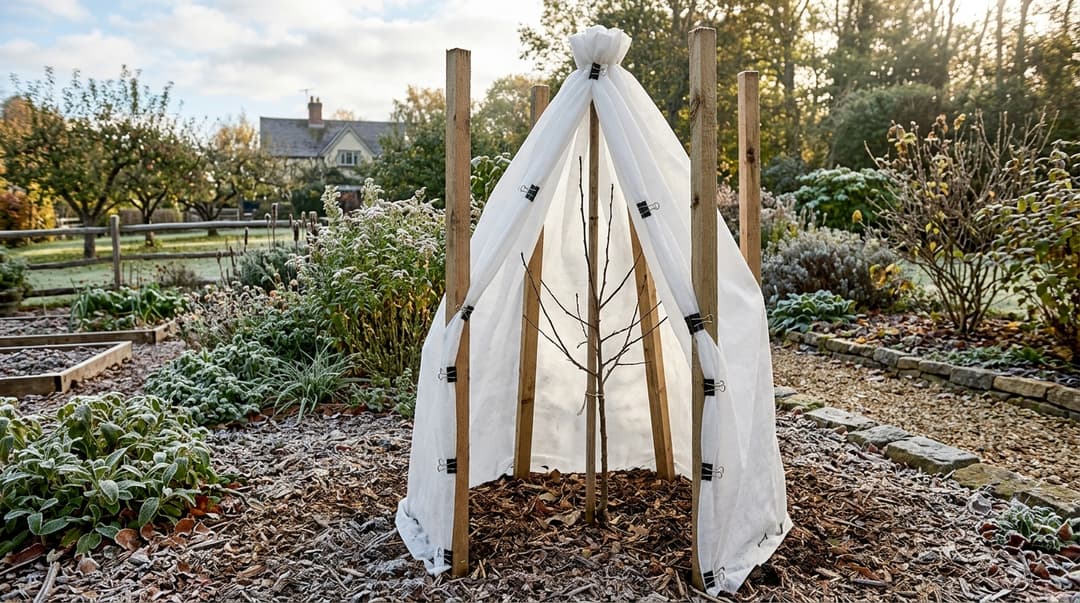
Option 2 (If Planting Now): Protect Hard All Winter Long
What if your climate is exceptionally mild (USDA Zone 10a or 10b, coastal Southern California, or frost-free thermal belts), or you have already put your avocado in the ground? In that case, you cannot rely on luck. You must protect hard through the cold season.
Follow these non-negotiable winter survival steps for newly planted in-ground avocados:
1. Build an Air-Pocket Frame (Never Drape Directly on Leaves)
Drive three or four tall wooden stakes (or bamboo poles) into the ground around the tree, forming a teepee or box frame at least 6 to 12 inches taller and wider than the avocado canopy. Never drape plastic or frost cloth directly against the foliage. When frost fabric or plastic contacts leaves, thermal conductance occurs, transferring freezing cold straight through the cloth and causing localized frost necrosis on every contact point.
2. Use Breathable Frost Fabric That Reaches the Ground
Drape a medium-weight (1.5–2.0 oz/sq yd) horticultural frost blanket (such as Agribon or DeWitt frost cloth) over the wooden stakes. Make sure the fabric extends all the way down to the soil surface, and secure the edges with soil, rocks, or bricks. The heat source is the ground! Soil absorbs solar warmth by day and radiates it upward all night. Your tent must capture that chimney of rising earth heat.
3. Mulch the Root Zone (With the Trunk Donut Rule)
Apply 3 to 4 inches of clean wood chip or straw mulch across the entire drip line. As explained in our guide on why mulching warm soil traps fall heat, mulch acts as an insulating thermal lid over delicate feeder roots. However, always preserve a 4-to-6-inch bare gap around the trunk. Moist mulch piled against green avocado bark invites crown rot (Phytophthora cactorum).
4. Paint or Wrap the Green Trunk
Young avocado trunks have tender green skin that photosynthesizes. Direct sunlight in winter can cause severe sunscald on southwest-facing bark, which freezes and splits during night drops. Paint the main trunk from soil level up to the lowest lateral branches with a 50:50 mixture of white interior latex paint and water, or wrap it with breathable foam tree guards.
5. Add an Emergency Thermal Boost on Hard Freeze Nights
If temperatures are forecast to plunge below 28°F for more than two hours, passive trapping might not suffice for a tender sapling. String a set of old-fashioned outdoor incandescent C7 or C9 Christmas lights (not cool LEDs!) through the interior frame, or place two 5-gallon buckets of warm water under the frost tent just before sunset. Water has an enormous specific heat capacity; as it cools, it releases latent heat inside the enclosure, raising the micro-climate temperature by 4°F to 8°F.
🌿 The Bottom Line
Don't let autumn tree-planting folklore cost you an expensive avocado tree. Deciduous trees love fall planting because they drop their leaves and sleep through the freeze; subtropical avocados keep working and have zero tolerance for winter frost. If you buy a container avocado in September, stage it safely in a sheltered microclimate and wait to plant in spring after frost danger clears. And if you already planted it, get your stakes, frost blanket, and mulch in place before the first cold snap strikes!
Preparing your garden for the seasonal transition? Read our complete SproutySpeaks Fall Gardening Guide & Checklist, see why you should stage nursery California natives until autumn heat breaks, understand how mulching warm soil insulates root zones, check our sweet potato frost rescue harvest protocol, and explore our master guide on what to plant in your fall garden.