Sprouty
Walking through your backyard orchard or fruit garden at the height of the season, it is almost impossible not to spot a few fallen fruits nestled in the turf or mulch beneath the canopy. Maybe an apple dropped early with a telltale puncture hole, or a cluster of plums turned soft, wrinkled, and brown before tumbling onto the dirt. For busy gardeners, the instinct is often to shrug and let nature take its course. After all, doesn't fallen fruit eventually decompose into soil organic matter?
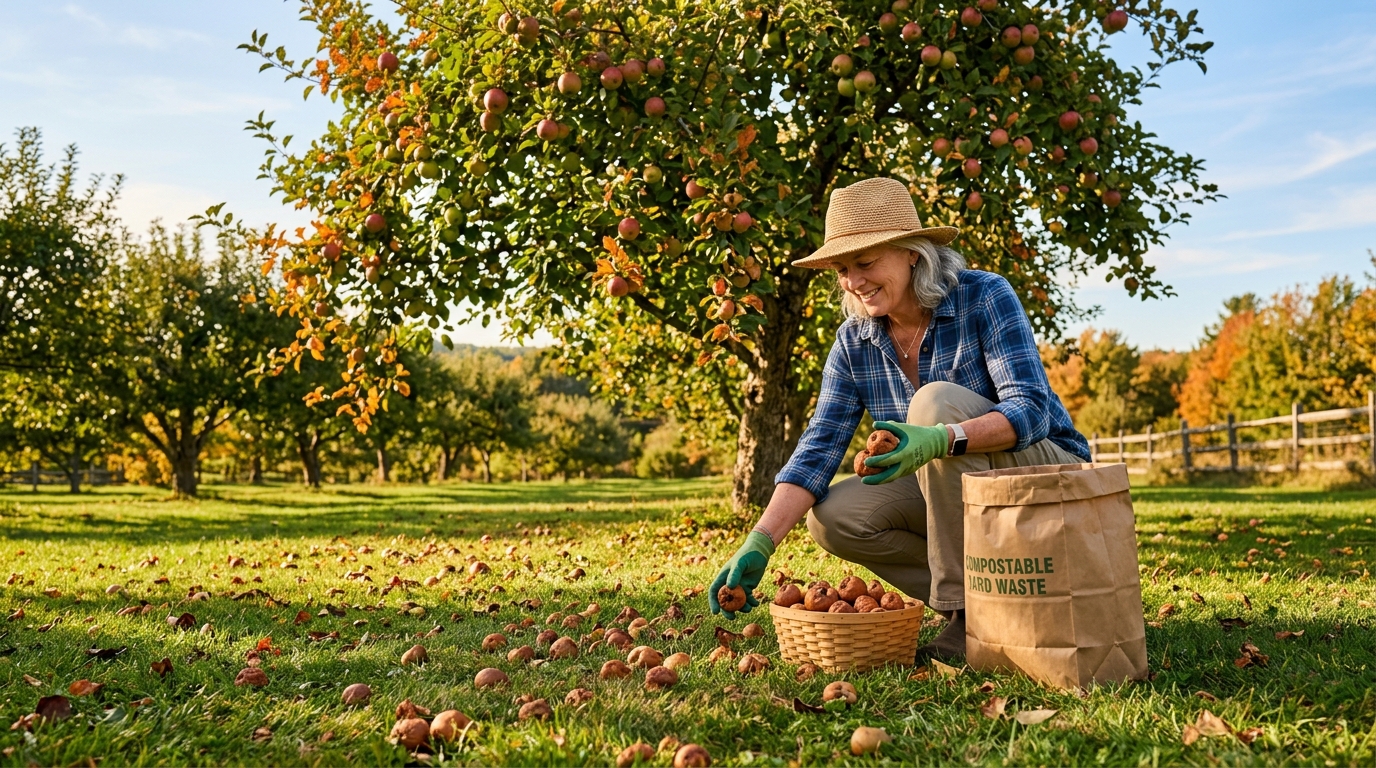
That was exactly the assumption Sophie made on a warm afternoon while inspecting her backyard fruit trees. Spotting a withered, brown apple that had dropped to the ground, she paused, nudged it with her boot, and turned to walk away. Before she could take another step, Sprouty stepped forward with an urgent alert:
Sophie: "It’s already fallen… I’ll just leave it."
Sprouty: "Nope! Pick it up and dispose of it — diseased fruit left here can keep the infection cycling."
Sophie: (Grabbing her garden-waste bag and scooping up the shriveled fruit) "Ahh… break the cycle."
🍎 On-Screen Truth: Fallen diseased fruit? REMOVE IT.
Watch Sprouty & Sophie Break the Disease Cycle
See why leaving shriveled fruit under your trees allows pathogens to cycle year after year in our short video companion.
The Plant Pathology: Why "Mummies" Are Biological Time Bombs
In forest ecosystems, fallen wild fruit naturally decomposes and recycles nutrients back into the woodland floor. But your backyard orchard is not an untamed forest—it is an intensively managed collection of domesticated cultivars bred for sugar content and thin skins, making them extraordinarily susceptible to opportunistic pathogens. When a diseased fruit falls and stays on the ground, it does not peacefully turn into compost. It transforms into what plant pathologists call an orchard mummy.
The primary culprit across stone fruits—including peaches, nectarines, plums, cherries, and apricots—is brown rot blossom and twig blight, caused by the fungal pathogens Monilinia fructicola and Monilinia laxa. As detailed in the University of California Statewide Integrated Pest Management Program (UC IPM) Brown Rot Guidelines, the fungus is capable of destroying entire crops within days of harvest. However, its survival strategy during the dormant season is what makes leaving fallen fruit so destructive:
- Formation of Pseudosclerotia: As infected fruit rots on the ground or clings to the tree, moisture is gradually lost, and the fruit hardens into a wrinkled, dark, leathery husk. Inside, the fungal mycelium aggregates into a dense, resistant fungal structure called a pseudosclerotium. This structure is built to survive winter sub-zero freezes, pounding rains, and prolonged dry spells.
- The Spring Spore Explosion: Come spring, rising temperatures (especially in the 60°F to 75°F range) coupled with spring rain or morning dew trigger the mummy to awaken. On mummies buried just at the surface of the orchard floor, the fungus produces miniature cup-shaped fruiting bodies called apothecia, which discharge millions of microscopic sexual spores (ascospores). On mummies resting on top of the ground or stuck in branches, powdery tufts called sporodochia produce asexual conidia by the billions.
- Blossom Blight and Twig Dieback: Rising warm air currents and splashing raindrops carry these spores directly upward into opening flower petals. The fungus invades the blossom, travels down through the flower stem into young twigs, causing twig blight, sunken cankers, and weeping amber gum. Those cankers, in turn, produce secondary spores all summer long, ready to rot the next batch of ripening fruit.
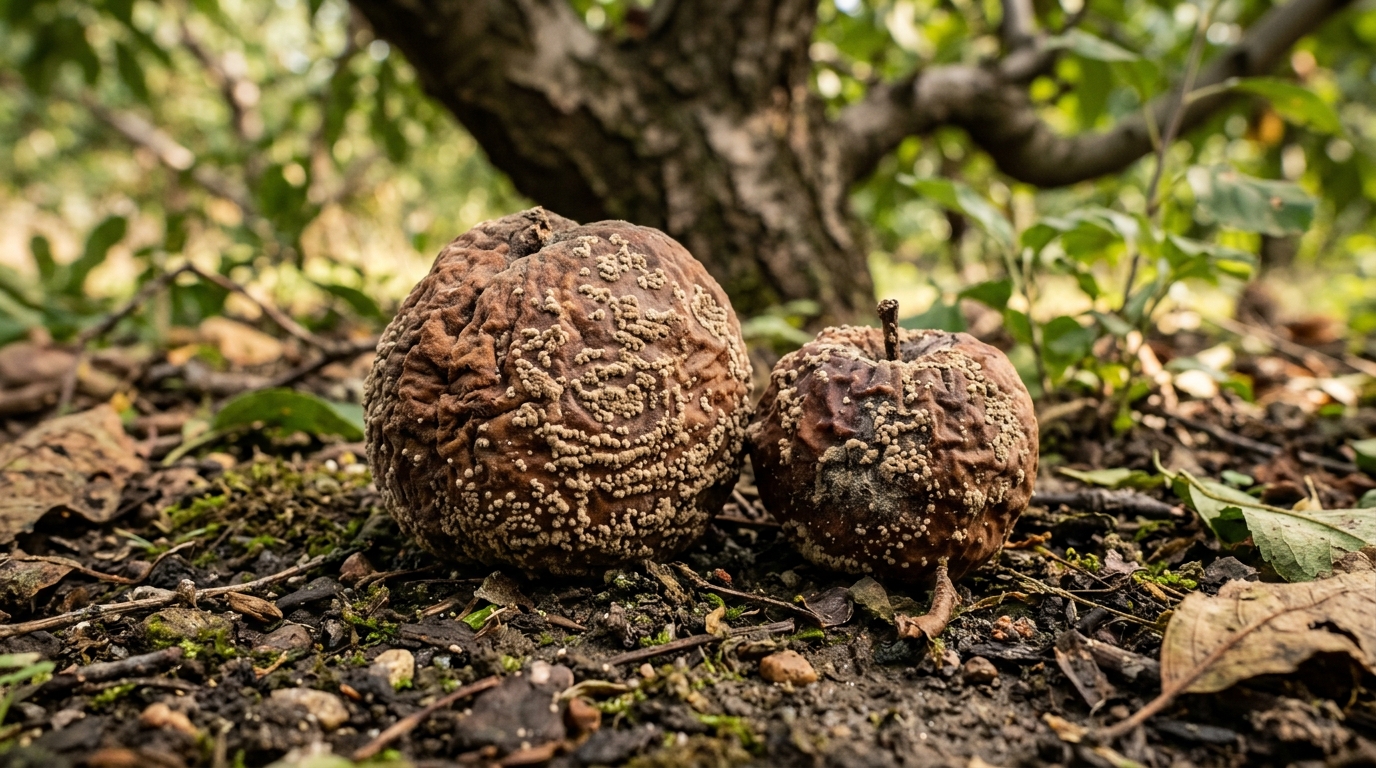
The same principle applies to pome fruits like apples and pears. Fallen fruit and infected leaves harbor Venturia inaequalis (apple scab) and Botryosphaeria rots. As documented in the UC IPM Apple and Pear Scab Pest Notes, overwintered pathogens release primary inocula at bud break, ensuring your trees never get a clean slate.
The Pest Reservoir: How Dropped Fruit Houses Next Year's Worms
Fungal spores are only half of the equation. Fallen, damaged fruit is also the premier nursery for damaging orchard insects. If an apple drops prematurely in midsummer or early autumn, there is a high statistical probability that it dropped because an insect tunneled inside it.
The most notorious example is the codling moth (Cydia pomonella), the classic "worm in the apple." According to the UC IPM Codling Moth Management Guidelines, larvae enter developing apples and pears, tunneling directly into the core to feed on developing seeds. Once fully grown, the larva exits the fruit:
- If the fruit is still hanging, the larva crawls down the branches or drops via silk thread.
- If the fruit has fallen to the ground, the larva crawls directly out of the rotting flesh and seeks immediate shelter under loose bark, in plant litter, or in the top two inches of soil beneath the drip line.
- There, it spins a dense, silken cocoon where it safely pupates or overwinters. In early spring, just as the tree begins flowering, adult moths emerge to mate and lay dozens of eggs on your brand-new crop.
By picking up dropped fruit immediately—within 24 to 48 hours of falling—you intercept the larvae before they have the opportunity to crawl out into the soil. Dropped fruit left beneath the tree also acts as a magnet for invasive vinegar flies like spotted wing drosophila (Drosophila suzukii), green fruit beetles, yellowjackets, rodents, and raccoons that damage lower branches and spread secondary bacteria.
The Big Mistake: Why Diseased Drops Must NEVER Go in Home Compost
Once you gather up fallen shriveled fruit, what should you do with it? Many well-intentioned gardeners make the mistake of tossing dropped mummies and wormy fruit straight into their backyard compost bin. That single action can ruin next year's garden.
Effective destruction of fungal pseudosclerotia, scab ascospores, and insect pupae requires sustained, uniform thermophilic composting temperatures—consistently reaching between 140°F and 160°F (60°C to 71°C) for several consecutive weeks. The overwhelming majority of residential compost piles are "cold" or passive piles that rarely exceed 110°F to 120°F at the core, with cold edges and corners where fungal spores easily survive.
When you spread that finished homemade compost onto your vegetable beds or use it to topdress berry patches next spring, you are effectively inoculating your garden with surviving spores and dormant pests. Instead, follow these disposal rules:
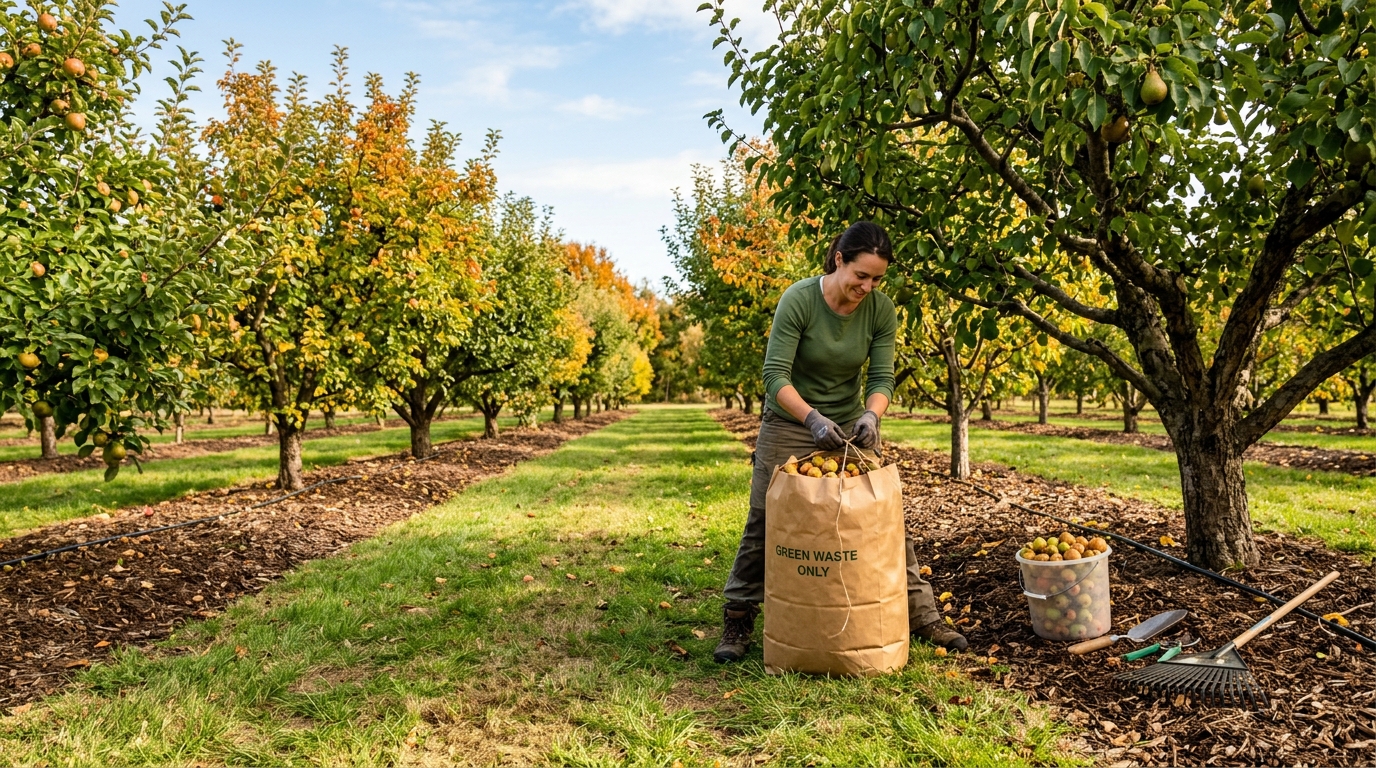
- Municipal Green Waste (Recommended): Place diseased fruit into your city or county municipal yard-waste green cart. Commercial municipal composting facilities operate large-scale windrows that sustain temperatures over 150°F under controlled moisture and aeration, thoroughly sterilizing pathogens.
- Double-Bagged Trash: If municipal green-waste collection is not available in your area, seal the diseased fruit inside a sturdy trash bag and dispose of it with municipal solid waste.
- Deep Burial (>18 Inches): If you cannot use municipal services, agricultural extensions recommend burying cull fruit at least 18 to 24 inches deep in an open trench far away from fruit tree roots, covered thoroughly with compacted native soil. Never bury drops shallowly or use them as surface trench mulch near trees.
The 4-Step Orchard Hygiene Protocol (UC Master Gardener Standard)
Orchard hygiene (often referred to in integrated pest management as cultural sanitation) is the most potent, non-toxic weapon in fruit growing. It cuts pesticide needs drastically and prevents disease outbreaks before they start. Here is the step-by-step protocol to keep your fruit trees clean and healthy year-round:
1. The Weekly Harvest Patrol
From the moment small fruitlets begin sizing up in late spring until the final harvest in autumn, make it a weekly habit to walk beneath every fruit tree. Inspect the ground across the entire drip line (the circle of ground directly beneath the tree’s outermost branch tips). Pick up every single fallen fruit—regardless of whether it looks rotten, damaged, or seemingly intact. If it dropped prematurely, assume it is compromised.
2. The Dormant Mummy Knock-Down
During late autumn and winter dormant pruning, look closely up into the bare branches of your stone fruit and pome fruit trees. You will often spot shriveled, blackened mummies still tenaciously clinging to fruiting spurs. Using pruning shears or a long pole, gently snip or knock every mummy down. Rake them up immediately and bag them. Leaving even two or three clinging mummies in the upper canopy can shower millions of spores over next spring's entire blossom set.
3. Sterilize Pruning Tools Between Trees
When cutting out cankered twigs or shoots blighted by brown rot, prune several inches back into healthy, green wood below the visible canker margin. Between every single cut—and especially before moving from an infected tree to a healthy one—sterilize your pruner blades with 70% isopropyl alcohol or a 10% bleach solution. This prevents mechanical transmission of fungal mycelium into fresh pruning wounds.
4. Convert to Low-Angle Drip Irrigation
Fungal spores require free moisture to germinate on plant surfaces. Overhead lawn sprinklers that spray water up into fruit tree canopies create the exact humid microclimate brown rot, powdery mildew, and apple scab need to flourish. Switch fruit tree root zones to low-angle drip emitters or soaker rings that deliver water directly to the soil, keeping blossoms, leaves, and ripening fruit completely dry.
💡 Healthy Mulch vs. Diseased Drops: What Belongs on Soil?
Gardening advice sometimes seems contradictory: we encourage gardeners to leave clean, healthy deciduous tree leaves on garden beds to build beneficial humus (see our guide on why dead leaves save soil), yet we adamantly insist on removing fallen fruit. Why the difference? Broadleaf shade tree foliage decomposes into structured carbon and feeds mycorrhizal fungi, whereas high-sugar, moisture-dense diseased fruit directly incubates virulent crop pathogens like Monilinia and destructive larvae like Cydia pomonella. Clean wood chip mulch is great under fruit trees—rotting, infected fruit is not.
Frequently Asked Questions About Fallen Fruit and Orchard Care
Can I feed fallen orchard fruit to chickens, ducks, or goats?
Yes, but with strict caveats. Poultry and livestock can happily consume fresh windfalls that have recently dropped due to heavy breezes or mild hail damage. However, you should never feed moldy, heavily spoiled, or rotting fruit containing fungal toxins (such as patulin or mycotoxins produced by molds) to animals, as these can cause digestive illness. Furthermore, feeding drops must happen in designated pens away from the orchard so animals do not leave infested scraps on the root zone.
What if the fruit just fell from a windstorm and looks completely healthy?
If healthy, mature fruit drops during a windstorm and has not split or begun fermenting, wash and eat it immediately, or process it into jams, cider, or preserves! The rule is simple: if you can eat it right away, do so. If you cannot eat it and it sits on the ground, remove it before fungal spores and insect pests discover it.
Are inland and warm-valley orchards at higher risk?
In warm inland valleys (such as California’s Central Valley and Sacramento Valley), high summer temperatures combined with early morning humidity or late-summer thunderstorms create explosive conditions for brown rot. Furthermore, warmer climates support multiple overlapping generations of codling moths and fruit flies per year. Diligent sanitation is even more crucial in these regions to prevent pest pressure from compounding month over month.
Looking to protect your orchard and garden without harsh chemicals? Explore our comprehensive Natural Pest Control Ultimate Reference Guide, check our guide on treating fungal powdery mildew outbreaks, discover how to break persistent thrips lifecycles, see why you should prune ornamental hedges correctly in early September, and browse our complete SproutySpeaks Seasonal Gardening Playbook.