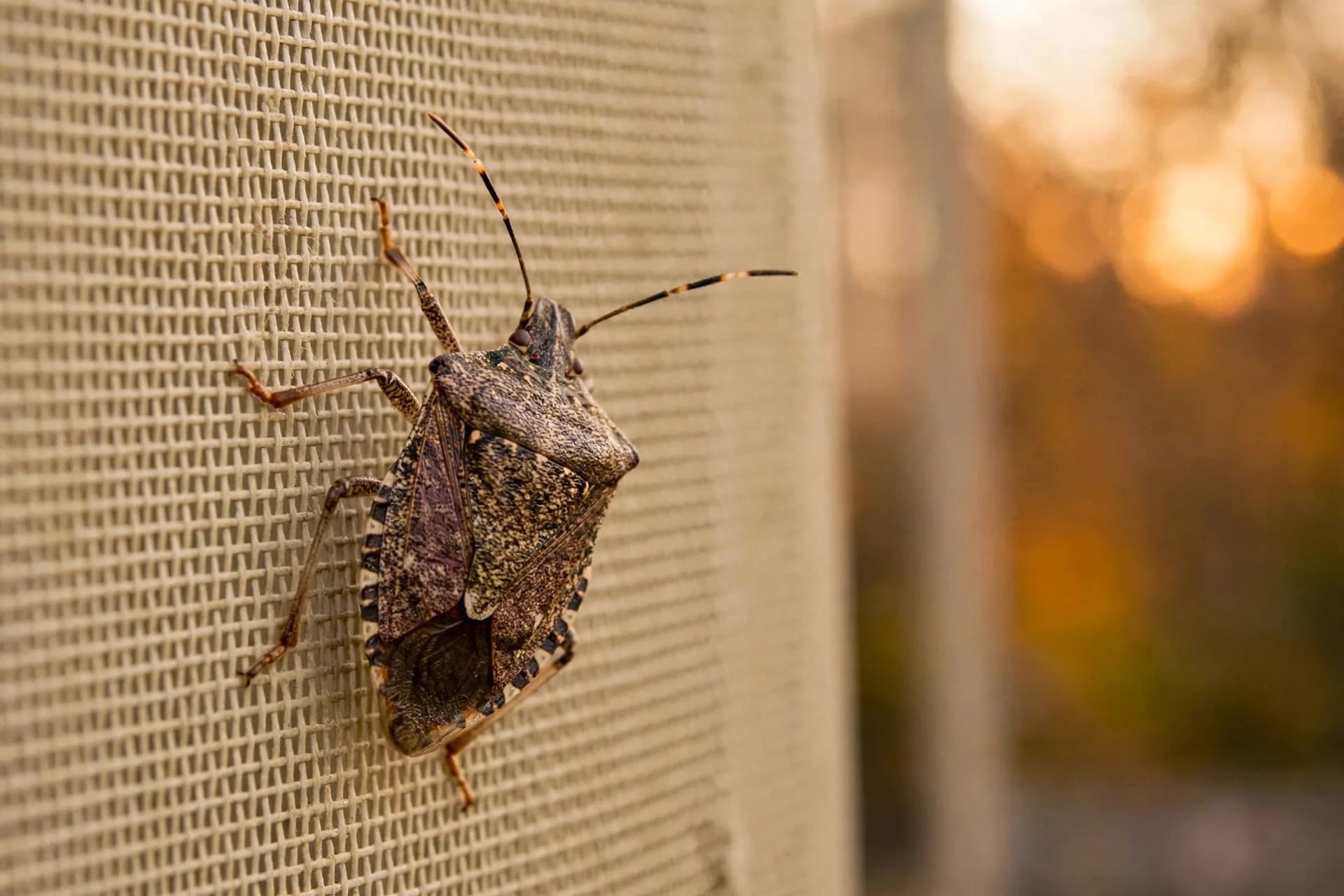

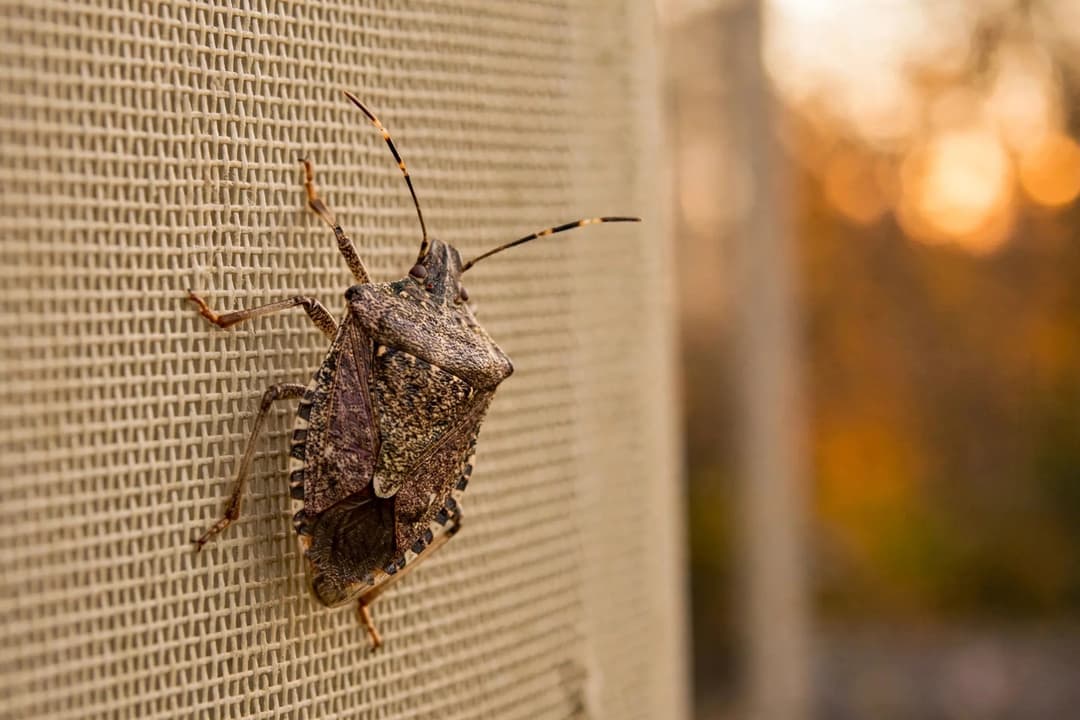
They're not biting you — they're hiding. The brown marmorated stink bug (Halyomorpha halys, family Pentatomidae, per Ohio State's BYGL extension) moves toward homes every fall in search of an overwintering shelter, and this season is no exception: KDKA Radio Pittsburgh reported on October 16, 2026 that homeowners around the city are seeing them around their houses, with Penn State Extension's Valerie Sesler explaining the seasonal influx, and Country Living's October 16, 2026 piece listed them among the bugs moving into homes this fall. Peak movement runs September through October, per Purdue Extension's 2017 E-273 guide, so on October 22 we're at the tail end — but late arrivals are still seeking entry, and sealing entry points right now still works.
Important honesty note: there is no documented 2026 national outbreak surge. Extension reports are regional — southeastern Missouri's numbers have continued to increase (MU Extension), while Ohio's own specialists say the onslaught diminished in recent years but they are receiving reports of significant numbers gathering on homes in southern and central Ohio this year (OSU BYGL). This article covers the seasonal behavior, not a crisis.
Sophie: (Finding one on the windowsill) "Sprouty, there are stink bugs all over the siding — why are they invading the house right now? Are they eating something in here?"
Sprouty: (Grinning) "They're not after your pantry, Sophie — your house just looks like a very warm rock to them. They want to sleep through winter in your walls. The move is to seal them out now, and never, ever squash the ones that got in."
🛡️ Takeaway: Stink bugs aren't infesting your home — they're overwintering in it. Seal the entry points now, and never crush the ones indoors.
Why your house, why now
By late summer, adult stink bugs have fed voraciously and built up fat reserves. In the fall they seek sheltered spots where cool temperatures slow their metabolism through winter — cool enough not to freeze, cool enough not to burn through those reserves (OSU BYGL). Homes are irresistible: the bugs are attracted to solar heat radiating off south- and west-facing roofs and walls, and to the warmth leaking from within (OSU BYGL). They land on sunny siding, crawl upward, and slip into attics, wall voids, and the gaps around door jambs and window frames. Purdue's entomologists report that the move into homes starts in September and continues through October (Purdue Extension) — which is exactly why late October is your last best window to seal them out. And here's the part that reframes the whole "invasion": brown marmorated stink bug is the only stink bug species whose adults seek structures to overwinter; they do not lay eggs and do not feed during the winter (MU Extension). The U.S. Environmental Protection Agency adds that they do not reproduce inside homes — so the ones already inside won't lay more eggs — and they cause no structural damage; the bugs you see indoors are adults that came from outside (Cincinnati Enquirer, October 2026).
What they're actually doing in there
Mostly: sitting still, waiting for spring. Bugs that settle into cool attics and wall voids are doing exactly what they evolved to do — diapause in a protected spot. The trouble starts when some of them follow the heat gradient too far and end up in heated living spaces. That's disastrous for the insects, not just annoying for you: high indoor temperatures cause them to burn through their fat reserves and starve (OSU BYGL). This is also why, on warm winter days and again in early spring, you'll see bugs "wake up" and buzz toward windows — they're following light and warmth out of their hiding places. None of this is a breeding population: they're generally harmless to humans and pets, they don't bite or sting, and they don't damage your home (MU Extension; Savannah Morning News, September 2026).
Never crush them indoors (and why vacuuming has a catch)
The name is the warning. Crushing a brown marmorated stink bug releases its defensive odor — an alarm chemical that can attract other stink bugs to the spot — and with large numbers the smell makes the whole situation worse (Cincinnati Enquirer, October 2026). OSU's extension adds that smashing them can stain furniture, carpets, and walls (OSU BYGL). So what actually works for the ones already inside? North Carolina State's Dr. Chris Hayes, director of the Hayes Structural Pest Research Lab, advises picking up a few bugs and flushing them down the toilet — and for larger numbers, vacuuming them up but then freezing the catch or putting it in water, since they will crawl back out of the vacuum (Cincinnati Enquirer, October 2026). Purdue's extension describes the soapy-water variant: knock insects into a bucket of soapy water where they drown (Purdue Extension). If you vacuum them, don't leave the catch sitting in the machine — the Saturday Evening Post notes most bugs survive the ride and will crawl back out overnight, so remove the bag and tape the hole shut, or bag it and freeze it (Saturday Evening Post, October 20, 2026). Purdue Extension adds that stink bugs left inside a vacuum give off a disagreeable odor (Purdue Extension). For a light-touch trap, Purdue describes the classic DIY: a desk lamp shining over a pan of soapy water in a dark room, which draws the bugs in overnight (Purdue Extension). One more don't: the University of Maryland's extension does not recommend insecticides for indoor stink bug control — they're mostly ineffective against this pest and pose health and environmental risks (UMD Extension).
The real fix: seal them out now
Every extension source agrees on the hierarchy: exclusion first, everything else second. OSU puts it bluntly — "an ounce of caulk is worth a pound of bugs" (OSU BYGL). Stink bugs need only a crack of about 1/16 to 1/8 inch around windows, doors, eaves, dryer vents, and utility penetrations (West Virginia University Extension). The sealing checklist from MU, OSU, Purdue, and WVU extension services converges on the same steps: run silicone or silicone-latex caulk around window and door frames and where pipes and cables enter the house; replace worn weatherstripping around doors, garage doors, and windows; repair torn window screens and add screens over vents and attic openings; check door sweeps (including the door to an attached garage); and pull out window air-conditioner units. MU Extension's urban entomologist Emily Althoff adds two outdoor moves: trim vegetation back from the house and clean up yard waste to remove hiding spots (MU Extension). Do it now — latecomers are still looking for entry points, and once sealed, your home stops being the shelter of choice.
A note for California gardeners
This isn't just an eastern story anymore. UC IPM's pest guidelines report that a reproducing population was first found in California in Pasadena and San Marino in 2006, that large reproducing populations were discovered in Sacramento and Yuba City in 2013, and that it has since been detected in many other parts of California (UC IPM). So if you're a California gardener spotting shield-shaped bugs with white-banded antennae on your sunny walls this fall, you're looking at the same seasonal behavior — and the same fix.
Quick answers
Why are stink bugs coming into my house in the fall?
Adult brown marmorated stink bugs seek protected places to spend the winter. They feed in late summer, then move toward buildings from September through October, attracted to solar heat on south- and west-facing walls (OSU BYGL; Purdue Extension). Your house is winter shelter, not a food source.
Do stink bugs reproduce or damage homes indoors?
No. They do not lay eggs or feed indoors during winter, do not bite or sting people or pets, and cause no structural damage (MU Extension; Cincinnati Enquirer, October 2026). They're a nuisance, not an infestation like roaches or bed bugs.
Why shouldn't I crush a stink bug indoors?
Crushing releases their defensive odor, which acts as an alarm signal that can attract more bugs, and the fluids can stain furniture, carpets, and walls (Cincinnati Enquirer, October 2026; OSU BYGL). Knock them into soapy water or vacuum them up instead.
How do I keep stink bugs out of my house?
Seal entry points before they get in: caulk around windows, doors, and utility penetrations; replace worn weatherstripping; repair window screens; screen vents; and pull window AC units (MU Extension; WVU Extension). Exclusion beats every other method.
When is stink bug season over?
The home-invasion movement runs September through October, with late October as the tail end. Sealing entry points now still catches the late arrivals — and the same seals protect against every fall invader next year (Purdue Extension).