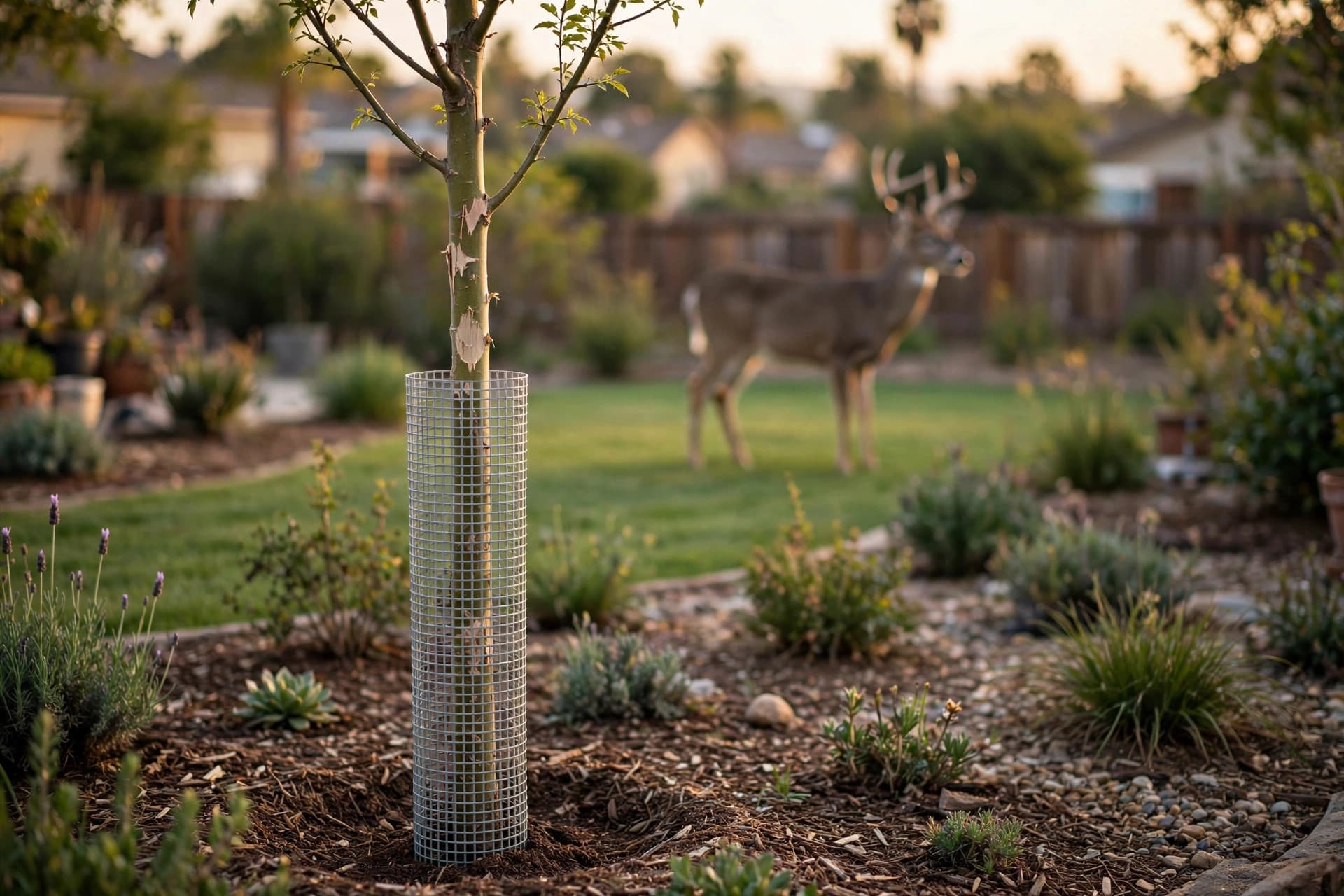

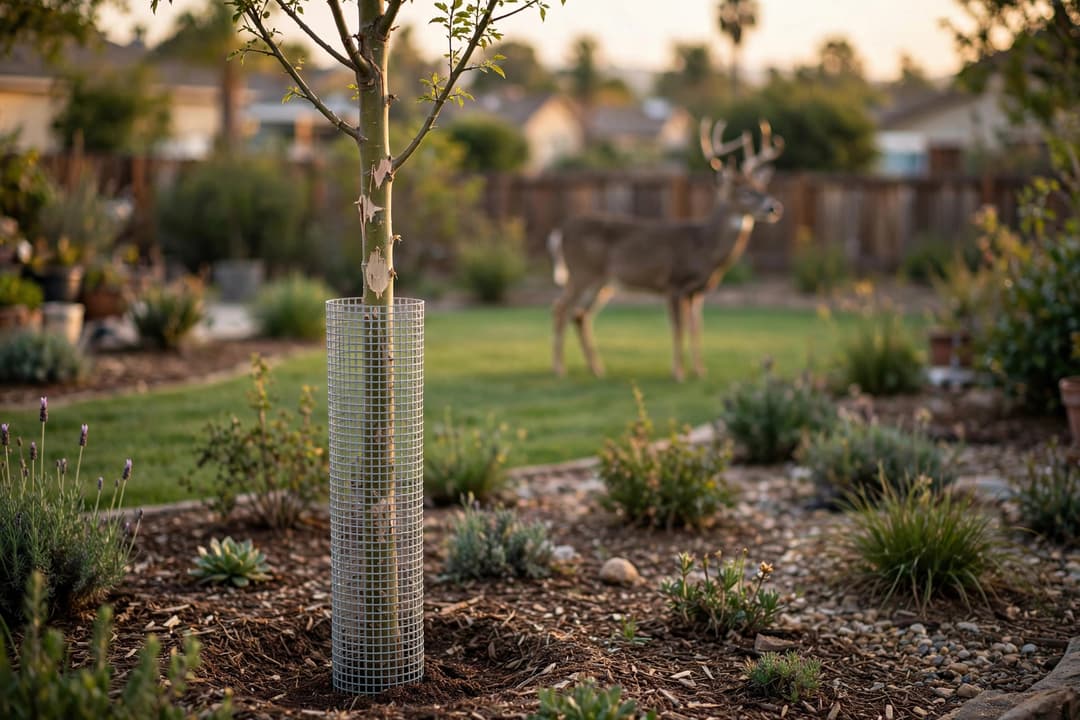
Use a physical barrier — it is the only method proven to work. Fit a rigid plastic trunk guard, a section of slit drain tile, or a woven-wire cylinder around the trunk of every young tree, running from the soil line up at least four feet, before the fall rut peaks. Extension guidance is blunt on this point: exclusion — wire caging or plastic tree tubes — is the only scientifically proven protection against deer damage (University of Georgia Extension), and UC IPM's deer Pest Notes likewise put fencing and physical protection ahead of repellents. Nebraska Extension gives the working spec: protect small or young trees with plastic tree wrap, slit drain tile, or a woven-wire cylinder, making sure the protection reaches at least four feet up the trunk (Nebraska Extension).
This guide is the companion to SproutySpeaks video #101, where Sophie's brand-new maple gets its guard one night after a buck's first visit.
Watch Sophie & Sprouty Guard the Maple
One night of antler rubbing can girdle a young tree — see the 10-second fix in our latest quick tip video.
Sophie: (Patting the mulch around her new tree) "My new maple — thriving!"
Sprouty: (Pointing at the fresh pale scrapes on the trunk) "Those scrapes? A buck rubbed his antlers here last night. One more night girdles it."
🦌 On-Screen Lesson: During the October rut, guard every young trunk — soil line to at least four feet up — before the buck's second visit.
Why bucks rub trees in the fall
Antler rubbing is rut behavior, not feeding. During the fall breeding season — October through January, peaking in November — bucks rub the dried velvet off their antlers and mark territory, and young tree trunks are the rubbing posts they choose (Nebraska Extension). The rubbing zone is predictable: trunk damage typically shows up 1½ to 3½ feet above the ground (Iowa State University Extension). A buck doesn't need to be hungry, and he doesn't need to taste anything — which is exactly why taste and scent repellents, variable even against browsing, are not the tool for rubbing. The fix is a barrier his antlers meet instead of your bark.
Why one night can kill the tree
Just under the bark sits the cambium and the water- and nutrient-conducting tissue the tree lives on. Iowa State Extension describes the mechanism plainly: rubbing removes the bark on small trees and disrupts those conducting tissues — and if the bark comes off all the way around the trunk, the tree is girdled and dies, because nothing can move between roots and canopy across the gap (Iowa State University Extension). The trees at risk are exactly the ones most of us just planted: young trees with flexible trunks and thin, smooth bark. The risk fades only when the trunk reaches roughly 3 to 4 inches in diameter and the bark turns thick and corky (Iowa State University Extension). Until then, one buck, one night, one complete ring of shredded bark is a dead tree on a delay.
How to guard a young tree, step by step
1. Pick a rigid barrier. A corrugated plastic trunk guard, a length of slit drain tile, or a cylinder of woven wire or hardware cloth. It has to be sturdy enough to stand up to a pushing buck — a flimsy spiral wrap meant for rabbits can fold under antlers. Nebraska Extension lists plastic tree wrap products, slit drain tile, and woven-wire cylinders as the standard options (Nebraska Extension). Georgia Extension puts the investment at roughly $5–10 per tree for caging or tubes (University of Georgia Extension).
2. Start at the soil line. Seat the bottom of the guard right at ground level, the way Sophie slides the guard down in the video. A floating guard leaves the lowest band of trunk exposed, and bucks rub low.
3. Cover at least four feet up. The rub zone runs to about 3½ feet, so protection should reach at least four feet up the trunk, or to the first branches on a shorter tree (Nebraska Extension). For wire cylinders on taller or high-value trees, five feet or more is safer (University of Georgia Extension).
4. Leave room to grow. The guard should stand clear of the bark, not press against it, with space for the trunk to thicken. Anchor wire cylinders with a stake so a rubbing buck can't shove the whole cage sideways into the tree.
5. Get it on before the rut, and check it. Iowa State Extension advises having barriers in place by mid-August, ahead of the rubbing season, and removing seasonal protection in spring so it never constricts a growing trunk (Iowa State University Extension). If you're reading this in October with fresh scrapes already on the bark, you are not too late for the second night — guard today. Then re-check every guard each fall until the trunk passes 4 inches across.
Already rubbed? What to do now
Check how much of the trunk's circumference lost its bark. A partial rub — bark gone on one face, intact bark bridging the rest — often heals over a season or two: keep the tree watered through dry spells, keep mulch over the root zone (pulled back from the trunk itself), and don't paint the wound; trees seal damage on their own, and wound dressings don't help them do it. Guard the tree anyway — a buck returns to a productive rubbing post. If the bark is stripped all the way around, be honest about the odds: a fully girdled young tree usually declines and dies, and replacing it in fall planting season — with a guard on from day one — is often the wiser spend than a season of nursing.
Which trees should you check first?
Walk your yard this week and guard in this order: any tree planted in the last three years; any trunk under 4 inches in diameter; smooth-barked species (young maples, cherries, and fruit trees are classic rubbing posts); and any tree already showing pale, shredded patches 1½ to 3½ feet up. If you find scrapes, that tree moves to the front of the line — it has been chosen, and the buck will be back.
Frequently asked questions
Do deer repellents stop antler rubbing? No — repellents are designed around taste and smell to discourage feeding, and even there extension sources call their effectiveness variable. A rubbing buck isn't eating. University of Georgia Extension is direct that exclusion is the only scientifically proven method against this damage (University of Georgia Extension).
How tall should a trunk guard be? At least four feet up the trunk from the soil line (Nebraska Extension). Rubbing damage concentrates between 1½ and 3½ feet, so four feet covers the zone with margin (Iowa State University Extension).
When is buck rub season? Fall into early winter — October through January, peaking in November (Nebraska Extension). Barriers should be in place by mid-August to be safe (Iowa State University Extension).
Can a rubbed tree survive? Yes, if bark remains intact around part of the trunk — the conducting tissue under the surviving bark keeps the tree alive while it seals the wound. A complete ring of stripped bark (girdling) cuts that connection entirely and is usually fatal (Iowa State University Extension).
Keep reading
Wildlife finds fall plantings irresistible in more ways than one. If you're planting tulips this month, read how to stop squirrels digging up your tulip bulbs — and while you're on a fall pest walk, here's why October is the month to scrape spotted lanternfly egg masses before they hatch in spring.