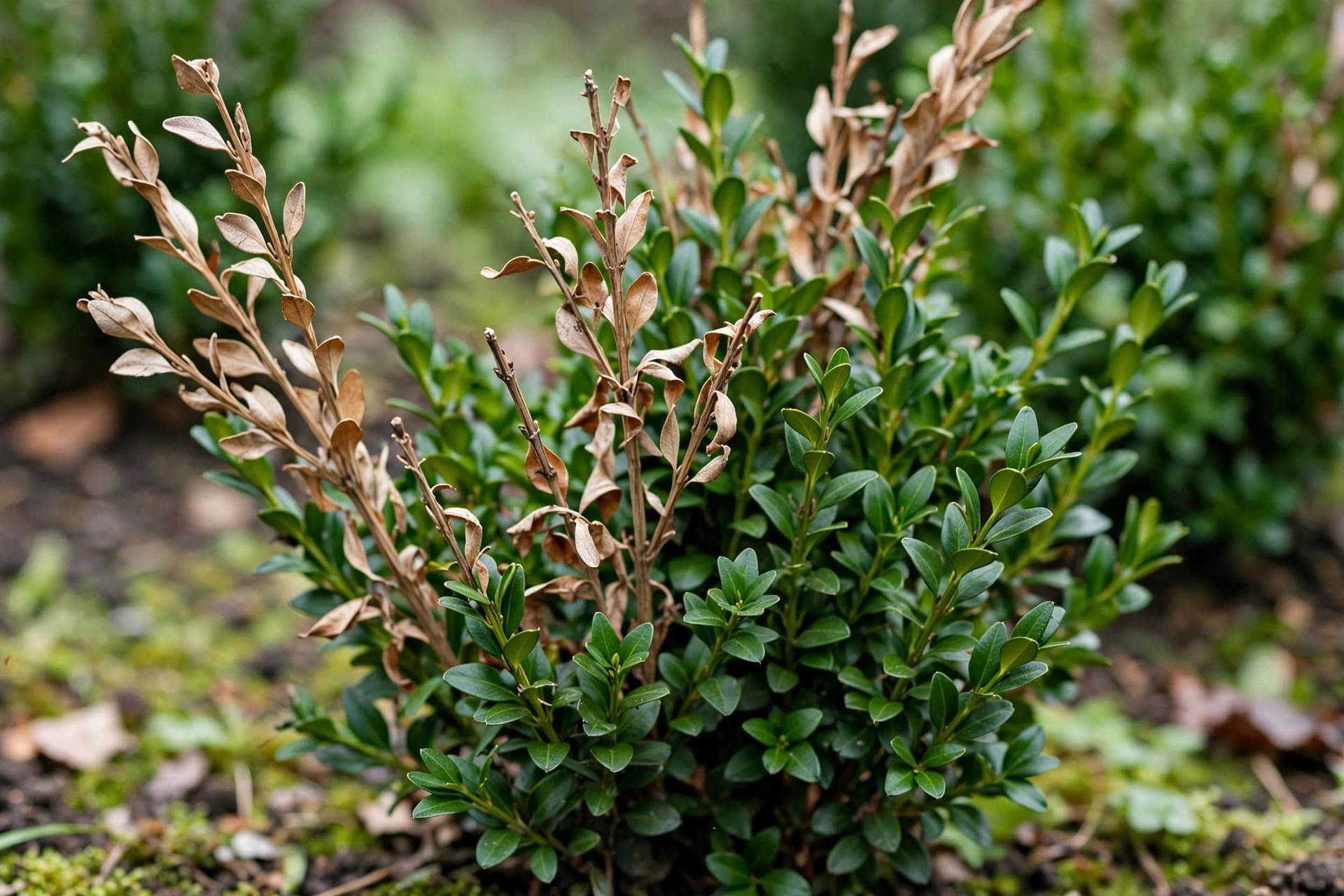

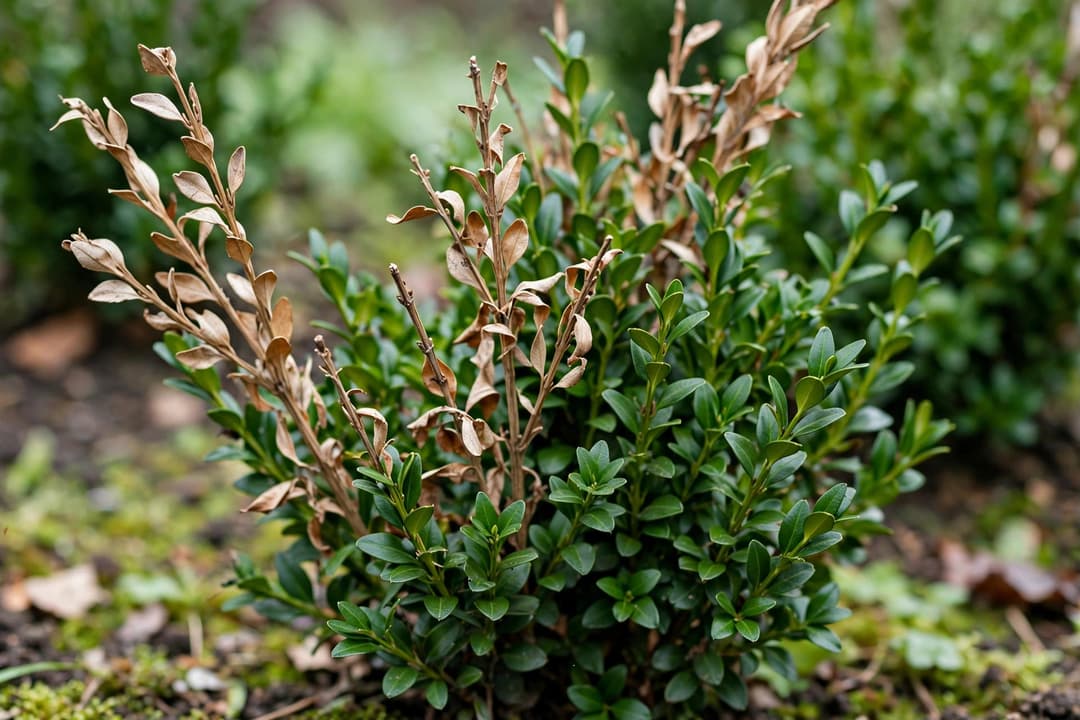
It might not be boxwood blight. There's a second disease — boxwood dieback, caused by the fungus Colletotrichum theobromicola — that produces brown, dead-tipped twigs, and it gets misdiagnosed constantly (the North Central IPM Center's national pest alert). The quick field tell: dieback turns random twigs light tan while the dead leaves stay attached and the roots and crown look normal; blight instead drops leaves rapidly and leaves narrow black streaks on green stems (University of Maryland Extension's 2026 boxwood guide). Getting the name right matters, because the fix for blight won't touch dieback.
The Disease That Hides Behind the Wrong Diagnosis
Boxwood dieback was first reported in the United States in 2015, after a Louisiana plant doctor noticed random twig dieback that mimicked Phytophthora root rot but came back clean for it — DNA testing eventually named Colletotrichum theobromicola as the culprit (the first report in Plant Disease, 2015; LSU AgCenter). The North Central IPM Center issued a national pest alert for it, and notes that these exact symptoms "have been long observed in landscape plantings but were always attributed to Phytophthora root rot or Volutella blight" (NCIPMC). In other words: gardeners have been fighting the wrong disease for years. The stakes are real — the USDA's 2019 nursery census put the wholesale value of boxwoods at $130 million a year in the United States (same alert) — and a mature boxwood hedge is the last thing you want to replace because of a wrong guess.
Dieback vs. Blight: Five Field Tells
1. Leaves: do they drop, or hang on? Dieback turns twigs light tan and the dead foliage stays attached to the branches (NCIPMC). Blight's signature is rapid browning and leaf drop (UMD Extension, 2026).
2. Pattern: random or bottom-up? Dieback kills twigs at random across the plant (NCIPMC). Blight starts on the lower branches and moves upward through the canopy (UMD).
3. Stems: black under the bark, or black streaks on it? Dieback causes a bright black discoloration of the stem immediately under the bark, running all along the infected twigs (the APS diagnostic guide). Blight shows narrow black streaks — cankers — on green stems (UMD).
4. Roots: are they healthy? With dieback, the roots and crown look normal (NCIPMC). That healthy-looking crown is exactly what separates it from Phytophthora root rot, which kills from the crown.
5. Leaf spots. Dieback can also cause spots with white centers surrounded by dark brown margins (NCIPMC). Blight's spots are dark and coalesce into brown blotches (UMD). And a third look-alike: Volutella blight shows pink spores on leaves in moist spring conditions (UMD).
Sophie crouched beside the boxwood hedge, pulling at a tan branch. "Half the tips are dead. I'm about to drench it in fungicide — blight, right?"
Sprouty peeled back a sliver of bark on the dead twig, then pointed at the roots. "Look — leaves still hanging on, crown looks fine. That's the dieback look, not the blight look. Blight drops its leaves; this one holds them."
"So what do I spray?" Sophie asked.
"Nothing you'd spray for blight would touch this," Sprouty said. "Pull the dead out, sanitize your pruners between cuts, and send a twig to the diagnostic lab. Guess wrong and you pay for the wrong fix."
Sophie set down the sprayer. "Diagnosis first. Thanks, Sprouty."
Why Misdiagnosis Costs You the Hedge
Here's the expensive part: the treatments are not interchangeable. "Disease management strategies practiced for managing Phytophthora root rot will not provide management of boxwood dieback," the NCIPMC alert warns — and since dieback is recently discovered, no effective fungicides are known at all; it calls for good cultural practices instead (same alert). For blight, the fungicides only work preventively, never as a cure (UMD Extension), so spraying a dieback-infected plant with blight fungicides is money and chemistry for nothing. Worse, pruning out the dead twigs — the obvious first move — "is not known to control this disease," so NCIPMC says all symptomatic plants should be removed and destroyed, not just trimmed.
What To Do This Fall
Sanitize pruners between every cut. Surface disinfection of pruning and cutting tools is one of the few controls NCIPMC names for dieback (same alert). A UGA Cooperative Extension page gives the recipe: soak tools in a 1:10 bleach solution (one part household bleach, nine parts water) or wet them with a Lysol-concentrate mix (about 2.5 tablespoons per gallon) for at least ten seconds and let them air-dry (UGA Cooperative Extension, Troup County).
Thin, don't shear. The right pruning method for boxwood is thinning — removing whole stems at their point of attachment so light and air reach the center; shearing stresses the plant and invites fungal trouble. The best window is winter, December through February (UMD Extension).
Never prune when the foliage is wet, and skip overhead watering — wet leaves are how these pathogens move (same UGA page). Water at the base instead.
Keep mulch thin. No more than an inch over the root zone, kept clear of the stems; deep mulch smothers shallow boxwood roots and shelters voles (UMD Extension).
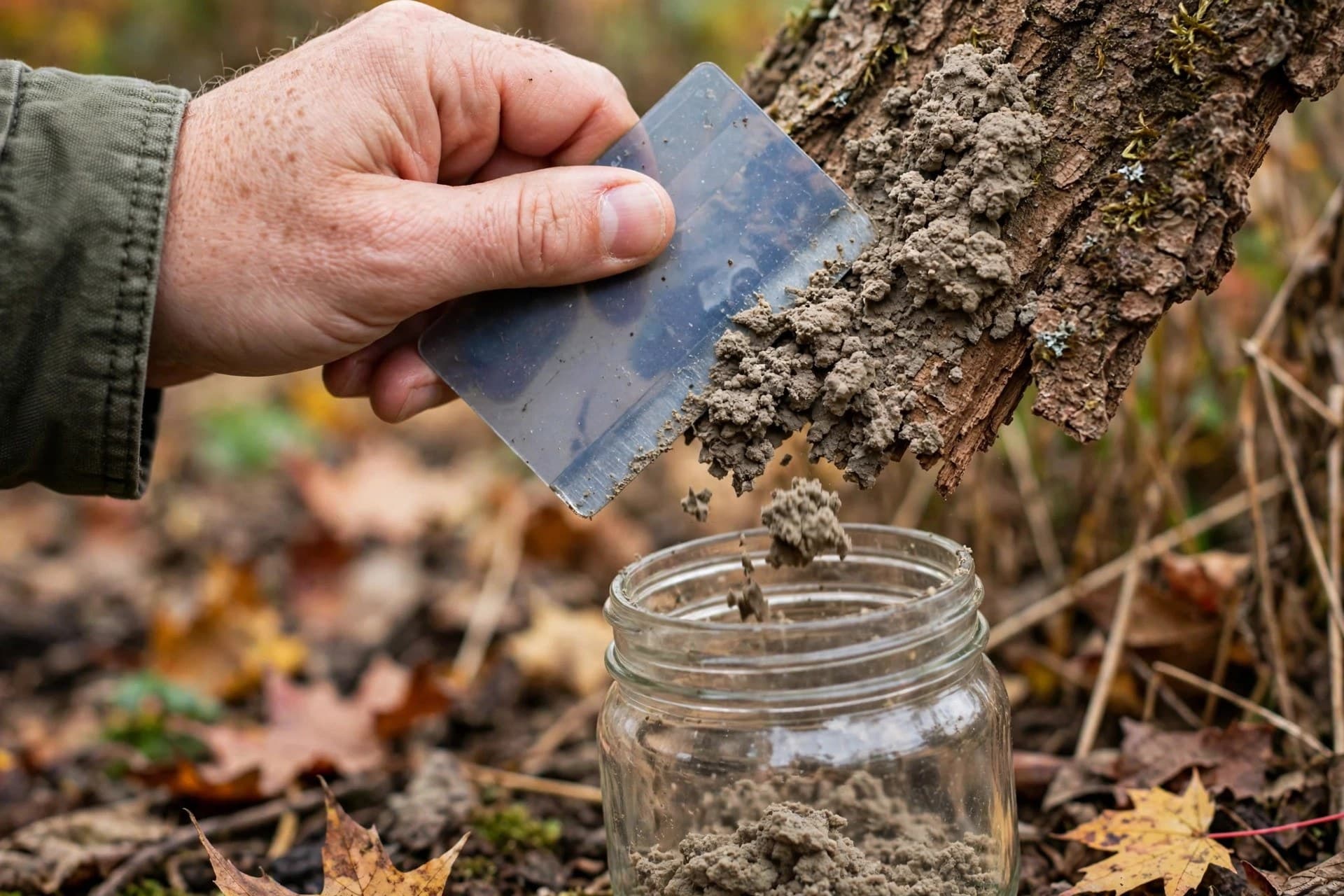
Send a sample before you treat. Laboratory testing is required to confirm dieback because it mimics root rot so closely (NCIPMC). Collect three to four one-foot twigs with both healthy and diseased tissue from a recently infected area — not branches dead for months — wrap each in a dry paper towel, bag them, and ship to your state's plant diagnostic lab (same alert).
Frequently Asked Questions
Can I cure boxwood dieback with a fungicide?
No. The North Central IPM Center says effective fungicides for boxwood dieback are currently limited — there are no known effective ones — and calls for cultural practices instead (NCIPMC). For blight, fungicides only work preventively, never as a cure (UMD Extension).
Is boxwood dieback the same as boxwood blight?
No — different pathogens entirely. Dieback is caused by Colletotrichum theobromicola; blight by Cylindrocladium pseudonaviculatum. NCIPMC's alert even opens with a warning not to confuse the two — and notes blight is currently much more common (same alert).
Will boxwood dieback kill the whole plant?
NCIPMC's management advice is stark: pruning out dead twigs is not known to control it, so all symptomatic plants in the landscape should be removed and destroyed (same alert). Act early — a hedge riddled with it is a removal job, not a pruning job.
Can I compost the prunings?
No — destroy them. Dieback-infected plants should be removed and destroyed (NCIPMC); for blight, UGA Extension says to bag infected plants and leaf debris on site for landfill disposal, never compost, because the fungus survives for years in dead debris (UGA Cooperative Extension).
When should I prune my boxwoods?
Thin in winter — December through February — removing entire stems at their attachment point for airflow, not shearing (UMD Extension).
Where do I send a sample?
Your state's plant diagnostic lab. Collect three to four one-foot symptomatic twigs with both healthy and diseased tissue from recently infected areas, wrap each in a dry paper towel, seal in zip bags, and include a submission form (NCIPMC).
Related reading: Pruning hygiene matters for every shrub — see why you should never seal rose pruning cuts with wound paint; diseased material never belongs in the pile, so learn what temperature actually kills pathogens in compost; and keep the orchard side of your yard clean too — fallen diseased fruit feeds next year's pest cycle. If your mulch instincts are off, read why mulch volcanoes rot trunks and why cutting every dried stem evicts native bees.