 Sprouty
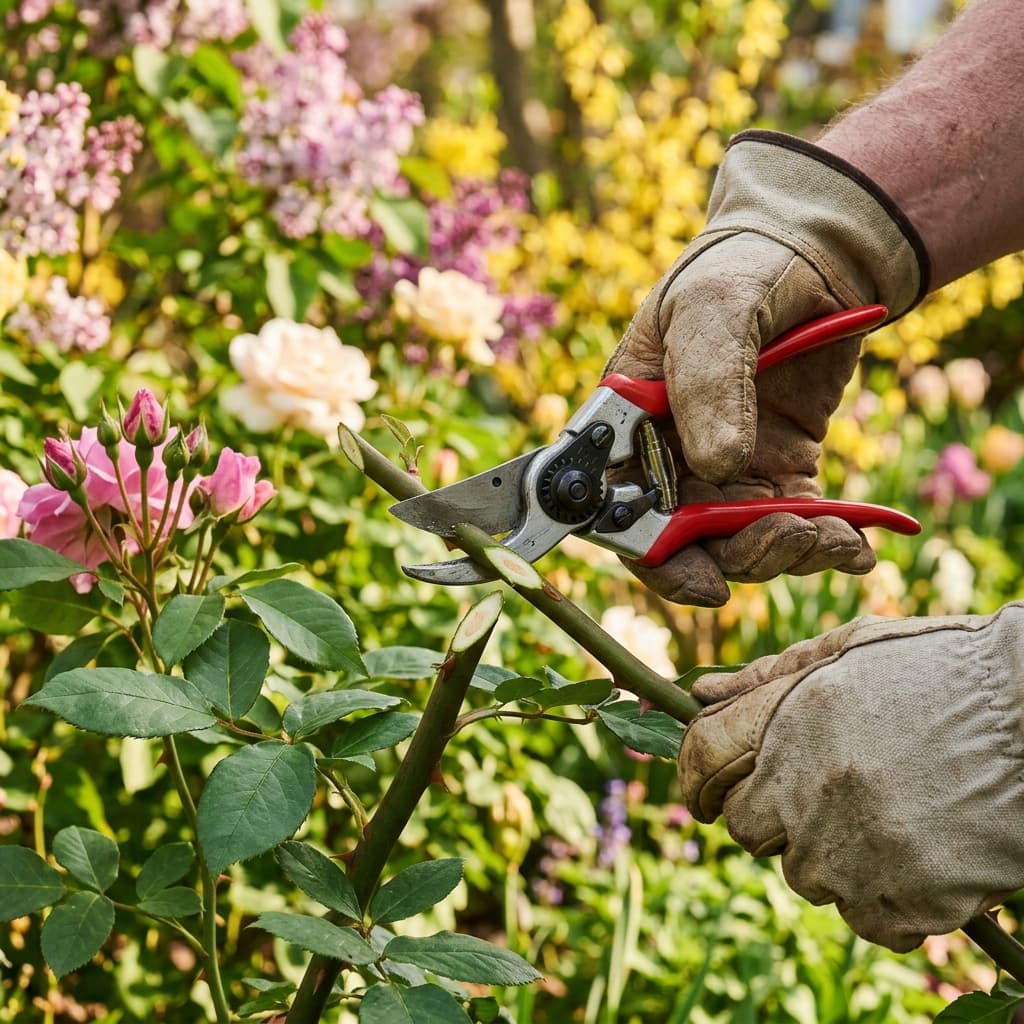
Walking through the rose garden with a pair of sharp bypass pruners, you've just made a crisp cut to remove a spent bloom or shape an overgrown cane. As the fresh white pith and green cambium ring stare back at you, a familiar thought creeps in: shouldn't you seal that open wound? For decades, gardening sheds across the country held a can of black pruning paint, tar, or aerosol wound dressing, marketed as the essential "first-aid bandage" to protect woody plants from rot, pests, and bacterial infection.
That was the exact assumption Sophie made while deadheading her prized rose bushes in late summer. Gripping a small paintbrush and a pot of commercial pruning sealant, she was poised to slather a thick protective coat over a fresh cut. But before the bristles could touch the stem, Sprouty intervened:
Sophie: "Just finished shaping this cane! Now let me just paint over this fresh pruning cut with wound sealant so fungi and rot can't get in..."
Sprouty: "Hold on, Sophie! Put down the paintbrush! Sealing that cut doesn't protect the rose—it traps moisture and fungal spores inside the cane and accelerates rot. Plants aren't people; they don't heal under a sticky bandage!"
Sophie: (Setting down the jar and brush in surprise) "Really? So leaving the pruning cut completely bare is actually safer?"
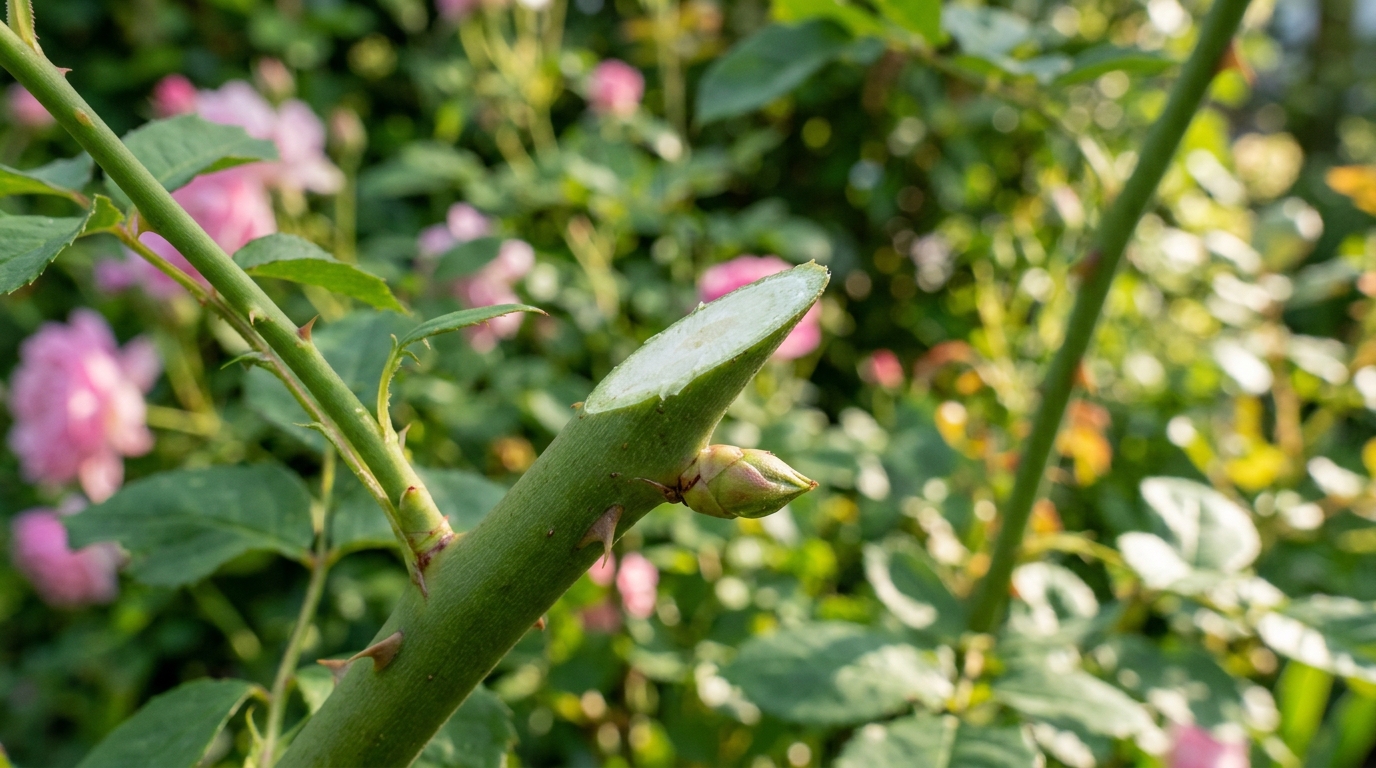
Sprouty: "Exactly! A clean cut exposed to fresh air and sunlight allows the rose to compartmentalize the wound and form natural protective suberin. Nature handles the bandaging!"
🌹 On-Screen Truth: NEVER SEAL ROSE CUTS WITH WOUND PAINT. KEEP PRUNING CUTS CLEAN, DRY, AND OPEN TO THE AIR.

Watch Sprouty & Sophie in the Rose Garden
See why painting over fresh rose pruning cuts traps moisture and promotes fungal rot in our quick video companion.
The Persistent Myth of the "Bandaged" Rose Cane
The belief that pruning cuts must be sealed is one of the most stubborn myths in modern horticulture. Its roots date back to the early 20th century, when arborists and gardeners treated plants under an anthropomorphic lens: if a human bleeds, you clean the wound and apply a bandage to keep dirt and microbes out. In the garden, that translated to slathering petroleum-based tree paint, coal tar, bitumen, or latex pruning paste over every cut stem.
Commercial packaging promised that these dark coatings would "seal out insects, block wood rot, and lock in vitality." But botanical research conducted over the last forty years—spearheaded by USDA Forest Service plant pathologist Dr. Alex Shigo and confirmed across university extensions—completely debunked this practice. What works for mammalian skin actually sabotages plant biology.
As explicitly stated in current regional guidance from the UC ANR Fresno Gardening Green Garden Tasks (Sept 18–24), horticulturists issue a clear directive when shaping and deadheading rose bushes for their final autumn blooms: "Do not apply any treatments to pruning cuts or other wounds because these materials are ineffective (and often detrimental)."
Botanical Reality: How Roses Actually "Heal"
To understand why wound paint fails, one must understand how woody plants react to injury. Unlike animal skin, which regenerates identical epidermal tissue to replace damaged flesh, woody plants do not "heal"—they compartmentalize.
When a rose cane is snipped cleanly with sharp shears, the plant initiates a rapid, multi-stage biochemical response known in arboriculture as CODIT (Compartmentalization Of Decay In Trees and woody shrubs):
- Immediate Desiccation Barrier: The outermost layer of cells exposed to oxygen and sun dries out quickly. This dry surface layer forms an uninhabitable zone for fungal spores, which require persistent surface water or high relative humidity to germinate.
- Suberin & Phenolic Deposition: Directly below the cut, living ray parenchyma cells rapidly deposit waterproof, waxy compounds called suberin, along with protective antimicrobial tannins and lignified chemicals. This creates a chemical boundary zone that blocks fungal mycelium from migrating downward through the vascular xylem bundles.
- Wound Callus Formation: The active vascular cambium—the green ring just beneath the outer bark—divides to produce undifferentiated callus tissue (wound wood). Over time, this callus rolls over the margin of the cut, sealing the stem permanently.
Crucially, every single step of this botanical defense mechanism requires oxygen and dry ambient conditions. When you cover a pruning cut in wound paint, you shut down the plant's natural defense systems.
Why Wound Paint Makes Cane Dieback Worse
Extensive university trials have repeatedly demonstrated that painted pruning cuts suffer higher rates of rot and internal discoloration than unpainted cuts left completely bare. Here are the four primary reasons why wound paint actively damages rose canes:
1. It Traps Internal Moisture and Condensation
A living rose cane is a high-pressure vascular hydraulic system constantly moving water upward through xylem vessels. When you cap a freshly severed cane with a waterproof synthetic barrier, that sap and transpired moisture cannot escape. It condenses directly beneath the paint film, transforming what should be a clean, dry wound into a dark, warm, moisture-rich incubator.
2. It Encapsulates Ubiquitous Fungal Spores
Microscopic spores of common rose pathogens—such as stem canker (Coniothyrium fuckelii), Botrytis cinerea, and anthracnose—are already present in garden air and rest harmlessly on outer bark surfaces. Under normal sunny conditions, UV light and dry airflow desiccate these spores before they can breach the wood. But when you brush wound paint over a fresh cut, you trap those opportunistic spores under a protective shell where direct sun and wind cannot reach them, giving fungal mycelium unhindered access to soft pith tissue.
3. Thermal Cracking Acts as a Rain Trap
As garden temperatures fluctuate between hot sunny afternoons and chilly nights, rose canes expand and contract. Synthetic sealants lack the elastic properties of living plant tissue. Within days or weeks, the coating develops microscopic hairline cracks. During rainstorms, dew accumulation, or overhead sprinkler cycles, water is drawn into these cracks via capillary suction. However, because the surrounding paint blocks air evaporation, the water remains trapped against the raw wood indefinitely, leading to catastrophic soft rot and hollow cane dieback.
4. Chemical Phytotoxicity Stalls Cell Division
Many traditional pruning dressings contain volatile petroleum distillates, asphalt, or chemical solvents. When applied to raw plant tissue, these chemicals dissolve thin cell membranes in the exposed cambium ring. Instead of dividing rapidly to form protective wound callus, the cambial cells die on contact, forcing the rose to retreat several inches down the stem and creating the very dieback the gardener hoped to avoid.
The 4 Golden Rules for Pruning Roses Safely
If wound paint is off the table, what actually prevents stem rot and keeps rose canes vigorous and disease-free? As highlighted in comprehensive care guides from the UC IPM Rose Cultural Practices Guidelines, clean cuts, correct angles, and sanitizing your tools provide total protection. Follow these four science-backed pruning rules:
1. Always Use Sharp Bypass Pruners (Never Anvil)
There are two primary styles of hand pruners: bypass shears (where a sharp blade glides past a thick counter-blade like scissors) and anvil shears (where a straight blade slams down onto a flat metal anvil). Anvil shears inevitably crush tender rose canes, mashing the vascular cambium and creating ragged, shredded fibers that rot easily. High-quality, razor-sharp bypass pruners deliver a surgically clean slice that allows the cane's outer cells to dry and suberize instantly.
2. Disinfect Blades Between Shrubs
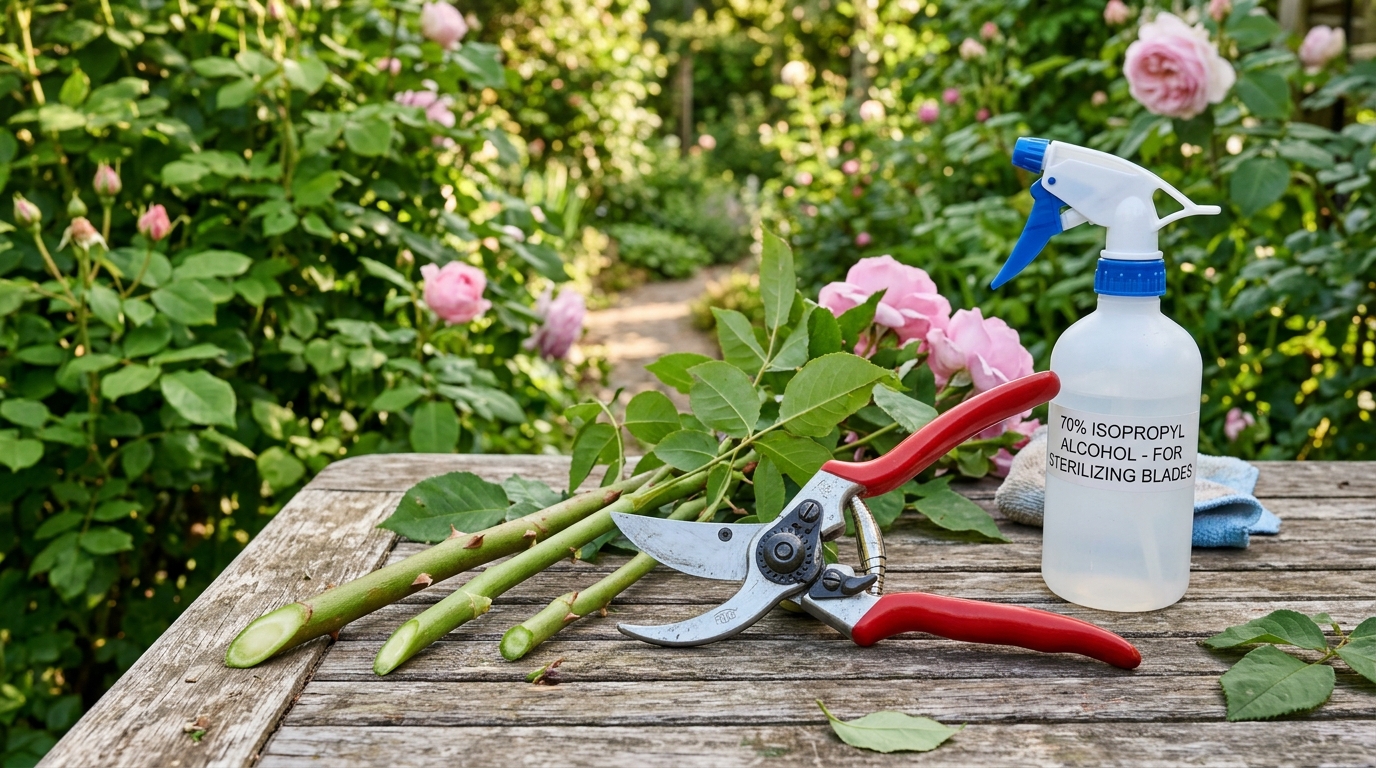
The real culprit behind stem cankers (Coniothyrium) is rarely the open air—it is contaminated pruning tools. If you trim an infected, blackened cane and immediately cut a healthy green stem without cleaning your shears, you physically inoculate the fungal pathogen directly into the healthy vascular bundle. Keep a spray bottle of 70% isopropyl alcohol or disinfectant wipes in your tool bucket, and thoroughly wipe down your blades between bushes.
3. Cut at a 45-Degree Angle 1/4 Inch Above an Outward Bud
Precision cut placement is your rose's greatest defense against moisture accumulation:
- The 45-Degree Slope: Angle the cut so the top slopes down away from the bud. Any rainwater or morning condensation immediately rolls off the backside of the cane rather than pooling directly over the growing bud eye.
- 1/4 Inch Distance: Pruning too close to the bud (less than 1/8 inch) can damage or dry out the delicate embryonic shoot. Cutting too far above the bud (leaving a 1-to-2-inch stub) leaves dead wood that cannot draw vascular sap; that dead stub will rot backward down the cane until it reaches the node. A 1/4-inch cut gives the bud space while allowing the stub to close cleanly.
- Outward-Facing Direction: Choose a bud that points outward away from the center of the shrub. This directs new autumn and spring growth outward, creating an open, vase-shaped canopy with superior airflow that discourages powdery mildew and black spot.
4. Leave the Cut Completely Bare to the Air
Once the cut is made, do nothing else. Let the morning sunshine and fresh air evaporate sap weeping from the surface. Within 24 to 48 hours, the cut surface forms a dry, corky suberized layer that naturally walls off environmental microbes far more effectively than any manufactured paste.
What About Rose Cane Borers?
Some gardeners ask: "What about cane borers or small carpenter bees that drill down into the soft central pith?" In regions where pith borers (such as small carpenter bees, Ceratina spp.) are active pests, commercial wound sealers and tar paints are still strictly avoided because they rot the cambium. Instead, veteran rosarians use a tiny pinpoint dab of ordinary water-based white carpenter's glue or Elmer's glue placed strictly on the white central pith dot, leaving the outer green cambium ring completely open to breathe. However, for 95% of routine deadheading and pruning cuts, leaving the cane completely untouched is best practice.
🌿 Sprouty's Golden Rule of Rose Care
In the rose garden, fresh air is medicine and trapped moisture is poison. Never seal a pruning cut with synthetic paint or tar. Give your roses clean, angled cuts with disinfected shears, let the sun dry the wound, and let the plant’s natural botanical defenses do the rest!
Looking for more step-by-step guidance on keeping your rose bushes thriving throughout the seasons? Check out our complete guide on Pruning Roses: When and How to Do It Right, discover the Top Pruning Mistakes That Harm Your Garden, or visit our Seasonal Tips Playbook for late-season shaping advice.