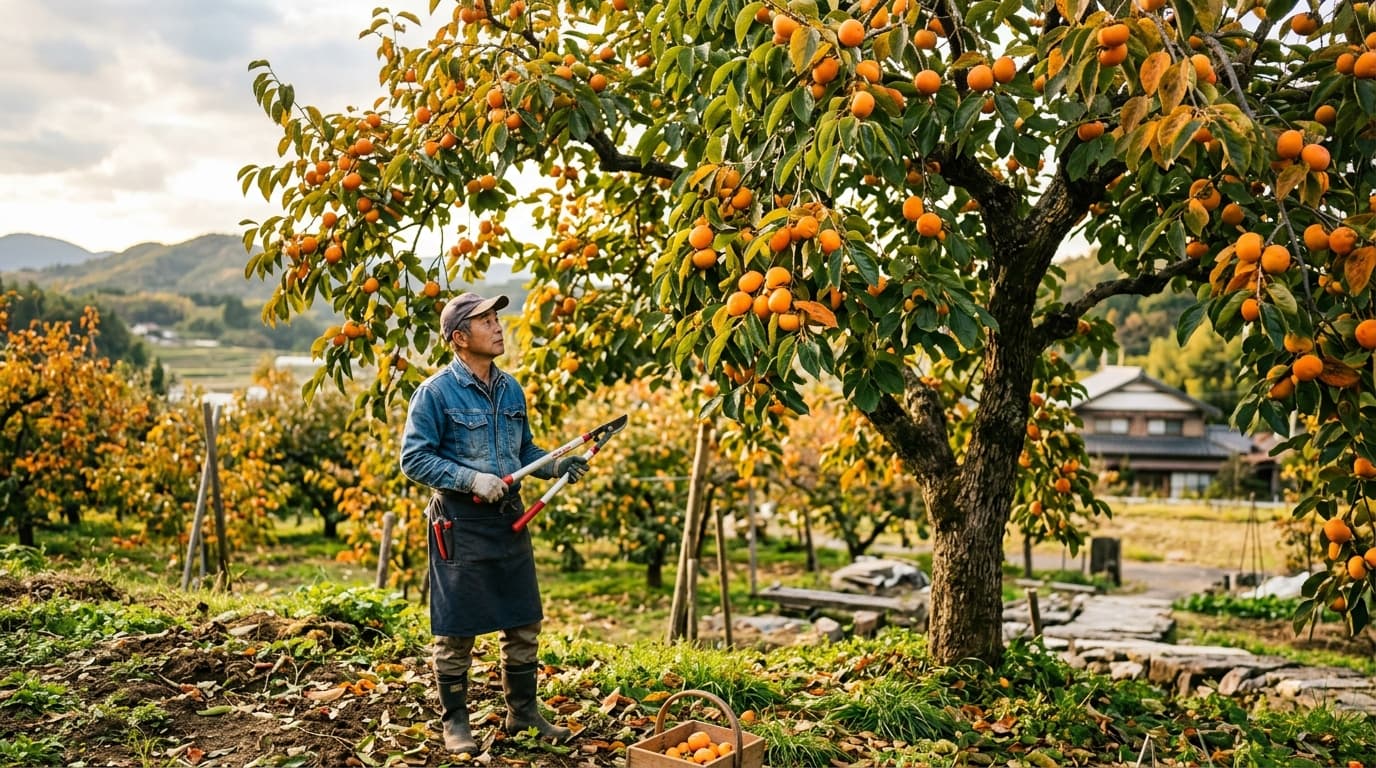

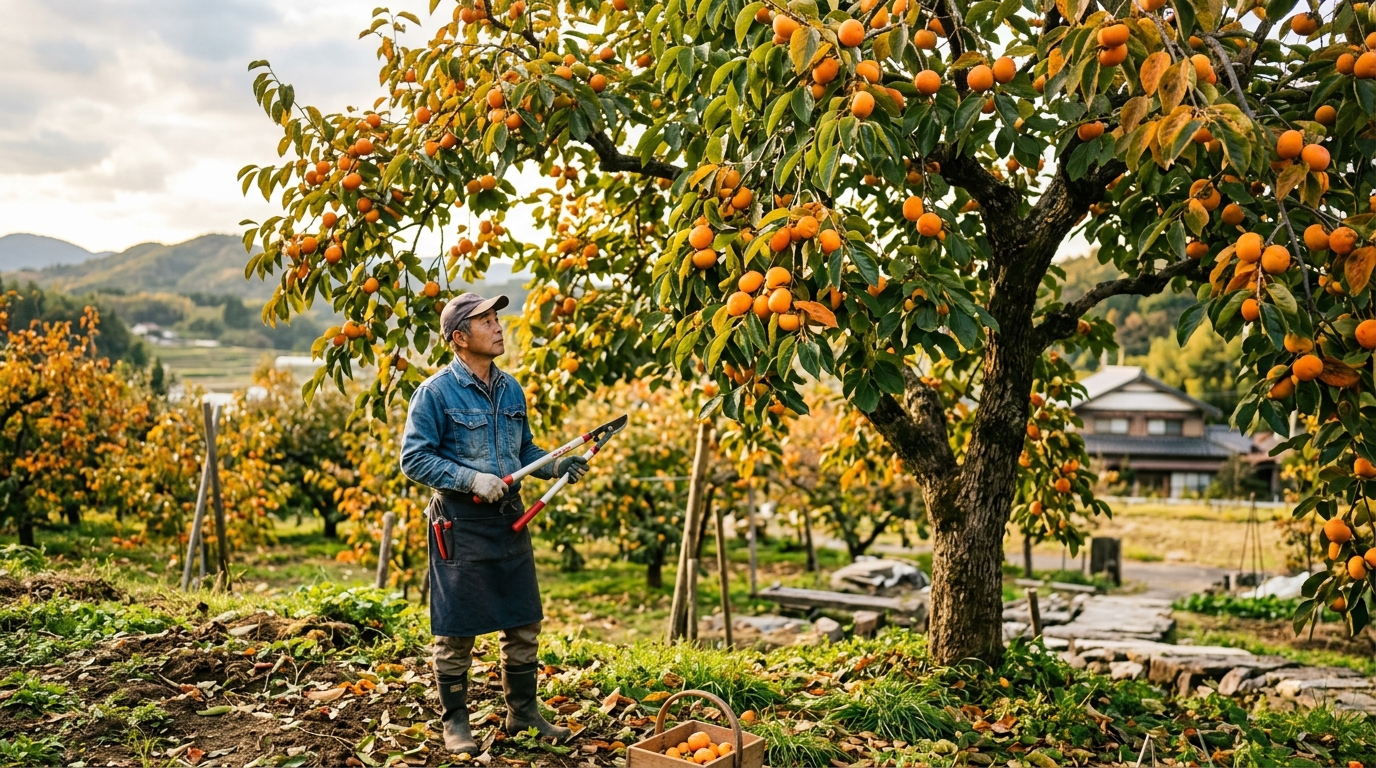
As autumn arrives, Japanese persimmon trees (Diospyros kaki) become the crown jewels of the home orchard. Their broad, leathery canopies turn brilliant shades of bronze, gold, and crimson while heavy clusters of plump orange 'Fuyu' and heart-shaped 'Hachiya' fruits weigh down the branches. But for many enthusiastic gardeners, that dense, drooping fall canopy triggers an immediate urge: grab the bypass loppers or pole saw, give the outer branches a severe haircut, and "tidy up" the tree before the leaves drop.
Put the loppers down! Pruning a leafy persimmon tree in autumn is one of the most devastating pruning mistakes you can make in the home orchard. A hard, uniform heading of a living leafy canopy in fall doesn't just shock the tree — it literally cuts away next year's entire fruit harvest before it even has a chance to form.
That exact scenario unfolded in Sophie's garden this week. Looking at her vigorous persimmon tree whose leafy branches were drooping toward the lawn under the weight of ripening fruit, Sophie approached with heavy bypass loppers raised, ready to shear the branch tips back to a uniform height. Before she could make a single cut, Sprouty stepped in:
Sophie: (Raising heavy bypass loppers toward a lush, leafy persimmon limb drooping near the ground) "This persimmon tree is getting completely unruly, and the branches are hanging so low! I'm going to head back all these leafy tips right now so it looks neat for winter."
Sprouty: (Gently raising a paw to hold back the lopper blades) "Put the loppers down, Sophie! That leafy fall canopy means hands off. Japanese persimmons produce their fruit from the plump tip buds at the very ends of those branches. If you hard-prune that leafy canopy now, you'll slice off next year's crop and shock the tree before frost. Wait until late winter when the tree is fully bare and dormant!"
Sophie: (Lowering the loppers with relief) "So leafy canopy in fall means no pruning — wait for late winter dormancy?"
🍂 On-Screen Lesson: Never hard-prune leafy persimmons in fall! The terminal tip buds at the ends of branches hold next season's fruiting wood. Keep loppers sheathed until the tree is fully dormant in late winter.
Watch Sprouty & Sophie on Fall Persimmon Pruning
See why a fall haircut deletes your persimmons in our quick video companion.
The Botany of Persimmon Fruiting: Why Terminal Buds Matter
To understand why fall pruning is disastrous for persimmons, you have to look at the unique fruiting habit of Diospyros kaki. Many stone fruits (like peaches and plums) bear on 1-year-old lateral wood, and apples and pears produce on perennial fruiting spurs. Persimmons, however, follow a completely different botanical rulebook.
Persimmon trees produce flowers and fruit on current-season growth that emerges in the spring from mixed buds formed near the tips (terminal and subterminal buds) of 1-year-old shoot growth from the previous season. The most vigorous, fertile buds are clustered almost exclusively in the outer one-third of the branch ends.
When spring arrives, those plump tip buds awaken and push out 6 to 12 inches of fresh green leafy shoots. Small creamy-yellow flowers form in the leaf axils along the lower portion of that new spring shoot. Those flowers then set fruit and develop into the persimmons you harvest in autumn.
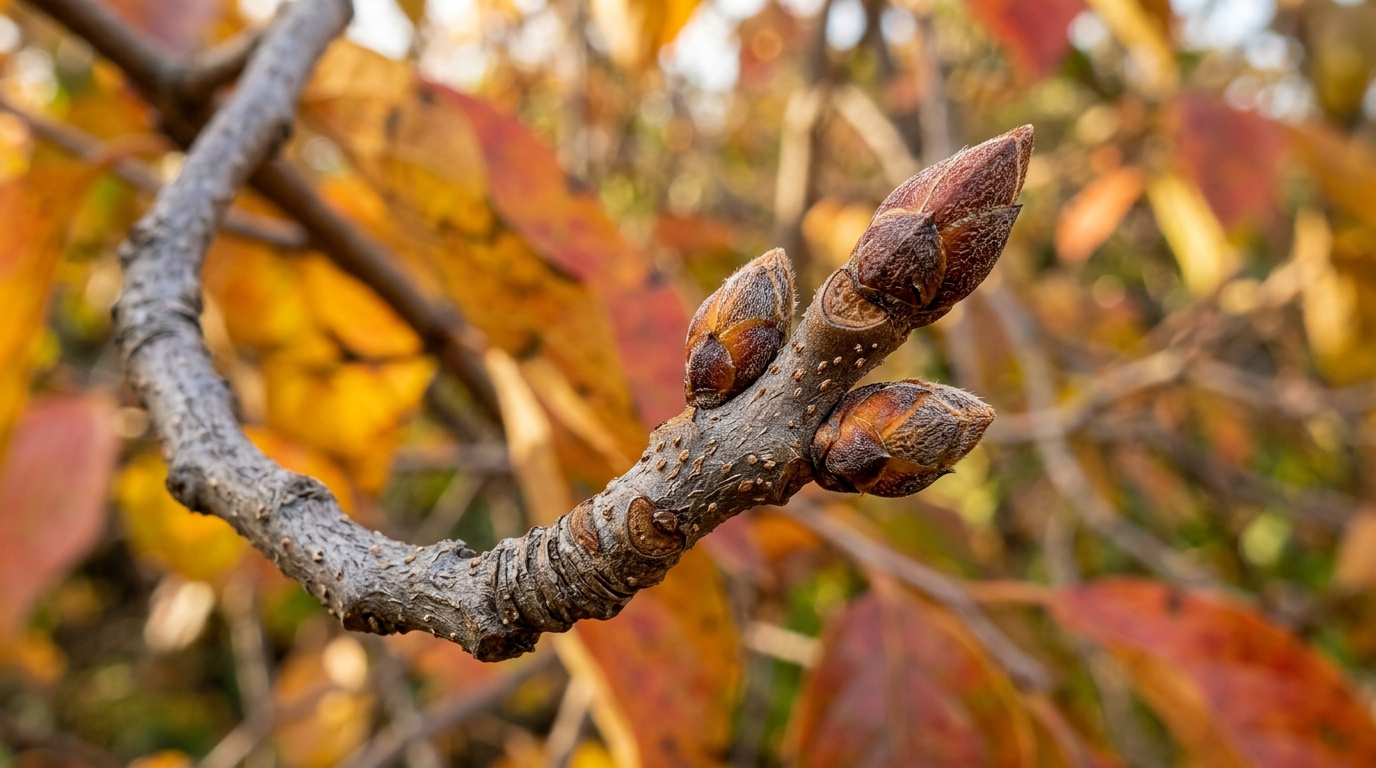
Now consider what happens when a gardener takes loppers or hedge shears and performs a "heading cut" — snipping off 1 to 2 feet of the branch tips in autumn to tidy up the tree's perimeter. Every single cut removes the exact terminal buds where next year's fruit-bearing shoots reside. The remaining lower wood contains mostly dormant vegetative buds that will only push blind, non-fruiting water sprouts the following year.
Three Reasons Hard-Pruning Leafy Persimmons in Fall Is a Disaster
Beyond stripping away your future harvest, cutting into a persimmon tree while it still holds its green and turning foliage triggers physiological stress throughout the entire organism:
1. Removing Next Season's Most Productive Fruit Buds
As confirmed by pomological research, the terminal and first two or three lateral buds below the shoot apex carry the highest percentage of productive flower buds. Cutting branch ends flush back to older wood eliminates the tree's primary flowering capacity. Even if the tree survives vigorously, your harvest drops to near zero.
2. Disrupting Nutrient Translocation and Cold Acclimation
Autumn foliage is not merely decorative. In September, October, and November, a persimmon canopy is working overtime in a vital physiological process called nutrient resorption and translocation. The green leaves synthesize carbohydrates and reclaim mobile nutrients (especially nitrogen, potassium, and magnesium), pumping them downward through the phloem into the trunk and root system.
These stored starches fuel root maintenance during winter and provide the explosive energy required for spring budbreak. Stripping off leafy limbs prematurely starves the roots. Furthermore, active pruning wounds in early autumn can break seasonal dormancy signals, stimulating tender, unhardened vegetative growth if an Indian summer or warm autumn spell follows. That tender tissue has zero frost tolerance and dies back during the first hard freeze, inviting wood decay pathogens into the vascular system.
3. High Susceptibility to Pruning Wound Decay and Sunburn
Persimmon wood is notoriously brittle and possesses a relatively slow compartmentalization response compared to other deciduous fruit trees. In late summer and early autumn, temperatures can fluctuate dramatically, and sap flow is diminishing. Cutting open large canopy wounds in fall leaves exposed cambium vulnerable to wood-boring insects, cankers, and fungal decay before the tree enters complete winter rest.
What University Extension Research Advises
Master gardener programs and agricultural extension offices across California and the fruit-growing regions of the United States are unequivocal regarding persimmon pruning timing and methods.
According to the horticultural specialists at the UC Marin Master Gardeners Pruning Persimmon Reference:
"Japanese persimmons (Diospyros kaki) produce flowers on current-season growth that develops from terminal and outer lateral buds on the previous year's shoots. For this reason, heading back branches severely reduces fruit production. Pruning should be kept to a minimum and should consist primarily of thinning cuts made during late winter dormancy."
Furthermore, in the UC Marin Master Gardeners guide to planting and growing persimmons, pomologists highlight the brittle nature of persimmon wood. Heading cuts stimulate dense, upright 'crow's foot' clusters of weak water sprouts that break under wind or fruit load. In contrast, training strong, well-spaced lateral scaffolds during the dormant season creates sturdy branches capable of bearing heavy fruit.
This principle is echoed in the University of California Cooperative Extension deciduous fruit management protocols (UC ANR / UC San Luis Obispo Deciduous Fruit Pruning Guidelines), which emphasize a strict seasonal rule: winter prune only; do not prune persimmons in summer or early autumn. Deciduous fruit trees must be allowed to enter dormancy naturally without disruptive pruning cuts.
The Proper Pruning Window: Wait for Late Winter Dormancy
The single best time to prune a Japanese persimmon tree is in late winter (January through February, or early March before bud swell), after all leaves have dropped and the tree is in deep dormancy.
Waiting for complete winter dormancy provides three game-changing advantages:
- Total Architectural Visibility: Once the canopy drops its leaves, you can clearly see the tree's entire framework. You can immediately identify crossing limbs, crowded inner branches, dead wood, narrow crotches, and weak lateral angles that are impossible to assess when hidden beneath a sea of fall foliage.
- Zero Disruption to Stored Nutrients: By late winter, all foliar nutrients have long since translocated into the trunk and root system. Making pruning cuts while the tree is dormant will not rob the tree of stored winter energy.
- Immediate Spring Healing: Dormant pruning cuts made in late winter sit for only a brief period before spring sap begins to flow. The active division of cambium cells in early spring rapidly seals pruning wounds with protective callus tissue, blocking rot organisms before warm spring pests emerge.
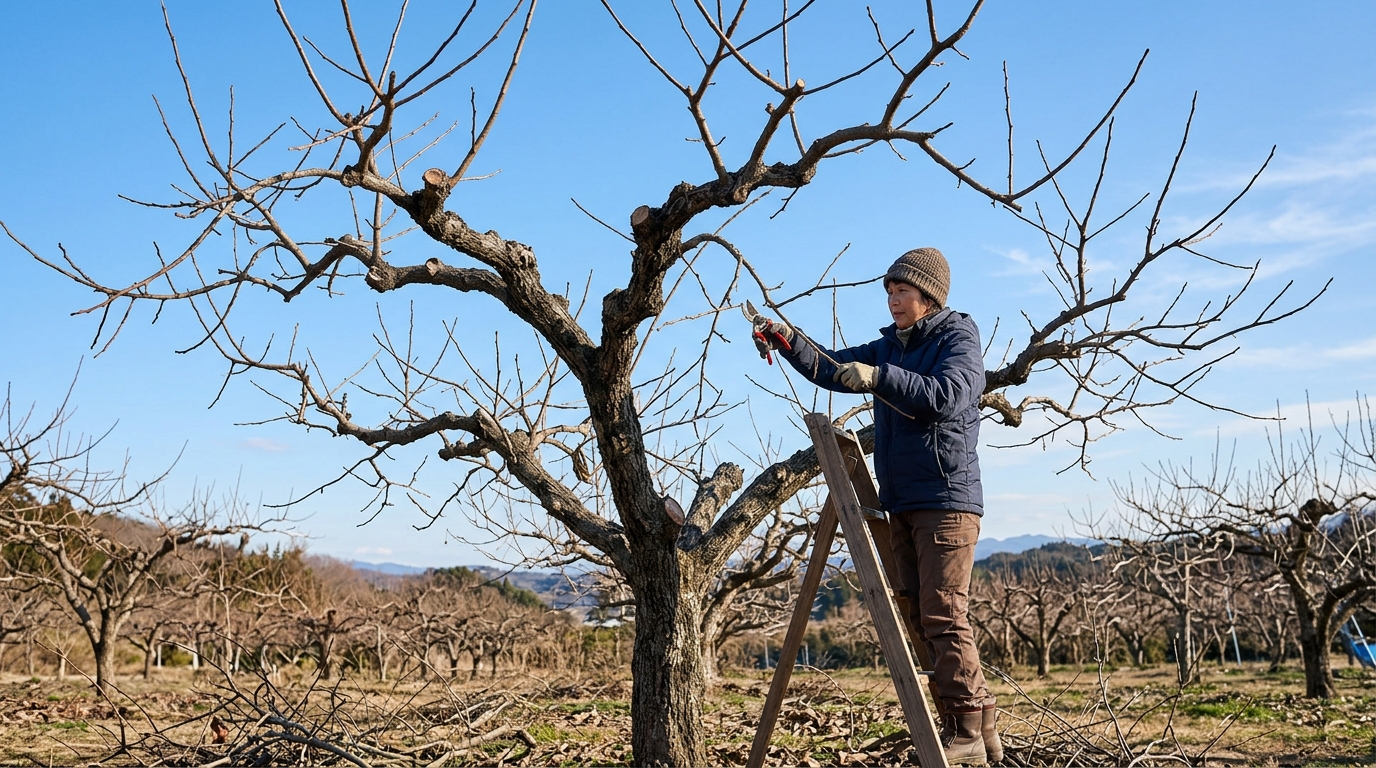
How to Prune Persimmons in Late Winter: Thinning vs. Heading Cuts
When late winter arrives and you sharpen your bypass pruners, the technique you use matters just as much as the timing. The golden rule of persimmon pruning is: favor thinning cuts; avoid heading cuts.
Thinning Cuts (The Right Way):
A thinning cut removes an entire branch or shoot back to its point of origin on a parent limb, or back to a strong lateral branch that is at least one-third the diameter of the branch being removed. Thinning cuts:
- Open up the center of the canopy to sunlight and air circulation, reducing fungal diseases.
- Preserve the intact terminal buds on the remaining scaffold branches so they can flower and fruit normally.
- Do not trigger chaotic water sprouts or bushy, weak broom growth at the cut site.
Heading Cuts (The Wrong Way):
A heading cut cuts a shoot or branch off midway down its length, leaving a blunt stub. On persimmons, heading cuts decapitate the fertile terminal buds, remove next season's crop, and stimulate multiple weak, upright water sprouts at the wound edge that shade the interior and break easily in autumn windstorms.
What to Do Right Now If Fall Persimmon Branches Are Drooping
If you walked out into your orchard this autumn and saw persimmon branches bowing low toward the ground under the weight of ripening fruit, don't panic — and definitely don't reach for the loppers! Here is the proper horticultural protocol for managing heavy fall canopies:
- Prop Heavy Limbs with Wooden Crutches: Take a 2x4 piece of lumber or sturdy tree prop with a shallow notched "V" cut at the top. Wrap the notch with a piece of burlap, rubber hose, or foam to prevent chafing against the bark, and gently wedge the prop beneath sagging scaffold limbs to relieve strain. Commercial persimmon orchards throughout Japan and California rely on wooden props every autumn to support heavy crops without cutting.
- Harvest Promptly When Fruit Colors: For non-astringent 'Fuyu' types, harvest as soon as the fruit turns solid orange. For astringent 'Hachiya', harvest when fully colored but still firm, clipping the fruit with hand shears leaving the calyx attached, and allow them to soften indoors. Harvesting relieves the weight load immediately.
- Allow Leaves to Drop Naturally: Persimmons will drop their leaves rapidly after the first couple of frosts. Rake and compost healthy fallen leaves, or shred them with your lawn mower to use as carbon-rich garden mulch.
- Mark Problem Limbs with Flagging Tape: If a particular branch is severely rubbing against another or hanging across a walkway, tie a piece of brightly colored flagging tape around it now. That way, when the tree is bare in January or February, you will immediately remember which branch needed selective thinning.
Step-by-Step Late Winter Persimmon Pruning Checklist
When late winter dormancy arrives, follow this simple 5-step checklist to prune your persimmon tree for maximum health and abundance:
- Step 1: Sanitize and Sharpen Your Tools: Wipe bypass pruners, loppers, and pruning saws with 70% isopropyl alcohol or a 10% bleach solution to avoid transmitting pathogens between trees.
- Step 2: Remove the "3 Ds": Cut away any Dead, Damaged, or Diseased wood all the way back to the branch bark collar (never leave stubs).
- Step 3: Remove Crossing and Inward-Growing Limbs: Look for branches rubbing against each other or growing directly toward the tree center. Make clean thinning cuts back to parent scaffold branches to allow sunlight to penetrate the interior canopy.
- Step 4: Remove Vertical Water Sprouts and Root Suckers: Snip off vigorous, whip-like vertical shoots arising from main limbs or from the rootstock below the graft union.
- Step 5: Thin Crowded Fruiting Shoots Sparingly: If lateral fruiting shoots are crowded within 6 inches of each other, thin out every other shoot at its base, leaving the strongest, sun-exposed shoots with their terminal buds completely intact.
Frequently Asked Questions About Persimmon Pruning
Can I prune my persimmon tree in the fall if the branches are drooping?
No. Never hard-prune leafy persimmon branches in the fall. Drooping branches in autumn are weighed down by ripening fruit and foliage. Pruning them now cuts off terminal mixed buds that produce next year's fruit. Instead of cutting, prop sagging limbs with notched 2x4 wooden crutches until you harvest the fruit, and wait until late winter dormancy to make structural thinning cuts.
Where do persimmon trees produce their fruit?
Japanese persimmon trees produce flowers and fruit on current-season leafy growth that emerges in spring from the terminal and outer lateral buds of 1-year-old shoot wood. Because the fruit-bearing shoots originate near the branch ends, blunt heading cuts remove next year's crop.
What happens if I prune my persimmon tree while it still has leaves?
Pruning a persimmon tree while it still has active leaves disrupts nutrient translocation from foliage into the root system, depriving the tree of winter starch reserves. In mild autumn weather, pruning cuts can also trigger tender late-season flushes of growth that have no cold tolerance and die back in the first hard frost, opening entry wounds for fungal decay.
When is the exact best time to prune persimmon trees?
The best time to prune persimmon trees is in late winter (January to February, or early March before bud swell). At this stage, the tree is completely bare and dormant, allowing you to clearly see branch architecture. Winter wounds heal quickly once spring sap flow begins, and no foliar energy is wasted.
What is the difference between thinning cuts and heading cuts on persimmons?
A thinning cut removes an entire branch back to its point of origin or to a major lateral limb, preserving terminal buds on remaining branches and encouraging healthy sunlight penetration without weak sprout growth. A heading cut cuts a branch off midway down its length, decapitating the fertile terminal buds and stimulating clusters of weak, non-fruiting water sprouts.
Explore More Seasonal Gardening Guides
Mastering seasonal pruning timing is the secret to a thriving, bountiful garden. Explore our comprehensive seasonal cleanup advice in the SproutySpeaks Fall Gardening Guide & Seasonal Cleanup Playbook, discover why you should never prune lilacs in September, learn how to prune Photinia now or lose your spring red flush, understand why you must wait until after a hard freeze to cut peony foliage, discover why you should leave brown fronds on freeze-damaged palms, find out why leaving dead mum stems standing over winter protects crown survival, and avoid critical yard-care blunders with our guide to 7 pruning mistakes killing your plants.