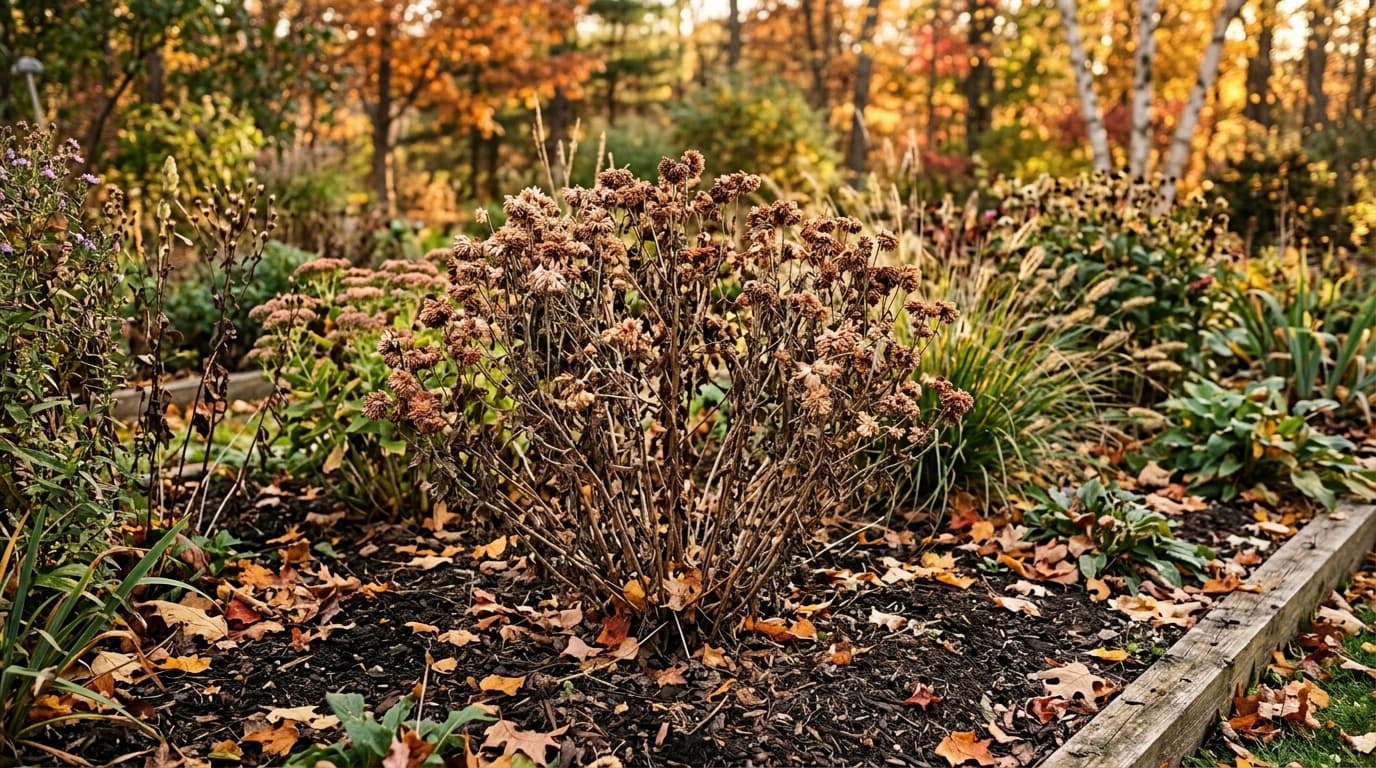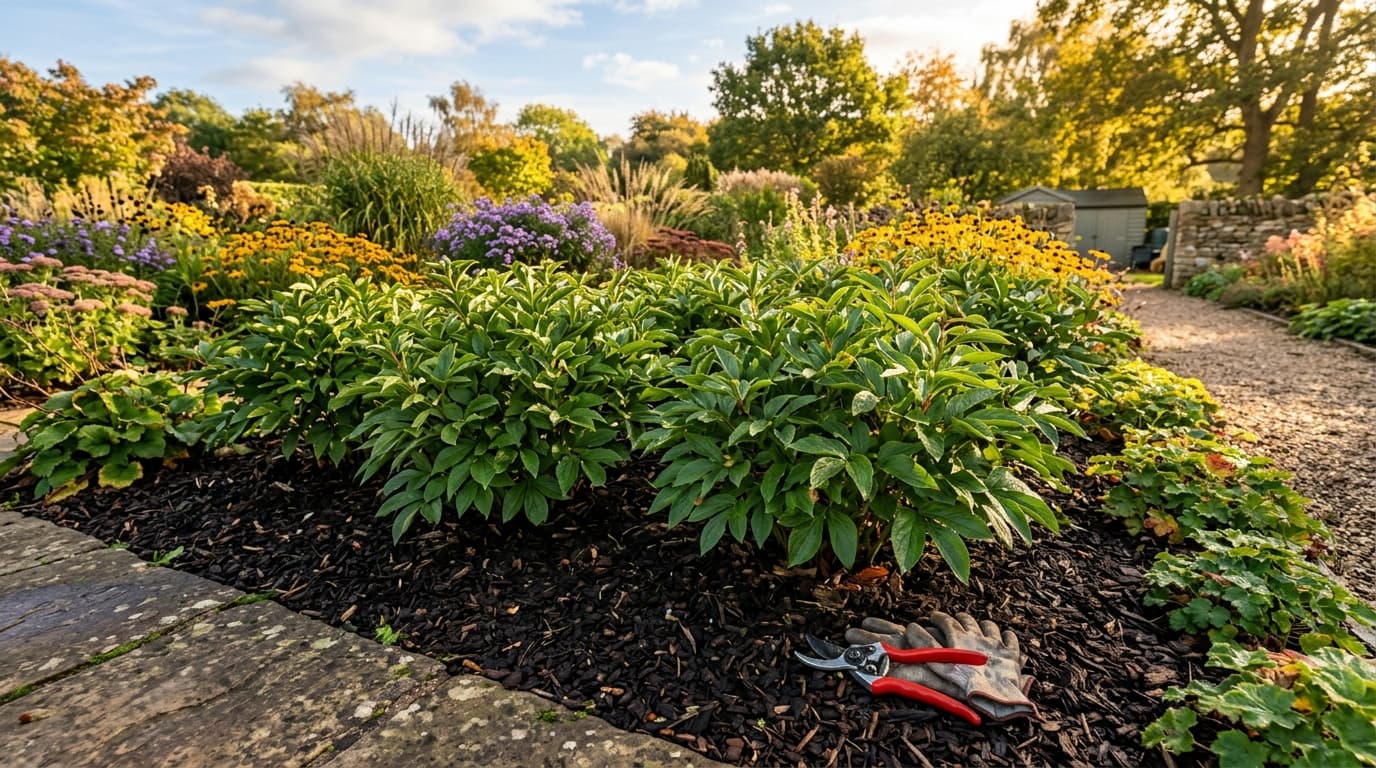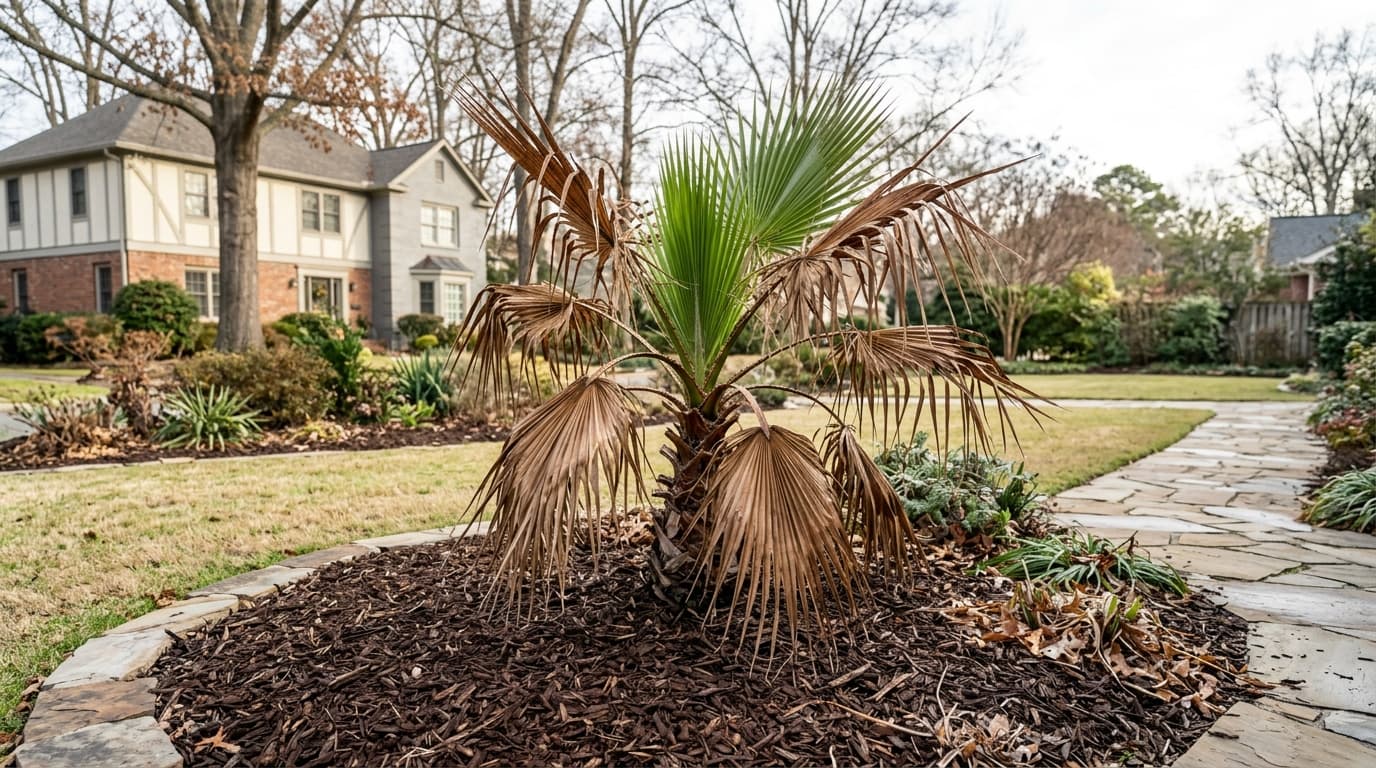

A sudden winter freeze sweeps across your landscape, night temperatures plunge below freezing, and within forty-eight hours your lush palm tree looks devastated. Fan fronds that were vibrant emerald just days ago turn a bleak bronze, parchment-tan, or crisp dark brown. For tidy gardeners, a powerful impulse immediately kicks in: pull out the loppers, grab the pole saw, and shear off all those unsightly dead fronds flush to the trunk.
Put the loppers away! For cold-damaged landscape palms (such as Mexican fan palms, queen palms, pindo palms, and date palms), giving your palm an immediate post-freeze haircut is one of the most destructive mistakes you can make. What looks like unsightly yard waste is actually your palm tree's primary winter survival armor.
That exact impulse unfolded in Sophie's garden following an unexpected cold snap. Standing before a young landscape palm with bypass loppers raised and blades aligned to hack away the scorched, drooping brown fronds, Sophie was ready to tidy the yard. Before the blades could bite into a single stem, Sprouty bounded into the garden bed to intervene:
Sophie: (Raising heavy loppers toward the scorched, brown lower fronds) "This cold snap completely fried my palm! I need to cut all these ugly brown fronds off right now."
Sprouty: (Gently raising a paw to hold back the lopper handles) "Hold the loppers, Sophie! Leave those brown fronds right where they are. They form an insulating thermal shield that buffers the palm's single growing heart against the next freeze. Wait until spring when freeze danger passes and fresh green spears emerge!"
Sophie: (Lowering her loppers and stepping back to examine the crown) "So leaving dead fronds actually saves the living heart inside?"
🌴 On-Screen Lesson: Never prune freeze-browned fronds immediately! Keep damaged leaves intact to insulate the central apical bud, and wait until all freeze risk ends and active new green spear growth appears.
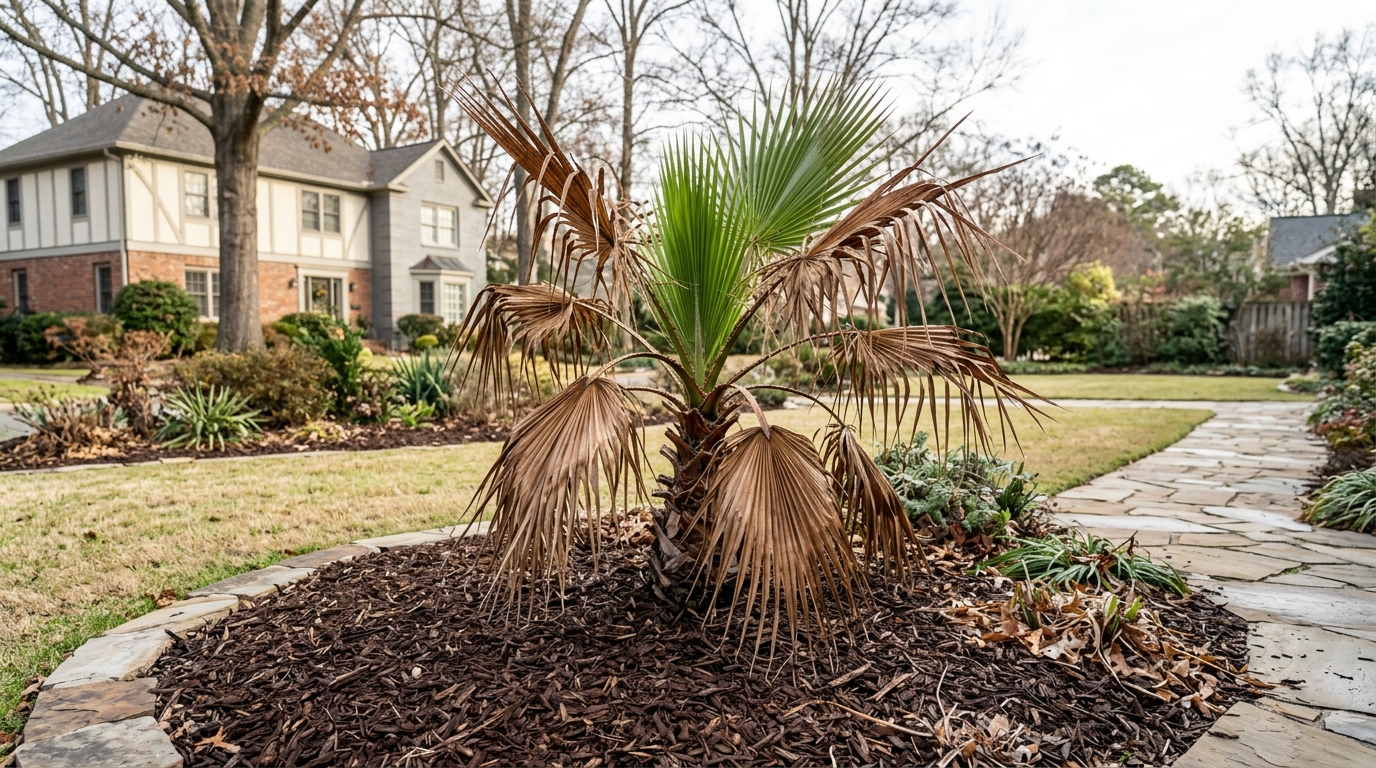
Watch Sprouty & Sophie on Freeze-Damaged Palms
See why pruning browned palm leaves after a cold snap jeopardizes your plant's heart in our quick video companion.
The Botany of Palm Cold Damage: Protecting the Apical Meristem
To understand why pruning a freeze-damaged palm can be fatal, it helps to understand palm anatomy. Unlike deciduous trees and branching woody shrubs, palms are monocots (more closely related to grasses, bamboo, and corn than to oaks or maples). This botanical distinction comes with a massive vulnerability: palms possess only a single growing point, known horticulturally as the apical meristem, or commonly as the "heart" or "bud."
In branching trees, if a severe freeze kills twig tips or outer branches, the plant activates dormant auxiliary buds along the trunk and limbs to resume branching. But in a palm, all new fronds, roots, and trunk tissue originate from that solitary central bud tucked at the top of the trunk. If the apical meristem dies, the entire palm dies. There are no backup buds waiting beneath the bark.
When freezing temperatures strike, leaving damaged fronds attached accomplishes three essential life-saving tasks:
- Thermal and Wind Buffering: Even completely withered, dry fronds create an insulating thatch layer around the palm crown. They physically shield the delicate growing bud from biting northern winds, radiation frost, and subsequent cold snaps that frequently follow initial winter freezes.
- Continuing Photosynthesis in Partial Greenery: Fronds rarely freeze uniformly. Leaves often turn brown at the tips while the base of the leaflets or petiole remains pale green. That remaining green tissue is still metabolically functional, capturing sunlight and synthesizing carbohydrates that fuel recovery.
- Nutrient Translocation: Palms are expert recyclers of mobile nutrients, particularly potassium (K) and magnesium (Mg). Before a frond naturally abscises or dies, the palm reabsorbs these vital minerals from older fronds and shuttles them upward to support the growing spear. Cutting off damaged leaves prematurely robs the palm of these emergency nutrient stores when it needs them most.
What University Extension Research Advises
Horticultural specialists and extension agents in the Southeast and West who frequently manage subtropical landscapes after severe winter storms are unanimous: delay pruning until active spring growth proves what is dead and what is alive.
According to research from the LSU AgCenter's guide on Care for Freeze-Damaged Palms:
"Wait until warm weather arrives in the spring to prune freeze-damaged palms. Even fronds that appear completely dead may be providing some protection to the growing point of the palm. Removing damaged fronds too soon reduces the cold hardiness of the palm during subsequent freezes and removes foliage that may still be functional."
Similarly, the palm physiology team at the University of Florida / IFAS Extension (Cold Damage on Palms ENH-92/MG318) emphasizes patience over cosmetic trimming:
"Do not remove freeze-damaged fronds until all danger of additional freezing weather has passed. Fronds that are completely brown may still offer some protection to the bud from future cold events. More importantly, fronds that are only partially discolored are still contributing photosynthetically to the palm's recovery."
As extension agents at UF/IFAS Miami-Dade Extension note in their cold recovery guidelines, panic-pruning causes more casualties than the freeze itself: "The general rule for cold recovery is: recovery, not panic. Damaged tissue takes months to declare its true fate, and premature cuts invite secondary pathogens into stressed vascular systems."
The Spear Pull Test: Diagnosing Living Buds vs. Bud Rot
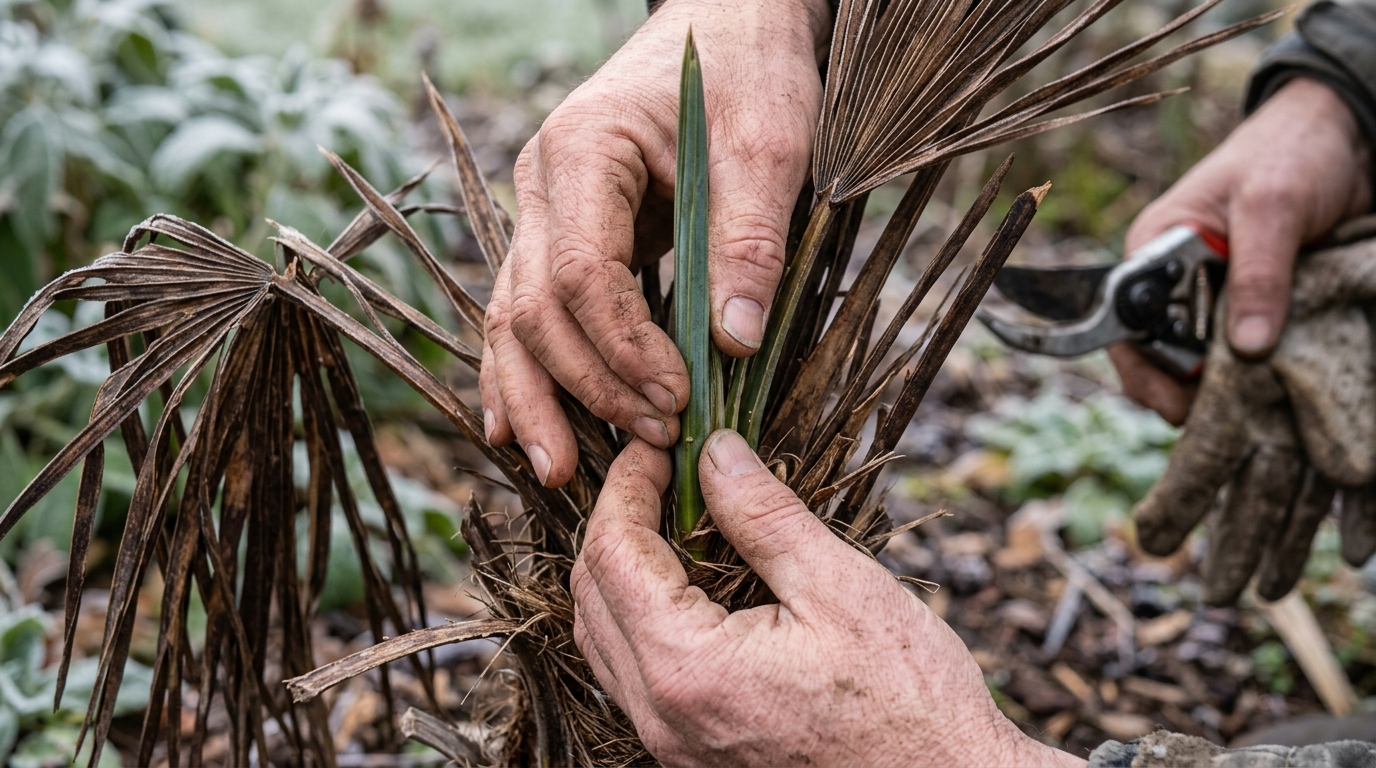
How do you know if your freeze-damaged palm is actually alive beneath its crown of brown foliage? Master gardeners and arborists use a simple diagnostic protocol known as the Spear Pull Test.
The "spear" is the newest, unexpanded frond emerging directly upright from the center of the palm crown. It is the physical tip of the apical meristem:
- Test Procedure: Wait 2 to 3 weeks after the freeze event. Reach into the center of the crown, grasp the base of the youngest central spear leaf firmly with your fingers, and give it a gentle but steady upward tug.
- Firm Spear (Pass): If the spear holds firm and resists pulling free, the apical bud is almost certainly alive and healthy. Keep patient, leave all fronds alone, and monitor the palm as temperatures warm.
- Mushy Spear Pull (Fail / Emergency): If the spear slides out effortlessly in your hand, check the base of the pulled spear. A soft, slimy, blackened base accompanied by a sour or foul rotting odor indicates that cold injury penetrated the heart, allowing secondary fungal or bacterial pathogens (such as Phytophthora bud rot) to attack the necrotic tissue.
Even if a spear pulls out, don't immediately fell the tree. Many palms with a pulled spear can regenerate from deep within the crown if the rot is arrested. Drench the open center cavity with a broad-spectrum copper fungicide or systemic fungicide according to label directions, prevent overhead irrigation water from entering the crown, and wait until late spring to assess whether a new spear emerges from the meristem.
The Step-by-Step Spring Palm Pruning Protocol
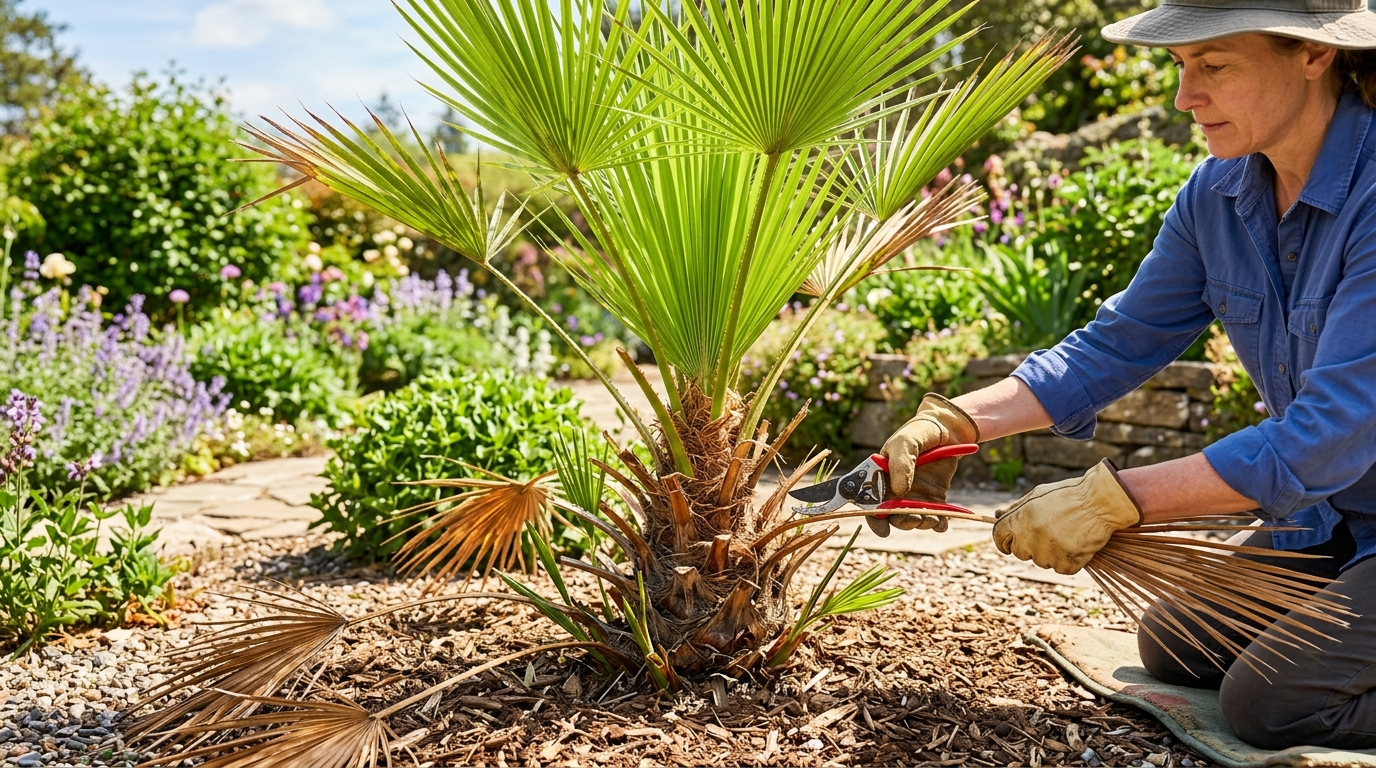
When should you finally bring out your pruning tools, and how should you prune? Follow this two-phase schedule:
Phase 1: The Winter Freeze Window (Leave Alone)
- Sheathe the loppers: Do not remove any fronds between November and March while the risk of subsequent frost remains.
- Hold all fertilizer: Never apply high-nitrogen synthetic fertilizers to a freeze-damaged palm in winter. Fertilizer stimulates tender growth flush that will be destroyed by the next frost, and damaged roots cannot absorb excess salts.
- Avoid overwatering: Cold, wet soil suffocates damaged root systems. Water only during severe dry spells, keeping moisture moderate and well-drained.
- Protect against future freezes: If another hard freeze threatens, wrap the trunk and crown with breathable frost cloth or burlap. Never use plastic sheeting in direct contact with fronds, as plastic conducts cold directly into plant tissue.
Phase 2: The Spring Recovery Window (Prune Selectively)
- Wait for the two green lights: Prune only when (1) your area's average last spring frost date has passed with zero freezes in the forecast, and (2) active new green spears have pushed at least 6 to 12 inches from the central crown.
- Cut only 100% brown fronds: Examine each frond carefully. If a frond has even 20% or 30% green tissue along its leaflets or rachis, leave it on the palm. Only sever fronds that are completely brittle, straw-colored, and dry from tip to base.
- Prune 1 to 2 inches from the trunk: Use sanitized bypass loppers or a clean hand pruning saw (disinfected with 70% isopropyl alcohol). Cut the petiole 1 to 2 inches away from the trunk base. Never hack or peel frond bases off the trunk, as tearing the fibers wounds the trunk and invites disease.
- Never "hurricane prune": Avoid the notorious "hurricane cut" (shearing all fronds except a tiny tuft pointing straight up at 12 o'clock). Retain every healthy green frond to maximize photosynthetic recovery. A healthy palm should maintain a full 360-degree or 180-degree circular canopy.
- Resume slow feeding in mid-spring: Once steady warm weather arrives (soil temperatures consistently above 65°F), apply a specialized palm fertilizer with a 4:1:6:2 ratio (nitrogen, phosphorus, potassium, magnesium) plus micronutrients like manganese and boron.
Regional Notes: California Inland Valleys & Desert Margins
In California's interior valleys—including Davis, Sacramento, Modesto, Fresno, and the Central Valley—subtropical landscape favorites like Mexican fan palms (Washingtonia robusta), queen palms (Syagrus romanzoffiana), and Canary Island date palms (Phoenix canariensis) look pristine all summer and autumn. But radiation freezes in December and January regularly drop temperatures into the mid-20s°F, browning entire canopies overnight.
Because inland California experiences periodic hard freezes right through mid-February or early March, stripping browned fronds in December or January leaves vulnerable crowns defenseless against the coldest weather of the winter. Furthermore, the Central Valley's humid Tule fog conditions can turn fresh pruning wounds into breeding grounds for fungal spores. Follow the same golden rule: let your palm look scruffy for winter, protect the apical heart, and conduct your cleanup when the Sacramento Valley warms in April.
Frequently Asked Questions About Freeze-Damaged Palms
How long does it take for a freeze-damaged palm to show new growth?
Palms grow much slower than herbaceous perennials or deciduous trees. Because root and bud metabolism depends on warm soil and air, freeze-damaged palms typically do not show visible recovery until daily high temperatures consistently exceed 70°F to 75°F. In most regions, this means new green spears won't begin expanding noticeably until April, May, or early June. Practice patience before concluding a palm is lost.
What happens if I cut all the brown fronds off right after a freeze?
Cutting browned fronds off immediately strips the apical growing bud of its thermal insulation, making it significantly more vulnerable to dying during the next cold night. In addition, premature pruning removes partially green tissue that is actively photosynthesizing, eliminates emergency potassium reserves, and creates fresh open pruning wounds that invite bacterial rot and fungal pathogens into stressed vascular systems.
Can a palm recover if all of its fronds turned brown?
Yes! Total canopy browning does not necessarily mean the palm is dead. As long as the central growing point (the apical meristem inside the crown) remained above its critical freeze tolerance threshold, the palm will push out an entirely new set of green fronds over the course of the following spring and summer.
Should I fertilize my freeze-damaged palm to help it recover?
No, not immediately. Applying fertilizer during winter or early spring to a cold-damaged palm can kill it. In cold soil, root systems are sluggish or damaged and cannot take up heavy fertilizers. The concentrated mineral salts can chemically burn compromised roots. Wait to apply a specialized slow-release palm fertilizer until late spring when warm weather has spurred active top growth and root development.
What does it mean if the center spear pulls out easily?
If the center spear pulls out with minimal effort and feels soft or smells sour at its base, the apical bud has suffered bud rot (frequently caused by cold damage combined with opportunistic fungi like Phytophthora). While serious, it is not an automatic death sentence. Treat the crown cavity immediately with a copper fungicide drench, withhold overhead watering, and monitor the palm through late spring to see if undamaged meristem tissue pushes a replacement spear.
Explore More Seasonal Gardening Guides
Protecting your plants through winter chills and seasonal transitions? Check out our complete Fall & Winter Gardening Guide Playbook, discover why leaving dead vegetation protects roots in our guide on why leaving fall mum stems prevents winter crown kill, learn why cutting green peony foliage early starves next spring's blooms, master seasonal tool boundaries with why you should never prune lilacs in late summer, avoid destructive trimming habits with 7 pruning mistakes gardeners make every season, and calculate your exact local frost windows using the SproutySpeaks Frost & Heat Date Growing Window Planner.