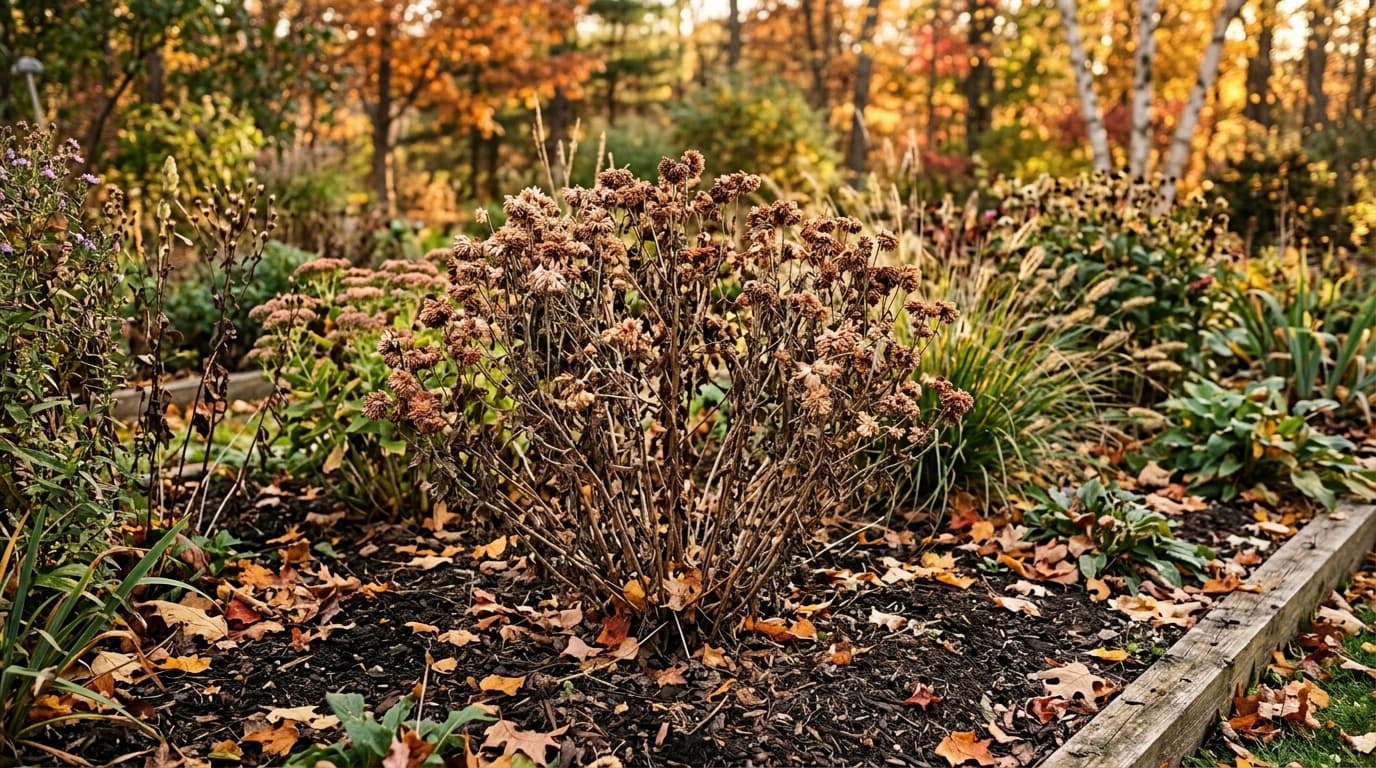

Every autumn, garden centers and porch steps burst with vibrant mounds of chrysanthemums in brilliant copper, gold, burgundy, and purple. But once that dazzling display fades in late October or November, a familiar gardening urge kicks in: grab the bypass pruners, shear those brown, withered stems flush to the soil line, and "tidy up" the garden bed for winter.
Put the pruners away! For in-ground hardy garden mums (Chrysanthemum × morifolium), giving your plants a neat fall haircut is one of the single most common mistakes that quietly kills them before spring.
That exact impulse unfolded in Sophie's garden on a crisp autumn morning. Standing over a spent garden mum clump with sharp shears open and aimed directly at the crown base, Sophie was ready to give the shrub a tight seasonal buzz cut. Before she could make a single snip, Sprouty stepped in:
Sophie: (Positioning sharp shears near the base of brown, spent mum stems) "These blooms are completely done! Time to tidy up and cut them flush to the ground for winter."
Sprouty: (Gently raising a paw to hold back the blades) "Hold the pruners, Sophie! Leave those dead stems standing all winter. They trap snow and mulch to insulate the crown from deadly freeze–thaw cycles. Wait until spring when fresh green shoots emerge!"
Sophie: (Lowering her shears without making a single cut) "So leaving the brown stems actually protects the roots?"
🌼 On-Screen Lesson: Never shear hardy mums to the ground in fall! Leave the dead stems standing through winter to insulate the crown, and cut them back in early spring when fresh green shoots appear.
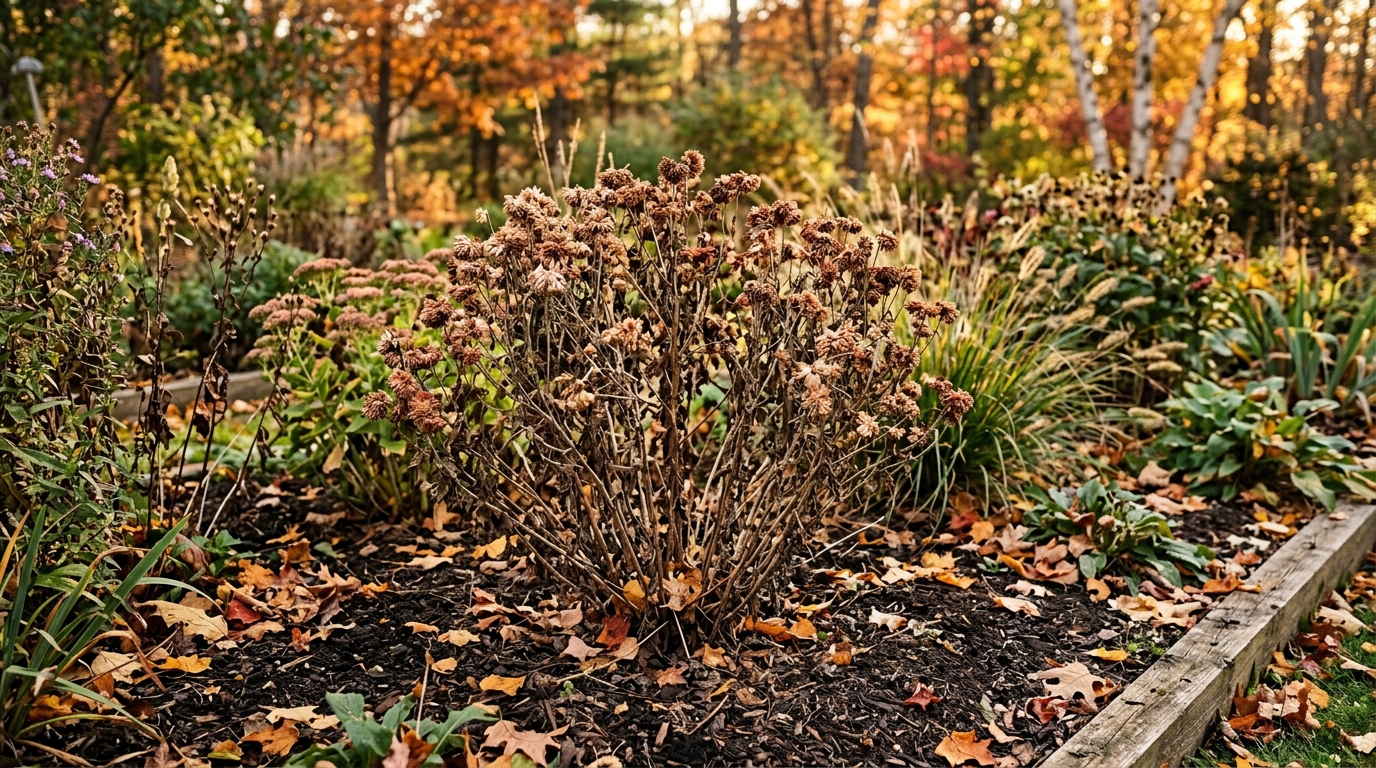
Watch Sprouty & Sophie on Overwintering Hardy Mums
See why a fall haircut deletes your garden chrysanthemums in our quick video companion.
Why Fall Shearing Kills Hardy Mums: The Botany of Crown Survival
To understand why fall pruning is catastrophic for chrysanthemums, you have to examine their root architecture. Unlike taprooted perennials (like baptisia or butterfly weed) that anchor deeply into the subsoil, hardy mums possess an extremely shallow, fibrous root system. The majority of their feeder roots and crown tissue sit in the top 3 to 6 inches of topsoil.
When you purchase a flowering mum in September or October and transplant it into your garden, the plant has spent the entire summer channeling its metabolic energy into producing massive clusters of flower buds rather than extensive root systems. Consequently, late-planted mums enter winter with a compact, vulnerable root zone.
Leaving the dead stems standing over winter provides three critical survival mechanisms:
- Natural Mulch and Snow Cage: The dense branch network acts as a physical scaffold. It catches falling leaves and holds snow in place directly over the plant's crown. Snow is one of nature's most effective thermal insulators, keeping the underlying soil consistently cold and preventing rapid temperature swings.
- Halting Frost Heaving: The primary killer of shallow-rooted perennials is not extreme cold—it is freeze-thaw cycling. When sunny winter days warm bare soil above freezing and freezing nights refreeze it, soil expands and contracts. This mechanical action ("frost heaving") literally lifts the mum's root crown out of the ground, exposing fragile roots to desiccation and sub-zero air. Standing stems shade the soil, keeping the ground uniformly frozen.
- Preventing Crown Rot from Open Stems: Chrysanthemum stems are semi-woody and pithy. Cutting them back in late autumn leaves dozens of hollow, open tubes exposed to rain, sleet, and melting snow. Moisture funnels directly down these open conduits into the heart of the crown, creating prime conditions for fungal rot and bacterial decay during wet winter thaws.
What University Extension Research Confirms
Horticultural extension specialists across the United States have consistently studied mum overwintering survival rates, and the consensus is decisive: leave the tops until spring.
According to University of Illinois Extension Educator Ryan Pankau:
"Typically, mums die in winter because their shallow, fibrous root system may get frozen as the upper soil layers freeze and thaw over winter... Many mum growers will recommend cutting them back at the end of the season, but research has shown that mums survive better if old growth is left standing for the winter season with an adequate mulch layer (4 inches thick). Once your overwintered mums pop up out of the mulch in spring, greater blooms can be encouraged by pruning them early in the growing season."
Horticulture specialists at Virginia Cooperative Extension emphasize a similar overwintering protocol:
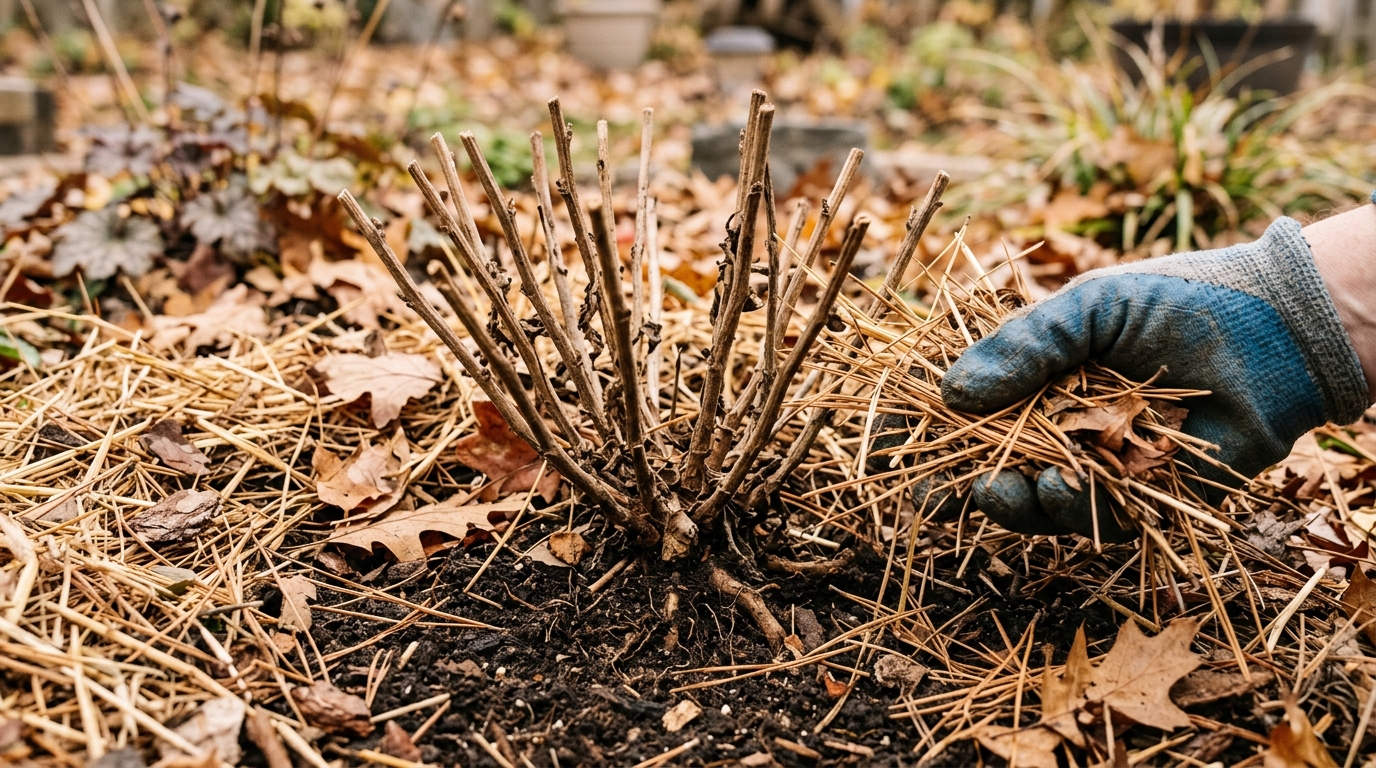
"Leave the existing foliage and stems on the plant until after the first hard frost. You will also need to add 3–4 inches of light, airy mulch over the crown of the plant. This mulch can be pine needles, loose shredded bark, clean straw (not hay), or evergreen branches. The loose mulch settles through the mum branches, protecting them from winter winds and shading the soil."
Furthermore, in his research for University of Missouri Integrated Pest Management, Extension horticulturist David Trinklein warns gardeners about the common name "hardy mum":
"The common name 'hardy chrysanthemum' is somewhat misleading and might imply they are able to endure the rigors of Midwestern winters in a manner similar to peony, daylily, and iris... Chrysanthemums have shallow root systems. Repeated freezing and thawing of the soil during the winter months can 'lift' plants out of the ground and cause severe damage known as 'frost heaving.' Mulches keep the soil in which the plants are growing shaded and at a constant temperature."
Popular gardening authorities summarizing Iowa State University trials, including The Old Farmer's Almanac and horticultural guides from The Spruce, reinforce that fall pruning removes the plant's built-in winter insulation blanket.
Garden (Hardy) Mums vs. Florist (Gift) Mums: Know What You Have
Before planning your winter garden strategy, make sure you know whether your mums are true perennials:
⚠️ The Porch Container Trap
Even a cold-hardy garden mum will die if left sitting outdoors in an above-ground nursery pot through freezing winter weather. While the earth provides infinite geothermal insulation to in-ground roots, container potting soil drops to ambient air temperatures within hours. Freezing air attacks the root ball from the top, sides, and bottom simultaneously. If you want container mums to return next year, plant them into garden soil at least 6 weeks before your first hard freeze date, or move the dormant container into an unheated garage or basement once frost strikes.
The Contrast: Why Peonies Get Cut in Fall, But Mums Wait Until Spring
Gardeners are often confused by seasonal advice because different perennials require opposite cleanup techniques. A prime example is the contrast between herbaceous peonies and garden mums:
- Peonies: CUT in late fall after a hard freeze. As detailed in our companion guide on why you must wait until after a hard freeze to cut peony foliage, peony stems must be cut and bagged for trash disposal because devastating fungal spores—like Botrytis blight and peony measles—overwinter on old leaves and reinfect emerging spring buds.
- Hardy Mums: LEAVE stems standing all winter. Mums do not suffer from the same overwintering foliar blights, but their shallow root crowns are severely threatened by frost heaving. Their standing stems serve as a mechanical windbreak and snow trap that keeps the crown insulated until spring.
Leaving dried stems also directly supports biodiversity. As we explore in our piece on why cutting dried perennial stems in autumn evicts native bees, many solitary native pollinators overwinter inside hollow and pithy plant stems.
Step-by-Step Protocol: When and How to Cut Back Hardy Mums
Here is your exact chronological action plan for thriving, long-lived perennial chrysanthemums:
1. During the Fall Bloom Display
Enjoy the vibrant flowers. If you want to keep the plant looking pristine, you can lightly pinch off faded blossom heads (deadheading). Deadheading spent blooms prolongs flowering, but never prune back the main structural stems while the plant is flowering.
2. Post-Bloom Through Late Autumn
Once blooms brown and die, step back and do nothing. Leave the entire canopy of stems, faded flowers, and dried leaves standing completely intact. Do not touch your bypass pruners.
3. When the Ground Freezes (Winter Mulch Timing)
Timing your winter mulch is critical. Never apply heavy winter mulch while the soil is still warm in early fall—mulching too early traps warm ground moisture and can delay dormancy. Instead, wait until the top inch of soil has frozen solid or several killing frosts have put the plant into complete dormancy. Then, spread 3 to 4 inches of loose, airy mulch (clean wheat straw, pine needles, or shredded hardwood bark) around and between the standing stems. Check your regional freeze timetable with our Frost & Heat Date Growing Window Planner.

4. Early Spring (The Cutback Window)
In early spring (typically late March to mid-April depending on your USDA zone), pull back the winter mulch from the crown once severe sub-zero cold has passed. Inspect the base of the plant. As soon as you see clusters of fresh, bright green basal shoots pushing up from the soil, it is time to cut:
- Use clean, sanitized bypass pruners (avoid dull hedge shears that crush vascular tissue).
- Cut the old, dried woody stems back to within 1 to 2 inches of the soil line.
- Be careful not to snip the tender new green basal shoots emerging from the crown.
- Rake away the severed old stems and compost them if healthy.
5. Late Spring to Midsummer: The Pinching Routine
Once your overwintered mum begins actively growing, do not let it grow into a tall, floppy stalk. When new shoots reach 4 to 6 inches in height, pinch off the top ½ to 1 inch of each stem with your fingernails or pruners. Each pinch stimulates the stem to branch into two to four new flowering shoots. Repeat this pinching process every 3 to 4 weeks until roughly July 4th (Independence Day), then stop. Ceasing pinching in early July allows the plant to form dense flower buds for a spectacular, spherical autumn display.
Regional Growing Note: Inland California & Mild Winters
In mild-winter regions like California's Central Valley (Sacramento, Davis, Yolo County, Zone 9b), soil rarely freezes several inches deep. However, leaving mum stems standing is equally beneficial. Mild winters feature heavy, saturated rain storms followed by sudden frosty mornings. Standing stems disperse the force of torrential downpours, reducing soil erosion around the shallow crown and shading wet soil during sunny intervals. The biggest local pitfall is treating fall nursery mums as disposable three-week decorations—plant garden varieties in ground early, skip the fall buzz cut, and let them return every autumn as magnificent focal points.
Frequently Asked Questions About Overwintering Hardy Mums
Should I cut back my mums after they finish blooming in the fall?
No. Research from university extensions confirms that leaving dead stems standing through winter dramatically improves mum survival rates. Old stems catch insulating snow, buffer the shallow crown from wind, and prevent frost heaving from freeze-thaw cycles. Wait to cut stems back until early spring when fresh green shoots emerge.
Why do fall-planted mums often fail to come back in the spring?
Fall-planted mums often fail because they are planted while in full bloom, meaning their root systems are small and shallow. When gardeners cut back their stems in fall, the exposed crown suffers from frost heaving and winter desiccation. To ensure survival, leave stems standing, apply 3 to 4 inches of loose mulch after the ground freezes, or plant mums in spring so roots have a full season to establish.
Can I leave potted mums in their nursery containers outside over the winter?
No. Container soil lacks the geothermal insulation of in-ground soil, allowing freezing temperatures to attack the root ball from all sides. Container mums left outdoors above ground will freeze and die in cold-winter zones. To save them, transplant them into garden soil at least 6 weeks before your first hard freeze, or store the dormant container in an unheated garage or basement, watering minimally once a month.
What is the best type of winter mulch for garden mums?
The best winter mulch for hardy mums is a loose, airy material that doesn't pack down or hold excessive soggy moisture against the crown. Clean wheat straw, pine needles, or shredded bark applied 3 to 4 inches deep are ideal. Avoid heavy whole autumn leaves or heavy clay soils that can mat down and suffocate dormant crowns.
When should I cut back dead mum stems in spring?
Cut dead mum stems back in early spring (March or April) as soon as danger of severe sub-zero freezes has passed and you see fresh, bright green basal shoots emerging at the soil line. Use clean bypass pruners to cut old woody stems 1 to 2 inches above the ground, taking care not to damage the fresh new growth.
Explore More Seasonal Gardening Guides
Planning your autumn and winter garden tasks? Check out our complete Fall Gardening Guide & Seasonal Cleanup Playbook, understand seasonal pruning boundaries with our breakdown of why pruning lilacs in September deletes next spring's flowers, discover the top 5 flowering plants to plant in September, avoid common horticultural traps with 7 pruning mistakes gardeners make every season, and calculate your exact frost dates with the Frost & Heat Date Growing Window Planner.