
It started right at the garden gate as Sophie was sizing up an unruly, overgrown red tip hedge with her loppers in hand. Looking at the long summer shoots waving in the September breeze, she turned to Sprouty with the question thousands of gardeners ask every autumn:
Sophie: "Leave the photinia till spring?"
Sprouty: "Hey Sophie — shape it now or you cut next spring’s red flush."
Sophie: "Got it — photinia gets pruned now."
On paper, Sophie's instinct makes total intuitive sense. After all, gardeners hear the rule drummed into their heads every autumn: "Don't prune your spring-blooming shrubs like lilacs or azaleas in fall, because you'll chop off next year's flower buds." But when gardeners mistakenly apply that exact same "wait until spring" logic to Red Tip Photinia (Photinia × fraseri), disaster strikes.
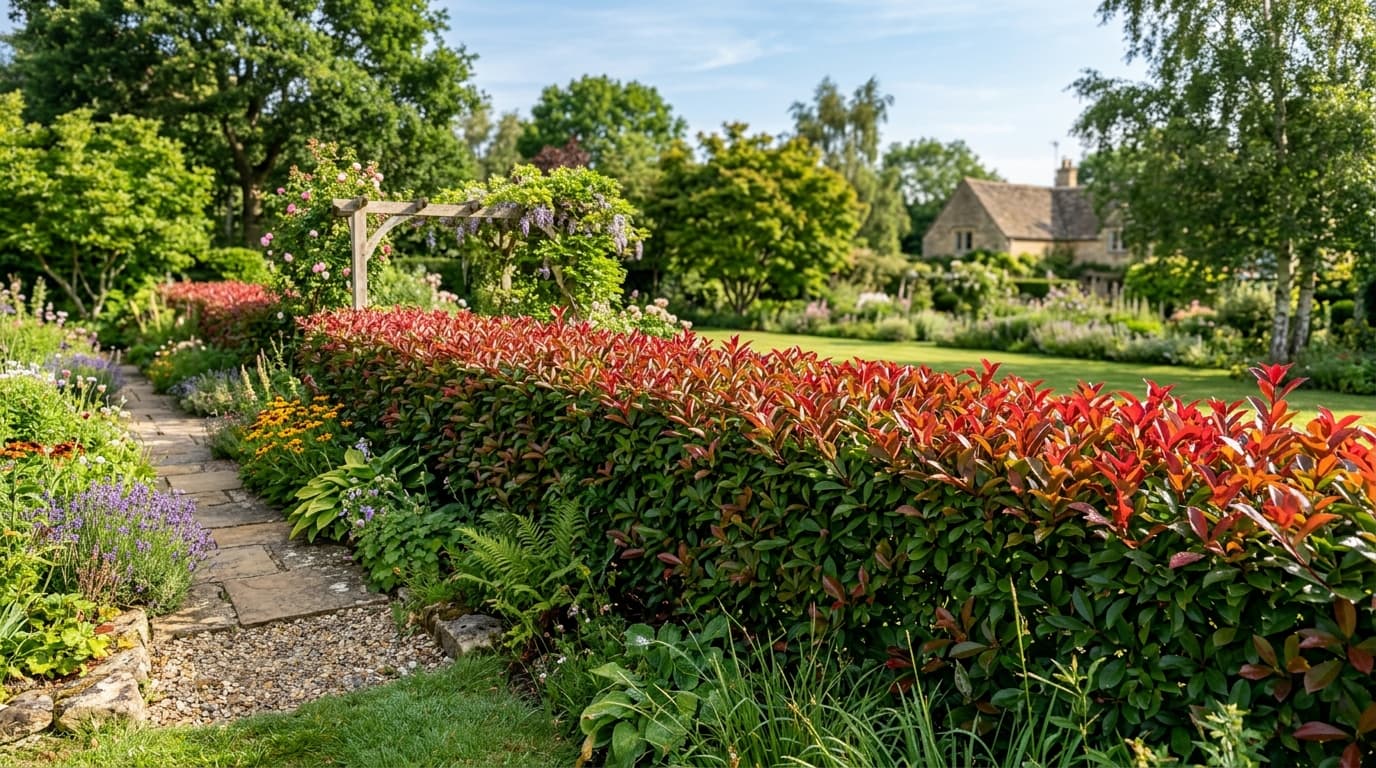
If you wait until spring to tidy, square off, or shape your photinia hedge, your pruners will slice right through the very prize you bought the plant for: the brilliant, fiery scarlet new foliage that crowns every branch tip in spring.
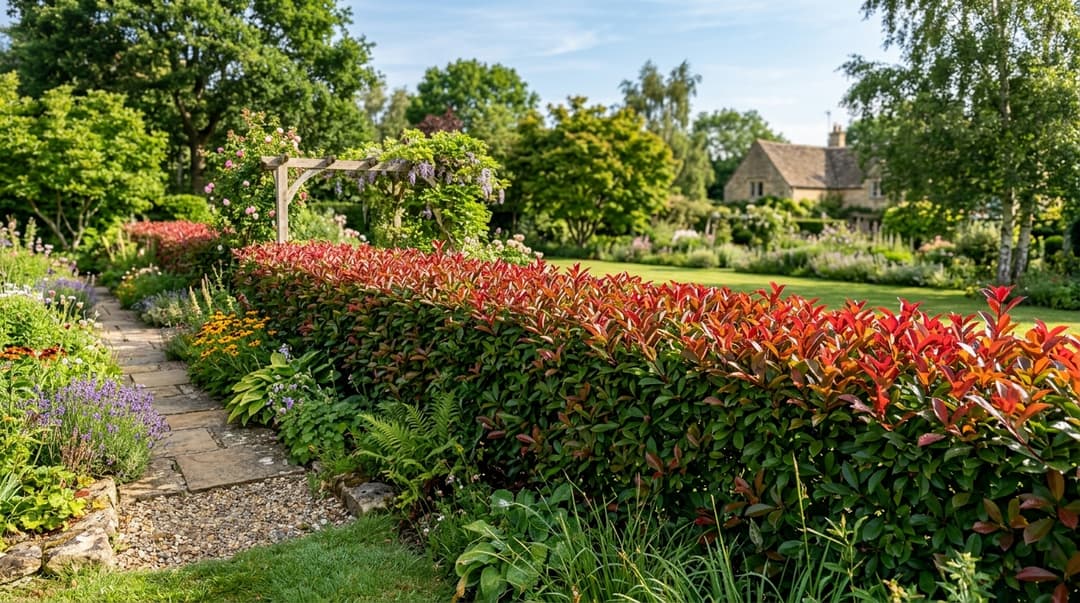
Watch Sprouty & Sophie Break Down the Photinia Pruning Window
See why delaying photinia pruning until spring deletes your fiery red foliage in our latest quick tip video.
The Botany of the Red Flush: Why Fraser Photinia Colors Up
To understand why pruning timing is make-or-break for this plant, you have to look at the unique biology of Photinia × fraseri. As detailed in the North Carolina State University Extension Plant Toolbox, Fraser photinia is a vigorous evergreen hybrid (a cross between P. glabra and P. serratifolia) celebrated throughout USDA zones 7 to 9 for its dramatic seasonal transformation.
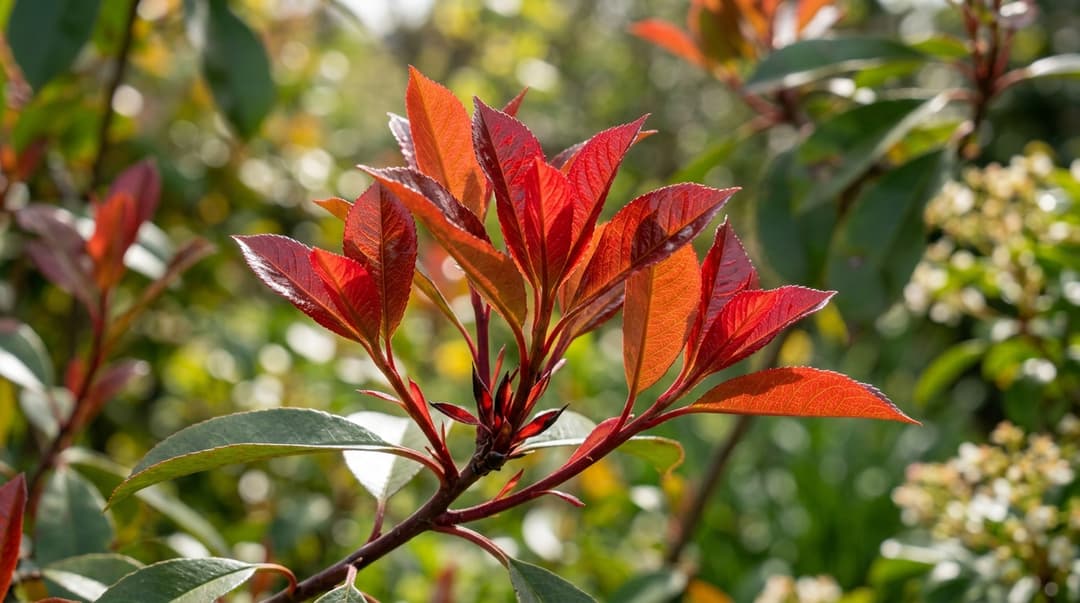
Unlike deciduous trees whose leaves turn red as chlorophyll breaks down in autumn, photinia does the exact opposite: its leaves are ruby-red only when they are brand new.
Young, unfurling leaves are packed with dense concentrations of anthocyanin pigments. Botanically, these red pigments serve as a natural sunscreen, shielding tender, juvenile cell walls and fragile photosynthetic machinery from harsh UV radiation until the leaf matures. Over three to four weeks, chlorophyll synthesis increases, the red fades, and the leaves transition into thick, leathery, dark emerald green foliage.
Here is the critical catch: that premier color flush happens in spring right at the terminal shoots of the branch tips. The plant spends winter storing carbohydrates in its woody stems, ready to explode with dozens of ruby shoots the second soil temperatures warm up in March and April.
The Spring Shearing Trap: Why Delaying Kills the Display
So what happens when a gardener decides to "leave the photinia until spring"?
- Winter reveals an unruly profile: Over the course of summer, photinia throws long, leggy "water shoots" that reach 3 to 5 feet past the hedge line. If left unpruned in September, the hedge spends all winter looking ragged, top-heavy, and uneven.
- Spring bud break erupts on those wild tips: Come March or early April, the plant wakes up. Because growth hormones (auxins) congregate at the highest terminal points, those long, wild shoots burst into glorious crimson red.
- The gardener grabs the hedge shears: Seeing wild shoots sticking out of an otherwise formal hedge, the homeowner fires up the trimmers to "neaten things up for the season." In five minutes of shearing, every single red tip falls to the driveway.
- Result: A flat, dull, chopped green wall: Once the terminal red growth is severed in spring, the remaining wood consists almost entirely of older, mature green foliage. You spend the rest of spring looking at a sheared green box, completely cheated of the color show.
✂️ The Core Paradox: Lilacs vs. Photinia
In our guide on why pruning lilacs in September deletes flowers, we warned gardeners to put down the shears because lilacs set flower buds on old wood during summer. Photinia is the practical inverse: you must shape photinia in early September so that its vegetative framework is set in advance. That way, when spring growth triggers, every single new shoot emerges untouched, giving you an uninterrupted carpet of crimson.
Why Early September Is the Exact "Magic Window"
Why early September specifically? Why not November, or mid-summer?
Early September sits in an ecological sweet spot between active summer transpiration and deep winter dormancy:
- Cuts heal before frost: In early September, ambient daytime temperatures are still warm enough for the plant's vascular cambium to seal pruning wounds with protective suberin and callus tissue. Cuts made in late autumn or freezing winter often remain open, leaving entry points for winter desiccation.
- Growth is slowing naturally: Photinia growth slows down as daylight hours shorten in September. A light to moderate shaping cut now does not provoke the rapid, sappy late-autumn growth flush that heavy mid-summer pruning causes. The plant directs its energy toward setting firm winter buds just below your cuts.
- Sets up uniform spring branching: When you trim the unruly tips back to an outward-facing leaf node in early September, each cut stem stimulates 2 to 3 lateral bud eyes. When spring arrives, instead of one single wild red tip, you get multiple bushy red clusters exploding along the entire surface of the hedge.
The Leaf Spot Trap: Pruning to Prevent Entomosporium
Anyone who has grown red tip photinia knows its biggest vulnerability: Entomosporium leaf spot (Entomosporium mespili). Those dreaded tiny reddish-purple spots that form halos and cause massive premature leaf drop are the #1 killer of photinia hedges across North America.
As documented in the University of California Statewide Integrated Pest Management (UC IPM) Common Leaf Spot Guidelines, Entomosporium spores spread primarily via splashing water and thrive during warm, wet weather. When shrubs are pruned repeatedly during damp spring rains, the flush of tender new growth is extraordinarily susceptible to fungal infection.
Similarly, plant pathologists at Clemson University Cooperative Extension (HGIC 1081) emphasize that improper pruning schedules and crowded monocultures accelerate Entomosporium spread. To protect your photinia while shaping:
🛡️ 4 Rules to Keep Photinia Disease-Free
- Prune in dry weather only: Never shape photinia when foliage is wet or when rain is forecast within 48 hours. Fungal spores require leaf wetness to germinate and penetrate cut stems.
- Sanitize your shears: Wipe blades with 70% isopropyl alcohol or a 10% bleach solution between bushes. This prevents transferring bacterial fire blight or fungal spores from an infected branch to a healthy one.
- Thin the interior for air circulation: Don't just shear the exterior flat. Reach inside with hand loppers and remove 2 or 3 of the oldest, thickest interior canes down to the base. Opening the center allows wind and sunlight to penetrate, drying leaves quickly after morning dew.
- Rake and discard fallen leaf debris: Overwintering Entomosporium spores survive on fallen spotted leaves beneath the shrub. Rake up all leaf litter in early autumn and discard it in municipal yard waste — never leave it as mulch under the hedge.
Sprouty's Step-by-Step Early September Shaping Routine
Ready to get your hedge into shape? Follow Sprouty's 4-step checklist this weekend:
- Step Back and Identify the "Outriders": Look down the hedge line. Locate the wild, 3- to 4-foot vigorous water sprouts that shot up above the desired hedge height during mid-summer.
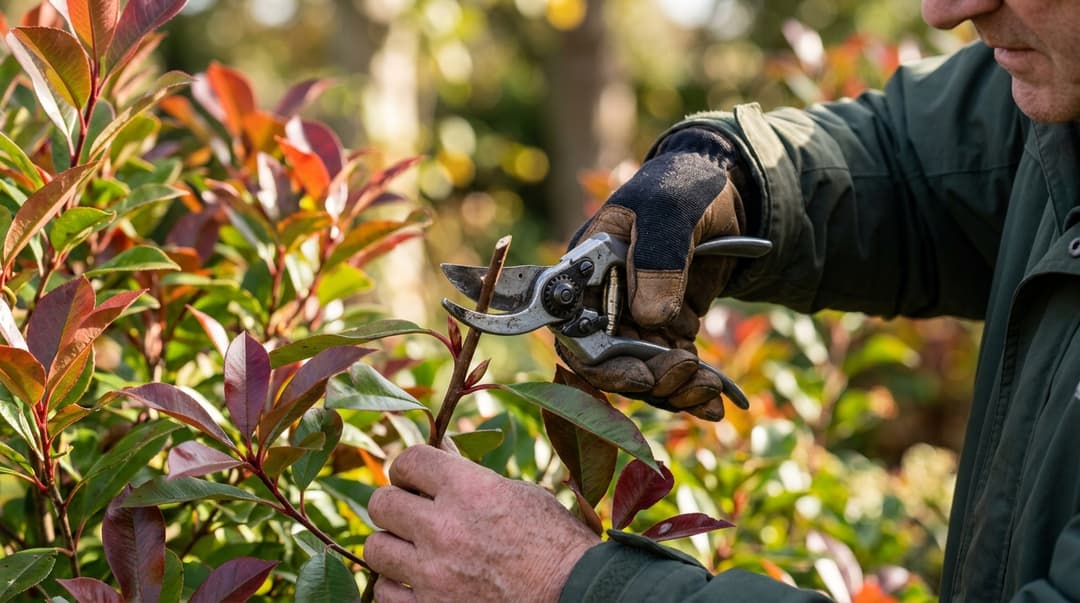
- Hand-Prune Rather Than Flat-Shear: Whenever possible, use bypass pruners instead of motorized hedge trimmers. Motorized shears shred and tear broad photinia leaves in half, creating ragged brown edges that take months to hide and invite fungal entry. Cut individual stems back into the canopy, just 1/4 inch above an outward-pointing leaf node.
- Maintain an A-Frame Profile: Always prune hedges so the base is slightly wider than the top (like an A-frame). If the top overhangs the bottom, it shades out lower branches, causing the lower 3 feet of your hedge to go bald and woody.
- Skip Late Fall Nitrogen Fertilizer: Pruning removes some leaf mass, but do not feed the plant high-nitrogen synthetic fertilizer in September. Adding heavy nitrogen now forces succulent, fragile green growth that will freeze during the first November frost. Let the plant harden off naturally for winter.
🌿 The Bottom Line
Gardeners wait all winter for photinia's explosive red spring show. Don't be the gardener who chops it off with hedge trimmers in April. Grab your bypass pruners in early September, give the hedge one clean, deliberate shaping haircut, and let it rest through winter. Next spring, every branch tip will thank you with blazing scarlet color.
Catching up on seasonal garden chores? Check out our complete Fall Gardening Seasonal Playbook, review the 7 pruning mistakes that damage shrubs, and read our breakdown of why you should never prune lilacs in September.