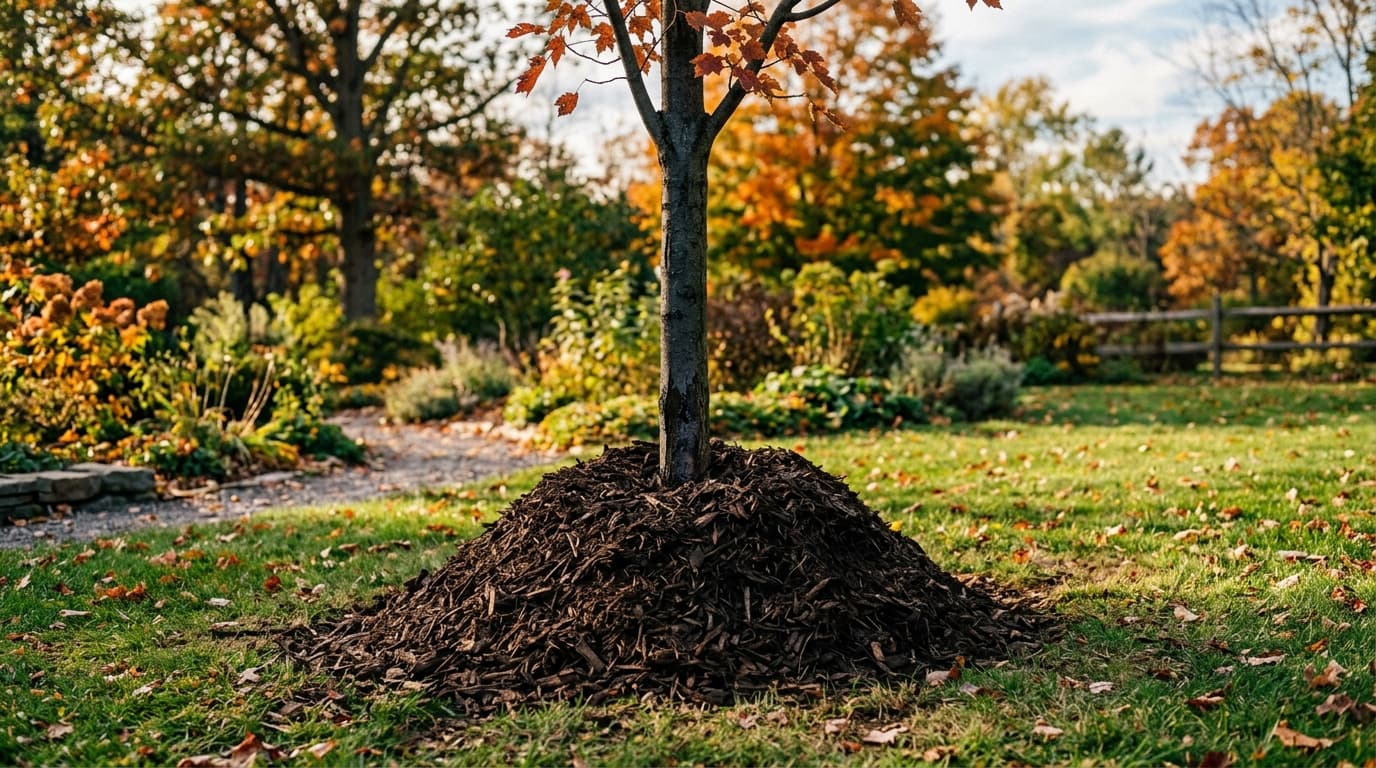

With fall mulching season here and wheelbarrows loaded with fresh wood chips, mulching in early fall is one of the most rewarding garden chores: it conserves residual soil moisture, insulates delicate root zones against temperature swings, and gives garden beds a crisp, beautifully manicured appearance ahead of winter.
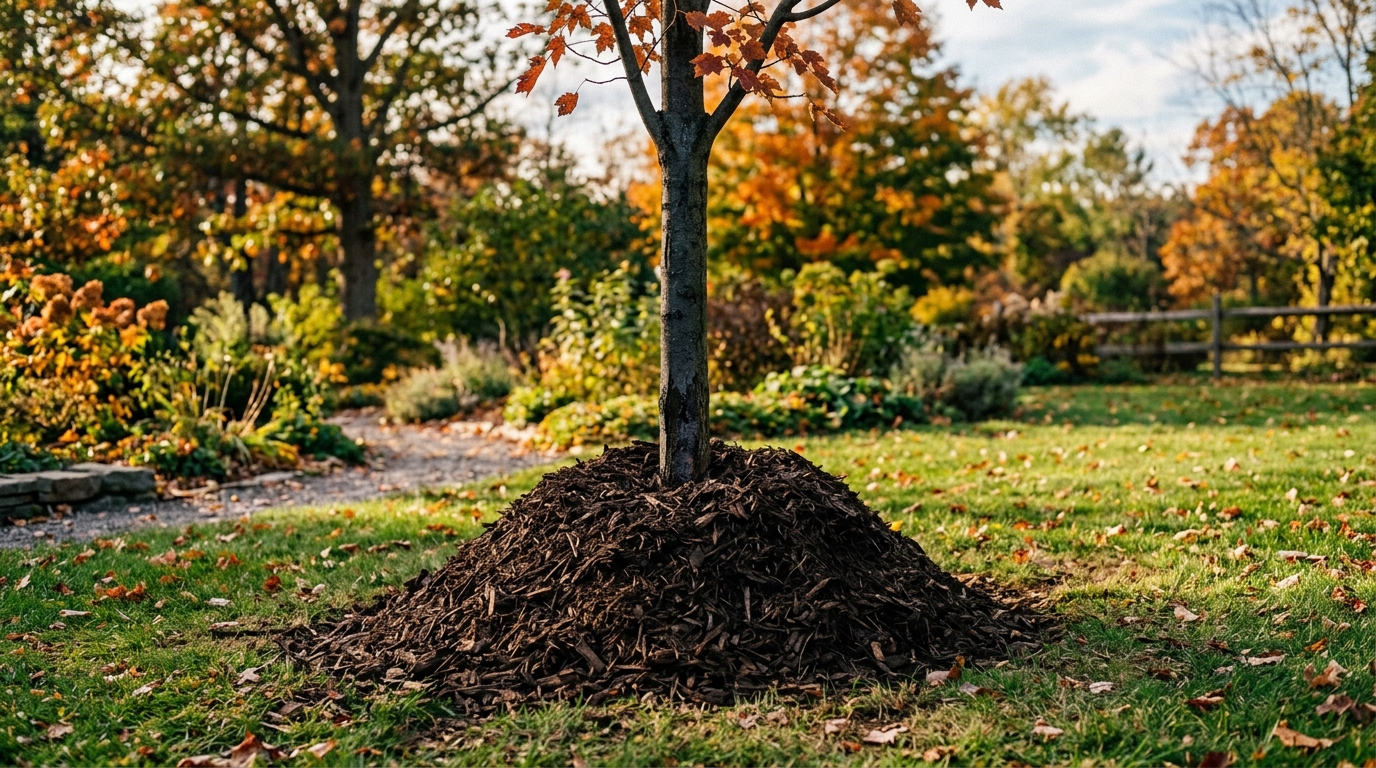
Yet right in the middle of this autumn enthusiasm, one well-intentioned habit quietly harms trees across suburban yards, city parks, and home landscapes: the dreaded mulch volcano. Walk down nearly any neighborhood street in late September or October, and you will spot them—steep mounds of dark shredded bark piled eight, ten, or even twelve inches high, banked directly against the lower trunks of young shade trees and fruit trees like miniature eruption cones.
It often seems intuitive to gardeners: if a little mulch is good, surely a deep blanket piled snugly against the trunk must keep the tree warmer and safer for fall! But tree trunks and tree roots are built for very different jobs. When you mound mulch against the bark, you create a dark, soggy environment that traps moisture, rots the protective outer bark, and creates a cozy haven for gnawing rodents.
That exact mulching mishap happened in Sophie's garden this week. Freshly delivered cedar mulch was piled high in her wheelbarrow, and she was busily shoveling a towering cone right against the base of her young maple. Before the mound grew any higher, Sprouty stepped in to redirect the shovel:
Sophie: (Carefully shoveling a deep mound of dark wood mulch high up against the bark of her garden tree) "I'm making this mulch volcano around my tree to protect it and tuck it in for fall!"
Sprouty: (Gently waving a paw to pause the shovel) "Hey Sophie — mulch volcanoes rot bark, keep mulch away from trunks! Bark needs fresh air to breathe. When you pile mulch against the trunk, trapped moisture rots the bark and invites rodents to nest."
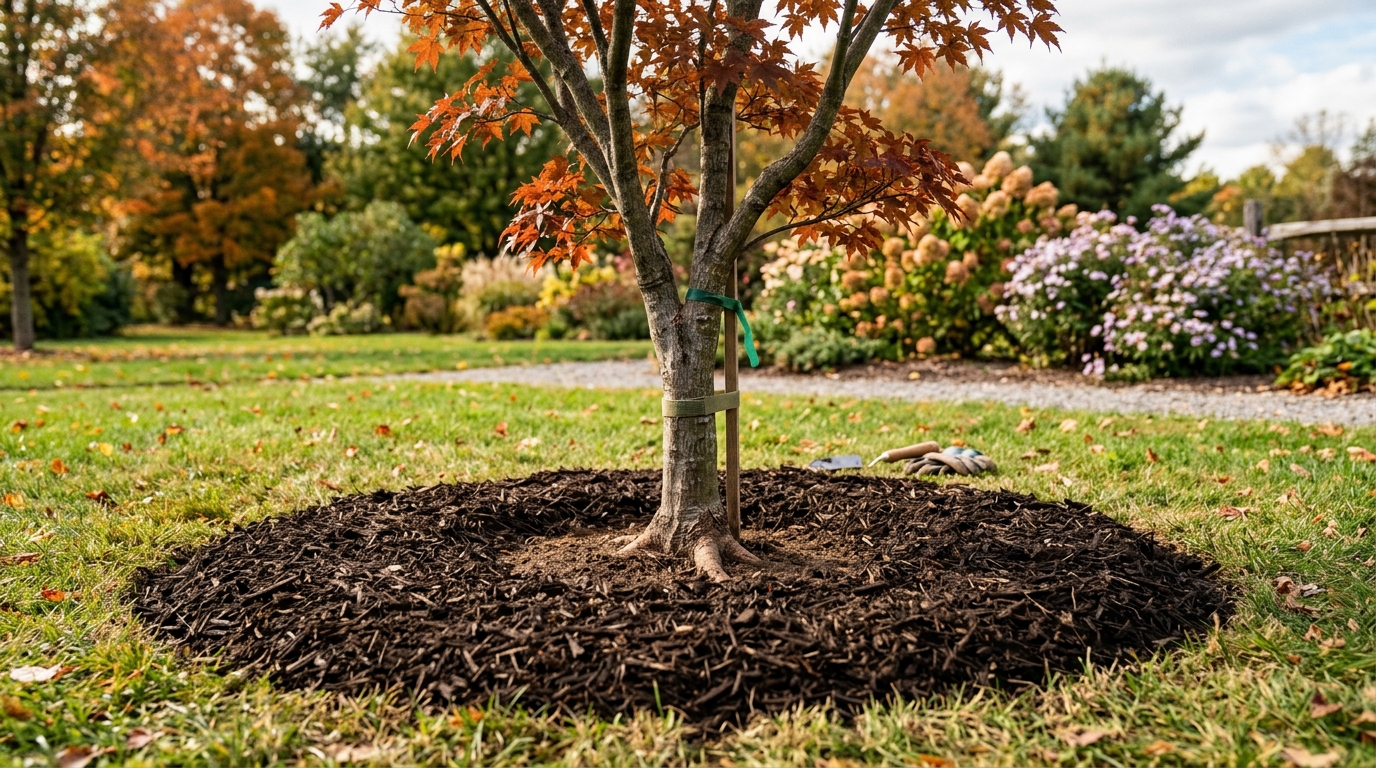
Sophie: (Pulling the mound back with her rake to expose the tree base) "Good catch, I'll spread it properly into a flat donut ring with the trunk flare clear!"
🌳 On-Screen Lesson: Never volcano your mulch! Keep mulch pulled back from the trunk flare (about a foot on large, mature trees) and spread a flat 2 to 3-inch donut ring out toward the drip line.
Watch Sprouty & Sophie on Mulch Volcanoes
See why spreading a flat donut ring keeps tree bark healthy in our quick video companion.
The Biology of Bark vs. Roots: Why Trunks Cannot Be Buried
To understand why mulch volcanoes cause problems, it helps to look at the anatomy of woody plants. A tree is divided into distinct anatomical zones, each evolved to thrive in very specific conditions:
- Roots live below ground. They are adapted to high-moisture, low-light environments and are designed to absorb water and dissolved mineral nutrients from the soil pore space.
- Trunk bark lives above ground in open air and sunlight. Bark is composed of protective outer cork cells, suberin, and microscopic pores called lenticels. Lenticels permit gas exchange, allowing living cells inside the inner bark (the phloem and vascular cambium) to take in oxygen and release carbon dioxide.
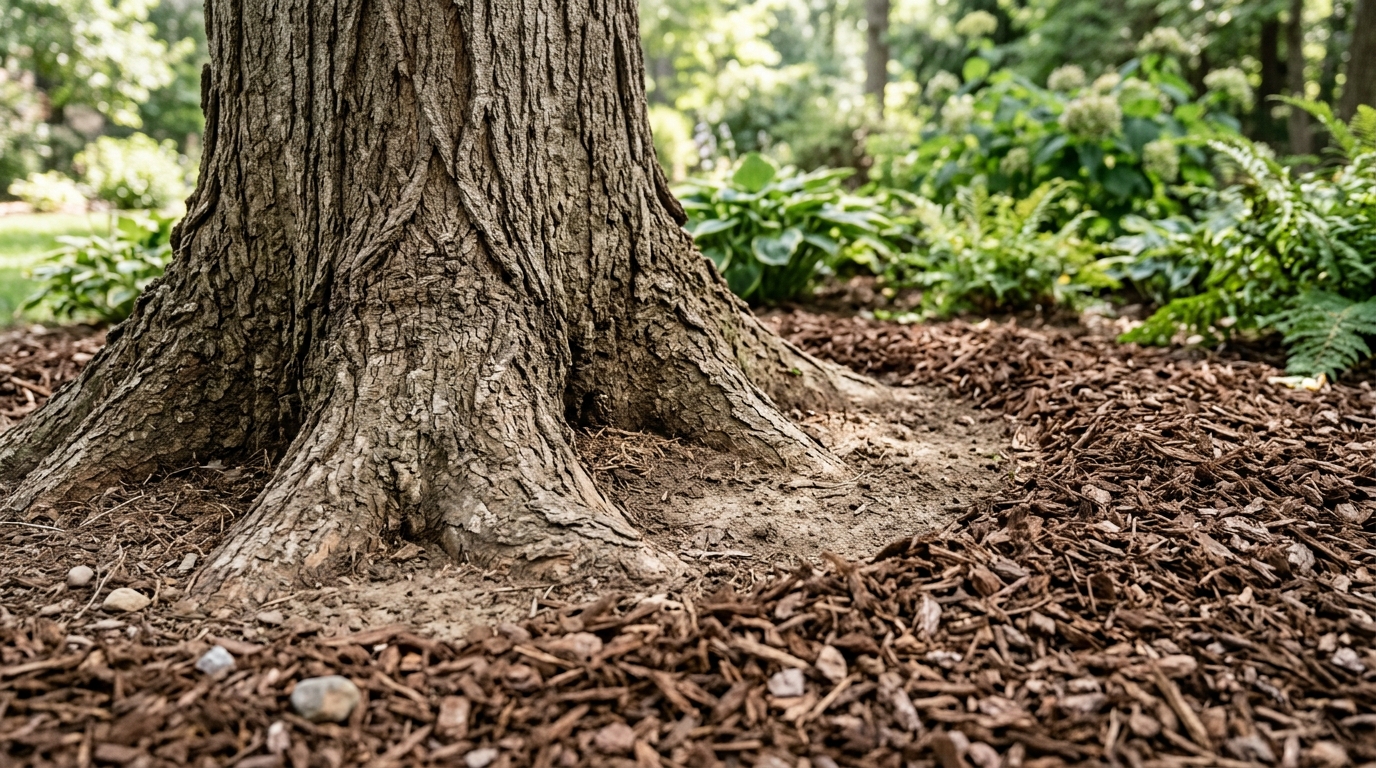
- The root flare (or trunk flare) is the transition zone where the vertical trunk broadens outward to anchor into the primary lateral roots. This critical junction must remain exposed to atmospheric air.
When you shovel a deep mound of organic mulch against the trunk, you artificially subject trunk bark to subterranean conditions. Unlike roots, aboveground bark has no adaptation for being continuously submerged in dark, moist, decomposing material. Trapped moisture softens the cork cells, blocks lenticel gas exchange, and leaves the protective outer bark vulnerable to decay.
What Goes Wrong: The Hidden Consequences of the Mulch Volcano
Mulch piled against a tree trunk triggers a sequence of preventable problems that can stress landscape plantings. Here is what happens when mulch is heaped against the bark:
1. Moisture Trapping and Bark Softening (Rot)
Organic mulches—whether double-shredded hardwood, pine bark nuggets, or cedar chips—are exceptional sponges. They excel at soaking up rainfall, dew, and irrigation water and holding it in place. When that wet sponge rests directly against living bark, the outer cork tissue stays continuously saturated.
Over time, this constant dampness softens, weakens, and breaks down bark tissue. Healthy dry bark forms a tough, resilient armor. Softened bark becomes spongy, discolored, and easily pulled away, exposing the sensitive cambium layer underneath to decay organisms.
2. Ideal Habitat for Bark-Gnawing Rodents
As autumn nights cool in late September and October, small rodents such as voles, meadow mice, and chipmunks search for sheltered, warm places to overwinter. A thick, eight-inch pile of loose woodchips against a tree trunk is an ideal nesting site, providing warmth, insulation from frost, and cover from hawks and neighborhood cats.
Unfortunately, these sheltered rodents often feed on the tender, moisture-softened inner bark of young trees. Concealed beneath the mulch pile, rodents can chew away sections of bark around the trunk flare, interrupting the tree's nutrient transport channels without any visible damage from above until the mulch is cleared away.
3. Secondary Fungal Infiltration and Wood Cankers
Intact, dry bark is a tree's primary defense against opportunistic pathogens. But when bark tissue is softened by excess moisture or nicked by rodent feeding, natural defenses are weakened. Fungal spores and bacteria present in the decomposing mulch can enter the softened trunk tissue, contributing to cankers and localized wood rot along the lower trunk flare.
4. Adventitious and Stem-Girdling Roots
When tree bark is smothered in dark, moist mulch for extended periods, the trunk may respond by sending out adventitious roots into the loose mulch layer. Instead of spreading outward into native soil to anchor the tree, these opportunistic roots circle inside the mulch mound around the trunk.
As the tree trunk grows in diameter, these circling roots can press tightly against the trunk (forming stem-girdling roots). Over time, girdling roots constrict the flow of water and sap between the canopy and root system, causing branch dieback and reduced vigor on one side of the tree.
What University Extension Research Advises (UFL-IFAS Guidance)
The University of Florida IFAS Extension (UFL-IFAS) advises gardeners never to pile mulch against tree trunks: mulch heaped on bark — often called "volcano mulching" — holds moisture against the wood, inviting bark decay, fungal infection, and insect or rodent damage. Their rule is simple: keep mulch pulled back from the trunk so the root flare stays exposed and dry, with an even 2- to 3-inch layer spread outward toward the drip line (about a foot of clearance for large trees).
UFL-IFAS researchers emphasize that mulch is designed to cover soil and roots, not aboveground wood. When applied properly over the root zone, mulch regulates soil temperature, conserves moisture, and prevents weed competition. But keeping mulch off the trunk flare is essential to prevent bark rot and protect the structural base of the tree.
The Proper Fix: How to Spread a Mulch Donut Ring (Step-by-Step)
Here is the step-by-step method recommended by arborists and extension horticulturists:
Step 1: Locate and Expose the Root Flare
Before spreading any mulch, look at the base of your tree. You should see the trunk widen slightly as it meets the ground—this is the root flare. If the trunk looks like a straight telephone pole entering the soil, gently brush away surface soil and old mulch until the top of the flare is visible.
Step 2: Leave a Bare Buffer Around the Bark
This is the "donut hole." Keep organic mulch pulled back 2 to 3 inches away from the trunk on young or small trees, and about a foot away on large, mature trees. The soil immediately adjacent to the bark should remain bare so air circulates freely around the bark.
Step 3: Spread a Flat 2- to 3-Inch Layer Over the Root Zone
Apply your mulch in a flat, even layer 2 to 3 inches deep. A 2-to-3-inch layer is the ideal thickness: it suppresses weeds and retains soil moisture without smothering soil oxygen or shedding water. Avoid piling mulch deeper than 3 to 4 inches, even away from the trunk. If using finely textured or double-shredded mulch, keep it to 1–2 inches instead — fine particles pack tighter and restrict oxygen. If using finely textured or double-shredded mulch, keep it to 1–2 inches instead — fine particles pack tighter and restrict oxygen.
Step 4: Expand Wide Outward Toward the Drip Line
Instead of building upward, spread outward! A tree's feeder roots extend well beyond the trunk. Create a wide circle extending at least 3 to 5 feet out from the trunk, or all the way out to the tree's drip line (the outer edge of the canopy) where practical. Taper the edges down to lawn level for a neat, finished edge.
How to Fix an Existing Mulch Volcano (Rescue Checklist)
If you inherited a yard with existing mulch volcanoes or realized your trees currently have mulch piled high against their trunks, don't worry! You can easily fix it with a few simple steps:
- Pull Mulch Back with Care: Use gloved hands or a lightweight plastic hand rake to pull the excess mulch away from the trunk. Avoid sharp metal shovels or pickaxes that could gouge the tender bark.
- Expose the Root Flare: Keep excavating gently until the root flare and top main lateral roots are visible. Check for any small adventitious roots that sprouted into the mulch mound and prune only thin, clearly expendable circling roots with clean bypass pruners — if roots are thick, the tree is large, or you're unsure, call a certified arborist.
- Let the Bark Air Dry: The newly exposed bark may look pale, damp, or greenish. Allow fresh air and sunlight to dry the trunk naturally. Do not apply tree wound dressings, paint, or sealants—arborists advise against them because they trap moisture and hinder the tree's natural compartmentalization.
- Redistribute the Excess Mulch: Rake the removed mulch outward into a wide, flat donut ring, or relocate excess mulch to vegetable beds, perennial borders, or your compost pile.
Frequently Asked Questions About Mulch Volcanoes and Tree Care
Why are mulch volcanoes bad for trees?
Mulch volcanoes are bad because piling mulch against a tree trunk traps moisture directly against the bark. Unlike underground roots, trunk bark needs air to breathe through microscopic pores called lenticels. Persistent dampness causes bark rot, provides a sheltered hiding spot for bark-gnawing rodents like voles and mice, and can stimulate circling roots that girdle the trunk. The damage is slow and often invisible for seasons, which is why volcano-mulched trees can look fine for years before declining.
How far away from the tree trunk should mulch be?
Mulch should be kept at least 2 to 3 inches away from the trunk on young or small trees, and about a foot away on large, mature trees. The root flare where the trunk widens at the ground should always remain visible and exposed to fresh air.
How deep should mulch be around trees?
A flat, uniform depth of 2 to 3 inches is ideal for shredded hardwood, pine bark, or wood chips. Piling mulch deeper than 4 inches can restrict oxygen exchange in the soil and prevent light rain showers from reaching the root zone.
What is the difference between a mulch volcano and a mulch donut?
A mulch volcano is a steep cone of mulch piled high against the tree trunk, smothering the bark. A mulch donut (or saucer) is a flat, even layer of mulch spread 2 to 3 inches deep across the root zone with a clear 2 to 3-inch gap around the trunk, leaving the root flare open and dry.
Can a tree recover after removing a mulch volcano?
Often, yes — especially if caught early. When excess mulch is carefully pulled back to expose the root flare and trunk to sunlight and circulating air, the bark dries out and natural defensive barriers help prevent further softening. Snipping only thin, clearly expendable circling roots that began forming in the mulch layer allows the tree to continue healthy outward root growth — but trees with advanced decay, major girdling roots, or canopy dieback may need an arborist's assessment.
When is the best time to refresh tree mulch?
Fall and mid-spring are both good windows to refresh mulch — Penn State notes mulch can actually go down nearly any time of year. Applying mulch in early autumn while soil is still warm insulates the root zone and retains autumn moisture. Just remember to check existing mulch depth first—if you already have 2 inches of intact mulch, you may only need a light top-dressing.
Explore More Soil Health, Tree Care, and Seasonal Gardening Guides
Proper tree care and soil management create the foundation for a resilient, beautiful landscape. For more evidence-based seasonal guidance, explore our SproutySpeaks Fall Gardening Guide & Seasonal Cleanup Playbook. Learn how soil temperature impacts mulching in why mulching at 55–65°F extends fall growth, check your region's key seasonal dates with our Interactive Garden Calendar, avoid common yard-care missteps in 7 pruning mistakes to avoid, see why you should never hard-prune leafy persimmons in fall, learn why you must wait until after a hard freeze to cut back peony foliage, understand why leaving dead mum stems standing over winter protects crown survival, and discover why you should leave brown fronds on freeze-damaged palms.