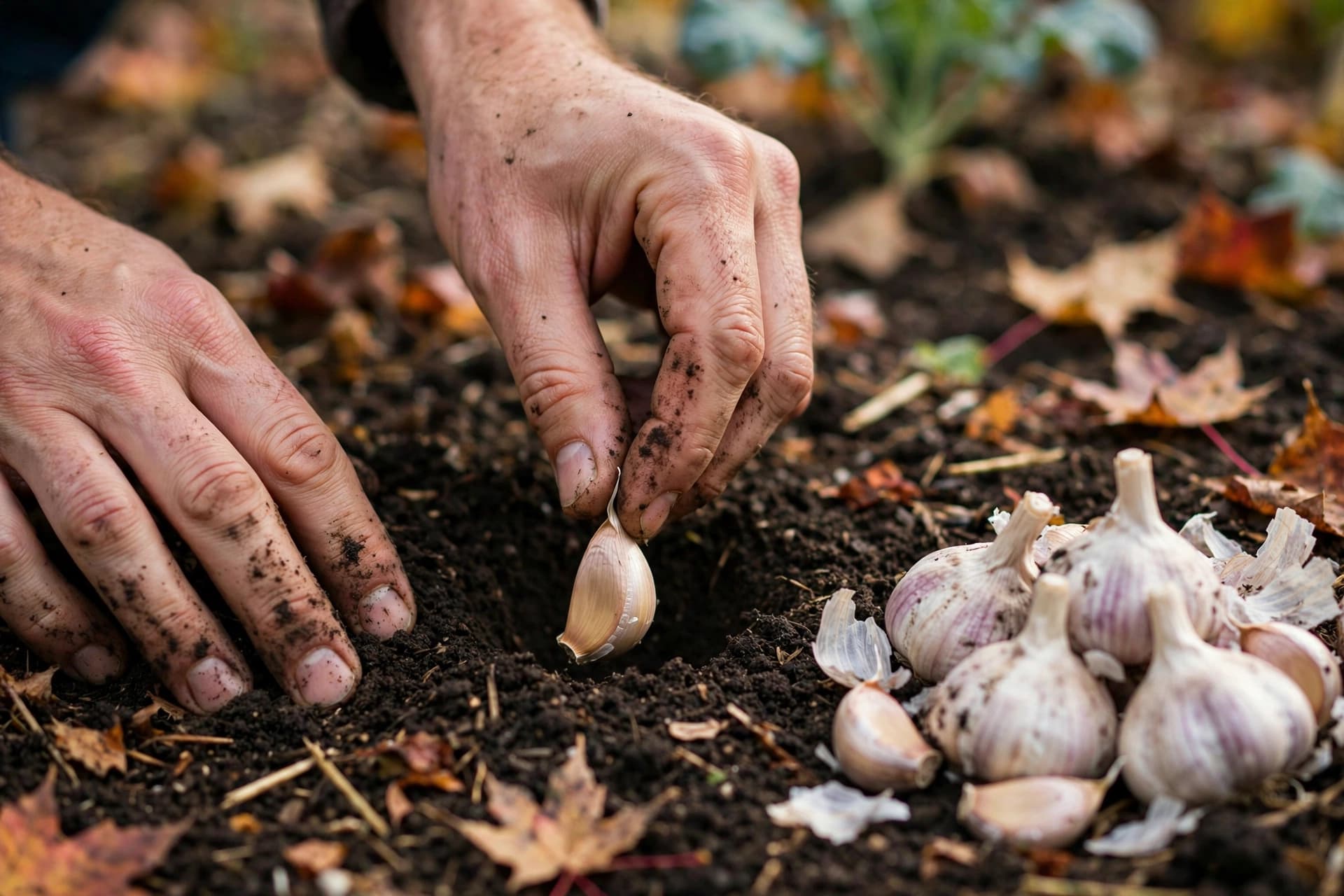

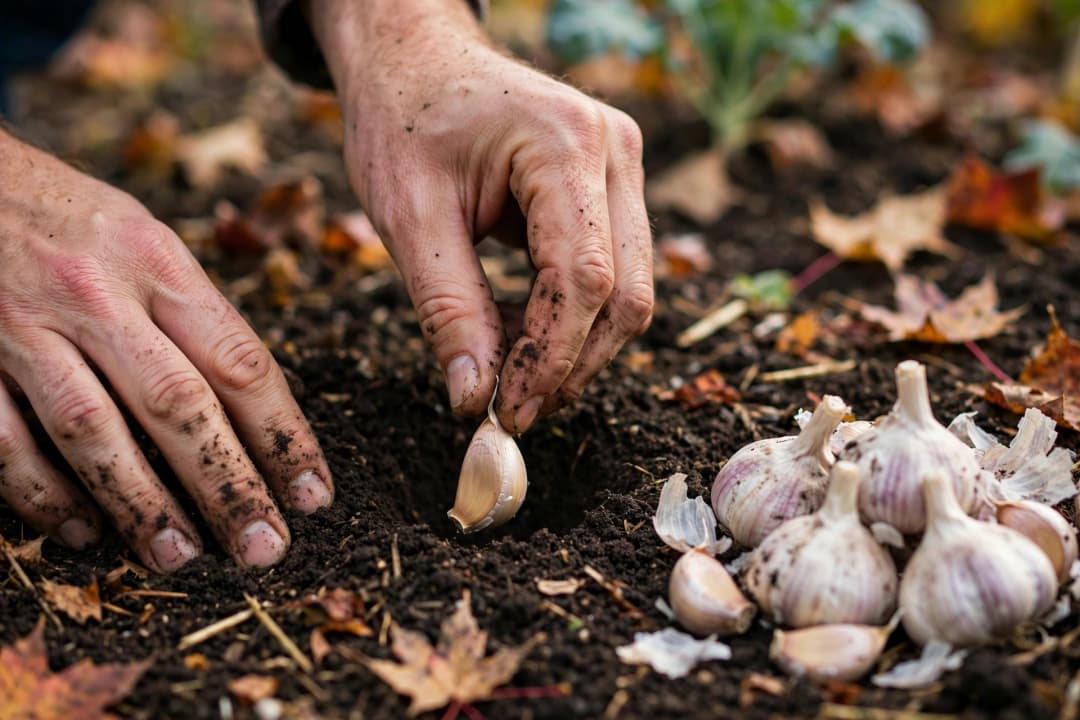
Want the short version? Don't plant grocery-store garlic. It's perfectly fine for cooking, but it's often treated to suppress sprouting, it may carry soil-borne plant diseases, and it's usually a variety poorly suited to your climate. Buy certified seed garlic from a reputable supplier instead — then plant it pointy end up, two inches deep, about 6 inches apart (Old Farmer's Almanac).
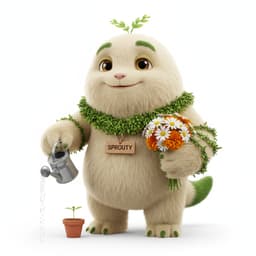
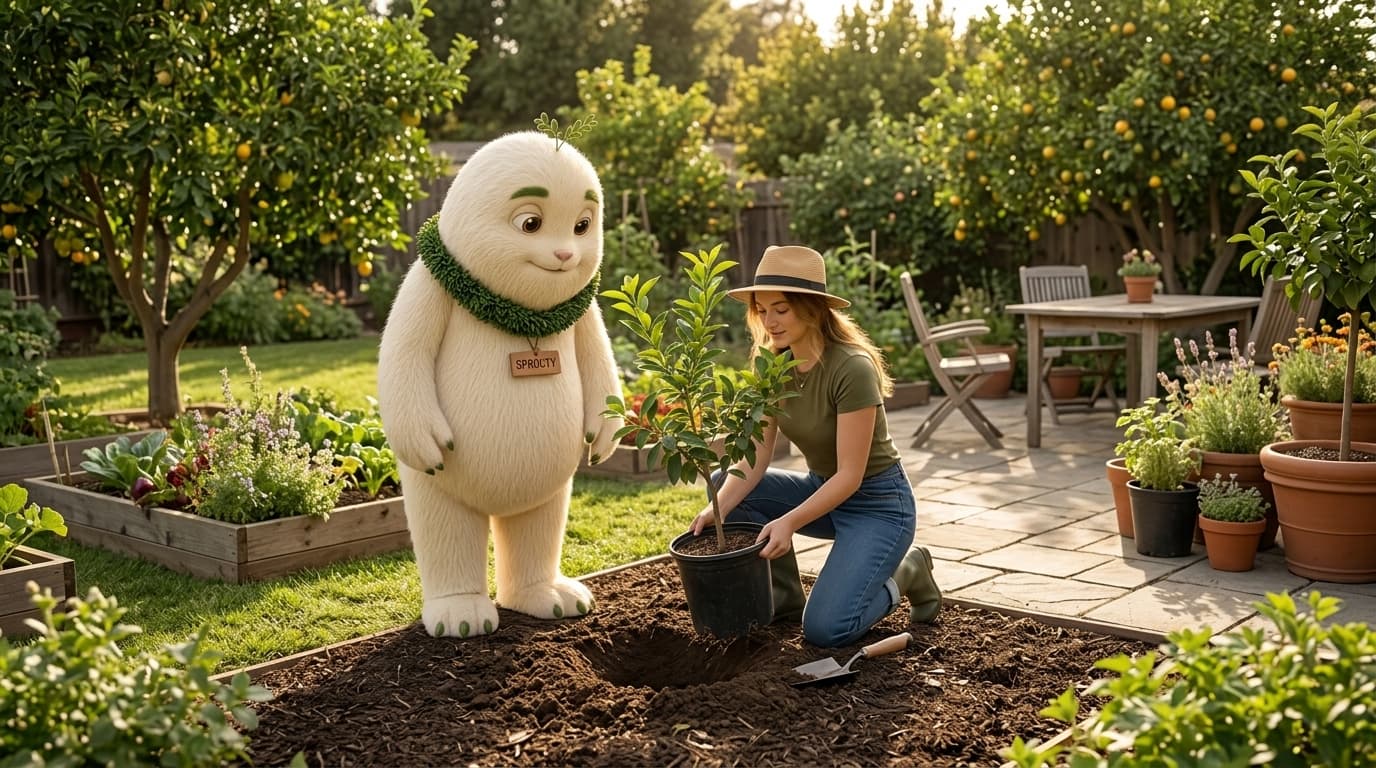
Watch Sophie & Sprouty Plant It Right
Sophie's about to plant grocery-store cloves. Sprouty intervenes — see the 3 mistakes in 10 seconds.
Why Grocery Store Garlic Fails in the Garden
Three strikes, and they're all documented:
- It's treated to not sprout. Garlic sold for eating is often treated with sprout inhibitors so it stays firm on the shelf — which is exactly what you don't want in planting stock. The University of Maryland Extension advises sourcing from a reputable seed-garlic supplier rather than grocery bulbs, which "may carry disease or have been treated to suppress sprouting."
- It can carry plant diseases. These are plant pathogens — white rot, Fusarium, nematodes — not human ones, so the garlic is perfectly safe to eat. But planted, they hitchhike into your soil, and some persist for years. Food-grade garlic was never produced with disease-free propagation in mind.
- It's the wrong variety for your climate. Penn State Extension notes grocery garlic may come from varieties poorly suited to your growing area. Seed garlic lets you choose hardneck vs. softneck for your winters — grocery bulbs give you no choice at all.
The 3 Planting Mistakes to Avoid
Mistake 1: Planting grocery-store cloves. Covered above — buy certified seed garlic. It's selected, tested, and cured for planting, and you get varieties bred for your region.
Mistake 2: Planting upside down. Cloves go pointy end up, flat basal plate down. An upside-down clove can still send up a shoot, but it wastes energy curving around — plant it right and the sprout heads straight for the surface.
Mistake 3: Planting too shallow. Set cloves about two inches deep (deeper in very cold zones), 6 inches apart. Shallow cloves heave out of the ground with freeze-thaw cycles. Then mulch 4–6 inches with straw after the ground cools — it insulates without smothering.
When to Plant: It Depends on Your Zone
Garlic needs weeks of root growth before the ground freezes. Rough timing: zones 1–6, early October; zones 7–8, late October into November; zones 9–10, November into early December (Old Farmer's Almanac). Too early and shoots emerge before winter; too late and roots never establish. When in doubt, plant 2–4 weeks before your ground typically freezes.
How the Video Plays Out
This week's reel catches Sophie in the October garden, garlic cloves in hand, asking the fateful question: grocery cloves work, right? Sprouty's answer: fine for eating, but treated to stop sprouting — use seed garlic, pointy end up, two inches deep. Ten seconds, one saved harvest.
Garlic Planting FAQs
Can I plant garlic from the grocery store if it's organic?
Organic skips the sprout inhibitors, but you still don't know the variety or its disease status. It can work in a pinch — pick the largest, firmest cloves — but certified seed garlic is the reliable route.
What happens if I plant the clove upside down?
The shoot usually still finds its way up, but the plant wastes energy and the bulb may be smaller or misshapen. It's a best-practice fix, not a guaranteed disaster — plant pointy end up and skip the gamble.
Is grocery-store garlic unsafe to eat if it "carries disease"?
No — the diseases in question attack plants, not people. The garlic on your shelf is perfectly safe to cook with. The risk is only about planting it.
Can I plant garlic in spring instead?
You can in some regions, but fall planting wins: cloves need winter cold (vernalization) to form divided bulbs, and spring-planted garlic typically yields smaller bulbs.
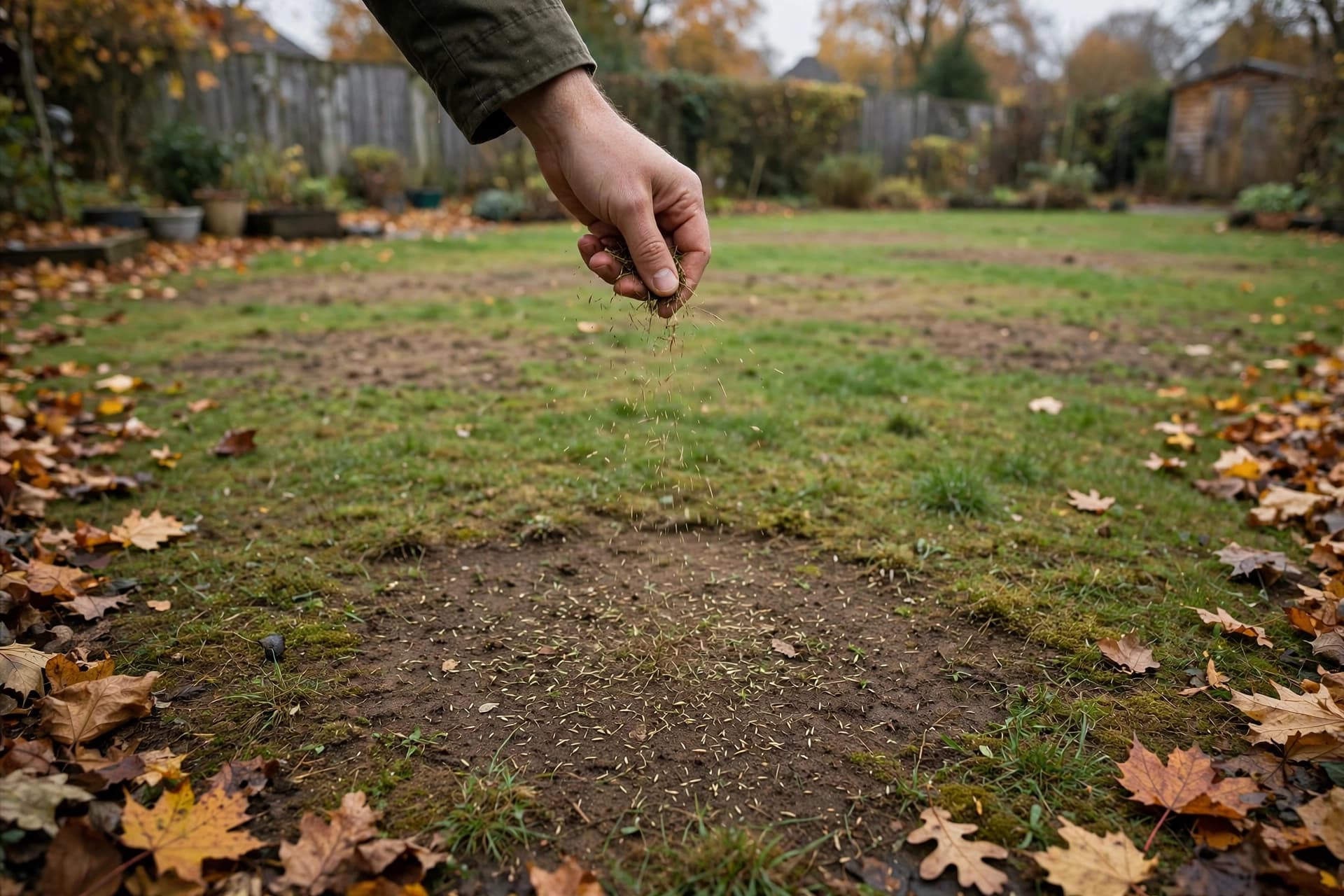
October is the garden's busiest planting month. See why it's also your last real chance to overseed a patchy lawn and how daikon cover crops break up tired soil — plus the full rundown of pruning mistakes gardeners make every season.