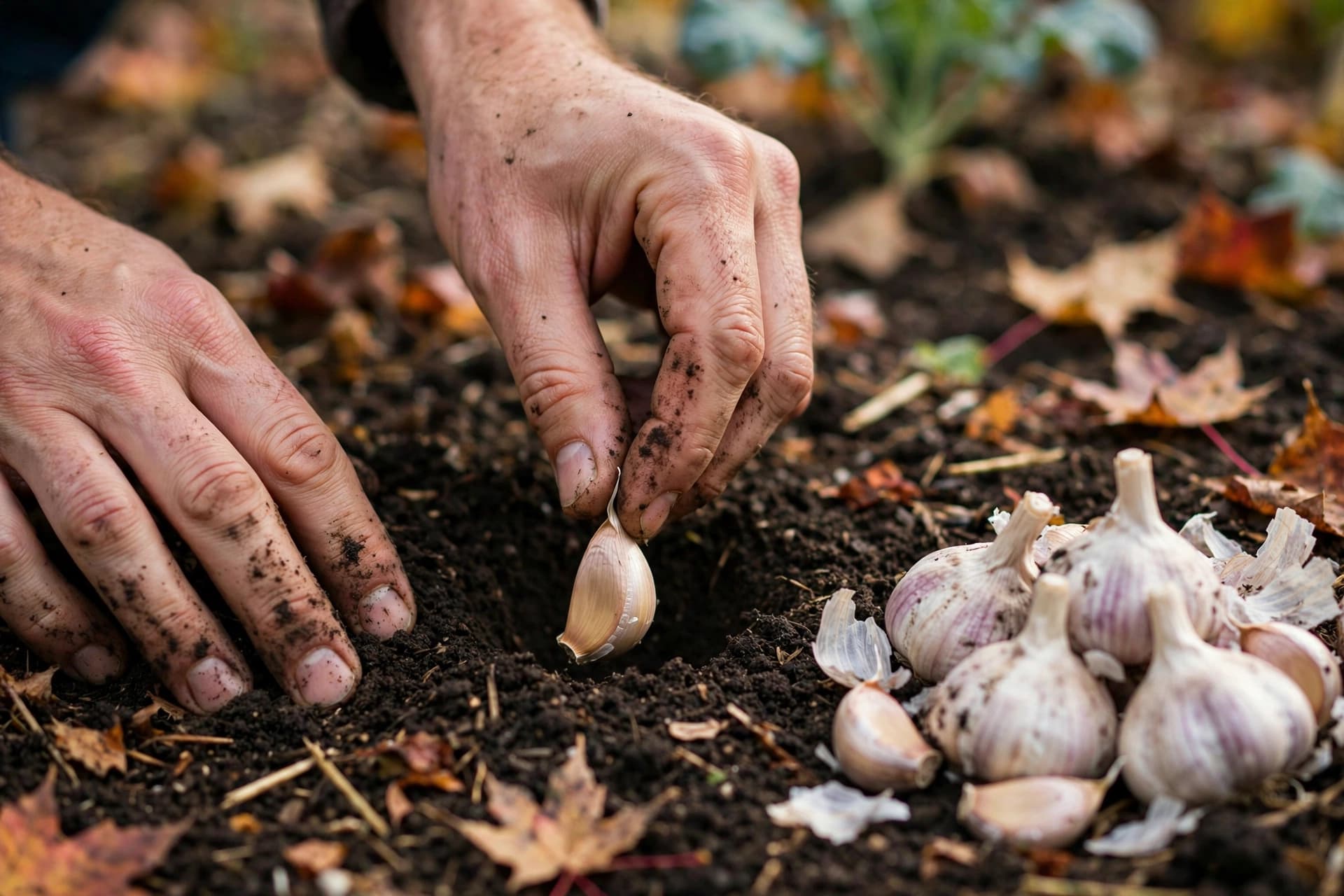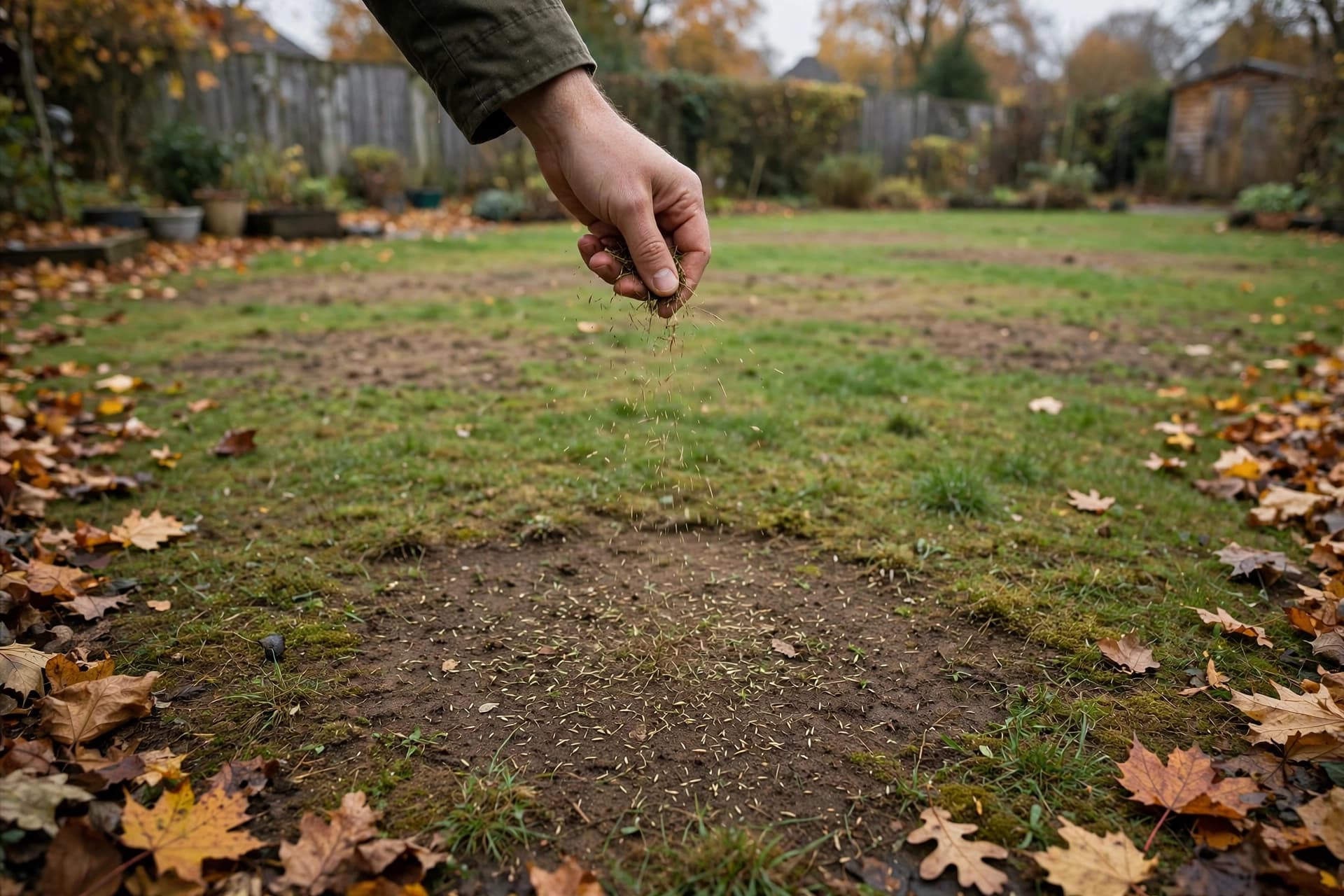

Want the short version? If your lawn is a cool-season grass (fescue, Kentucky bluegrass, perennial ryegrass) and it has bare patches, overseed them in fall — ideally 6 to 8 weeks before your first hard freeze. Early October is the tail end of that window for much of the country. Seed sown now gets warm soil for fast germination, cool air that favors grass over weeds, and two cool growing seasons before it ever faces summer heat (South Dakota State Extension). Wait until spring and the seed has to fight crabgrass for space, then survive summer on shallow roots.
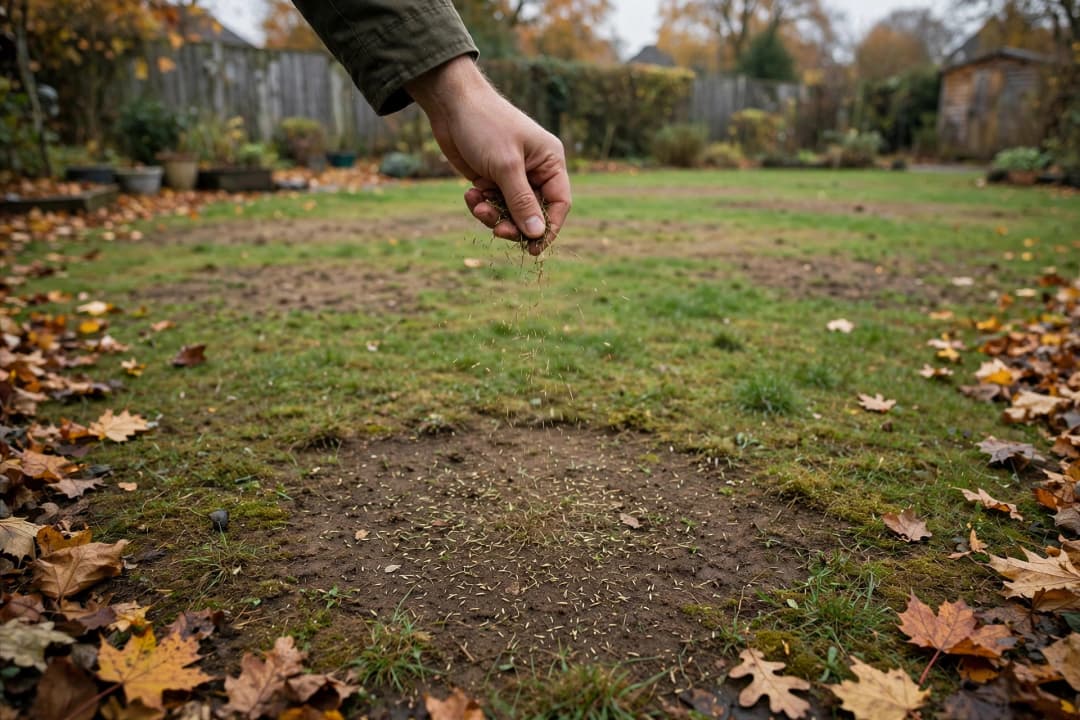
Watch Sophie & Sprouty Rescue the Lawn
Sophie wants to wait till spring. Sprouty knows better — see the 10-second save.
Why Fall Wins for Grass Seed
Cool-season grasses germinate fastest in warm soil and grow best in cool air — and fall is the only season that delivers both at once. South Dakota State Extension lists the compounding advantages: fall reduces competition from summer weedy grasses like crabgrass, warm soil speeds germination, cooler air favors grass growth, and seedlings build a real root system before freezing temperatures arrive (South Dakota State Extension).
Then spring arrives, and that fall-sown grass gets another few months to deepen its roots before the heat of summer. Fall seed effectively gets two cool growing seasons; spring seed gets one short one — and it arrives already stressed.
Why Spring Seeding Usually Fails
Virginia Tech's turf program puts it bluntly: grass seeded in spring goes into summer with weaker food reserves and root development, and dies from summer stress the way fall-seeded grass doesn't (Virginia Tech Extension). Three specific traps:
- Crabgrass preventer kills your seed too. The pre-emergent herbicide most people apply in spring doesn't distinguish between crabgrass seed and the grass seed you just spread.
- Weed competition is at its peak. Young cool-season seedlings can't outcompete weeds that have been growing all season.
- Summer arrives too soon. Seedlings with shallow roots face their first heat wave before they're established. Many don't make it.
How to Overseed Bare Patches (5 Steps)
The University of Georgia's turf team stresses one thing above all: seed-to-soil contact. Seeds that germinate in thatch or above the soil dry out and die (UGA Extension). Here's the drill:
- Mow short. Cut the existing grass to about 1.5–2 inches and bag the clippings so seed can reach the soil.
- Open the soil. Vigorously rake bare patches to remove dead debris; core aeration is even better on compacted lawns.
- Match your seed. Use a cool-season blend suited to your region and sun exposure — and certified (blue-tag) seed that's free of weed seed.
- Sow evenly. A spreader beats hand-scattering for large areas; half the rate walking north–south, half walking east–west.
- Water lightly and often. Keep the seedbed consistently moist until seedlings are established — usually several light waterings a day at first, tapering as grass grows.
The Deadline, Honestly
The ideal window slides with latitude: roughly mid-August to mid-September in the upper Midwest and Northeast, later as you move south — and for warm-season grasses like bermudagrass, fall overseeding with ryegrass is a different job entirely. Early October is the genuine tail end for cool-season lawns in much of the transition zone. If your soil is still warm and frost is weeks out, you can still seed this week — just don't wait for November.
How the Video Plays Out
This week's reel finds Sophie in the October garden, seed bag in hand, looking at the bare patches and deciding to deal with them "in spring." Sprouty steps in: spring seed loses to weeds and heat — fall seed wins. Cool-season lawns, this week. Ten seconds, one saved lawn.
Fall Overseeding FAQs
Can I still overseed in late October?
If the soil is still warm (above about 50°F) and your first hard freeze is several weeks out, yes — germination will just be slower. Much later than that, and you're better off waiting for a dormant seeding in late winter.
Will fall-sown seed survive the winter?
Yes — that's the point. Cool-season seedlings go dormant with the rest of the lawn and resume in spring with an established root system, which is exactly why fall seeding beats spring seeding.
Do I need straw or starter fertilizer?
Straw helps on slopes where seed might wash away, but on flat bare patches consistent watering matters more. Hold fertilizer until seedlings emerge — about three weeks after seeding — since early feeding can encourage weed competition.
My lawn is bermuda/zoysia. Does this apply?
Not directly — warm-season grasses go dormant in winter, and overseeding them with ryegrass is a separate practice with its own timing. This guide is for cool-season lawns: fescue, Kentucky bluegrass, and perennial ryegrass.
Fall is the season the whole garden pivots. See how daikon cover crops break up tired soil and why you should stop raking every dead leaf — plus the full rundown of pruning mistakes gardeners make every season.