
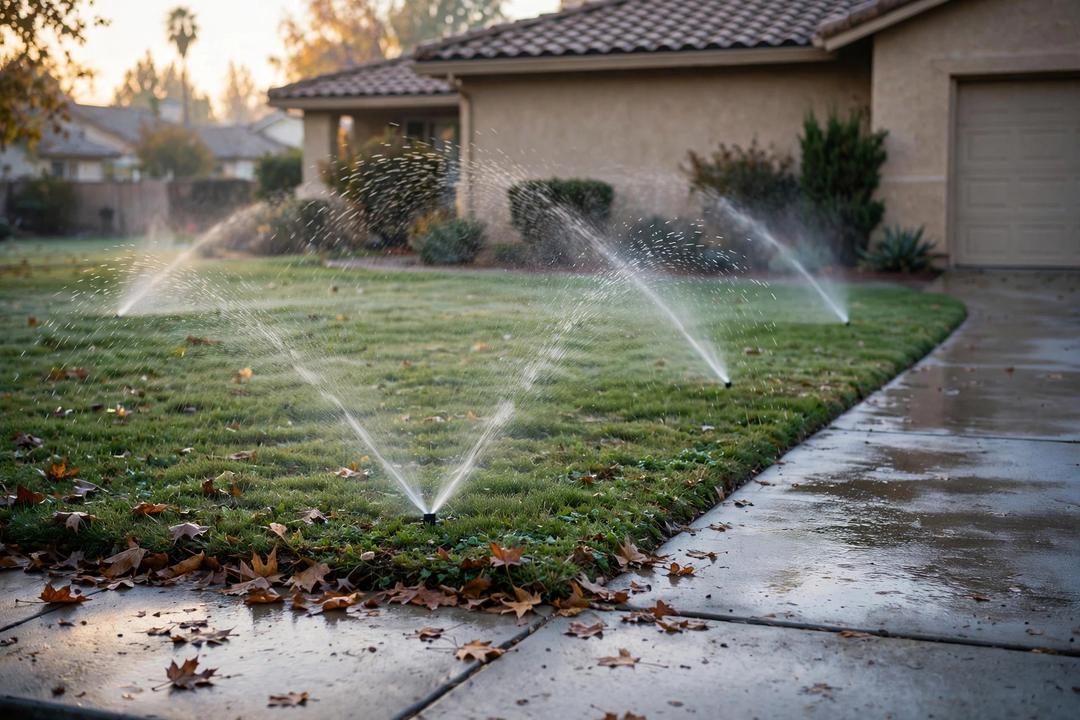
In the Sacramento Valley, the answer is November — and the advice is blunt: turn the sprinklers down to zero. UC Cooperative Extension advisor Bruno Pitton puts it plainly: the water the air pulls out of soil and plants — evapotranspiration — falls from about 9 inches in July to about 2 inches in November in the Sacramento Valley, and "if you're watering deeply, you need to water less than once a month — if at all." Coastal and southern California are different — there the schedule shrinks rather than stops — but everywhere in the state, the move this month is the same: cut the summer schedule way back, check the soil before you water, and let the rain do the job.
Sophie: My lawn still looks green. If I stop watering now, won't it die?
Sprouty: Green in November doesn't mean thirsty — it means the grass has slowed down. The days are shorter, the air is cooler, and the soil is holding moisture far longer than it did in July. Watering on a summer schedule now is watering a plant that has already stopped drinking.
Why November changes the math
The reason is not the temperature on any one day — it is the light. Pitton explains that sunlight drives evapotranspiration: summer days run 14 hours or more, and in the fall the day drops below 12 hours. Less light means less evaporation from the soil and less water pulled through the grass, so the lawn's demand collapses even before the first rain arrives. "As the days get shorter, plants need less water because they're growing less," Pitton says. "They're growing less because there's less sunlight. It's all tied together."
The numbers make the size of the change concrete. In the Sacramento Valley, evapotranspiration runs about 9 inches in July and about 2 inches in November — roughly a four-fifths drop. Pitton's rule of thumb for the shoulder season is that October irrigation can still run at 50 to 70 percent of July outdoor water use, because October can stay warm — but "in November, it should be down to zero," with a good winter storm replacing whatever water the soil loses. Irrigation usually stays off through the rainiest months and goes back on in late March or April, when rapid spring growth starts and the days get noticeably longer.
The coast and the south run on a gentler version of the same curve: less evaporation and more marine layer — so the cutback is still large, but the off-switch is softer. What does not change anywhere is the direction: every zone waters far less in November than in July, and a timer left on its summer program is a common way a California lawn gets overwatered in fall.
Check the soil before you trust the calendar
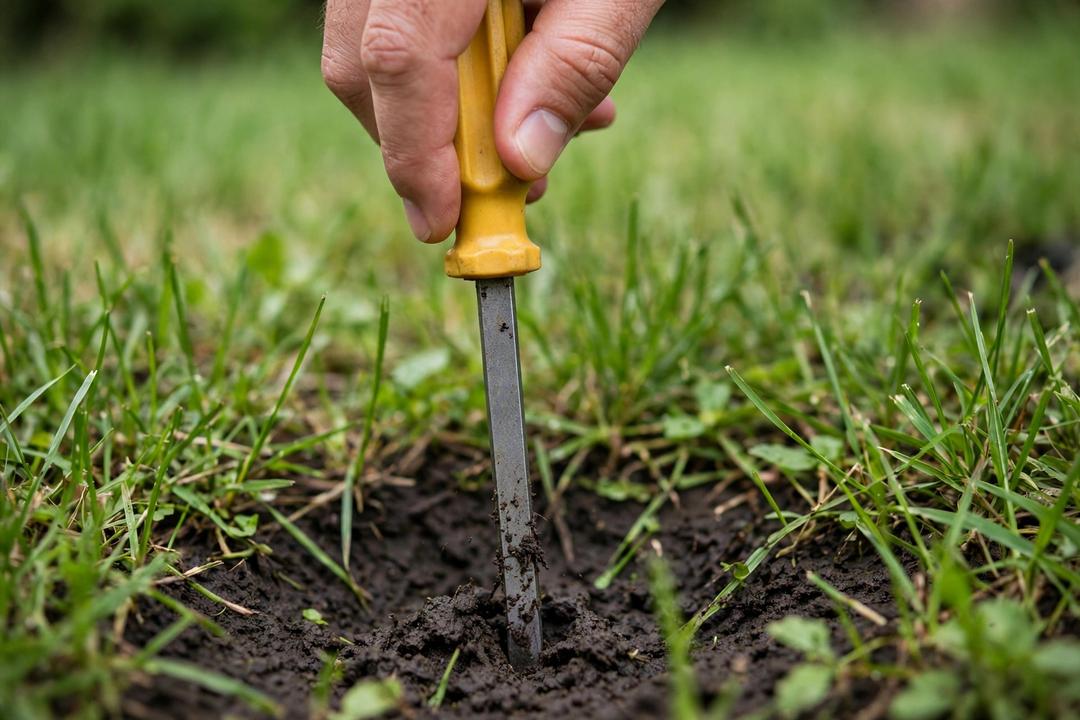
The calendar tells you to cut back; the soil tells you whether to water at all. Pitton's test is a 6-inch screwdriver: push it into the soil, and if it goes in easily, irrigation can wait — the surface can look dry while the ground a couple of inches down still holds enough moisture for the roots. The City of Roseville gives the same test with a 4-to-6-inch depth, and adds that if the screwdriver stops short after a couple of inches, the deeper soil is dry and it is time to water.
UC IPM's lawn-watering guidance states the same rule from the plant's side: most lawns need water when the top 2 inches of soil have dried out, and deeper, less frequent watering beats frequent shallow watering. UC IPM caps watering at two to three times a week; in fall, water less often still. UC Master Gardeners of San Joaquin County put the target at about 1 to 2 inches of water to keep the root system moist, and note that deep, infrequent watering builds a vigorous root system. The practical habit is simple: test first, water second, and never on a fixed day just because the timer says so.
Timing matters as much as amount. San Joaquin County's guidance puts the best watering window between 2 and 8 in the morning, and warns against watering in the evening or before midnight, when thatch and blades stay wet through cool nights and become susceptible to disease. UC IPM agrees: water early in the morning, when evaporation and wind are minimal, and shut the system off during rainy weather.
California is not one answer
The stop date depends on where the lawn grows. Farmers' Almanac's fall watering guide, updated in September 2026, puts California's wind-down at October to November in the colder interior and mountain areas, with watering able to continue through winter in dry coastal and southern areas — and it stresses that the dates are approximate, not deadlines, because elevation, rainfall, grass type, and microclimate can move them by weeks. Read with the UC guidance, the map looks like this:
| Where you garden | What to do in November |
|---|---|
| Sacramento Valley | Turn it down to zero — ET is about 2 inches for the month, and winter rain usually covers the rest. Water only if a dry spell leaves the screwdriver test dry. |
| Central Valley (south of Sacramento) | Cut back sharply — the fall wind-down applies here too, but judge by the screwdriver test rather than the Sacramento Valley's 2-inch ET figure. |
| Bay Area / coast | Cut the schedule sharply and let rain take over; fog and short days keep the soil moist. If a dry spell leaves the soil dry at depth, give one deep watering — then stop again. |
| Southern California | Cut back sharply, but do not assume zero — watering may continue through winter in dry coastal and southern areas, judged by the screwdriver test. |
| Foothills / mountains | Wind down in October to November, and stop before the ground freezes — never irrigate frozen ground, which cannot absorb water. |
The honest version of the rule is not a date but a condition: stop routine watering when growth has essentially stopped, rainfall is supplying the soil's moisture, and the ground is approaching freeze-up. In the valley that condition arrives in November. On the coast it arrives with the first real storms. In the far south it may not fully arrive at all — which is why the screwdriver test, not the calendar, is the final judge.
One more split matters: which grass you have. UC IPM's guide to grass growth explains that warm-season grasses may go dormant and lose their green color in winter, while cool-season grasses remain green year-round unless temperatures consistently fall below freezing. In practice that means tall fescue, the common cool-season lawn in California, stays green and grows slowly through winter — while bermudagrass, the common warm-season lawn, turns brown and goes dormant. UC IPM is direct about bermudagrass: it loses its color and becomes dormant in most locations during the cooler months of late autumn and winter. A brown bermuda lawn in November is resting, not thirsty — watering it will not keep it green.
Reset the controller — don't just hope it adjusts itself
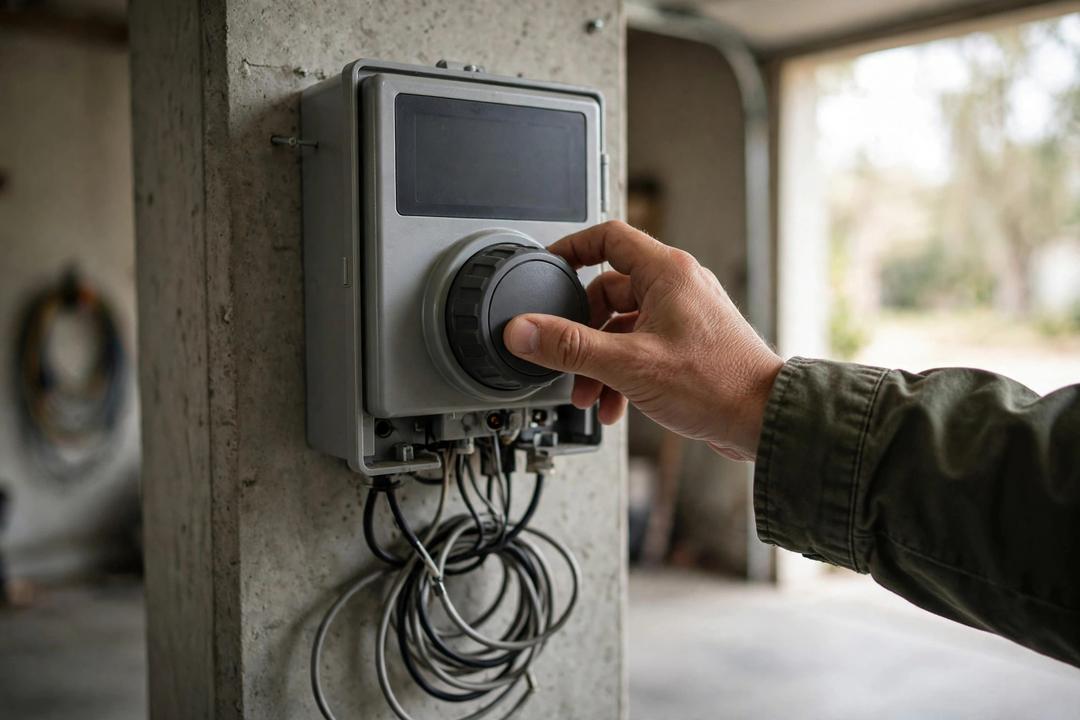
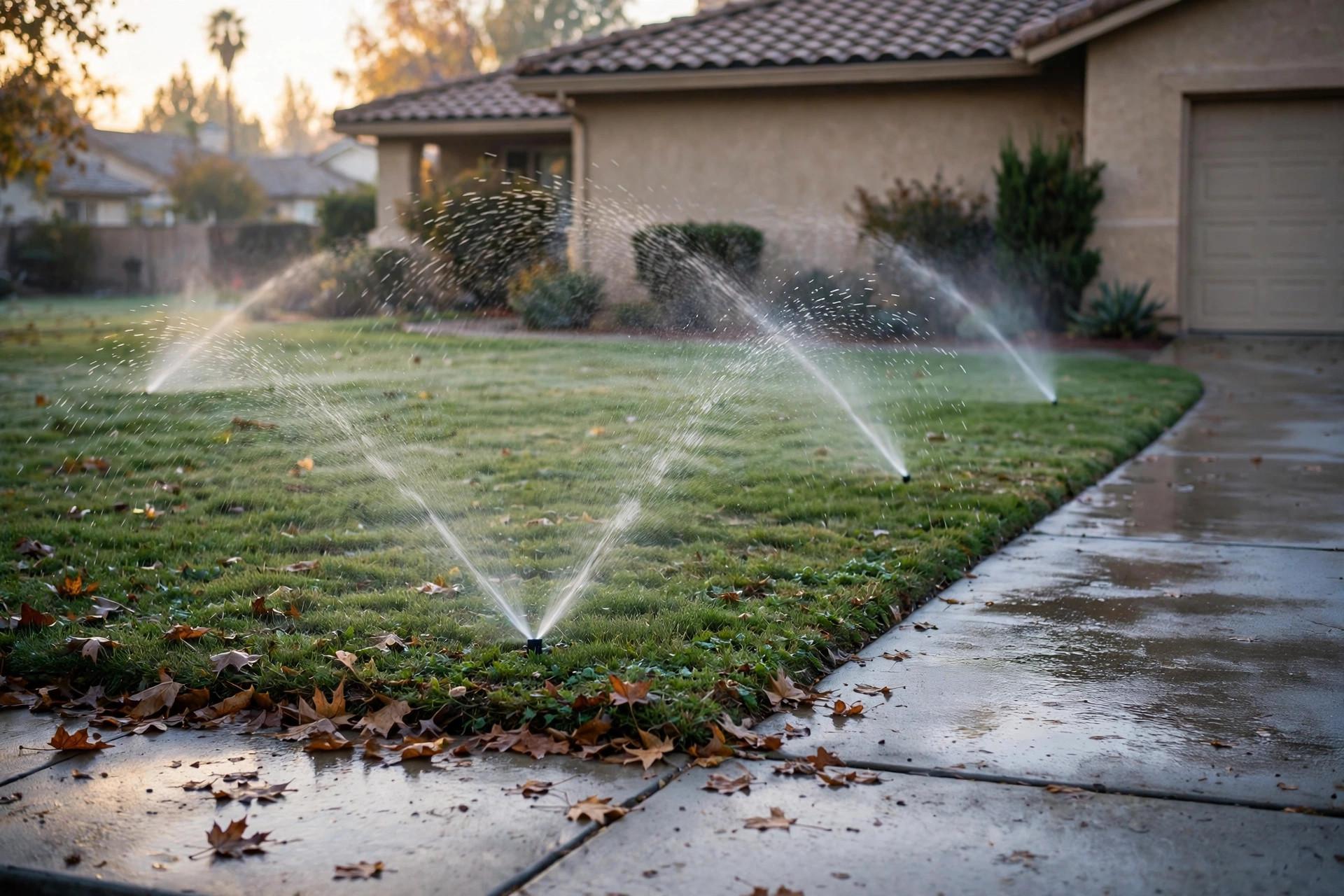
A timer does what it was told in July, and it will keep doing it until somebody tells it otherwise. The EPA's WaterSense guidance is direct about this: a controller that is not reprogrammed for seasonal and weather changes wastes water, and in fall or winter even weekly irrigation could waste water in some areas. The fix takes five minutes:
- Write down the summer settings first. Note the days, start times, and run times per zone, so the spring reset takes seconds instead of guesswork.
- Cut the days before you cut the minutes. The City of Roseville's advice is to halve the number of watering days as temperatures drop, and not to shorten run times first — deep, infrequent soaking still builds strong, downward roots, while short daily sips keep roots shallow.
- Use the seasonal-adjust or water-budget button. Most controllers scale every run time by a percentage; in the Sacramento Valley that number goes to zero for November, on the coast to a small fraction of summer.
- Turn the system off or to rain mode when the storms arrive — and check that a rain sensor, if you have one, actually shuts the system off. UC IPM's rule is to adjust the schedule seasonally and shut the system off during rainy weather.
- Walk the system while it is on. UC ANR notes that checking the irrigation system for leaks and fixing physical and operational problems can cut water use by 10 percent or more — and a broken head spraying the sidewalk in November is water nobody's lawn ever sees.
If the controller is a smart or weather-based model, let it do the seasonal work — but verify it. A sensor that never triggers and a Wi-Fi controller that lost its connection are both just expensive ways to keep watering in November.
One rule overrides everything in this article: check your local water agency's watering-day rules. The EPA's WaterSense guidance says to check with your local utility for any outdoor watering restrictions — if your agency allows watering only on certain days, that schedule wins over any schedule here.
The exceptions: when November watering is still right
Turning the system off is the default, not a ban. Three situations still call for water:
New plantings. Pitton is explicit that new transplants need extra irrigation when there is no rain or little rain. UC ANR adds that no native or commonly used landscape plant is drought-resistant until it is established, and puts that establishment window at about a year or more after planting. A lawn overseeded this fall, a newly sodded patch, or a shrub planted in October all count: water them deeply when the soil test says dry, and let the established lawn go without.
Dry spells. California rain rarely arrives on a tidy schedule, and a rainless November can leave even a dormant lawn dry several inches down. The rule is the same test: if the screwdriver stops short and the soil is dry at depth, give the lawn one deep watering and then stop again. One deep soak after a long dry spell is the right move; a daily timer cycle all month is not.
A lawn you are keeping alive, not lush. Cutting water to zero does not mean the grass must die. UC ANR turf specialist Jim Baird's deficit-irrigation work shows turf can be kept alive, and even attractive, on a minimal amount of water — irrigation cut back to two times a week, with the walk test as the guide: if the blades spring back after being walked on, the lawn does not need more water. That two-times-a-week figure is a summer drought regime, not a November target — in November, the walk test will usually tell you the lawn does not need water at all.
What a summer schedule costs in November
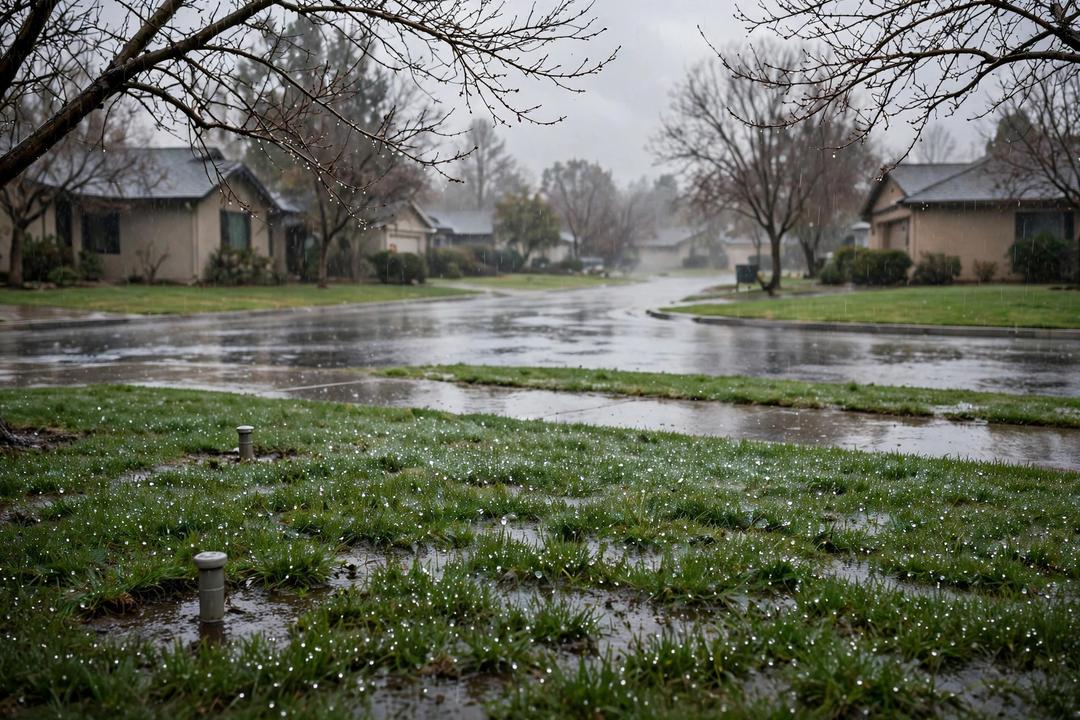
The waste is bigger than most people guess. The EPA estimates that as much as 50 percent of the water used outdoors is lost to wind, evaporation, and runoff from inefficient irrigation. UC ANR puts landscape irrigation at about 50 percent of residential water consumption statewide — roughly 30 percent in some coastal communities and 60 percent or more in many inland suburbs. And UC Master Gardeners of San Joaquin County note that the typical suburban lawn consumes about 10,000 gallons of water above and beyond rainwater each year. A timer still running a summer program through November is spending a large share of that on a lawn that stopped asking for it weeks ago.
Overwatering in fall costs the lawn too, not just the water bill. Wet thatch and blades sitting through cool nights invite disease, which is why the UC guidance warns against evening watering. The November cutback is not neglect — it is the schedule the grass's own growth cycle is asking for.
Quick answers
When should I stop watering my lawn in California?
In the Sacramento Valley, November — UC guidance says irrigation should be down to zero for the month. Elsewhere in the Central Valley, cut back sharply and judge by the screwdriver test. On the coast, cut back sharply and let the rain take over. In dry parts of Southern California, reduce hard but keep an occasional deep watering if the soil test says the ground is dry. In the foothills and mountains, wind down in October to November and stop before the ground freezes.
How do I know if my lawn actually needs water in November?
Push a 6-inch screwdriver into the soil. If it slides in easily, the root zone is moist and the lawn can wait. If it stops short after a couple of inches, the deeper soil is dry and one deep watering is due. The surface can look dry while the soil underneath is still damp.
Will my lawn die if I stop watering for the winter?
No — and the two grass types behave differently. Warm-season lawns like bermudagrass go dormant and turn brown in winter, which is normal — do not water them green. Cool-season lawns like tall fescue slow down but stay green. Either way, UC turf research shows grass stays alive and even attractive on minimal water. Use the walk test: if the blades spring back after you step on them, the lawn has enough moisture.
Should I change the timer, or just turn the system off?
Do both in sequence: write down the summer settings, use the seasonal-adjust setting to cut the schedule to near zero (or switch to off / rain mode), and turn it back on in late March or April when rapid spring growth starts. A rain sensor helps, but only if it actually shuts the system off — check it.
What about a newly planted lawn or new shrubs?
Water those. New plantings need steady moisture for a year or more after planting, and a dry November can still leave them thirsty. Water them deeply when the soil test says dry, and let the established lawn go without.
Is it ever too late in the year to water?
Yes — never irrigate frozen ground. Once the soil is frozen it cannot absorb water, so anything applied runs off. In the foothills and mountains, finish the wind-down before hard freezes arrive.