
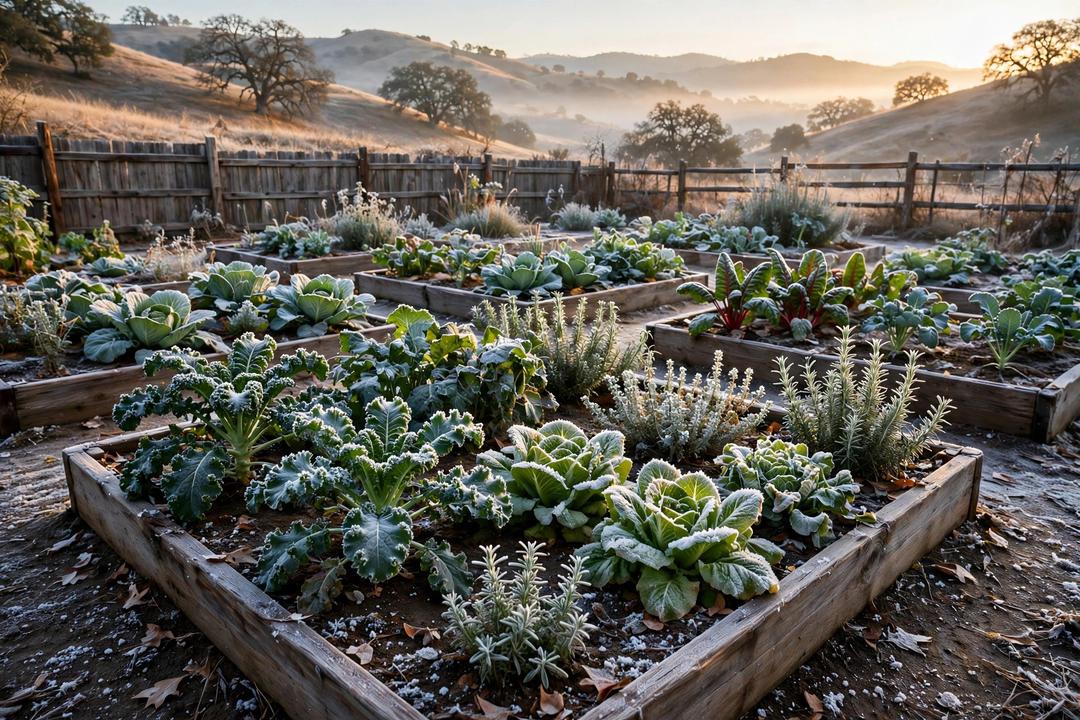
There is no single first frost in California — it runs from mid-October in the mountains to January, or never, on the coast — and the date that matters for planning is the early one, not the median. The UC Agriculture and Natural Resources frost table gives every town two dates: an early date, when frost has arrived in about one year in ten, and a median date, when it has arrived in half of years. Placerville's median first frost falls on November 9. Auburn's early date is November 9 too. Fresno's early date was November 6. If you garden in the foothills or the Sacramento Valley, the window is open right now, and the early date is the one to plan by.
Sophie: So when is my first frost? I looked it up and got three different dates.
Sprouty: All three were probably right — they were just answering different questions. The table gives you an early date and a median date. Plan by the early one, and the median will never catch you out.
How to read the frost table
The UC ANR table, "Approximate First and Last Frost Dates in California," is built from National Weather Service data from 1971–2000, and it defines frost as temperatures of 32°F or lower. For each town it gives two fall dates. The 10% date is the early date: in about one year in ten, frost has already arrived by then. The 50% date is the median: in half of years, frost has arrived by then. The gap between the two is usually two to five weeks — but it ranges from under two weeks in Victorville to nine weeks in Palm Springs — and that gap is the whole point — a median date is a coin flip, and a gardener planning on a coin flip loses half the time.
Two more definitions matter. A light frost is 32°F or lower; a hard freeze is 28°F or lower, and it is far more damaging — many plants that shrug off a light frost are finished by a hard freeze. And the table's dates are approximate by design: UC ANR says plainly that California has many climate zones and the number of frost days varies within small areas, so the nearest town's dates are a guide, not a guarantee for your exact garden. Low spots, open sky, and clear calm nights all make frost arrive earlier than the table suggests.
First frost dates across California
Here is the UC ANR table's fall data for California towns, grouped by region. The early date is the one to plan by; the median is when frost has arrived in half of years. Use our frost-heat planner to match these dates to your own planting decisions.
| Town | Early frost (10%) | Median frost (50%) |
|---|---|---|
| Foothills & mountains | ||
| Bishop | Sep 29 | Oct 15 |
| Sonora | Oct 11 | Nov 4 |
| Paso Robles | Oct 11 | Oct 29 |
| Lakeport | Oct 11 | Nov 3 |
| Placerville | Oct 20 | Nov 9 |
| Victorville | Oct 22 | Nov 3 |
| Auburn | Nov 9 | Dec 1 |
| Sacramento Valley | ||
| Chico | Oct 29 | Nov 14 |
| Ukiah | Oct 29 | Nov 16 |
| Davis | Oct 31 | Nov 28 |
| Yuba City | Nov 8 | — |
| Woodland | Nov 13 | Dec 4 |
| Marysville | Nov 17 | Dec 9 |
| Sacramento | Dec 4 | Jan 1 |
| San Joaquin Valley | ||
| Fresno | Nov 6 | Dec 3 |
| Visalia | Nov 12 | Dec 6 |
| Stockton | Nov 14 | Nov 30 |
| Bakersfield | Nov 15 | Dec 11 |
| Modesto | Nov 16 | Dec 8 |
| Bay Area & coast | ||
| Napa | Nov 5 | Dec 5 |
| Santa Rosa | Nov 5 | Dec 7 |
| Mendocino | Nov 5 | Dec 7 |
| San Luis Obispo | Nov 10 | Dec 30 |
| Lompoc | Nov 11 | Dec 14 |
| Eureka | Nov 13 | Dec 16 |
| Fairfield | Nov 14 | Dec 6 |
| Salinas | Nov 17 | Dec 10 |
| San Rafael / Marin | Nov 19 | Jan 2 |
| San Jose | Nov 24 | Dec 26 |
| Half Moon Bay | Dec 9 | — |
| Monterey | Dec 18 | — |
| Long Beach | Dec 23 | — |
| Berkeley | Dec 25 | — |
| Alameda | Dec 26 | — |
| Southern California | ||
| Riverside | Nov 18 | Dec 23 |
| San Bernardino | Nov 23 | Dec 24 |
| Palm Springs | Nov 29 | Feb 1 |
| Pasadena | Dec 12 | — |
| Los Angeles | — | — |
| San Diego | — | — |
Source: UC ANR, "Approximate First and Last Frost Dates in California" (National Weather Service data, 1971–2000). A dash means the table records no frost date — Los Angeles and San Diego average 365 frost-free days.
The pattern is the story of California in one table. The mountains are done first — Bishop's median first frost is October 15, and Sonora's is November 4. The foothills follow in November: Placerville's median is November 9, Auburn's early date is November 9. The Sacramento Valley stretches from late October in Chico and Davis to December in Sacramento itself. The San Joaquin Valley runs through November into early December. The Bay Area and coast scatter from early November in Napa and Santa Rosa to late December in Berkeley and Alameda. And the south splits in two: Riverside and San Bernardino see frost in November and December, while Los Angeles and San Diego may never see it at all.
Why different sources give you different dates
If you looked up your town's first frost somewhere else and got a different date, neither source is necessarily wrong. Frost dates are computed from a baseline period and a weather station, and both vary. The UC ANR table above uses National Weather Service data from 1971–2000. The newer 1991–2020 NOAA normals tell a different story for some towns: Sacramento's average first frost lands around December 2 on the newer normals — see the 1991–2020 normals compiled for California — roughly a month earlier than the UC table's January 1 median, noting that an average and a median are not the same statistic. The date moved a month earlier between the two baselines — the baselines span different decades, and the station moved too: different stations in the same city can disagree by weeks, because a station in a low spot or an open field records colder nights than one on a hill or near pavement.
That is why this article gives you a window instead of a single day, and why it tells you to plan by the early date. The early date is the conservative one: protect your plants by then and you are covered in nine years out of ten. Waiting for the median means accepting a coin flip. And no table replaces the forecast — when a frost is predicted for your exact location this week, that forecast outranks every historical average on this page.
What to do before your first frost
Once your early date arrives, do these four things before the next cold, clear night:
- Harvest what's tender. Tomatoes, peppers, basil, cucumbers, and squash are killed by frost — pick what you can use now, including green tomatoes, which ripen indoors.
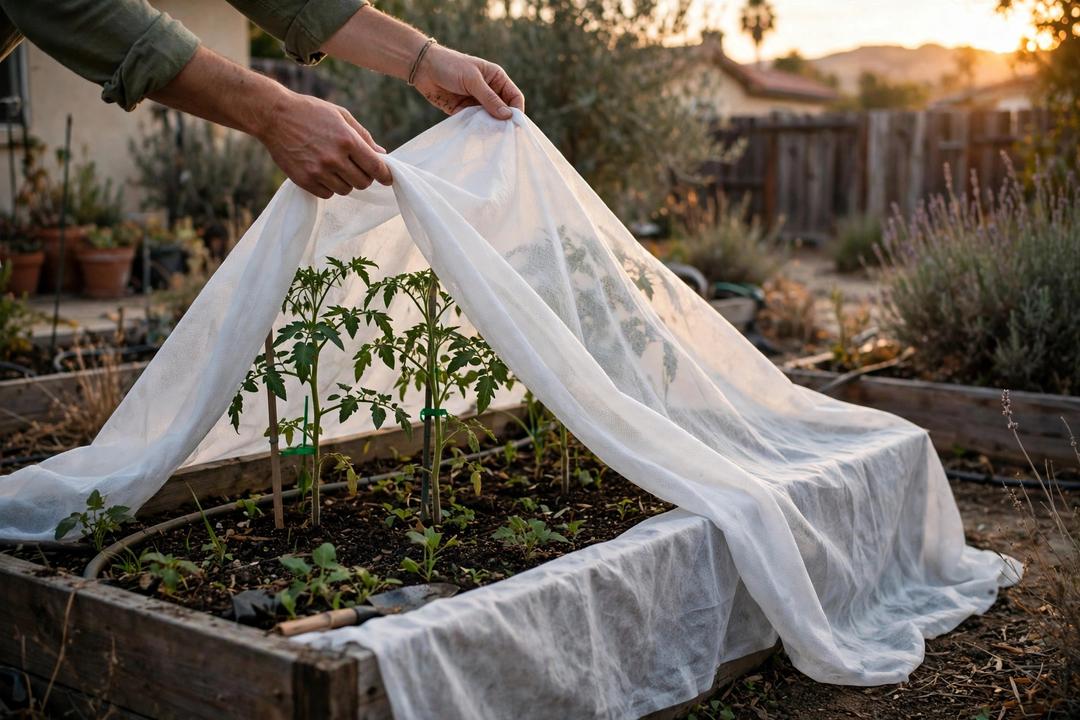
- Cover tender plants before sunset. Drape frost cloth (or an old sheet) over the plant so it reaches the ground on all sides — the cover traps heat rising from the soil, and a cover that only wraps the foliage misses it. Remove it in the morning so the plant can warm up. Our full guide, How Do You Protect a Citrus Tree on a Frost Night?, walks through the same method step by step.
- Water the soil in the afternoon. Moist soil holds and releases more heat overnight than dry soil, so a good watering before a frost night is real protection, not a chore to skip.
- Move potted tender plants to shelter. A plant in a pot is colder than the same plant in the ground — its roots have no earth insulating them — so cluster pots against a south-facing wall or bring the tender ones under cover.
What frost does — and doesn't — kill
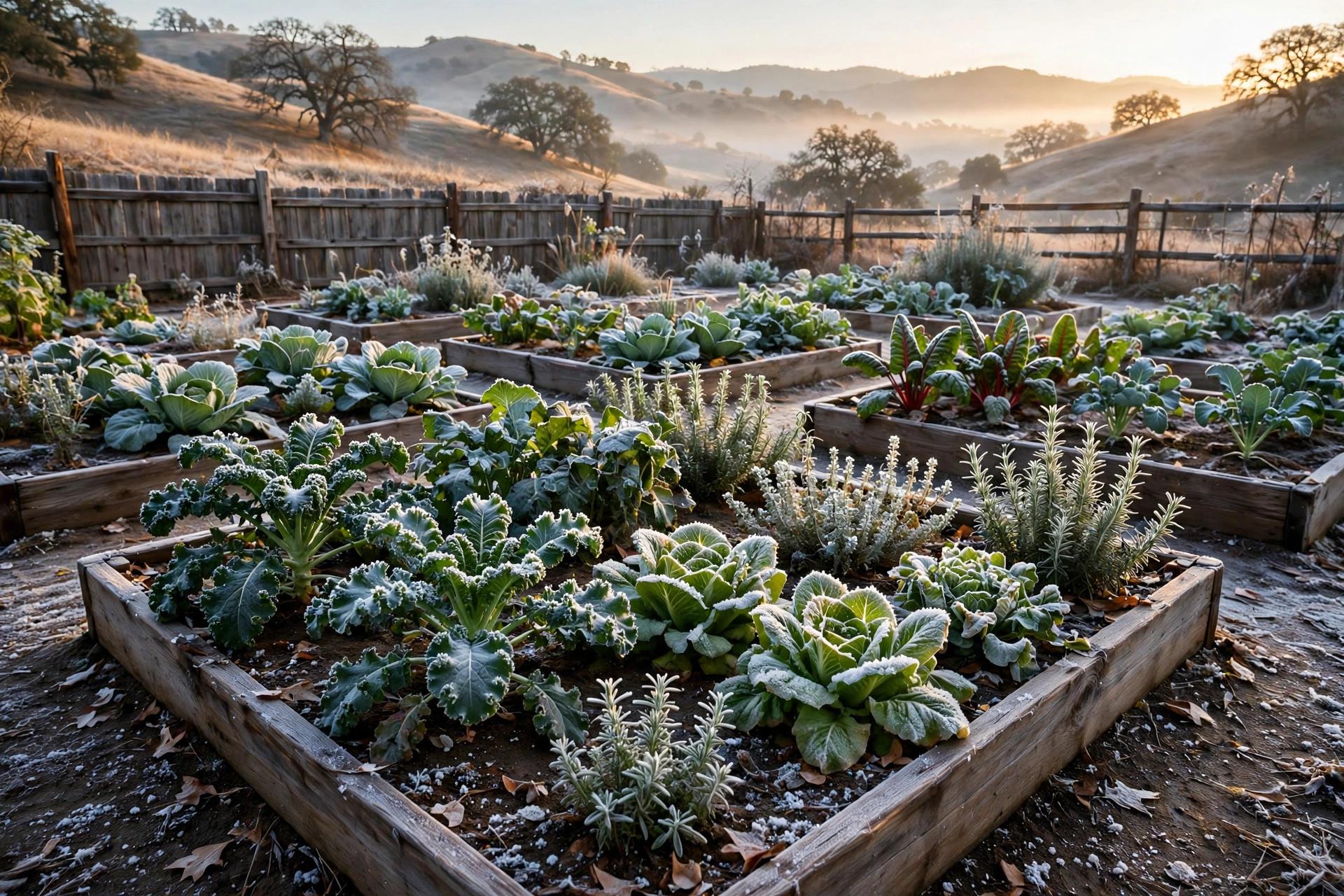
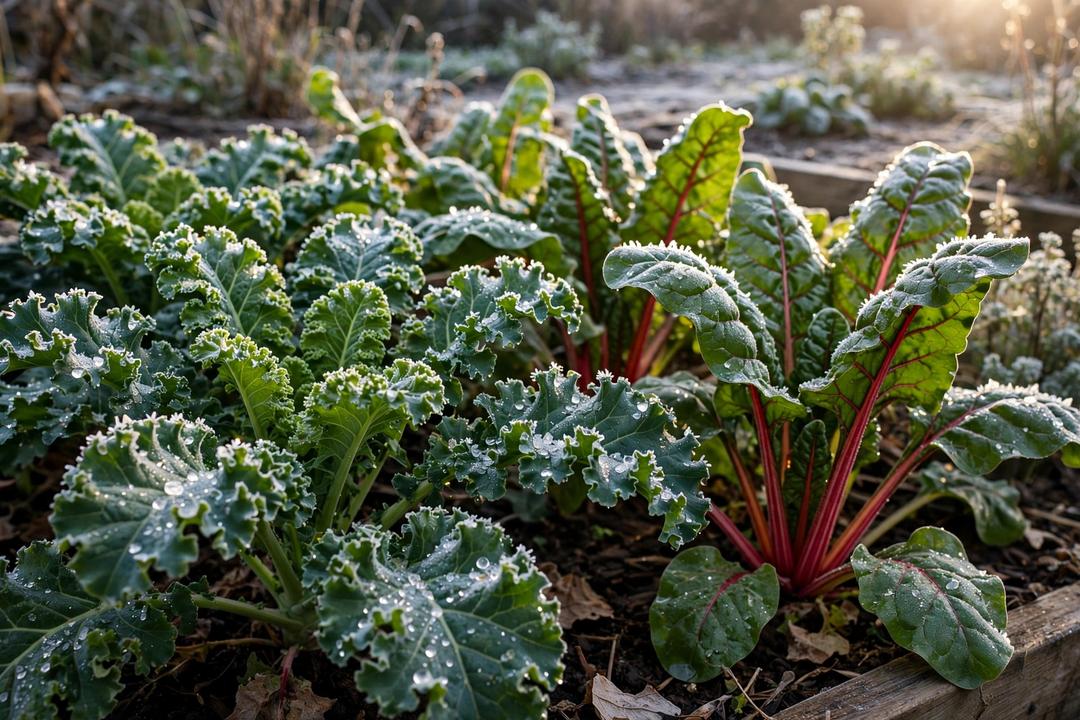
Frost is not a death sentence for the whole garden; it is a filter, and which side of it a plant falls on depends on what it is. Tender summer crops are killed by frost — the UC Master Gardeners of Napa County list corn, peppers, and cucumbers as summer-garden-only plants for exactly that reason — and tomatoes, basil, and squash are frost-tender too. But the cool-season garden is built for this weather. The hardiest vegetables — broccoli, Brussels sprouts, cabbage, collards, English peas, kale, kohlrabi, leeks, mustard greens, parsley, radish, spinach, and turnips — can survive temperatures of 25°F to 28°F, according to the same Napa County guidance. Semi-hardy ones — beets, carrots, cauliflower, celery, Chinese cabbage, endive, potatoes, lettuce, radicchio, rutabaga, salsify, and Swiss chard — tolerate a light freeze for a few hours.
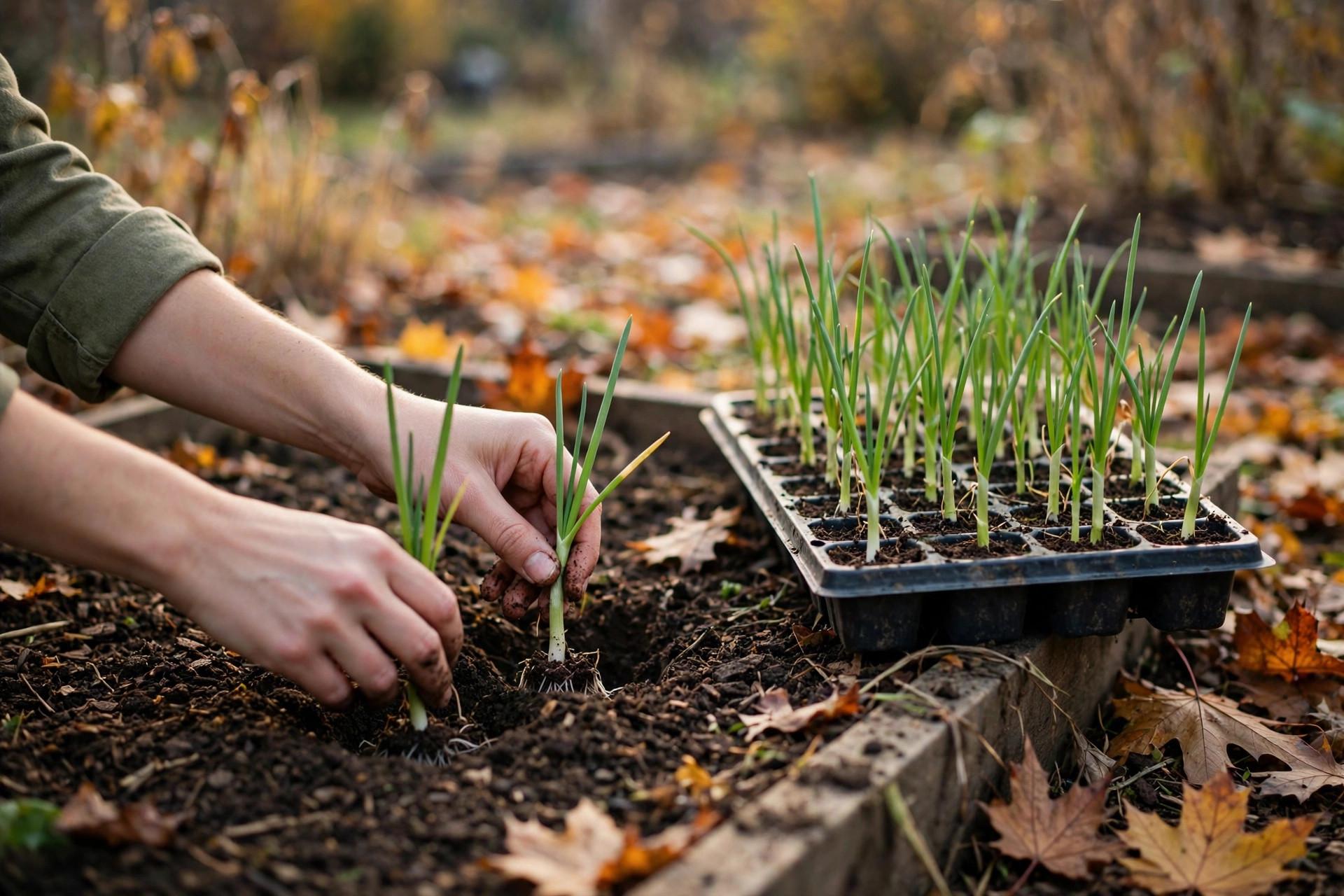
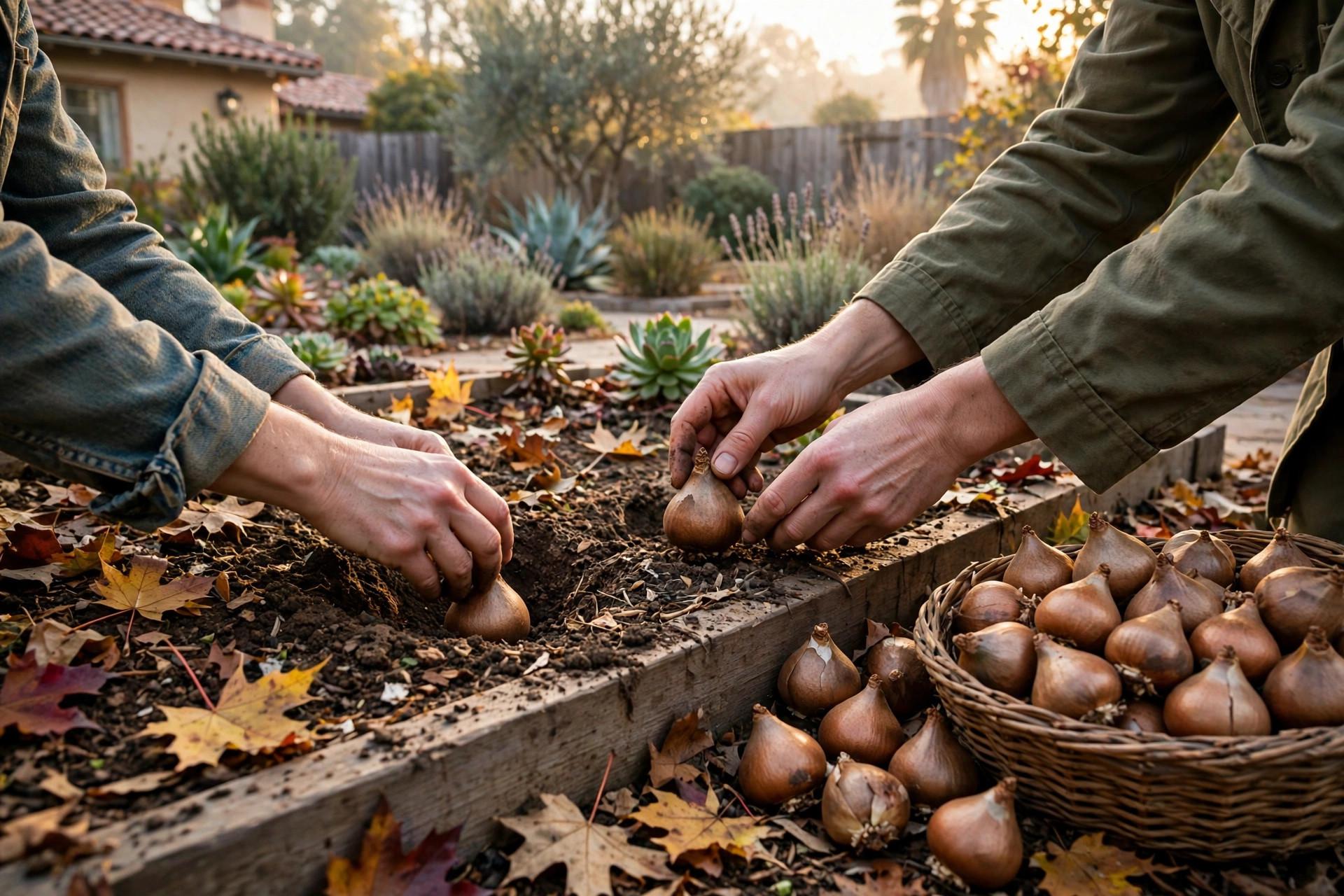
And frost does not just spare those plants; it improves some of them. The Napa Master Gardeners note that frost makes collards, spinach, cabbage, and kale sweeter. That is why the November garden is not an empty garden: the onions going in now, the tulips chilling for spring, and the kale already in the bed are all on the side of the filter that frost leaves alone. The plants to worry about are the summer leftovers still holding fruit — harvest them, cover them, or let them go, and let the cool-season bed take over.
Quick answers
When is the first frost in Sacramento?
The UC ANR table gives Sacramento a window of December 4 (early date) to January 1 (median) — but the newer 1991–2020 NOAA normals put the average first frost around December 2, about a month earlier. Plan by early December, and check the forecast rather than trusting any single date.
When is the first frost in the Bay Area?
It depends on where in the Bay Area. Napa and Santa Rosa see their early frost around November 5; San Jose's early date is November 24; Berkeley and Alameda don't see their early frost until December 25–26. Coastal spots may barely frost at all in a given year.
Does Southern California get frost?
Inland, yes: Riverside's early frost is November 18 and San Bernardino's is November 23, with medians in late December. On the coast, rarely or never — Los Angeles and San Diego average 365 frost-free days in the UC ANR table.
What temperature counts as frost?
32°F or lower. A light frost is 32°F or lower; a hard freeze is 28°F or lower and is far more damaging. Frost dates are computed on the 32°F line.
Should I cover my plants tonight?
If frost is forecast and the plant is tender — tomatoes, peppers, basil, citrus — yes: cover with frost cloth before sunset, cloth reaching the ground, and remove it in the morning. Hardy cool-season vegetables like kale, chard, broccoli, and carrots don't need covering for a light frost.