
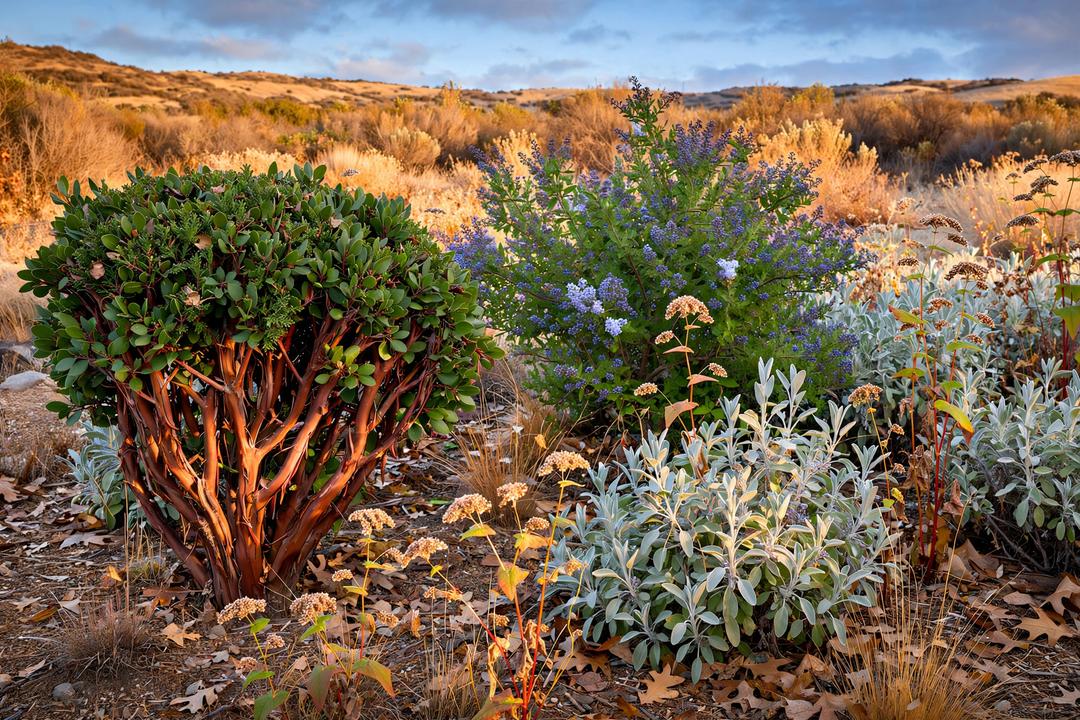
November is not just a viable window for planting California native plants — late fall is the best time of year to get them in the ground. While gardeners in cold-winter climates are putting their tools away for the season, California's gardening calendar is only beginning its most productive phase. As the UC Master Gardeners of San Luis Obispo County point out: "The best time to plant is in the fall just as the rains begin. Planting during other seasons can be successful but plants will require more care to get established."
The advantage comes down to soil warmth and seasonal rain. In November, California soils remain warm from months of summer and early autumn sun, while daytime temperatures drop and the air cools. A young native settled into warm soil beneath cool skies can keep building roots through the cool, damp months — the establishment window the CNPS Garden Q&A describes — without having to support thirsty new foliage under a harsh sun. By the time winter rain arrives, those roots are already anchored and ready to drink in every drop.
Why November works
California operates on an inverted growing calendar shaped by a classic Mediterranean climate of wet, mild winters and bone-dry summers. In regions with summer rain, spring planting is standard because summer storms provide reliable moisture. In California, planting in spring sets young plants on a collision course with intense summer heat and drought before root networks can reach deep into the subsoil — which is why the CNPS Garden Q&A calls planting in late fall to winter best.
In an interview for the California Native Plant Society (CNPS) Garden Q&A, horticulturist Barbara Eisenstein explains the core mechanism: "To help these plants become established, planting in late fall to winter is best. This way, they do not have to survive extreme heat and drought right after being relocated. For the first year or two, you may need to water them a couple of times a month, but be sure to water them deeply and then allow the soil to dry out a bit."
Even when top growth slows in December and January, the root systems of a November planting keep establishing through the cool, damp months — the establishment window the CNPS Garden Q&A describes. By the time spring heat returns in April and May, a November-planted native has banked five to six months of root development.
Potted plants before the rain, seeds after it
Sophie: Should I wait for the first winter storm before I put my nursery plants in the ground, or should I plant them right now?
Sprouty: Get your potted container plants in the ground before the first rain so their roots are settled and ready to drink when the storms arrive! Save your native wildflower seeds for after the first soaking rain — seeds need that moisture to germinate.
The most frequent November mistake is treating container-grown shrubs and seed packets the same way — potted plants and wildflower seeds have opposite timing requirements relative to the first soaking storm.
According to the University of California Cooperative Extension publication Selecting & Planting California Native Plants (UC Master Gardeners, Sept 2021), potted nursery plants should go into the ground before the first rain to allow for good root growth. Plant potted plants while the soil is still dry, setting the root crown slightly above grade. The UC ANR guide says potted plants go in before the first rain; UC SLO puts it as “just as the rains begin” — the same window, stated two ways: plant while the soil is still dry enough to work and the storms are on their way. When the first storm sweeps in, the rain soaks the native soil around the root ball.
Native wildflower seeds need the opposite sequence. As detailed in the UC ANR guide Sowing Native Wildflower Seeds, California native annual wildflowers are not sown during late spring or summer. Instead, "we start sowing them in November as the rains begin. We can sow them through March, although November to January is optimal and allows for less water." This article reads the two guides together: “as the rains begin” means after the first soaking rain has dampened the soil.
Wait until after the first storm: the UC ANR Sept 2021 planting guide states the rule plainly — seeds go in after the first rain “to get best root growth,” when the soil is damp and seeds can make contact with moist earth.
To extend wildflower blooms from early spring into summer, UC ANR recommends starting your first seed broadcast in mid-November and re-sowing successive batches through February and even into March. Note that late-sown batches miss the early winter storm sequence and will most likely need supplemental hand watering to establish and flower.
How to plant one
Proper technique decides whether a native thrives for decades or rots in its first winter:
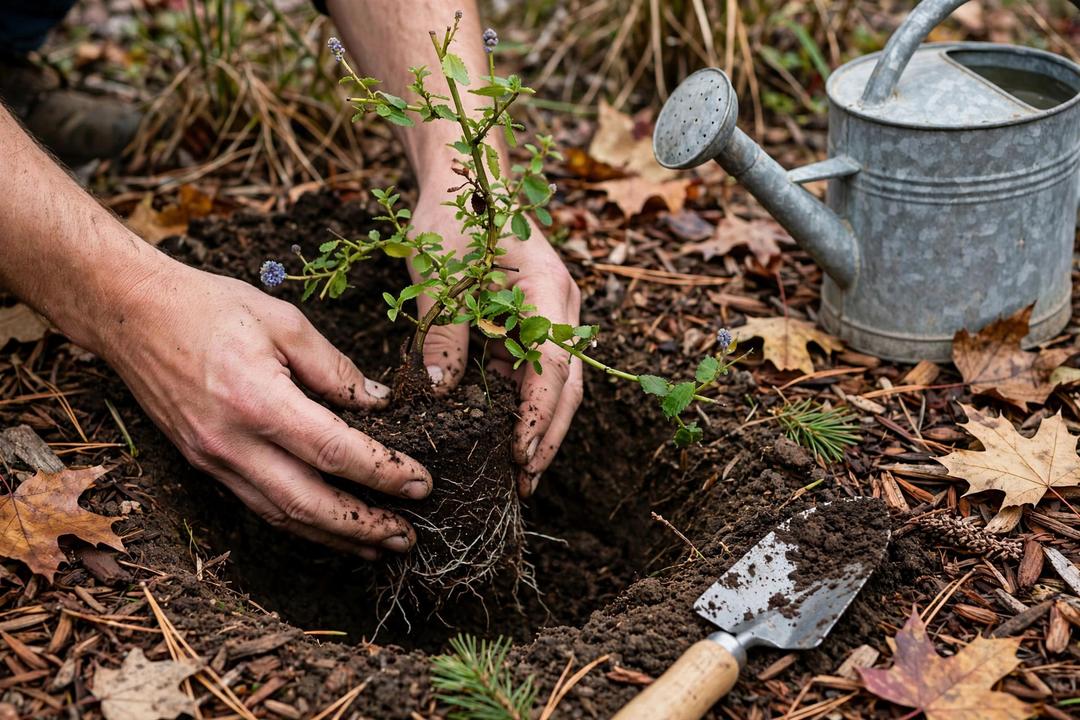
- Dig the proper hole: Dig a hole as deep as the root ball and twice as wide, as directed in the UC ANR Sept 2021 planting guide. Rough up the sides and bottom of the hole so roots can push outward instead of circling, per the CNPS planting guidance cited in a San José State University library guide. (That CNPS guidance suggests a hole half again as deep as the container — a deeper variant; this article follows the UC ANR depth.)
- Pre-hydrate the hole: Fill the hole with water and let it soak through before positioning the plant, as the CNPS planting guidance cited in a San José State University library guide recommends. The pre-soak helps keep surrounding dry earth from pulling moisture out of the root ball.
- Set the crown high: Place the plant into the hole so the root ball rests about 1/2 to 1 inch above the surrounding native soil grade, per the CNPS planting guidance cited in a San José State University library guide. UC SLO’s own planting instructions put the crown slightly lower — even with or ¼ to ½ inch above grade — so treat the range above as the high end. Setting the crown slightly high ensures that settling soil and mulch do not wash over the stem base, preventing fatal crown rot.
- Backfill with native soil only: Refill the hole exclusively with native soil dug from that spot, per the UC ANR guide. Do not add compost, potting soil, or commercial soil conditioners. Amending the hole creates a container effect that traps water and discourages roots from venturing into the surrounding native soil.
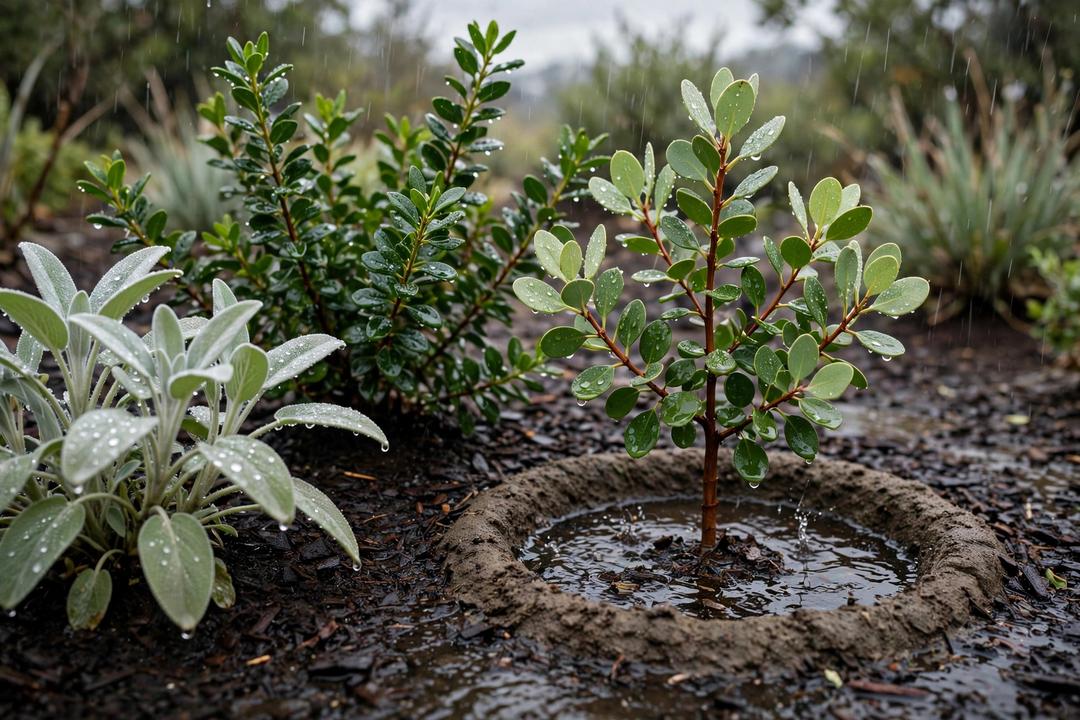
- Build a watering berm: Form a low earthen basin around the plant to hold water over the root zone while it soaks in — the UC SLO guide’s approach to watering new natives.
- Deep soak: Water the new installation thoroughly until the soil is moist to the full depth of the root ball — the UC ANR guide’s rule is “water until moist to depth of roots” and “do NOT overwater.”
Finish with mulch: the UC ANR guide recommends keeping a 4–6 inch layer of mulch around trees and shrubs through summer and fall — it holds moisture in the soil and keeps roots cool. That 4–6 inch depth is the UC ANR figure for trees and shrubs; the linked mulching guide’s warning about 5–6 inches of dense material suffocating soil is written for vegetable beds. Keep mulch off the trunk either way. UC SLO’s planting instructions use a lighter 1–2 inches of mulch around a new planting — this article uses the 1–2 inch figure at planting time and reserves the deeper 4–6 inch layer for established trees and shrubs.
Watering the first two years
A widespread misconception is that California native plants need zero irrigation from the day they leave the nursery. In truth, drought tolerance is an earned trait that only develops after a plant establishes a deep, extensive root system.
As the UC Master Gardeners of San Luis Obispo County emphasize: "Native plants are not drought tolerant before they are established. All native plants will need regular irrigation for first year or two until they have established root systems."
Full establishment takes a year or two — until then, every native needs regular irrigation, as the UC SLO guide stresses. For the first month, water every 3–4 days and do not let the soil dry out, per the UC SLO guide; from the second month, a deep soak once a week except when it rains, per the UC ANR guide and UC SLO, preferably in the early morning (UC SLO). Once the rains stop, start checking the soil a couple of weeks later; if the top 2 to 6 inches are dry, water deeply, per the UC ANR guide.
Frequencies vary by species, soil, and weather — the schedule below is a starting point from UC sources. Note the sources genuinely differ: the CNPS guidance quoted above suggests a couple of deep waterings a month for the first year or two, about half the UC ANR weekly frequency. Watch the plant and the soil, not the calendar.
The UC ANR Sept 2021 guide details a tapering schedule for low-water plants:
- First year: Water once per week except when raining, per the UC ANR guide (after the first month — see the every-3–4-days rule above). UC SLO’s version of the same rule: from the second month through the first summer, water once a week, adjusted for weather and soil.
- Second year: Water once every two weeks for low-water plants, per the UC ANR guide. UC SLO notes that after the second summer, most native plants are established — so from here the schedule is a taper for drought-tolerant species, not a requirement for every plant.
- Third year: Water once every three weeks for drought-tolerant species, per the UC ANR guide.
- Fourth year and beyond: Water once every four weeks for very low-water selections, per the UC ANR guide. Certain dry-adapted species, including flannel bush (Fremontodendron californicum) and mature native oaks (Quercus), need no supplemental summer water once established — the UC ANR guide lists them as no-additional-water plants.
Rain is never guaranteed in California winters, and dry spells happen between storms. The two UC sources give different dry-winter figures: UC SLO advises watering once a month when winter rainfall is scant, while the UC ANR guide prescribes semi-monthly watering — twice a month — when nature does not provide rain between November and April. The sources disagree on first-year dry winters: UC SLO’s Year One guidance drops to once a month when fall/winter rainfall is scant, while UC ANR’s first-year schedule is weekly except when raining. This article follows a first-year schedule of every 3–4 days in the first month (per UC SLO) and weekly after that (per the UC ANR guide), and reserves the semi-monthly figure for older plantings — UC SLO’s Year Two guidance is likewise once a month in fall/winter, so the older-plantings choice also follows UC ANR over UC SLO. Check the soil before each soak.
At the same time, summer overwatering is hazardous. The UC SLO Master Gardeners point out: "Summer irrigation can cause activation of soil fungi which thrive in moist warm conditions and cause crown and root rot." Native plants evolved to receive moisture during cold winter months, not during hot summer days. Water deeply during the natural winter window, and taper off as weather heats up.
What to plant first
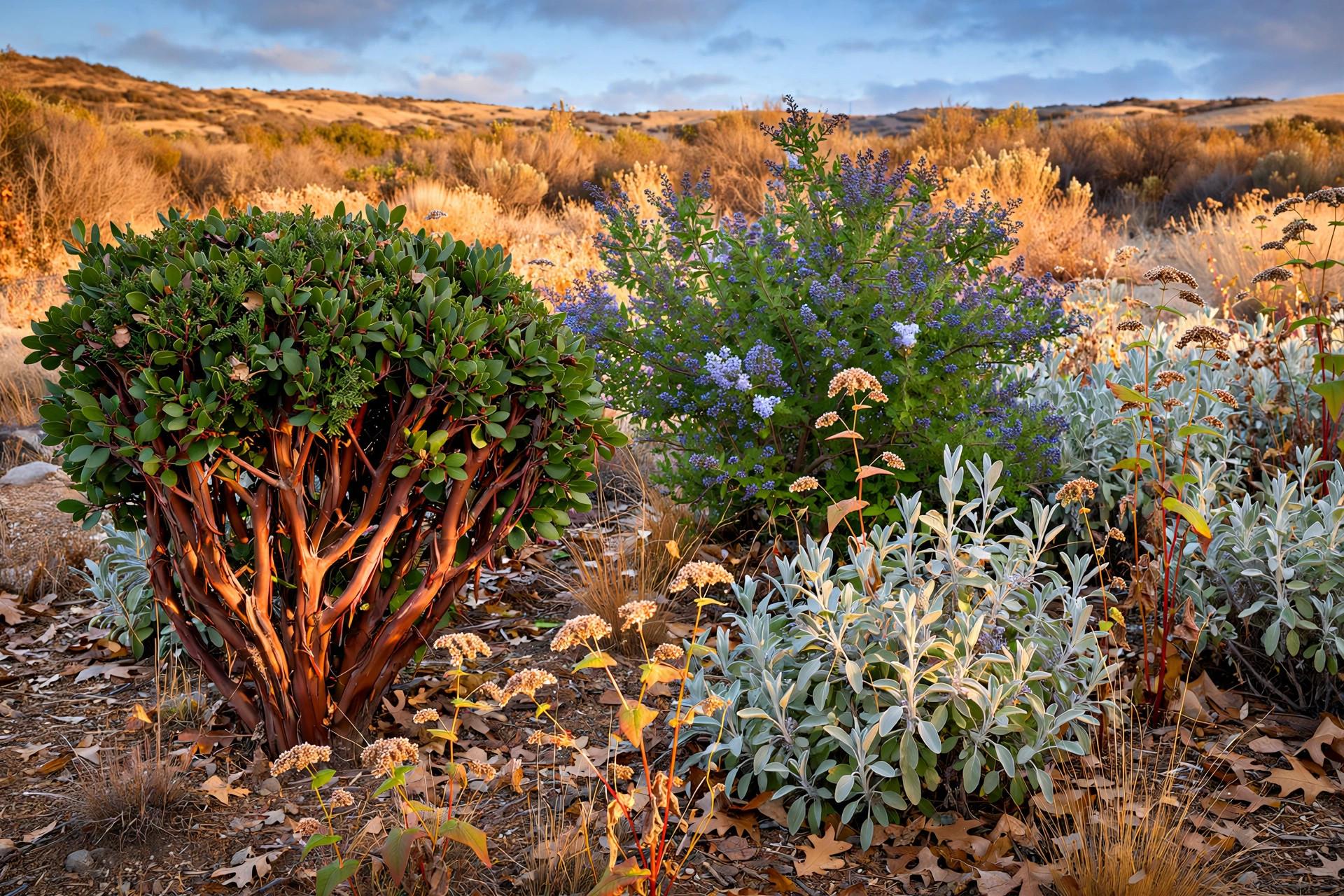
If you are building your first native garden bed this November, choose resilient, time-tested species that provide structure, color, and valuable wildlife habitat. Descriptions below are summarised from Calscape’s plant profiles — check Calscape for the full sun, water, and soil needs of each one before you buy:
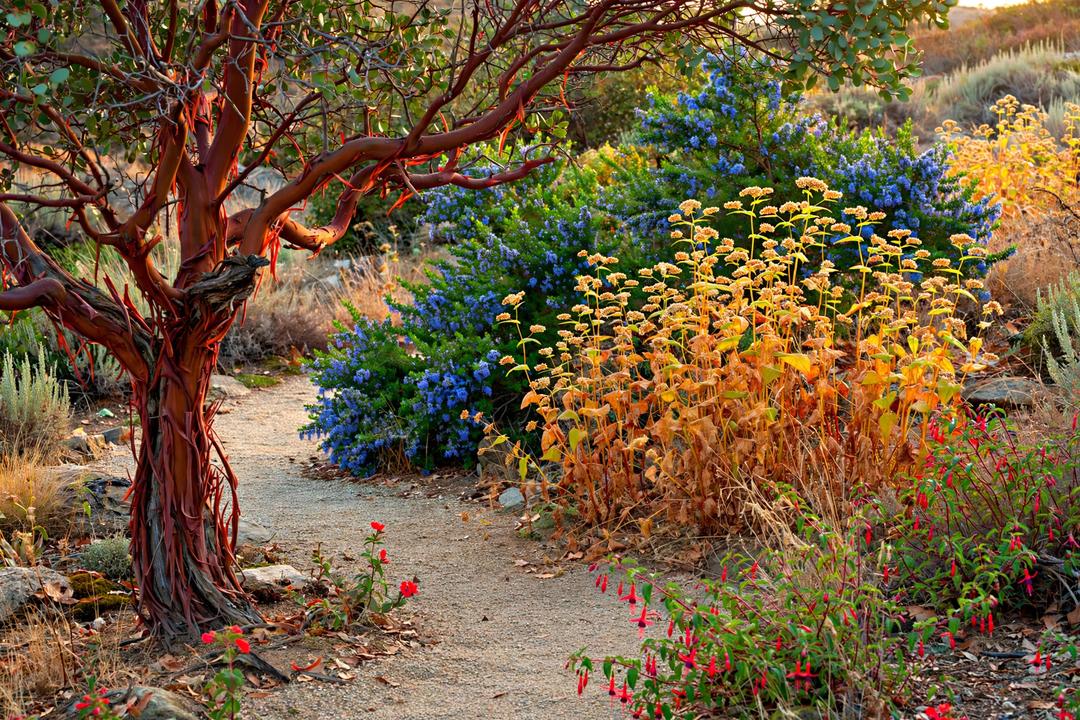
- California lilac (genus Ceanothus): A versatile evergreen shrub available in groundcover and upright forms, known for dense clusters of electric blue or purple flowers that burst open in late winter and spring.
- Manzanita (genus Arctostaphylos): Celebrated for its smooth, polished mahogany bark, delicate urn-shaped flowers, and year-round evergreen foliage.
- California sagebrush (Artemisia californica): A foundational coastal scrub shrub with finely divided silver-grey leaves and a classic wild California fragrance.
- California buckwheat (Eriogonum fasciculatum): A tough native shrub producing flat flower heads of white, pink, or cream that mature into warm rust-brown seeds for native birds.
- California fuchsia (Epilobium canum): A low-growing perennial that produces bright scarlet tubular blooms from late summer into fall, whose flowers draw hummingbirds.
- Toyon (Heteromeles arbutifolia): A sturdy evergreen large shrub or small tree that displays brilliant clusters of bright red winter berries against dark green, serrated leaves.
To find the exact plants native to your neighborhood, consult Calscape, a comprehensive free tool created by the California Native Plant Society. By entering your street address or ZIP code, Calscape generates a tailored list of plants indigenous to your specific microclimate, complete with precise sun, water, and soil requirements — filter by your conditions (clay or sand, full sun or shade, flat or slope) before you buy, since the right choice changes with the spot.
Fall is also the season for local California Native Plant Society chapter plant sales — CNPS describes chapters hosting sales statewide through the fall, offering site-adapted native species rarely available in big-box retail nurseries, paired with hyper-local advice from experienced native plant growers.
What not to do
Keep these core rules in mind:
- Do not plant in summer heat: summer is the worst time to plant natives — heat and drought stress new roots before they can establish, and the CNPS planting guidance cited in a San José State University library guide warns against planting during the hot summer and early fall.
- Do not soak established natives during hot weather: warm, wet soil activates the fungi that cause crown and root rot — never try to fix a struggling established native in summer by dumping water on its crown.
- Do not bury the crown: burying the base of the plant invites moisture against the bark and rapid decay — set it high, as in step 3 above.
- Do not skip watering during a dry winter: new plantings cannot survive on optimism. If a winter dry spell sets in, check the top few inches of soil: first-year plantings stay on their first-year schedule (every 3–4 days during the first month, weekly after that) — this article follows UC ANR’s weekly figure here rather than UC SLO’s once-a-month Year One figure — while older plantings get a deep soak twice a month while the dry spell lasts (see the watering section above).
- Do not add fertilizer: California natives evolved in unamended, low-nutrient soils — backfill with native soil only and skip the amendments, per the UC ANR planting guide.
Quick answers
Can I plant natives in November if it hasn't rained yet?
Yes. You do not need to wait for a storm: the UC ANR planting guide says potted plants go into the ground before the first rain. Plant once temperatures have cooled, into pre-moistened soil, and give them a thorough soak yourself.
Should I wait for the first rain?
For potted nursery plants, no — install them before the first rain so their roots are settled and ready for storm moisture. For native wildflower seeds, yes — wait until after the first soaking rain, per UC ANR’s wildflower guide.
Do new natives need watering if it rains?
Yes, during dry spells between winter storms. Check the top few inches of soil; if dry, apply supplemental deep watering following your first-year schedule (every 3–4 days in the first month per UC SLO, weekly after that per the UC ANR guide).
What if I miss November?
You can continue planting through winter and early spring — the UC SLO guide notes planting in other seasons can succeed but needs more care to establish. Summer is the worst time to plant, when heat and drought stress new roots.
Related reading
- Buy California Natives in September, But Don't Plant in Summer Heat: Why New Roots Stall (And When to Put Them in the Ground)
- Why Planting California Native Bulbs Before the First Rains Will Rot Them (And When to Plant)
- Wait for Cool Soil to Mulch and You Miss the Warm-Soil Window: Why Mulching at 55–65°F Extends Fall Growth