
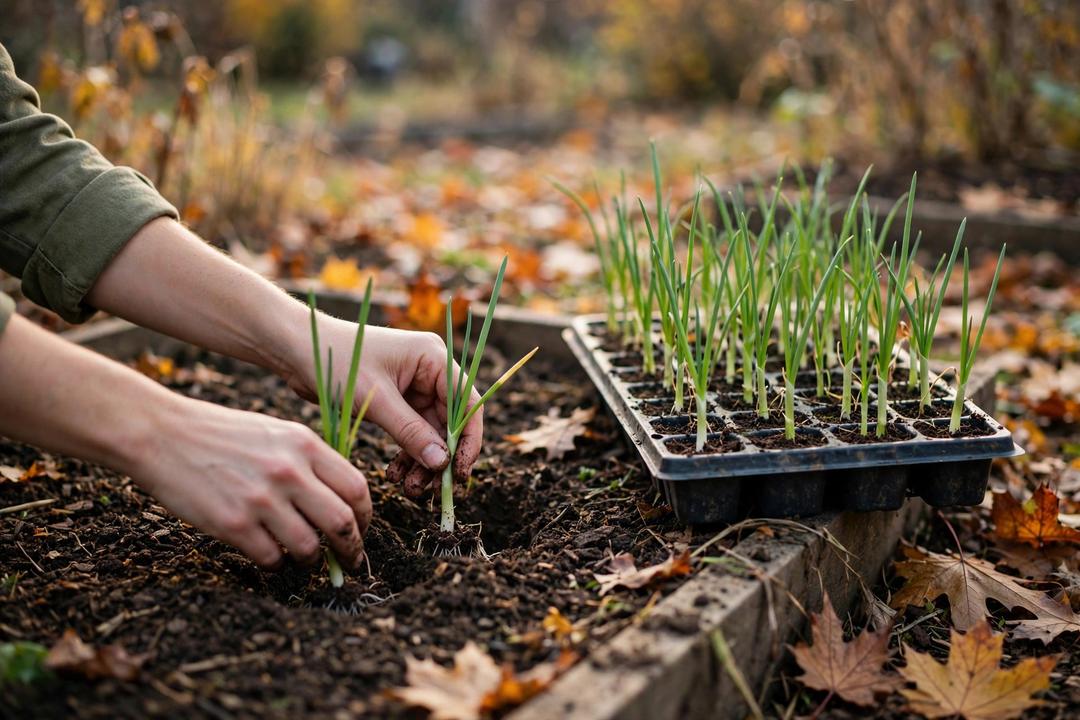
Yes — November is onion-planting month in California, but only if you plant the right kind. Short-day onion varieties, planted as transplants in November, grow leaves all winter and form bulbs as the days lengthen in spring. The UC Statewide IPM Program's planting table puts bulb onions in the ground November through March in the interior valleys — and in the desert valleys, the window is October through November, which means it closes at the end of this month. Plant a long-day variety instead, and in most of California the onion never gets enough daylight to bulb at all: you harvest leaves, not bulbs.
Sophie: I bought onion sets at the nursery. I just stick them in the ground and wait, right?
Sprouty: Not quite — first check the label. An onion decides to make a bulb by measuring the length of the day. Plant the wrong type for California and it will grow beautiful leaves and never bulb at all.
Why the day length decides everything
An onion (Allium cepa, family Amaryllidaceae) does not form a bulb because it is old enough or big enough. It forms a bulb because the day got long enough. As the UC IPM guide puts it, each variety has a critical day length for bulbing "regardless of temperature or plant size," and growing an onion below its critical day length "results in formation of new leaves but no bulbing."
That is the whole trap of onion shopping in California. Short-day varieties begin bulbing once days reach about 10 to 12 hours, according to the UC Master Gardeners of Ventura County handout, and the San Diego County Master Gardeners put the short-day trigger at about 12 hours. UC IPM lists the short-day trigger slightly higher, at 12 to 14 hours — the exact number varies a little by variety and source, but the practical point is identical: short-day onions bulb in spring as California days lengthen, which is why they are planted in fall. Long-day varieties, by contrast, need 14 to 16 hours of daylight to bulb; San Diego's longest day is about 14 hours in late June, per the San Diego Master Gardeners, so a long-day onion planted there never gets its signal.
Intermediate-day varieties sit in between, bulbing at about 12 to 14 hours, and they work in parts of California too — but they are planted later, in February and March, not November. The November planting is a short-day planting, full stop.
When to plant, region by region
California is not one onion climate, and the UC IPM planting table says so plainly. Bulb onions go in:
- Interior valleys (Sacramento, San Joaquin): November through March. November is the opening of the window, not the end of it — but planting early produces the largest bulbs, as the San Diego Master Gardeners note, because the plant has more time to grow leaves before bulbing starts.
- Desert valleys (Imperial, Coachella): October through November. This is the live deadline. If you garden in the desert valleys and have not planted yet, this month is last call.
- North and north coast (Monterey County north): January through March. November is too early here; the window opens after the new year.
- South coast (San Luis Obispo County south): February through March. Same story — coastal gardeners south of San Luis Obispo wait until late winter.
UC IPM adds the honest caveat that these dates are only approximate, because the climate varies greatly within each region, and suggests checking with your local UC Master Gardener program for more precise dates. The UC Davis Vegetable Research and Information Center draws the line in similar terms: south of Bakersfield, seed or transplant early varieties in October for a June harvest; north of Bakersfield, seed or transplant early varieties from November through January for a late-spring or summer harvest.
The nursery timing matches the guidance. The UC Master Gardeners of Stanislaus County note that onion transplants, or starts, appear in local nurseries beginning in late October and early November — which is why the trays are on the shelves right now.
Transplants, not sets
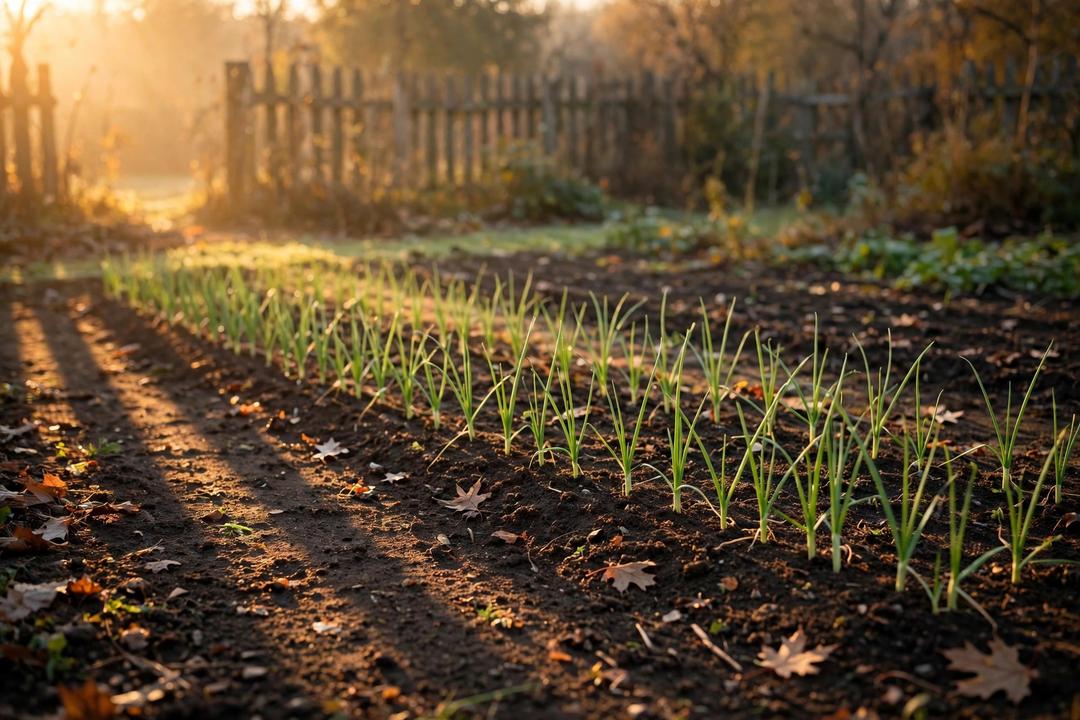
The second decision is how the onion arrives in your garden: seed, sets, or transplants. UC IPM is blunt: "Onions produce better from seed or transplants rather than from onion sets. Much of the energy in onion sets seems to go into producing seed stock instead of bulbs," and sets "unless properly stored, will tend to bolt rather than set a large bulb." The Ventura County handout agrees — sets are "generally not recommended for our area" because they tend to bolt, while transplants are "often considered the most successful method."
That matters because the sets on nursery shelves are the trap. As the San Diego Master Gardeners warn, the long-day varieties sold as onion sets "usually do not bulb well in the San Diego area" — and the UC Davis guide adds that the varieties used to produce sets are "frequently not well adapted to California." A bag of mystery sets is how a gardener ends up with a bed of leaves in June. Buy named short-day transplants instead — the bunches of green seedlings sold in trays — or start from seed.
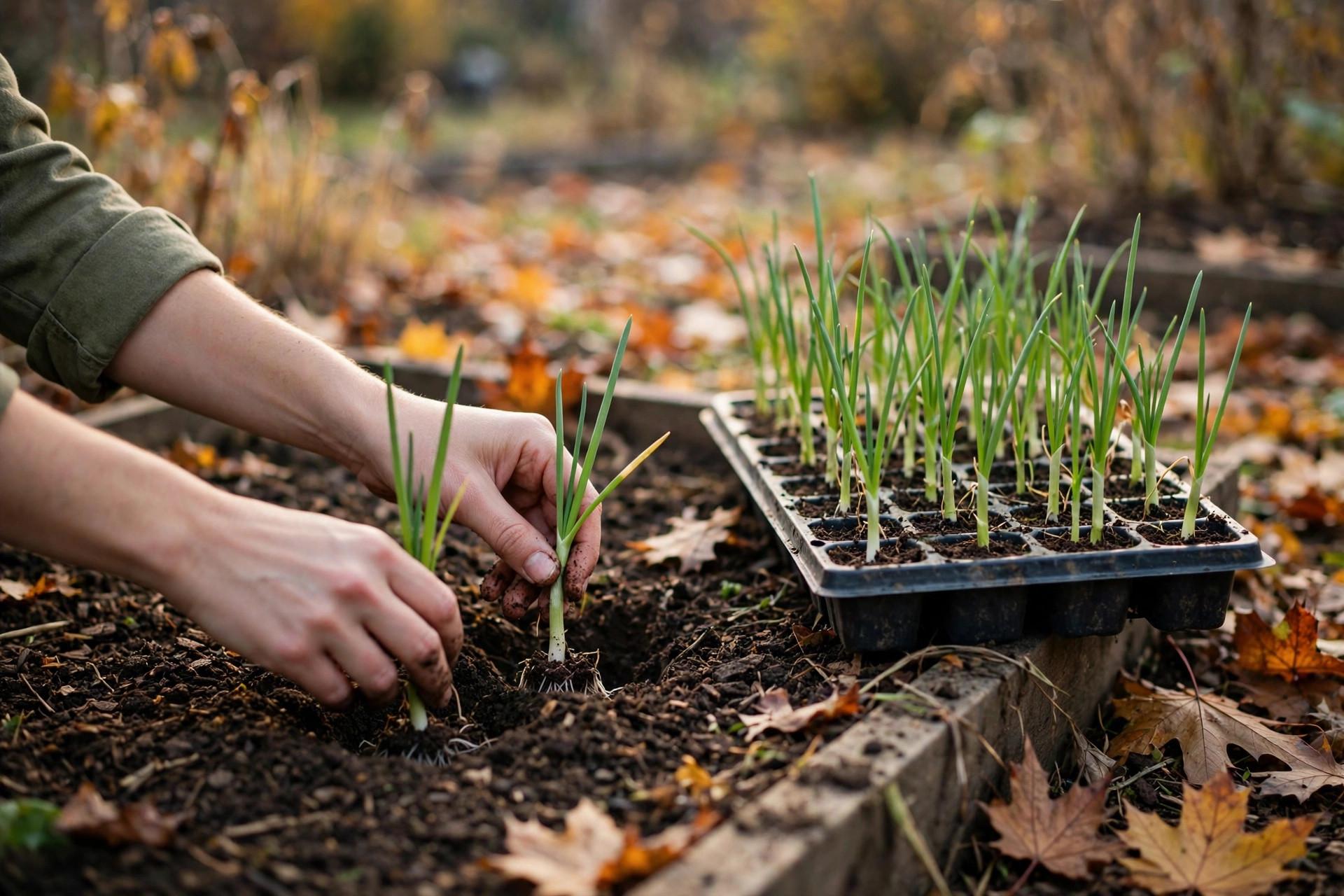
If you start from seed, the UC numbers are: sow about 0.25 inch deep and keep the soil moist, per UC IPM, and thin the seedlings to 2 to 5 inches apart in rows 12 to 24 inches apart, per the Ventura handout, which also advises starting seeds indoors in pots in October and transplanting them 50 to 60 days later. For transplants, UC IPM says to space them about 4 to 5 inches apart and plant them to cover the base of the bulb with just enough soil to anchor it in place. The Stanislaus Master Gardeners give the same spacing — 4 to 5 inches apart, with just enough soil to cover the bulb. Green onions are the exception: set those starts 2 to 3 inches apart, per the UC Master Gardeners of Santa Clara County.
Which varieties to buy
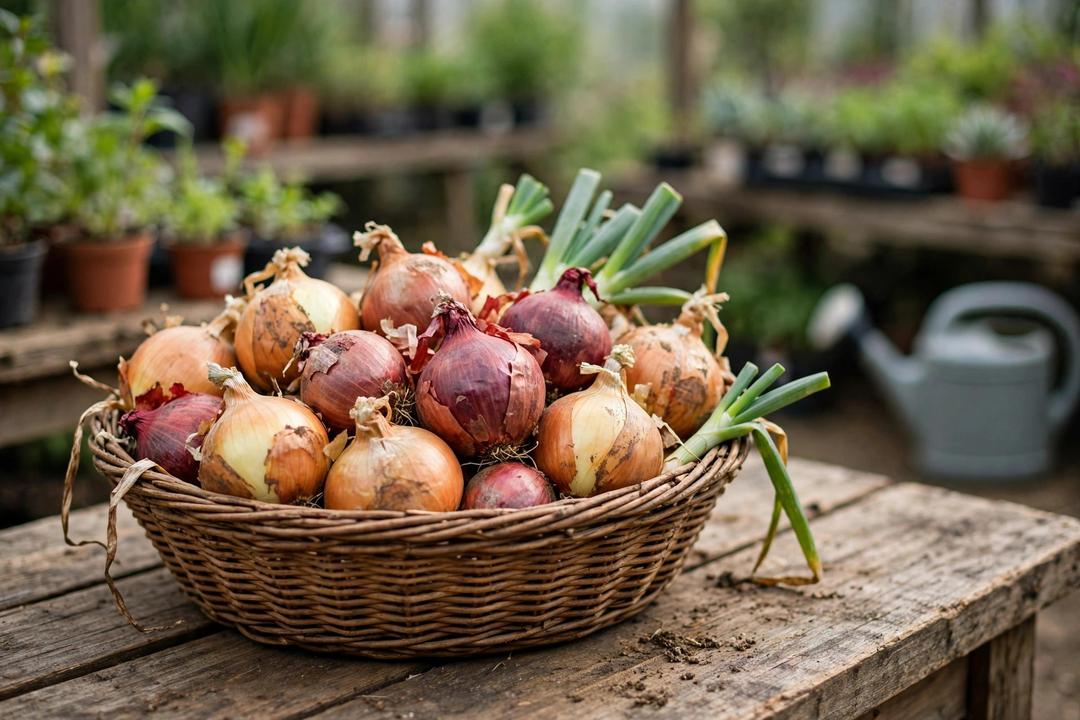
Buy short-day, and buy named varieties. The UC Davis list of recommended early-bulb varieties is short and specific: Grano (red or white), Granex (red or white), and California Early Red. The Ventura County handout adds Yellow Granex, Gabriella, Madalyn, White Castle, and Red Rock to the varieties to consider. The San Diego Master Gardeners recommend Grano, Granex, and Crystal Wax (White Bermuda) for short-day planting, sown in October or set out as transplants in mid-November.
Short-day onions are generally sweeter flavored, per the Ventura handout — but sweeter, milder onions have a relatively short storage life compared with stronger, more pungent varieties, per the San Diego Master Gardeners, so plan to eat them within a few months of harvest rather than keeping them through the year. That is the trade California gardeners make: a sweet onion in June, not a storage onion in December.
Planting day: the steps
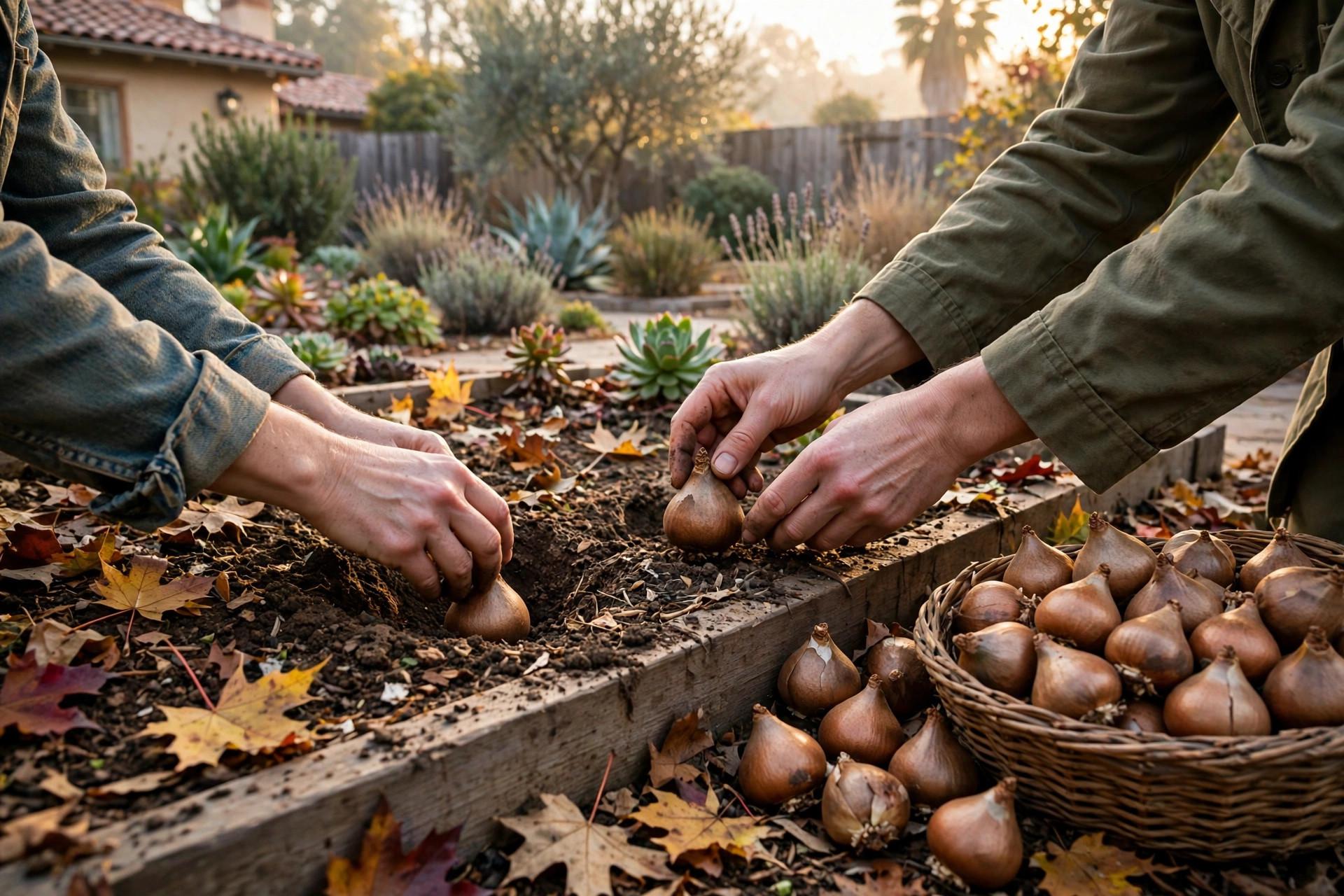
Once the variety is right, planting takes an afternoon. Follow the UC numbers:
- Pick a sunny, well-drained spot. UC IPM calls for full sunlight — at least 4 to 6 hours a day — and well-drained soil, with a pH of 6.0 to 6.5. Work compost or other organic matter into heavy clay or sandy soil before planting.
- Separate the transplants gently. Nursery starts come in bunches; tease them apart carefully so each plant keeps its roots.
- Set them 4 to 5 inches apart. That is the UC IPM and Stanislaus spacing for bulb onions. Wider spacing gives bigger bulbs; tighter spacing gives smaller ones. Cover the base of the bulb with just enough soil to anchor it — do not bury the plant deep.
- Water them in. Onions have a fairly high water requirement, and UC IPM says the soil needs to be kept evenly moist throughout the growing season. Water stress during development affects flavor — infrequent or insufficient water increases pungency.
- Mulch the bed. Apply a 3- to 4-inch layer of organic mulch to conserve moisture, per the Ventura County handout.
After planting: water, feed, wait
Then the onion mostly needs patience — about 120 days or more to mature, per UC IPM, or roughly six months in practice, per UC Davis. Keep the soil evenly moist all winter; in many areas winter rain supplies adequate moisture, but irrigate if rainfall is short. On fertilizer, UC IPM advises sidedressing nitrogen after the plants are 3 to 4 inches tall, in light but frequent applications every 3 to 4 weeks, keeping fertilizer off the stems to avoid burning. The Ventura handout adds that seedlings started indoors should get half-strength fertilizer two weeks after germination, until transplant time.
Do not expect visible drama for months. The plants grow leaves through winter, and bulbing begins around March 20 for short-day varieties in San Diego County, per the San Diego Master Gardeners. Intermediate-day varieties, planted in February and March, do not begin bulbing until about June 20. The bulb you harvest in June was decided in November, when you picked the variety and the planting date.
When will they be ready?
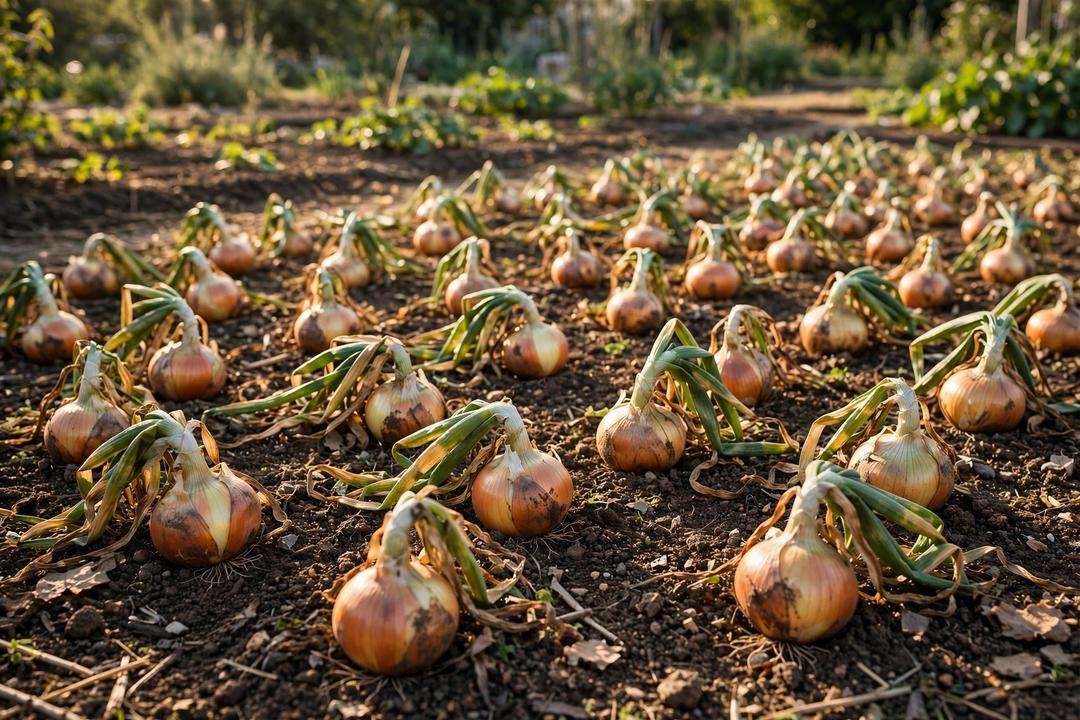
Onions are ready to harvest when the tops bend to the ground and become dry, per UC IPM — the same signal as garlic. The Stanislaus Master Gardeners give the Central Valley arithmetic: plant in early November, harvest in mid-April to early May. In San Diego County, short-day onions planted in November are ready in June or July. Whenever yours are ready, the last step matters as much as the first: onions need to cure before storing. UC IPM says they may be dug and left in the garden to dry, protected from sunburn by covering them with the tops of other plants, or placed in burlap bags and left outside to dry naturally. And as the tops begin to fall over, withhold water to stop root growth and let the outer scales dry.
If November slips past you, the interior-valley window runs through March — but every week of delay costs leaf growth before bulbing, and the San Diego Master Gardeners are explicit that planting early produces the largest bulbs. In the desert valleys there is no later window at all: October through November, and then the season is gone. Plant the transplants now, and the day length will do the rest.
Quick answers
Is it too late to plant onions in November?
No — November is the opening of the bulb-onion window in the interior valleys (November through March, per UC IPM), and the last month of the window in the desert valleys (October through November). North-coast gardeners wait until January through March; south-coast gardeners until February through March.
Should I plant onion transplants or seeds in November?
Transplants. UC IPM says onions produce better from seed or transplants than from sets, and the Ventura County handout calls transplants the most successful method. Sets tend to bolt instead of bulbing. Seeds started indoors in October are transplanted 50 to 60 days later — which lands in November and December.
How do I plant short-day onions?
Buy named short-day varieties (Grano, Granex, California Early Red, White Bermuda), set transplants 4 to 5 inches apart in a sunny, well-drained bed, cover the base of the bulb with just enough soil to anchor it, and water them in. Short-day varieties bulb when days reach about 12 hours, so a November planting grows leaves all winter and bulbs in spring.
How far apart do I space onion transplants?
4 to 5 inches apart for bulb onions, per UC IPM and the UC Stanislaus Master Gardeners. Set green-onion starts 2 to 3 inches apart.
When do I harvest onions planted in November?
When the tops bend to the ground and dry — about 120 days or more after planting. In the Central Valley that is mid-April to early May for an early-November planting; in San Diego County, June or July. Cure the bulbs in the sun before storing.
Why did my onions only grow leaves and never bulb?
Almost certainly the wrong day-length type. Long-day varieties need 14 to 16 hours of daylight to bulb; San Diego's longest day is about 14 hours in late June, per the San Diego Master Gardeners, so a long-day onion planted there never gets its signal — below its critical day length an onion grows leaves and no bulb. Sets are often long-day varieties, which is why they usually fail to bulb here. Plant named short-day varieties next November.