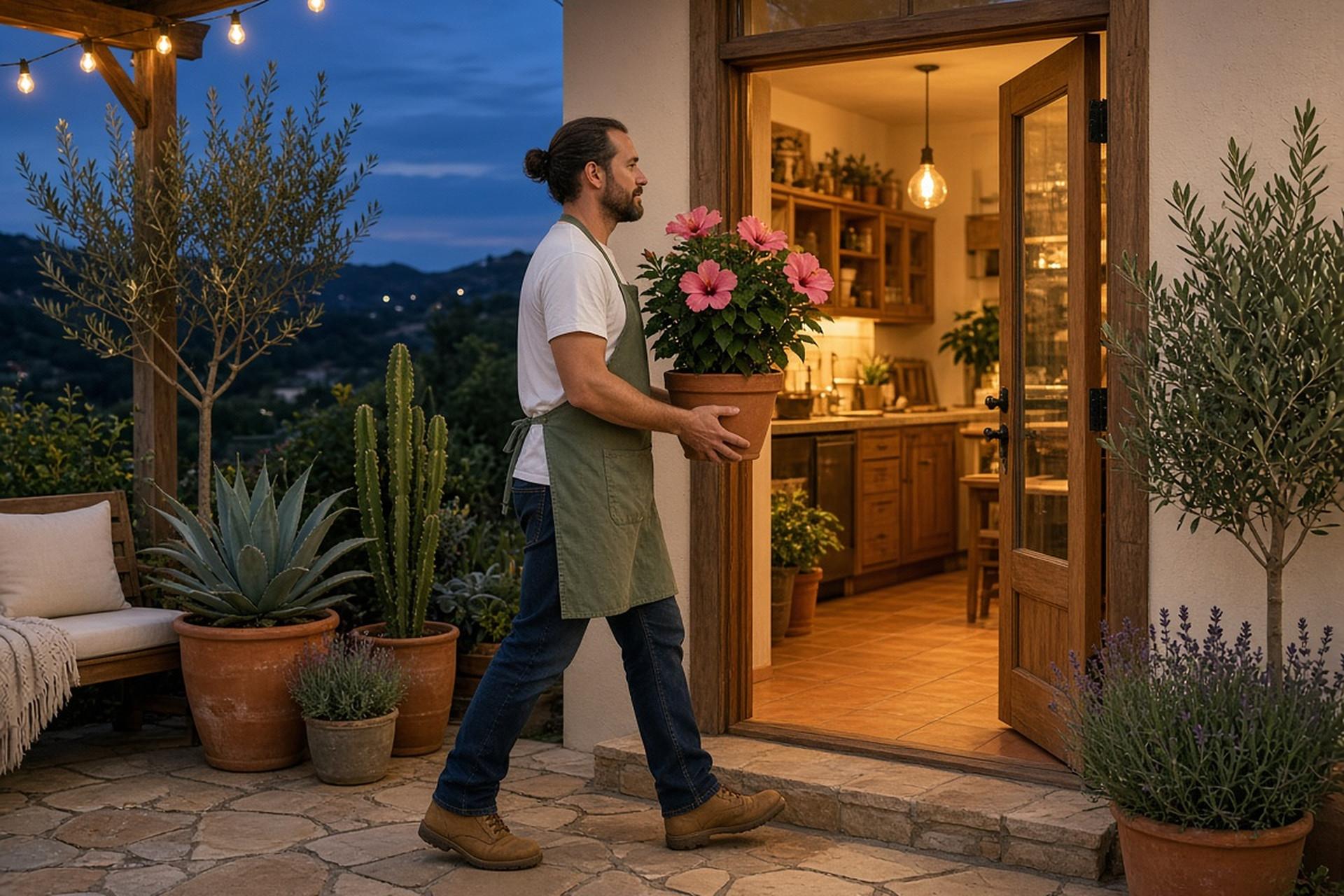

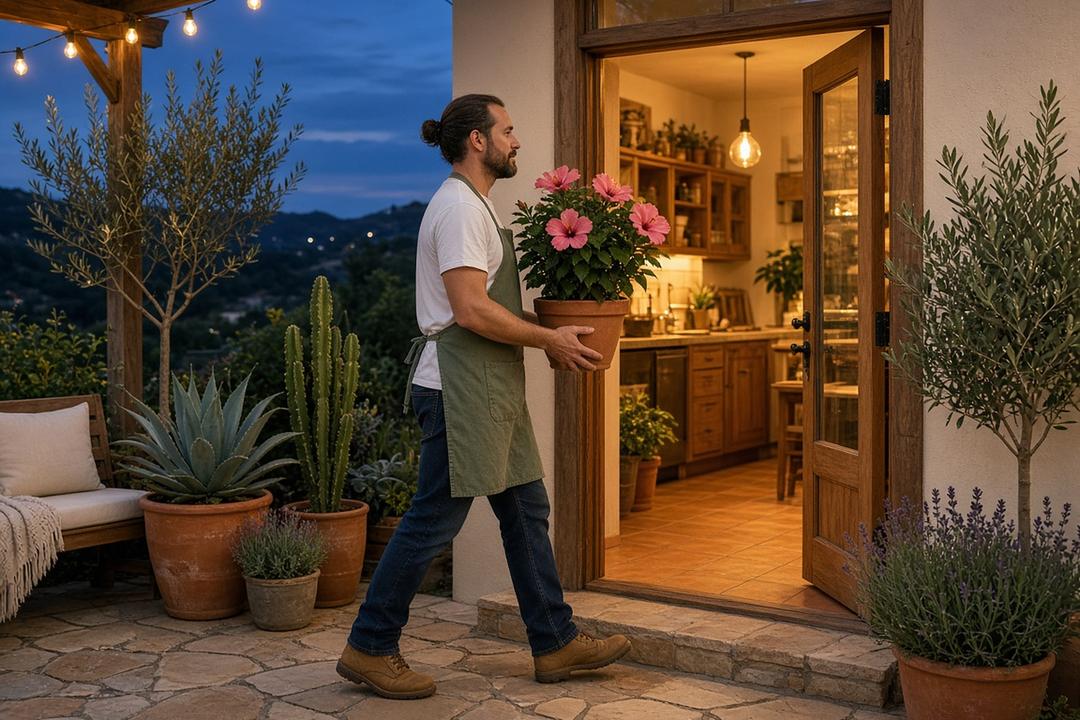
Bring tropical potted plants inside when overnight lows start dipping toward 50°F — not when the first frost is forecast. Penn State Extension warns that most houseplants come from tropical, subtropical, or arid regions and can be damaged when temperatures fall below 50°F — and Sacramento's forecast low tonight, November 11, is 44°F. If your pots are still outside, the deadline isn't coming. It arrived this week.
Sophie: But there's no frost warning. It's still in the 70s during the day.
Sprouty: Frost is the wrong finish line. A tropical starts taking damage below 50 degrees — weeks before anything freezes. Watch the overnight low, not the daytime high.
The 50-degree line is the real deadline
Penn State Extension puts it plainly: the majority of plants kept as houseplants come from tropical, subtropical, or arid regions, and they "can easily be damaged when temperatures fall below 50°F." It would be unwise, Penn State says, to wait until temperatures dip that low before starting the move — and temperatures around 40 to 50°F can already damage them. Cold-sensitive tropicals may need to come in even sooner, before nights get anywhere near the danger zone.
The trigger is the overnight low, not the calendar and not the daytime high. A 72°F afternoon means nothing if the night drops to 44°F — and that is exactly this week's forecast for Sacramento: a low of 44°F tonight, a high of 72°F on Thursday, then 49°F on Friday night, 41°F on Monday night, and 39°F the following Friday, according to the ten-day forecast. Inland valleys and foothill towns run colder than the coast. Gardens near the coast run warmer — check your own forecast, not your neighbor's.
Frost is a second, later deadline
There are two different lines, and confusing them is the mistake. The UC Master Gardeners of Contra Costa County explain that frost can start to occur when the temperature gets below 36°F, and is sure to happen at 32°F. Below 32°F it becomes a freeze, and below 28°F it is a hard freeze. So the 50°F line is the tropical-damage line, and the 32°F line is the frost line — and the first arrives weeks before the second. Waiting for the frost warning means standing by while tropicals take weeks of chilling injury that never shows up as ice.
Our guide to California's first frost dates puts the gap in numbers: Sacramento's early first frost, from the UC Agriculture and Natural Resources table, is December 4 — nearly a month after the 50°F nights arrive. The frost date is still worth knowing for everything else in the garden. It is just the wrong deadline for a potted tropical.
Which plants move first
The UC Master Gardeners of Butte County list the plants at risk from winter cold as citrus, succulents, tender perennials, and tropical and subtropical plants. Move those first: potted citrus, tender succulents, and any houseplant that spent the summer outdoors on the patio — all of them sit in the categories UC lists as at risk. If it came from a warm climate and lives in a pot, it goes on the early list.
What can wait are the hardy container plants — kale, collards, parsley, and the other cool-season vegetables our frost guide lists among the hardiest survivors of 25–28°F. But "hardy" does not mean "safe in a pot": a plant in a container is colder than the same plant in the ground, because its roots have no earth insulating them. That is why even the pots that stay outside deserve the shelter treatment below, and why the tender ones belong indoors before the coldest nights, not after.
The four-step move
Do it in this order, and start early: step 3, easing the light down, needs one to two weeks of lead time — not a panic move at 9 p.m. when the forecast has already turned.
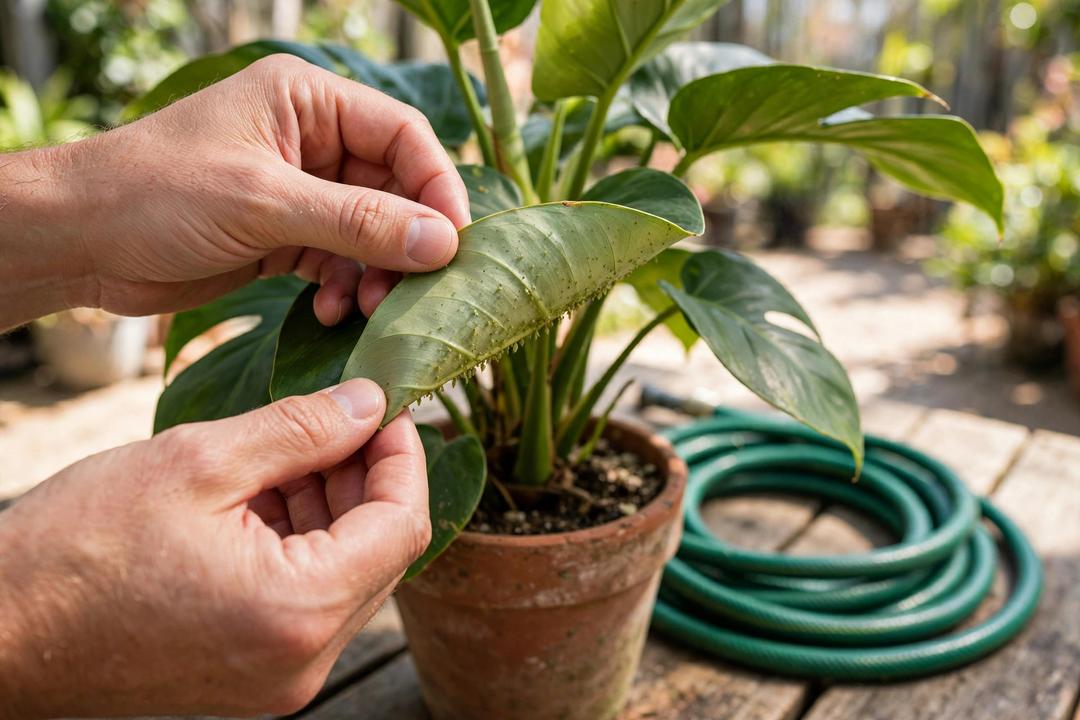
- Inspect every leaf. The University of Minnesota Extension advises thoroughly examining all plant parts and containers before bringing plants indoors for the winter: tops and undersides of leaves for insects, webbing, holes, and eggs, plus stems, pot rims, and drainage holes. Look for aphids, mealybugs, spider mites, whiteflies, and scale. A ten-power hand lens helps — some pests are very small.
- Rinse it down. Wipe leaves with a damp cloth, or give the plant a good rinsing from the garden hose — Penn State notes a hose rinse can remove many pests from leaves and stems, and soaking the pot to the rim in lukewarm water for at least 15 minutes can flush out insects hiding in the soil. The University of Minnesota gives similar advice: wipe leaves with a damp paper towel, spray small plants in a sink, spray large plants in a shower. Let the plant drain and dry completely before it comes inside.
- Ease the light down. Penn State recommends gradually reducing the light a plant receives about one to two weeks before bringing it indoors — move it to a shadier spot first — so it adjusts to lower indoor light instead of suffering a sudden drop.
- Quarantine it. Keep the new arrival away from your established indoor plants. Penn State recommends isolating plants for three to four weeks; the University of Minnesota gives one to two weeks as the minimum. Either way, do not set a plant straight into the collection the day it comes in — the isolation period lets pests or other problems that may not be readily apparent show themselves before they spread to your other plants.
Life indoors after the move
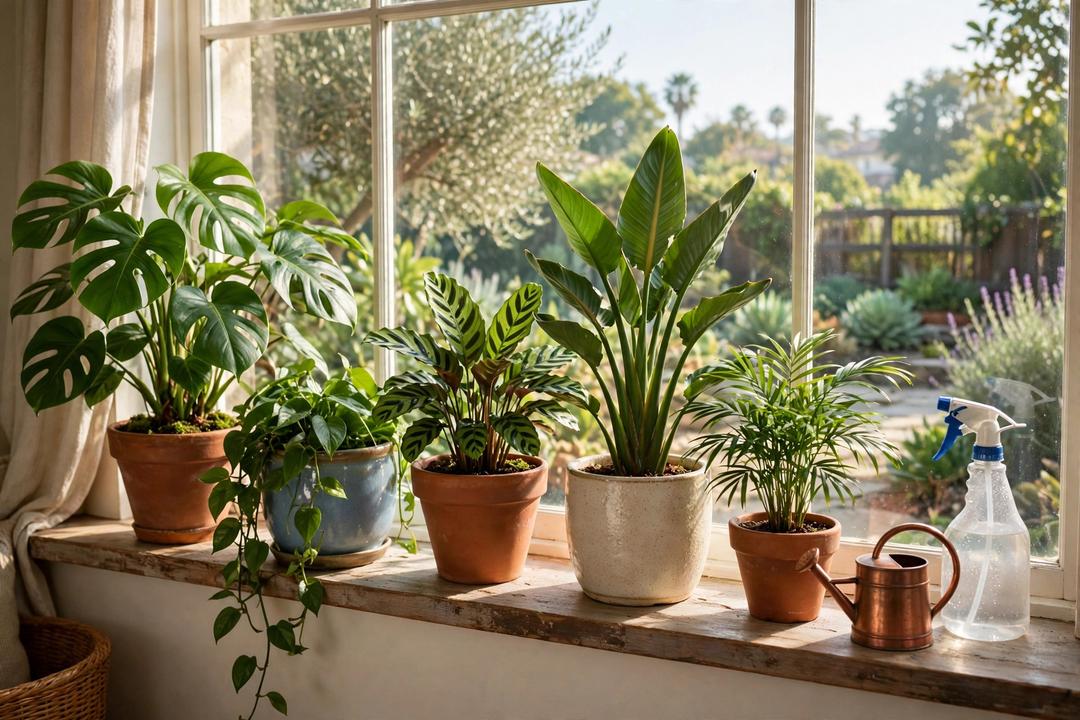
Place the plant near the brightest window you have — UC ANR advises putting plants brought indoors near a window that gets sunlight, and Penn State notes that plants needing a lot of light do well near a sunny, south- or west-facing window. Then water less: Penn State explains that houseplants slow their growth indoors due to reduced light, so they need less water — adjust based on soil moisture rather than following the summer schedule. Expect some yellowing or leaf drop after the move; Penn State calls that a normal response to the change in light and growing conditions, and says plants can take one to two months to adjust, with new growth once they adapt. Group plants together and keep them away from drafts and heat sources while they settle in — that also helps with humidity.
The pots that stay outside
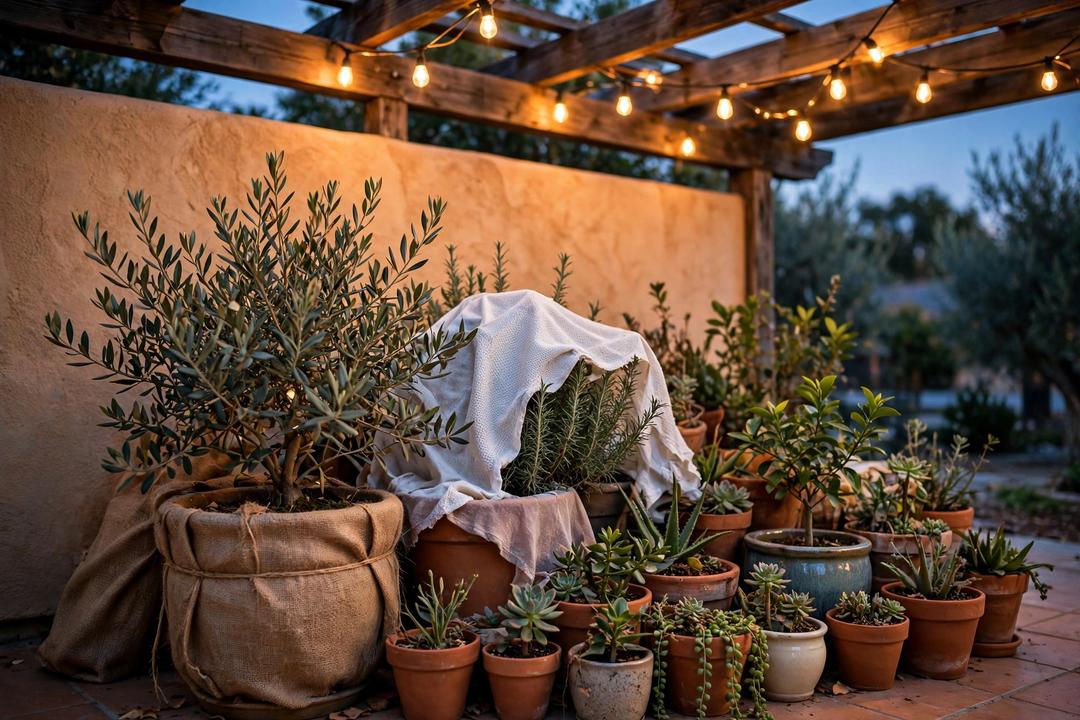
Not everything comes in — and the pots that stay out still need a plan. UC Master Gardeners of Contra Costa County recommend moving the most sensitive small plants inside or into wind-sheltered wall nooks, because a heated interior gives off a touch of warmth through the home's exterior walls. Cluster the remaining pots together against the house wall, under a patio cover or the eaves — the UC Master Gardeners of Butte County give the same advice: move potted plants to warmer spots next to the house or under a patio cover, and cover them just before sunset to capture the day's heat.
Insulate the big pots you cannot move: wrap them with burlap, bubble wrap, or frost blankets. Ceramic and clay pots can crack in freezing temperatures, so they are the ones to wrap first, and heavy pots are worth putting on rolling platforms now, while you can still move them. Water the soil in the afternoon before a cold night — moist soil retains heat better than dry soil — but keep succulents dry when a freeze is expected. And cover with frost cloth or an old sheet before sunset, draped all the way to the ground to trap the soil's heat, and removed in the morning so the soil can absorb heat during the day.
Quick answers
When should I bring potted plants inside in California?
When overnight lows start approaching 50°F — for tropical potted plants. In Sacramento that is already this week — the forecast low tonight is 44°F. Do not wait for the first frost warning; frost is a later, colder line.
What temperature damages tropical houseplants?
Below 50°F. Penn State Extension says most houseplants can be damaged below 50°F, and temperatures around 40 to 50°F can already damage them.
Can I just cover my pots instead of bringing them in?
For hardy plants, a cloth cover before sunset helps them through a light frost. For true tropicals, don't rely on a cover — below 28°F is a hard freeze, and tropicals belong indoors.
Should I check for bugs before bringing plants inside?
Yes. Inspect the tops and undersides of leaves, stems, and pot rims for aphids, mealybugs, spider mites, whiteflies, and scale, wipe the leaves or rinse the plant down, and isolate it from your other houseplants for one to two weeks at minimum — three to four weeks if you follow Penn State's recommendation.
Do succulents need to come inside?
Tender succulents, yes — they are on the UC list of plants at risk from cold. And keep succulents dry when a freeze is expected: wet soil plus freezing temperatures is worse for them than dry soil.
Will my plant drop leaves after moving inside?
Probably some. Penn State Extension says some yellowing or leaf drop may occur once plants are indoors, but it is a normal response to the change in light and growing conditions — plants can take one to two months to adjust, with new growth once they adapt.