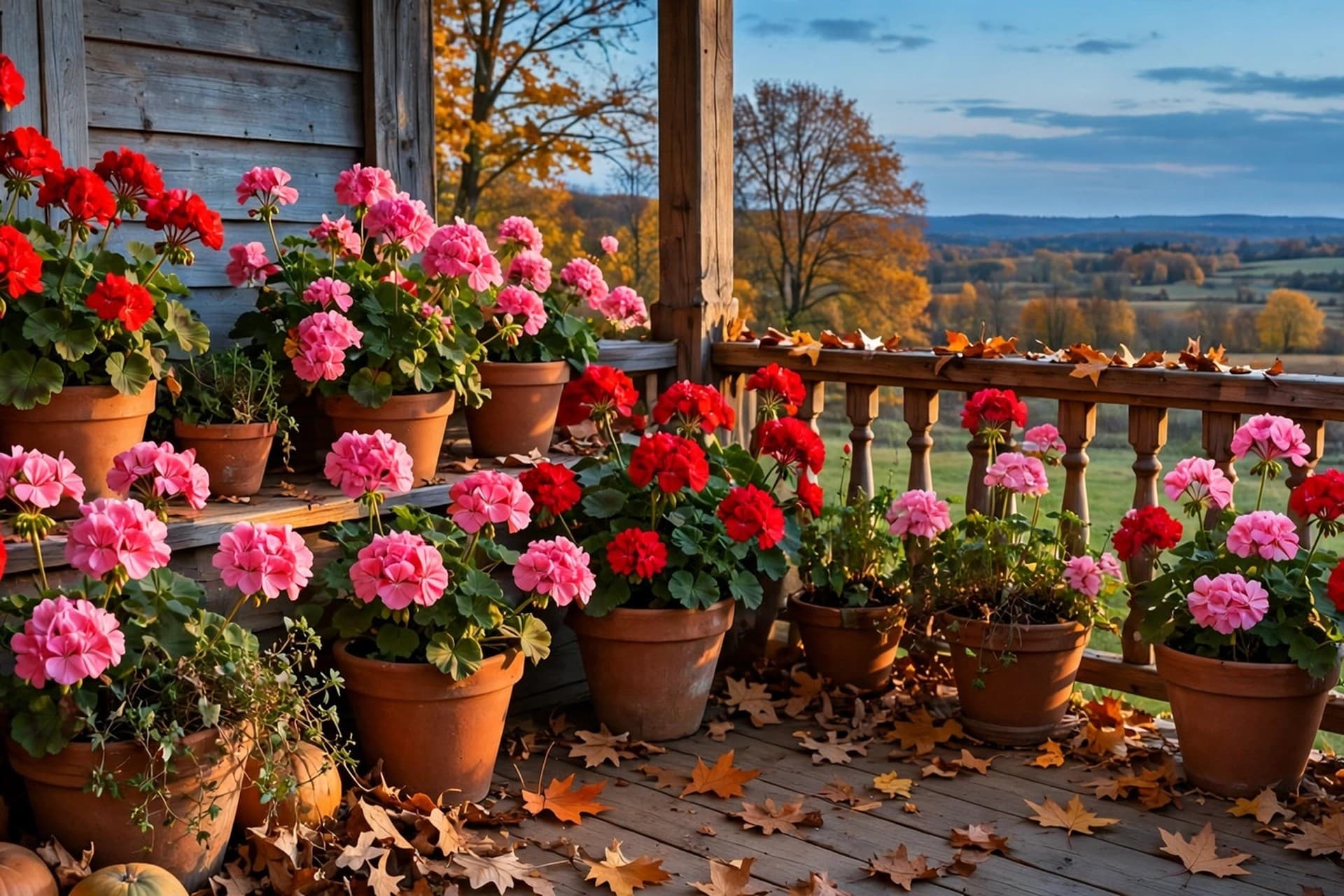

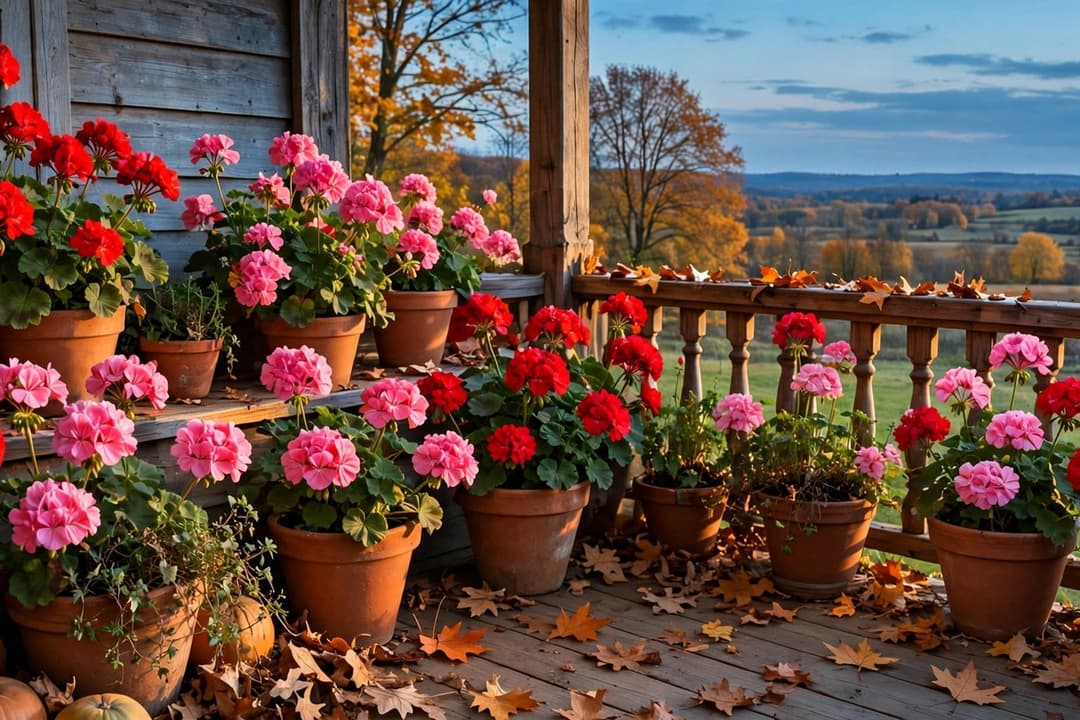
Yes — you can overwinter a bedding geranium, and the move has to happen before the first frost, not after it. The plant in your pot is almost certainly a tender Pelargonium, not a hardy true geranium: Illinois Extension states plainly that geraniums must be dug or moved indoors before the first frost, and that annual geraniums (Pelargonium) can be successfully overwintered indoors to be enjoyed again next year. That is the whole answer in one line: bring it in before frost, pick one of three methods below, and keep it alive until the frost threat has passed in spring. No method guarantees survival or a bloom date — but all three are extension-backed.
Sophie: "So my geranium is not really a geranium?"
Sprouty: "It is a Pelargonium wearing a geranium's name. Hardy cranesbills planted in the ground in suitable climates stay outside all winter. Yours cannot reliably survive frost, which is exactly why we are bringing it in."
First, Check Which Plant You Have — and Whether It Is Worth Saving
Both groups sit in the Geraniaceae family, but they are different genera with different winters. The UC Cooperative Extension El Dorado County Master Gardener guide explains that the most common garden geraniums are pelargoniums, while true geraniums are called geraniums or cranesbills, and it advises moving plants indoors before the first frost in cold-winter climates or taking cuttings. The most reliable test is the plant's tag: if it was sold as an annual for a pot or window box, treat it as a Pelargonium. Rounded, slightly fuzzy leaves and puffy flower clusters are a supporting hint, not a diagnosis on their own. If it is a hardy cranesbill planted in the ground, leave it alone — this article is not for it.
Before any plant crosses your threshold, inspect it the way Illinois Extension directs: look for spots or discoloration on leaves and stems, wilting, shriveling, rot, or insects, and discard any plant showing them. A diseased or infested plant is difficult to overwinter and risks spreading the problem to your houseplants. Check leaf undersides and the soil surface, too — that is where hitchhikers hide.
Method 1: Keep It as a Houseplant (Easiest)
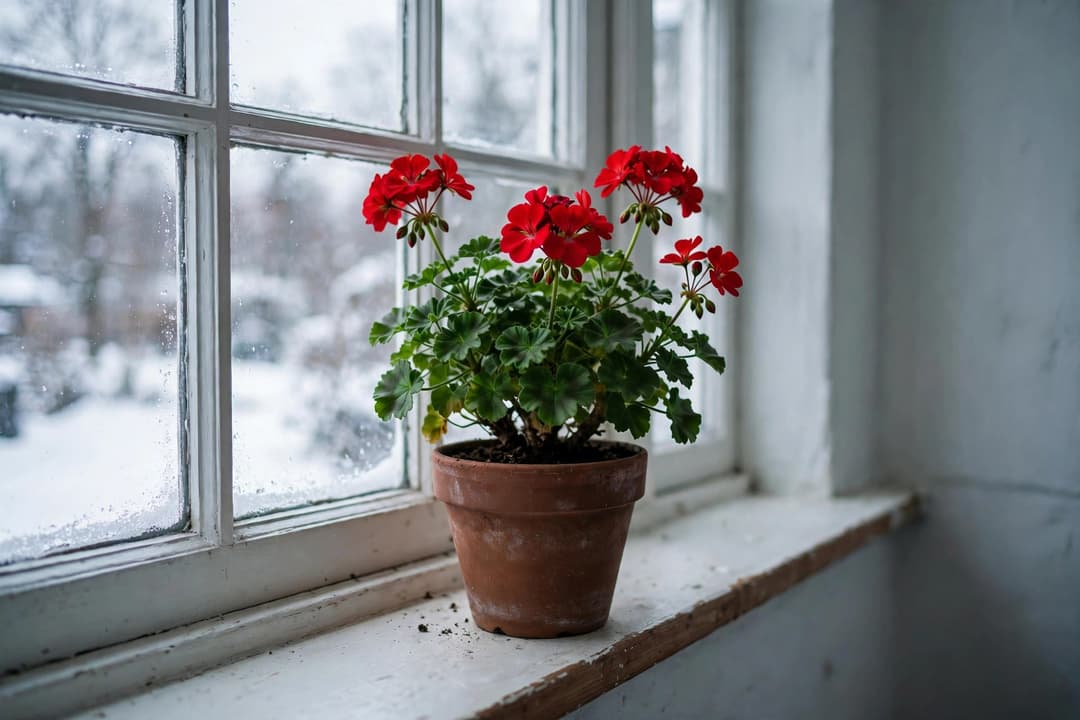
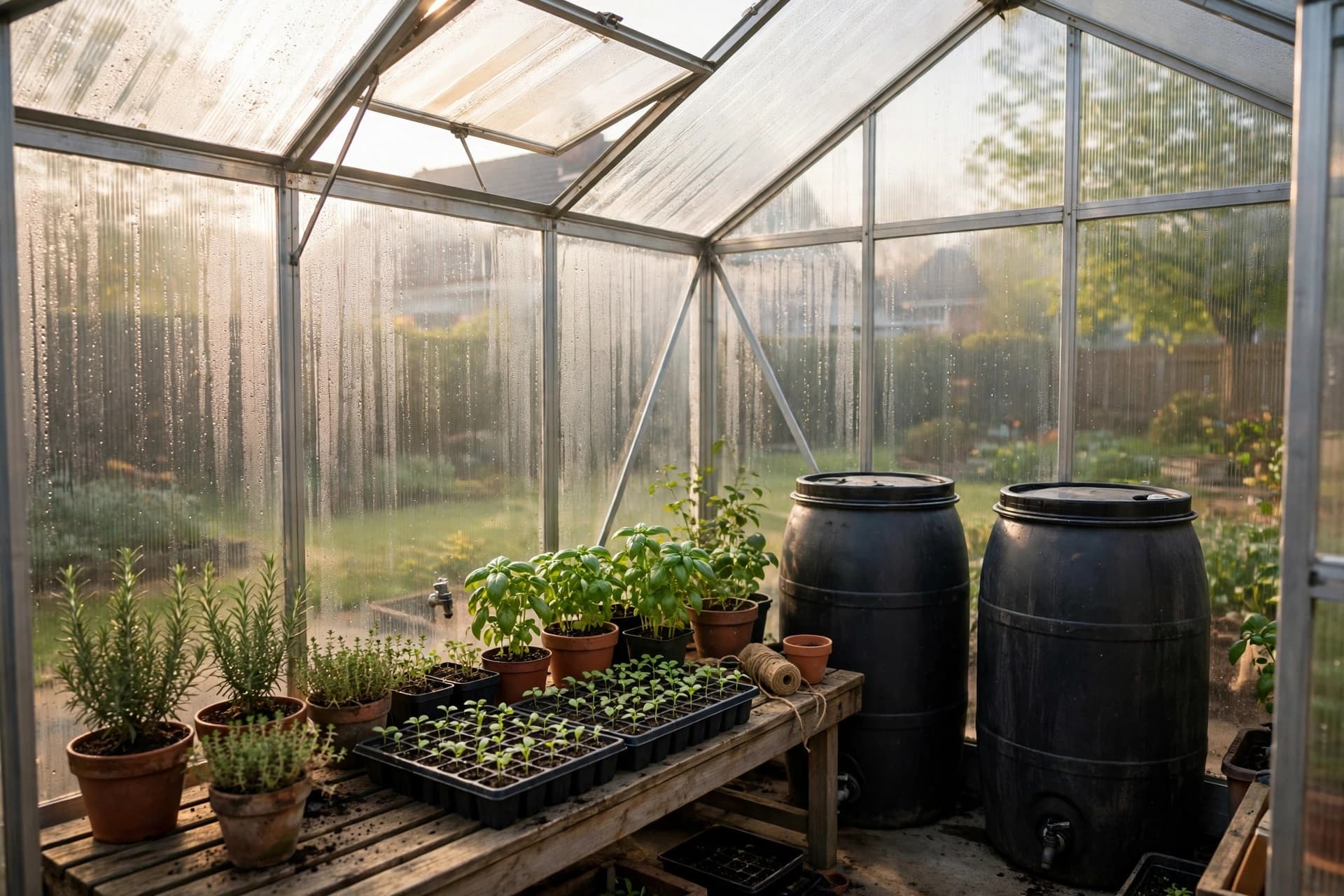
This is the most straightforward method, and the easiest if your plant is already in a pot: just carry the pot in. For a plant in the ground, dig it carefully, set it in an appropriately sized pot with drainage holes, prune it back by one-third to one-half, and water it thoroughly, per Illinois Extension. Place it in a bright, sunny window or under supplemental lighting. University of Wisconsin Extension puts the ideal at 60 to 65 degrees Fahrenheit, away from heat vents or a fireplace, and warns that warm conditions with too little light make plants lanky. Water when the soil feels dry to the touch, and pinch stems back just above a leaf node whenever growth gets leggy — that pinch is what keeps the plant stocky rather than straggly. If leaves yellow or drop after the move, do not read that alone as proof the plant is dying — check that the stems stay firm and green, and give it time; soft, rotting stems are the real warning sign.
Method 2: Take Cuttings (Best When Space Is Tight)
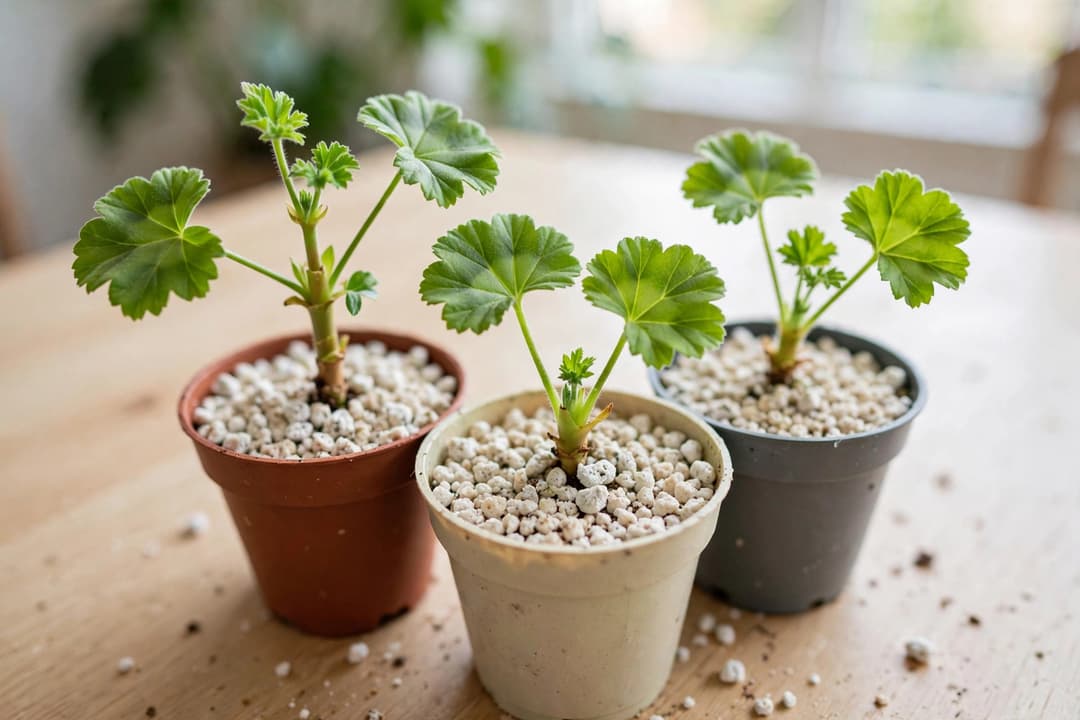
If you cannot fit full pots by a window, take cuttings instead. Illinois Extension directs taking 3- to 4-inch cuttings from the ends of branches, removing the lower leaves, dipping the cut end in rooting hormone, and sticking them in a pot with drainage holes filled with perlite, vermiculite, or a sand-peat moss mixture, kept moist. A clear plastic bag over the pot can help retain moisture, but watch for mold. Keep cuttings in bright light but out of direct sun, which can burn them, per University of Wisconsin Extension. That guide adds the timing honestly: cuttings should be well rooted after about 6 weeks (Illinois gives 4 to 8 weeks), after which each goes into its own 3- to 4-inch pot of potting soil in a bright spot. Take cuttings while the parent is still actively growing, before frost — a frost-damaged stem is a poor cutting.
Method 3: Store It Bare-Root in a Paper Bag (The Old Trick)
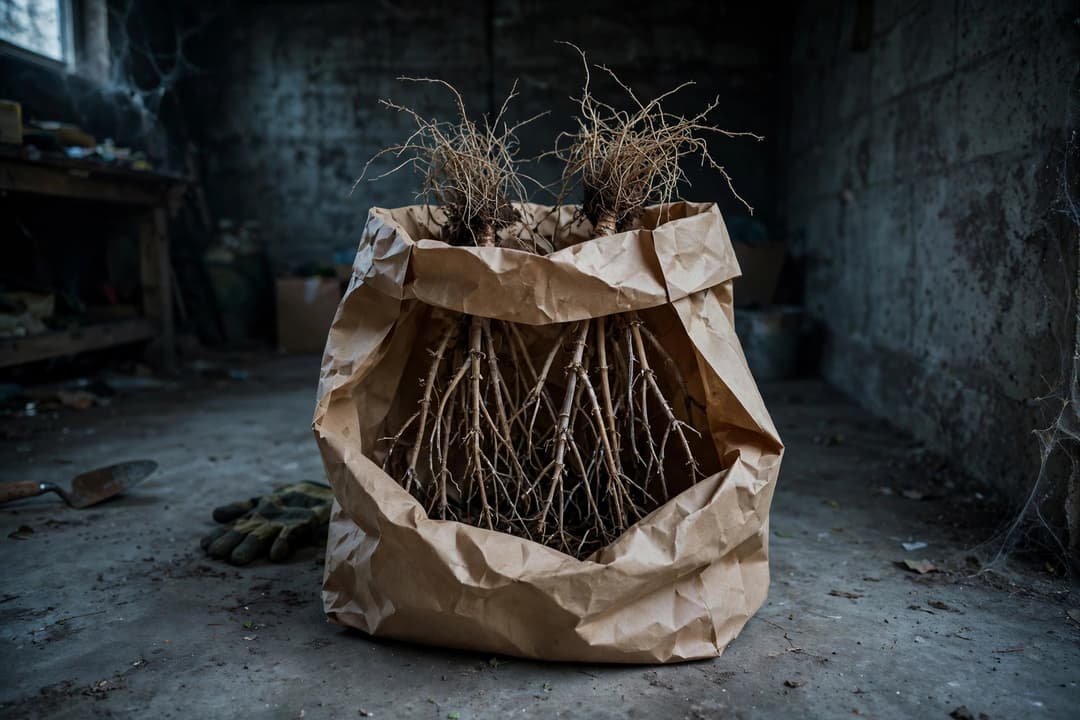
This is the method that surprises people: a leafless stem in a bag can come back. Dig the plant before a hard freeze, shake the soil from the roots, and put it in a large paper bag in a cool, dry location at 45 to 50 degrees Fahrenheit — or hang it upside down — according to Illinois Extension. The sources do not agree on one exact temperature, so aim for the overlap: 45 to 55 degrees Fahrenheit, the range University of Wisconsin Extension gives. The warmer 50 to 60 degrees in the Tuolumne box method below is that method's own variant, not a second target for the same bag. Likewise, open bag and closed box are different setups, not interchangeable steps: if you use a bag, keep it open for air circulation; if you use Tuolumne's box, close the top as that guide directs. University of Wisconsin Extension gives the same range as 45 to 55 degrees, notes the bag should stay open for air circulation, and warns not to be surprised when the leaves dry up and fall off — that is expected. UC Cooperative Extension Tuolumne County Master Gardeners add the California version: store stems upside down in a box at 50 to 60 degrees, check for mold every few weeks and cut any moldy parts away, discard shriveled stems, and soak stems that look dry in water for a few minutes, patting them dry afterward. For the restart, Illinois and Wisconsin put the cut-back in March; in California, follow Tuolumne instead and pot up six to eight weeks before your own last frost, cutting back to firm, green tissue. Whichever setup you use, the storage space itself must stay inside the temperature range above — a garage that freezes or warms into the 60s is not a storage room. Wisconsin also offers a periodic-soak option during storage: soak the roots in water for a few hours several times through winter to keep them from drying out completely, then hang the plant back up or return it to its bag. Wisconsin's advice is blunt and worth repeating: experiment with several plants and take cuttings just in case the originals do not survive.
California, Honestly
California does not have one geranium winter. UC Cooperative Extension Tuolumne County notes that in many parts of California geraniums are treated as perennials, but in the frosty Mother Lode they quickly succumb to winter temperatures and are grown as annuals. That split is the whole story for inland foothill gardeners around El Dorado Hills and Folsom: a frost-free coastal patio is not your garden, and a foothill frost is. Let your own forecast decide — move plants in before your first frost, not on a date from another climate. If your winters stay frost-free, your pelargonium may simply keep growing outside; if frost visits, the three methods above are your options, in that order of ease.
Bringing It Back in Spring
Keep every overwintered geranium indoors until the threat of frost has passed, as University of Wisconsin Extension directs. For bare-root plants, that means potting up six to eight weeks before your last frost and growing on indoors; for houseplants and rooted cuttings, it means moving outside gradually — a few hours at first, building up — before the plant lives outdoors again. Do not rush this step: one late frost undoes a winter of care. Tuolumne County Master Gardeners set the expectation plainly: new growth in about 14 days after potting up, ready for summer in four to six weeks, and at least six hours of full sun or the plant will not bloom as well. That guide also advises five- or six-inch terra cotta pots, planting deep enough that two leaf nodes sit below the soil line, watering only when the soil is dry about an inch down, and feeding every few weeks — its feeding recipe is a 10-10-10 time-release fertilizer at potting, plus half-strength 10-10-10 liquid at each summer watering. Once outside, keep pinching new growth to keep the plant bushy.
Frequently Asked Questions
Can I just leave my geranium outside and cover it?
Not if frost reaches it. Tender Pelargonium cannot reliably survive frost, especially a hard frost; a cover may buy a night, but it is not an overwintering plan. Move it in or take cuttings before frost.
Why is my indoor geranium dropping leaves?
Leaf drop after a move indoors does not by itself prove the plant is dead — check that the stems stay firm and green and give it time to recover. Soft, rotting stems are a different problem — that plant should go.
Which method should I pick?
Houseplant if you have a bright window; cuttings if space is tight or as insurance alongside another method; bare-root if you have a cool, dry garage or basement and no window space. Trying two methods on the same plant is not indecision — it is the backup plan extension writers themselves suggest.
Will it bloom as well next year?
Maybe, not guaranteed. An overwintered plant gives you a head start over a new purchase, but no method promises a bloom date. Judge success by a healthy plant in spring, not by a calendar.