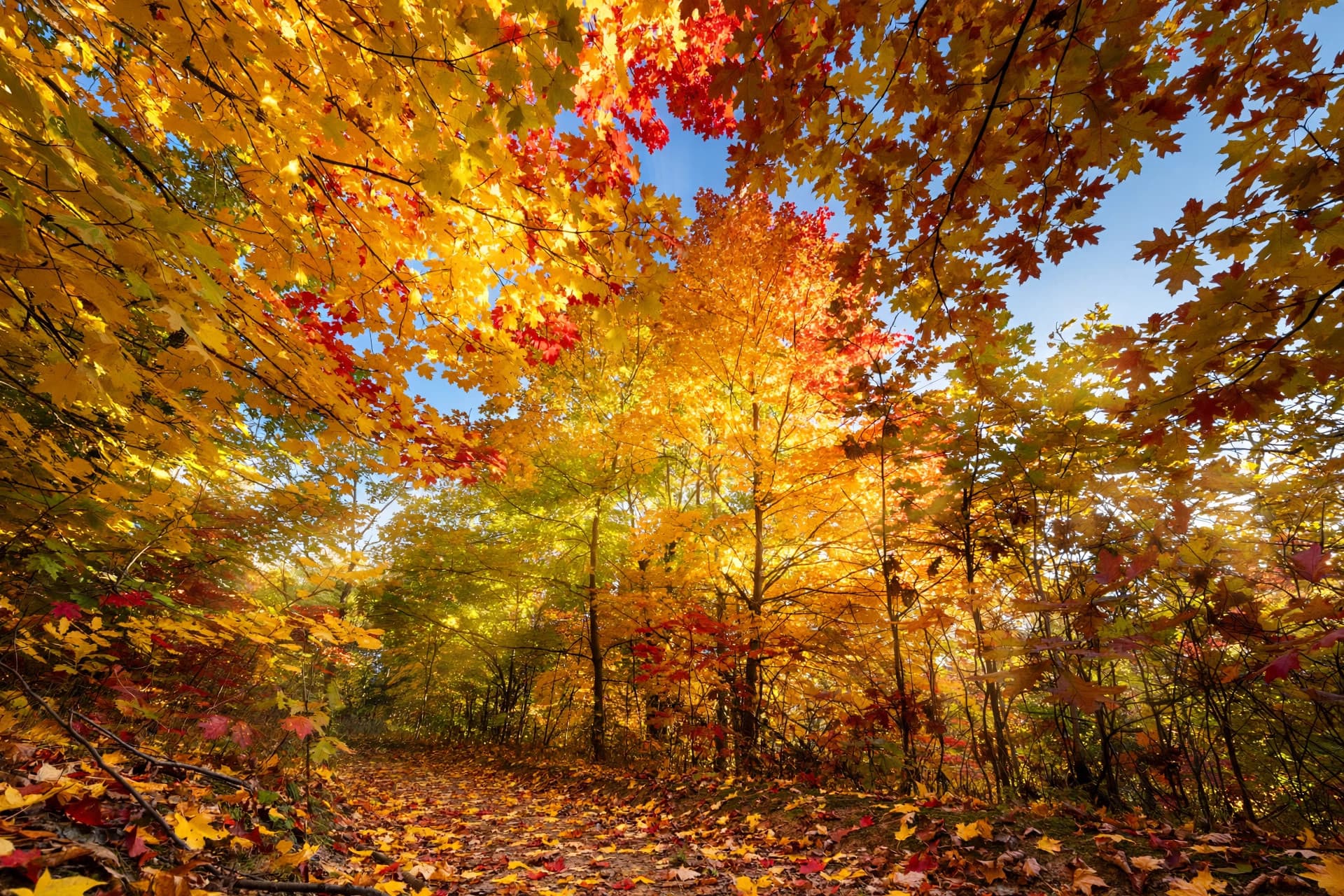

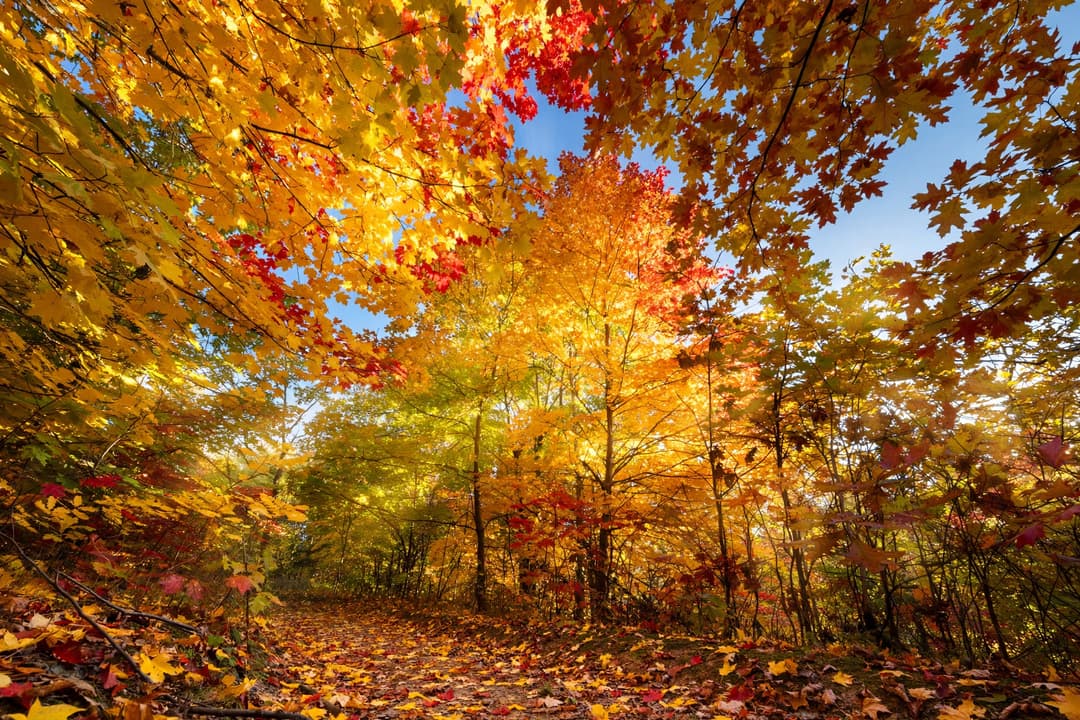
Leaves change color in fall because the tree stops replacing chlorophyll. As days shorten, chlorophyll — the green pigment that powers photosynthesis — breaks down faster than the tree makes it, and the green fades. What shows through next depends on the leaf: yellow and orange carotenoids that were present all summer but hidden by the green, and, in many species, red and purple anthocyanins the leaf makes fresh during autumn itself. Then a sealing layer, the abscission layer, closes off the leaf stem, and the leaf drops. That sequence — green lost, hidden colors revealed, new reds made, leaf released — is the whole show, according to the University of Wisconsin Extension and the University of Missouri IPM program.
Sophie: "So Jack Frost does not paint the leaves red?"
Sprouty: "No — a hard freeze is the show's enemy, not its artist. Frost turns leaves brown and ends the color early. The reds come from sunny days and cool nights, not from a freeze."
Yellow and Orange Were There All Along
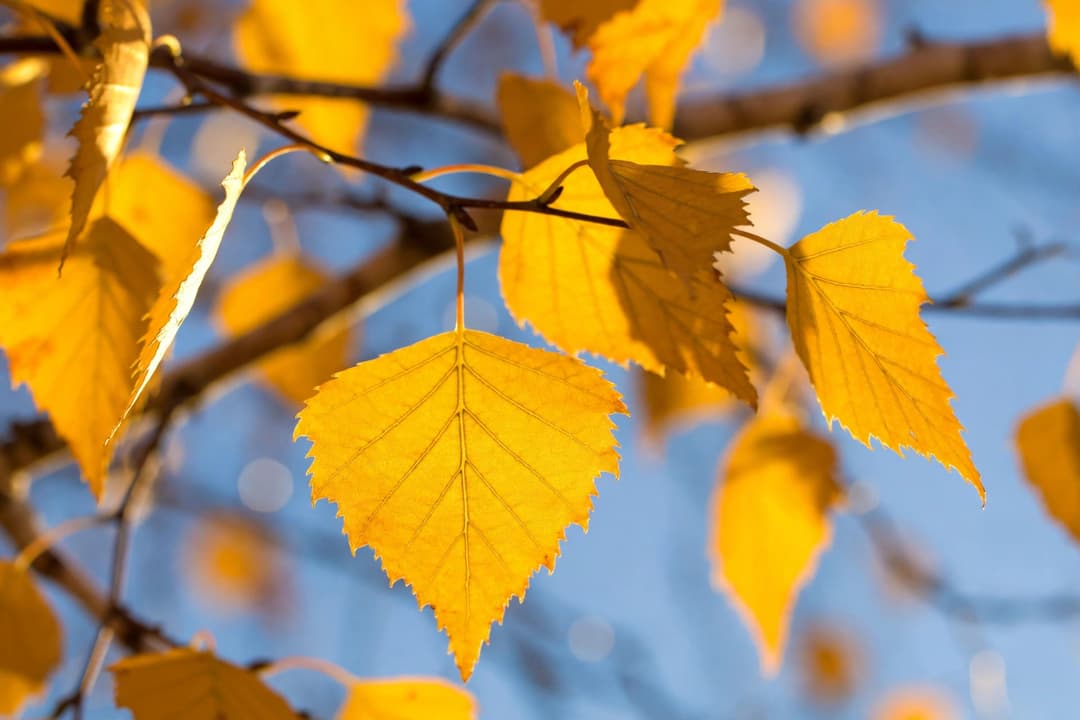
Yellow fall color is a reveal, not a creation. Carotenoids — the pigments behind yellows and oranges — are present in leaves throughout the growing season, where they help protect the leaf's photosynthetic machinery. While chlorophyll dominates, they are invisible to us. As chlorophyll levels fall in autumn, the carotenoids are unmasked, and the leaf turns gold. That is why birch, aspen, poplar, and hickory reliably turn yellow: their leaves carry carotenoids and make little or no red to cover them, as the University of Wisconsin Extension explains.
Red and Purple Are Made Fresh in Fall
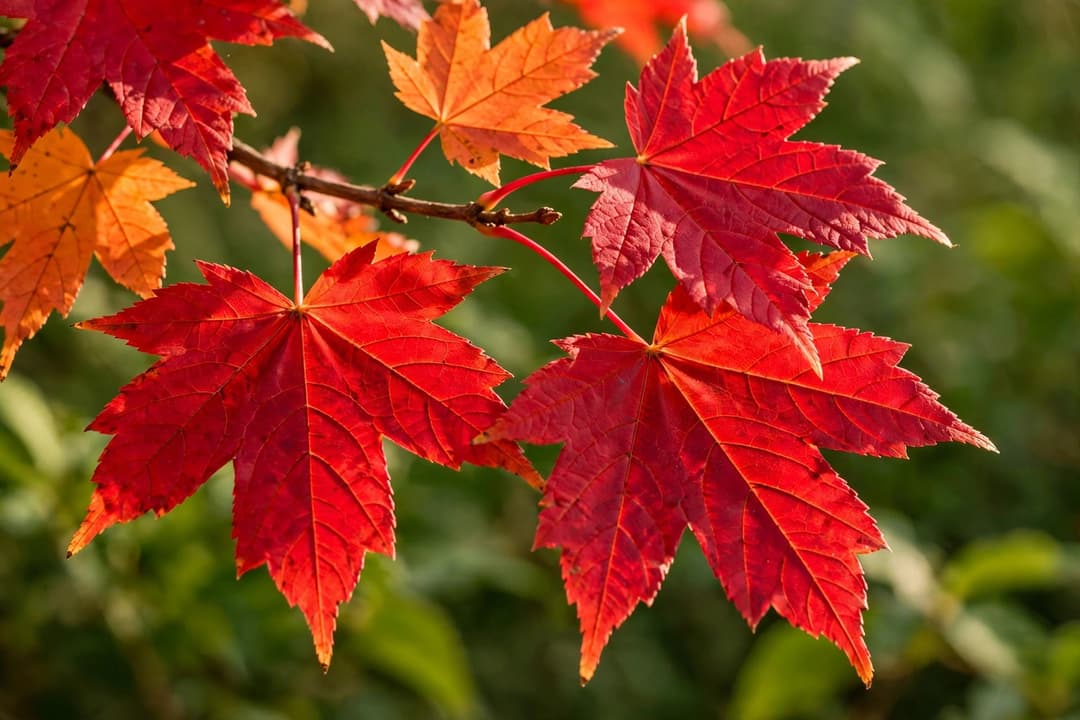
Reds work the opposite way. Anthocyanins, the pigments behind red, purple, and crimson foliage, are mostly produced in autumn, while the leaf is being dismantled. As the abscission layer forms between leaf and twig, it traps sugars inside the leaf; those sugars, in bright light, are converted into anthocyanins. Red leaves carry roughly the same carotenoids as yellow leaves — the red simply masks the yellow underneath. That is also why weather decides how red a year gets: sunny autumn days make more sugar and more anthocyanin, cool nights slow sugar's escape from the leaf, and cloudy or warm stretches produce duller, more yellow-brown displays, per the University of Missouri IPM program and the University of Wisconsin Extension. Classic red-turning trees include red maple, sumac, dogwood, and sweetgum.
Brown Is What Is Left Behind
When the last pigments break down, brown tannins that were in the leaf all along are what remains. Oaks are the familiar example: their leaves tend to go russet and brown rather than scarlet, because tannins dominate once the brighter pigments are gone. Brown is not a failed color show — it is the final stage of the same dismantling process.
Why Leaves Fall at All
Color and leaf drop are one process. The abscission layer that traps sugars for red pigment also slowly seals the leaf off from the twig. Once it is complete and the connecting tissues are sealed, the leaf is ready to drop. Shedding leaves is how deciduous trees get through winter: without broad, thin leaves, the tree loses far less water at exactly the time when cold or frozen soil makes water hard to replace. The tree is not dying — it is packing up for the season, having already reclaimed much of what the leaf was made of.
Why Some Years Blaze and Others Fizzle
Four conditions make a brilliant year, and missing two or three of them mutes it:
- Warm, sunny autumn days — more light means more sugar, which means more anthocyanin and deeper reds.
- Cool nights that stop short of a hard freeze — cool air traps sugars in the leaf; a hard freeze ruptures cells, turns leaves brown, and ends the show.
- Adequate late-summer moisture — leaves that dried out early drop before they ever color.
- No windstorm at peak — mature autumn leaves are loosely attached, and one storm can strip a tree bare overnight.
Timing also varies by species and is under genetic control: some trees color weeks before their neighbors at the same latitude, which is why one hillside can look patchwork even on a perfect weekend.
California, Honestly
California's fall color is real but patchy, and that is worth saying plainly. So much of the state's landscape is evergreen, and many California gardens are built around plants that never turn at all. The show here is local rather than landscape-wide: a single street tree in full color while its neighbors stay green is normal, not a sign something is wrong. Judge your own garden by its own trees, not by New England photographs.
What to Do With the Fallen Leaves
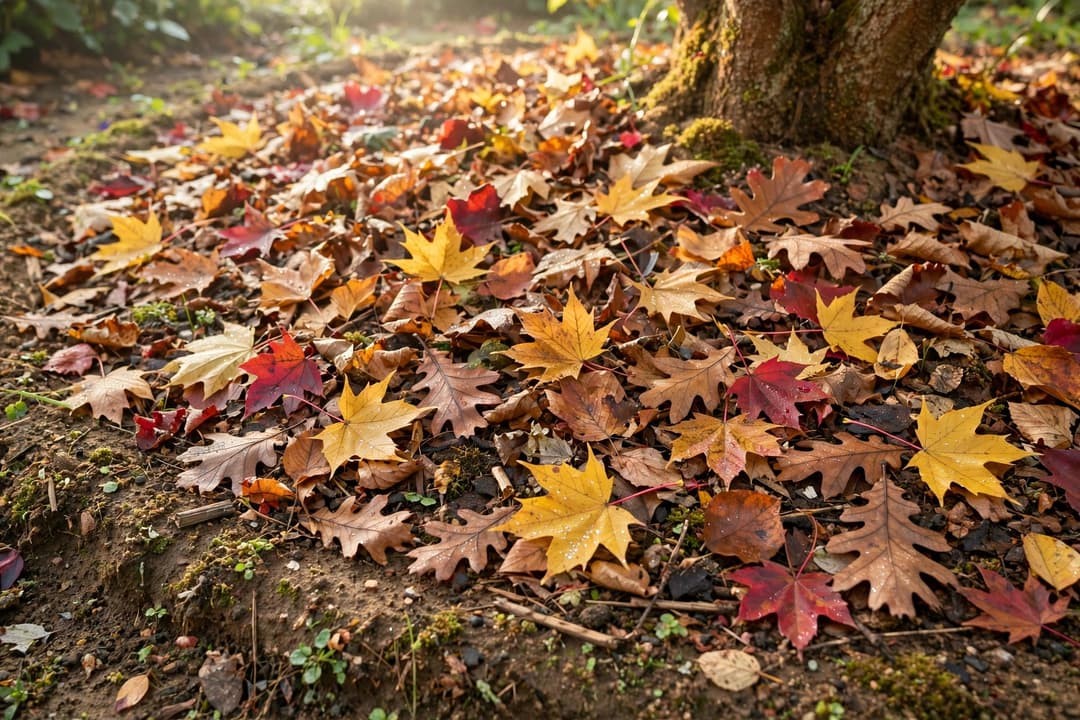
Do not send every leaf to the curb. Healthy fallen leaves are free winter mulch: spread them over beds, where they insulate soil, feed soil life as they break down, and shelter overwintering insects. The exception is diseased leaves — leaves spotted with disease should go in the trash or municipal green waste, not back onto beds or into a cool compost pile, so the problem does not return next year. If your own garden's leaves are healthy, leaving them in place is the lowest-effort, highest-return move of the fall garden.
Frequently Asked Questions
Does frost cause fall color?
No. A light chill can help the process along, but a hard freeze destroys color: it ruptures leaf cells and turns leaves brown. The best reds come from sunny days and cool, non-freezing nights.
Why does one side of a tree turn red first?
Sunlight drives anthocyanin production, so the sunniest side of a tree — and the sunniest leaves — typically color first and most vividly, while shaded leaves may stay yellow or green longer.
Do evergreens change color?
Not in this way. Evergreens keep their needles through winter and replace them gradually, a few at a time, rather than shedding a whole canopy in one autumn event.
Can I predict a good color year?
Only loosely. A moist late summer followed by sunny days and cool, frost-free nights is the recipe for a strong year — but one early hard freeze or windstorm can still cut it short, so watch the forecast, not just the calendar.