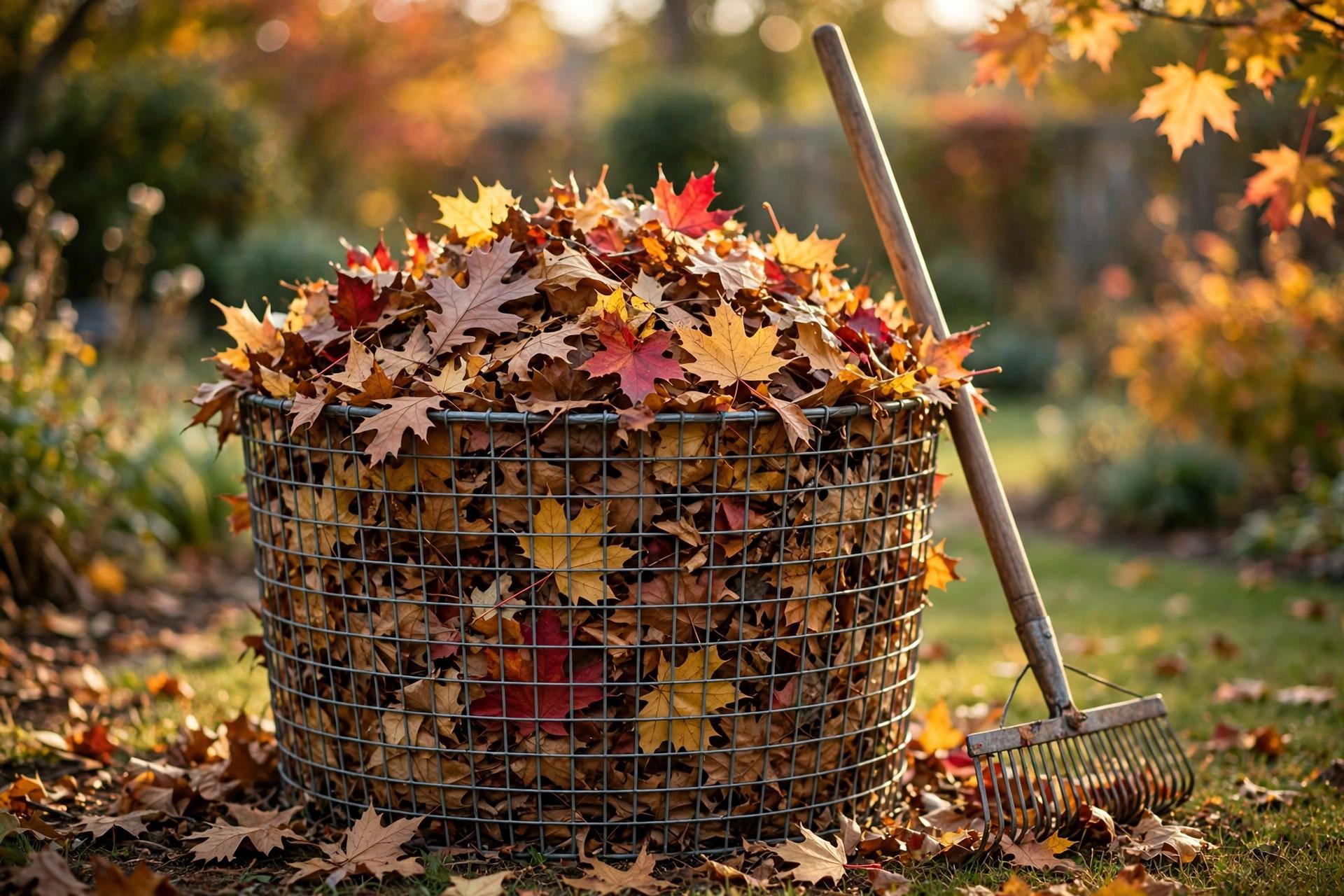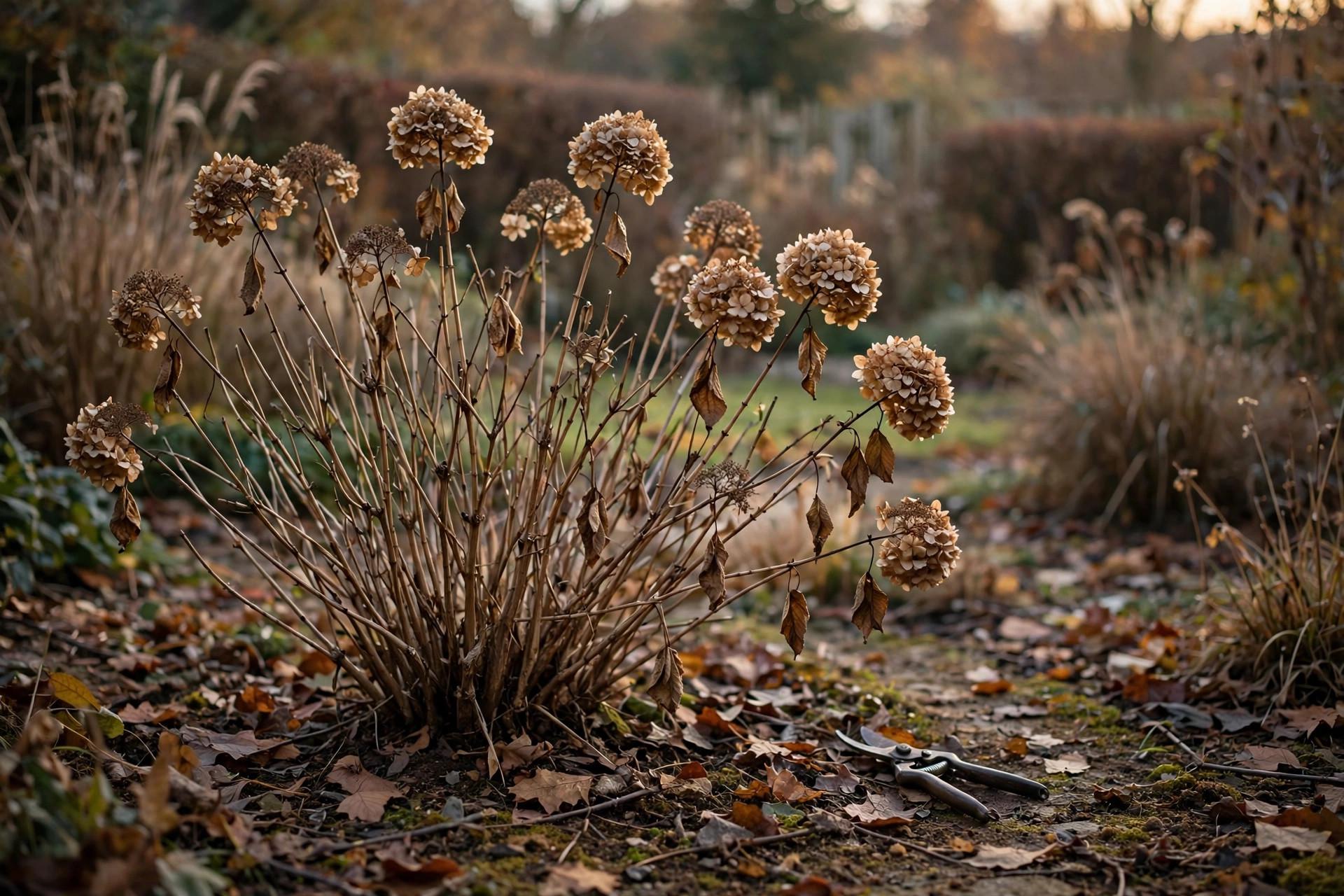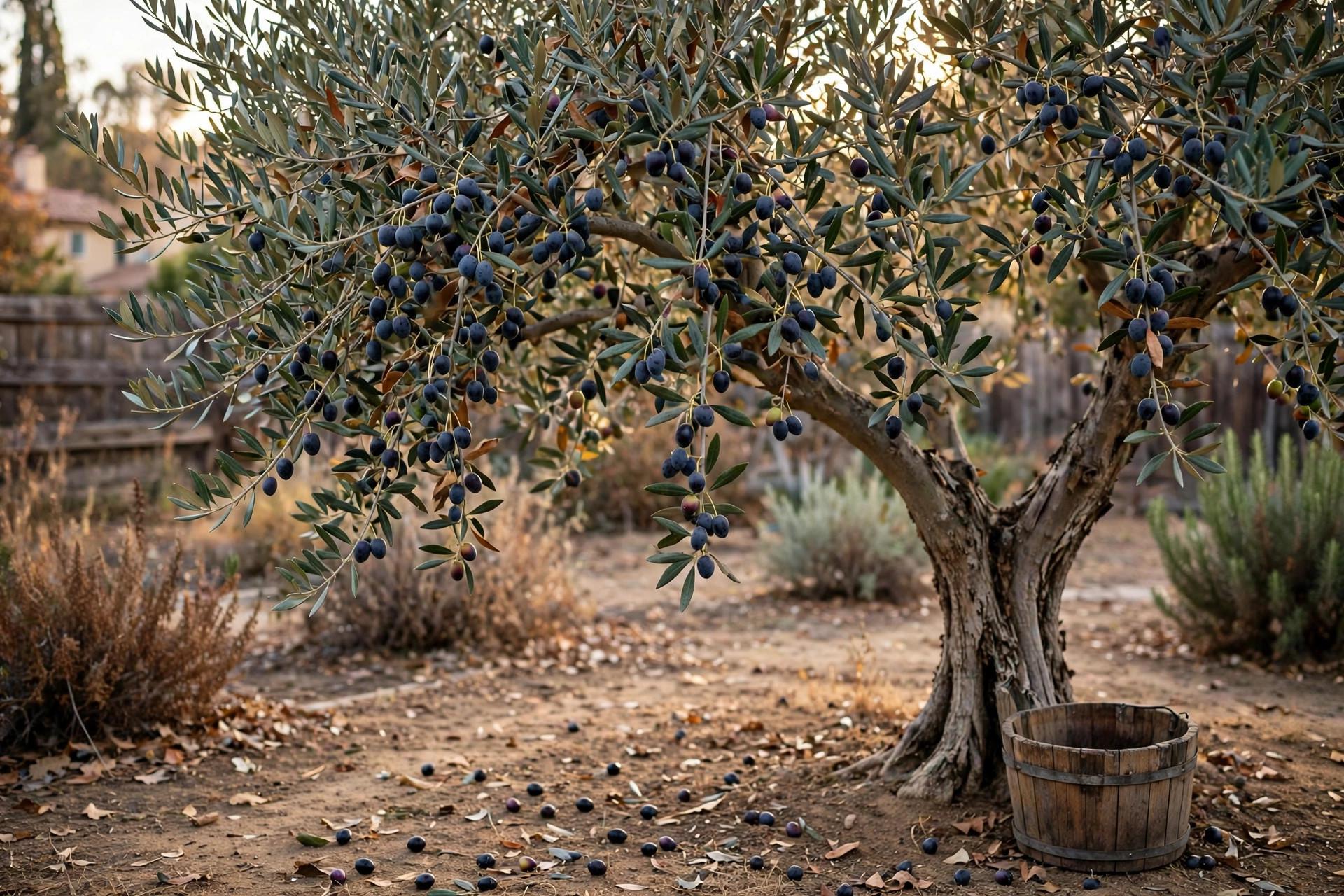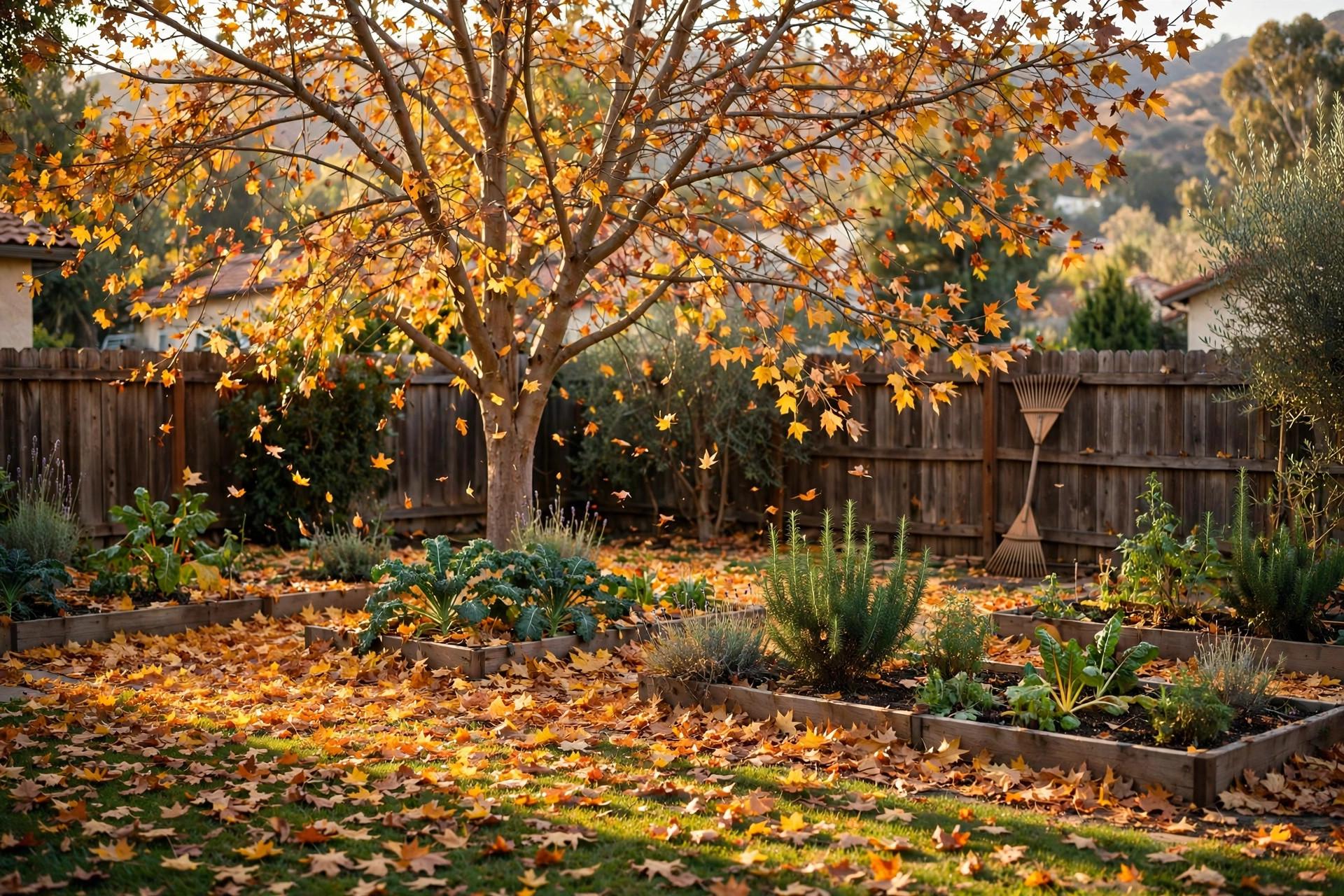

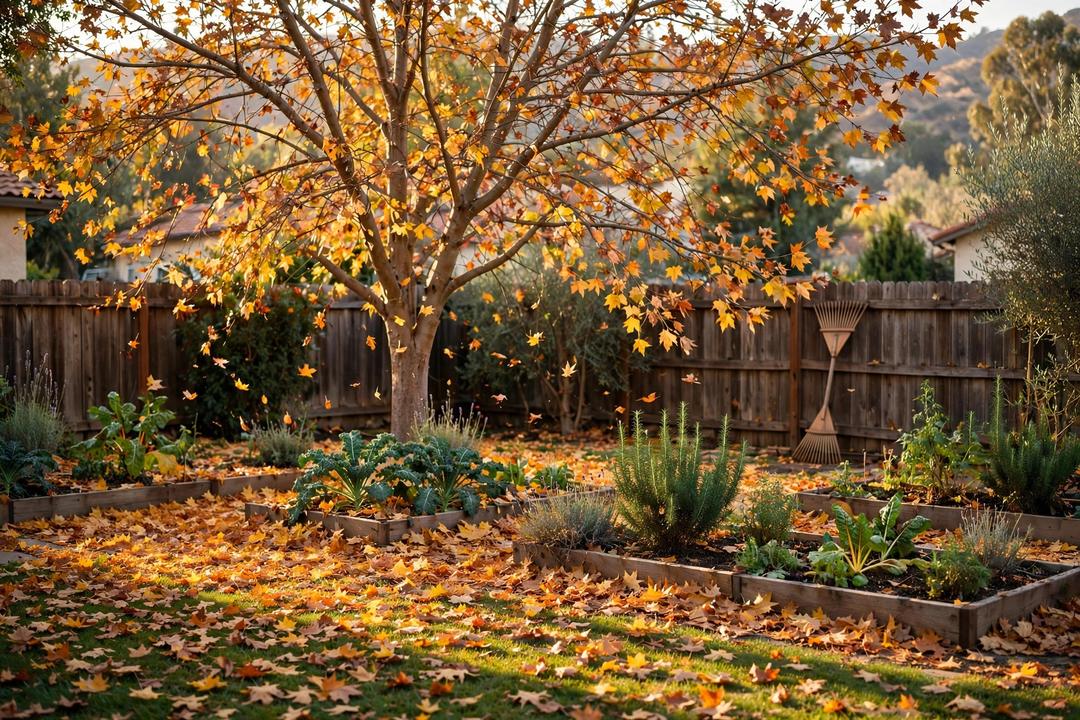
Yes — the best thing to do with fallen leaves in November is to sort them by where they landed, not bag them all for the curb. Leaves on garden beds become mulch, leaves on the lawn get shredded with the mower and left in place, leaves within five feet of the house get cleared for fire safety, and the extras go into a bag to become leaf mold. UC Marin Master Gardeners lay out the same three choices — leave them, compost them, or spread them on the lawn — and the difference between a chore and a gift is simply putting each leaf in the right one. The timing is now: UC Stanislaus notes that by mid-November, neighborhoods and gardens in its Central Valley county are littered with fallen leaves, and the jobs below are do-this-week work, not a project for someday. The UC guidance cited in this article comes from California Master Gardener programs — Marin, Contra Costa, Stanislaus, Sonoma, Yolo, Santa Clara, Placer, and Ventura — so the timing fits those regions best.
Sophie: The yard is buried. Do I really have to bag all of this?
Sprouty: Nope — bagging is the last resort, not the first step. A good share of that pile belongs right back on the beds, and the rest just needs to be in the right place. Let me show you the sort.
Sophie: Okay — rake in hand. Show me where everything goes.
The quick sort: where each leaf goes
Before you touch a bag, walk the yard once and sort by location. Every leaf falls into one of four buckets, and each bucket has a different destination:
- Leaves on garden beds → leave them or mulch with them. They are already where they do the most good.
- Leaves on the lawn → shred-mow them. A light covering run over with the mower becomes lawn food in place.
- Leaves near the house, in gutters, or on drains → clear them. This is the safety bucket, and it is the only one with a deadline.
- Everything left over → compost or leaf mold. The extras are next year's soil, not trash.
That sort is the whole job. The sections below are just the how for each bucket — and the mistakes that turn a good idea into a problem.
Mulch your beds with them
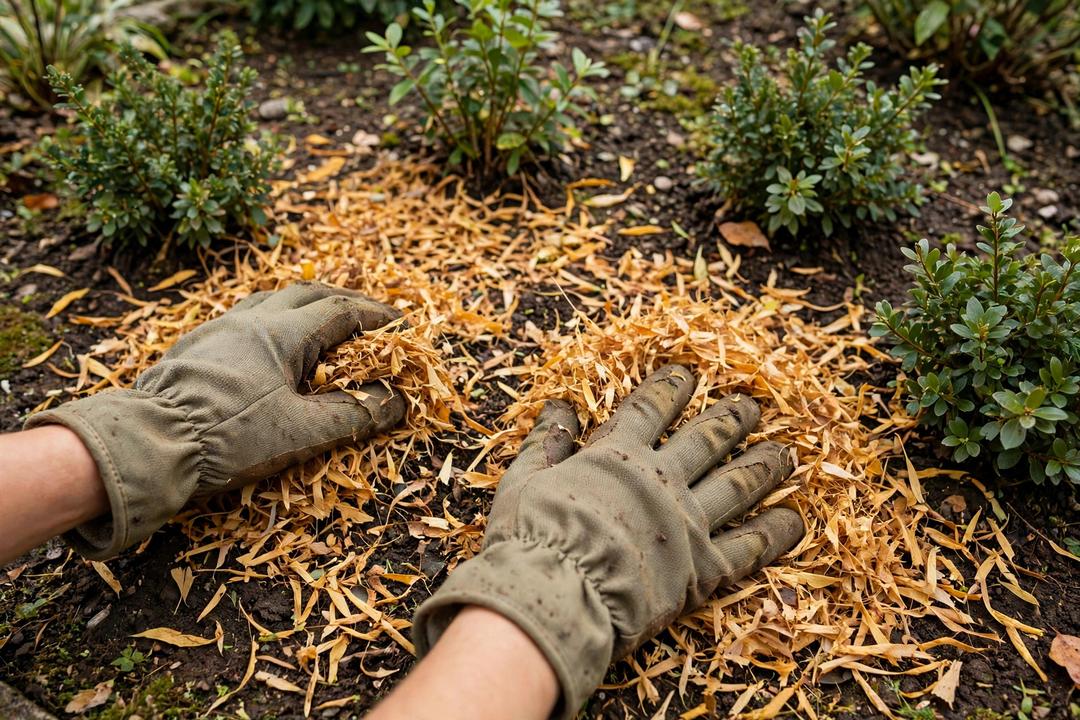
This is the highest-value use of the pile, and the one UC Contra Costa Master Gardeners recommend first: rake the leaves off the lawn and hardscape and spread them in the beds, where they suppress weeds, protect soil from erosion, retain moisture, and return nutrients to the garden. UC Stanislaus puts it plainly — fallen leaves have the same weed-suppression and moisture-retention properties as shredded wood mulch, and they are free. Water trickling through the leaf layer carries carbon, phosphorus, nitrogen, and other nutrients back into the soil, and the layer doubles as insulating winter cover for roots, seeds, and bulbs.
Four rules keep leaf mulch working instead of smothering:
- Keep it thin — 2 to 3 inches. UC Contra Costa's rule is a thin 2- to 3-inch layer: thicker layers of whole leaves block water and air from reaching the ground and can smother low-growing plants. If weed suppression is your main goal, UC Yolo Master Gardeners put the floor at three inches — so aim for the top of the range in weedy beds and the bottom where plants are low and tender.
- Shred first, especially the tough ones. Light leaves — Japanese maple, Chinese pistache, liquidambar, red maple, poplar, willow, and cherry — break down quickly even whole. Thick leaves — bay, magnolia, sycamore, and oak — take much longer and benefit from shredding, with a mower, a leaf shredder, or even a string-trimmer in a metal can, according to UC Contra Costa. UC Marin agrees: hard, waxy leaves like magnolia and live oak break down slowly and benefit from shredding or weed-whacking.
- Keep mulch off stems and trunks. UC Contra Costa and UC Yolo both say the same thing: mulch piled against a stem or trunk traps moisture and invites disease and rot. Leave a gap around every plant.
- Watch for matting, and keep diseased leaves out. Whole leaves can form a mat that blocks air and water — UC Yolo advises checking the layer occasionally for matting; UC Contra Costa's fix is to rake some out and add them back later in the season as the layers break down. And leaves with problems such as fireblight and anthracnose, or insects such as whiteflies and thrips, should not be used as mulch at all, per UC Contra Costa — they go in the yard-waste bin, not the beds. UC Santa Clara says the same: diseased leaves should be put out with yard-waste recycling to avoid spreading disease in your garden. One more exception: keep leaves known for phytotoxicity out of the beds — black walnut leaves are the classic case, and UC Contra Costa says to remove those.
One more reason to leave a share of the leaves where they fall: UC Stanislaus warns that raking up leaves and putting them in the trash can remove some of next year's garden butterflies and moths, many of which are pollinators that overwinter in the litter. If you want the full case for leaving leaves alone, our companion piece makes it — Why You Must Stop Removing Dead Leaves to Save Your Garden Soil — and this guide is the practical half of that argument: what to do with the leaves you do move.
Clear the places leaves must not stay
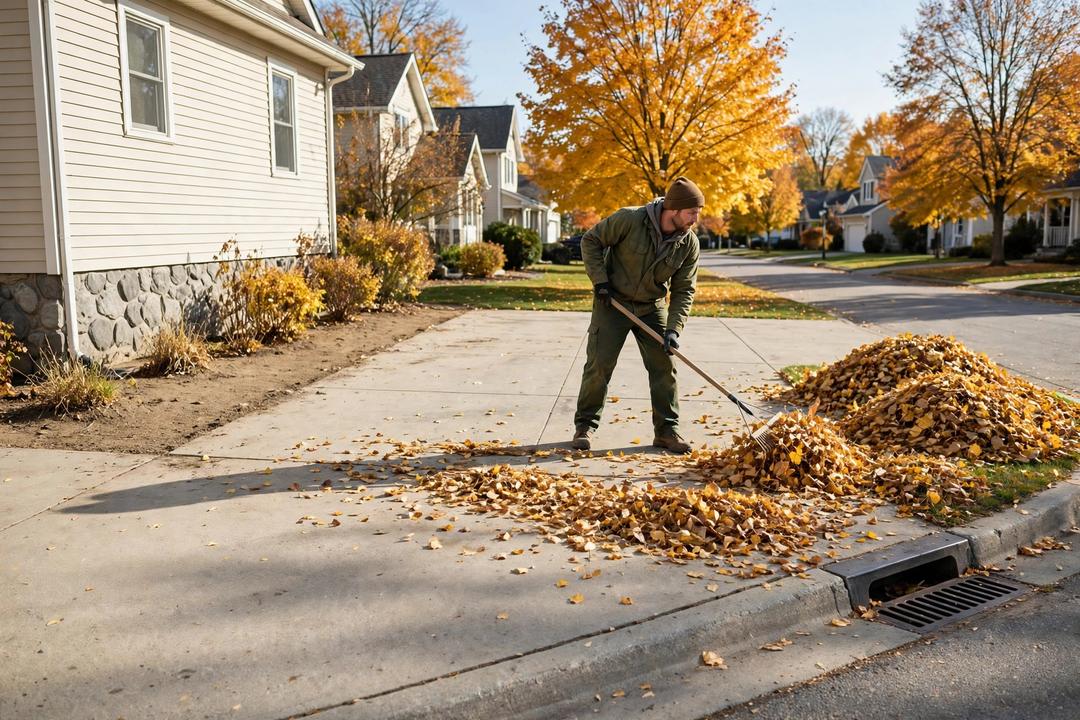
Not every leaf gets to stay. Three places need clearing before the winter rains, and the reasons are fire, water, and the lawn itself.
Around the house — the five-foot zone. Dried leaf litter is fuel, and embers are the main way homes ignite: Fire Safe Marin reports that 60 to 90 percent of homes destroyed in wildfires ignite because of hot embers blowing ahead of the fire, and leaf litter is most dangerous within five feet of any structure. UC Marin's fire-smart rule is to remove fallen leaves and other debris within five feet of your home and other structures or decks. UC Sonoma Master Gardeners, in their November 2025 garden advice, put it as a depth rule: leaf litter should be removed completely from zero to five feet of the foundation, and should not be allowed to accumulate more than two to four inches deep within five to thirty feet of the home. Fire Safe Marin's version is to rake and dispose of leaf litter within thirty feet of structures in green-waste cans, keeping anything beyond thirty feet to a thin layer of three inches or less. UC Marin's fire-smart landscaping guide frames the same ground as zones: Zone 0, zero to five feet, holds no combustibles at all; Zone 1, five to thirty feet, stays lean and clean.
Gutters and drains. UC Ventura County's October 2026 Master Gardener checklist lists it as a fall job in plain terms: check your drains and gullies for blockage, and clear your rain gutters. Leaves packed into a gutter overflow onto the fascia and the foundation; leaves matted over a storm drain turn the street into a shallow lake at the first real rain. Sweep them off the drain grate and out of the gutter now, and put them in the green-waste cart or on the beds — never blown into the street, where they wash straight back to the drain. The City of Paso Robles' leaf-cleanup guidance says the same: don't blow or rake leaves into the street, gutter, or storm drain, and mow over leaves to make mulch instead.
Thick layers on the lawn. A light dusting of leaves on grass is fine — see the shred-mow note below — but a thick blanket smothers it. UC Sonoma's warning is blunt: too many leaves can kill grass. UC Marin's rule is that a light covering can be shredded with the mower and left in place, but if the layer gets too thick, rake it up for the compost pile.
Bag the extras for leaf mold
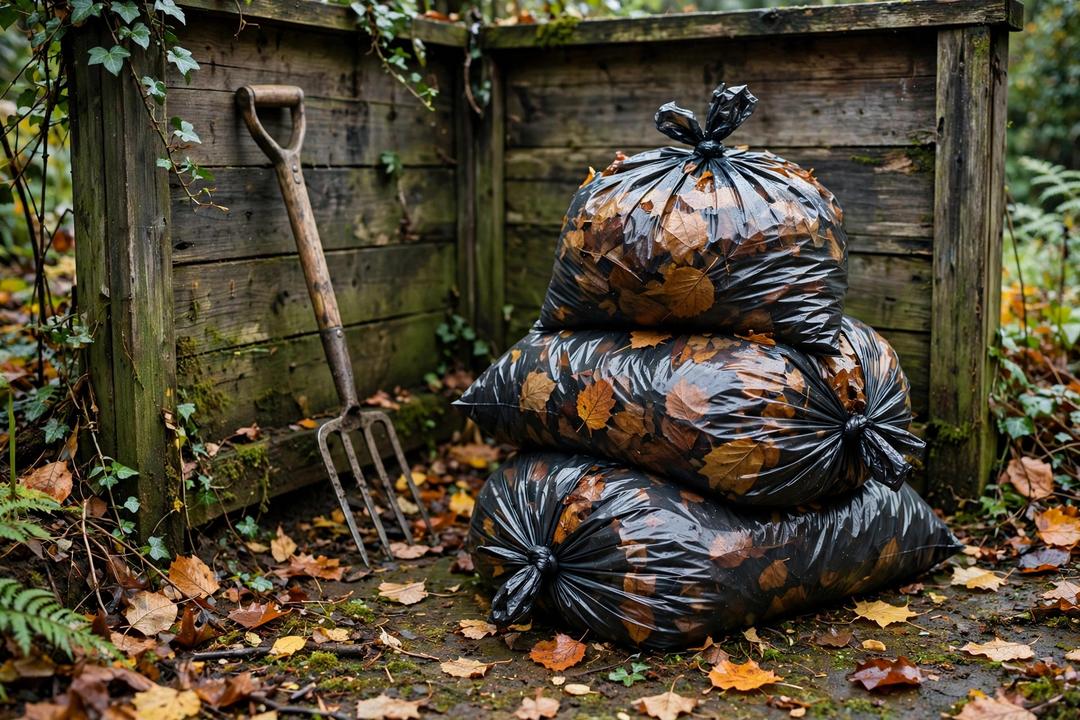
After the beds are mulched and the safety zones are clear, there will still be leaves left — and the best use for the surplus is the slowest one. Leaf mold is what you get when leaves break down on their own, mostly through fungi rather than the hot bacteria of a compost heap. The Old Farmer's Almanac describes it plainly: collect fallen leaves, keep them moist, and give them time — a year or two — and they become a dark, crumbly material that improves soil structure and helps it hold moisture. It is a soil amendment and a mulch, not a complete fertilizer, so don't expect it to feed plants the way compost does.
The bag method is the small-space version, and it takes five minutes in November:
- Shred first if you can. Running the mower over the pile before bagging speeds the breakdown, and the Almanac notes that shredding helps leaves break down faster.
- Fill sturdy plastic bags with damp leaves and tie them loosely. If the leaves are dry, sprinkle in water as you fill. The goal is damp all the way through, not soggy.
- Poke holes for air. A few fork holes in each bag let the fungi breathe — sealed airtight, the leaves just sit there.
- Tuck them in an out-of-the-way corner at least 30 feet from the house and wait. Check every few months and add a splash of water if the contents look dry. In a year or two — sometimes longer, depending on the leaves and conditions — you will have dark, crumbly leaf mold to dig into beds, mix into potting soil, or spread as mulch.
Two cautions travel with the method. First, the Almanac's note on black walnut: walnut leaves can be composted, but if juglone is a concern, compost them separately for at least six months before using them — don't put walnut leaves in the same bag as the rest. Second, placement matters for fire safety even for a slow pile: UC Marin's guidance for a leaf compost pile is to site it at least thirty feet from your home and away from other vegetation, so the pile breaks down without being a fire hazard. A bag stack counts as a pile — keep it well away from the house, not leaning against the back wall.
And if bagging feels like too much fuss, the open alternative works too: UC Marin says simply to pile the leaves on the ground in that same thirty-foot spot, and UC Stanislaus notes that a leaf pile left alone breaks down naturally, while UC Marin adds that leaves decompose naturally, feeding soil organisms and eventually becoming compost. The bags just keep the pile tidy and the moisture in.
What not to do with fallen leaves
- Don't blow or rake them into the street. They wash into storm drains and mat over the grate. Green-waste cart, compost pile, or beds — never the gutter.
- Don't pile them against trunks. Mulch — leaves included — belongs away from stems and trunks, where trapped moisture causes disease and rot.
- Don't mulch with diseased leaves. Fireblight, anthracnose, whiteflies, or thrips on the leaves means yard-waste recycling, not the beds — and compost only if the pile gets hot enough to destroy the pests.
- Don't burn them. UC Placer County Master Gardeners call burning yard waste a way of the past, citing air-pollution concerns in Placer and Nevada counties: chipping, composting, and mulching are the alternatives that keep the material — and the nutrients — in the garden instead of in the air.
- Don't strip the beds bare in spring. UC Stanislaus advises waiting until later in the season before removing leaves, to give the creatures sheltered by the litter over winter time to emerge and depart. The leaves you leave now are next spring's pollinators' winter home.
Quick answers
Can I just leave the leaves on my lawn?
A light covering, yes — UC Marin says a light covering can simply be shredded with your lawn mower and left in place, where it decomposes rapidly and adds nitrogen and organic matter to the soil. A thick layer, no: rake it up for the compost pile, because too many leaves can kill the grass underneath.
How deep should leaf mulch be?
UC Contra Costa recommends a thin layer of 2 to 3 inches — thicker layers of whole leaves block water and air and smother low-growing plants. If weed suppression is the goal, UC Yolo Master Gardeners put the floor at three inches, so use the bottom of Contra Costa's range — around two inches — for beds with low, tender plants.
When should I clear the leaves off my beds in spring?
Later rather than sooner. UC Stanislaus advises waiting until later in the season so the butterflies, moths, and other creatures sheltered in the litter have time to emerge and depart before you tidy up.
Are fallen leaves really a fire risk?
Within thirty feet of the house, yes. Fire Safe Marin reports that 60 to 90 percent of homes destroyed in wildfires ignite from embers, and dry leaf litter is exactly what embers land on. Clear the zero-to-five-foot zone completely and keep the five-to-thirty-foot zone lean — beyond thirty feet a thin layer of three inches or less is acceptable.
Can I compost diseased leaves?
Only if the pile gets hot enough to destroy the pests — UC Contra Costa's condition for composting problem leaves. Otherwise, UC Santa Clara's rule applies: diseased leaves go out with yard-waste recycling.