 Sprouty
The arrival of September triggers a familiar itch for vegetable gardeners. As summer’s scorching triple-digit days begin to ease, nursery displays fill with lush fall starts, seed racks get restocked, and gardening checklists proclaim that autumn planting season has officially arrived. If you grow cool-season greens, it feels entirely natural to head straight into the garden, carve neat furrows into your raised beds, and sprinkle your spinach seeds into the warm earth.
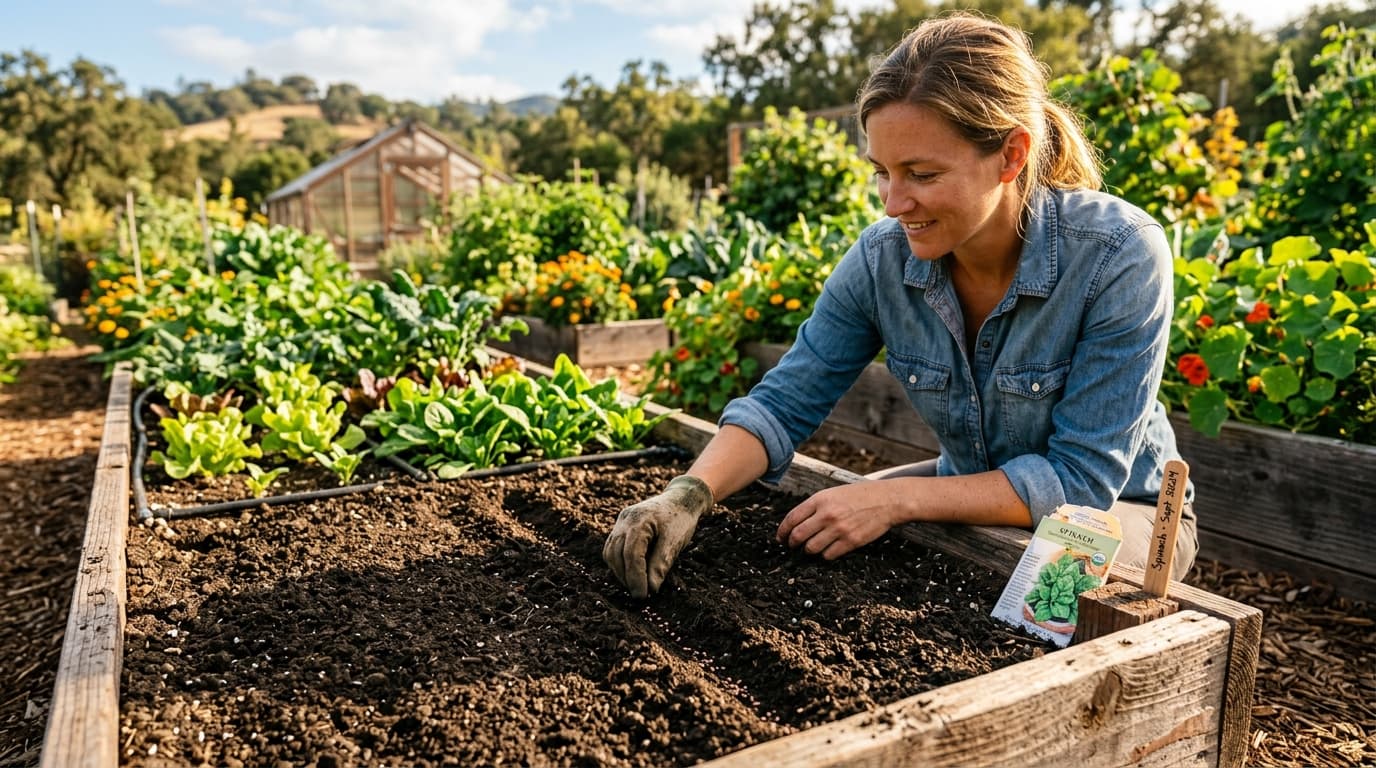
That was exactly what Sophie was doing on a sunny afternoon in early September. Kneeling beside a freshly turned, compost-amended garden bed, she tore open a packet of Bloomsdale Long Standing spinach seeds, tapped a generous pinch into her palm, and poised her hand over the soil furrow. Before the first seed could drop, Sprouty burst out from behind the chard patch, waving his leaves in urgent protest:
Sophie: "Sprouty, what are you doing? It's September! The calendar says fall garden season is officially here, and I'm getting my spinach crop started so we have tender salad greens by November!"
Sprouty: "Sophie, stop right there! Put those seeds back in the packet! If you sow spinach seed into that dirt today, you will get virtually zero germination!"
Sophie: "Wait, zero germination? But the soil is warm and workable, and it's September! Why can I plant kale and cabbage transplants today, but not spinach seeds?"
Sprouty: "Because cabbage transplants already have root systems, but spinach starts as a naked seed—and spinach seeds have a biological built-in thermostat! Here in Yolo County and the Sacramento Valley, early September topsoil easily bakes over eighty degrees. Spinach seeds hit high temperatures and slam into 'thermodormancy'—they literally lock up and refuse to sprout. If you keep watering hot dirt, they just rot in the ground! You have to wait for Yolo's cool seed window—the last two weeks of September!"
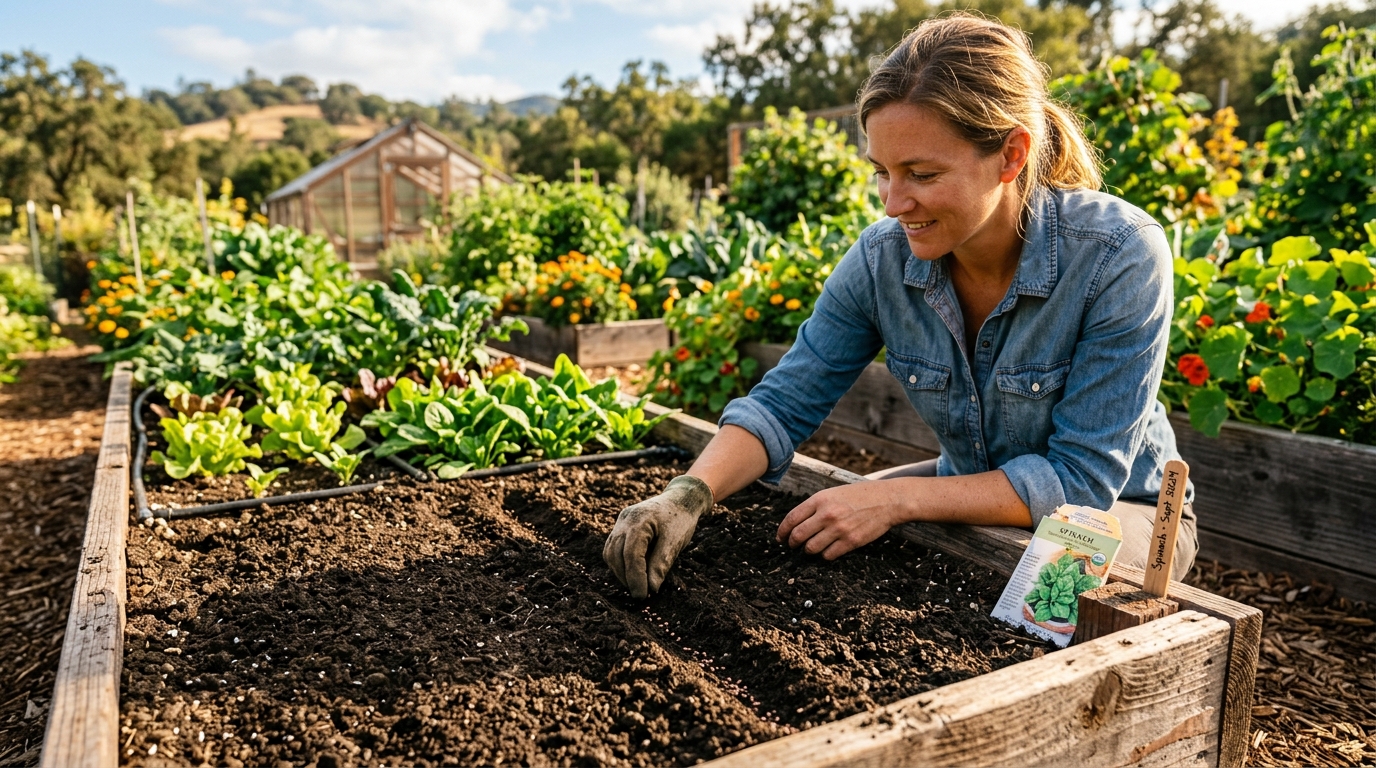
Watch Sprouty & Sophie on the Yolo Late-September Spinach Window
See why sowing spinach seeds before late September causes thermal dormancy and total germination failure.
The Plant Physiology: How Hot Soil Triggers "Thermodormancy"
Why is direct-seeded spinach so finicky about planting dates compared to other fall greens? The answer lies inside the seed coat of Spinacia oleracea.
Spinach is a cool-hardy annual native to central and southwestern Asia, evolved to germinate in damp, chilly spring snowmelts and brisk autumn rains. Because of this evolutionary heritage, spinach seeds possess a distinct physiological defense mechanism known as thermodormancy (high-temperature dormancy):
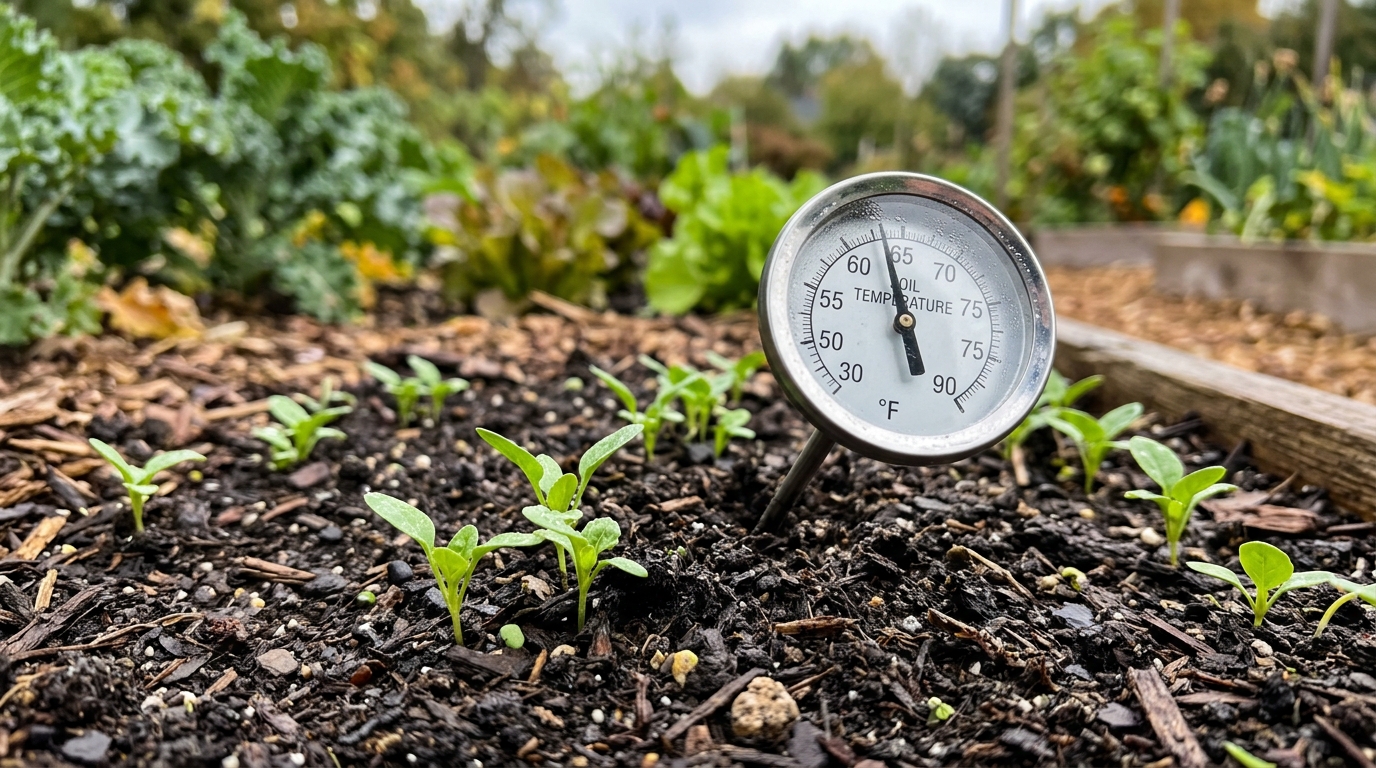
- The Ideal Germination Zone (45°F to 68°F): When soil temperatures range between 50°F and 65°F, spinach seeds hydrate, activate metabolic enzymes, and germinate rapidly—often emerging in just 5 to 7 days with germination rates exceeding 85% to 90%.
- The Inhibition Threshold (75°F to 80°F): As soil temperatures climb past 75°F, germination rates plummet sharply to under 30%. The thick seed coat (pericarp) of the spinach fruit restricts oxygen diffusion to the embryo. At higher temperatures, the embryo's respiratory demand for oxygen spikes, but the pericarp cannot supply enough oxygen through warm moisture.
- The Thermal Shutoff (>85°F): When seedbed soil reaches or exceeds 85°F, germination drops to virtually zero. High heat triggers a surge of abscisic acid (ABA), inducing a state of secondary dormancy. Once secondary dormancy is induced, seeds will refuse to sprout even after the soil later cools down!
Compounding the problem, when well-meaning gardeners keep irrigating bare soil in early September trying to "coax" the seeds up, the warm, wet soil becomes an incubator for soilborne pathogens. As documented in the UC Statewide IPM Program Spinach Management Guidelines, damping-off fungi and water molds like Pythium and Rhizoctonia attack struggling seeds before emergence, rotting the seed embryo in the furrow.
The Yolo County Calendar: Why the Last Two Weeks of September Rule
In inland Mediterranean climates like Davis, Woodland, Winters, and the broader Sacramento Valley (USDA Hardiness Zones 9b and 10a), air temperatures and soil temperatures tell two very different stories in September.
During the first half of September, daytime ambient temperatures frequently spike into the high 80s or 90s. Dark garden loam under direct sunlight absorbs solar radiation, pushing 2-inch topsoil temperatures well into the 80°F–88°F zone by mid-afternoon. That is lethal territory for spinach seed germination.
This critical distinction is officially codified by regional horticulture experts. In the UC Master Gardener Program of Yolo County September Vegetable Planting Guide published on The Savvy Sage (written by Master Gardener Peg Smith), the planting calendar explicitly partitions cool-season crops based on establishment type:
📋 Yolo County Master Gardener September Planting Guidelines
According to the UC Master Gardeners of Yolo County and the Sacramento Area vegetable planting guidelines:
- Plant throughout September: Broccoli (transplants), Cauliflower (transplants), Lettuce (seed & transplants). Transplants already possess established root systems and can handle late-summer soil warmth if shaded and hydrated.
- Plant in the FIRST two weeks of September: Potatoes (starts) and Rutabaga (seed). As detailed in our guide on why waiting past mid-September deletes inland fall potato crops, potatoes must establish leafy canopy before winter frosts halt tuber bulking.
- Plant in the LAST two weeks of September: Spinach (seed) and Broccoli Raab (seed). Sowing direct seed in late September ensures soil has moderated into the cool germination zone.
Source: UC ANR Master Gardeners of Yolo County, The Savvy Sage (Peg Smith) & UC Davis Department of Plant Sciences.
By the time late September arrives, the autumn equinox shortens daylight hours, sun angles flatten, and crisp inland night temperatures (frequently dropping into the 50s) pull stored heat out of the soil. Topsoil temperatures settle reliably into the 60°F–68°F sweet spot, allowing spinach seeds to hydrate without oxygen starvation.
Transplants vs. Direct Seed: Why Can't You Just Buy Spinach Starts?
When gardeners hear about spinach's sensitivity to hot soil, their immediate reaction is: "Why not just buy 6-packs of spinach transplants at the nursery like I do for broccoli?"
While you can occasionally find spinach transplants, commercial growers and Master Gardeners strongly discourage it:
- Sensitive Taproot: Spinach develops a delicate, sensitive central taproot early in seedling life. Any root disturbance during transplanting causes significant transplant shock.
- Premature Bolting: Root disturbance combined with lingering autumn warmth triggers an immediate hormonal stress response in spinach: premature bolting. Instead of unfurling broad, tender rosettes of leaves, root-bound transplants shoot up thin, woody flower stalks and bitter leaves within 2 weeks of planting.
- Yield & Density: Direct-sown spinach can be planted densely in wide bands or tight rows (2 to 3 inches apart) for high-density "cut-and-come-again" harvesting. Buying six-packs to fill an 8-foot garden bed is expensive and yields a fraction of the harvest.
Direct seeding is dramatically superior—provided you honor the late-September temperature window.
Step-by-Step: How to Nail the Late-September Spinach Window
To ensure 90%+ germination and a bountiful winter crop, follow this field-tested protocol starting the third week of September:
1. Take a Morning Soil Temperature Reading
Don't guess by ambient air temperature. Push a simple kitchen or soil thermometer 2 inches into your garden bed at 9:00 AM. When the soil temperature reads below 72°F (ideally between 55°F and 68°F), your seed window is wide open.
2. Pre-Irrigate the Bed the Day Before
Water your prepared planting bed deeply 24 hours before sowing. Moist soil cools significantly through evaporative cooling and allows seeds to make immediate, firm contact with damp earth without needing a violent jet of water that dislodges tiny seeds.
3. Sow at the Right Depth and Spacing
Create shallow furrows 1/2 inch deep spaced 8 to 12 inches apart. Sow seeds about 1 inch apart, then cover with 1/2 inch of finely sifted compost or light potting soil. Sifted compost won't form a hard crust under afternoon sun, allowing delicate cotyledons to emerge without impediment.
4. Use the Burlap or Shade Cloth Cooling Trick
If an unseasonable late-September Indian summer heatwave pushes air temperatures back into the 90s, lay a strip of damp burlap, a wooden board, or a 30% shade cloth directly over the seeded furrow for the first 3 to 4 days. This keeps topsoil 5°F to 10°F cooler and retains surface moisture. Crucial rule: Check daily and remove the cover the instant the first green seed loops break ground!
5. Thin Early for Giant Rosettes
Once seedlings have developed their first set of true leaves, thin them to 3 to 4 inches apart (enjoy the tender thinnings in your evening salad!). Adequate spacing prevents competition for light and promotes dense, thick leaves.
The Winter Bonus: Why Spinach Thrives Once Established
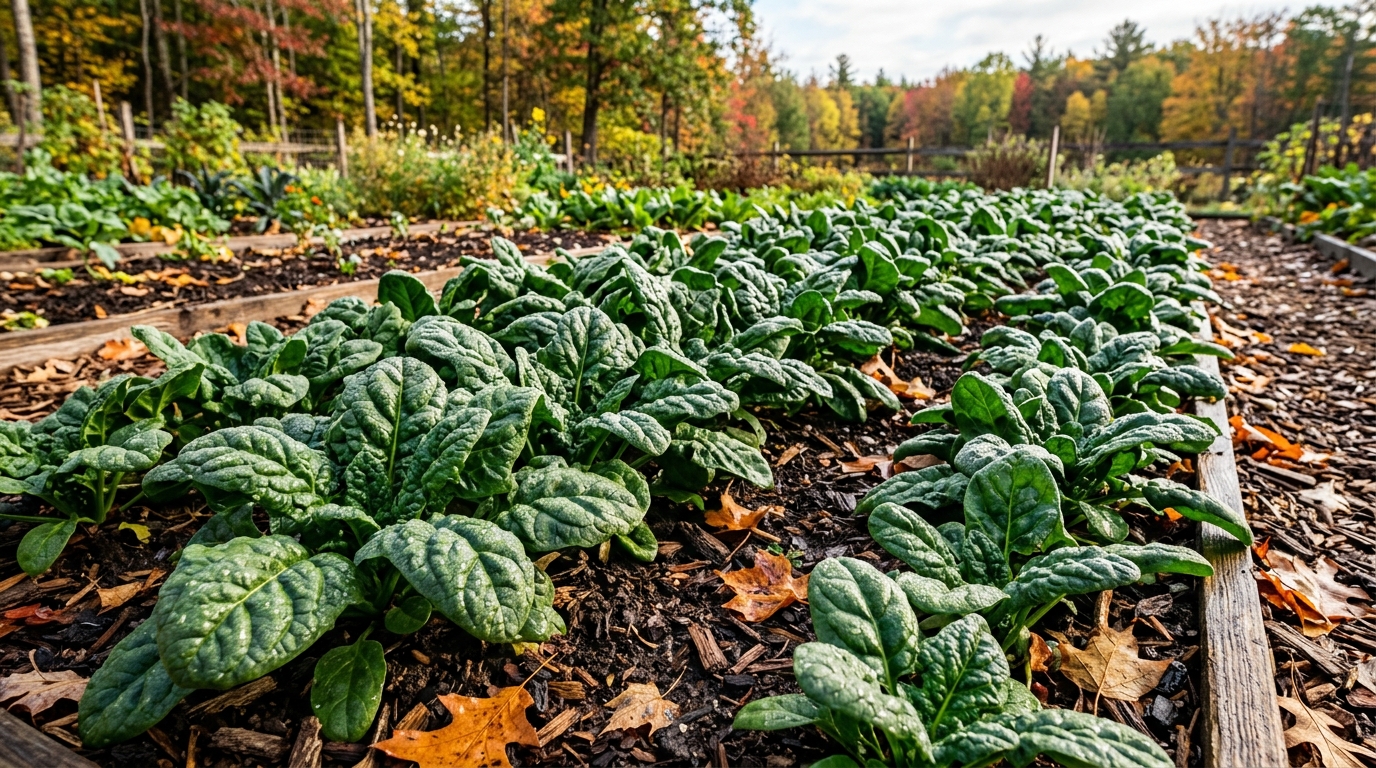
Once your late-September spinach clears the germination hurdle, it becomes one of the toughest, most resilient plants in your entire garden. Mature spinach is extraordinarily cold-hardy, withstanding hard frosts down to 20°F without row covers.
In fact, winter cold does something magical to spinach: as freezing nights arrive, the plant converts starches into soluble sugars to serve as a natural cellular antifreeze. Winter-harvested spinach leaves are remarkably sweet, thick, and succulent—far superior to anything you can buy in a grocery clamshell.
🌿 The Bottom Line
Don't let autumn enthusiasm ruin your spinach crop. In Yolo County and inland California valleys, direct-seeding spinach before late September guarantees poor germination due to soil thermodormancy. Keep your seed packets cool and dry, prep your raised beds, and wait for the last two weeks of September when soil temperatures moderate into the 50°F–68°F sweet spot. One extra week of patience delivers a winter-long harvest of sweet, crinkled greens!
Planning your complete cool-season garden? Explore our complete SproutySpeaks Fall Gardening Guide & Seasonal Checklist, see why you must plant inland fall potatoes before mid-September, understand why you should buy California natives in September but stage until heat breaks, see why you should sow Daikon cover crops in September or October to break compacted soil, learn how mulching warm soil insulates root zones, and check why you need to protect nursery avocados against winter frost.