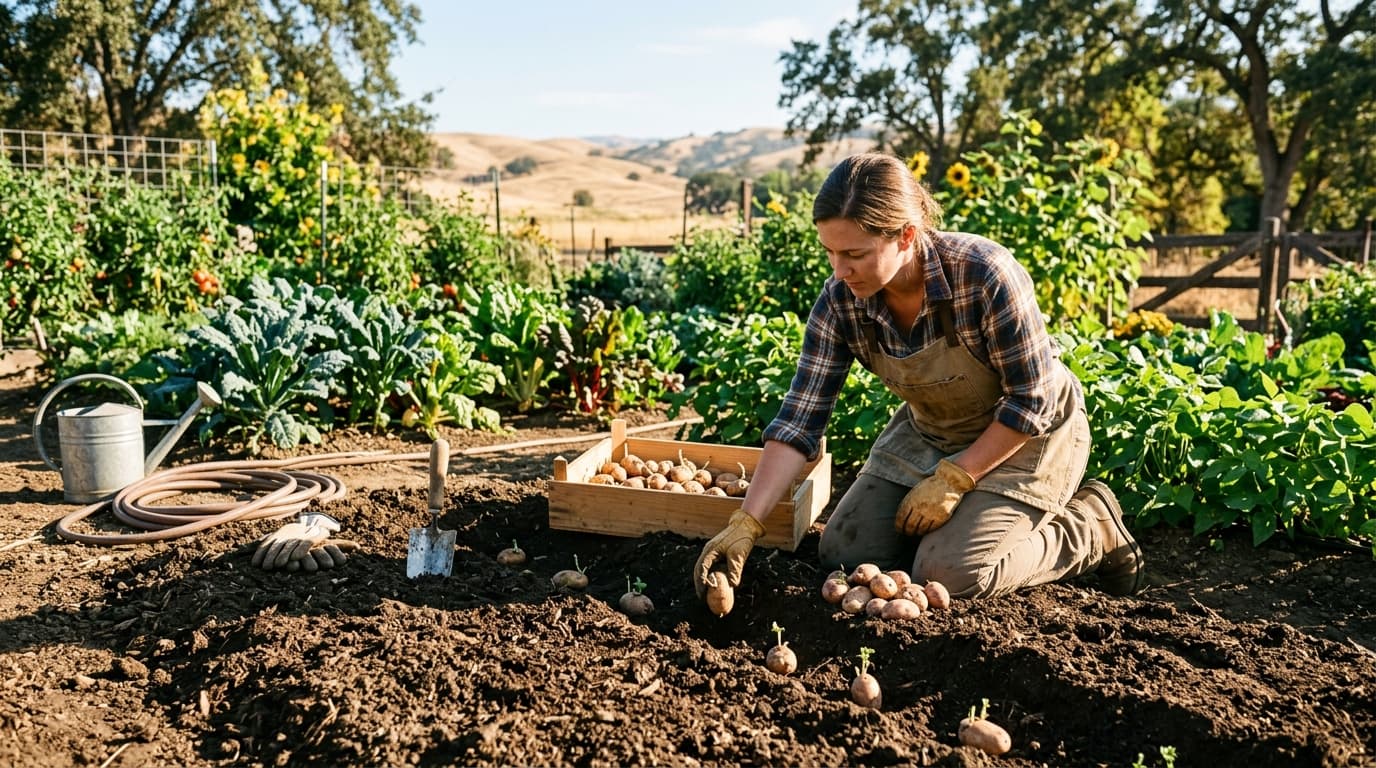

Late summer gardening has a deceptively relaxed rhythm. The blistering August heat waves begin to soften into breezy September afternoons, and many gardeners assume autumn vegetable chores can wait until the weather turns truly brisk. Sophie stood in the garden, holding a mesh bag of sprouted seed potatoes, and asked the obvious question: "Can't I wait until late September or October to plant these potatoes? Won't they be happier once the soil cools down even more?"
Sprouty's immediate answer: "Bury them in the ground right now! If you wait past mid-September in our inland valleys, you will completely miss the harvest window — and winter frost will freeze your vines before a single potato swells bigger than a marble."
For gardeners across the Sacramento Valley, Davis, Yolo County, and the northern San Joaquin interior, fall potatoes are one of the most rewarding cool-season crops you can grow. But unlike coastal zones or cool northern climates, our inland geography operates on an unbending botanical clock. Hesitating just two weeks too long isn't a minor delay — it is a harvest cancellation notice.
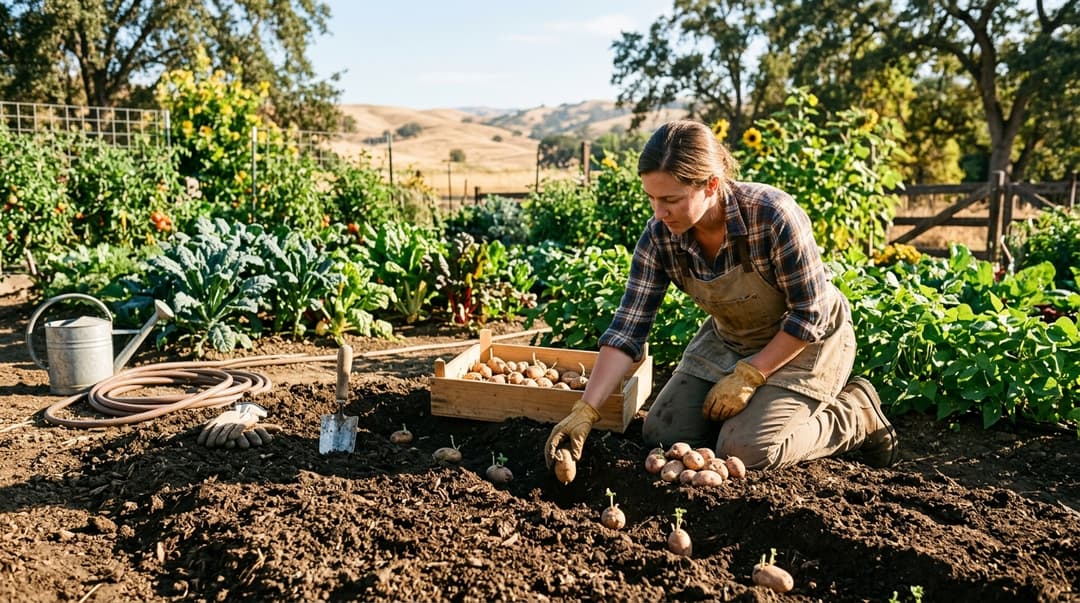
Watch Sprouty & Sophie Break Down the Inland Potato Window
See why waiting past mid-September deletes your inland potato harvest in our latest quick tip video.
The Plant Botany: How Inland Valley Climate Dictates Potato Timing
White potatoes (Solanum tuberosum) are cool-season nightshades native to high Andean elevations. Their biological machinery operates under strict environmental thresholds:
- Sprout Emergence: Soil temperatures between 60°F and 75°F trigger rapid cell division at the eyes, pushing green shoots above the surface in just 7 to 10 days.
- Tuber Initiation & Bulking: Potatoes synthesize carbohydrates in their lush green foliage and transport those starches downward along underground stolons to swell into tubers. As detailed in the UC Statewide IPM Potato Pest Management and Cultural Guidelines, optimum tuber formation occurs when soil temperatures stay cool (around 60°F to 68°F). When soil exceeds 75°F, tuber initiation halts entirely.
- Frost Vulnerability: While underground tubers can endure chilled soil, potato leafy stems and foliage have virtually no frost tolerance. A 28°F to 31°F freeze blackens the leaves and shuts down carbohydrate production instantly.
In Mediterranean inland valleys like Yolo, Solano, Sacramento, and San Joaquin counties (USDA Hardiness Zones 9b and 9a), gardeners face a dual-challenge climate. Mid-summer days routinely exceed 100°F, turning upper soil into an oven where seed potatoes simply rot or bake. But by December, overnight freezing temperatures arrive. That leaves a razor-thin fall sweet spot.
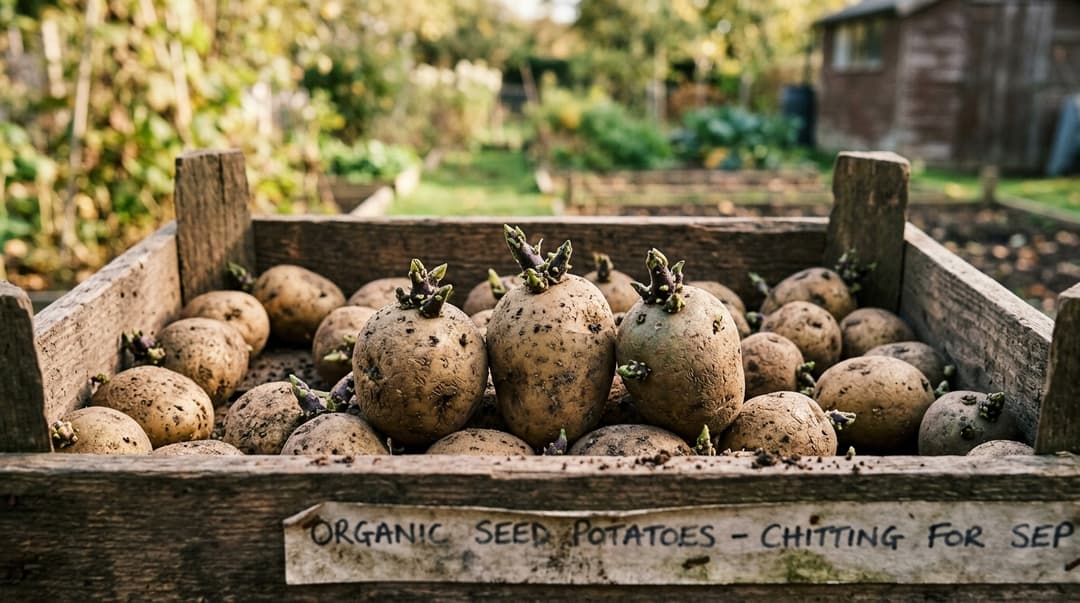
What Is the "Yolo Window"? The First Two Weeks of September
According to regional vegetable production records from the UC Master Gardener Program of Yolo County (and the classic Sacramento area vegetable planting calendar developed by the UC Davis Department of Plant Sciences), fall potatoes must be planted in early September.
This is further corroborated by the UC Master Gardener Interior Vegetable Planting Guide, which explicitly warns inland growers that "planting after September 1 risks frost kill" before the crop can mature.
🌾 The Mathematical Breakdown of the September 1–15 Window
An early-maturing potato variety (like Yukon Gold, Red Norland, or Chieftain) needs roughly 70 to 80 days of active, frost-free leaf growth to build full-sized spuds. Count forward from September 10: 75 days puts you at Thanksgiving (late November). That hits the exact historic boundary when our first winter radiation freezes begin settling into the valley basin.
What Happens When You Plant After Mid-September
If you wait until late September or mid-October to drop your seed tubers into the ground, a cascade of botanical hurdles strikes the crop:
- Plunging Soil Temperatures Slow Emergence: In early September, warm soil (72°F) wakes up seed tubers in 7 to 10 days. By mid-October, soil temperatures drop into the low 50s. Cold soil triples emergence time, meaning your sprouts don't break the surface until November.
- Rapid Loss of Day Length: In September, the Sacramento Valley enjoys over 12 hours of intense sunlight daily. By November, photoperiod drops below 10 hours, and the low sun angle drastically slows down photosynthetic rates. The plant cannot build a dense foliar canopy.
- Terminal Frost Freezes Immature Vines: When the first December frost hits 29°F, your late-planted potatoes will still be tiny, fragile 4-inch sprigs. The frost will kill the top growth instantly. When you dig down into the bed hoping for dinner, all you will find are tiny, golf-ball or marble-sized tubers that never had time to bulk.
- Winter Rains Cause Heavy Valley Clay Rot: If unharvested plants sit in saturated, cold winter clay during December atmospheric rivers, the mother tubers rot underground before harvesting.
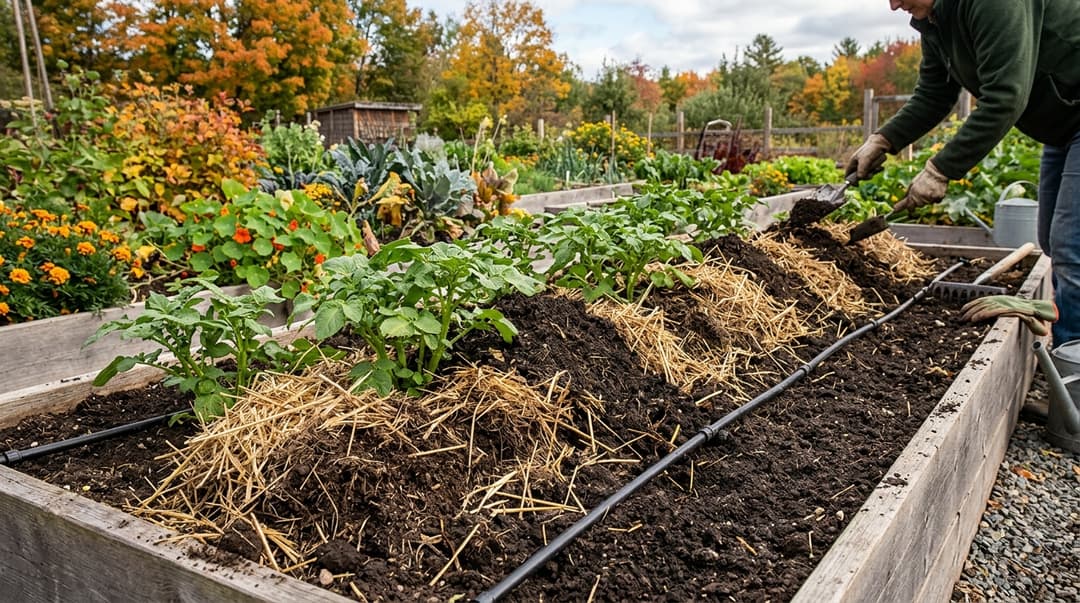
How to Plant in the Early September Window: Step-by-Step
To maximize every ounce of autumn warmth and beat the late-November frost, follow Sprouty's four-step planting protocol for inland beds:
🥔 Sprouty's Inland Fall Potato Checklist
- 1. Choose 65–75 Day Early Varieties: For fall planting in the Sacramento Valley, avoid 100+ day late russets. Choose fast-maturing determinates or early indeterminates such as Yukon Gold, Red Norland, Dark Red Norland, or French Fingerling.
- 2. Pre-Chit Indoors: Keep seed potatoes in a cool, well-lit room (out of direct burning sun) for 10–14 days before planting. Sturdy, stubby half-inch green/purple sprouts hit the ground running immediately.
- 3. Trench and Soil Drainage: Inland valley soils frequently contain dense Sacramento clay. Plant tubers 4 inches deep in raised beds or well-aerated mounds enriched with finished compost. Avoid soggy low spots.
- 4. Hill with Compost and Clean Straw: As stems grow 6 to 8 inches above ground, hill up 3 to 4 inches of compost mixed with straw around the lower stems. This expands the underground stolon zone and insulates the tubers against cool late-autumn nights.
How Irish Potatoes Differ from Sweet Potatoes in Fall
Many gardeners confuse true potatoes (Solanum tuberosum) with sweet potatoes (Ipomoea batatas). They have opposite temperature requirements in autumn:
As we covered in our emergency guide on why you must dig sweet potatoes the same day frost strikes, sweet potatoes are tropical root crops that must come out of the ground before or immediately at frost to avoid rot and chilling injury. White potatoes, by contrast, thrive in cool autumn air; their tubers can safely stay tucked under straw in cool soil until you are ready to harvest for winter roasts.
🌿 Sprouty's Golden Rule for Inland Potatoes
Near Davis, Sacramento, and the interior valleys, think of early September as a boarding gate: the door closes at mid-September. Get your seed potatoes into loose, composted soil during the first two weeks of the month. By Thanksgiving, you'll be digging steaming, buttery homegrown potatoes while late-waiters are left holding empty forks.
Setting up your autumn garden checklist? Explore our full Fall Gardening Guide & Seasonal Playbook, read why you should stop removing dead leaves and turn them into soil-saving mulch, and learn why September lilac pruning deletes spring flowers.