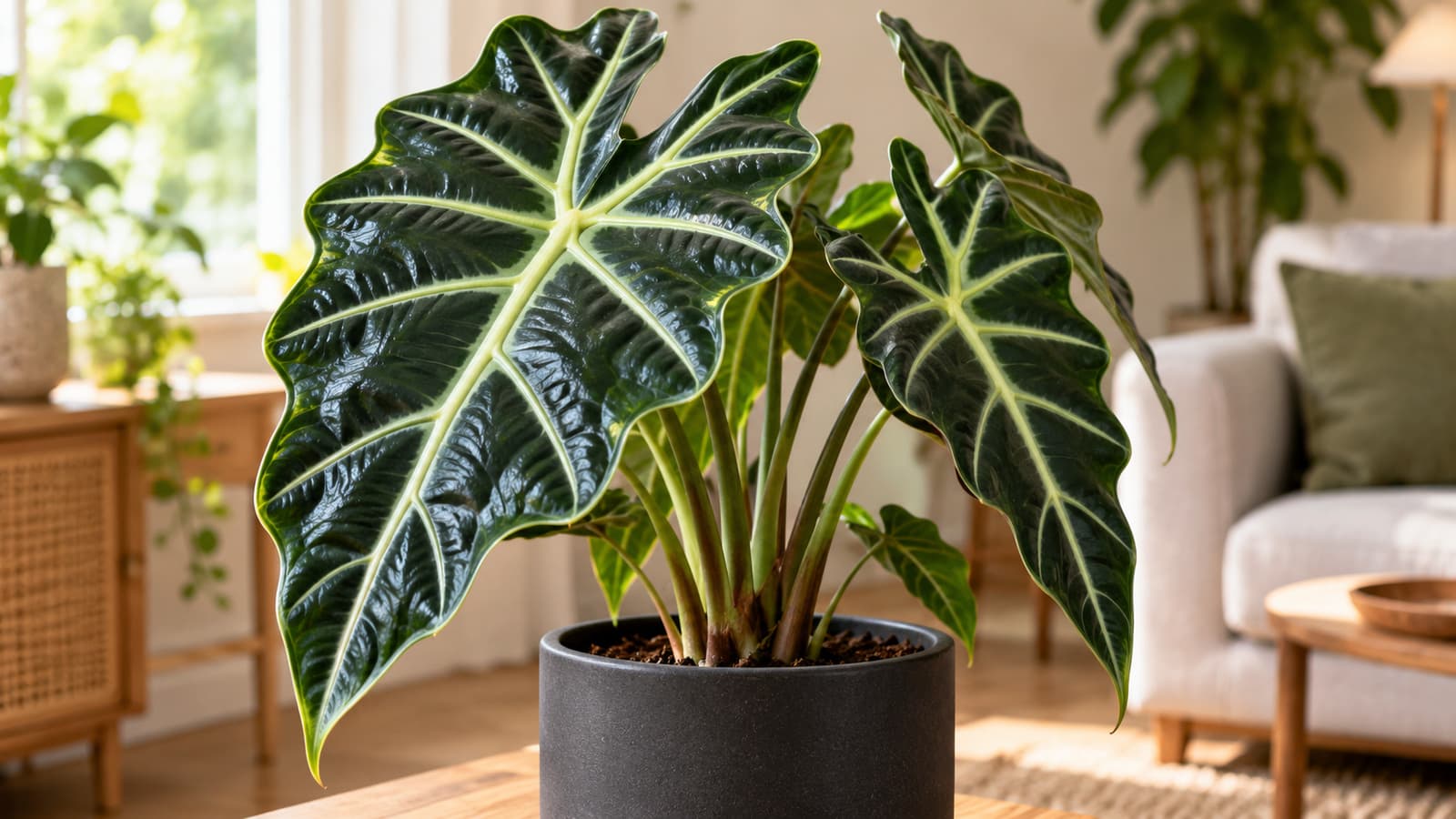

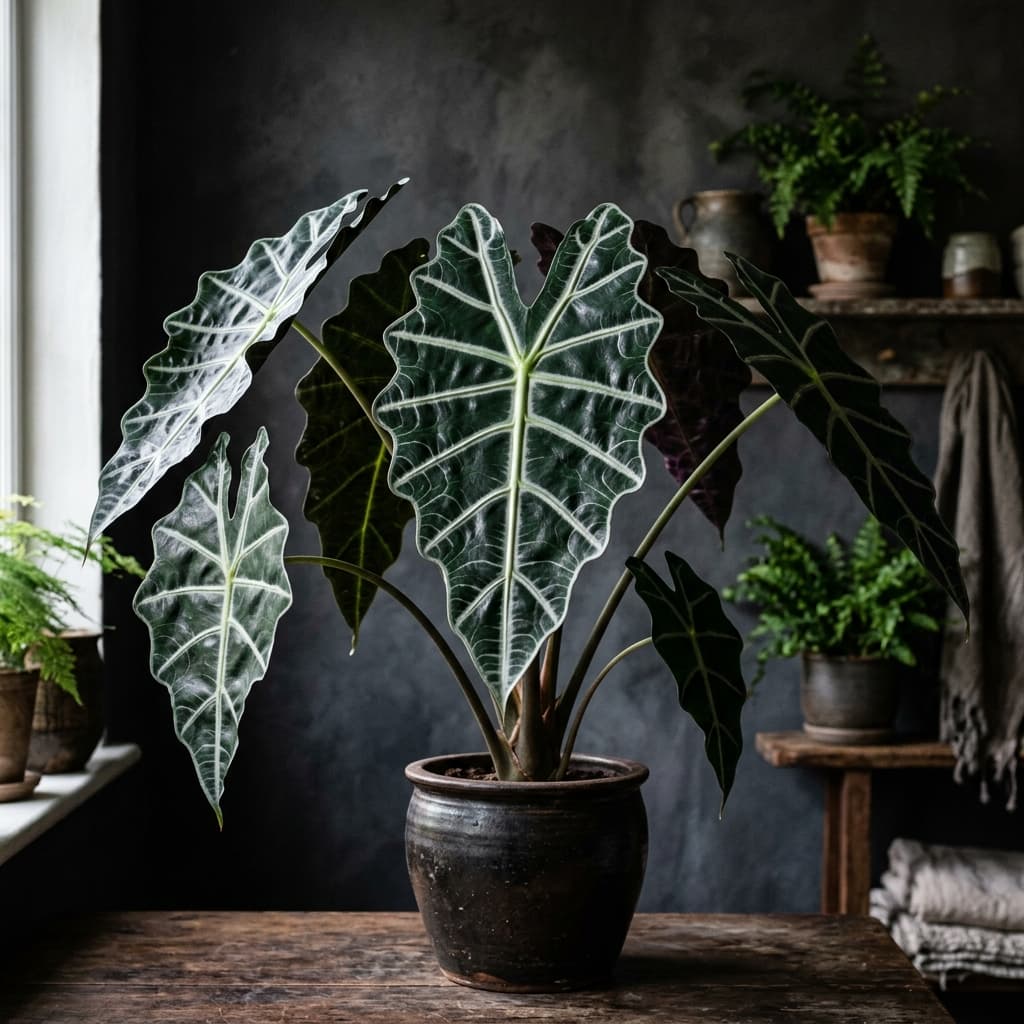
Studies suggest washed rice water can supply nutrients and affect microbes under particular growing conditions. They do not establish that a homemade fermented batch will trigger new Alocasia leaves. If your plant has stopped growing, check its light, temperature, roots, watering, and existing feeding routine before assuming a kitchen treatment is the missing ingredient.
This article used to promise that fermented rice water would trigger new Alocasia leaves — it even gave the process a week-by-week timeline. That overstated what the research actually shows. This is the revised, honest version: the same topic, examined the way the evidence deserves. One thing hasn’t changed — a stalled Alocasia is usually asking for better growing conditions, not a miracle ingredient.
What the Studies Actually Tested
Two studies get cited whenever rice water comes up. Here is what each one did — and didn’t do.
2021 — fermentation changes what’s in the water. A study in Sustainability examined how fermenting washed rice water changed its nutrient composition and bacterial populations. That’s the finding: fermentation alters the water’s chemistry and microbial mix. It did not test whether the resulting liquid helps any particular houseplant grow. (Fermentation of Washed Rice Water Increases Beneficial Plant Bacterial Population and Nutrient Concentrations, 2021)
2023 — a field trial on a leafy vegetable. Researchers at Universiti Putra Malaysia ran three-day fermented washed rice water against full-rate NPK fertilizer, a half-NPK-plus-rice-water combination, and tap water — on choy sum (Brassica chinensis var. parachinensis), a fast-growing leafy vegetable, in an open field, over three planting cycles. The combination treatment did best; fermented rice water alone performed similarly to full NPK for growth; rice-water soils had higher bacterial populations but were more acidic; and there were no carryover effects, likely because heavy rains leached nutrients away. (Combined benefits of fermented washed rice water and NPK mineral fertilizer on plant growth and soil fertility, 2023)
What neither study tested: indoor Alocasia, potted houseplants of any kind, a 24–48-hour home recipe, or a LECA reservoir. The species, the growing conditions, the fermentation duration, and the fertilizer comparisons are all visible in the papers — and none of them is “your Alocasia in a pot.”
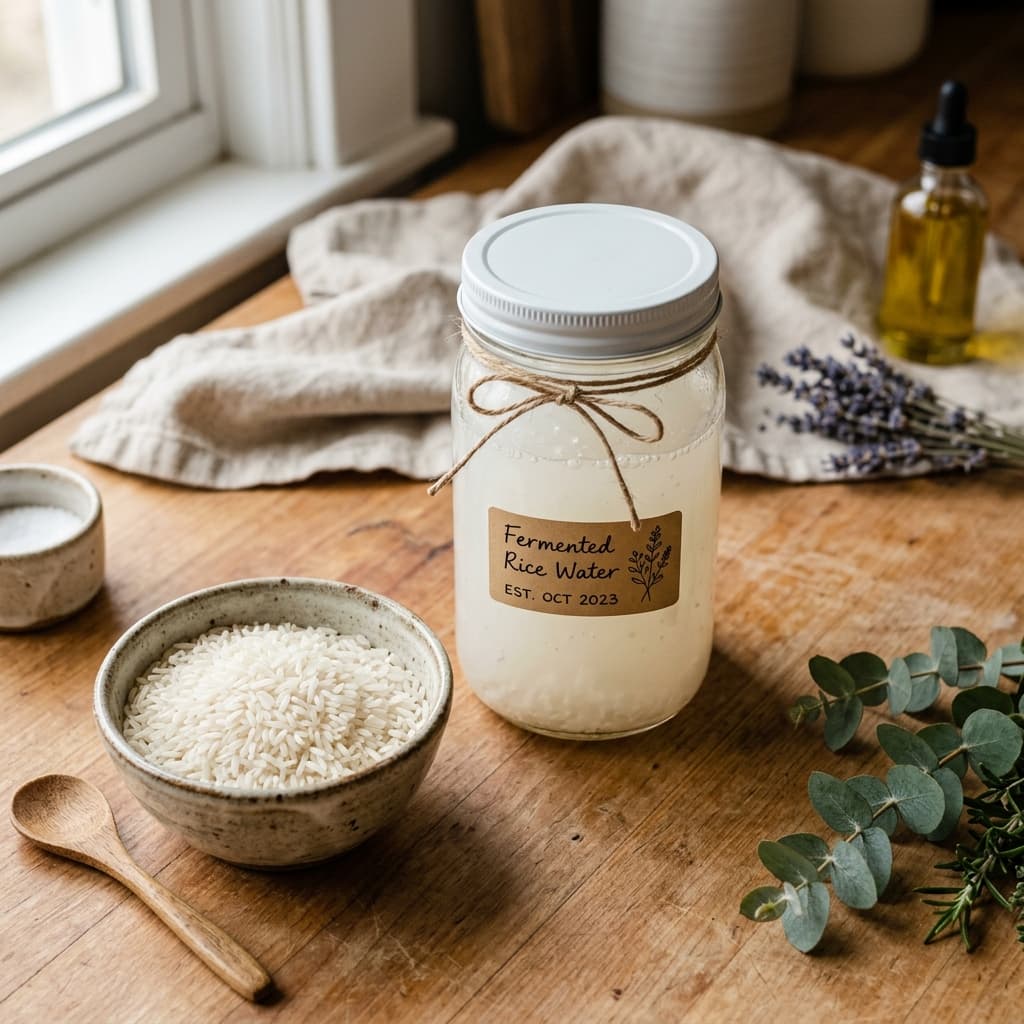
Why a Field Vegetable and Your Alocasia Aren’t the Same System
An open field is a vast, buffered, rain-flushed ecosystem with an established soil food web. Your Alocasia lives in a few liters of potting mix on a windowsill. Nutrient leaching, microbial diversity, pH buffering, and root volume all behave differently at that scale — and nobody has run the trial that would show rice water working there.
LECA is different again: a soilless reservoir system, not soil at all. Adding starch-rich liquid to an enclosed reservoir is untested, and it’s easy to imagine going wrong — organic matter decomposing where you can’t see it, feeding microbes you didn’t invite. The earlier version of this article recommended rice water for LECA reservoirs. That recommendation had no research behind it, and it’s been removed.
The Vitamin B1 Claim, Corrected
The original article said fermentation increases B vitamins — especially B1 (thiamine) — and that B1 is “strongly associated with root development and stress recovery,” used in commercial horticulture for that purpose. That needs correcting.
Washington State University’s review of the vitamin B1 literature is blunt: applying thiamine to the root systems of whole plants does not stimulate root growth. The myth persists because B1 is an important ingredient in tissue-culture media — the sterile lab environment where isolated plant tissues are propagated. A lab role is not a root-tonic role. Healthy plants manufacture their own thiamine, and many root-associated fungi and bacteria produce it too, so healthy soils already contain it. (Washington State University: The Myth of Vitamin B-1)
What the Original Article Overstated — a Revision Note
Revised October 1, 2026. The earlier version of this piece made claims the sources don’t establish. Specifically, it:
- Promised growth and gave week-by-week leaf-emergence timelines — no study establishes these for Alocasia.
- Described a home fermentation as “controlled, food-safe, and too brief for pests or mold.” Appearance, timing, and a sour smell do not establish a known microbial composition or safety.
- Presented vitamin B1 as an established root-growth and recovery mechanism for whole plants.
- Offered a fixed dilution and application schedule as a proven default for Alocasia.
- Recommended rice water for LECA reservoirs.
- Implied that a rotation of kitchen scraps adds up to a complete, predictable feeding program — variable homemade amendments are not equivalent to a characterized fertilizer.
Those claims have been removed. What remains below is what the evidence actually supports.
First Checks for an Alocasia That Isn’t Growing
Before adding any treatment — rice water or otherwise — run through the fundamentals. A stalled Alocasia is far more often a conditions problem than a missing-amendment problem:
- Light. Bright, indirect light is the engine. A plant two meters from a north-facing window in winter simply isn’t getting the energy to push leaves, and no amendment fixes that.
- Temperature. Alocasias are tropical. Cool rooms slow them dramatically; sustained cool plus wet soil invites corm rot, which looks like “not growing” right up until it’s worse.
- Roots and corm. Gently check: firm corm and healthy roots, or soft spots and mush? A struggling root system can’t use extra nutrition anyway.
- Watering. Consistently soggy or bone-dry cycles stall growth. Even moisture, with the top of the mix drying between waterings, is the target.
- Feeding. If the plant hasn’t been fed in months, a characterized balanced fertilizer at label (or half-label) strength addresses nutrition directly and predictably — unlike an uncharacterized home batch of unknown composition.
If the leaves are yellowing rather than just stalled, start with our guide to diagnosing yellow leaves before reaching for any supplement.
Claim, Evidence, Unknown
| Claim | What the evidence says | What remains unknown |
|---|---|---|
| Fermentation increases nutrients and beneficial microbes in rice water | A 2021 study measured exactly that under its lab conditions. | Whether a 24–48-hour jar on your counter produces the same microbial mix. |
| Fermented rice water grows plants | A 2023 field trial on choy sum found it performed similarly to NPK fertilizer; half-NPK plus rice water did best. | Whether any of this applies to a potted Alocasia indoors. |
| Vitamin B1 in rice water stimulates root growth | WSU’s review: applying B1 to whole plants does not stimulate root growth; its established role is in tissue-culture media. | Little — this one is fairly settled. |
| A 24–48-hour home batch is controlled, food-safe, and too brief for pests or mold | No evidence either way — sour smell and cloudiness don’t identify composition or safety. | What actually grows in home batches, and what it does once poured into potting mix. |
| Rice water works in LECA reservoirs | No evidence on any soilless reservoir system. | How starch-rich liquid behaves in an enclosed reservoir — untested, so don’t be the experiment on a plant you value. |
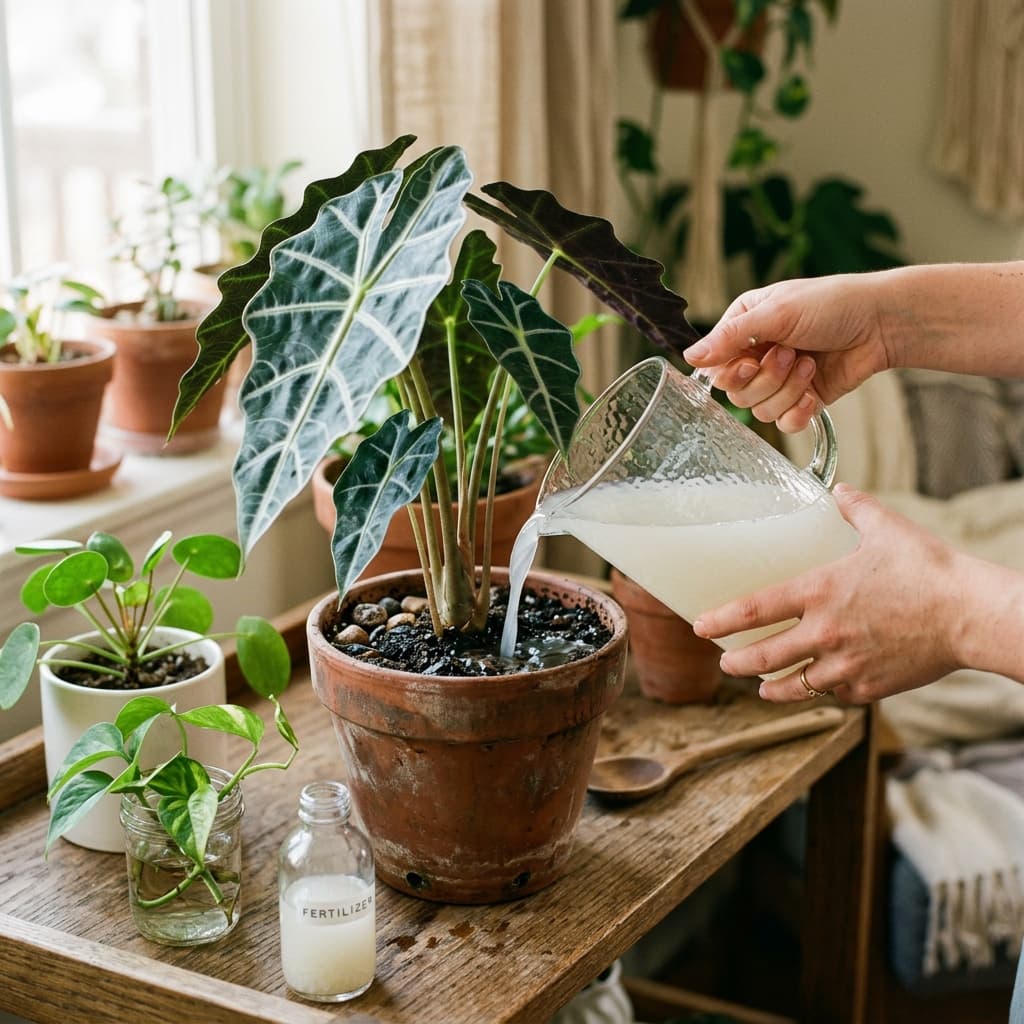
If You Want to Try It Anyway
Curiosity is fine — just make it an observation, not a conclusion. A careful home trial would look like this:
- Treat one plant and leave a similar one untreated; change nothing else (light, water, feed, position).
- Record the starting point: cultivar, pot size, substrate, light, temperature, your normal feeding routine, and dates.
- Don’t risk a valuable specimen to create content, and don’t attribute a new leaf to rice water if several care conditions changed at the same time.
FAQs
Is rice water good for Alocasia?
Possibly helpful, unproven. Research shows fermented washed rice water can supply nutrients and shift soil microbes — in field vegetables. No study has tested it on indoor Alocasia, so anyone promising results for your plant is guessing.
How long should I ferment rice water?
There’s no tested answer for houseplants. The popular home recipe says 24–48 hours; the field study used three-day fermentation on a completely different growing system. A sour smell means fermentation happened — it doesn’t identify the microbes or guarantee anything about plant growth.
Can I use rice water in a LECA reservoir?
We don’t recommend it. No research supports it on any soilless reservoir system, and adding starch-rich liquid to an enclosed reservoir can feed microbes you can’t see or control. This article previously suggested it; that advice has been removed.
Will rice water make my Alocasia push a new leaf?
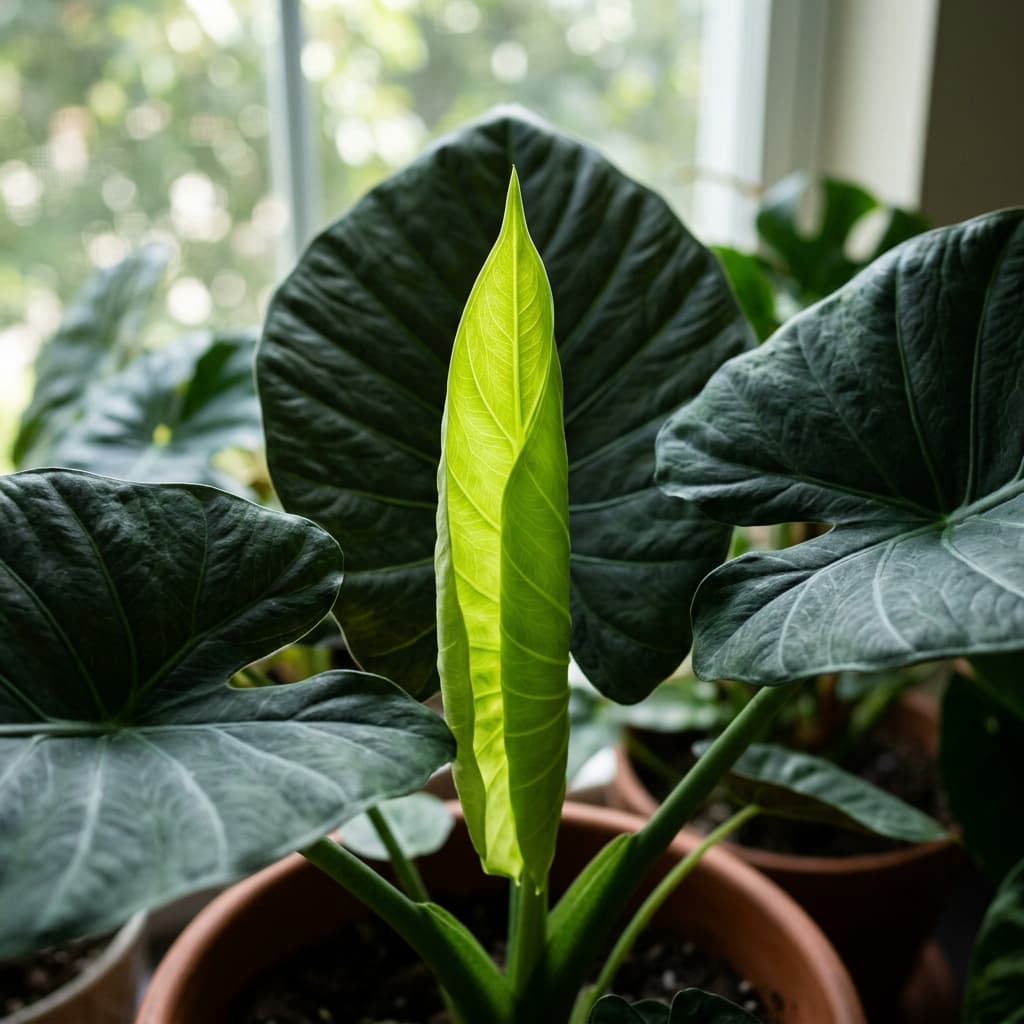
No source establishes that, or any timeline for it. If a leaf appears after you change several things at once — more light, fresh feeding, a new watering habit — you can’t credit the rice water.
My Alocasia isn’t growing — what should I check first?
Light, temperature, roots, watering, and your existing feeding routine — in that order. If leaves are yellowing, see our yellow-leaf diagnosis guide.
🌱 Sprouty’s Bottom Line
Check your Alocasia’s growing conditions before adding another treatment. The rice-water research is real and interesting — it just wasn’t done on your plant, in your pot, with your recipe. Get the light, warmth, roots, water, and feeding right first. That’s where new leaves actually come from.