
Short answer: banana peel water gives a fiddle leaf fig very little and draws fruit flies. The peel's useful nutrient is potassium, and dried peel powder delivers it better: bake the peels at 200°F until brittle, grind them, and scratch 1–2 tablespoons into the top of the soil every 3–4 weeks in spring and summer. Expect a first new leaf in about 3–6 weeks.
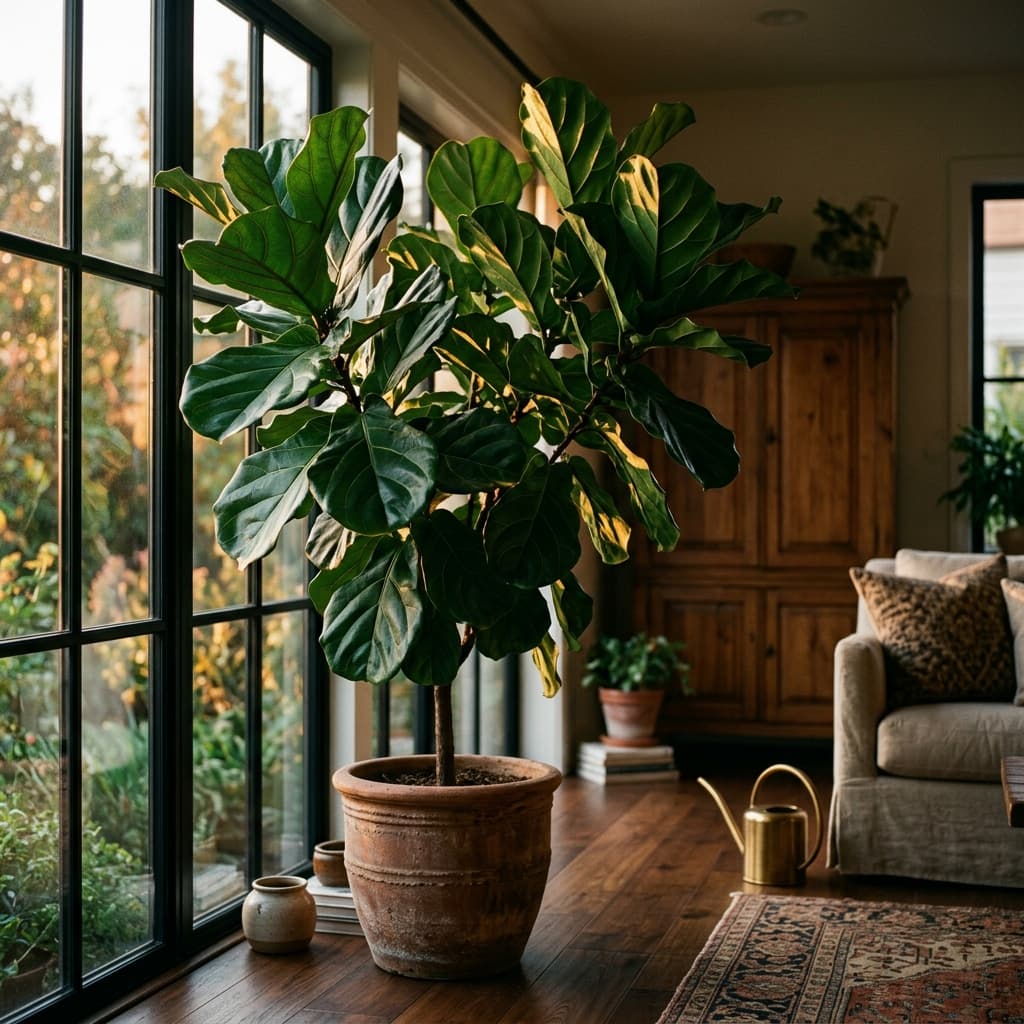
Fiddle Leaf Figs have a reputation for being drama queens — and honestly? They earned it. Beautiful, architectural, impossible to ignore in a living room. Also: stubborn, sulky creatures that will sit perfectly still for six months without producing a single new leaf while you question every decision you've ever made as a plant parent.
But here's something most people don't know about why FLFs stall out. And here's the thing that fixes it — sitting in your fruit bowl right now.
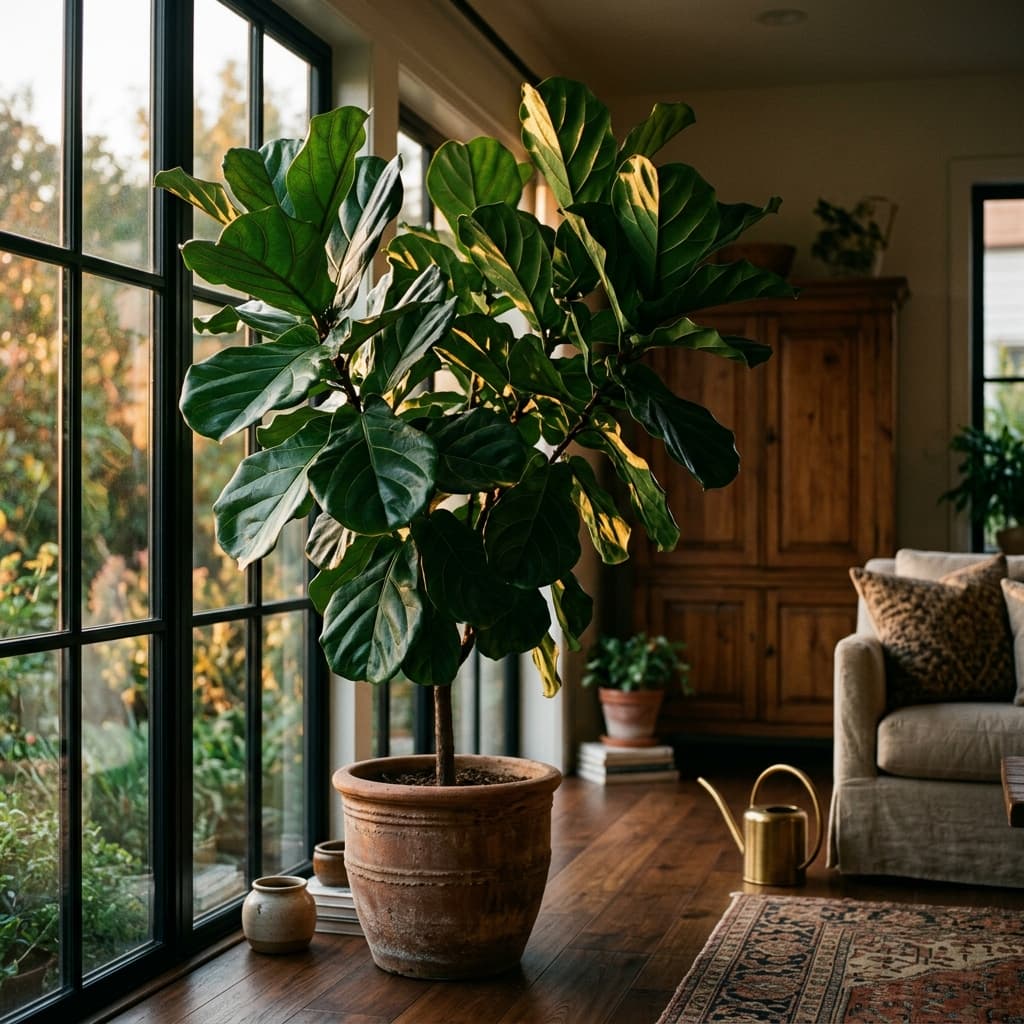
Why Fiddle Leaf Figs Stop Growing (It's Usually This)
Before the banana peel trick makes sense, you need to understand the most common reason FLFs stall — and it's not light, it's not watering, it's not root-bound stress.
It's potassium.
Potassium is the nutrient plants use to regulate basically everything that happens inside their cells: moving water and nutrients through stems and leaves, building thick cell walls, opening and closing the tiny pores that control gas exchange, and — most relevant to us — triggering the cellular division that produces new growth.
When a Fiddle Leaf Fig is low on potassium, it doesn't dramatically collapse. It just... stops. It conserves what it has. It holds the leaves it already has firmly, but has nothing left over to build new ones. The plant looks "fine" by any objective measure. It's just completely switched off growth mode.
Standard potting soil is good at providing nitrogen (for green, leafy growth) but typically runs low on potassium within 6–12 months of potting. Most indoor plant fertilizers are heavily nitrogen-weighted because that's what makes plants look lush and green fast. But that's not actually what your stalled FLF needs.
It needs potassium. And banana peels are almost entirely made of it.
🌿 Why Banana Peels — The Numbers
Dried banana peel powder contains roughly 42% potassium by dry weight — significantly higher than most commercial fertilizers. It also has useful amounts of phosphorus (for root development), magnesium (for chlorophyll production), and calcium (for cell wall strength). It's not a complete fertilizer on its own, but for a stalled FLF that specifically needs a potassium boost, it's hard to beat.
The Right Way to Do It (Not the TikTok Way)
You've probably seen the viral version of this — dumping banana peels into a jar of water, leaving it on your counter for a week, then pouring the murky liquid on your plants. And if you've read our other article on that particular hack, you already know: raw rotting fruit peels in an open container are a pest magnet, not a fertilizer factory.
The secret isn't that method. The secret is what happens when you dry the peels first.
Drying a banana peel concentrates all those nutrients into a shelf-stable, pest-free powder you can apply directly to soil as a slow-release amendment. No open containers of fermenting liquid. No fruit flies. No smell. Just a small jar of dark powder that lasts for months and works every time you use it.
How to Make Banana Peel Powder: Step by Step
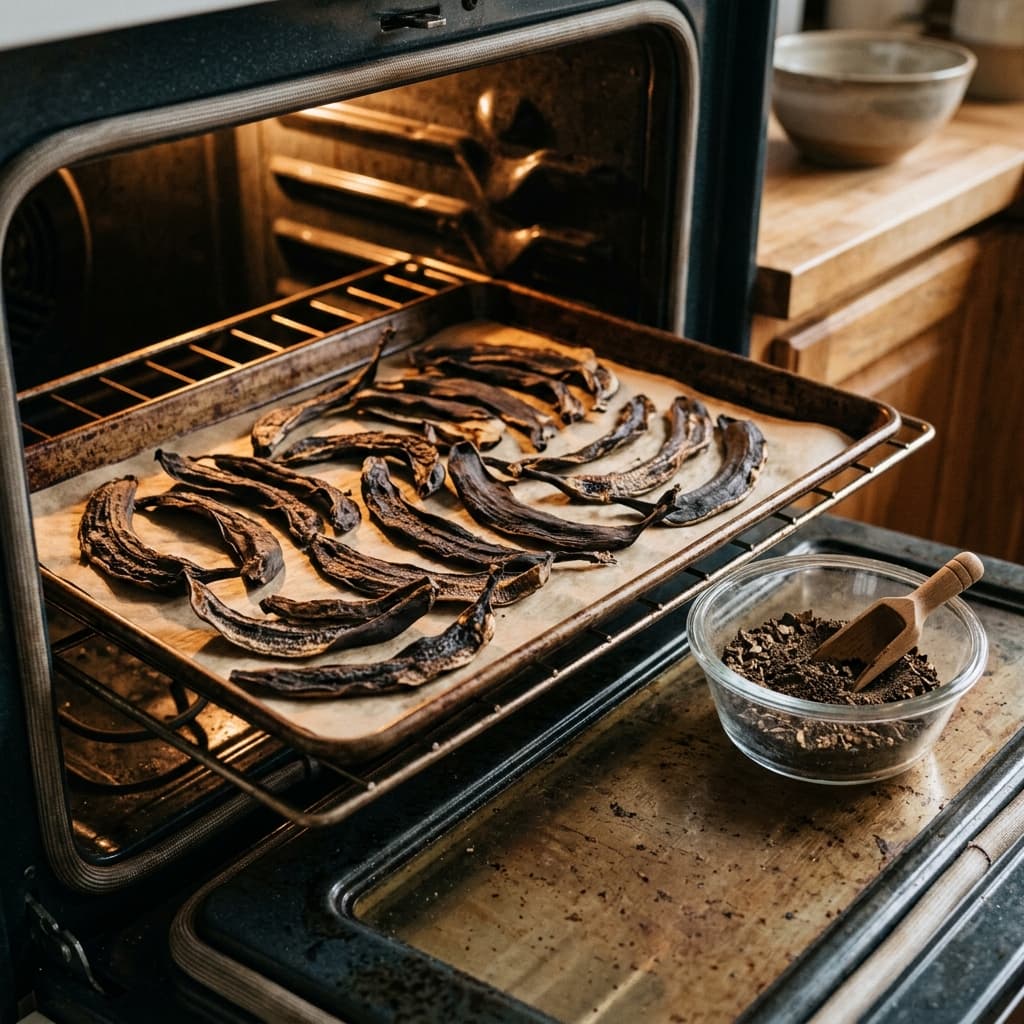
The process is genuinely simple and takes about 20–25 minutes of actual active time:
- Save your peels. One or two peels per application is plenty. The riper and darker the banana, the better — overripe bananas have the highest potassium concentration in their skins.
- Lay them flat on a baking sheet lined with parchment paper. Don't overlap them.
- Bake at 200°F (93°C) for 20–30 minutes until the peels are completely dry, dark, and brittle. They should snap rather than bend. If they're still pliable, give them another 10 minutes.
- Let them cool completely, then crumble them with your hands or pulse briefly in a small food processor or spice grinder until you have a coarse-to-fine powder.
- Store in a sealed glass jar at room temperature. Properly dried powder stays good for 3–6 months with zero smell and zero pest attraction.
That's the whole prep. Now here's how to use it on your FLF.
How to Apply It to Your Fiddle Leaf Fig
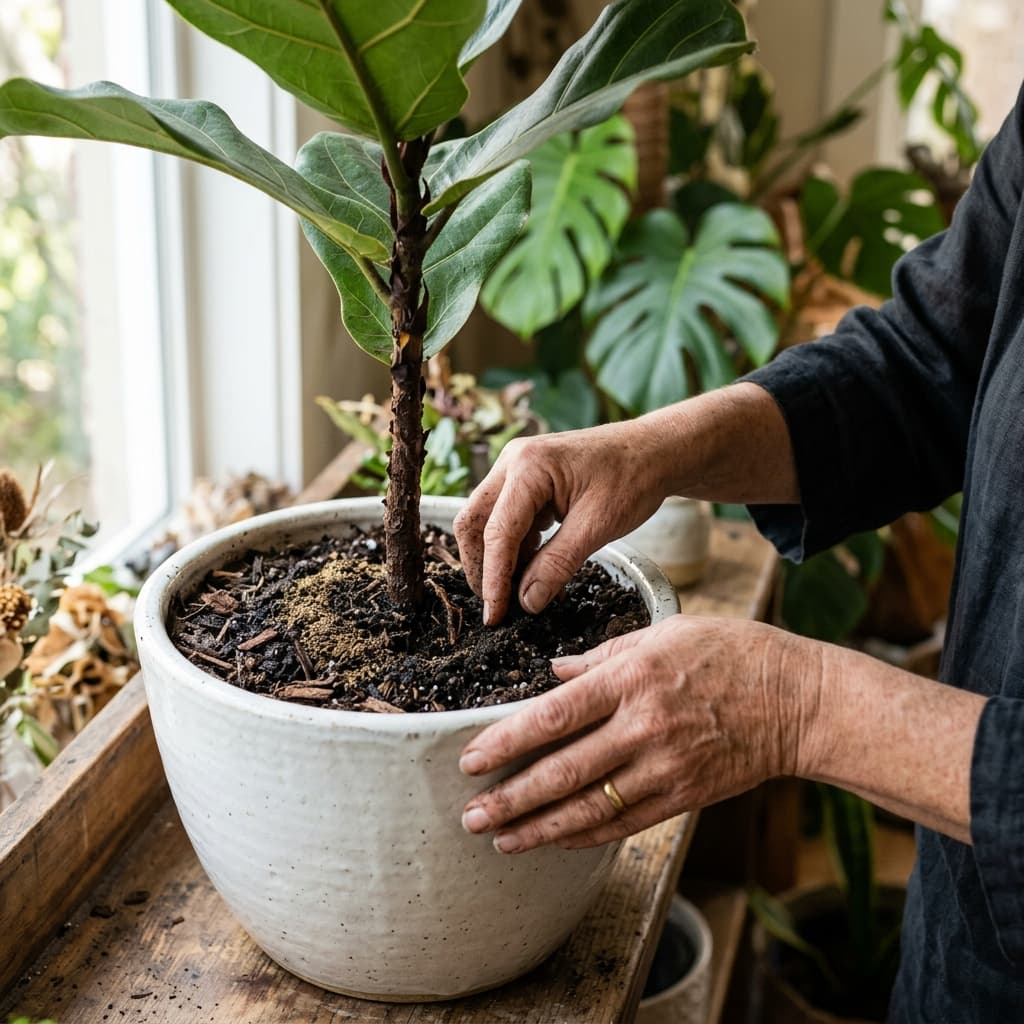
Banana peel powder works as a top-dressing amendment — meaning you apply it to the surface of the soil and let watering slowly pull the nutrients down to the roots over time. This is intentional: it mimics how nutrients release naturally from decomposing organic matter in the wild, and it prevents any burn risk.
How much to use: 1–2 tablespoons per application for a standard 10–12 inch pot. Scale up slightly for larger pots, stay at 1 tablespoon for smaller ones.
How to apply it:
- Sprinkle the powder evenly over the surface of the soil, keeping it away from the trunk — don't let powder pile up against the stem
- Use a chopstick, pencil, or your finger to scratch it lightly into the top ½ inch of soil — this speeds up nutrient release and prevents it washing off the surface
- Water normally. The moisture will begin pulling nutrients down to the root zone immediately
How often: Once every 3–4 weeks during the growing season (spring and summer). In fall and winter, scale back to once every 6–8 weeks or stop entirely — FLFs naturally slow down in lower light and don't need the same nutrient input.
What to Expect and When
Results depend on how stalled your plant is and what's been going on with its light and watering situation, but here's what most FLF owners experience after consistent banana peel powder application:
- Week 2–3: Nothing visible yet, but the top of the stem node (where new leaves emerge) may start looking slightly more swollen or active
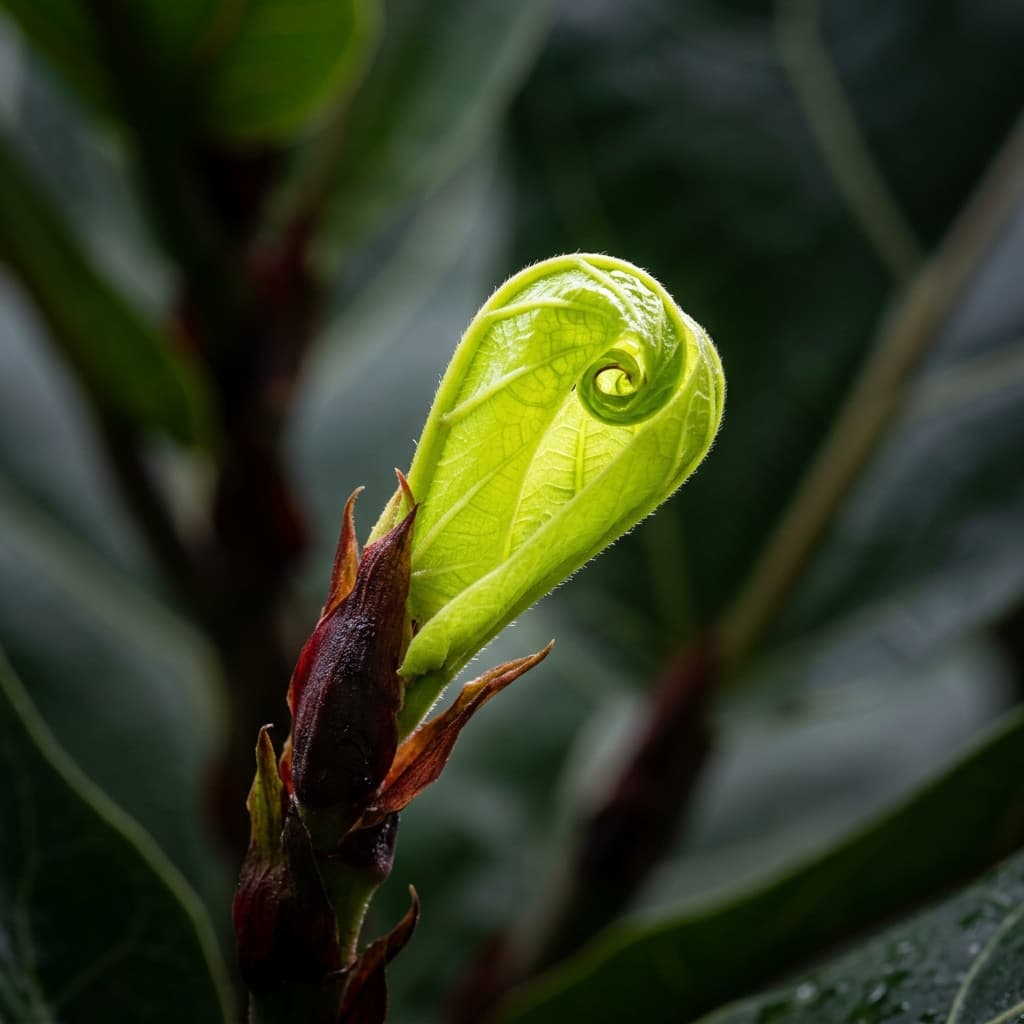
- Week 3–5: The first new leaf tip typically appears — a tight, dark red-brown curl emerging from the top growth point. This is your sign it's working.
- Week 5–8: The leaf unfurls. FLF leaves unfurl slowly over 1–2 weeks, starting tightly coiled and deepening from lime green to the rich, glossy dark green of maturity
- After the first leaf: Growth often becomes more rhythmic — one new leaf every 4–6 weeks during active season, which for a FLF is genuinely impressive output
Does It Work for Other Houseplants Too?
Yes — banana peel powder is broadly useful for any potassium-hungry houseplant. Plants that respond especially well:
- 🌿 Monsteras — potassium drives bigger, more fenestrated leaves
- 🪴 Ficus family (rubber plants, weeping figs, FLFs) — all seem to respond noticeably to potassium boosts
- 🌺 Anthuriums and Peace Lilies — potassium is key for flowering, and these will often push more blooms with regular applications
- 🍃 Pothos and Philodendrons — already easy growers, but banana peel powder often visibly increases leaf size on mature plants
- 🌵 Succulents and cacti — use sparingly (½ tablespoon, every 2 months), but potassium strengthens their stress tolerance
A Few Things That Maximize Results
Banana peel powder is a potassium amendment, not a complete fertilizer. For the best results on a stalled FLF, pair it with:
- Consistent bright indirect light. No nutrient in the world overcomes bad light for a FLF. South or east-facing window, as bright as you can manage without direct sun hitting the leaves. If your light situation is compromised, consider a grow light — it genuinely transforms these plants.
- Correct watering. FLFs want to dry out moderately between waterings. The top 2 inches of soil should feel dry before you water, but don't let the whole pot go bone dry. Consistent moisture (not soggy, not desert-dry) is what keeps them in growth mode.
- No moving them around. FLFs famously drop leaves when repositioned. Find their spot, leave them there. Stability encourages growth.
- Complement with a balanced fertilizer occasionally. Once a month in growing season, use a diluted balanced liquid fertilizer (something like 3-1-2 NPK) alongside your banana peel powder applications. The powder handles the potassium; the liquid fertilizer fills in nitrogen and trace minerals.
🌿 Sprouty's Bottom Line
This isn't a miracle hack. It's just giving a potassium-hungry plant the specific nutrient it's missing, in a form it can actually use, from a source you'd otherwise throw away. Dry the peel. Grind it. Scratch it in. Water normally. Wait 4 weeks. That's it. The banana peel costs you nothing. The new leaf is priceless.
Quick Reference: Banana Peel Powder for FLFs
- 🍌 What to use: Dried, baked banana peel ground to powder — overripe peels preferred
- 🌡️ How to dry: 200°F oven, 20–30 min, until brittle and snap-dry
- 📏 How much: 1–2 tablespoons per 10–12 inch pot, per application
- 📅 How often: Every 3–4 weeks in spring/summer, every 6–8 weeks in fall/winter
- 🔧 How to apply: Scratch lightly into top ½ inch of soil, then water normally
- ⏳ When to expect results: First new leaf typically in 3–6 weeks of consistent use
- 🧪 Pair with: Bright indirect light + monthly balanced liquid fertilizer for maximum effect