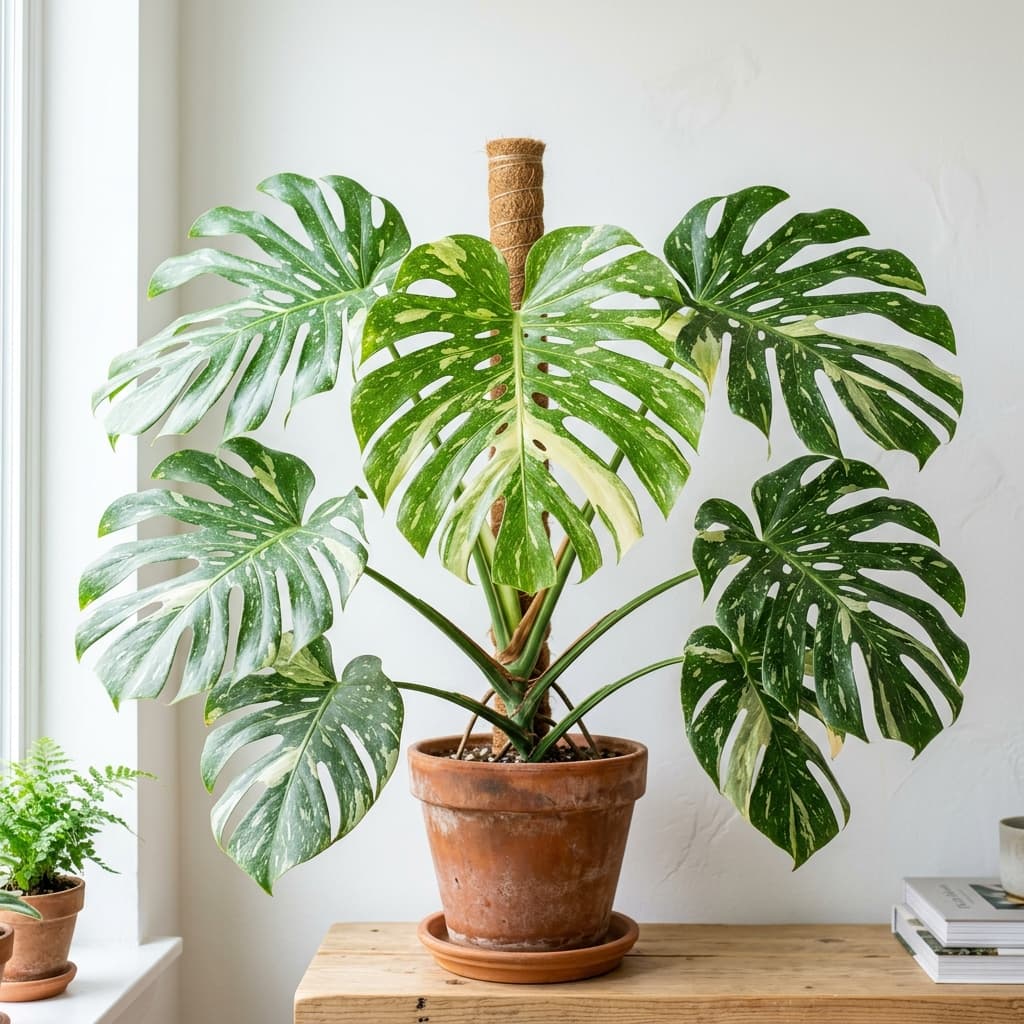

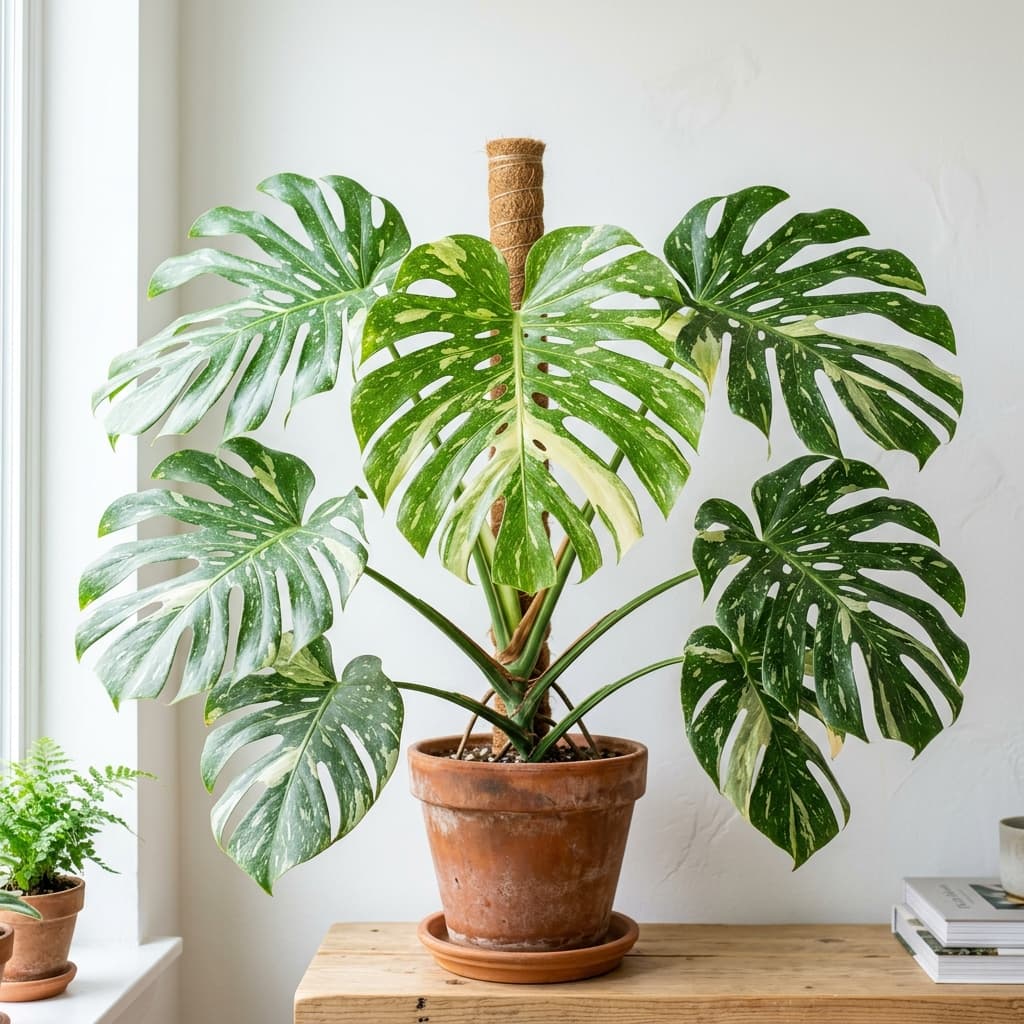
You saved up. You researched. You finally got your hands on a Monstera Thai Constellation, a stunning Albo variegata, or a shelf-full of Adansonii. And now you water it every few days, check the soil constantly, mist the leaves, and rotate it religiously—all while wondering why it's sitting there looking... sad.
Here's the uncomfortable truth that experienced rare-plant collectors know: the fastest way to kill a rare Monstera is to love it too hard. Neglect—real, intentional, strategic neglect—isn't a lack of care. It's the highest expression of understanding what these plants actually need.
Why Rare Monsteras Are Different From Your Average Houseplant
Before we talk about neglect as a practice, it helps to understand where Monsteras come from. In the wild, Monstera deliciosa and its rare cousins are hemiepiphytes—plants that spend part of their life cycle climbing trees through dense jungle canopies. They're adapted to:
- Boom-and-bust water cycles — torrential rains followed by extended dry periods as roots cling to bark and air
- Bright, filtered light — the canopy above them diffuses direct sunlight dramatically
- Airy, fast-draining substrate — roots that evolved gripping bark rot quickly in dense, constantly-moist potting mix
- Minimal fertilizer — jungle floor detritus is sparse and slow-releasing, nothing like the concentrated feeds we pour on
When you keep a Thai Constellation dripping wet and in a chunky peat mix, you're not creating jungle conditions—you're creating the opposite. You're creating the conditions of a bog, and bogs will rot rare Monstera roots in weeks.
🌿 The Rare Monstera Neglect Paradox
The plants that are hardest to find and most expensive to buy are, paradoxically, the ones that do best when you stop trying so hard. Their value comes from rarity in cultivation, not from being delicate. In the wild, these plants are survivors.
The 5 Ways Over-Caring Kills Rare Monsteras
1. Overwatering: The #1 Killer, By Far
Overwatering doesn't mean you watered too much in a single session. It means watering before the substrate has dried out enough. The roots of Monsteras need oxygen just as much as water. When the substrate stays wet, roots literally suffocate—and they begin to rot within days in warm conditions.
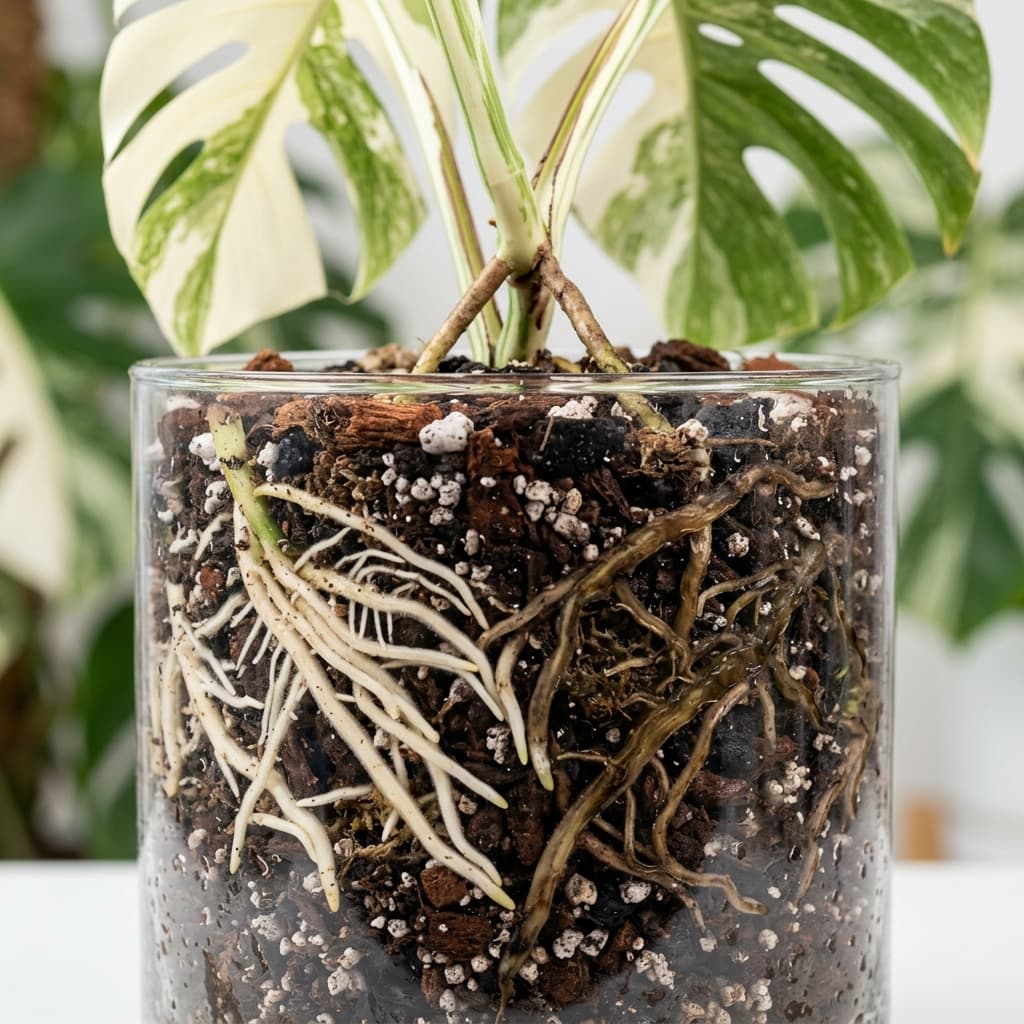
What strategic neglect looks like: Let the top 2–3 inches of substrate dry completely before watering. In a chunky, well-draining mix (more on that below), this may be 10–14 days between waterings in spring and summer, and 3–4 weeks in winter. Your rare Monstera would rather be slightly too dry than slightly too wet, every single time.
2. Repotting Too Frequently
New plant parents are always excited to give their rare acquisition "more room to grow." But Monsteras in cultivation are famously root-bound tolerant—in fact, they often push out more growth when mildly root-bound because it triggers a survival instinct to climb higher and find more light.
Every repot is a shock event. Roots are disturbed, the balance of moisture in the new substrate changes, and the plant diverts energy from leaf production to root recovery for weeks. Repotting your Albo every spring "just because" may be delaying the very growth you're hoping to see.
What strategic neglect looks like: Only repot when roots are actively circling the bottom of the pot or escaping the drainage holes in significant numbers. Go up just one pot size (2 inches diameter max). And consider bark-heavy or semi-hydro substrates that minimize repotting frequency entirely.
3. Misting (And Humidity Theater)
The misting ritual feels nurturing. The reality: misting the leaves of a Monstera raises local humidity for approximately 10–20 minutes before it evaporates, and the water droplets sitting on the leaves in indirect light can actually promote fungal issues over time. It's effort that produces no real benefit for the plant.
What strategic neglect looks like: If humidity genuinely matters for your growing environment (below 40% relative humidity, especially in winter), invest in a room humidifier positioned near your plants. That's real, sustained humidity. Stop the misting. Your Monstera doesn't need the performance—it needs the result.
4. Feeding on a Rigid Schedule
Over-fertilizing is the sneaky cousin of overwatering. Nutrient salts build up in the substrate, burn fine root hairs, and create stress that slows growth instead of accelerating it. Many collectors mistake fertilizer burn symptoms (brown leaf tips, yellowing lower leaves) for nutrient deficiency and respond by feeding more—which makes things worse.
What strategic neglect looks like: Feed only during active growth (spring through early fall), at half the recommended dose, no more than once a month. In winter, stop entirely. Every 6 months, flush the substrate thoroughly with plain water to clear salt buildup. Less is almost always more with fertilizer for Monsteras.
5. Constantly Moving and Rotating
The impulse to optimize a plant's position—rotating it for even growth, moving it to a brighter window, then back, then to a different room—creates invisible stress. Plants make micro-adjustments to their cellular structure based on light direction. Constant moving means constant re-adjustment, which consumes energy that could go toward fenestrations and new leaf production.
What strategic neglect looks like: Find a spot that works and commit to it. A stable, consistent environment is more valuable than a theoretically optimal environment that changes every two weeks.
The Ideal Rare Monstera Setup That Lets You Walk Away
The goal of strategic neglect is to build a system where the plant thrives without constant intervention. Here's what that system looks like:
Substrate: The Foundation of Neglect
Ditch standard potting mix entirely for rare Monsteras. A chunky, airy mix that drains fast and dries evenly is the single biggest upgrade you can make. A reliable starting point:
- 40% orchid bark (medium grade) — provides air pockets and mimics epiphytic growing conditions
- 30% perlite — ensures rapid drainage and prevents compaction
- 20% coco coir — retains just enough moisture without waterlogging
- 10% worm castings — slow-release nutrition without the burn risk of synthetic fertilizers
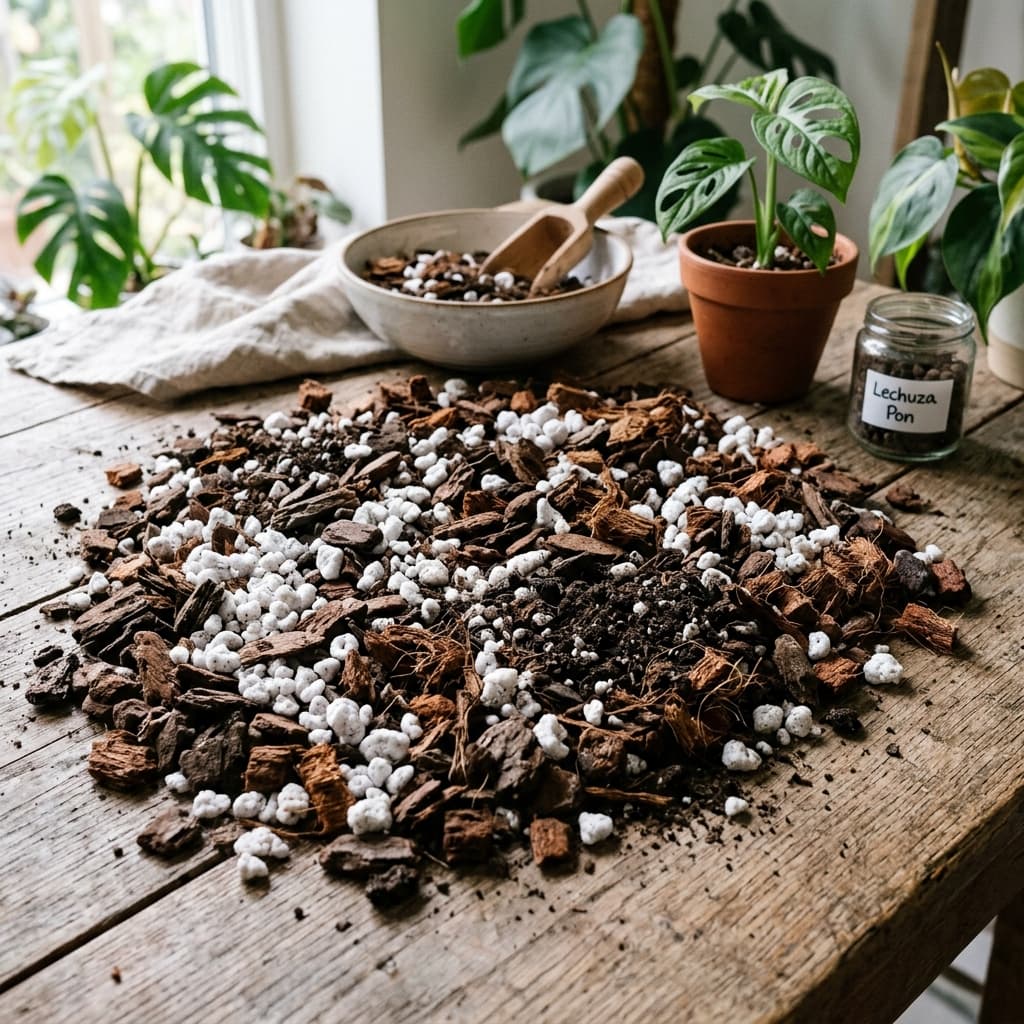
In this mix, it's genuinely difficult to overwater because water moves through so efficiently. You've engineered your way out of the biggest danger.
💡 The Semi-Hydro Option
Many serious rare Monstera collectors have moved to semi-hydroponics—roots in pure perlite or LECA (lightweight expanded clay aggregate) with a passive wicking reservoir. The moisture level is consistent, root rot becomes nearly impossible, and growth rates often double. It's the ultimate "set it and forget it" system for rare plants. If you're serious about your collection, it's worth researching.
Light: Bright, Consistent, Indirect
Rare variegated Monsteras like the Thai Constellation and Albo need bright light to sustain their white sectors—those cells lack chlorophyll and can't photosynthesize, meaning the green sections must work harder. But direct sun will bleach and burn the variegated portions within days.
The sweet spot: bright indirect light, as consistently as possible. An east-facing window is ideal. A north-facing window with a grow light supplement works well in winter. A south or west window with a sheer curtain to filter direct rays is acceptable. Choose a spot and leave the plant there.
Watering: The Lift-the-Pot Test
Forget soil moisture meters and moisture-checking sticks. Learn to lift your pot. A dry pot is dramatically lighter than a wet one. When you're uncertain whether it's time to water, lift the pot. If it feels light and the top 2–3 inches are dry, water thoroughly until it flows freely from the drainage holes. Then walk away for another week or two.
What Healthy Neglect Actually Looks Like Over Time
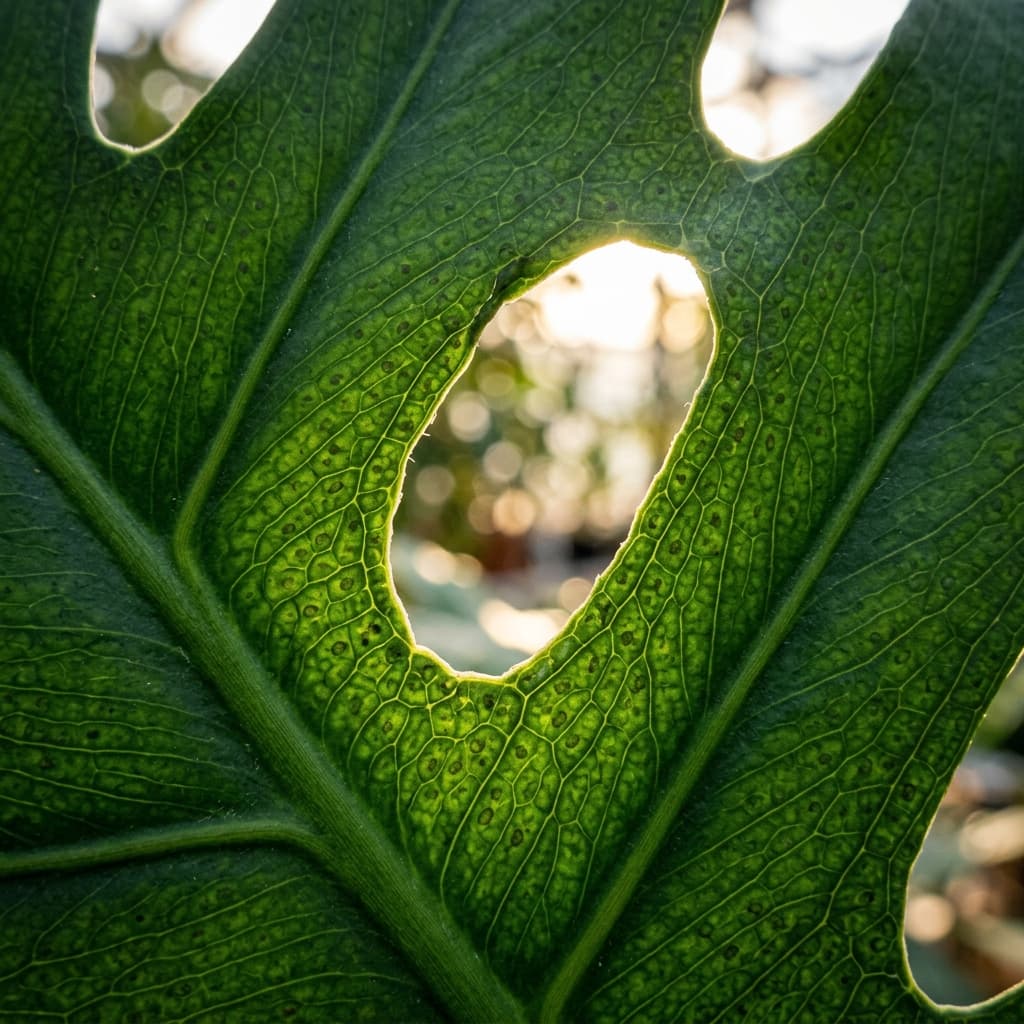
When you implement strategic neglect, you'll notice something counterintuitive in the first few weeks: the plant might look like it's doing nothing. No new leaves. No obvious changes. This is normal. The plant is often in a recovery phase, adjusting from previous over-care, building a stronger root system, or simply settling into its new stable environment.
After 4–8 weeks of consistent, hands-off care, you'll typically see:
- New growth emerging from the central crown—often the first leaf in months
- More pronounced fenestrations (holes and splits) on mature leaves, a sign of a healthy, well-established root system
- Firmer, more upright leaves that hold their structure rather than drooping
- Improved variegation expression in Thai Constellations and Albos as the plant stabilizes
The Mindset Shift: Trust the Plant
The hardest part of strategic neglect isn't the watering schedule or the substrate recipe. It's the mental shift from "I need to do something" to "my job is to stop doing the wrong things."
Rare Monstera collectors who thrive with their plants have usually arrived at the same conclusion through the same painful route: they killed a $300 plant by loving it to death, learned from that, and built a hands-off system that actually works. The restraint they practice isn't indifference—it's the highest expression of understanding what the plant needs.
Your rare Monstera doesn't need you hovering. It needs bright light, fast-draining substrate, water only when truly dry, and the freedom to grow at its own pace. Give it those things consistently—and then trust it. That's the real green thumb.
Quick Reference: Rare Monstera Care by the Numbers
- 🌡️ Temperature: 65–85°F (18–29°C) — avoid cold drafts and A/C vents
- 💧 Watering frequency: Every 10–14 days in summer, 3–4 weeks in winter (use the lift test, not a calendar)
- ☀️ Light: Bright indirect — 200–400 foot-candles minimum for variegated varieties
- 💦 Humidity: 50–70% ideal; 40%+ acceptable. Use a humidifier, not misting.
- 🌱 Fertilizer: Half-strength balanced fertilizer (e.g. 20-20-20) monthly in spring/summer only
- 🪴 Repotting: Only when roots actively circle the pot — typically every 2–3 years, not annually
- 🧪 Substrate: Chunky, airy mix (orchid bark + perlite dominant) — never standard potting soil alone