
LECA root problems need a setup check, not an automatic assumption that still water is toxic. Inspect the roots for soft decay, check whether the upper root zone has access to air, and review water level and nutrient concentration. A non-circulating reservoir can work in an appropriate design; continuously submerging roots that require an air space can create problems.
Sophie lifted the inner pot out of the cache pot and frowned at the waterline. "Sprouty, are the roots supposed to be swimming?" Sprouty peered over the rim. "Only the bottom ones. The rest should be breathing. Let's draw what we've actually got before we touch anything."
1. Draw Your Setup Before Changing It
The quickest decision comes before any diagnosis: sketch what your system actually looks like. Grab a scrap of paper and draw a side view of your double-pot setup — the inner pot, the outer pot, where the LECA sits, where the waterline is, and where the roots are.
Most LECA "emergencies" turn out to be geometry problems, not chemistry problems. If your sketch shows the entire root mass sitting below the waterline with no air space above it, you've found your first fix — and it's a water-level adjustment, not a chemical rescue. If your sketch shows water touching only the bottom layer of pebbles with most roots above it, your setup is shaped correctly and the issue lies elsewhere.
This one drawing also stops the most common overreaction: tearing apart a healthy system because a single brown root caused panic. Which brings us to the design itself.
2. The Water-Contact Layer Versus the Upper Air Zone
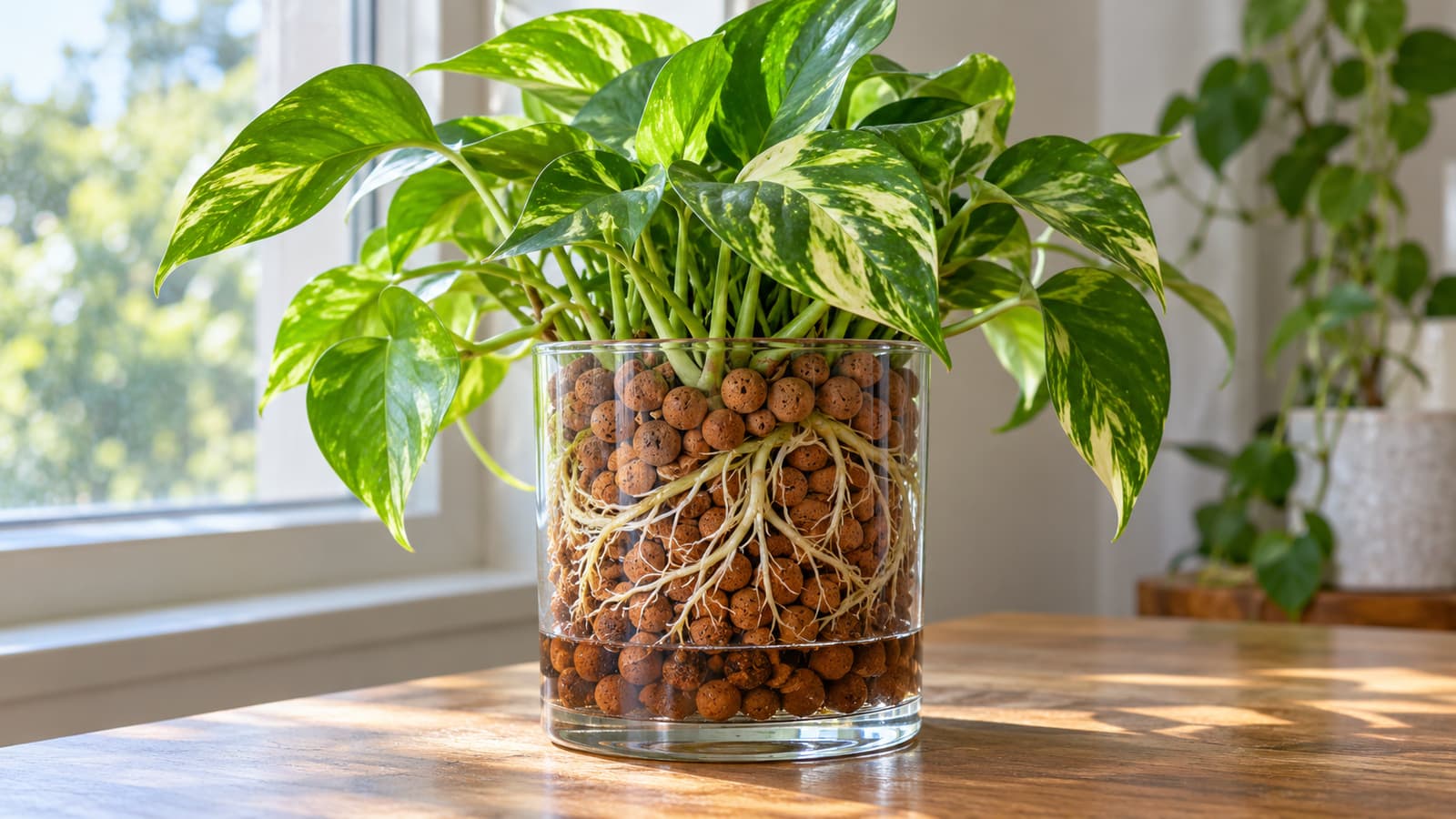
A working LECA semi-hydro setup has two zones, and they do different jobs:
- The water-contact layer (bottom): the lowest pebbles sit in the reservoir. Capillary wicking draws moisture upward through the LECA, so roots don't need to sit in water to stay hydrated.
- The upper air zone: the bulk of the root system lives here, in humid air between the pebbles. This is the oxygen pathway — roots take up oxygen from the air spaces, not from dissolved oxygen in the water.
This is the same principle behind non-circulating hydroponic methods like Kratky's: the plants thrive not because the water is moving, but because an air gap exists between the nutrient solution and the upper roots, letting one set of roots breathe while lower roots drink. Research on Kratky's non-circulating methods demonstrates that still water with an appropriate air space is a workable design — which is why "stagnant" alone is never the full diagnosis. Kratky's original paper describes the method and the air-gap mechanism in detail.
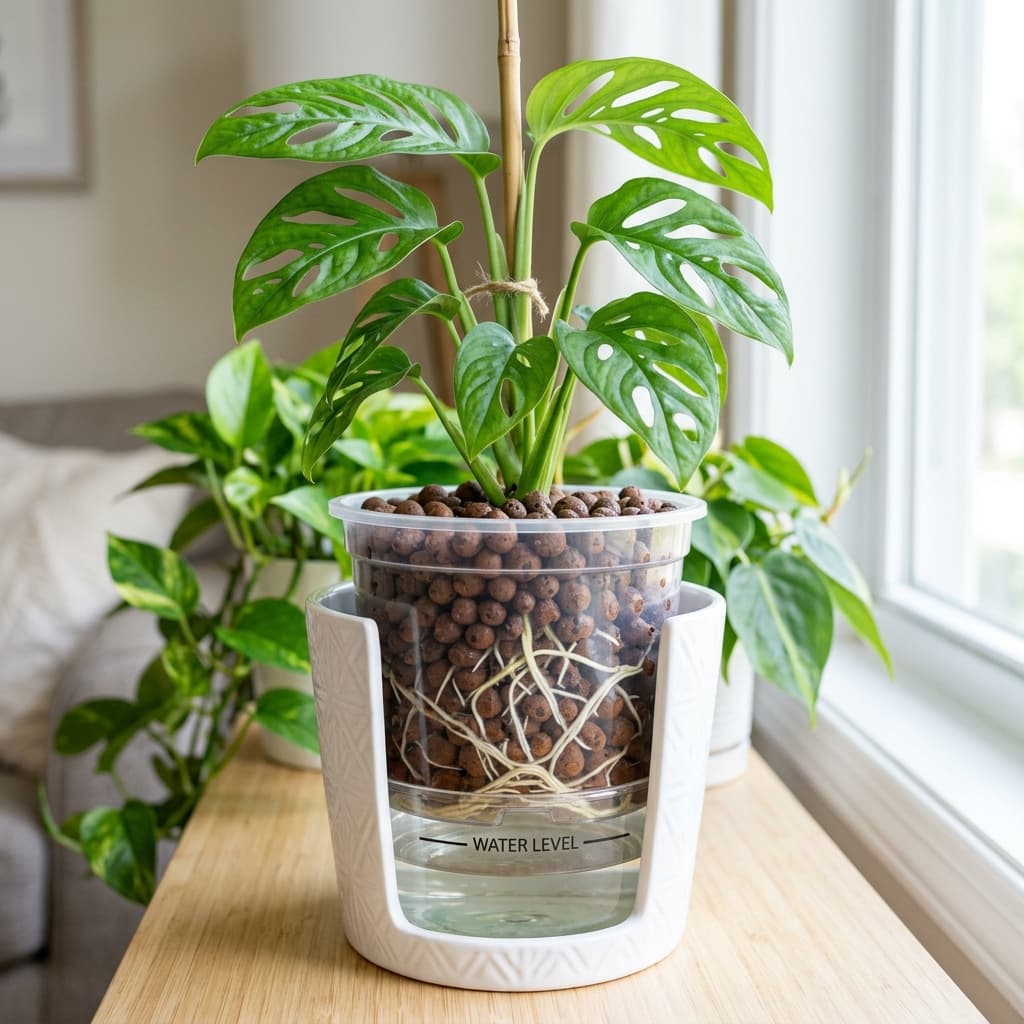
Notice what this means for the old "half to one inch, always" rule: a fixed depth ignores pot dimensions and system design. In a tall narrow pot, an inch of water is a puddle; in a short wide one, it's a lake. Judge by the zones — water touching the bottom layer, air space above — not by a universal number.
3. Healthy Roots, Stains, Algae, and Actual Decay
Here's where most LECA growers get misled: color alone doesn't diagnose anything.
- White or cream, firm roots — healthy. This is the baseline.
- Firm roots with brown or tan staining — usually nutrient or tannin staining, not rot. If the root is firm and doesn't disintegrate when you tug gently, leave it alone.
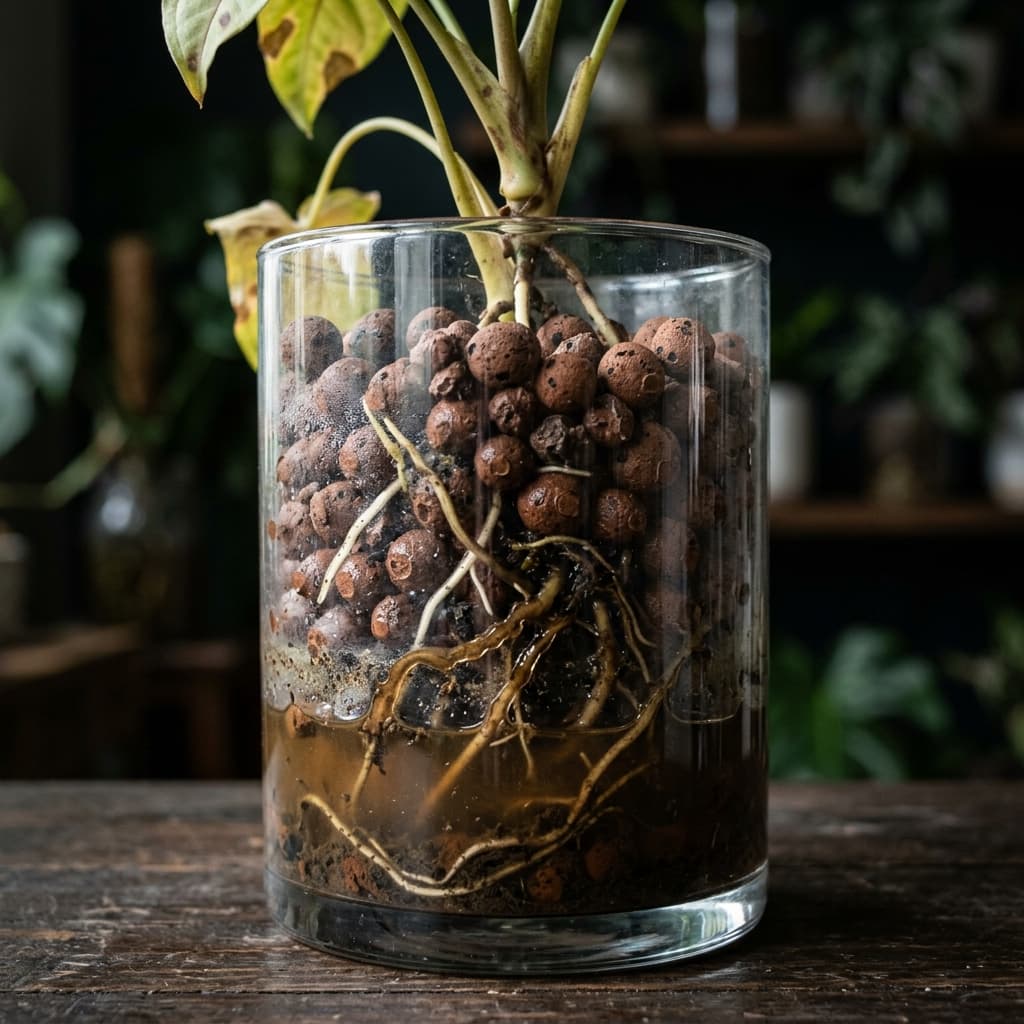
- Mushy, slimy roots that fall apart or smell foul — that's actual decay. Trim only these, with clean scissors, cutting back to firm tissue.
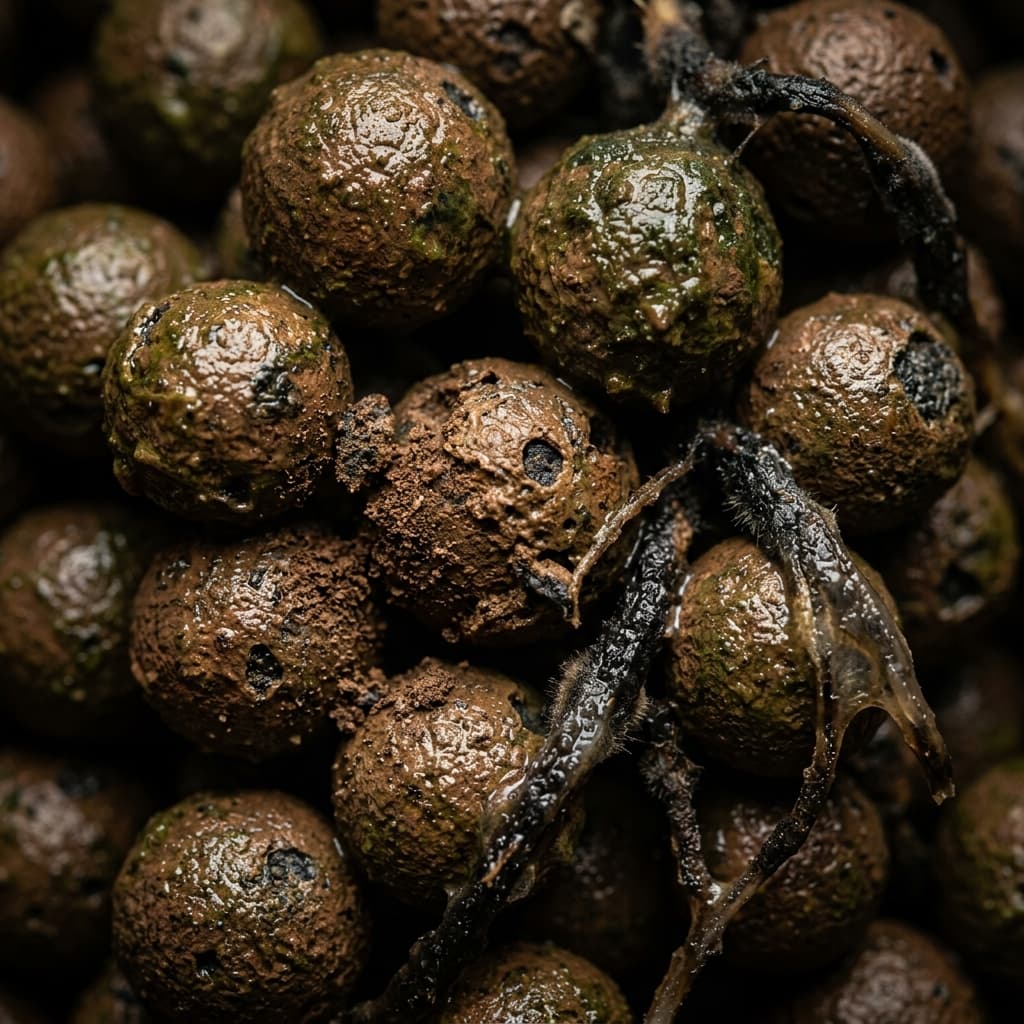
- Algae or biofilm on the pebbles — unsightly, and a sign the system wants attention, but algae on LECA is not itself a diagnosis of root harm.
- Musty or sour smell from the reservoir — suggests microbial activity worth investigating. It's a reason to inspect, not a verdict.
🌿 Sprouty's Inspection Checklist
When you lift the inner pot, check:
💧 Waterline position — is most of the root mass above it, in the air zone?
👃 Smell — fresh and neutral is fine; musty or sour means inspect closely
✋ Root texture — firm (healthy, even if stained) vs. mushy or slimy (decay — trim these)
🟢 Pebble surfaces — heavy slime or crusty mineral buildup means the system is due for a rinse
📉 Water level trend — a healthy plant drinks, so the level should fall between refills
🍂 Leaves — sudden yellowing has many possible causes; rule out the usual suspects before blaming the reservoir
4. Top-Up, Refresh, and Nutrient Monitoring
Topping up and refreshing are different operations, and confusing them causes slow-building problems:
- Top-up: adding water as the level drops. Fine day to day — but every top-up without a refresh concentrates leftover fertilizer salts a little more.
- Refresh: draining the reservoir completely and refilling with fresh nutrient water. This resets salt buildup and is the real maintenance event.
How often to refresh depends on the system and the plant — pot size, plant size, temperature, and growth rate all change how fast water is used and salts accumulate. A fast-growing monstera in a warm bright room needs attention sooner than a slow winter pothos. Watch your own setup's rhythm rather than following a universal calendar; guidance on monitoring hydroponic solutions, including checking concentration and pH when you have the tools, is covered in UMN Extension's small-scale hydroponics guide.
On feeding: LECA itself contains no nutrients, so plants depend on what you add to the water. Use a fertilizer formulated for hydroponic or houseplant use and follow the product label's directions — labels, not internet rules of thumb, are the authority on concentration. If you own an EC or pH meter, it's a useful check; it isn't a requirement for every grower.
5. A Cautious Rescue Checklist
Only do a full reset when decay is confirmed — mushy roots, foul smell, or a collapsed plant. A stained root or a bit of algae doesn't warrant tearing the system apart.
- Lift and drain. Remove the inner pot from the outer pot and pour off all the reservoir water.
- Inspect, then trim only what's dead. Rinse roots gently and cut away only mushy, slimy tissue with clean scissors, back to firm root. Firm roots stay — even stained ones.
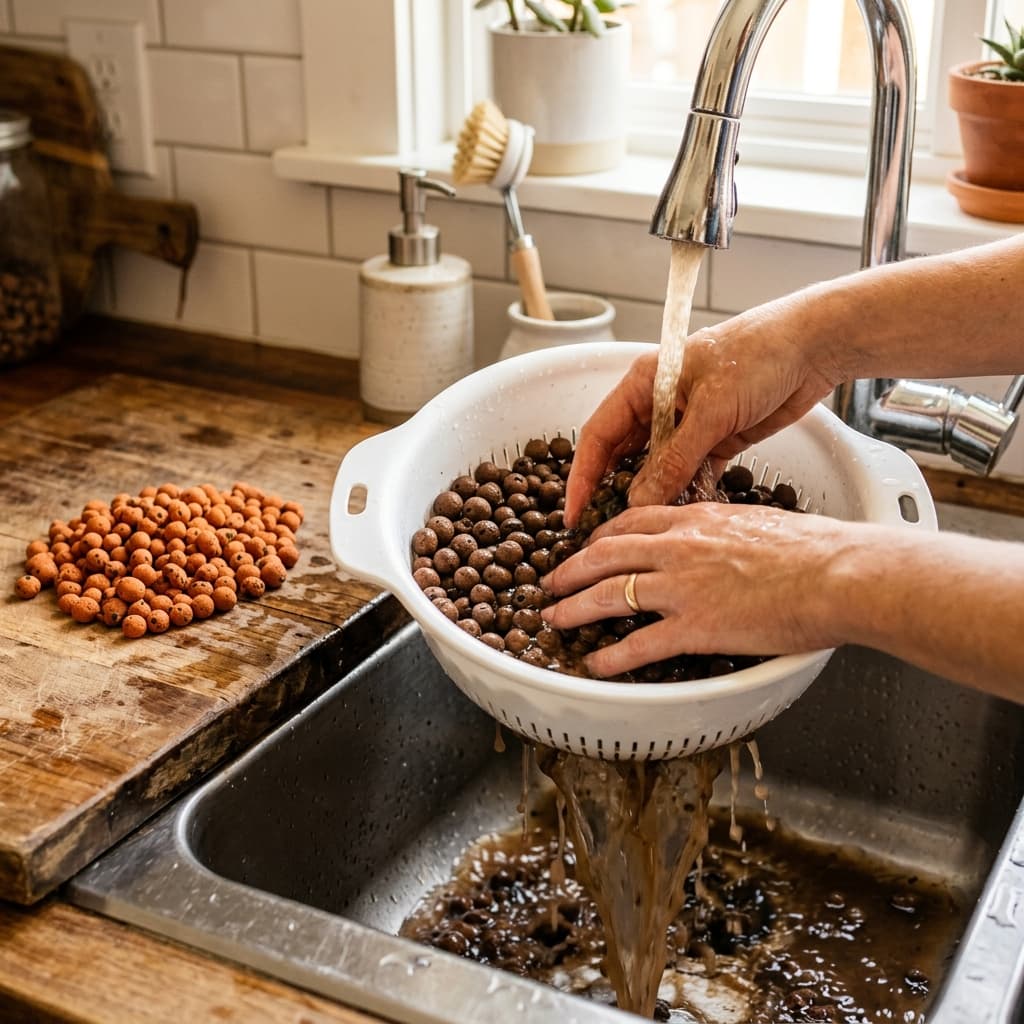
- Rinse the pebbles. Put the LECA in a colander and run water through it, agitating with your hands, until the water runs clear. For heavy mineral crust, a soak in plain water with a splash of white vinegar for an hour, then a thorough rinse, helps dissolve deposits.
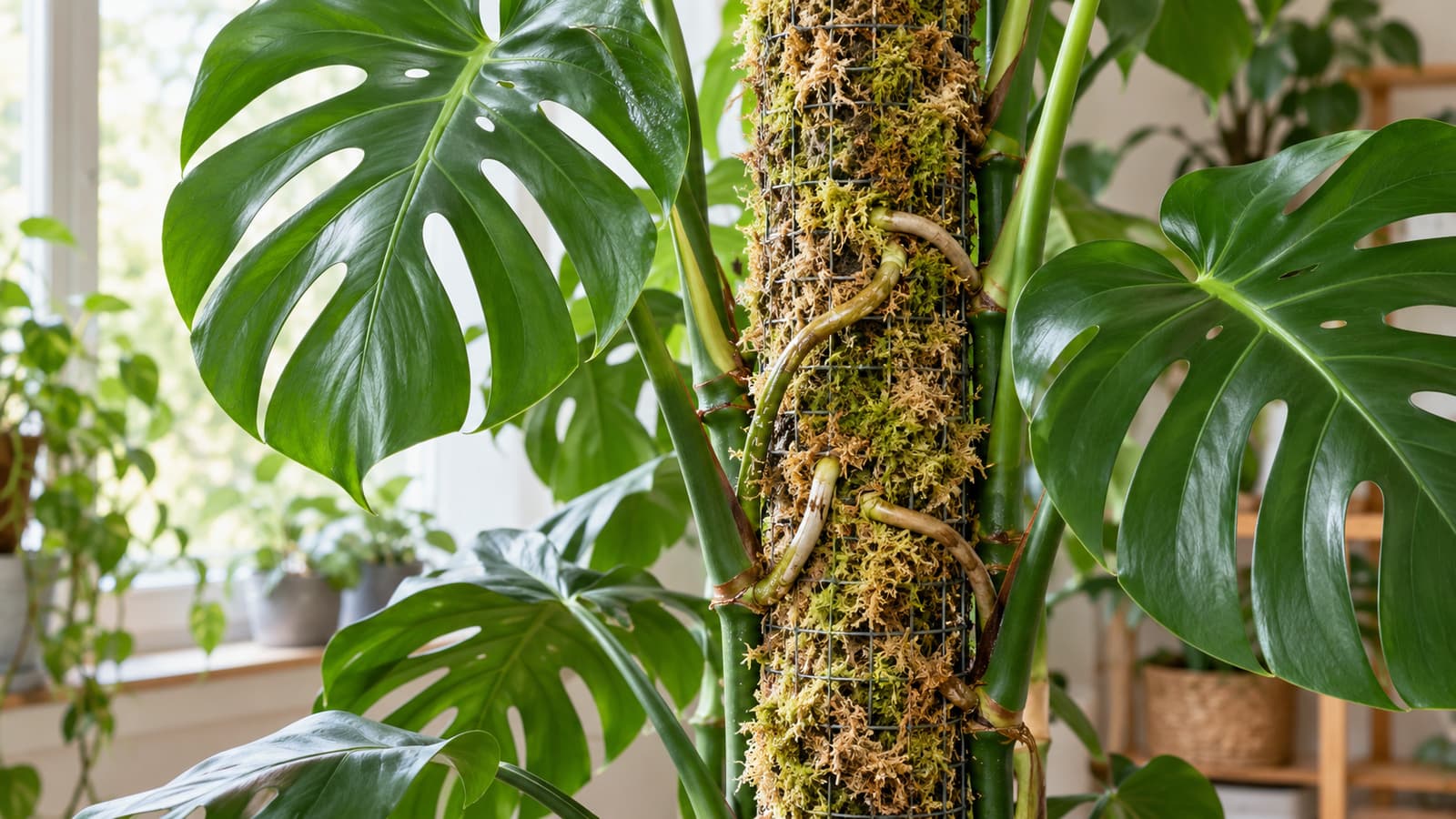
- Reset the geometry. Repot, then fill the reservoir low — water touching only the bottom pebble layer, with the root mass in the air zone above. If your plant also climbs, this is a good moment to check whether its support pole setup suits its roots too.
- Watch, don't fuss. Give the plant a week or two of stable conditions before deciding anything else. Repeated unpotting stresses roots more than a slightly imperfect reservoir does.
6. A Maintenance Log Matched to Your Plant
Instead of a fixed schedule, keep a short log and let your plant set the pace. A notebook line or phone note per check is enough:
- 📅 Refresh date — when you last drained and refilled; shorten the interval if salt crust appears quickly, lengthen it if everything stays clean
- 👀 Waterline trend — is the level falling between top-ups? A level that never moves deserves a root inspection
- 🚿 LECA condition — note slime or mineral crust when you see it; rinse when buildup is visible, not on a calendar
- 🔬 Root peek — during refreshes, glance at root texture: firm is fine, mushy gets trimmed
- 🌱 Growth notes — new leaves and active growth mean higher water and nutrient use; adjust refresh frequency with the seasons
🌿 Sprouty's Bottom Line
LECA is a genuinely good growing system — when the geometry is right. Water low, roots mostly in air, refresh before salts build up, and judge roots by texture, not color. Still water isn't the diagnosis. Start with your LECA waterline.
Sources
- Kratky — Three Non-Circulating Hydroponic Methods for Growing Lettuce (University of Hawaiʻi CTAHR): the primary paper on non-circulating hydroponics and the air-gap mechanism.
- Small-Scale Hydroponics (University of Minnesota Extension): system management, solution monitoring, and maintenance practices.