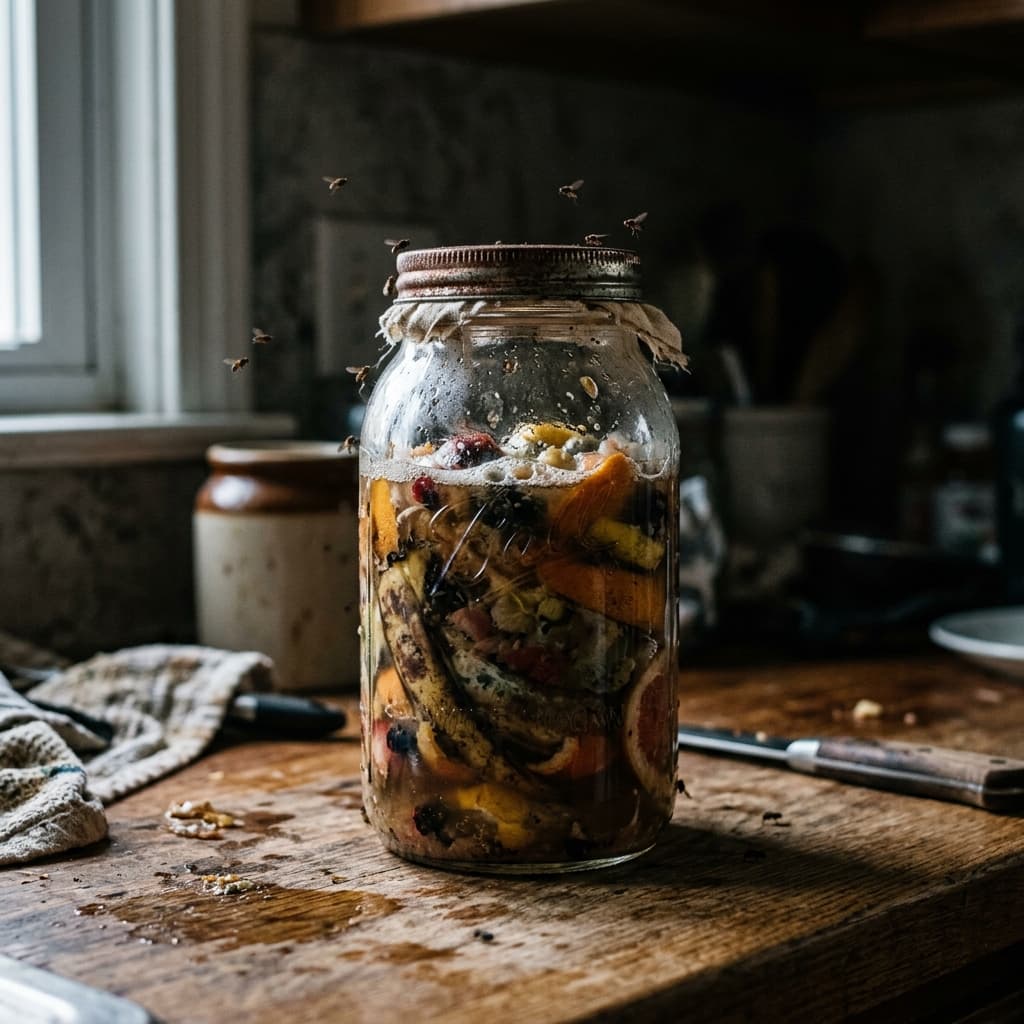

You've seen it. The aesthetic mason jar. The satisfying pile of orange peels and banana skins. The confident creator voice saying "just soak these in water for a week and you've got free liquid fertilizer for your plants!"
It sounds incredible. Zero waste! Free nutrients! Sustainable gardening! 🌿
And honestly? Sprouty wanted it to be true too. But after digging into what's actually happening inside that jar — and what it means for your kitchen — we have to be straight with you.
This hack isn't making fertilizer. It's making a pest magnet. And depending on where you live, that mason jar sitting on your counter is basically sending a group chat notification to every roach in a two-block radius.
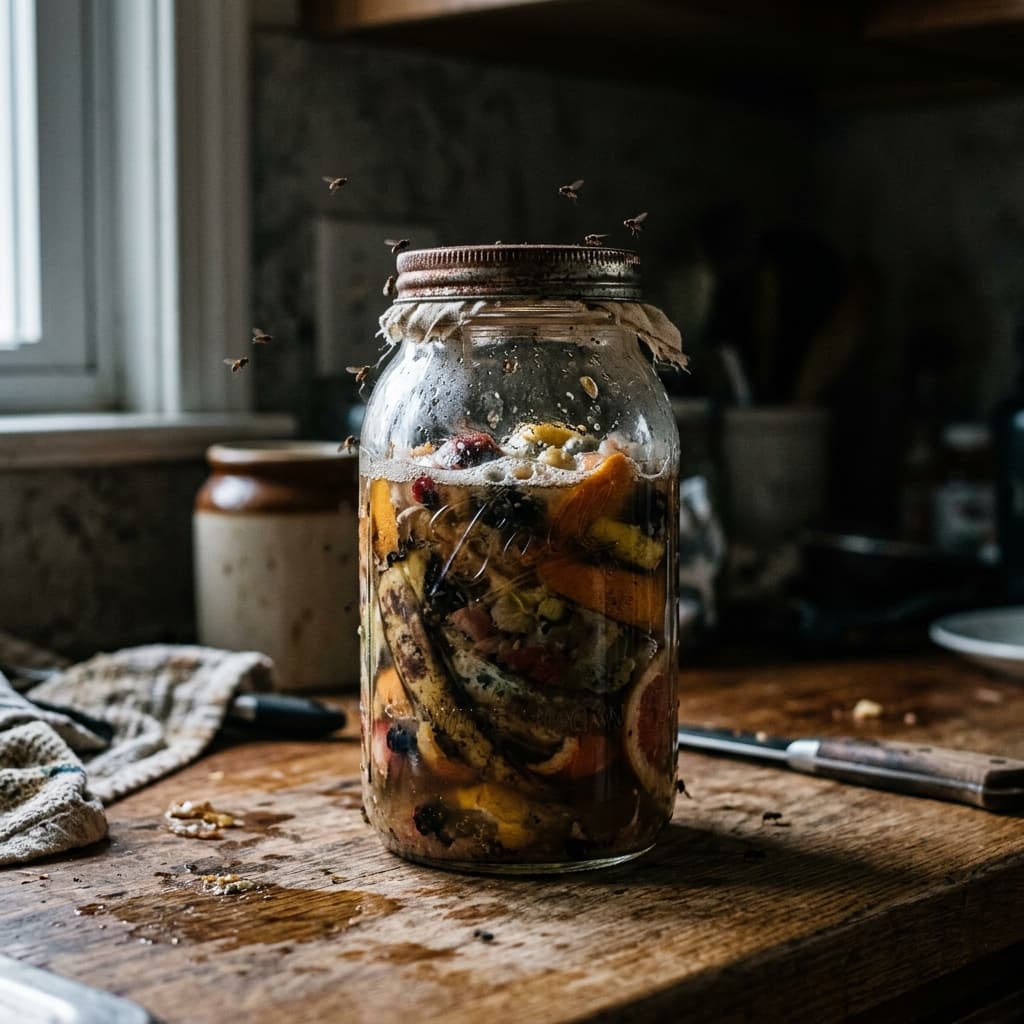
Wait — Does It Actually Work as Fertilizer?
Let's give the hack a fair shot first. The idea behind it: banana peels contain potassium, citrus peels have some calcium and magnesium, and soaking them in water should release those nutrients into a liquid you can pour on your plants.
In theory — kind of? Those nutrients are in the peels. But here's what the viral videos skip over:
- Soaking fruit scraps in room-temperature water for a week doesn't produce fertilizer — it produces fermented, anaerobic (oxygen-free) liquid that smells awful and has a chaotic, unpredictable nutrient content
- Most of the potassium from a banana peel that's been sitting in water is leaching, not concentrating — you end up with a very dilute solution that's mostly just... funky water
- What IS concentrating fast? Sugars. Fruit peels are loaded with natural sugars. Those sugars ferment, creating the exact warm, sweet, rotting smell that attracts fruit flies, gnats, ants — and the guests nobody invited: cockroaches
🌱 Sprouty's Quick Reality Check
The nutrients in fruit peels are real. The problem is the method of extraction. Soaking raw scraps in a closed jar on your counter isn't composting — it's just rotting. And rotting food on your counter has consequences that a proper compost setup is specifically designed to prevent.
What's Actually Happening in That Jar
Here's the unsexy but important part — and don't worry, Sprouty will keep it simple.
When you throw fruit peels into water and leave them at room temperature, you're not starting a controlled process. You're just letting things rot. And rotting fruit goes through a few very distinct (and very smelly) stages:
- Day 1–2: The Sugar Party. Naturally occurring bacteria and wild yeasts start feasting on the sugars in the fruit skins. The jar warms slightly. It starts smelling sweet-ish, almost like overripe fruit. This is the stage that smells appealing to every insect that's ever met fruit.
- Day 3–5: Things Get Funky. As bacteria multiply, they produce gases (CO₂, and sometimes hydrogen sulfide — yes, that's the egg smell). The liquid starts clouding. Mold may start forming on any peels above the waterline. The "fertilizer tea" starts smelling sour or musty.
- Day 5–7+: Full Rot Mode. The liquid is now a cocktail of fermentation byproducts, mold spores, and bacterial colonies. It may have some dissolved minerals in it. It also smells like garbage. And your kitchen has been advertising itself to pests the whole time.
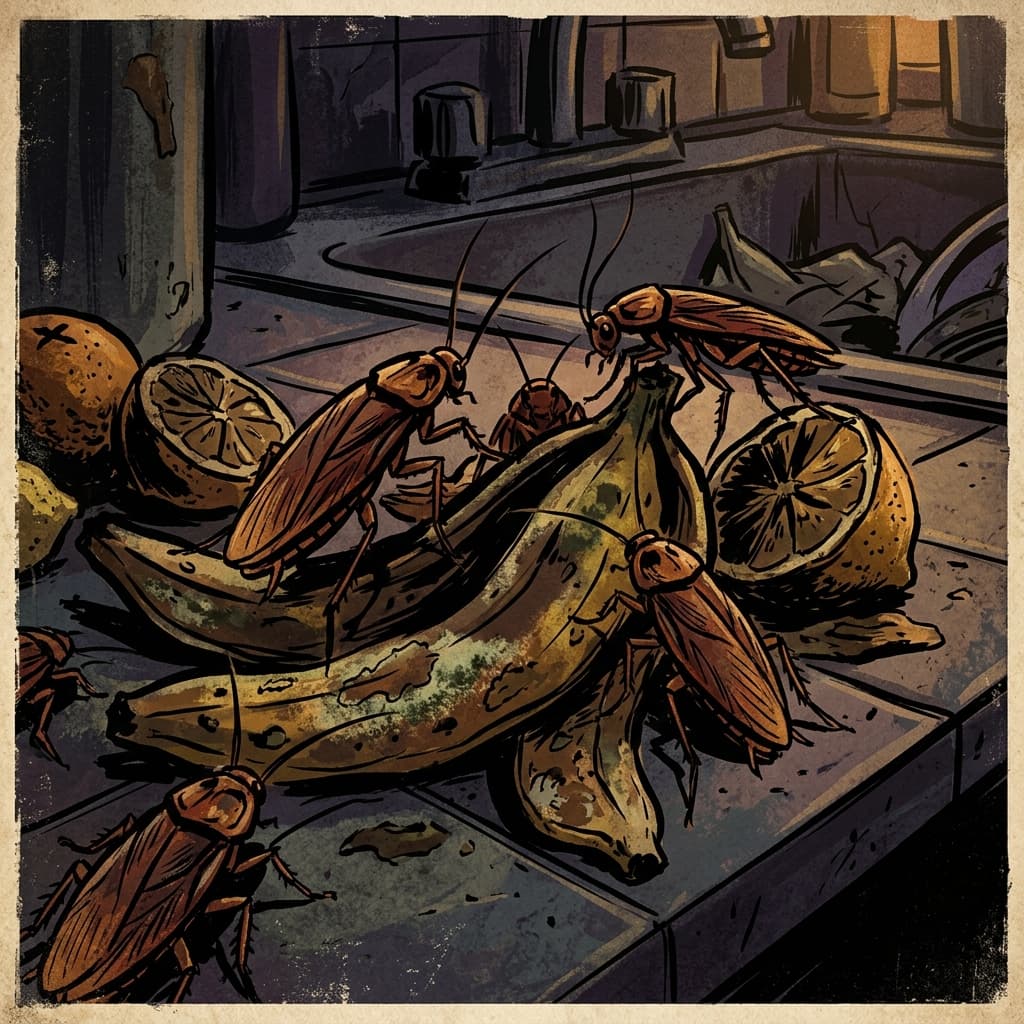
The Roach Problem Is Very Real
Let's talk about why roaches specifically are the concern here — because it's not just an ick factor, it's biology.
Cockroaches are moisture-seeking, sugar-loving, decomposition-following creatures. They've survived for 300 million years by being extremely good at finding exactly three things: warmth, moisture, and fermenting organic matter. A jar of week-old fruit peels soaking in water on a warm counter is basically a neon sign that reads "Free All-You-Can-Eat Buffet — All Species Welcome."
Here's what makes kitchen countertop hacks like this particularly risky compared to outdoor composting:
- 🏠 It's inside. Outdoor compost piles attract pests outside. Your countertop attracts them into your home — and once roaches find a food source, they leave pheromone trails that signal others. You're not getting one visit. You're getting a colony scouting mission.
- 💧 It's wet and warm. Moist, room-temperature fermentation is prime roach habitat. An outdoor pile might dry out, freeze, or get rain-diluted. Your counter jar does none of those things.
- 🫙 It's open or loosely covered. Most people doing this hack use cloth-covered jars or just jar lids tilted to "let it breathe." That means the odor is continuously broadcasting.
- 🦟 Fruit flies come first — then the bigger guests. Fruit flies are the canary in the coal mine. If you've already noticed fruit flies around your peel jar, know that they're an attractant for the next tier of pest.
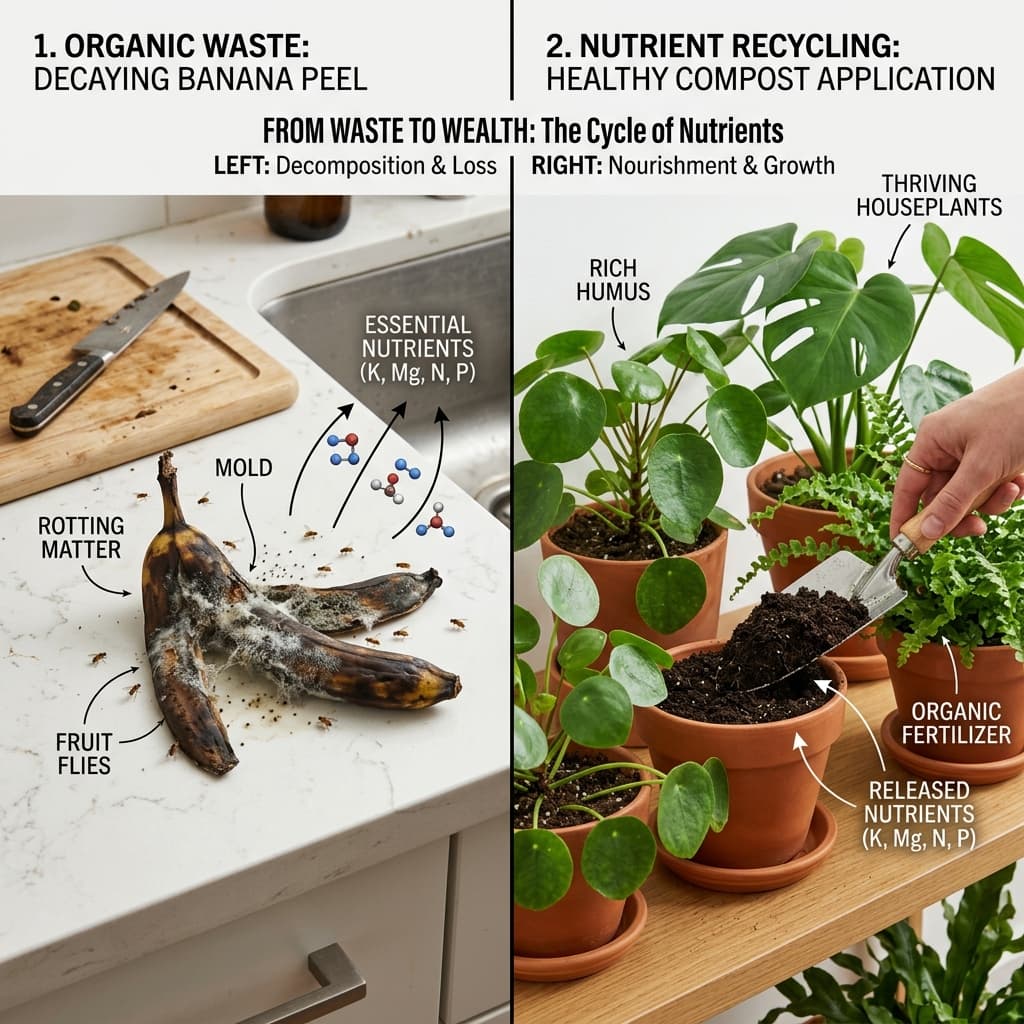
Does Your Plant Even Want This Liquid?
Here's the other half of the story: even if you braved the smell and the flies and actually made the "fertilizer" — your plant might not thank you for it.
Pouring fermented, bacteria-loaded liquid directly into your plant's soil creates a few problems:
- pH swings. Fermented liquid is acidic. Dumping a lot of it into your soil can bring the pH down dramatically, which makes nutrients unavailable and stresses plants — the opposite of what you want.
- Introducing bad microbes. Not all bacteria are beneficial in your plant's root zone. The anaerobic bacteria from an oxygen-free fermentation jar are not the same as the aerobic, plant-friendly microbes in healthy compost.
- Mold introduction. If any mold spores from the brew land in your potting mix, you may start seeing surface mold — which is harmless for some plants but a stressor for others, and deeply alarming if you spot it.
- Nutrient uncertainty. A properly made fertilizer tells you exactly what's in it — NPK ratios, micronutrients, pH. A jar of banana and orange water is a total mystery box.
So What Should You Do Instead?
The urge behind this hack is genuinely good! Reducing kitchen waste, feeding your plants naturally, not buying synthetic fertilizers — all excellent instincts. Here's how to scratch that itch without inviting pests into your home:
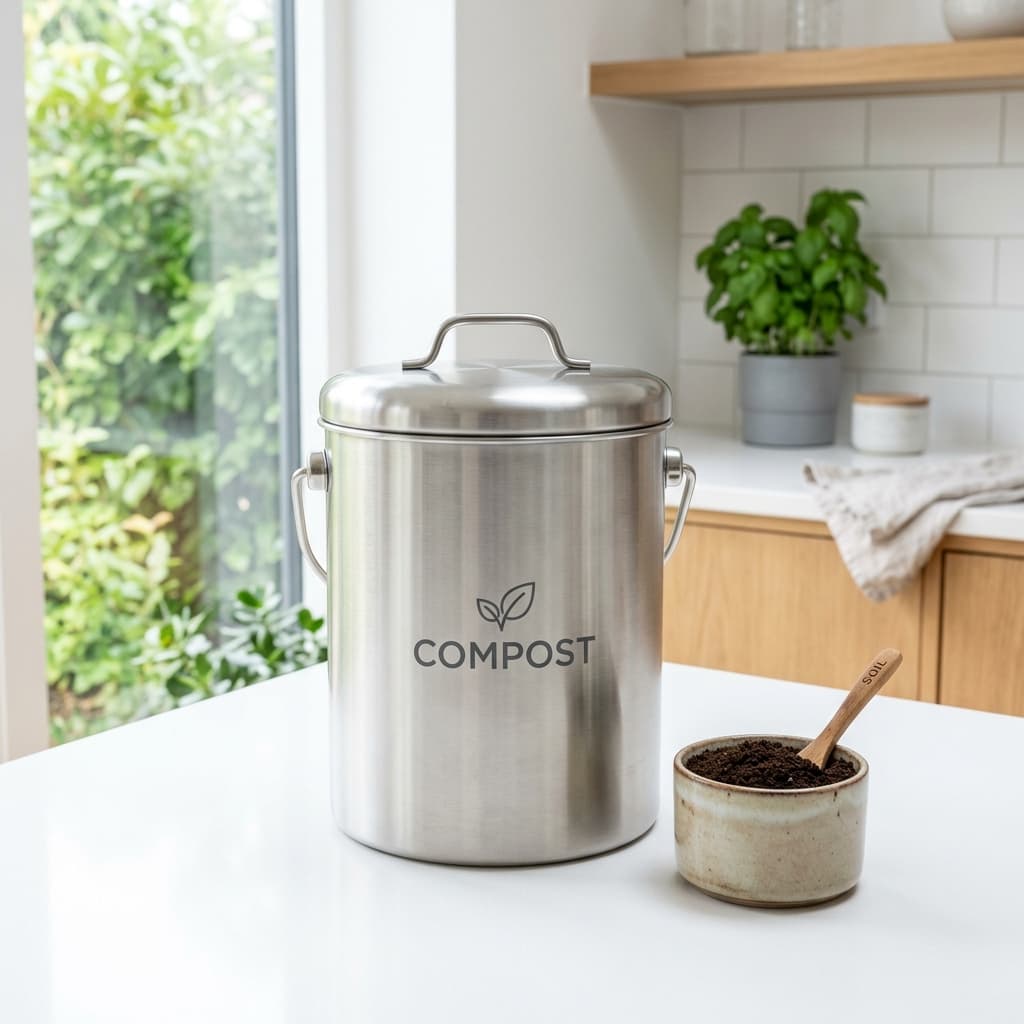
Option 1: The Sealed Kitchen Compost Bin (Zero Smell, Zero Bugs)
Get a stainless steel countertop compost bin with a carbon-filter lid. Toss your fruit peels, coffee grounds, and veggie scraps in there daily. Empty it into an outdoor compost pile or a municipality collection bin every 2–3 days. The filter neutralizes odor, the seal keeps pests out, and you're actually composting — not just rotting.
Option 2: Dry Your Peels First
Want to use those banana and citrus peels directly? Dry them out first. Spread peels flat on a baking sheet, dry them in your oven at 200°F for 1–2 hours (or let them air-dry in the sun for a few days), then crumble them into a fine powder. That powder can be scratched into the top layer of your soil as a slow-release potassium source — with zero fermentation, zero smell, and zero pest attraction. Dry organic matter doesn't attract pests. Wet, rotting organic matter does.
Option 3: Worm Bin (The Real Zero-Waste Win)
If you're serious about turning kitchen scraps into plant gold, a small indoor worm bin (vermicomposting) is the actual answer. Worms process fruit scraps into incredibly nutrient-dense castings that plants absolutely love. Done right, a worm bin has very little smell and zero pest issues because the worms outcompete other decomposers. The resulting liquid — worm tea — is a genuinely potent, balanced fertilizer your plants will visibly respond to.
Option 4: Just Buy Proper Organic Fertilizer
And hey — sometimes the most sustainable thing is also the most straightforward. A good organic, slow-release fertilizer (look for ones based on kelp, worm castings, or feather meal) gives your plants exactly what they need, in known quantities, without rotting anything on your counter. It costs less than a pest exterminator. Just saying.
🌿 Sprouty's Bottom Line
Your intentions with this hack are great. Your plant appreciates that you care. But that mason jar of rotting peels is not the move — not for your plant, and definitely not for your kitchen. Dry the peels, seal the scraps, or compost them properly. The nutrients will get there. Just not via a roach-approved fermentation station on your counter.
The Quick Verdict
- ❌ Raw fruit peel water left on the counter: Attracts fruit flies, invites roaches, uncertain pH, unknown nutrient content, smells terrible
- ✅ Dried peel powder scratched into soil: Slow-release potassium, pest-free, no mess
- ✅ Sealed compost bin → outdoor pile: Proper nutrient cycling, zero indoor pest risk
- ✅ Vermicomposting: Best nutrient density, genuinely sustainable, plants go wild for it
- ✅ Quality organic fertilizer: Known ratios, consistent results, no counter science experiments required
Bottom line: love your plants, love your kitchen, and leave the fermentation to kimchi and sourdough — things designed to be fermented. 🥬