
What if the most powerful fertilizer in your garden was already sitting in your kitchen trash? No trips to the garden center. No price tag. Just stuff you'd throw away anyway — repurposed into a genuine nutrient boost your soil will love.
This is the zero-waste garden hack that's taken off in 2026, and for good reason: it works, it costs nothing, and it takes about five minutes.
Why Kitchen Scraps Are Garden Gold
Commercial fertilizers deliver nutrients in a fast, concentrated hit. Kitchen scraps work differently — they release nutrients slowly as they break down in the soil, feeding your plants steadily over weeks. That's actually better for most garden plants, which prefer consistent, gentle feeding over boom-and-bust cycles.
Here's the cheat sheet of what you've already got:
🥚 Eggshells
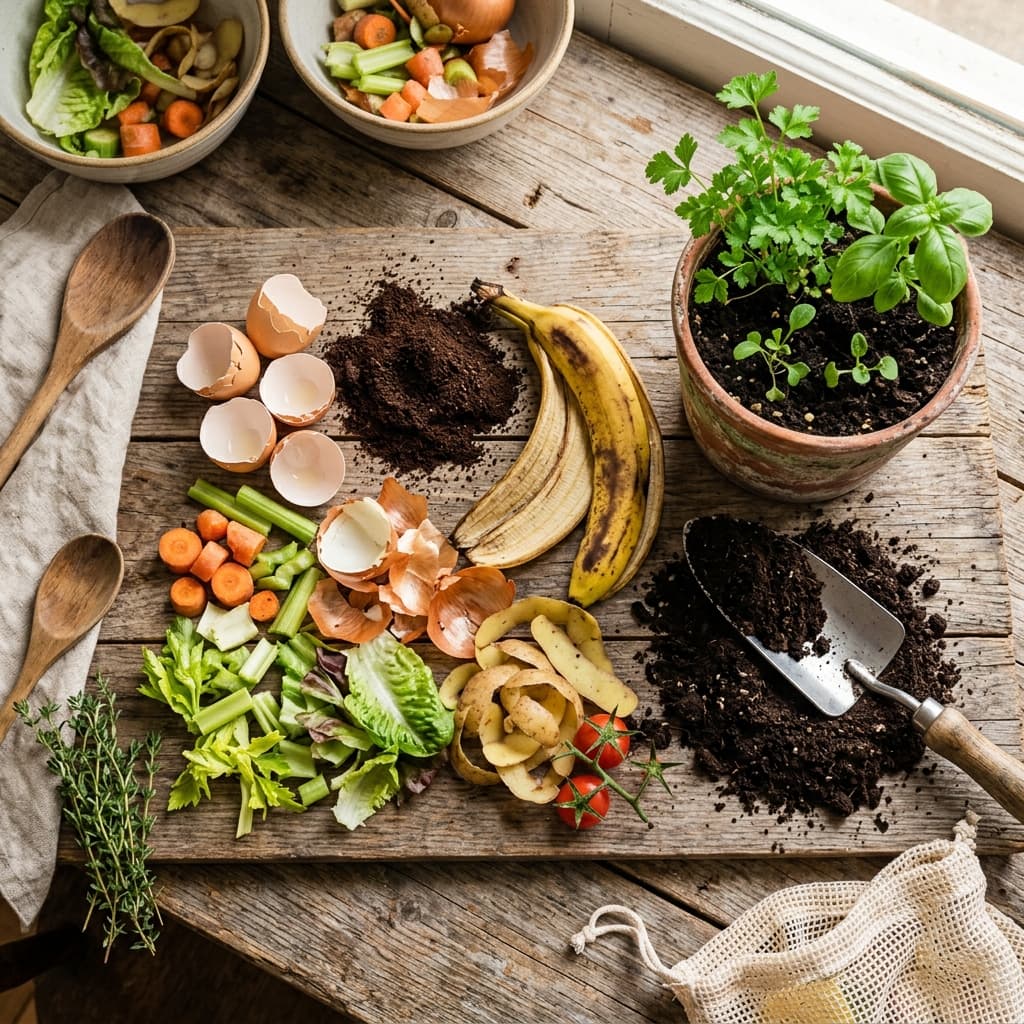
What they give: Calcium — the same mineral that prevents blossom end rot in tomatoes and peppers. Rinse, dry, and crush them right into the soil around your plants, or blend dry shells into a fine powder and sprinkle. They break down slowly, so the earlier in the season you start, the better.
☕ Coffee Grounds
What they give: Nitrogen, plus they attract earthworms (nature's best soil aerators). Sprinkle spent grounds lightly around acid-loving plants like blueberries, azaleas, and hydrangeas. Key word: lightly. A thin layer is great; a thick mound can compact and repel water. Also works brilliantly as a slug deterrent around hostas.
🍌 Banana Peels
What they give: Potassium and phosphorus — exactly what flowering and fruiting plants crave. Chop peels into small pieces and bury them an inch below the soil surface near roses, tomatoes, or any plant that's about to flower. Or soak a peel in water for 24–48 hours and use the water as a quick liquid feed.
🥕 Vegetable Cooking Water
What it gives: Whatever leached out of the vegetables — potassium, phosphorus, trace minerals. Let it cool completely, then use it to water your plants instead of pouring it down the drain. Never use salted cooking water — salt builds up in soil and is toxic to plants. Unsalted only.
The 2026 Hack: Scrap Tea
The easiest way to use all of the above at once? Make scrap tea.
- Drop your kitchen scraps (eggshells, coffee grounds, fruit and vegetable peels — no meat, no dairy) into an old bucket or large jar
- Fill with water and let it sit for 24–48 hours
- Strain out the solids (those go in the trash or a traditional compost pile)
- Use the liquid to water your garden
The result is a mild, broad-spectrum liquid fertilizer that costs nothing and takes about two minutes of active effort. It won't replace a full fertilization program for heavy-feeding crops, but as a weekly supplement it makes a real difference — especially in potted plants that get flushed out with every watering.
🌱 Sprouty's Rule of Thumb
Go easy. Kitchen scraps are a supplement, not a replacement for good soil health. If your soil is already well-amended, a few eggshells and coffee grounds each week is plenty. You're adding, not overhauling — and that's exactly what your garden needs.
What NOT to Use
A quick word of caution — not all kitchen waste belongs in the garden:
- Meat, fish, or dairy — attract pests and can introduce harmful bacteria
- Salted or seasoned food — salt accumulates in soil and causes serious damage over time
- Citrus peels in large quantities — the natural oils can inhibit germination; use sparingly if at all
- Diseased plant material — disease-causing organisms can survive in raw form and re-infect your garden
Start Today
Put a small bowl on your kitchen counter. Every time you peel a banana, crack an egg, or brew a coffee, the scraps go in the bowl instead of the bin. By the end of the week, you'll have enough to make a batch of scrap tea or dress a few beds.
It's the smallest habit change with one of the biggest returns in the garden — and it's completely free.