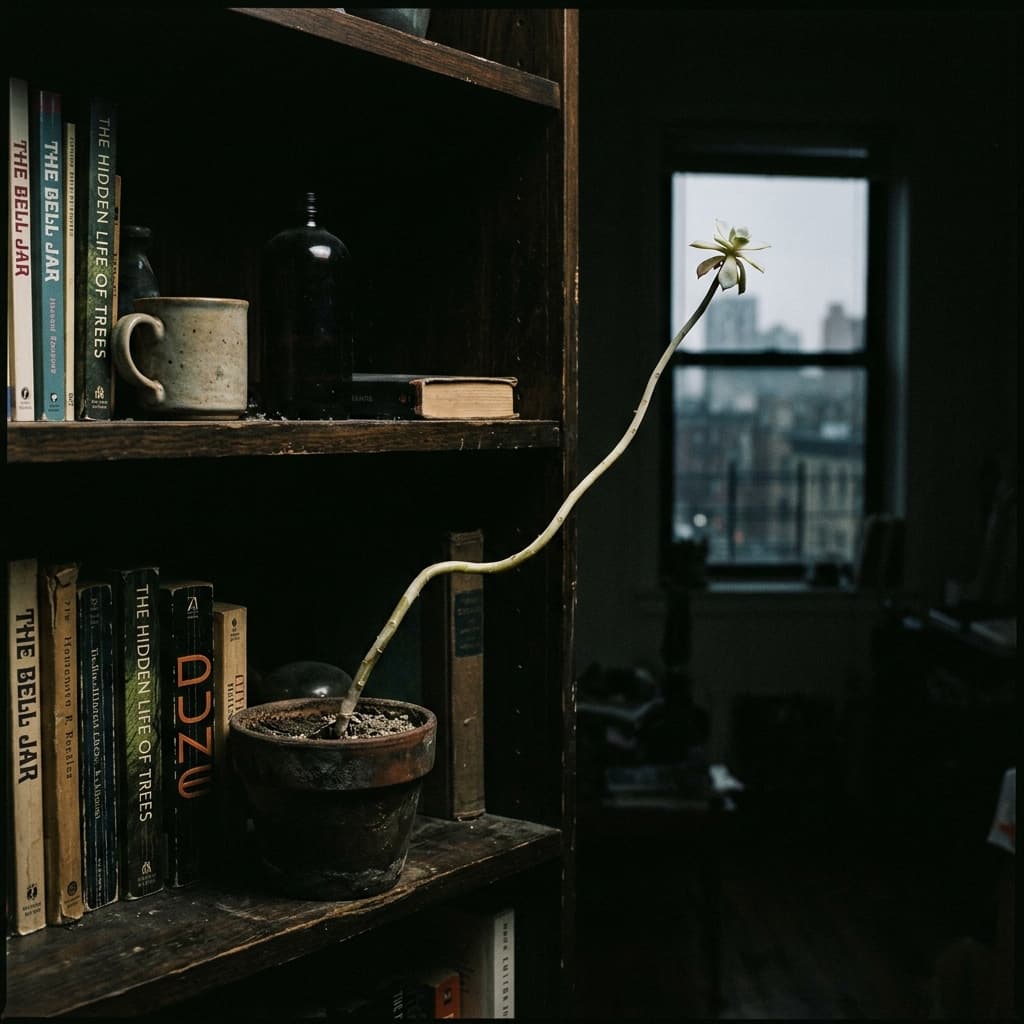

The beginner plant myth goes like this: succulents are easy. They don't need much water. They're forgiving. They're perfect for people who kill everything.
This myth has killed more houseplants than any other single piece of gardening advice in circulation. And Sprouty is done letting it slide.
Succulents are not easy. They are not forgiving. They are not perfect for beginners. They are desert plants that evolved for conditions that bear almost no resemblance to the inside of a modern apartment — and putting one on your bookshelf and misting it once a week is not giving it what it needs. It's giving it a slow, aesthetically confusing death.
The Two Ways Succulents Die Indoors (And Why Both Are Almost Inevitable)
There are exactly two ways a succulent dies in most indoor environments, and they pull in opposite directions — which is what makes succulents so uniquely frustrating for new plant owners.
Death #1: Light Starvation (The Slow Stretch)
Succulents evolved in some of the highest-light environments on earth. The Sonoran Desert. The Karoo of South Africa. The dry hillsides of Mexico. In their natural habitat, they receive 8–12 hours of intense, direct, unfiltered sunlight every single day. The rays that hit them would give you a sunburn in minutes.
The average apartment window — even a "bright" one — delivers roughly 5–15% of that light intensity. Not because windows are dark, but because glass filters UV and infrared, overhangs block direct sun, and most windows only face one direction, limiting light hours dramatically.
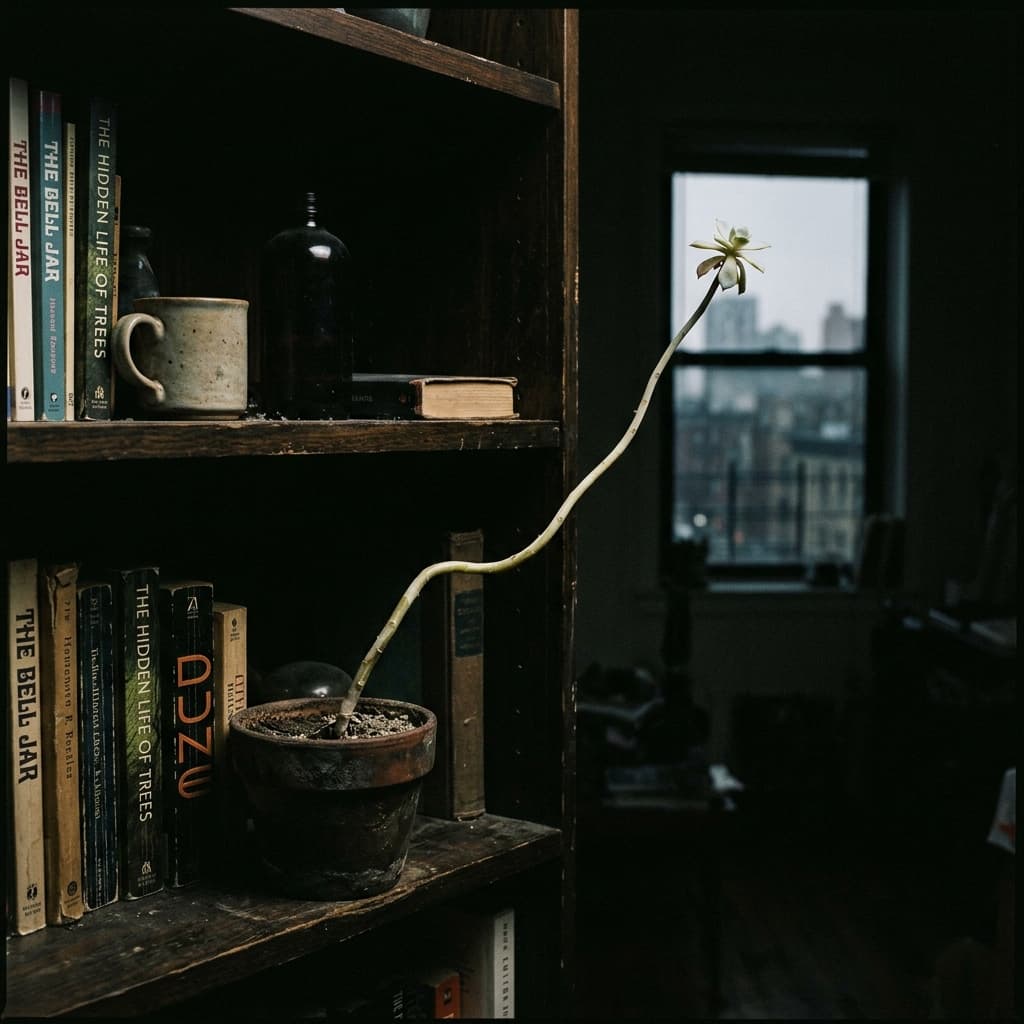
Without enough light, succulents do something called etiolating: they stretch their stems toward whatever light source exists, spacing their leaves further and further apart, trying to maximize the light-gathering surface. The plant goes pale and elongated. It looks like it's reaching for something it can never get to. Because it is.
Etiolation is irreversible on existing growth. You can propagate new compact rosettes from the leaves, but the stretched stem doesn't shrink back. The damage is permanent.
The honest truth: unless you have a south-facing window with zero obstruction, no curtains, and 6+ hours of direct sun hitting the windowsill — or a quality grow light on a timer — your succulent will etiolate. It's not a question of if. It's a question of how fast.
Death #2: Root Rot (The Silent Collapse)
The advice to "barely water" succulents is well known. What nobody explains is why — and how brutally unforgiving overwatering actually is for these plants.
Succulents store water in their leaves and stems specifically because water is scarce in their native habitat. Their root systems evolved to drain completely after rare rain events and then stay dry for extended periods — sometimes weeks or months. The roots are designed for this. They're not designed for the consistently moist soil that most beginner plant owners tend to create.
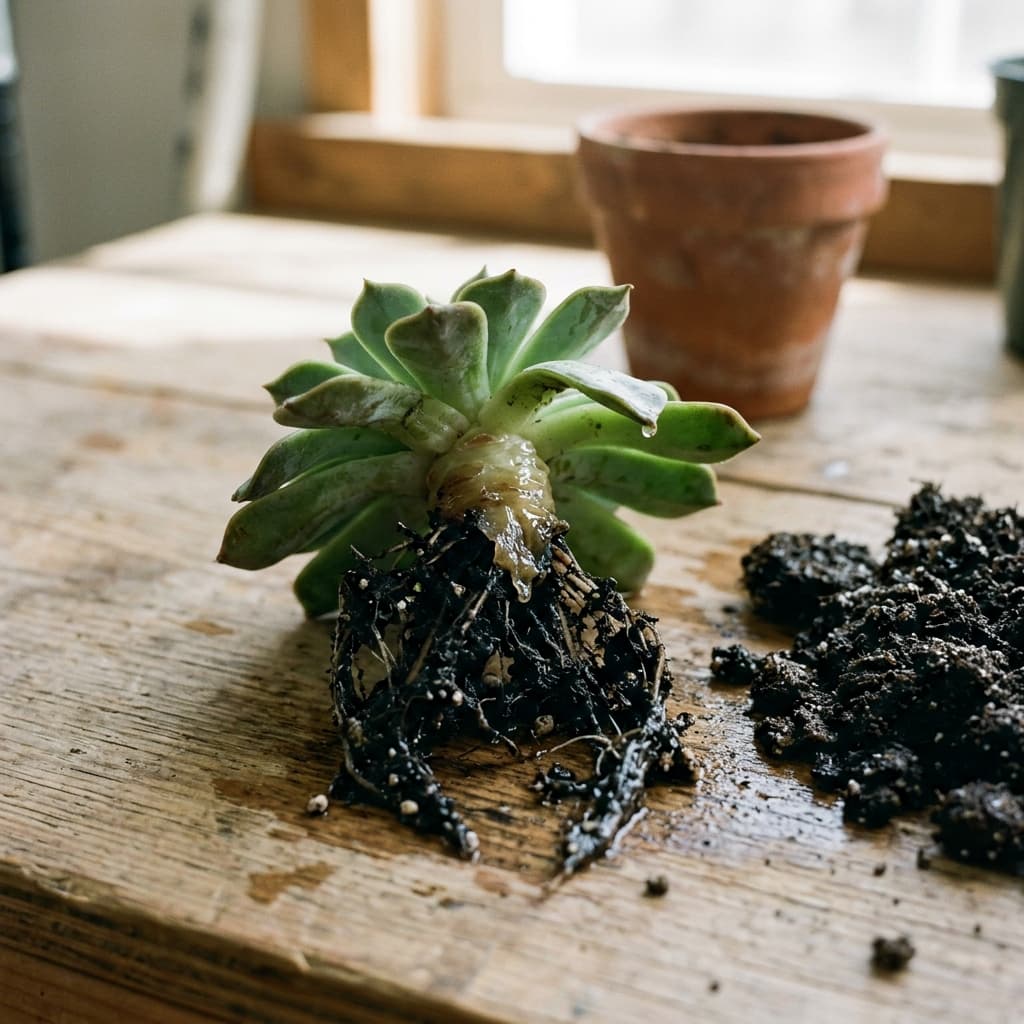
When succulent roots sit in even mildly damp soil for too long, they rot at the cellular level. And here's the thing that catches beginners completely off guard: the leaves stay firm and healthy-looking while the roots and stem base are already dead. The plant is storing its reserves in the leaves. It looks fine. It isn't fine. By the time leaves start going translucent or falling off, the stem is already mush.
If you're seeing unexplained yellowing or dropping leaves on your succulent, check the base of the stem immediately — gently squeeze it between your fingers. If it feels soft or gives at all, root rot has already reached the crown. There's often no saving it at that point.
The irony: the "don't water much" advice causes a second failure mode too. Beginners feel guilty about not watering and end up watering more than they should, precisely because they've been told the plant is "easy."
🌿 The Climate Control Problem
Modern apartments and homes compound both problems. Air conditioning dries the air but also keeps temperatures consistent — eliminating the dramatic day/night temperature swings that desert plants use as signals to regulate growth and dormancy. Central heating in winter produces warm, dry air that tricks succulents into thinking it's growing season when light levels are at their lowest. The result: the plant tries to grow actively in the worst possible light conditions, and etiolates even faster than usual between fall and spring.
What "Easy Care" Actually Means — And What Plant You Should Buy Instead
Here's the reframe that changes everything: a plant is only "easy" if its requirements match the environment you actually have. A succulent that needs 8 hours of direct desert sun isn't easy in a north-facing apartment. A tropical plant that evolved under a rainforest canopy — in warm, humid, low-light conditions — actually is easy in your living room. Because your living room is kind of like a rainforest canopy.
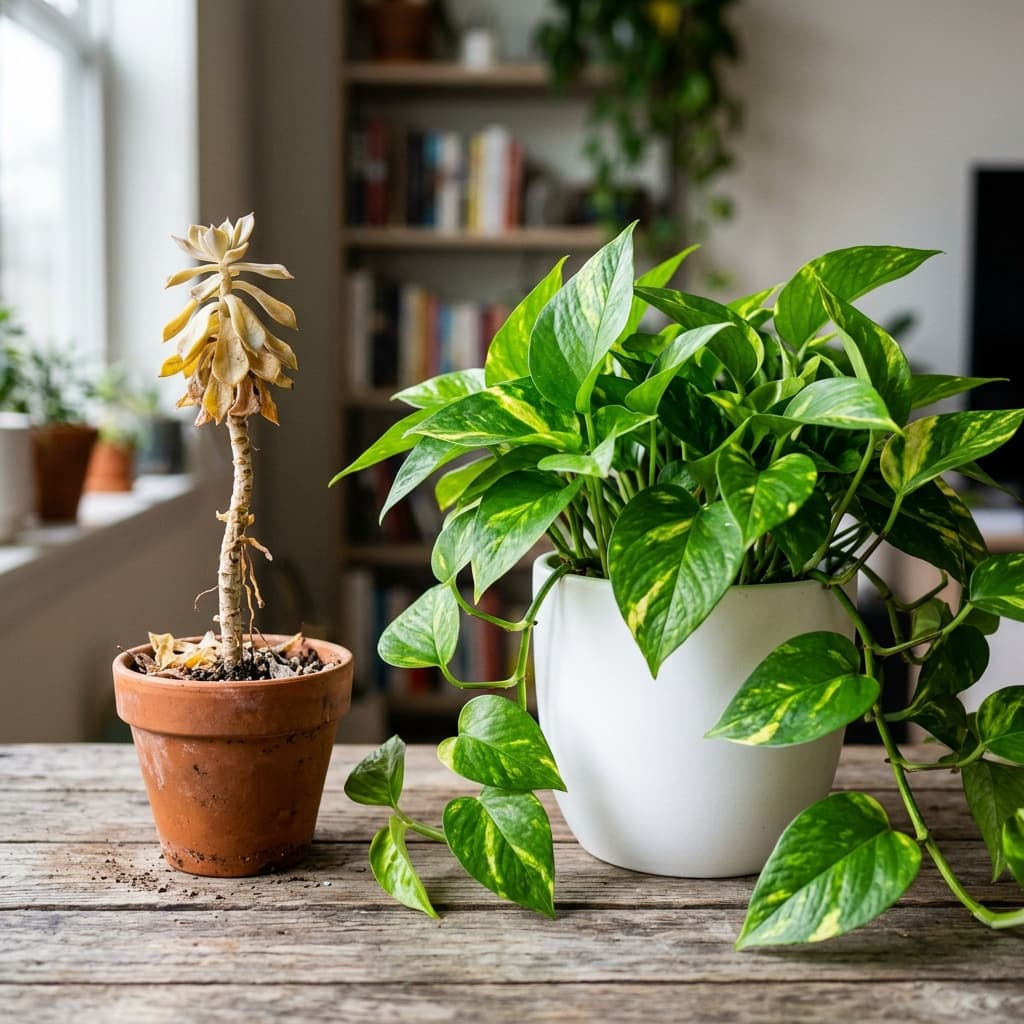
Tropical plants — Pothos, Philodendrons, ZZ Plants, Peace Lilies, Snake Plants — evolved under dense forest canopies where direct light is filtered, humidity is high, and temperatures stay warm and consistent. Sound familiar? That's basically your apartment in every season except winter.
These plants are genuinely forgiving in ways succulents are not:
- They tolerate lower light without permanently deforming
- They can handle irregular watering — both underwatering and brief overwatering — without immediately rotting
- They actively grow in indoor conditions and give you visible, satisfying feedback (new leaves, lengthening vines, expanding pots)
- They communicate problems early and visibly — drooping, color changes, leaf texture shifts — rather than looking fine until they're already dead
Our roundup of the most trending houseplants and how to actually keep them alive covers many of the best beginner-friendly tropicals in detail. If you're starting from scratch in 2026, that's your starting point.
The Sprouty Beginner Tropical Starter List
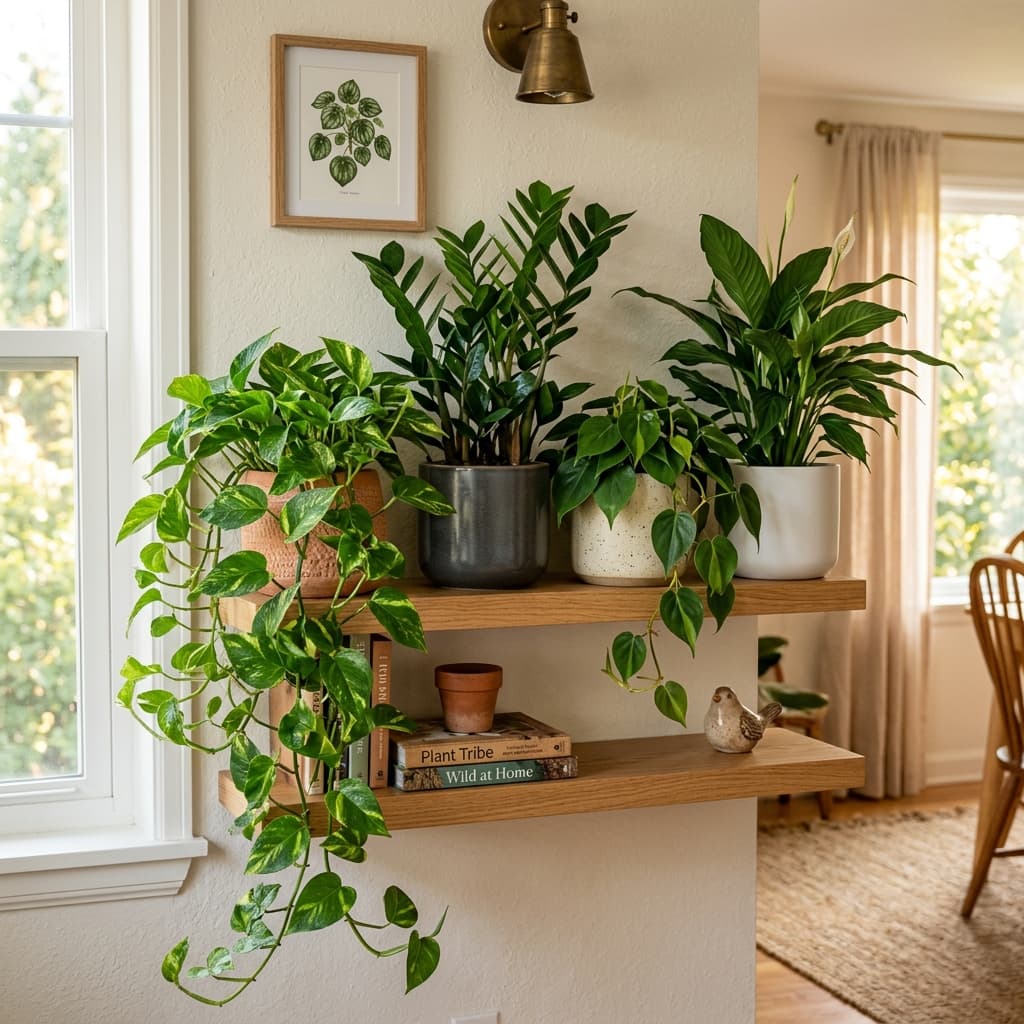
Here's exactly what Sprouty recommends buying instead, ranked by how forgiving they are for true beginners:
- 🏆 Pothos (Epipremnum aureum) — The single most beginner-friendly plant in existence. Thrives in low to medium indirect light. Tolerates irregular watering. Trails dramatically from shelves. Tells you it's thirsty by drooping slightly, then fully recovers after watering. Nearly impossible to kill if you're not actively trying. Start here.
- 🥈 ZZ Plant (Zamioculcas zamiifolia) — Has rhizomes (underground water storage organs) that make it genuinely drought tolerant, unlike succulents. Slow but steady grower. Handles very low light. Glossy, architectural, looks expensive. Water once every 2–3 weeks and leave it alone.
- 🥉 Heartleaf Philodendron — Faster growing than Pothos, equally forgiving of indoor conditions. Will thrive in a bright room and survive in a dim one. New leaves emerge regularly, giving beginners the satisfaction of visible growth. A gateway plant to the wider aroid family — eventually you'll find yourself looking at rare Monsteras and understanding exactly what they need.
- 🌿 Peace Lily (Spathiphyllum) — One of the few flowering houseplants that genuinely thrives in low-medium light. Droops dramatically when thirsty (almost theatrical), then perks back up within hours of watering. No guessing required. Flowers several times a year.
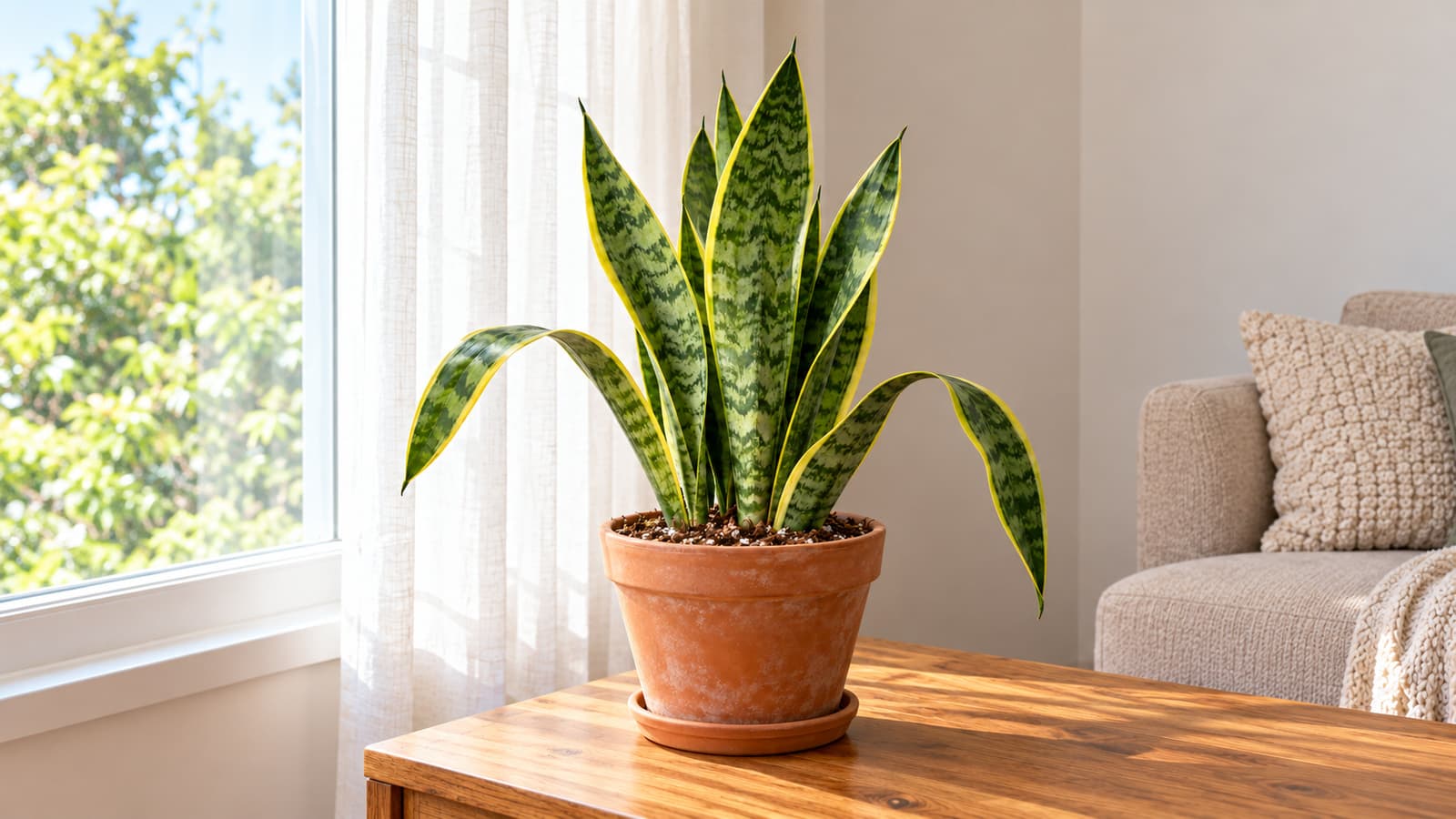
- 🌱 Snake Plant (Sansevieria/Dracaena trifasciata) — The one plant that actually bridges the gap between tropical and succulent. Stores water in its leaves like a succulent but tolerates indoor light conditions like a tropical. Watered every 3–4 weeks. Almost impossible to overwater if it's in well-draining soil. The closest thing to "no maintenance" in the plant kingdom.
Every plant on this list will grow actively, visibly, and enthusiastically in normal apartment conditions. None of them require grow lights. None of them will punish you for watering a day late. None of them will silently rot over 3 weeks while looking totally fine.
If You Already Have Succulents: When to Salvage vs. Move On
You might already own succulents. Sprouty isn't here to make you feel bad about that. Here's an honest assessment of when to fight for them and when to let go:
- ✅ Keep it if: It's compact (not stretched), sits within 12 inches of a south or west-facing window, and the soil goes completely dry between waterings. This plant is surviving, possibly even thriving, in your specific setup.
- ⚠️ Intervention needed if: It's stretching but the stem base is still firm. Move it directly to the sunniest spot you have — a narrow windowsill is better than a shelf two feet back. Consider a grow light. Stop watering for 3–4 weeks and only resume when soil is bone dry at every depth.
- ❌ Let it go if: The stem base is soft or mushy, the leaves are dropping without being touched, or the plant has been stretching for more than 2 months indoors without any sign of compacting. Propagate healthy leaves if you want to try again — but the parent plant is unlikely to recover.
A Word About Soil and Starting Right
If you do want to give succulents a real chance, soil is where most people make their first mistake. Standard potting mix holds far too much moisture for desert plants. You need a gritty, fast-draining mix — roughly 50% regular potting soil and 50% perlite or coarse sand — so that water moves through the root zone within minutes rather than sitting for days. Our full guide to understanding soil and its properties is worth reading before you commit to any potting mix, for any plant.
But honestly? If you're a beginner in 2026, just buy a Pothos. Put it somewhere bright. Water it when it droops. Watch it grow. Build your confidence. Then come back for the succulents when you have a south-facing window and a grow light budget.
🌿 Sprouty's Bottom Line
The plant industry sells succulents to beginners because they're cheap, compact, and photograph beautifully on store shelves. Not because they're easy to keep alive. The plants that are actually easy to keep alive in a typical indoor environment are the ones that evolved there — in low light, warm, humid conditions. Buy a tropical. Build your confidence on something that wants to live where you live. The succulents will still be there when you're ready for them.
Quick Reference: Succulents vs. Tropicals for Beginners
| Factor | 🌵 Succulents | 🌿 Tropicals |
|---|---|---|
| Light needed | 6–8h direct sun daily | Medium indirect is fine |
| Watering frequency | Every 2–6 weeks, bone dry | Every 1–2 weeks, consistent |
| Overwatering tolerance | ❌ Near zero | ✅ Usually recovers |
| Low light tolerance | ❌ Etiolates within weeks | ✅ Slows but survives |
| Problem visibility | ❌ Hidden until critical | ✅ Early, obvious signals |
| Visible new growth | ⚠️ Slow, minimal | ✅ Regular, satisfying |
| Best for beginners? | ❌ No | ✅ Yes |
Ready to level up once you've nailed your first tropical? Start with a Monstera or an Alocasia — the most rewarding plants in the hobby, for growers who already know the basics.