 Sprouty
As summer winds down across suburban neighborhoods and country gardens, annual flower borders undergo their biggest seasonal makeover of the year. The heat-loving annual vinca (Catharanthus roseus, commonly known as Madagascar periwinkle) that filled beds with crisp white, lavender, and pink blooms all July and August begins to look tired, leggy, or sparse as night temperatures drop. At local garden centers, nursery benches suddenly burst with fresh, colorful six-packs and flats of cool-season pansies (Viola × wittrockiana) and violas.
For most home gardeners, the transition seems wonderfully simple: pull out the spent vinca plants by their stems, shake off the loose dirt, and pop the fresh pansy plugs directly into the ready-made holes. It saves digging, preserves the border layout, and promises instant autumn beauty. But horticultural plant pathologists know this convenient shortcut as one of the most common reasons entire fall flower beds mysteriously collapse within three to four weeks of planting.
That exact close call happened in Sophie's garden on a crisp September afternoon. Having just cleared a row of summer vinca from her raised timber garden bed, Sophie knelt with a fresh six-pack of velvety purple and yellow pansies in hand. She was lowering the root balls right toward the empty, freshly excavated vinca holes when Sprouty dashed across the paving stones, reaching out a fluffy white paw to intervene:
Sophie: (Lowering a fresh pansy cell-pack straight toward the empty vinca holes) "Out with the tired summer vinca, in with the fall pansies! The holes are already dug and ready to go!"
Sprouty: (Rushing over and raising his paw to stop her before roots touch the ground) "Hold on, Sophie, don't plant them there! Annual vinca and pansies share soil-borne fungal root rot. If you tuck new roots into those old holes, the fungus in the soil can wipe them out completely!"
Sophie: (Pulling the pansy tray safely back onto the bench) "Whoa—good save, Sprouty! Give the spots a break, rotate to a non-host flower, or remediate the soil first."
🪴 On-Screen Truth: Don't plant pansies after vinca! Shared soil-borne fungal pathogens wipe out new roots in the same bed.

Watch Sprouty & Sophie Halt the Flower Bed Infection Loop
See why dropping fresh fall pansies directly into spent summer vinca holes invites fungal root rot in our quick video companion.
The Plant Pathology: The Hidden Shared Host Danger
Why is planting pansies into old vinca holes so dangerous? The answer lies in the biology of soil-borne plant pathogens. In agricultural and horticultural science, crop rotation is standard practice for field vegetables. Farmers never plant tomatoes directly where potatoes just grew because members of the same botanical family share susceptibility to identical pests and diseases.
In ornamental landscaping, gardeners frequently overlook crop rotation because annual vinca (family Apocynaceae) and pansies (family Violaceae) belong to completely different botanical families. They look unrelated and grow in opposite seasons. However, microbial pathogens do not always respect plant families. Several notorious soil-borne fungal organisms possess host ranges that span both species—creating a dangerous biological bridge between your summer and autumn flower displays.
1. Black Root Rot (Thielaviopsis basicola / Berkeleyomyces basicola)
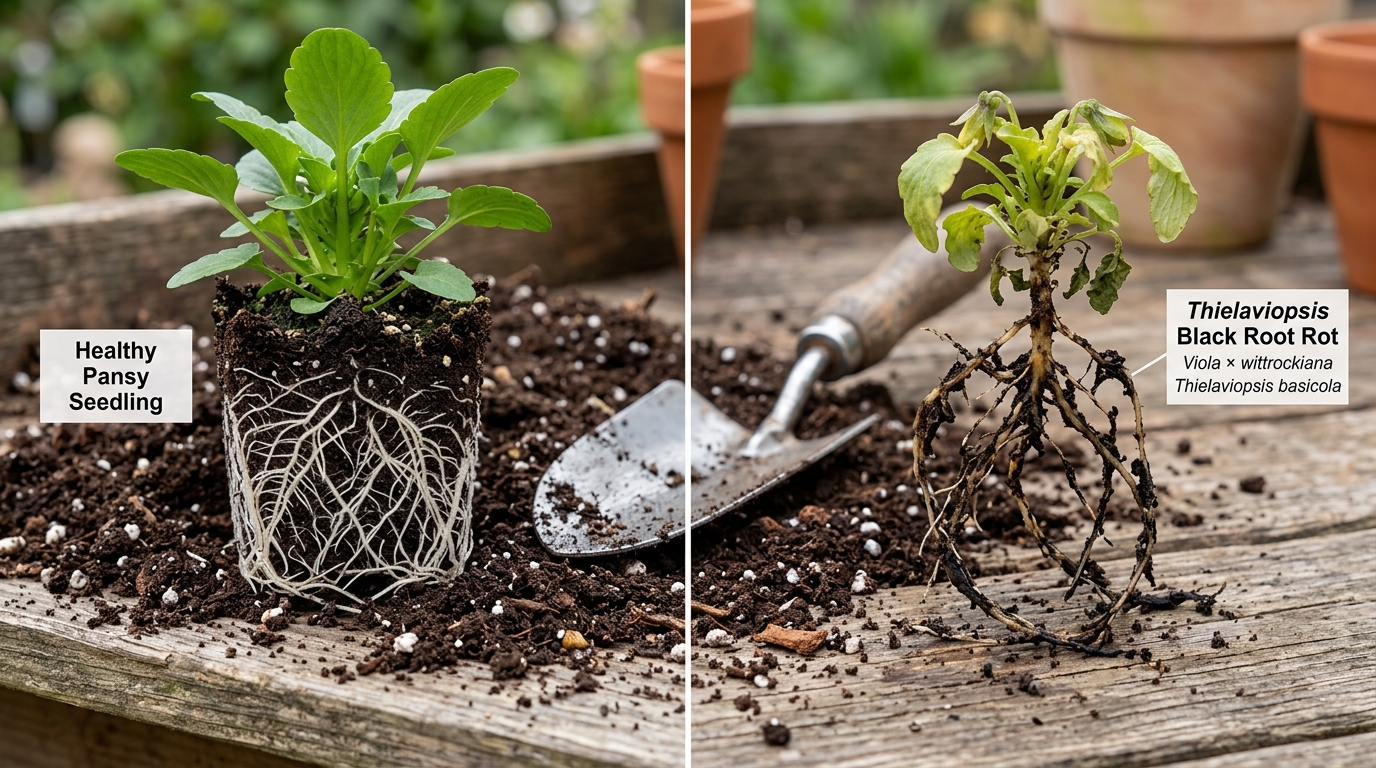
The primary culprit behind same-bed failure is black root rot, caused by the microscopic fungal pathogen Thielaviopsis basicola (reclassified in modern taxonomy as Berkeleyomyces basicola). As detailed in the UC IPM Pest Notes on Black Root Rot, this pathogen infects a select group of high-profile ornamental bedding plants—with pansy, viola, and annual vinca ranking at the very top of its primary host list.
During the warm summer months, annual vinca can harbor low-level, subclinical infections of Thielaviopsis. The vinca may appear moderately healthy above ground because hot weather supports rapid vegetative growth, but beneath the surface, the fungus is quietly colonizing root tips and producing millions of thick-walled resting spores called chlamydospores.
When you pull out the vinca in September, fine feeder roots inevitably snap off and stay behind in the soil. Packed inside those discarded root tissues are clusters of durable, melanized chlamydospores that can survive in unamended garden soil for months—and even years—without a living host. Planting a fragile pansy plug straight into that spore-saturated cavity is the ecological equivalent of handing the fungus a feast on a silver platter.
2. The Autumn Temperature Trap (55°F to 65°F)
The danger is made worse by autumn soil temperatures. Unlike summer heat-loving fungi that slow down as nights chill, Thielaviopsis basicola is genetically adapted to thrive in cool, moist soil conditions. Peer-reviewed extension research from the NC State Extension Ornamental Pathology Program confirms that black root rot infection is most aggressive at soil temperatures between 55°F and 65°F (13°C to 18°C).
When you plant fall pansies in September or October, the cooling soil reaches the exact thermal sweet spot where fungal resting spores germinate with explosive vigor. As the tender root hairs of your newly planted pansy plug attempt to explore the surrounding dirt, germ tubes from Thielaviopsis spores penetrate root epidermis cells within 24 to 48 hours, invading the cortical tissue and dissolving feeder roots.
3. Secondary Oomycetes: Pythium and Phytophthora
In addition to Thielaviopsis, annual vinca and pansies both serve as susceptible hosts for water mold oomycetes including Pythium ultimum and Phytophthora nicotianae (documented across UC IPM Floriculture & Ornamental Disease Guidelines). When summer vinca beds have received heavy routine irrigation, damp anaerobic pockets harbor water mold oospores. Dropping fall pansies into those saturated, uncultivated dips exposes tender root crowns to immediate collar rot and damping-off.
The Symptoms: Why "Watering More" Makes It Fatal
When pansies contract black root rot from old vinca holes, the disease often fools the gardener into making catastrophic care mistakes:
- Upper Leaf Chlorosis (The Fake Iron Deficiency): Because black root rot destroys the finest feeder roots responsible for nutrient uptake, the plant cannot absorb micronutrients like iron and magnesium. The youngest leaves turn pale yellow while leaf veins remain faint green. Convinced the plant is hungry, gardeners frequently apply synthetic fertilizers, which increases soil soluble salts and further damages remaining roots.
- Midday Wilting in Moist Soil: On warm autumn afternoons, infected pansies limp and flag as if dehydrated. Gardeners instinctively grab the hose and drench the soil. However, the soil is already moist; the plant is wilting because its decayed root system cannot transport water upward to match leaf transpiration. Adding more water saturates the rhizosphere, eliminates oxygen, and accelerates fungal destruction.
- Stunted Growth & Bud Drop: Healthy pansies establish rapidly in fall to build robust root crowns before winter frost. Infected plants freeze in place, fail to produce lateral branching, abort floral buds, and eventually turn dull purplish-yellow before collapsing into a withered clump.
💡 The Soil Sanitation Rule: Pathogens Don't Vanish on Their Own
Just as tossing diseased summer tomato vines into an unheated backyard pile allows fungal spores to survive under 165°F (see our deep dive on why cool compost incubates plant pathogens), leaving infected vinca root residue in planting holes preserves infectious resting spores. Similarly, leaving fallen diseased fruit under orchard trees perpetuates brown rot (read about breaking the orchard fungal loop). Garden bed hygiene requires active biological separation.
How to Safely Transition Flower Beds: 4 Actionable Steps
You don't have to abandon pansies entirely to enjoy a vibrant fall and winter garden. By following four horticulture-backed practices, you can break the disease cycle and protect both your soil and your wallet:
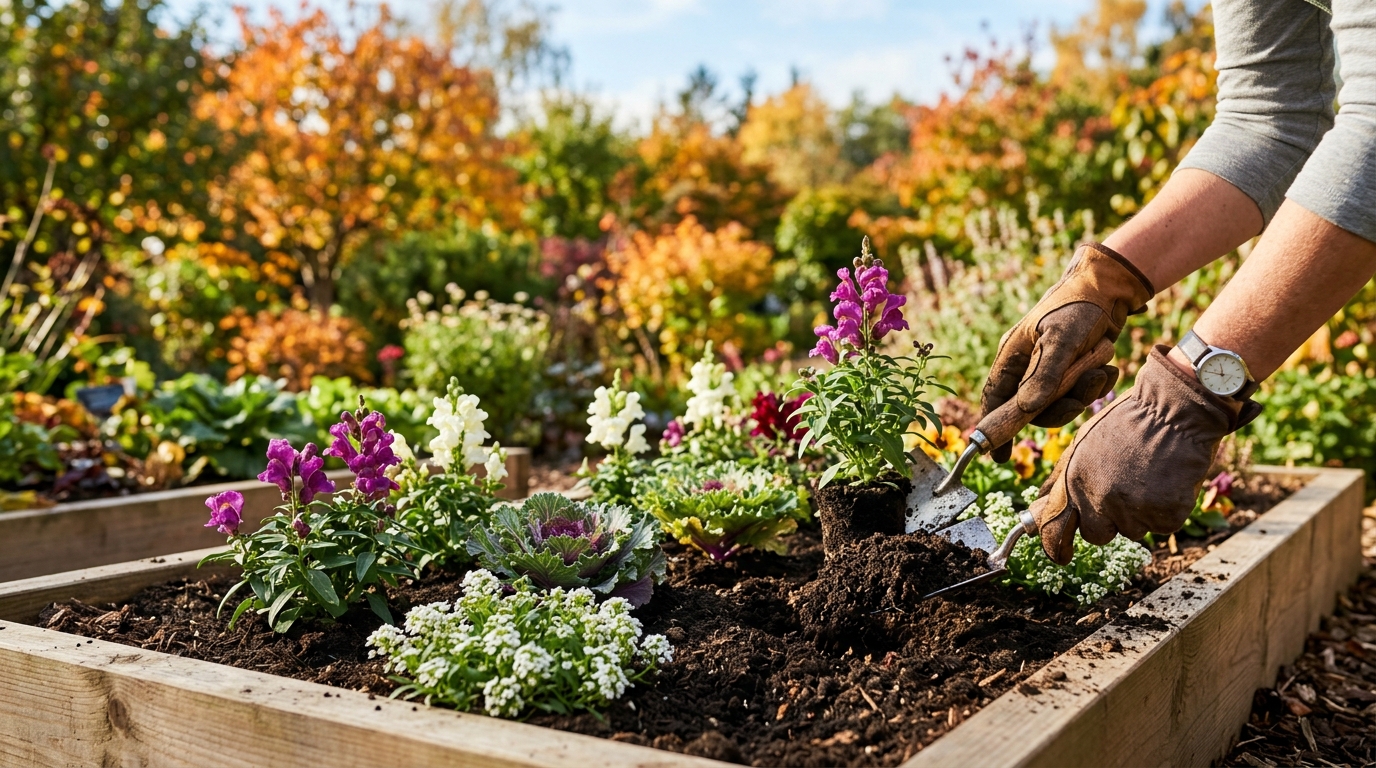
1. Give Old Vinca Holes a Rest (Bed Rotation)
The single simplest rule: never drop a new plant into the exact excavation hole left by annual vinca. When removing vinca, use a garden fork to loosen the surrounding soil and carefully extract root clusters rather than yanking the crown and leaving snapped rootlets behind. Dispose of the vinca roots in municipal yard waste or bag them—do not toss suspected infected roots into cool compost piles.
2. Shift Your Planting Grid by 6 to 12 Inches
If you have a dedicated flower border where you love displaying pansies, simply offset your planting geometry. Stagger your autumn planting holes into the fresh soil spaces between where summer vinca stood. This gives tender pansy roots an opportunity to establish in clean, uncompacted soil with significantly lower pathogen density.
3. Rotate to Non-Host Cool-Season Flowers
If your summer vinca showed any signs of premature decline, yellowing, or root rot, take a seasonal break from the Viola family in that specific bed. Plant non-host cool-season ornamentals that Thielaviopsis basicola cannot infect. Here is how popular cool-season bedding choices compare:
4. Remediate Soil & Manage Substrate pH
Before planting your fall display, actively remediate the bed's soil biology:
- Blend In Active Cured Compost: Topdress and incorporate 1 to 2 inches of mature, certified compost. High organic biological activity introduces beneficial antagonistic microflora (such as Trichoderma species and actinomycetes) that naturally outcompete pathogenic fungal spores. (For timing tips on preserving warmth, see our guide on why mulching warm soil at 55–65°F extends fall root growth).
- Maintain a Slightly Acidic Soil pH: Black root rot is profoundly suppressed in acidic growing media. University plant pathology trials demonstrate that Thielaviopsis thrives in neutral and alkaline soils (pH 6.5 to 7.5+), whereas its spore germination drops sharply below pH 5.6. Fortunately, pansies prefer slightly acidic conditions (pH 5.4 to 5.8). Applying elemental sulfur or an acid-forming fertilizer (such as ammonium sulfate) helps keep soil pH in the zone where pansies flourish while the fungus starves.
- Avoid Saturated Silt Pockets: Ensure beds drain freely. Raised beds, porous loam, and well-aggregated soil prevent the stagnant water films that swimming zoospores require to spread.
A Quick Note on Warm-Fall Climates (Inland California & Southwest)
While this disease cycle threatens gardens nationwide across USDA Hardiness Zones 4 through 10, gardeners in warm-fall regions—such as California's Central Valley, Inland Empire, and the Desert Southwest—face a unique seasonal overlap. In these areas, September and early October afternoons often reach 85°F to 90°F+, while overnight temperatures dip into the 50s. This rapid day-night oscillation stresses tender cool-season pansy plugs, increasing their vulnerability to latent fungal attack. In warm autumn climates, waiting until average daytime highs moderate below 80°F before installing pansies gives roots the cool comfort they need to outpace fungal spores.
Frequently Asked Questions About Pansy & Vinca Root Rot
Can I reuse potting soil from summer vinca patio planters for fall pansies?
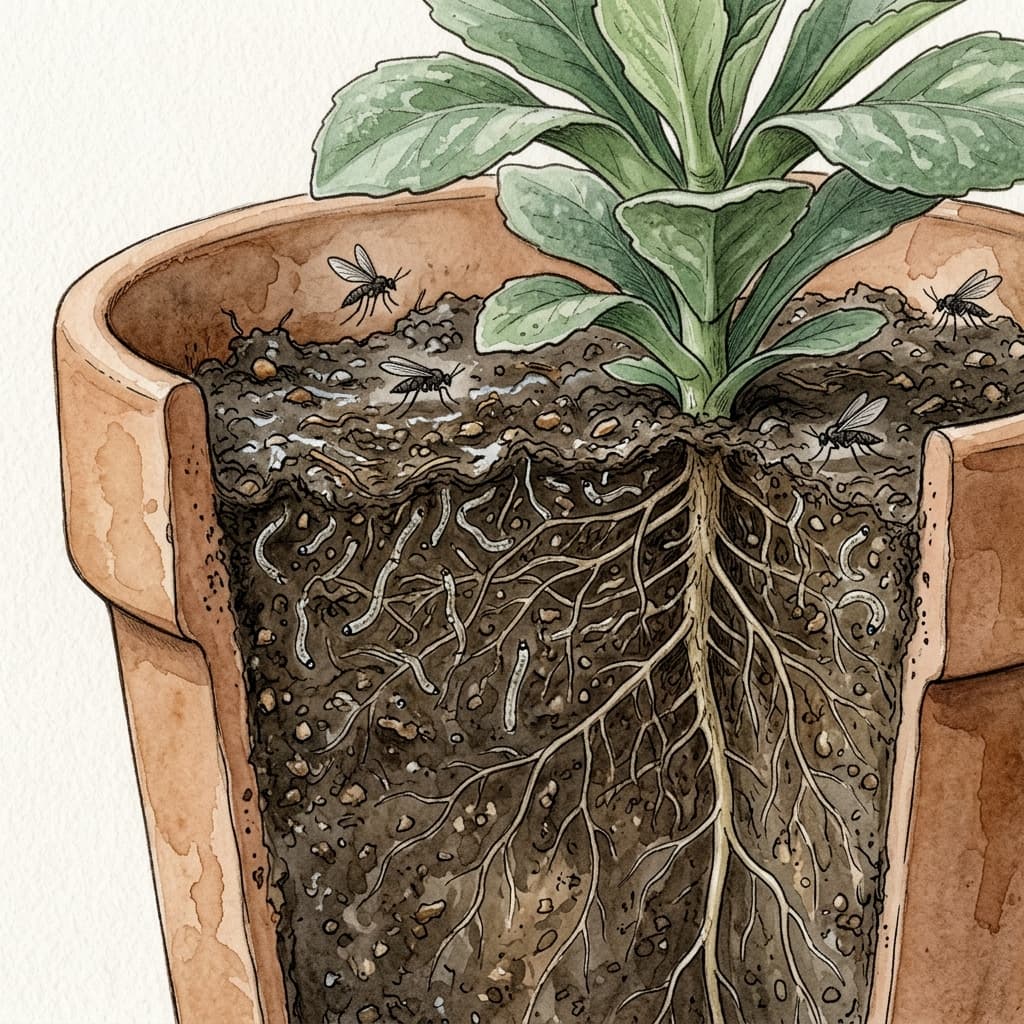
Never. In closed container systems, fungal chlamydospores become concentrated in the root ball and potting mix. Reusing old vinca potting soil for fall pansies guarantees severe infection within weeks. Discard spent container media into your municipal green-waste bin, scrub the pots with a 10% bleach solution (or 70% isopropyl alcohol) to kill adhering spores, and refill with fresh, sterile soilless potting mix.
Can chemical fungicides cure pansies once black root rot starts?
No. Fungicides labeled for black root rot (such as thiophanate-methyl or fludioxonil) are strictly preventive protectants; they cannot regenerate cortical root tissue that has already blackened and died. Once an infected pansy exhibits severe stunting and blackened roots, the most effective management is to dig up the plant, remove the surrounding soil ball, bag it, and replace it with a non-host plant like sweet alyssum or ornamental kale.
Does summer soil solarization eliminate black root rot in garden beds?
Yes, but it requires advance summer planning. As documented in the UC Statewide IPM Soil Solarization Guidelines, covering moist garden soil with clear polyethylene plastic for four to six weeks during peak summer sunshine (June through August) elevates upper soil temperatures above 140°F, pasteurizing resting sclerotia and chlamydospores. However, by late September, sun angles are too low to achieve therapeutic heat, making crop rotation and bed rest your best fall defenses.
Ready to make the most of your autumn garden? Discover our curated selections in the Top 5 Flowering Plants to Plant in September, master fall soil biology with how warm soil mulching extends autumn root development, learn proper compost pathogen control in why cool compost fails to kill persistent garden diseases, avoid orchard re-infection with orchard sanitation practices, and explore our comprehensive Seasonal Gardening Playbook.