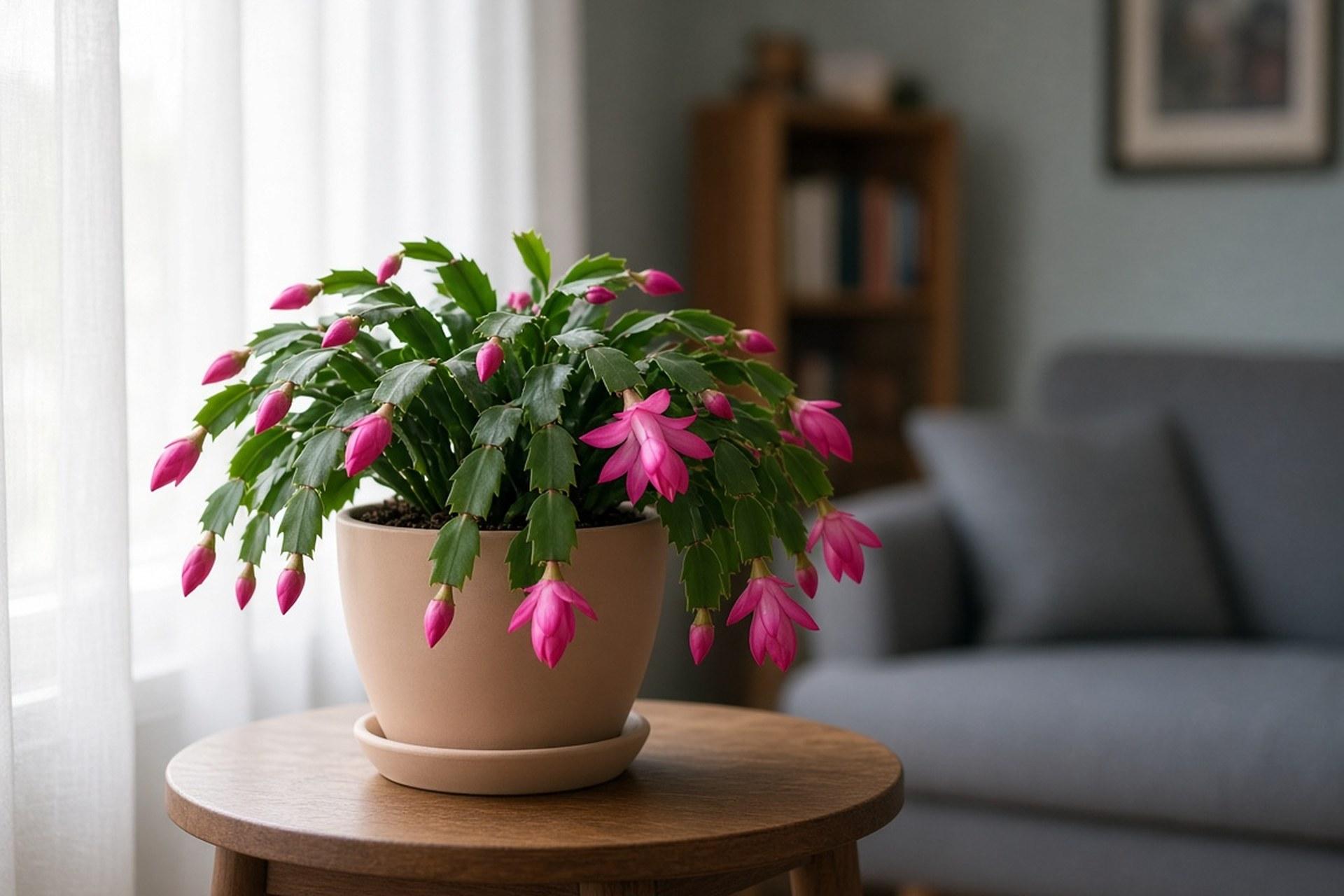

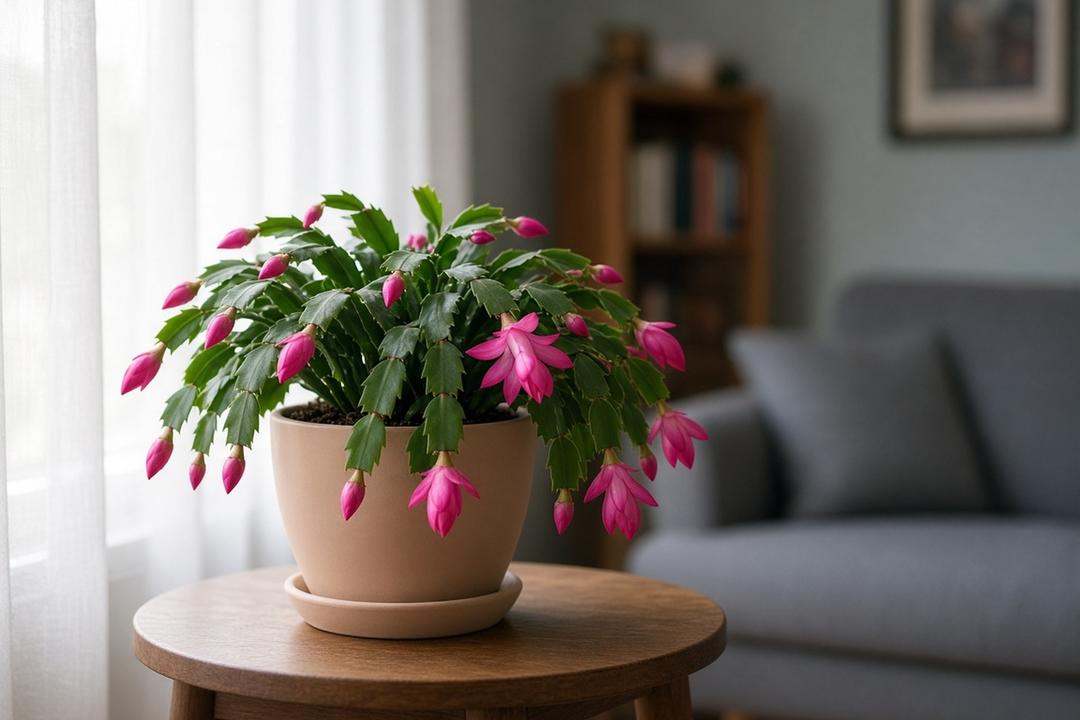
A Christmas cactus dropping buds is almost never a dying plant. It is a plant that got moved, chilled, dried out, or blasted by a heater after the buds had already set. Sudden changes in light, temperature, and drafts are the usual triggers. Iowa State University Extension is direct about the first rule: do not move the plant to a new location until the first flowers start to open. The rest of the fix is the same idea — one stable spot, bright indirect light, cool indoor temperatures of about 60–70°F by day and cooler at night, and steady moisture until the show is over.
Sophie: My Christmas cactus keeps dropping its buds. What am I doing wrong?
Sprouty: Sudden changes in light, temperature, and drafts. Keep it in one stable spot with bright indirect light and cool indoor conditions — and don't move it once the buds are on.
Why a Christmas cactus drops its buds
The plant sold as a Christmas cactus is a tropical forest epiphyte, not a desert cactus. It is a Schlumbergera — usually the Thanksgiving cactus, Schlumbergera truncata, which has pointed teeth on the stem segments, or the true Christmas cactus, Schlumbergera × buckleyi, which has more rounded, scalloped edges. University of Illinois Extension notes that most plants sold as "Christmas cactus" are actually Thanksgiving cactus. The care, and the reasons buds drop, are the same for both.
In the wild these plants grow in the crotches of trees in the humid mountains of southeastern Brazil, taking water from rain and decaying matter. Their flattened stem segments — botanically phylloclades, not true leaves — make food, and the flowers form at the tips. Once those tips have set buds, the plant is famously touchy. University of Minnesota Extension puts it plainly: once flower buds have started to develop, holiday cacti do not like to be disturbed. Buds may drop from drafts, from sudden changes in temperature or humidity, and from a change in the direction or amount of light.
Illinois Extension lists the same cluster of causes as the most common holiday-cactus complaint: temperatures that are too high, exposure to drafts, insufficient light, under- or overwatering, and low humidity. North Carolina State Extension adds sudden changes in temperature or light, and a lack of water. None of these is a mystery disease. They are changes the plant can feel, and the buds are the first thing it sheds.
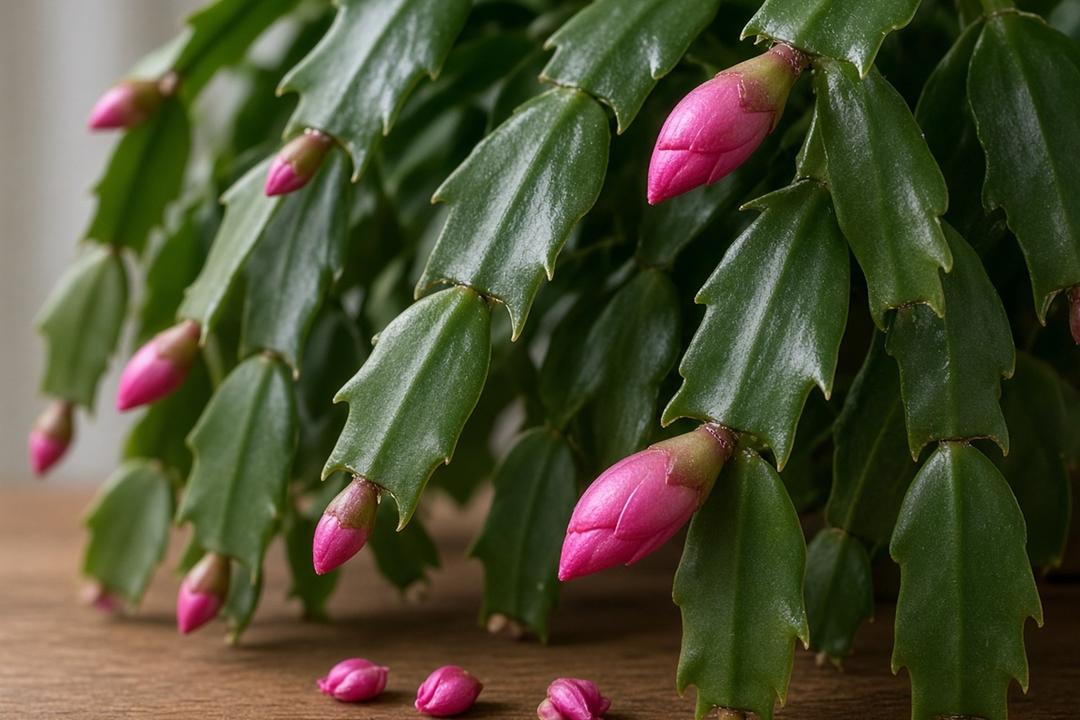
Don't move it — or even rotate it — once buds set
This is the habit to stop. Carrying a budded plant from the nursery to a cold car, rotating it on the windowsill so the back gets light, sliding it to a brighter room for guests, or just "finding a better spot" after you get it home are all enough to trigger drop. Iowa State University Extension's rule is the one to follow: do not move a holiday cactus to a new location until the first flowers begin to open. After the first blooms open, you can move it to a place you will enjoy it.
Minnesota Extension makes the same point about disturbance, and notes that a change in the direction of sunlight can drop buds on its own — which is why rotating the pot for even growth is a good habit in summer and a bad one once buds are on. If the plant has to end up in a warmer display room than the one where the buds started, Minnesota's advice is to make that move as soon as the buds appear, not midway through. The safest path is simpler: pick the final spot when you bring the plant home, and leave it there.
The trip home is the first test. Iowa State warns that holiday cacti should be transported carefully in winter, because cold exposure can damage plants or cause buds to drop. A budded plant that goes from a warm shop into a cold evening, sits in a chilly car, and then lands in a dry, heated living room has already had three sudden changes before you hang up your coat. Wrap it for the ride, get it indoors quickly, and let it settle in one place.
Temperature swings, drafts, and heater vents
Holiday cacti want a cool, steady room — not a hot one, and not one that swings. Indoors, Iowa State recommends temperatures between 60°F and 70°F. While the plant is blooming, Illinois Extension recommends about 70°F during the day and 55–65°F at night. Minnesota Extension is in the same range: daytime temperatures of 65–70°F and evening temperatures of 55–65°F. Nights that stay above about 65°F make it harder for the plant to set buds in the first place. Once buds are on, the bigger risk is a swing — a blast of heat from a vent, a cold draft from a door — and, below 50°F, Illinois warns that the cold itself may drop buds.
The practical translation is a room that stays in the 60s, with cooler nights, away from anything that blasts hot or cold air. Minnesota Extension's action for bud drop from temperature change is specific: locate the plant away from drafts, heaters, and vents. A heating register, a radiator, a fireplace, a frequently opened exterior door, and a leaky window are all regular sources of the sudden change that sheds buds.
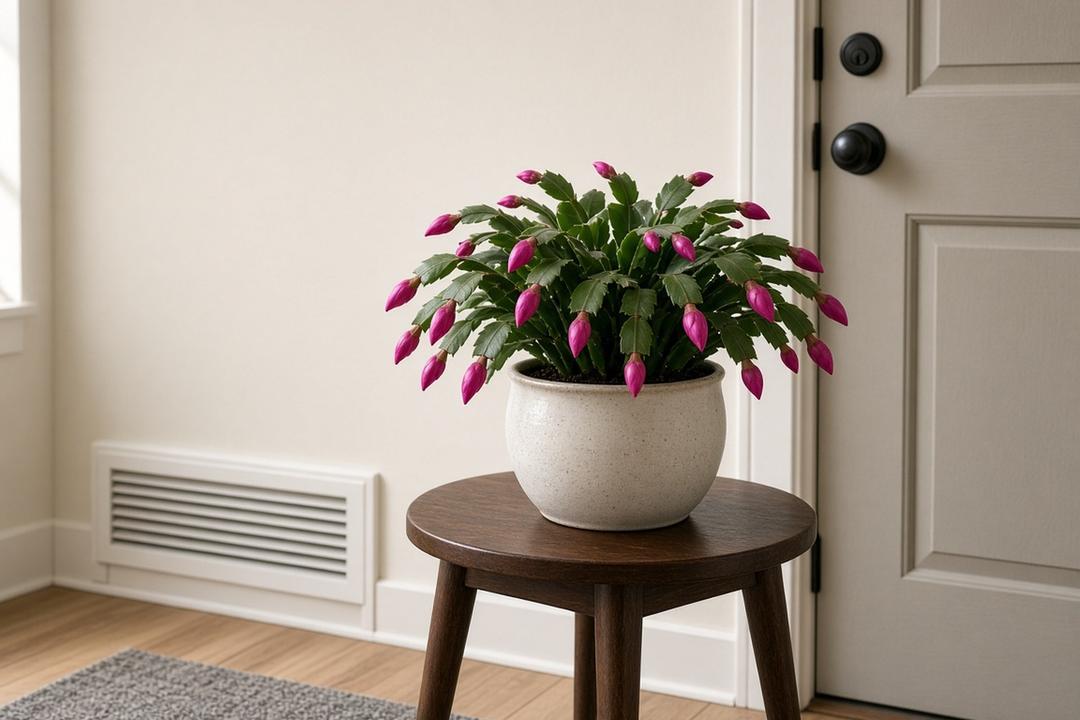
Light: bright and indirect, and then leave it alone
Bright, indirect light is the right intensity — an east window, or a south or west window with a sheer curtain, is typical. These plants are not desert cacti, and they are intolerant of harsh direct sun. North Carolina State Extension says they thrive in bright, indirect sunlight and are intolerant of direct sun. Illinois Extension warns that too much light can turn the stems pale green or sunburn them, which matches their life as understory epiphytes on tree branches.
The change is what drops buds, not a modest room's worth of daylight. Moving a plant from a dim shop corner to a hot, sunny windowsill — or from that windowsill to a dark coffee table for a party — is a light change the buds will notice. Minnesota Extension lists both the direction and the amount of sunlight as bud-drop triggers. Pick a bright, indirect spot on day one, and keep the pot facing the same way.
A related light issue matters earlier, when buds are still forming: holiday cacti are short-day plants. Iowa State notes that most need a long stretch of uninterrupted darkness — often 14–16 hours, some cultivars as little as 12 — and that lamps, kitchen lights, or even streetlights can interfere with bud set. Once the buds are already on the plant, that dark-period work is largely done. Don't start a new lighting experiment now just to "help" it bloom.
Watering and humidity while it's in bud
Unlike desert cacti, holiday cacti should not be kept dry while they are budding and flowering. Iowa State says to keep the soil evenly moist in this phase, because dryness can cause buds or flowers to drop. Illinois Extension agrees: keep the soil moist, but do not let the pot sit in water, and if the plant gets too dry while blooming, it may drop its flowers. North Carolina State notes that buds may drop from a lack of water, and recommends watering about every one to two weeks, or when the soil is nearly dried out — a useful cue, as long as "nearly dry" does not become "bone dry" while buds are on.
Overwatering is the other side of the same problem. Illinois Extension says wilted, shriveled, dull-gray-green stems are more often a sign that the mix has been kept too wet, and the roots can no longer take up water, than a sign the plant is thirsty. Water thoroughly, let the excess drain, empty the saucer, and water again when the top of the mix has dried — not on a rigid calendar, and not with a daily sip.
Low humidity is on Illinois Extension's bud-drop list, and it is a winter-house problem: heating systems dry the air that a Brazilian forest epiphyte would prefer to be moist. A pebble tray with water below the pot (the pot sitting on the pebbles, not in the water), a room humidifier, or grouping plants together helps. Skip a heavy mist on open flowers, which can spot the blooms; raise the humidity around the plant instead.
A quick-fix checklist
Do these in order, then stop fussing. The goal is one steady environment until the flowers open.
- Stop moving and rotating the pot. Leave it where it is if that spot is already bright, indirect, and away from vents and drafts. If you just set it down in a bad place — on a heater, in a doorway, or in hot direct sun — make one move, now, to a better permanent spot, and do not move it again until the first flowers open.
- Keep days around 60–70°F and nights cooler, ideally in the mid-50s to mid-60s°F, and never let nights fall below 50°F if you can help it.
- Park it away from drafts, heaters, and vents — and away from a frequently opened exterior door.
- Give it bright, indirect light and keep the pot facing the same direction.
- Keep the mix evenly moist, never soggy and never bone-dry. Water thoroughly, drain well, and empty the saucer.
- Raise the humidity with a pebble tray or a humidifier if the heating is running.
- Skip a repot and a hard prune while it is in bud. Iowa State says the best time to repot is spring or early summer, when the plant is not in bloom, and only when it has truly outgrown the pot — these plants flower well when slightly pot-bound. You do not need to fertilize now either: Illinois Extension recommends a complete houseplant fertilizer once growth resumes in spring through late summer.
After buds drop — and next year's bloom
A dropped bud will not reattach or open. Tidy the ones on the table, keep the care steady, and let the remaining buds continue. The plant itself is usually fine. If every bud has fallen, treat it as a houseplant until spring: slightly drier watering after the flowering season, as Iowa State advises, then regular growth-season care, and a cooler, darker-night stretch next fall so it can set buds again.
For next year's flowers, the same extensions agree on the recipe: short days and cool nights. Iowa State recommends a cool spot at 55–65°F with bright daytime light and no artificial light at night, starting in late summer. Illinois Extension says plants need at least 12 hours of continuous darkness for five to six weeks, plus daytime temperatures of 65–70°F and evenings of 55–65°F — or, if you cannot manage the dark period, nights around 55°F may induce blooming regardless of night length. A spare bedroom that stays dark after sunset is enough. That is a project for September and October, not for a plant that is already dropping buds this week.
Quick answers
Why is my Christmas cactus dropping buds?
Sudden changes after the buds have set — moving or rotating the plant, temperature swings, hot or cold drafts, heater vents, a change in light, low humidity, or letting the soil get too dry or too wet. Iowa State, Minnesota, Illinois, and North Carolina State Extensions all point to this same cluster of causes.
Should I move my Christmas cactus to a sunnier window?
Not once buds are on it. Pick a bright, indirect spot and leave it there. A sudden move into stronger light — or a turn of the pot — can drop the buds you were trying to save.
What temperature does a Christmas cactus need?
About 60–70°F during the day and cooler nights, ideally 55–65°F. Nights that stay too warm make blooming less reliable; nights below 50°F can drop buds.
Can I rotate it so it grows evenly?
Not while it is in bud. A change in the direction of light is one of the bud-drop triggers Minnesota Extension lists. Resume rotating after the flowers finish.
Will dropped buds come back this season?
No. A fallen bud will not reattach. Keep the remaining buds in stable conditions and they can still open. The plant will set new buds next year if it gets cool nights and a stretch of uninterrupted darkness in the fall.
How often should I water a Christmas cactus that is in bud?
Keep the soil evenly moist, not wet. Water thoroughly when the top of the mix has dried, let it drain, and empty the saucer. Do not let it dry out completely while it is budding or flowering, and do not leave the pot standing in water.