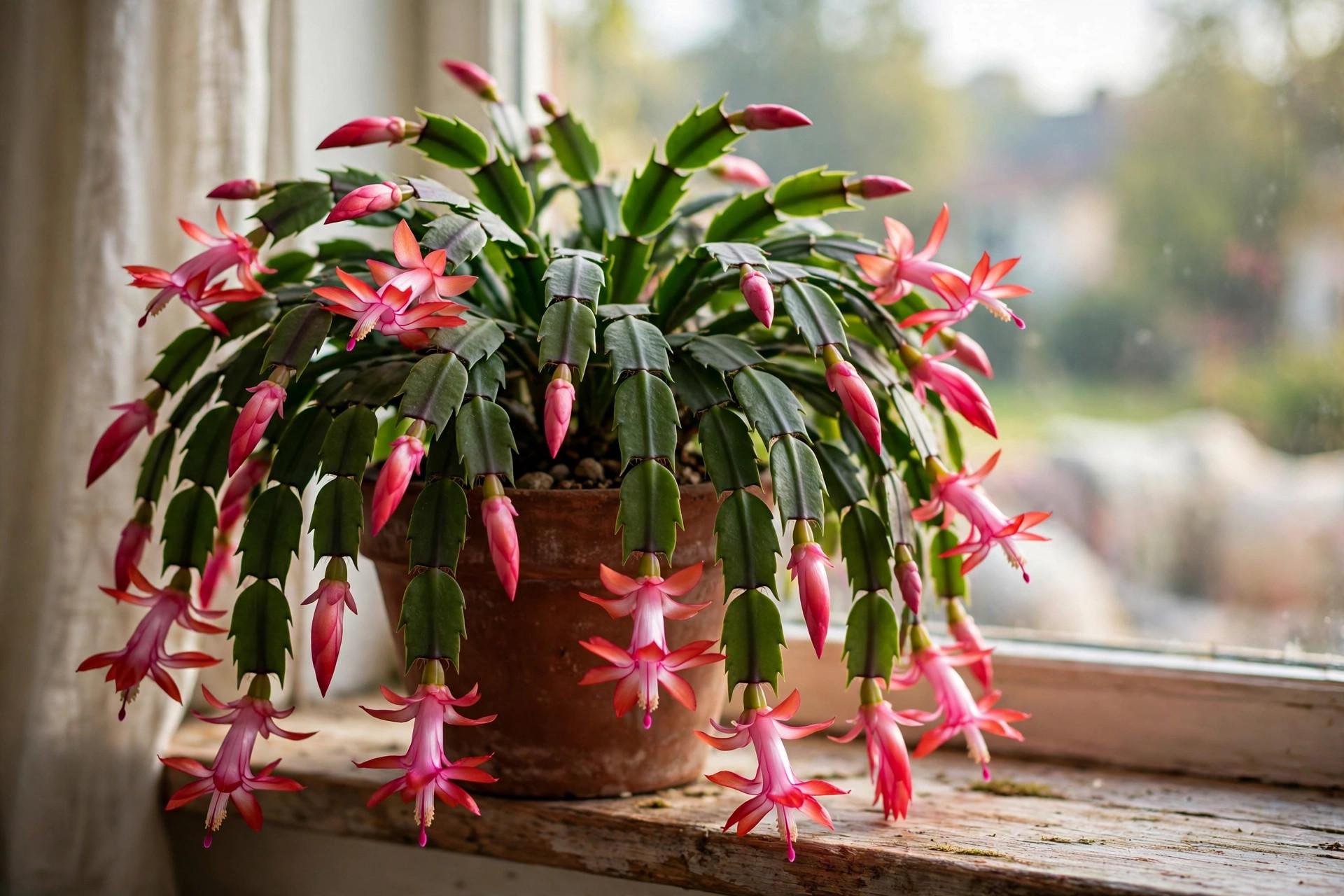

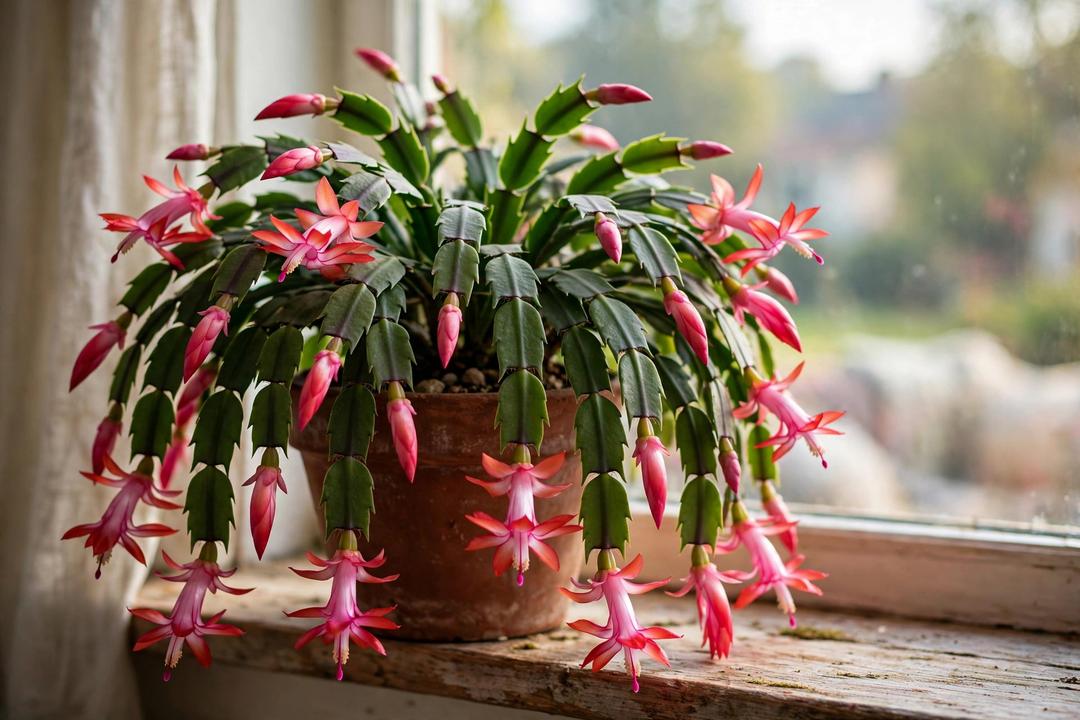
Your plant is almost certainly not sick. It is waiting for two signals it has not received: long, uninterrupted darkness at night and cool evening temperatures. A Christmas cactus is a short-day plant — it sets flower buds only when the nights stretch long and the air turns cool, the way they do in its native Brazilian mountain forests in fall. A warm living room with a lamp on every evening gives it neither signal, so it grows green stems all winter and never blooms. The fix is a six-week routine of dark nights and cool evenings, and if you start tonight — Wednesday, November 18 — the calendar still works out to winter flowers. Just do the math honestly first: six weeks from today is December 30, so plan on January blooms, not Christmas morning.
Sophie: It looks perfectly healthy — green, growing, not a spot on it. So why zero flowers?
Sprouty: Because healthy and ready are two different things. Your cactus is waiting for a long dark night and a cool evening, and your living room has given it neither.
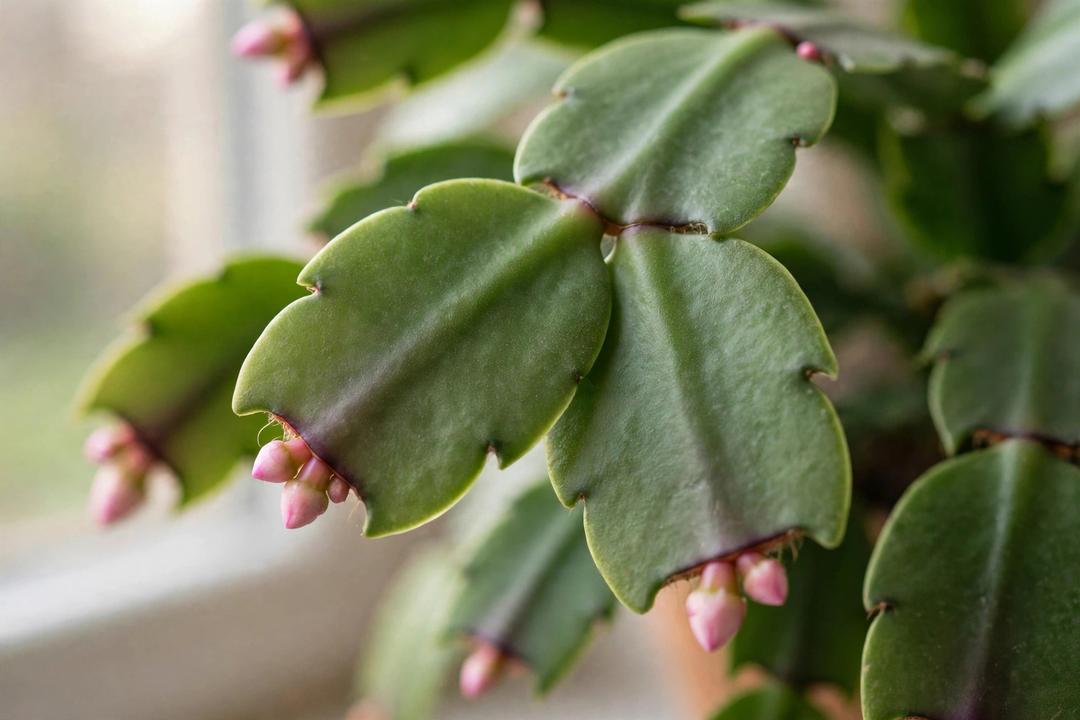
First, check which holiday cactus you actually own
Before you change anything, look at the stem segments — because the plant on your windowsill may not be a Christmas cactus at all. Iowa State University Extension is blunt about it: most plants sold as "Christmas cactus" are actually Thanksgiving cactus or hybrids. The three look alike on the shelf in October, bloom at different times, and need slightly different handling — and one of them will never bloom in December no matter what you do.
| Plant | How to tell | Botanical name | When it blooms |
|---|---|---|---|
| Thanksgiving cactus | Stem segments with 2–4 pointed, upward teeth | Schlumbergera truncata | Mid-November to late December |
| Christmas cactus | Scalloped segments, no pointed teeth; drooping flowers | Schlumbergera × buckleyi | Late November to early February |
| Easter cactus | Smoother segments with slight ripples and bristly tips | Hatiora gaertneri (syn. Schlumbergera gaertneri) | March to May |
Timing data: Iowa State University Extension (Thanksgiving mid-November to late December; Christmas late November to early February; Easter March to May) and Penn State Extension (Thanksgiving blooms usually begin in mid-November; Christmas blooms typically begin shortly after, in December).
The true Christmas cactus, Schlumbergera × buckleyi, is a hybrid of S. russelliana and S. truncata created in England about 150 years ago, according to Iowa State — which also notes it was formerly called Schlumbergera bridgesii, the name the University of Minnesota Extension still uses. If your plant has pointed teeth, it is a Thanksgiving cactus, and its window is already open: it should be budding now, and the routine below still applies. If it has smooth, rippled segments with bristles, it is an Easter cactus — Hatiora gaertneri in current taxonomy, though Iowa State and Minnesota still list it as Schlumbergera gaertneri. It follows the same short-day-and-cool treatment in fall — Iowa State gives it 14 to 16 hours of darkness at 60 to 70°F for three to four weeks, then 47 to 55°F for another four to six weeks — but it flowers in March to May, so it will not bloom for Christmas. That is not a failure; it is the wrong calendar.
The two signals your plant is waiting for
Holiday cacti are short-day plants, which means they measure the night, not the day. As daylight shrinks in fall, the long dark stretch tells the plant to stop growing leaves and start forming flower buds. Cool nights send the same message a second way. The University of Minnesota Extension puts it plainly: to produce flower buds, they require shorter days and/or cool night temperatures. Miss both signals and you get a healthy green plant with no flowers — a common complaint about these plants, and the one Minnesota opens its holiday cactus guide by acknowledging.
Signal one: darkness. The extension sources agree on the idea and disagree on the exact number of hours, so treat the numbers as a range rather than a rule:
| Source | Darkness needed each night |
|---|---|
| University of Minnesota Extension | At least 12 hours of complete darkness |
| Penn State Extension | 12 to 14 hours of uninterrupted darkness |
| UC Agriculture and Natural Resources (Stanislaus) | 13 hours or more of continuous darkness |
| Iowa State University Extension | 14 to 16 hours; some cultivars respond to as little as 12 |
One number satisfies every source on that table: 14 hours. It sits at the top of Penn State's range, clears UC ANR's 13-hour floor, and reaches the bottom of Iowa State's 14-to-16 range. Give the plant 14 hours of real darkness every night — say 5 p.m. to 7 a.m. — and you are inside every published range at once. And "real" matters: Penn State Extension warns that flower buds will not set if the darkness is interrupted for too long — two hours or more — and that plants must be kept away from lamps and streetlights. A lamp switched on for the evening, a television glowing across the room, or a streetlight through the window all shrink the plant's true dark hours. In mid-November, California nights are already long; the problem is almost never the season. It is the lights you leave on.
Signal two: cool nights. Here the sources agree more closely: night temperatures of 55 to 65°F, per Minnesota, Penn State, and UC ANR alike. The edges matter. Minnesota notes that plants are unlikely to bloom if night temperatures stay above 65°F, and Iowa State goes further: above 70°F prevents flowering even with short days — darkness alone cannot rescue a plant in a warm room. On the cool side, Minnesota reports that at 55°F nights, plants will bloom in approximately five to six weeks, sometimes regardless of day length. A cool room does half the work on its own. Daytime temperatures of 65 to 70°F are fine; it is the night temperature that sets buds. Keep the plant away from heating vents, radiators, and fireplaces once buds start forming — UC ANR warns that continuous warmth, especially above 80°F, can make buds drop even after they form.
Both signals run for about six weeks. Minnesota and Penn State both give about six weeks of short days for Thanksgiving and Christmas cacti, and Iowa State's 14-to-16-hour darkness requirement fits the same routine.
The fix: a six-week dark-nights routine, starting tonight
Pick a spot and a schedule, then leave the plant alone. The routine is simple; the discipline is the hard part.
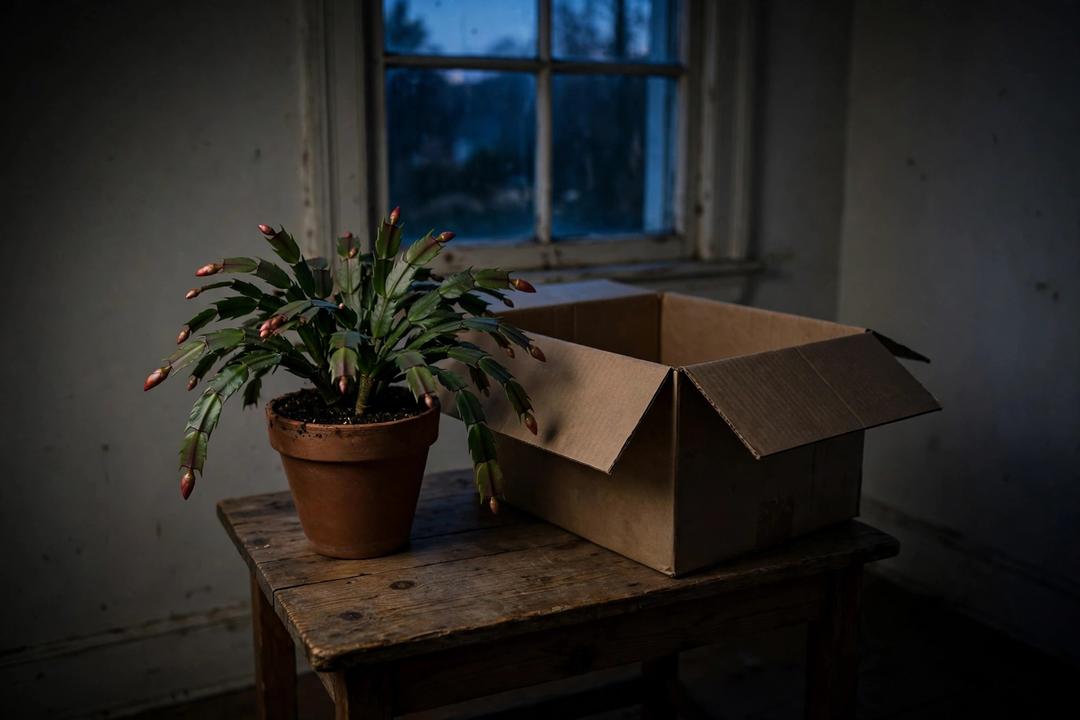
1. Move it to a cool, dark-at-night room. An unused bedroom or a cool basement corner works well — somewhere with bright indirect light during the day, nights in the 55 to 65°F range, and no lamps, television, or streetlight after dark. Iowa State suggests exactly this: in late summer, place the plant in a cool spot with bright daytime light and no artificial light at night. If no room in your house goes fully dark, cover the plant with a large cardboard box or a dark cloth each evening and uncover it in the morning — the cover must block light completely, not just dim it.
2. Give it 14 hours of darkness, every night, for six weeks. Into the dark at about 5 p.m., back into the light at about 7 a.m. — or into a closet at 6 p.m. and out at 8 a.m. The exact hours do not matter; the unbroken stretch does. Do not peek with the room light on, and do not skip weekends. A brief interruption of under two hours is the tolerance Penn State Extension gives — but a full lit evening, three to five hours of lamplight, is a broken night by that rule, and the buds will not set.
3. Keep the days bright. Darkness is only half the schedule. During the day the plant still needs bright, indirect light — an east-facing window is ideal, or a few feet back from a south window. A plant parked in a dark closet around the clock will not bloom either; it needs daylight to build the energy that flowers are made of. UC ANR notes that more abundant blooms come from plants exposed to high light, and that too much direct summer sun can yellow or burn the leaves — bright but filtered is the target.
4. Water sparingly until buds appear, then keep it evenly moist. This is the one place the advice changes mid-routine, so get the sequence right. In fall, before buds form, water only enough to keep the leaves from wilting — UC ANR's instruction — and never let the plant sit in waterlogged soil, which rots the roots. Once tiny buds appear at the segment tips, switch: Iowa State and Penn State both say to keep the soil evenly moist while the plant is budding and flowering, because dryness at that stage makes buds or flowers drop. Think of it as a dry rest, then steady moisture.
5. Stop feeding while buds form. Feed monthly with a half-strength balanced fertilizer from June through August, per Minnesota — then stop, or switch to a low-nitrogen, high-phosphorus-and-potassium formula (Minnesota's example is 0-15-10) for fall. UC ANR says to stop fertilizing entirely during flower bud formation. Either way, do not keep feeding a regular fertilizer into bud season: Penn State Extension lists overfertilization while buds develop as one of the conditions that contribute to a lack of blooms.
6. Once buds appear, do not move it. This is the rule that undoes the most good work. Leave the plant exactly where it set its buds until the first flowers begin to open. Iowa State is explicit: do not move the plant until flowers begin to open, as doing it sooner can cause buds to drop. Drafts, sudden temperature changes, and a new spot by a heater are the usual culprits. If the plant must be displayed in a warmer room for the holidays, move it only once the first flowers have actually opened. Minnesota allows moving to a warmer room as soon as buds appear; Iowa State advises waiting until the first flowers open — when in doubt, wait.
Is it too late to start?
It depends on what "too late" means. Six weeks of short days starting Wednesday, November 18 lands on December 30. Buds form over those six weeks; the flowers open after the buds form. So a plant started tonight is on track for blooms in January — squarely inside the true Christmas cactus window, which runs late November to early February. What is a stretch is Christmas Day itself: if you need open flowers on December 25, a plant with no buds on November 18 is almost certainly not going to make it, and any guide that promises otherwise is selling you a calendar it has not checked.
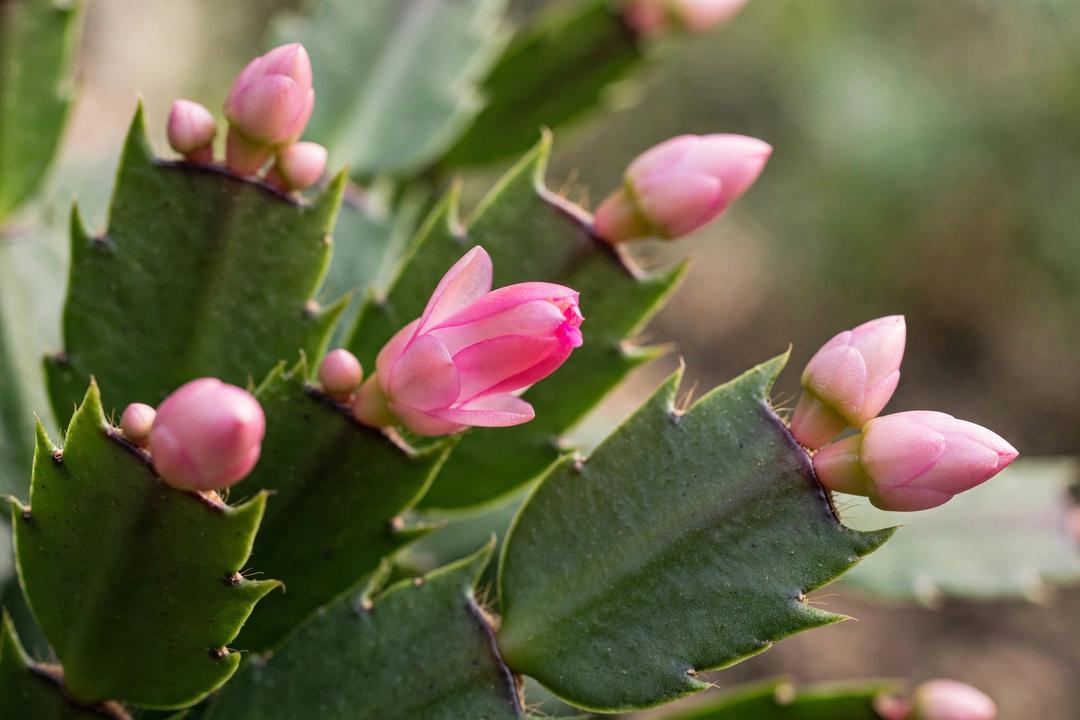
There are two exceptions. First, cool nights can shorten the wait: Minnesota notes that at 55°F nights, buds can form in five to six weeks, sometimes regardless of day length — so a plant in a genuinely cool room may beat the six-week estimate by a few days. Second, if your plant already has tiny buds at the segment tips, skip the dark routine entirely. The buds are already set; your only job now is to keep the plant cool, evenly watered, and exactly where it is until the flowers open.
And if nothing happens after six faithful weeks? Check the identification table again — an Easter cactus won't bloom for Christmas; it flowers in late winter to spring — then check the other causes in the next section. But give the routine the full six weeks before declaring it a failure. These plants are famously long-lived: both Minnesota and Penn State note they can live over 100 years and are often passed down through generations. A plant that has bloomed for decades does not lose the ability in one warm fall; it is waiting for the signals to return.
One distinction before the checklist below: buds forming and then dropping is a different problem from buds never forming — moving the plant after buds set, drafts, sudden temperature or humidity swings, dry soil while in flower, or continuous warmth above 80°F are the usual causes. If your buds are falling off after forming, our guide to Christmas cactus dropping buds covers that problem in full. If no buds ever formed at all, the dark-nights routine above is the fix.
The other reasons it won't bloom
If the nights are long, the room is cool, and there are still no buds after six weeks, work through the rest of Penn State Extension's list of conditions that contribute to a lack of blooms: root rot from saturated soil, overfertilization while buds develop, drought stress, and too much light. Minnesota's common-issues section adds a third cause alongside warmth and short days: the plant lacks nutrients, fixed with a half-strength low-nitrogen, high-phosphorus-and-potassium fertilizer in fall. A few checks:
- Dry indoor air. These plants come from humid rainforests, and Minnesota notes their need for high humidity. Penn State says they enjoy a light misting of water daily — in a dry heated house in winter, a daily mist is cheap insurance while buds are forming.
- Soggy soil. Holiday cacti are rainforest epiphytes, not desert cacti — but they still need drainage. Minnesota calls root rot from overly wet soil one of the most common causes of death in these plants. If the soil stays wet for days after watering, or the plant looks wilted even though the soil is wet, the roots are rotting: let it dry out, make sure the pot drains freely, and never let it sit in a saucer of water.
- Too much light. Bright indirect light by day is right; direct sun, especially through a south window, can bleach and stress the segments. Penn State lists too much light among the causes of no blooms, and its care guide warns the plants are damaged by full sun.
- A recent repot. Holiday cacti bloom best when somewhat pot-bound, per Minnesota, Penn State, and Iowa State alike. Repotting should never happen while the plant is blooming anyway — wait until late winter or early spring, and only when the plant has completely outgrown its container.
Quick answers
How many hours of darkness does a Christmas cactus need to bloom?
At least 12 hours of uninterrupted darkness every night for about six weeks — that is the floor every extension source agrees on. The sources differ above that floor: Penn State says 12 to 14 hours, UC ANR says 13 or more, Iowa State says 14 to 16 for most cultivars. Aim for 14 hours nightly and you are inside every published range.
Can I still get blooms if I start in mid-November?
Yes — winter blooms, not necessarily Christmas Day blooms. Six weeks from November 18 is December 30, and buds still need time to open into flowers after they form. A true Christmas cactus blooms into early February, so January flowers are a realistic outcome. A plant kept at genuinely cool 55°F nights may form buds a few days sooner, but Christmas Day itself is still a stretch. If your plant already has buds, skip the routine and just keep it cool and unmoved.
Why did it bloom last year but not this year?
Something changed in the two signals. The usual suspects: the plant moved to a warmer room or nearer a heater, a new lamp or television now lights the room in the evening, or it was repotted into a larger pot in fall. Work backward through the changes since last December; the answer is usually one of them.
Will it bloom again next year?
Yes, if you repeat the routine each fall: six weeks of long dark nights and cool evenings starting in early October, then steady care while buds develop. These plants can live over 100 years and are often passed down through generations — one bloomless winter is a missed signal, not a dead plant.
My plant has buds, but they keep falling off. Is that the same problem?
No — buds that form and then drop are a stability problem, not a darkness problem. Moving the plant, drafts, sudden temperature or humidity changes, dry soil while in flower, or heat above 80°F are the usual causes. Our guide to Christmas cactus dropping buds covers the fix: one stable, cool spot, and no moves until the first flowers open.
Is a Christmas cactus a real cactus?
Yes — it is a member of the cactus family, Cactaceae — but it is a rainforest epiphyte, not a desert plant. Its ancestors grew in the mountainous rainforests of southeastern Brazil, in tree crotches where leaves collected and moss grew, absorbing water and nutrients from rain and decaying matter. That is why it wants humidity, filtered light, and moist soil, and why treating it like a desert cactus is the fastest way to kill it.