
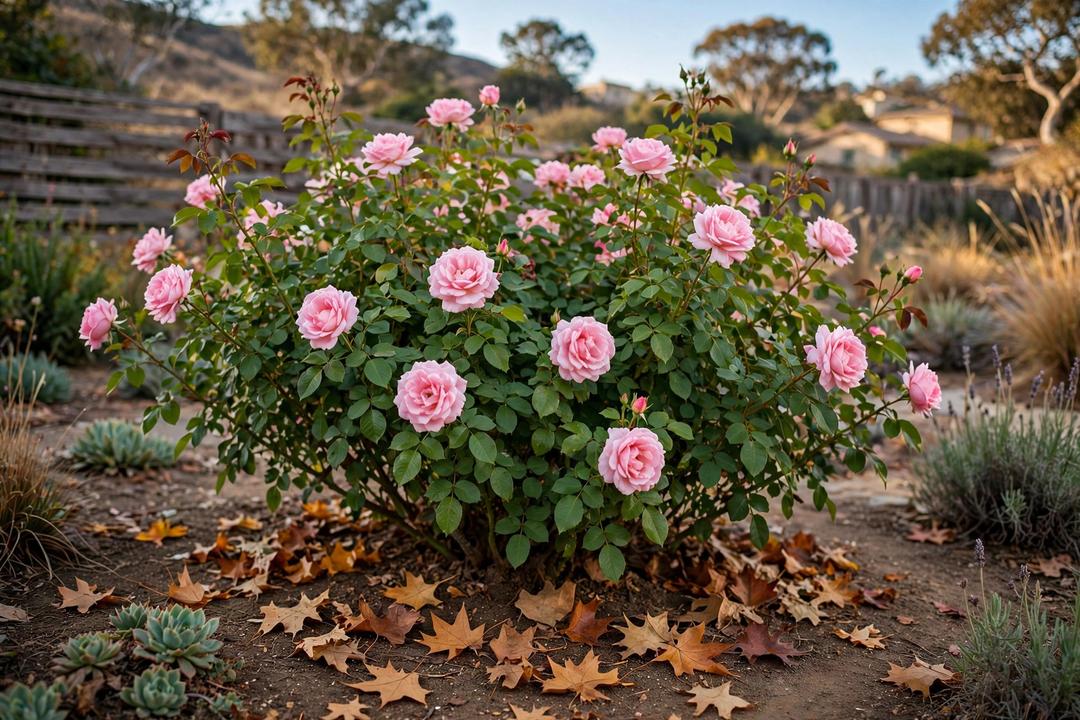
The last feeding was November 15. UC Master Gardener Debbie D., writing for UC Cooperative Extension Fresno County on October 30, 2026, puts it plainly: "You can fertilize on the 1st and again on the 15th of November. That is it for fertilizing your roses until early spring of next year." The November 15 feeding has just passed. If you fed on the 15th, you are done. If you missed it, do not make it up now — put the fertilizer away until spring.
Sophie: But my roses are still blooming — shouldn't I keep feeding them while they're flowering?
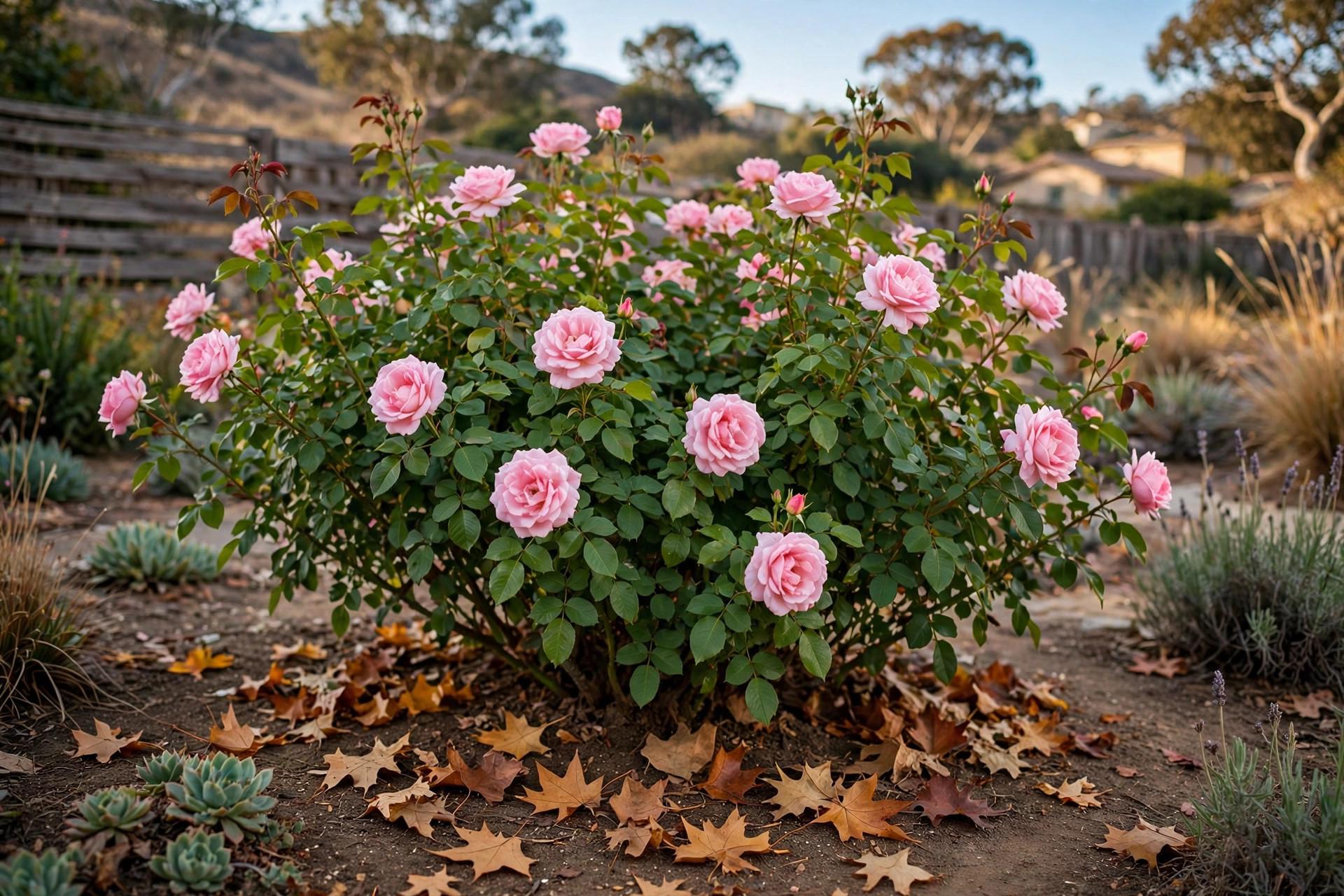
Sprouty: The blooms are the trap. The fall blooms are already set — a late feeding doesn't feed those flowers, it pushes soft new shoots that the first frost will kill.
Why a November feeding backfires
Fertilizer, especially nitrogen, tells a rose (Rosa spp., family Rosaceae) to grow — fast, soft, leafy growth. That is exactly what you want in March and exactly what you do not want in November. UC Integrated Pest Management's Pest Notes on roses warns that "too much nitrogen may shift plants into vegetative growth at the expense of flowers," and the same publication ties fall feeding to hardening: "In locations with cold winters, use an immediate release form in early fall to allow for proper winter hardening of the plants." Early fall is the operative phrase. A feeding in early fall gives new growth time to harden before cold arrives. A feeding in late November does not — the tender shoots it pushes have no time to toughen up, and the first frost kills them.
The UC Master Gardeners of San Luis Obispo County rose care calendar makes the same point from the other direction: October is the month to "apply final fertilizer of the year" and to "avoid encouraging new late-season growth." Two different UC sources, two different final dates — October on the Central Coast, November 15 in the Central Valley — and the gap is the point. California is not one rose climate, and the right stop date moves with your first frost.
The California calendar: three dates that don't quite agree
Here is what the extension sources actually say, side by side. They disagree by a few weeks, and that disagreement is useful — it tells you the rule is "stop before your frost," not a single magic date.
| Source | Last feeding | What it says |
|---|---|---|
| UC Fresno, Rosie's Corner (Oct 30, 2026) | November 15 | "You can fertilize on the 1st and again on the 15th of November. That is it for fertilizing your roses until early spring of next year." |
| UC San Luis Obispo, Rose Care Calendar | October | "Apply final fertilizer of the year" in October; "avoid encouraging new late-season growth." |
| UC IPM, Roses: Cultural Practices (Pub. 7465) | Fall — 2nd of 2 annual feedings | Nitrogen twice a year, spring and fall. "In locations with cold winters, use an immediate release form in early fall to allow for proper winter hardening of the plants." |
Timing data: UC Fresno Rosie's Corner, October 30, 2026 (November 1 and 15, then nothing until early spring); UC San Luis Obispo Rose Care Calendar (October final fertilizer); UC IPM Pest Notes: Roses, Cultural Practices and Weed Control (twice-yearly feeding; early-fall feeding for winter hardening).
How to read the disagreement: Fresno's first frost falls around December 1, so a November 15 feeding still leaves about two weeks before frost — and in Fresno County's mountain areas, where the first frost comes around the middle of November, the window has already closed. The practical rule the Fresno dates point to: your last in-ground feeding should land about two weeks before your first frost; potted roses stop 30 days before first frost. On the coast, where the San Luis Obispo calendar ends feeding in October, the October stop is the separate coastal rule. If your garden rarely or never sees frost — parts of the coast and Southern California — there is no frost date to count back from, so use the San Luis Obispo October stop as the mild-climate guide. If you do not know your first frost date, our guide to when the first frost arrives in California explains why to plan by the early date, not the average.
One more check before you feed anything, any time of year: the same Fresno column that gives the November dates also says, in its October edition, "Don't fertilize just to fertilize. Get your soil tested (if you haven't already) to find out if you need any additional minerals." UC IPM agrees — its twice-a-year recommendation "may only be necessary if roses show symptoms of nitrogen deficiency, such as poor overall growth or chlorosis of the lower leaves." A rose in decent soil may not need the November 15 feeding at all. The dates are the latest you should feed, not a feeding you owe the plant.
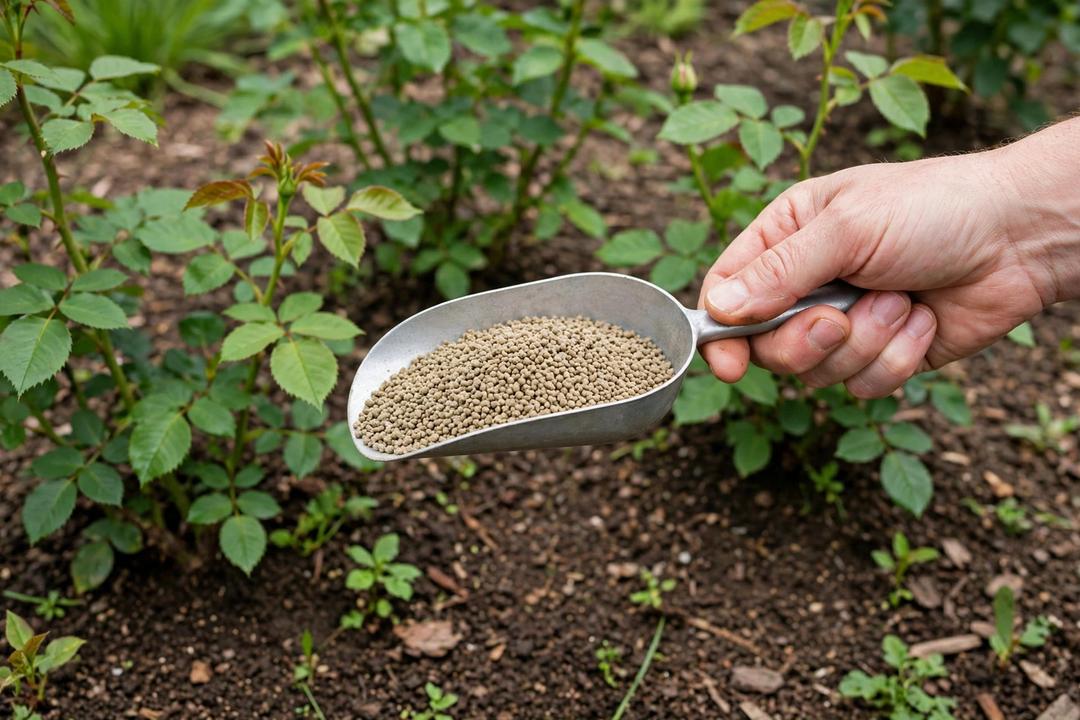
What to do instead this month
Stopping the fertilizer does not mean abandoning the roses. November is a busy month in the rose bed — just not a feeding month.
Water less, but keep watering. Once daytime temperatures drop below 80°F, Fresno notes, "rose bushes slow down their water uptake significantly compared to the 6 to 12 gallons a week they need in the middle of summer." In Fresno, the November watering schedule is once a week — a city watering restriction, not a horticultural rule — in cycles of 5 to 15 minutes at a time so the water soaks in instead of running off. Your own schedule depends on your local water rules and rainfall. If November turns rainy, turn the sprinklers off and let the rain do it. Water at the base, not over the leaves — wet foliage spreads fungal disease.
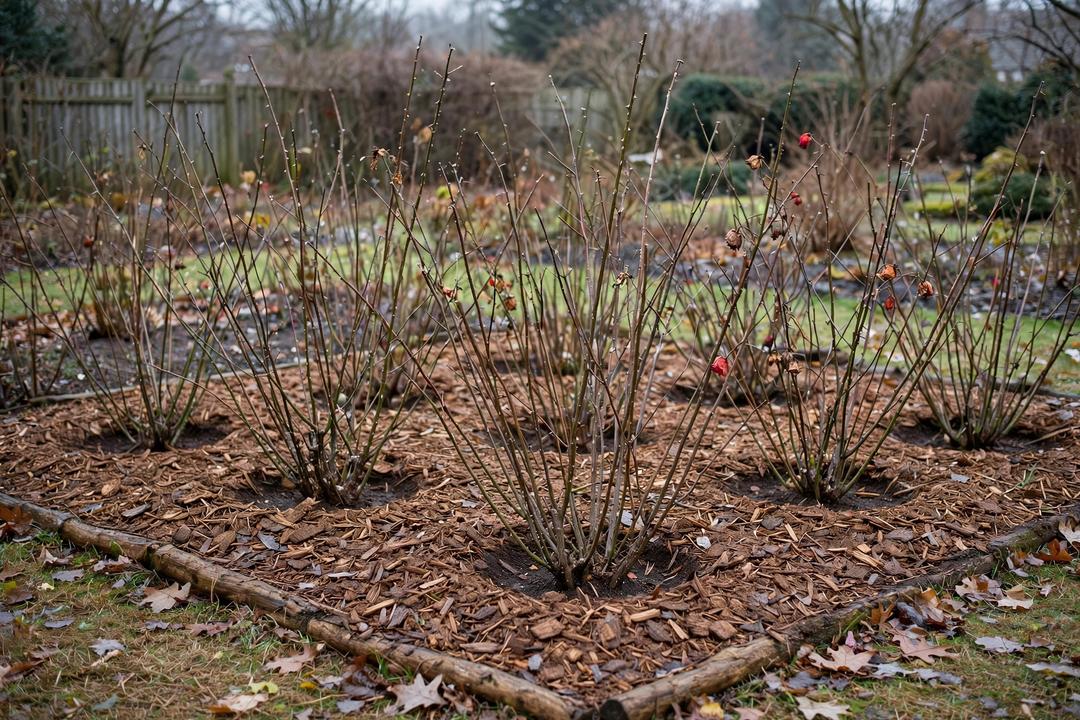
Mulch. The San Luis Obispo calendar lists replenishing mulch as an October job, and UC IPM recommends 2 to 4 inches of organic material such as wood chips around rose bushes — mulches "help to decrease water loss from the soil through evaporation" and "will reduce annual weeds." Keep the mulch off the canes themselves.
Keep deadheading — while the blooms last. Fresno's November advice is to "continue to deadhead spent roses so that new ones will grow on those canes," and to remember that "this is just deadheading and not pruning your rose, which will happen in late winter/early spring." The fall bloom, Fresno says, "should be beautiful blooms for Thanksgiving and up until Christmas or the first of the year, depending on the weather." Deadheading a spent bloom is a small cut that keeps flowers coming; the big structural prune waits until the plant is dormant.
Clean up. UC IPM's sanitation advice is to pick up fallen leaves and winter prunings, because they "can help reduce disease severity and insect populations in spring," so a November rake-out is disease prevention, not tidiness. Check the plants for bugs and fungal disease while you are at it, as Fresno advises, and treat only what you actually find.
The deadheading question: should you let hips form?
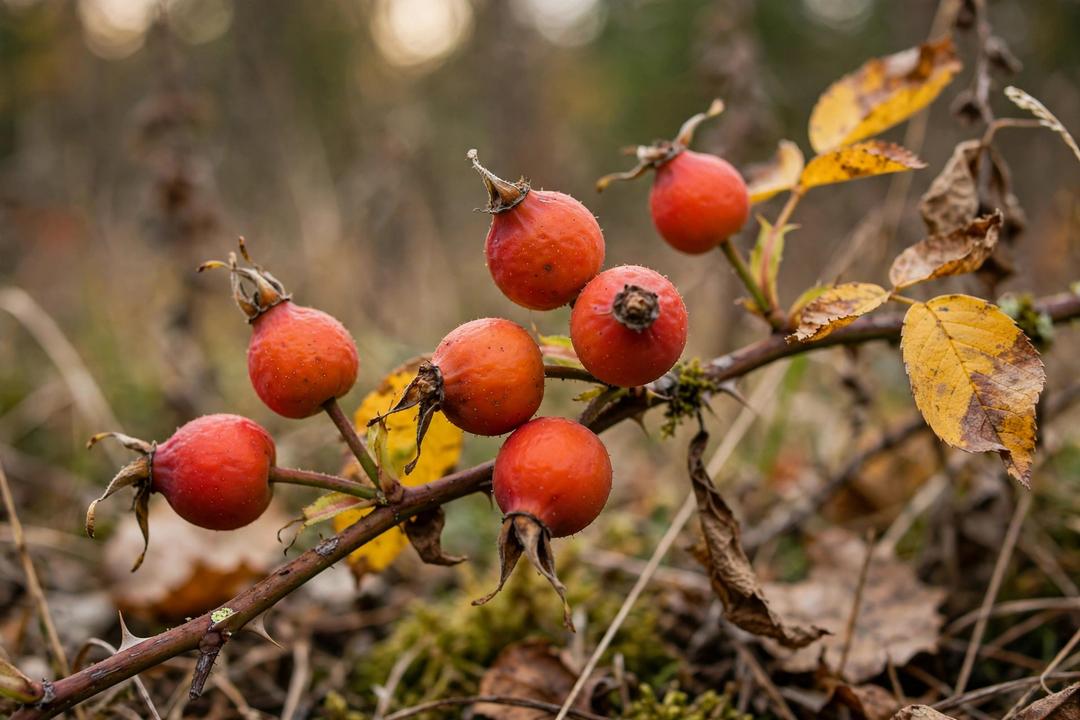
You will find two opposite pieces of advice about November deadheading, and both are right — for different climates. In cold-winter regions, the standard advice is to stop deadheading in fall and let the last flowers form rose hips, the seed pods that signal the plant to slow down and harden off. Iowa State University Extension puts it plainly: "as fall approaches, it's best to stop [deadheading]. The development of rose hips (fruits) slows plant growth and helps prepare the plants for winter." That advice is written for places where roses go fully dormant and the ground freezes.
Most of California is not that place. The San Luis Obispo calendar says November is the month when "some roses continue blooming while others enter semi-dormancy," and in San Luis Obispo and South County "roses may still bloom" in December. Fresno's November column is explicit: keep deadheading while the fall bloom is running. So in California, follow the plant, not the cold-climate rule: while your roses are still producing flowers, deadhead the spent ones; when the blooms stop, stop deadheading too, and let the plant wind down on its own schedule. If you live where the first frost already arrived — the mountain areas Fresno mentions, where frost comes around mid-November — the season is over, the hips can stay, and the fertilizer bag should already be put away.
What about roses in pots?
Container roses follow the same seasonal calendar, with two adjustments Fresno spells out. First, they dry out faster than roses in the ground, so check the soil with your finger two to three inches down and water when it feels dry — do not water on a schedule. Second, the dose is smaller: half the recommended amount of fertilizer, applied every two weeks, and only until 30 days before your first frost date. For Fresno, where the first frost falls around December 1, that puts the last potted feeding around November 1 — two weeks earlier than the in-ground dates. In the mountain areas, where frost comes around mid-November, the last potted feeding was around mid-October. If your potted roses missed that window, the same rule applies: stop now, and feed again in spring.
When to feed again
Spring, once the plant is actually growing. The San Luis Obispo calendar puts it in two steps: February, "fertilize now or wait for first new growth," and March, "when new growth is 2–4 inches long, apply granular or slow-release fertilizer and water in well." UC IPM's twice-a-year rhythm is the same shape — spring and fall, with the spring feeding doing the heavy lifting. When you do feed in spring, Fresno's October column suggests a fertilizer with a greater percentage of phosphate relative to nitrogen and potassium, alternating with fish emulsion if you wish — and to water thoroughly the day before applying any fertilizer, especially a non-organic one, "as it will burn the plant," then water again afterward. The winter prune comes first: January in the San Luis Obispo calendar ("buy, plant, and prune roses"), finishing in February, and UC IPM says to prune "in winter before buds swell" in most of California. And before you feed in spring, get the soil tested if you never have; Fresno's advice applies year-round.
Our when-to-prune guide for roses has the month-by-month pruning window by zone if you want the pruning side of the calendar in one place.
Quick answers
When should I stop fertilizing roses in California?
By mid-November at the latest. UC Fresno Master Gardeners allow feedings on November 1 and 15, then nothing until early spring; UC San Luis Obispo's calendar makes October the final fertilizer of the year. Coastal gardeners should stop in October; Central Valley gardeners get until November 15. The rule behind the dates: last in-ground feeding about two weeks before your first frost, potted roses 30 days before.
I missed the November 15 feeding. Should I feed late?
No. A late-November feeding pushes soft new growth that has no time to harden before the first frost. The plant is already winding down for the season. Wait until new growth is 2 to 4 inches long in spring.
My roses are still blooming. Does that mean they still need fertilizer?
No — the blooms are already set. Keep deadheading the spent flowers while they keep coming, keep watering on your local schedule (in Fresno that's once a week under the city restriction), and let the plant finish its fall bloom.
Should I stop deadheading so the roses form hips?
Not while they are still blooming. In California's mild climate, Fresno advises continuing to deadhead through the fall bloom, which can run to Christmas. Letting hips form is a dormancy cue for cold-winter regions; where roses bloom into December, deadheading is still the right call. When the blooms stop, stop deadheading too.
What about roses in pots?
Same seasonal stop, smaller dose, earlier deadline: half the label amount every two weeks, stopping 30 days before your first frost — around November 1 for pots in Fresno, earlier in the mountains. Potted roses also dry out faster, so check the soil two to three inches down and water at the base when it feels dry.
When do I start fertilizing again?
In spring, after pruning: February, fertilize now or wait for first new growth; March, once new growth is 2 to 4 inches long — per the San Luis Obispo calendar. Use a granular or slow-release fertilizer, water it in well, and follow the label. Get a soil test first if you have never had one; UC IPM notes that twice-a-year feeding may only be necessary if the roses show signs of nitrogen deficiency.