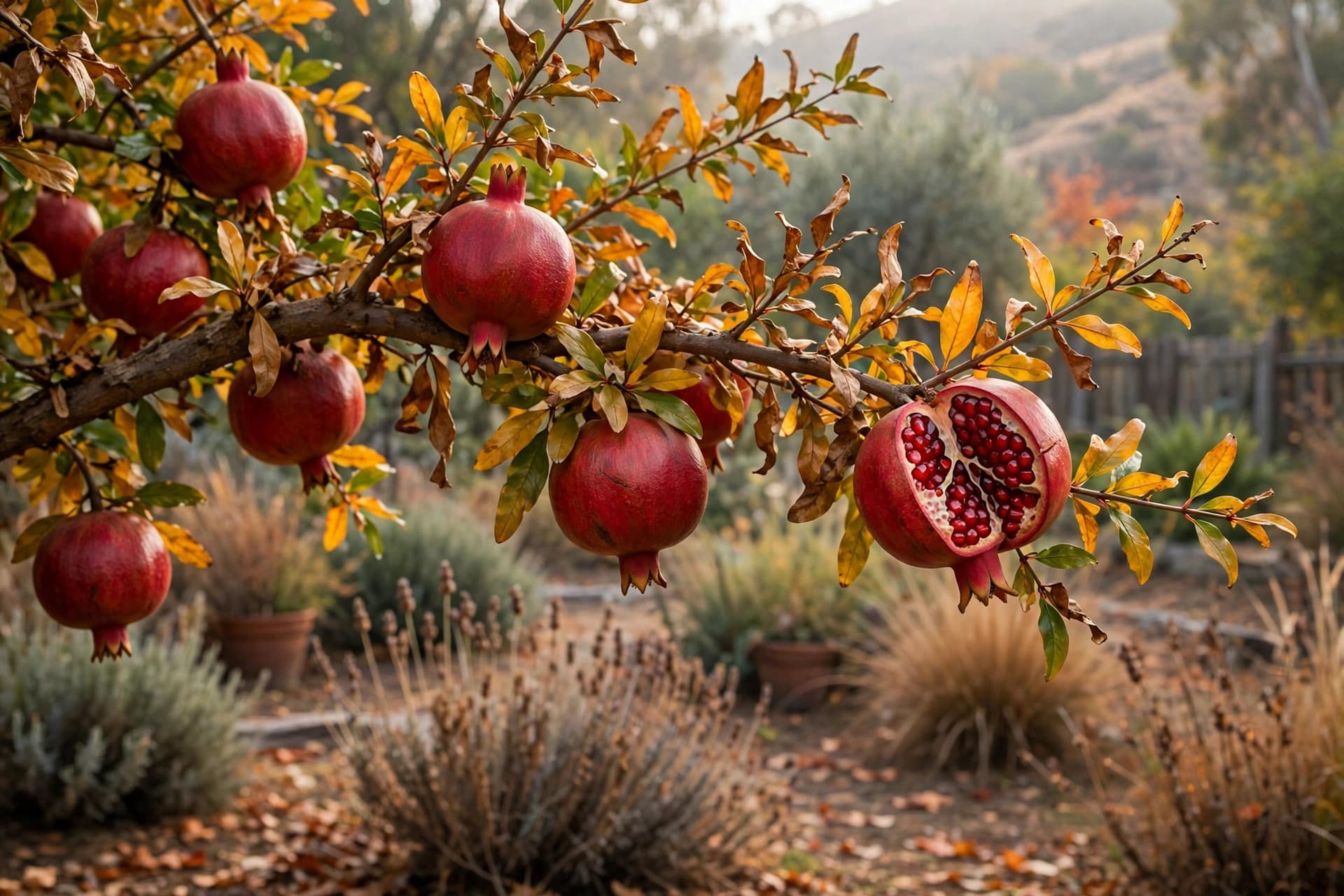

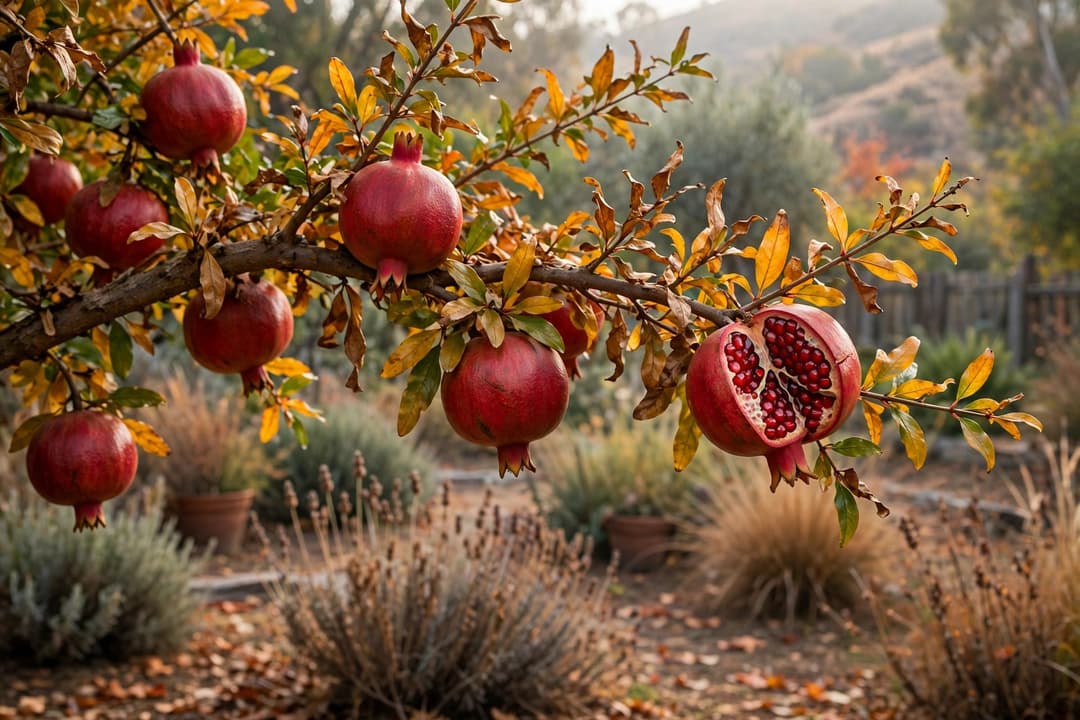
A pomegranate splits when a dry spell is followed by a sudden soaking — rain or a heavy irrigation — and the juicy arils inside swell faster than the rind, toughened by the dry weeks, can stretch. That is the short answer, and it explains why splits so often appear right after the first fall rains. UC Master Gardeners of Napa County name the pattern plainly: pomegranates tend to crack after the first fall rains, or if you overwater late in the season. UF/IFAS Extension adds the other half: sudden changes in irrigation amounts and timing often lead to fruit splitting, especially a few weeks before harvest. So both sides of the swing matter — a tree left dry, and a tree soaked all at once — and a single split cannot tell you which one your tree got.
Sophie: "So the rain ruined them? Should I just pick everything before the next storm?"
Sprouty: "Only the ones that are actually ripe. A pomegranate never ripens after picking, so stripping the tree early trades split fruit for sour fruit. Check each one — the ripe ones come in, the rest stay and take their chances."
Why the Rind Loses the Race
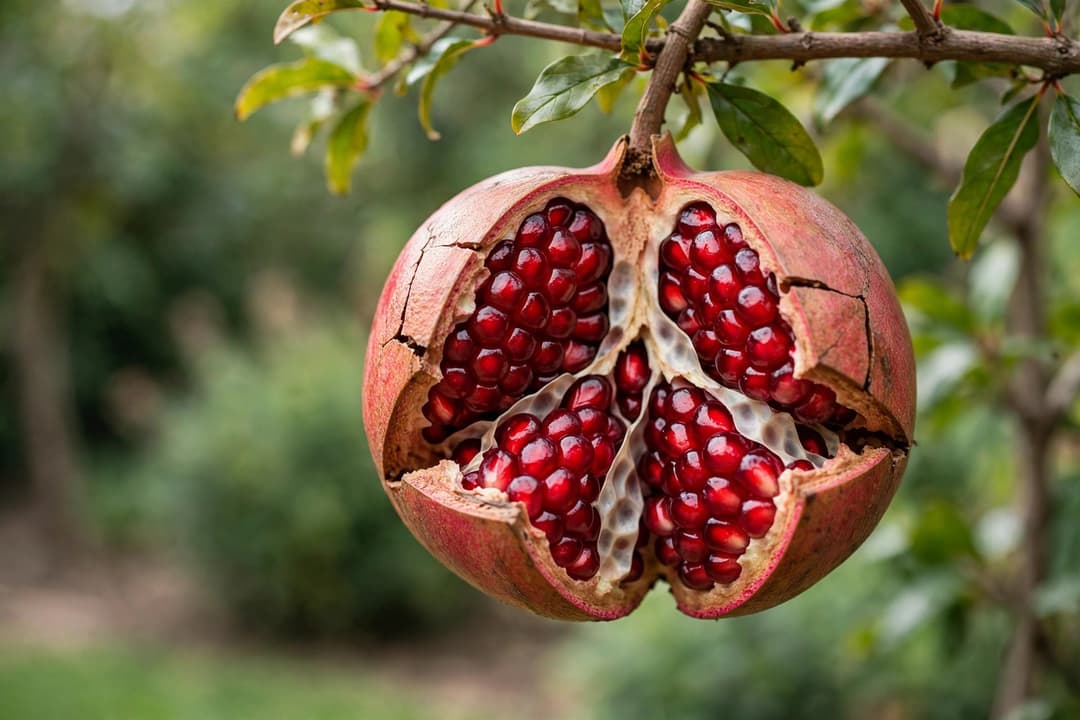
Think of the rind as a jacket that stops stretching. During dry weeks it hardens and sets its size, while the arils inside keep filling with juice. When water suddenly arrives, the roots pull it up fast and the arils swell in a rush the rind cannot match — so it tears. UC Master Gardeners of Napa County warn what follows: once they crack, birds will feast on them, or they will start to mold and rot. That is the real cost of a split — not the crack itself, but the open door it leaves. Variety can also play a role in how readily a given tree splits — UC Master Gardeners of Placer County note that ripening timing depends on the cultivar, and UC Master Gardeners of Napa County note that skin color at maturity varies by variety — so do not read one split as proof of a watering crime.
Is It Ripe? Run the Tests Before You Pick
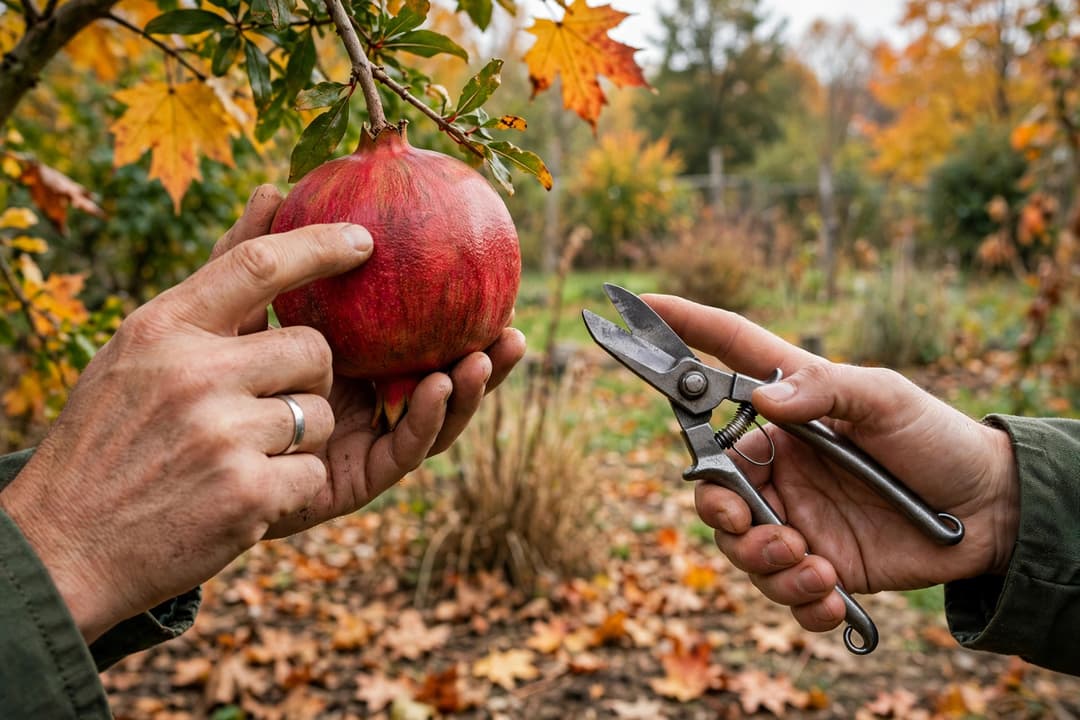
Pomegranates are ripe in early autumn, October and November, according to UC Master Gardeners of Placer County, ripening six to seven months after flowering depending on the cultivar — but the calendar is only a rough guide, and your tree's bloom time and summer weather shift it. Run the tests instead. First, color: harvest when the fruit has developed its distinctive cultivar color and makes a metallic sound when tapped, with size about that of a softball. Second, skin: before ripening the skin is hard and tight and cannot be easily scratched, but when ripe it turns a bit soft, and you can scratch it with a fingernail and gentle pressure. Third, shape: an unripe fruit is exactly round, but as the arils press against the outer wall at maximum juice content, the sides flatten and the fruit looks slightly squared or flattened. The rose-like petals at the crown also turn slightly inward on a ripe fruit. Color alone misleads — some varieties never darken to the deep red you expect, and skin color at maturity can run from mostly green or light yellow to pink — and, for familiar varieties like Wonderful, deep red — per Napa County's variety notes — so use color together with sound, scratch, and shape, never alone. And remember the trade at the heart of this article: UC Master Gardeners of Placer County state plainly that there is no way to artificially ripen a pomegranate — after harvest it does not ripen any further. Picking unripe fruit to beat the rain only swaps one disappointment for another. When you do pick, clip close to the base rather than pulling, so no stem stub damages the fruit in handling.
What to Do With Split Fruit Right Now
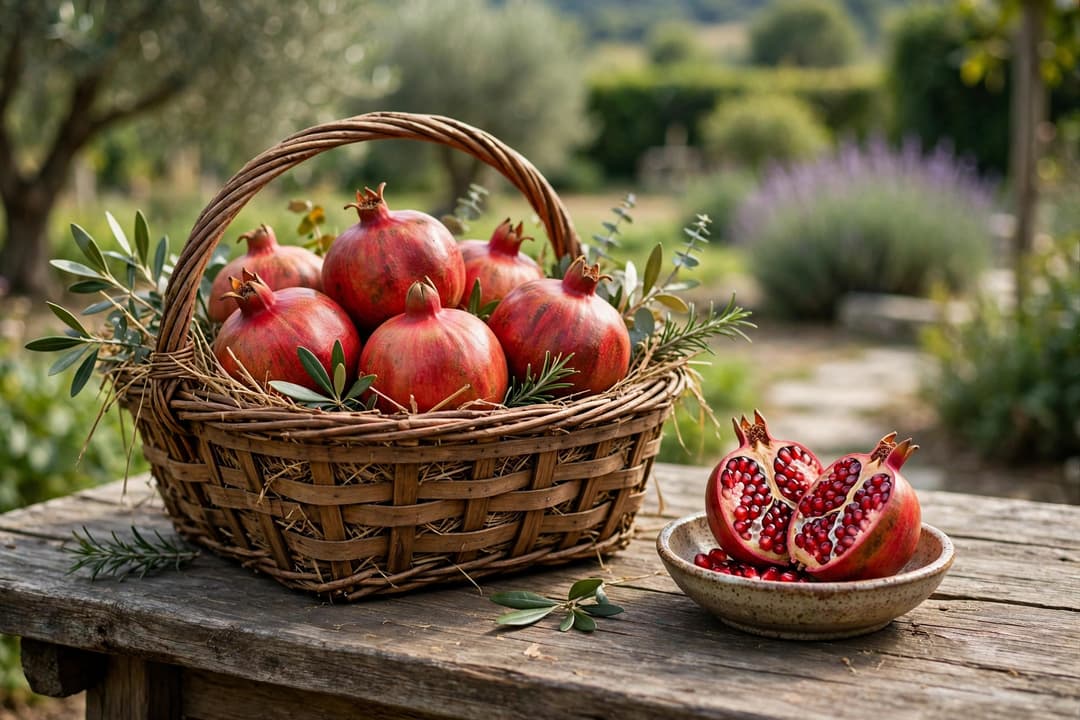
With rain in the forecast and ripe fruit on the tree, pick the fruit that passes the ripeness tests just before the rain rather than after it — UC Master Gardeners of Placer County advise that most fruit should ideally be picked just prior to splitting, and that split fruit left on the tree may spoil if it rains. For fruit that has already split, triage it the same day. Clip it promptly and keep it separate from your sound fruit. If the interior is sound — arils bright, firm, and clean-smelling, with no mold, gray fuzz, soft spots, off smell, or insect contamination — eat it soon. Do not store split fruit for weeks: Placer County notes that fruit meant for storage, which can keep for several months in the refrigerator, must be chosen without splits. Discard any split fruit that shows mold, soft rot, or insect contamination in the trash rather than trying to salvage the clean-looking arils around it. A split alone cannot diagnose your tree's cause, so while you triage, note the clues for next season: was the tree dry for weeks before the soak, was it overwatered late, and did the splitting strike one tree or the whole planting?
Preventing Splits Next Season: Steady Water, Good Drainage
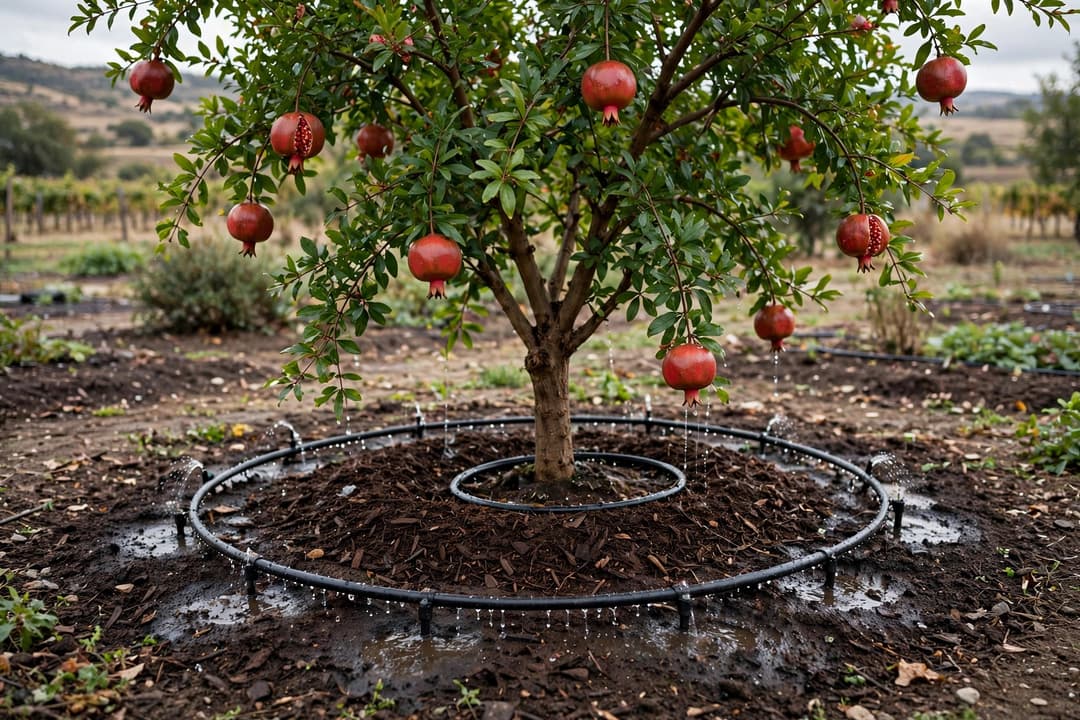
Next season's fix is boring, which is why it works: keep root-zone moisture steady and adequate through fruit development instead of letting the tree dry out and then flooding it — tapering gradually during maturation, per UF/IFAS Extension, never stopping outright and never flooding. UF/IFAS Extension advises maintaining adequate soil moisture in late summer and early fall to reduce potential splitting, and warns that sudden changes in irrigation amounts and timing often lead to splitting a few weeks before harvest. Check the soil before you irrigate — dig a few inches down near the drip line and feel whether it is dry, damp, or soggy — and do not stop watering in fall hoping to prevent splits, since a dry tree hit by the first rain is exactly the setup that cracks. Good drainage matters too: UF/IFAS Extension notes optimum growth is associated with well-drained soils, not heavy or moist ones, so fruit in a spot where water stands after rain is fighting two problems at once. Do not prescribe yourself a fixed number of litres or days, and do not reach for calcium sprays as a universal fix — no watering schedule or spray survives every soil, rainfall pattern, and root depth, and a split this year is not repaired by anything sprayed after the fact. If splitting repeats across seasons, compare varieties and sites, watch how water actually moves into your root zone, and ask your local extension service before changing inputs. One variety note worth carrying into any replanting decision: UC Master Gardeners of Napa County suggest an earlier-ripening variety, such as Parfianka, if you live where early fall rains arrive before your current variety ripens.
A Note on the Plant Itself
The pomegranate is Punica granatum, now placed in the family Lythraceae under current taxonomy — older references, including UF/IFAS Extension's own pomegranate page, still list it under its former family, Punicaceae. NCBI Taxonomy places Punica granatum in Lythraceae. If you see both names in older books and newer guides, they are the same plant — the classification moved, not the tree.
Frequently Asked Questions
Can I eat a pomegranate that split on the tree?
Yes, if the interior is sound — bright, firm arils with no mold, soft spots, off smell, or insects. Eat it soon and keep it separate from fruit you plan to store. Discard anything moldy, mushy, or insect-contaminated.
Should I pick all my pomegranates before a storm?
Pick only the fruit that passes the ripeness tests — distinctive color, metallic tap sound, softball size, scratchable skin, flattened sides. Unripe fruit never ripens off the tree, so stripping the tree early trades splits for sour fruit.
Does a split mean I watered wrong?
Not necessarily. A split alone cannot diagnose the cause: a dry spell followed by rain, late overwatering, and variety can all crack fruit. Look at the pattern — recent rain and irrigation, soil moisture, and whether splits cluster on one side — before blaming one habit.
Can I stop splits by not watering in fall?
No — that backfires. A dry tree hit by the first fall rain is the classic splitting setup. Keep root-zone moisture steady through fruit development and check the soil before irrigating, rather than stopping water in fall.